
The Role of Cultural Exchange in Shaping Hindu Philosophical Ideas


Welcome to Ancient India History, where we embark on a captivating journey through the rich tapestry of India's past. This week, we delve into the intriguing theme of cultural exchange in Hindu philosophy, uncovering how diverse influences have shaped the profound ideas that underpin one of the world's oldest religions. From the bustling streets of the Indus Valley to the intellectual flourishing of the Gupta Empire, the legacy of these exchanges is both fascinating and complex.
Prepare to unlock the secrets of ancient wisdom as we explore how interconnectedness has been a vital force in the evolution of Hindu thought. Join us on this enlightening expedition!
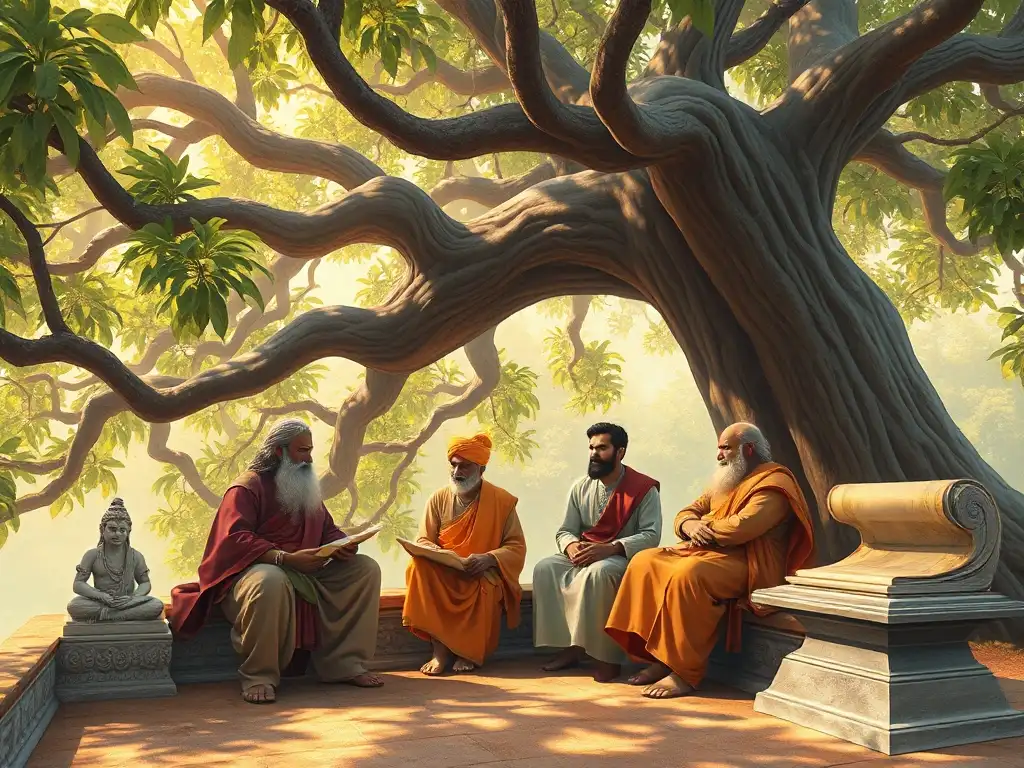
Introduction to Cultural Exchange in Hindu Philosophy
Cultural exchange has always been a driving force behind the evolution of ideas and belief systems across civilizations. In the context of Hindu philosophy, the interplay of diverse cultural influences has led to a rich tapestry of thoughts and practices that have shaped the spiritual landscape of India. From the ancient Indus Valley civilization to the flourishing Gupta Empire, various interactions—whether through trade, conquests, or scholarly pursuits—have contributed significantly to the development of Hindu philosophical ideas. This article delves into the intricate relationships formed through cultural exchange and how these interactions have influenced the core tenets of Hindu philosophy.
Understanding Cultural Exchange and Its Importance
Cultural exchange refers to the process through which different cultures share ideas, beliefs, customs, and practices, resulting in mutual influence and adaptation. In Hindu philosophy, this exchange has played a crucial role in:
- Enriching Philosophical Discourses: The blending of ideas from neighboring cultures has led to the emergence of new philosophical schools and thought processes.
- Promoting Tolerance and Pluralism: The interactions fostered a climate of acceptance, allowing diverse beliefs to coexist and thrive within the Hindu framework.
- Facilitating Knowledge Transfer: Scholars and philosophers from various backgrounds contributed to a shared pool of knowledge that advanced philosophical thought.
Cultural exchange is not merely a historical phenomenon; it continues to shape contemporary Hindu thought and practice.
Overview of Hindu Philosophy and Its Evolution
Hindu philosophy encompasses a wide range of ideas and schools of thought, typically classified into six orthodox (Astika) systems: Nyaya (logic), Vaisheshika (atomism), Samkhya (enumeration), Yoga (discipline), Mimamsa (rituals), and Vedanta (end of the Vedas). Each of these systems has evolved through the centuries, influenced by various factors, including:
- Religious Texts: The Vedas, Upanishads, and Puranas provide foundational philosophical concepts.
- Key Thinkers: Philosophers such as Adi Shankaracharya and Ramanuja have contributed to the evolution of thought through their commentaries and interpretations.
- External Influences: Contacts with Buddhism, Jainism, and later Islamic and Western philosophies have also shaped Hindu philosophical discourse.
Understanding the evolution of Hindu philosophy requires an appreciation of the cultural exchanges that have facilitated these developments.
Historical Context of Cultural Exchange in Ancient India
The historical backdrop of ancient India is marked by numerous interactions that fostered cultural exchange. From trade routes to migration, various factors contributed to the diffusion of ideas and beliefs across the subcontinent.
Trade Routes and Their Influence on Philosophical Thought
Ancient India was strategically located at the crossroads of major trade routes, including the Silk Road and maritime routes connecting India to the Mediterranean and Southeast Asia. These routes facilitated:
- Economic Exchange: The flow of goods and wealth encouraged interactions between traders, scholars, and philosophers.
- Cultural Interactions: Exposure to foreign ideas and practices enriched local philosophical thought, leading to the cross-pollination of concepts.
For example, the exchange between Indian and Greek philosophies during the Hellenistic period resulted in significant dialogues that influenced metaphysical and ethical discussions in Hindu philosophy.
Key Civilizations Contributing to Cultural Exchange
Several ancient civilizations played a pivotal role in fostering cultural exchange in India:
- Indus Valley Civilization: Early interactions with neighboring cultures set the stage for philosophical developments.
- Maurya Empire: The reign of Ashoka promoted the spread of Buddhism, which in turn influenced Hindu philosophical ideas.
- Gupta Empire: Often regarded as the Golden Age of India, this period saw significant advancements in arts, sciences, and philosophy, greatly influenced by cross-cultural interactions.
These civilizations not only contributed to the cultural exchange but also absorbed and integrated diverse philosophical ideas, shaping the evolution of Hindu thought.
The role of cultural exchange in shaping Hindu philosophical ideas is a testament to the dynamic and interconnected nature of ancient Indian civilizations. The synthesis of diverse influences has enriched the philosophical landscape, making it a vibrant field of study that continues to inspire and evolve.
Major Influences on Hindu Philosophical Ideas
Hindu philosophy has been shaped significantly by a multitude of cultural exchanges throughout its history. Each interaction with neighboring civilizations has introduced new ideas, practices, and concepts that have been integrated into the existing philosophical framework. This blending of thoughts has allowed Hindu philosophy to evolve and adapt over centuries, reflecting the dynamic nature of Indian society and its interactions with various cultures.
Interaction with Ancient Persian Thought
The interaction between ancient Indian and Persian thought can be traced back to the Achaemenid Empire's expansion into the Indian subcontinent around the 6th century BCE. This era marked a significant cultural exchange that influenced various aspects of Hindu philosophy. Persian concepts, particularly those related to ethics and governance, began to permeate Indian thought.
One notable influence was the introduction of dualistic ideas concerning good and evil, akin to the Zoroastrian principles of Ahura Mazda and Angra Mainyu. These concepts may have contributed to the development of moral philosophy within Hinduism, emphasizing the importance of righteousness (dharma) and the struggle against adharma (unrighteousness). Additionally, the Persian emphasis on law and order may have reinforced the significance of social duties and responsibilities in Hindu philosophical discourse.
The Impact of Greek Philosophical Concepts
The arrival of Greek philosophers in India, particularly during the time of Alexander the Great, brought a new wave of intellectual thought that significantly impacted Hindu philosophy. The cross-cultural dialogues between Greek and Indian thinkers facilitated the exchange of ideas, particularly in metaphysics and ethics.
The Greek emphasis on rationalism and logic can be seen reflected in the development of Hindu philosophical schools, such as Nyaya and Vaisheshika, which prioritize epistemology and the nature of reality. The influence of Platonic thought is particularly notable in the conception of ideal forms, which parallels certain Hindu ideas about the ultimate reality (Brahman) and the material world (maya). Furthermore, the Greek focus on the importance of the individual and self-knowledge resonates with Hindu ideas found in texts like the Upanishads, which explore the nature of the self (atman) and its relationship to the universal.
Contributions from Chinese Philosophical Traditions
Cultural exchanges between India and China, particularly during the early centuries CE, played a crucial role in shaping Hindu philosophical ideas. The introduction of Buddhist thought from India into China and vice versa allowed for significant philosophical dialogues that enriched both traditions.
Chinese philosophies, especially Daoism and Confucianism, emphasized harmony, balance, and ethical governance. These themes found their way into Hindu philosophical discourse, particularly in the understanding of dharma and the importance of living in accordance with natural laws. The integration of mindfulness and the practice of meditation from Daoist traditions also resonated with existing Hindu practices, further enhancing the spiritual and philosophical landscape in which Hinduism thrived.
Key Philosophical Themes Shaped by Cultural Exchange
Cultural exchanges have not only influenced individual philosophical ideas but have also contributed to the emergence of key themes within Hindu philosophy. These themes reflect a synthesis of diverse thoughts, demonstrating the adaptability and richness of Hindu philosophical traditions.
The Concept of Dharma: A Synthesis of Ideas
The concept of dharma, which encompasses duty, righteousness, and moral law, has evolved through various cultural influences. The interactions with Persian, Greek, and Chinese philosophies contributed to a more nuanced understanding of dharma, framing it not just as a personal duty but as a universal principle guiding ethical behavior and social harmony.
The synthesis of ideas from different cultures has led to a more comprehensive interpretation of dharma, incorporating elements such as justice, compassion, and the balance of individual rights and societal responsibilities. This evolution illustrates how cultural exchange has enriched Hindu philosophical discourse, making dharma a central theme in the moral fabric of Indian society.
The Role of Meditation and Spiritual Practices
Meditation and various spiritual practices are integral to Hindu philosophy, and their development has been significantly shaped by cultural exchanges. The incorporation of ideas from Buddhism, particularly the emphasis on meditation as a tool for achieving enlightenment, has profoundly influenced Hindu practices.
This blending has led to the refinement of meditation techniques within Hinduism, emphasizing the importance of personal experience in spiritual realization. The interaction with other cultures has also fostered a more inclusive understanding of spiritual practices, allowing for a diversity of approaches that cater to various seekers.
The Development of Cosmology and Metaphysics
Cultural exchanges have also played a pivotal role in the development of Hindu cosmology and metaphysics. The integration of Greek philosophical concepts, such as the nature of the universe and the principles of causation, has enriched Hindu metaphysical discourse.
This dialogue has resulted in a more sophisticated understanding of the cosmos, bridging material and spiritual realms. The synthesis of various cosmological views has fostered a holistic perspective in Hindu philosophy, where the universe is seen as a complex interplay of forces, governed by both physical laws and spiritual principles. The resulting metaphysical frameworks reflect a deep inquiry into the nature of reality, the self, and the ultimate purpose of existence, showcasing the dynamic evolution of Hindu philosophical thought through cultural exchange.
Case Studies of Cultural Exchange in Hindu Philosophy

Cultural exchange has played a pivotal role in shaping Hindu philosophical ideas throughout history. Various interactions with neighboring religions and philosophies have led to the evolution of thought within Hinduism. By examining specific case studies, we can gain insight into how these exchanges transformed Hindu philosophy and contributed to its richness.
The Influence of Buddhism on Hindu Thought
Buddhism emerged around the 5th century BCE and quickly spread across the Indian subcontinent. The interaction between Buddhism and Hinduism was marked by a dynamic exchange of ideas. One of the significant influences of Buddhism on Hindu thought is the concept of Maya, or illusion, which was explored extensively in both traditions but approached differently.
Buddhism emphasized the impermanence of all things, while Hinduism incorporated Maya into its discussions of reality, particularly in texts like the Bhagavad Gita and the Upanishads. Furthermore, the Buddhist notion of Anatta (no-self) challenged the Hindu concept of the eternal soul, or Atman. This philosophical friction led to a deeper exploration of the nature of self and consciousness within Hinduism, prompting the development of schools like Advaita Vedanta, which sought to reconcile these ideas.
Moreover, the practice of meditation and mindfulness, which gained prominence in Buddhist tradition, found its way into Hindu practices, enriching the spiritual landscape and contributing to the evolution of yogic philosophies.
The Interaction between Hinduism and Jain Philosophy
The relationship between Hinduism and Jainism dates back to ancient times, with both religions sharing a common cultural and philosophical milieu. Jain philosophy, with its emphasis on non-violence ( Ahimsa) and truthfulness, significantly influenced Hindu thought, particularly in ethical and moral frameworks.
One notable aspect of this exchange is the Jain concept of Syādvāda, or the doctrine of conditional predication, which encourages a multi-faceted understanding of truth. This philosophical idea encouraged Hindu thinkers to embrace the complexity of reality, leading to the development of more nuanced interpretations of scriptures and doctrines.
Additionally, the Jain practice of asceticism and its focus on liberation ( Moksha) resonated with Hindu ascetic traditions, promoting a shared discourse on renunciation and spiritual liberation. This convergence of ideas has enriched both traditions, leading to a profound dialogue on ethics, spirituality, and the pursuit of ultimate truth.
Cross-Cultural Dialogues: Examples and Outcomes
Throughout history, Hindu philosophy has engaged in dialogues not only with Buddhism and Jainism but also with various other cultures and religions. One prominent example is the interaction with Greco-Roman thought during the early centuries of the Common Era. The exchange of ideas between Indian scholars and Hellenistic philosophers led to the introduction of concepts such as logic and empirical reasoning into Hindu discourse.
The Yoga Sutras of Patanjali, for instance, reflect influences from Greek philosophy, particularly in their systematic approach to understanding human experience and consciousness. This synthesis of ideas contributed to the development of new philosophical interpretations within Hinduism.
Another significant cross-cultural dialogue occurred during the medieval period, when Islamic philosophy began to influence Hindu thought. The introduction of Sufi ideas, particularly concepts of divine love and mysticism, permeated various Hindu traditions and inspired thinkers like Kabir and Tulsidas. This interaction fostered a rich tapestry of philosophical ideas that transcended religious boundaries, highlighting the universal themes of love, devotion, and the quest for truth.
The Role of Texts in Cultural Exchange
Texts have been instrumental in facilitating cultural exchange and the dissemination of philosophical ideas across regions and eras. Ancient Indian texts, written in Sanskrit and other languages, served as vehicles for sharing knowledge, experiences, and spiritual insights.
Sanskrit Literature and Its Cross-Cultural Impact
Sanskrit literature is a cornerstone of Hindu philosophy and has had a profound impact on various cultures. The epic texts like the Mahabharata and the Ramayana not only encapsulate Hindu values and philosophical ideas but have also been translated and adapted in numerous cultures across Southeast Asia.
The influence of these texts can be seen in the literary and artistic traditions of countries such as Indonesia, Thailand, and Cambodia, where Hindu epics inspired local narratives and artistic expressions. The Ramayana in particular has been reinterpreted in various forms, illustrating the adaptability and universal appeal of its themes.
Furthermore, the philosophical treatises written in Sanskrit, such as those by Adi Shankaracharya and Ramanuja, have transcended geographical boundaries, contributing to debates and discussions in regions far beyond India. Their ideas on non-dualism and qualified non-dualism have found resonance among various philosophical schools worldwide, showcasing the global relevance of Hindu philosophical thought.
Translations and Interpretations: A Bridge Between Cultures
Translations of Hindu texts into other languages have played a crucial role in bridging cultural divides and facilitating understanding. The Persian translations of Indian texts during the Mughal era, for instance, not only preserved Hindu philosophical ideas but also allowed for a dialogue between Islamic and Hindu thought.
Moreover, the translation of key texts into English in the 19th and 20th centuries opened up Hindu philosophy to a broader audience, influencing Western thinkers and movements. Works by scholars such as Swami Vivekananda and Aurobindo Ghose introduced concepts like Karma and Yoga to the West, leading to a renewed interest in Eastern philosophies and practices.
These translations and interpretations have not only preserved the essence of Hindu philosophy but have also enabled its evolution as it interacts with new cultural contexts. By serving as conduits for dialogue and exchange, texts continue to play a vital role in the ongoing development of Hindu philosophical ideas in an increasingly interconnected world.
Modern Implications of Cultural Exchange in Hindu Philosophy
Cultural exchange has significantly influenced the evolution of Hindu philosophical ideas, leading to a dynamic interplay between various traditions and schools of thought. In the modern context, this exchange manifests in several ways, including the adaptation of ancient philosophies into contemporary philosophical discourse and practices.
Modern thinkers often draw inspiration from classical texts such as the Upanishads and the Bhagavad Gita, interpreting them through the lens of current social and ethical dilemmas. This process not only revitalizes ancient ideas but also integrates them with global philosophical movements, allowing for a more inclusive understanding of human existence and spirituality. Moreover, the cross-pollination of ideas has resulted in a richer tapestry of thought that addresses the complexities of modern life, emphasizing the relevance of Hindu philosophy in contemporary discussions on ethics, morality, and spirituality.
Contemporary Interpretations of Ancient Ideas
In contemporary discourse, ancient Hindu philosophical ideas are frequently reinterpreted to resonate with current issues, such as environmental sustainability, social justice, and mental well-being. Scholars and practitioners alike have begun to explore how concepts like Dharma (duty/righteousness) and Karma (action and consequence) can provide insights into modern ethical challenges.
For instance, the concept of “Ahimsa” (non-violence) has been re-evaluated in light of global movements for peace and social justice, demonstrating the enduring applicability of these ancient principles. Additionally, the rise of mindfulness practices, rooted in Hindu and Buddhist traditions, highlights a growing interest in the psychological aspects of these philosophies, emphasizing meditation and self-awareness as tools for personal and communal harmony.
The Global Influence of Hindu Philosophy Today
Hindu philosophy has transcended geographical boundaries, influencing various cultures and religious practices worldwide. The globalization of yoga and meditation practices reflects a significant cultural exchange, where ancient Hindu concepts have been adapted to fit contemporary wellness paradigms.
Furthermore, Hindu philosophical ideas have permeated Western thought, particularly in the fields of psychology, metaphysics, and comparative religion. Thinkers such as Carl Jung and Alan Watts have drawn upon Hindu concepts to elaborate on the nature of consciousness and the self, demonstrating the universal relevance of these teachings. This global integration not only enriches the understanding of Hindu philosophy but also fosters a mutual appreciation of diverse cultural perspectives.
Conclusion: The Lasting Impact of Cultural Exchange on Hindu Philosophy
The role of cultural exchange in shaping Hindu philosophical ideas is profound and multifaceted. It has not only contributed to the richness and diversity of these philosophies but also ensured their continual evolution in response to changing societal values and global dynamics.
The interplay between various cultural and philosophical traditions has allowed Hindu philosophy to remain relevant, providing valuable insights into both personal and collective human experiences. This ongoing dialogue between the past and present underscores the importance of cultural exchange in fostering a deeper understanding of complex philosophical concepts.
Reflection on the Importance of Cultural Exchange in Shaping Thought
Cultural exchange serves as a catalyst for intellectual growth and philosophical innovation within Hindu philosophy. It encourages an open-minded approach to understanding and interpreting ancient texts, fostering a spirit of inquiry and dialogue among scholars, practitioners, and enthusiasts alike.
The reflections on diverse interpretations not only honor the heritage of Hindu philosophy but also highlight the interconnectedness of human thought. By acknowledging and embracing the influences from various cultures and philosophies, individuals can cultivate a more comprehensive worldview that appreciates the nuances and complexities of spiritual and ethical dilemmas.
Future Directions for Research in Cultural Exchange and Hindu Philosophy
Future research in cultural exchange and Hindu philosophy can explore several promising avenues. There is a need for interdisciplinary studies that bridge anthropology, religious studies, and philosophy, examining how cultural exchanges have historically shaped Hindu thought and practice.
Additionally, comparative studies that analyze the influence of Hindu philosophy on other traditions, as well as vice versa, can provide deeper insights into the universality of philosophical ideas. Exploring contemporary movements and practices that stem from Hindu philosophy in a global context will also be essential in understanding its evolving landscape. By focusing on these areas, future research can continue to illuminate the dynamic interplay between cultural exchange and Hindu philosophical thought, ensuring that its rich heritage remains a vital part of global philosophical discourse.
- Introduction to Cultural Exchange in Hindu Philosophy
- Historical Context of Cultural Exchange in Ancient India
- Major Influences on Hindu Philosophical Ideas
- Key Philosophical Themes Shaped by Cultural Exchange
- Case Studies of Cultural Exchange in Hindu Philosophy
- The Role of Texts in Cultural Exchange
- Modern Implications of Cultural Exchange in Hindu Philosophy
- Conclusion: The Lasting Impact of Cultural Exchange on Hindu Philosophy
- What is the significance of cultural exchange in Hindu philosophy?
- How did ancient Indian civilizations contribute to philosophical development?
- What are some examples of cultural influences on Hindu philosophy?
- Why is understanding cultural exchange important for modern Hindu practices?
- How does the concept of cultural exchange relate to global spirituality?
Frequently Asked Questions
What is the significance of cultural exchange in Hindu philosophy?
Cultural exchange played a crucial role in shaping Hindu philosophical ideas by integrating diverse thoughts and practices, leading to a richer and more complex spiritual framework.
How did ancient Indian civilizations contribute to philosophical development?
Ancient Indian civilizations, particularly during the Indus Valley and the Gupta Empire, fostered an environment of intellectual exchange, which facilitated the growth of various schools of thought in Hindu philosophy.
What are some examples of cultural influences on Hindu philosophy?
Key influences include Buddhism and Jainism, which encouraged dialogue and debate, resulting in the evolution of concepts like karma, dharma, and moksha within Hindu thought.
Why is understanding cultural exchange important for modern Hindu practices?
Understanding cultural exchange helps practitioners and scholars appreciate the diverse origins of Hindu practices and philosophies, fostering a more inclusive approach to spirituality today.
How does the concept of cultural exchange relate to global spirituality?
The cultural exchange in Hindu philosophy has influenced global spirituality, promoting interfaith dialogue and the sharing of philosophical insights that transcend cultural boundaries.
Final Reflection: The Transformative Power of Cultural Exchange in Hindu Philosophy
Cultural exchange in Hindu philosophy is not just a historical phenomenon; it is a living, breathing force that continues to shape our understanding of spirituality and ethics today. As we navigate an increasingly interconnected world, the lessons drawn from the rich tapestry of Hindu philosophical ideas remind us of the importance of dialogue and mutual respect among diverse cultures. The interplay of ideas across borders has the potential to foster deeper insights and greater harmony, highlighting that our differences can be a source of strength rather than division.
Cultural exchange has profoundly influenced not only the evolution of Hindu philosophy but also the broader social and cultural landscape. The intermingling of thoughts and beliefs has led to a more nuanced understanding of concepts such as dharma, karma, and moksha, which resonate with universal human experiences. As Mahatma Gandhi once said, "> The best way to find yourself is to lose yourself in the service of others." This sentiment encapsulates the essence of cultural exchange, where the act of engaging with others can lead to self-discovery and a richer appreciation of our shared humanity.
As we reflect on the insights gained from the exploration of cultural exchange in Hindu philosophy, I invite you to consider how these principles can be applied in your own life. Embrace the opportunity to learn from others, engage in meaningful conversations, and allow the wisdom of diverse cultures to enrich your own understanding. By fostering an environment of openness and curiosity, we can contribute to a world where philosophical ideas flourish, ultimately leading to greater compassion and unity among all people.
Embrace the Journey of Cultural Exchange!
Thank you for diving into the vibrant world of how cultural exchange shapes Hindu philosophical ideas. Your interest fuels the exploration of these profound concepts and their interconnections. Now, it's time to put that knowledge into action!
- Engage deeply: **Explore the works of a renowned Hindu philosopher** who has been significantly influenced by cultural exchange to gain diverse perspectives.
- Join a discussion: **Participate in a local or online forum** dedicated to Hindu philosophy and share your insights.
- Spread the knowledge: **Share this article with friends and family** to inspire a broader discussion on the cultural influences that shape philosophical thought.
How do you think cultural exchange can continue to evolve and influence modern philosophical discussions?