
Inscriptions and Social Hierarchies in Ancient Indian Civilizations

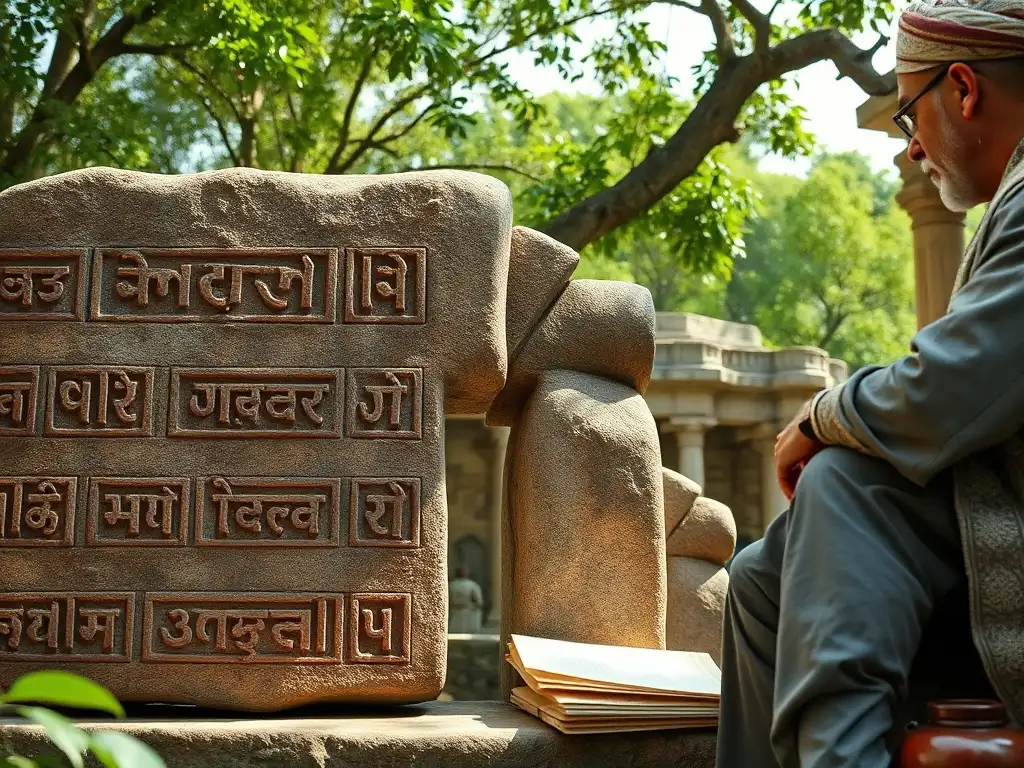
Welcome to Ancient India History, where we take you on a fascinating journey through the intricate tapestry of India's past. Discover how inscriptions in ancient India serve as vital keys to understanding the social hierarchies that shaped its vibrant civilizations. From the sophisticated scripts of the Indus Valley to the profound messages of the Gupta Empire, each inscription tells a story waiting to be unveiled.
Dive deeper into this captivating subject and explore how these ancient texts not only reflect societal structures but also illuminate the rich cultural heritage of India. Your adventure into the remarkable world of inscriptions and epigraphy begins here!
-
Inscriptions in Ancient India and Their Role in Social Hierarchies
- Introduction to Inscriptions in Ancient India
- Types of Inscriptions Found in Ancient India
- Historical Context of Inscriptions in Ancient Indian Civilizations
- Social Hierarchies Reflected in Inscriptions
- Case Studies of Notable Inscriptions
- The Role of Inscriptions in Understanding Ancient Indian Society
- Conclusion: The Legacy of Inscriptions in Ancient India
- Future Directions in the Study of Inscriptions and Social Hierarchies
- References and Further Reading on Inscriptions in Ancient India
-
Frequently Asked Questions
- What are inscriptions in ancient India?
- How did inscriptions reflect social hierarchies in ancient India?
- What types of materials were commonly used for inscriptions in ancient India?
- Why are inscriptions important for understanding ancient Indian culture?
- Can you name significant inscriptions from ancient India?
- Final Reflection: The Enduring Legacy of Inscriptions in Ancient India
- Unveil the Secrets of Ancient Indian Social Hierarchies!
Introduction to Inscriptions in Ancient India
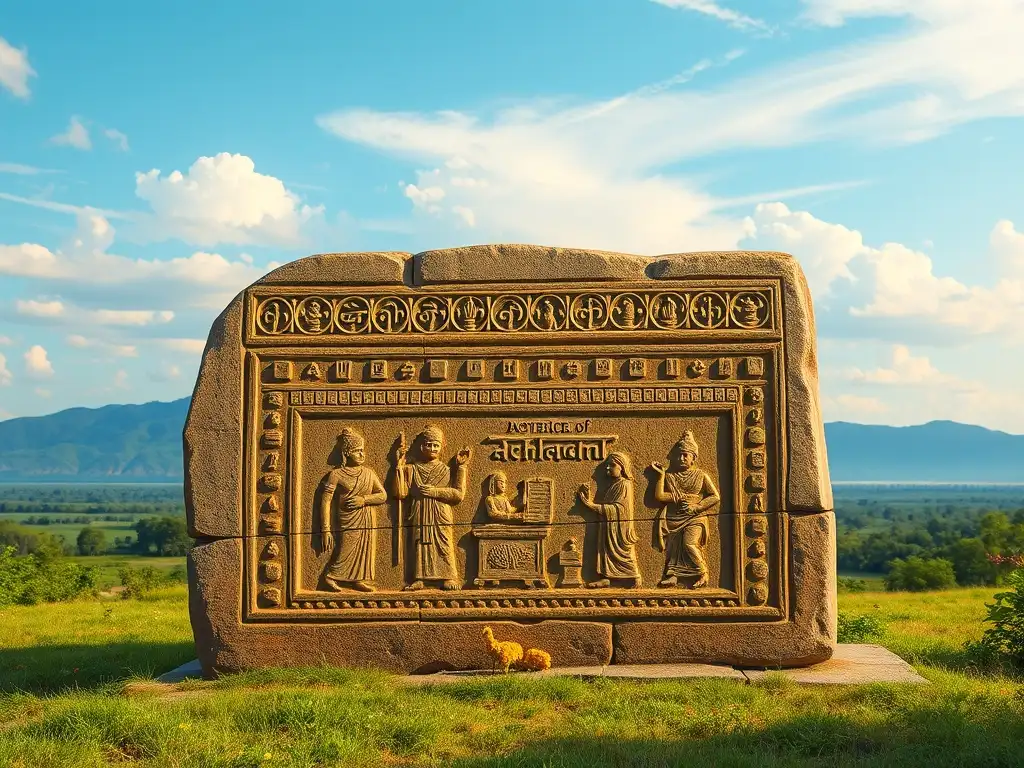
Inscriptions in ancient India serve as invaluable artifacts that illuminate the social, cultural, and political landscapes of various Indian civilizations. From the early Harappan societies of the Indus Valley to the flourishing Gupta Empire, these inscriptions provide a glimpse into the complexities of social hierarchies and the administrative frameworks that governed these societies.
The study of inscriptions is crucial not only for understanding the historical narratives of ancient India but also for appreciating the linguistic and artistic achievements of the time. By analyzing these engravings, historians can reconstruct the socio-political dynamics and cultural practices that shaped the lives of people in ancient India.
Definition and Importance of Inscriptions
Inscriptions are written records, typically engraved on durable materials such as stone, metal, or pottery, that document significant events, decrees, or cultural expressions. They hold immense importance for several reasons:
- Historical Records: They serve as primary sources of historical information, providing insights into governance, law, and societal norms.
- Cultural Heritage: Inscriptions reveal the artistic styles, language, and literacy levels of different periods, contributing to our understanding of cultural evolution.
- Social Structures: They often delineate social hierarchies, roles, and relationships within ancient societies, offering clues to the social fabric of the time.
Overview of Ancient Indian Civilizations
The ancient Indian subcontinent was home to a variety of civilizations, each contributing to the rich tapestry of Indian history. Key civilizations include:
- Indus Valley Civilization (c. 2500–1500 BCE): Known for its advanced urban planning and script, though much remains undeciphered.
- Maurya Empire (c. 322–185 BCE): Famous for Emperor Ashoka's edicts, which promoted Buddhism and moral governance.
- Gupta Empire (c. 320–550 CE): Often regarded as the Golden Age of India, marked by significant achievements in arts, science, and literature.
Types of Inscriptions Found in Ancient India
The diverse materials and methods used for inscriptions in ancient India reflect the complexity and sophistication of its cultures. Below are the primary types of inscriptions:
Stone Inscriptions: Characteristics and Examples
Stone inscriptions are perhaps the most enduring records of ancient India. They are characterized by their permanence and the formal script used. Notable examples include:
- Ashoka's Edicts: Inscribed on rocks and pillars, these edicts outline his policies of Dharma and social welfare.
- The Junagadh Rock Edicts: These inscriptions provide insights into the administration and culture of the Mauryan period.
Copper Plate Inscriptions: Usage and Significance
Copper plate inscriptions became prevalent during the early medieval period. They served various purposes, including:
- Land Grants: Many inscriptions document the granting of land to religious institutions or individuals, indicating the socio-economic dynamics of the time.
- Royal Decrees: These inscriptions often contain proclamations by kings, highlighting their authority and governance strategies.
Other Materials Used for Inscriptions
In addition to stone and copper, inscriptions were also made on other materials, showcasing the diversity of ancient Indian writing practices:
- Terracotta: Common in earlier civilizations, terracotta tablets often contained administrative records.
- Wood and Bone: While less common, inscriptions on these materials provide unique insights into specific cultural practices or regional variations.
By delving into the world of inscriptions in ancient India, we can better understand not only the historical context but also the intricate social hierarchies that defined these remarkable civilizations.
Historical Context of Inscriptions in Ancient Indian Civilizations
Inscriptions in ancient Indian civilizations serve as crucial historical artifacts that provide insight into the social, political, and cultural dynamics of the time. Dating back thousands of years, these inscriptions were often etched onto stone, metal, or clay, and they encompass a wide range of subjects, including royal decrees, religious texts, and everyday transactions. Understanding the historical context of these inscriptions helps scholars piece together the intricate social hierarchies that existed in ancient India.
The tradition of inscribing information can be traced to the Indus Valley Civilization, where seals and inscriptions were used for trade and administrative purposes. As civilizations evolved, so did the complexity of the inscriptions, reflecting a more stratified society. The Maurya Empire and the Gupta Empire further developed this tradition, using inscriptions not only for administrative records but also to propagate ideologies and reinforce power structures. By examining these inscriptions, researchers can glean valuable insights into the political motivations, cultural practices, and social stratifications of ancient Indian societies.
Inscriptions from the Indus Valley Civilization
The Indus Valley Civilization (circa 3300-1300 BCE) is renowned for its advanced urban planning and trade networks, and its inscriptions are among the earliest examples of written communication in India. The most notable artifacts are the seals, which often feature animal motifs and short inscriptions in an undeciphered script. These seals were likely used for trade and administrative purposes, indicating a complex economic system.
The inscriptions from this period are limited in scope, primarily focusing on trade relationships, ownership of goods, and perhaps religious symbols. The lack of extensive written records suggests that oral traditions may have played a significant role in the society, although the presence of these seals signifies the importance of written communication for economic and administrative functions. The social hierarchies of the Indus Valley are still a subject of debate, but the inscriptions hint at a structured society that valued trade and possibly had distinct occupational groups.
Inscriptions During the Maurya Empire
The Maurya Empire (322-185 BCE) marked a significant advancement in the use of inscriptions as a means of governance and ideological dissemination. Under the reign of Emperor Ashoka, inscriptions became a powerful tool for promoting Buddhist teachings and moral edicts. The famous Ashoka Edicts, etched on pillars and rock surfaces across the empire, are a testament to the political and religious ideologies of the time.
These inscriptions not only communicated laws and moral principles but also reflected Ashoka's efforts to unify his diverse subjects under a common ethical framework. The inscriptions reveal a complex social hierarchy, where the emperor positioned himself as a benevolent ruler guided by dharma. Additionally, the use of multiple languages and scripts in these inscriptions illustrates the cultural diversity of the empire and the attempts to reach various communities.
Gupta Empire Inscriptions and Their Implications
The Gupta Empire (circa 320-550 CE) is often referred to as the "Golden Age" of India, characterized by remarkable achievements in arts and sciences. Inscriptions from this period, such as those found in Udayagiri and Sarnath, highlight the prosperity and cultural advancements of the time. These inscriptions often celebrated royal patronage and the achievements of prominent rulers.
The Gupta inscriptions reveal the intricate relationship between power and culture, showcasing how rulers used inscriptions to legitimize their authority and commemorate their contributions to society. The emergence of Sanskrit as a dominant literary language during this period is evident in the inscriptions, reflecting the intellectual and cultural flourishing. Furthermore, these texts often include references to various social classes and their roles, hinting at the structured nature of Gupta society and the emphasis on social order.

Inscriptions from ancient India are not merely historical records; they are a valuable lens through which the social hierarchies of the time can be studied. The content of these inscriptions often reveals the stratification of society, indicating how different classes and groups interacted with one another.
Caste System and Its Representation in Inscriptions
The caste system, a defining feature of traditional Indian society, is frequently reflected in ancient inscriptions. Various texts make references to different castes, often determining the social status and occupational roles of individuals. Records from the Maurya and Gupta periods include references to specific castes, their duties, and their privileges, providing insight into the rigid social structure that governed life in ancient India.
Inscriptions related to religious endowments and temple constructions often highlight the contributions of various caste groups, illustrating their roles in society. For example, inscriptions that mention donations to temples indicate which castes held wealth and influence, reinforcing the social hierarchy. The emphasis on caste in these inscriptions underscores the importance of social identity in ancient Indian civilization.
Inscriptions as a Reflection of Political Power
Political power dynamics are vividly captured in ancient inscriptions, which often served as proclamations of authority by rulers. The royal edicts, such as those of Ashoka, exemplify how inscriptions were used to communicate political ideals and reinforce the ruler's legitimacy. These texts frequently outline laws, policies, and moral directives, showcasing the ruler's role in maintaining order and justice.
Inscriptions also reveal the relationships between different political entities, such as alliances and conflicts. By examining the language and content of these inscriptions, historians can deduce the geopolitical landscape of ancient India and how power was negotiated among various kingdoms and regions.
Religious and Cultural Hierarchies in Ancient Inscriptions
Inscriptions often reflect the religious and cultural hierarchies that existed in ancient Indian society. Temples and religious texts frequently serve as the backdrop for inscriptions, revealing the significance of religion in everyday life. The patronage of religious institutions by rulers is a common theme in these inscriptions, illustrating how power and spirituality were intertwined.
Additionally, inscriptions related to festivals, rituals, and religious practices highlight the cultural values and beliefs of the time. They provide insight into how different religious groups coexisted and interacted, reflecting the pluralistic nature of ancient Indian society. By studying these inscriptions, scholars can better understand the complex tapestry of religious and cultural hierarchies that shaped ancient India.
Case Studies of Notable Inscriptions
Inscriptions in ancient India serve as crucial historical documents that provide insight into the culture, governance, and societal structures of the time. By examining notable inscriptions, we can gain a clearer understanding of the complexities within ancient Indian civilizations. Below are significant case studies that exemplify the role of inscriptions in revealing historical narratives and social hierarchies.
The Edicts of Ashoka: A Study in Governance and Ethics
The Edicts of Ashoka, inscribed during the reign of Emperor Ashoka (268–232 BCE), represent one of the most profound collections of inscriptions in ancient India. These edicts, inscribed on rocks and pillars across the Indian subcontinent, primarily communicate Ashoka's ethical governance and his commitment to Dhamma, or moral law.
The inscriptions reveal a shift from a militaristic approach to one focused on compassion and welfare. Ashoka emphasized values such as non-violence, tolerance, and respect for all living beings. His edicts also addressed social issues, including the importance of social harmony and the welfare of his subjects.
The geographical spread of these edicts highlights the vastness of Ashoka’s empire and his efforts to unify diverse populations under a common ethical framework. Furthermore, the use of different languages, such as Prakrit and Greek, in various regions underscores the linguistic diversity and the administrative reach of his governance.
The Allahabad Pillar Inscription: Historical Significance
The Allahabad Pillar Inscription, attributed to Emperor Samudragupta of the Gupta dynasty (c. 4th century CE), is a remarkable historical document that provides insight into the political and military achievements of the time. This inscription is often referred to as a "prashasti," or eulogy, and is inscribed in Sanskrit.
The inscription details Samudragupta’s conquests and the extent of his empire, highlighting his military prowess and diplomatic skills. It celebrates his victories over numerous kings and his benevolence towards conquered territories.
Moreover, the Allahabad Pillar Inscription serves as a testament to the flourishing cultural and artistic expressions during the Gupta period. The use of sophisticated Sanskrit language reflects the literary advancements of the time and illustrates the significance of royal patronage in the development of arts and literature within ancient Indian society.
The Bakhshali Manuscript: Insights into Social Structure
The Bakhshali Manuscript, discovered near Peshawar, is an ancient mathematical text that dates back to the 3rd or 4th century CE. While primarily a mathematical work, it also offers valuable insights into the social structure of its time.
This manuscript contains various mathematical concepts, including arithmetic, geometry, and algebra, indicating a high level of mathematical understanding and education. The presence of such a manuscript suggests that certain segments of society, likely including merchants and scholars, were engaged in advanced study and trade practices.
Additionally, the Bakhshali Manuscript reflects the importance of commerce in ancient Indian society. The calculations and problems presented in the text imply a structured economy, with a significant focus on trade, wealth distribution, and the roles of different social classes in economic activities.
The Role of Inscriptions in Understanding Ancient Indian Society
Inscriptions are pivotal in reconstructing the social, political, and economic landscapes of ancient Indian civilizations. They provide a tangible link to the past, illuminating the complexities of societal hierarchies and interactions.
Linguistic Diversity and Regional Variations in Inscriptions
The linguistic diversity found in ancient Indian inscriptions is a testament to the rich tapestry of cultures and languages that existed across the subcontinent. Inscriptions in various languages, including Sanskrit, Prakrit, Tamil, and regional dialects, reveal the regional variations and the adaptability of language in expressing local identities and governance.
Each inscription often reflects the specific context of its region, allowing historians to trace the influences of local customs, religious practices, and administrative systems. This linguistic diversity not only highlights the cultural richness of ancient India but also underscores the significance of communication in governance and societal organization.
Economic Insights from Inscriptions: Trade and Wealth Distribution
Inscriptions often provide valuable economic insights, particularly regarding trade practices and wealth distribution in ancient Indian society. Records of trade routes, taxation, and land grants reveal the economic structures that supported various social classes.
For example, inscriptions detailing trade agreements or merchant guilds illustrate the interconnectedness of urban centers and rural areas. They also shed light on the distribution of resources and the roles of different social groups in economic activities, such as agriculture, crafts, and trade.
Such economic inscriptions are crucial for understanding how wealth was accumulated and circulated within society, as well as the implications for social hierarchies based on economic status.
Gender Roles and Representation in Ancient Inscriptions
Ancient inscriptions also provide insights into the roles and representation of gender in society. While many inscriptions predominantly feature male figures, there are notable exceptions that highlight the status and contributions of women.
Inscriptions related to temple patronage or royal edicts sometimes mention women, indicating their involvement in cultural and religious practices. For instance, some inscriptions celebrate female figures as patrons of the arts or as influential in religious ceremonies, suggesting a more nuanced understanding of gender roles.
Examining these inscriptions allows historians to challenge the traditional narratives surrounding women's statuses in ancient societies and provides a more complex view of their contributions to cultural and social life.
Conclusion: The Legacy of Inscriptions in Ancient India
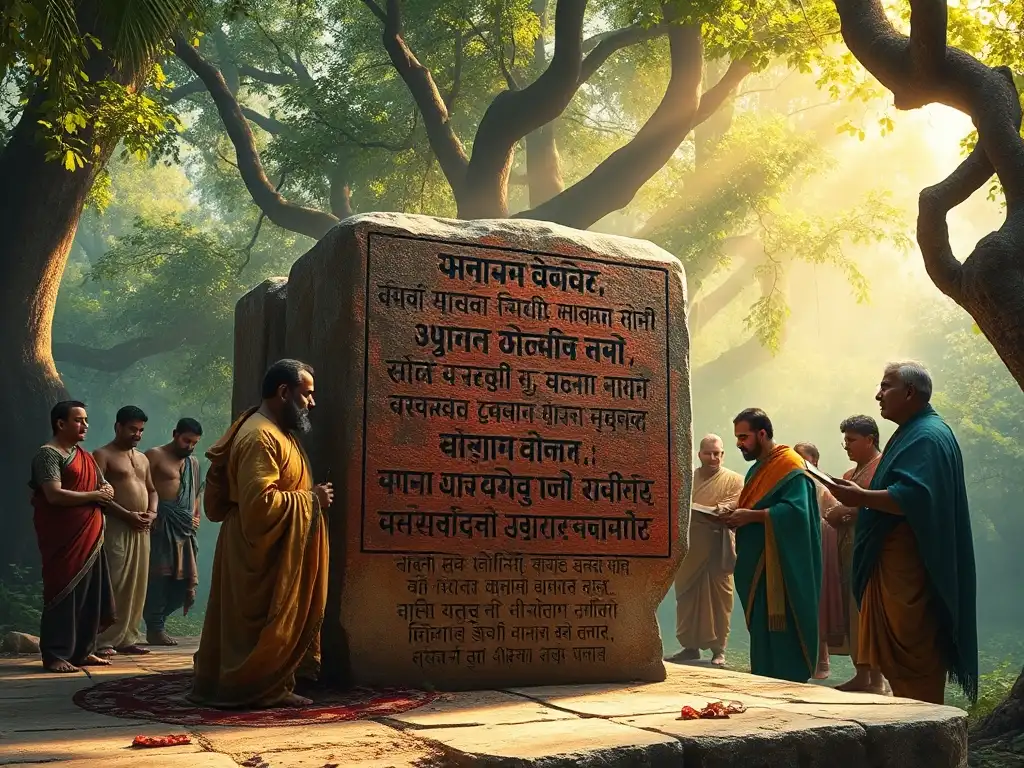
The study of inscriptions in Ancient India reveals a profound narrative about the social hierarchies that shaped its civilizations. These inscriptions functioned not only as historical records but also as tools for understanding the governance, culture, and socio-political dynamics of the time. They serve as a bridge between the past and present, offering insights into the lives of people from different strata of society, their beliefs, and their interactions.
The legacy of these inscriptions is a testament to the complexity of ancient Indian society, highlighting various aspects such as caste systems, economic transactions, and religious affiliations. As scholars continue to decode and analyze these texts, the intricate tapestry of ancient India's social structure becomes increasingly clear, enriching our understanding of human history.
Summary of Insights Gained from Inscriptions
Through meticulous study, inscriptions in Ancient India have provided significant insights into various social hierarchies. For instance, inscriptions often delineate the roles of kings, religious leaders, and commoners, illustrating the power dynamics at play. They reveal a structured society where different classes had specific duties and privileges. Additionally, inscriptions frequently document land grants, trade agreements, and religious donations, enabling historians to trace economic relationships and the influence of religion on social order. The language, style, and material used in these inscriptions also reflect the cultural and artistic expressions of the time, highlighting the regional diversities within ancient Indian civilizations.
The Continuing Relevance of Ancient Inscriptions in Modern Research
Ancient inscriptions remain highly relevant in modern research, serving as primary sources that inform various academic disciplines, including history, archaeology, and anthropology. Scholars utilize these inscriptions to challenge and refine historical narratives, allowing for a more nuanced understanding of ancient Indian societies. The ongoing translation and interpretation of these texts foster interdisciplinary collaborations, bridging gaps between traditional historical methodologies and contemporary analytical frameworks. Furthermore, as modern researchers uncover new inscriptions or reevaluate existing ones, they continuously contribute to the ever-evolving dialogue about ancient Indian civilization and its legacies.
The study of inscriptions and their implications for understanding social hierarchies in ancient India is poised for exciting developments in the coming years. As new discoveries are made and methodologies evolve, the potential for fresh insights into the complexities of ancient societies expands.
Advancements in Epigraphy and Archaeology
Recent advancements in epigraphy and archaeology have significantly enhanced our ability to analyze inscriptions. New excavation techniques, such as ground-penetrating radar and remote sensing, allow researchers to uncover inscriptions that were previously inaccessible. Additionally, the development of improved dating methods helps establish more accurate chronologies for these texts. Scholars are increasingly applying interdisciplinary approaches, combining epigraphic studies with historical linguistics and cultural anthropology, to create a holistic understanding of the societies that produced these inscriptions. Such advancements promise to unveil further layers of social hierarchies and relationships in ancient India.
The Role of Technology in Analyzing Ancient Inscriptions
Technology plays a crucial role in the modern study of ancient inscriptions. Digital imaging techniques, such as 3D scanning and photogrammetry, enable researchers to document and analyze inscriptions in unprecedented detail. These technologies not only aid in preserving fragile artifacts but also facilitate remote analysis, allowing scholars from around the world to collaborate on deciphering ancient texts.
Furthermore, machine learning algorithms are increasingly being utilized to identify patterns and relationships within large datasets of inscriptions, leading to new hypotheses and interpretations. As technology continues to evolve, it will undoubtedly reshape the landscape of epigraphic research, enhancing our understanding of the social hierarchies in ancient Indian civilizations.
References and Further Reading on Inscriptions in Ancient India
The study of inscriptions in ancient India provides invaluable insights into the social hierarchies, cultural practices, and historical narratives of the time. To deepen your understanding of this subject, here are some key texts and resources, as well as notable scholars who have made significant contributions to the field.
Key Texts and Resources for In-depth Study
-
"Inscriptions of Ashoka" by Alexander Cunningham
This foundational text presents the inscriptions attributed to Emperor Ashoka, revealing insights into his reign and social reforms. Cunningham’s work is essential for understanding the role of inscriptions in governance and societal structure.
-
"Ancient Indian Epigraphy" by R. C. Majumdar
This comprehensive book examines various inscriptions from different eras, providing context and analysis to the inscriptions’ content. It serves as a crucial resource for anyone looking to understand the evolution of writing and documentation in ancient India.
-
"The Indian Epigraphical Glossary" by D. C. Sircar
A detailed glossary that aids researchers and scholars in interpreting inscriptions, this text outlines terminology and concepts frequently encountered in ancient texts. It is particularly useful for deciphering meanings and implications of specific phrases and symbols.
-
"The Archaeology of Early Historic South Asia: The Emergence of Cities and States" by Robin Coningham and Ruth Young
This book explores the relationship between urbanization, state formation, and the use of inscriptions in ancient South Asia, offering a broader context for understanding social hierarchies and political structures.
-
Online Databases and Journals
- The Epigraphia Indica, an annual publication that documents significant discoveries and analyses of inscriptions.
- The Digital South Asia Library, which contains digitized versions of important texts and inscriptions, allowing for easier access to primary sources.
Notable Scholars in the Field of Ancient Indian Epigraphy
-
D. C. Sircar
A pioneering figure in Indian epigraphy, Sircar’s contributions have shaped the field significantly. His works, including "Indian Epigraphy," provide foundational knowledge and methodologies for studying inscriptions.
-
R. C. Majumdar
An influential historian, Majumdar's research has focused on the socio-political implications of inscriptions in ancient India. His comprehensive approach has inspired many subsequent scholars to explore the intersection of history and epigraphy.
-
Romila Thapar
Renowned for her work in ancient Indian history, Thapar has also contributed to the study of inscriptions, particularly in analyzing how these texts reflect societal norms and power dynamics in ancient civilizations.
-
M. S. K. Sinha
Sinha's research emphasizes the role of inscriptions in understanding regional variations in ancient Indian society. His studies have highlighted how local inscriptions can offer insights into the day-to-day lives of people from different strata.
-
K. R. Subramanian
A contemporary scholar, Subramanian focuses on the linguistic aspects of ancient inscriptions, providing a critical lens through which to view the evolution of language and communication in Indian history.
By engaging with these resources and scholars, researchers can gain a nuanced understanding of the inscriptions in ancient India and their profound implications for social hierarchies and cultural practices.
Frequently Asked Questions
What are inscriptions in ancient India?
Inscriptions refer to texts carved or engraved on various materials like stone, metal, and pottery, serving as vital historical records that provide insights into ancient Indian civilizations.
Inscriptions often documented the status of rulers, religious figures, and elite classes, showcasing social hierarchies and power dynamics prevalent within ancient Indian society.
What types of materials were commonly used for inscriptions in ancient India?
Ancient Indians primarily used stone, metal, and terracotta for inscriptions, with stone being the most durable and frequently utilized for significant declarations and memorials.
Why are inscriptions important for understanding ancient Indian culture?
Inscriptions are crucial as they offer direct evidence of past cultural practices, languages, and governance, significantly enriching our understanding of ancient Indian society.
Can you name significant inscriptions from ancient India?
Notable inscriptions include the Ashoka edicts, which promote Buddhist philosophy, and the Junagadh rock inscription, which provides insights into the Mauryan and Gupta empires.
Final Reflection: The Enduring Legacy of Inscriptions in Ancient India
Inscriptions in Ancient India serve as a powerful testament to the complexities of social hierarchies and cultural narratives that shaped early civilizations. Today, as we navigate a world increasingly defined by digital communication and social stratification, the insights gleaned from these ancient texts resonate with contemporary issues of identity, power, and societal organization. The stories etched in stone remind us that the struggles and triumphs of our ancestors continue to inform our understanding of community and governance.
The exploration of inscriptions not only reveals the historical context of social hierarchies but also invites us to reflect on our own societal structures. These ancient records illustrate how power dynamics were established and maintained, often reflecting the values and beliefs of the time. As we consider our current social landscape, we can draw parallels to the past, recognizing that the lessons from these inscriptions are not merely relics but living narratives that influence our present. History is not just about the past; it is a guide to the future.
As you contemplate the significance of inscriptions in Ancient India, I encourage you to reflect on your own role within the social hierarchies of today. How can the lessons from these ancient civilizations inspire you to foster inclusivity and equity in your community? Embrace the opportunity to learn from history, allowing it to guide your actions and decisions. By doing so, we can honor the voices of the past while shaping a more just and connected future for all.
Thank you for immersing yourself in the fascinating world of inscriptions and social structures in ancient Indian civilizations. Your exploration of this rich history not only enhances your understanding but also connects you to the narratives of countless individuals who shaped their societies.
Now, take the next step in uncovering the layers of this intricate past:
- Dive deeper into the inscriptions by visiting local museums or libraries to discover authentic artifacts and documents related to ancient India.
- Join a discussion group or forum to share insights and learn from others who are passionate about ancient civilizations.
- Surprise yourself by researching an unexpected aspect of ancient Indian social hierarchies—such as their influence on contemporary Indian society!
What aspect of ancient inscriptions resonates with you the most, and how do you believe it shapes our understanding of social hierarchies today?