
The Legacy of Greek Philosophers in Ancient Indian Thought

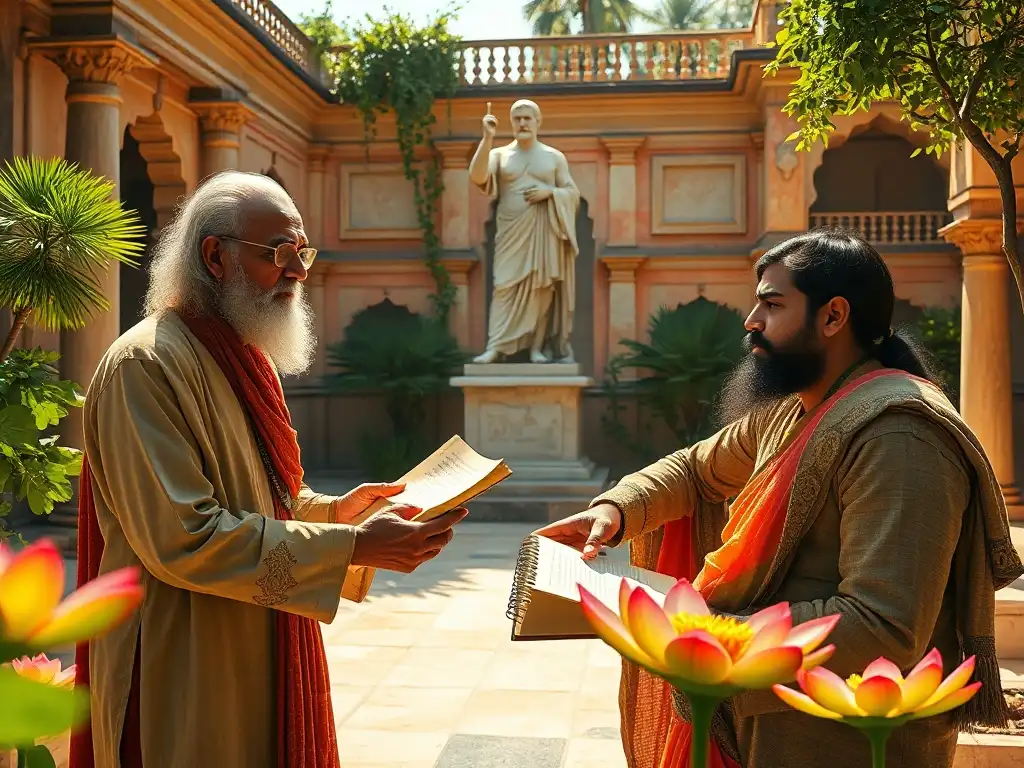
Welcome to Ancient India History, where we embark on a fascinating journey through the rich tapestry of India's past! Here, we dive deep into the cultural exchanges and influences that have shaped the subcontinent, with a special focus on the intriguing legacy of Greek philosophers in ancient Indian thought. How did the profound insights of these thinkers intertwine with Indian philosophy and culture? Join us as we unravel this captivating narrative, revealing the threads of wisdom that connect two great civilizations. Stay curious and delve deeper into the legacies that continue to resonate today!
Introduction to Greek Philosophers Influence on India
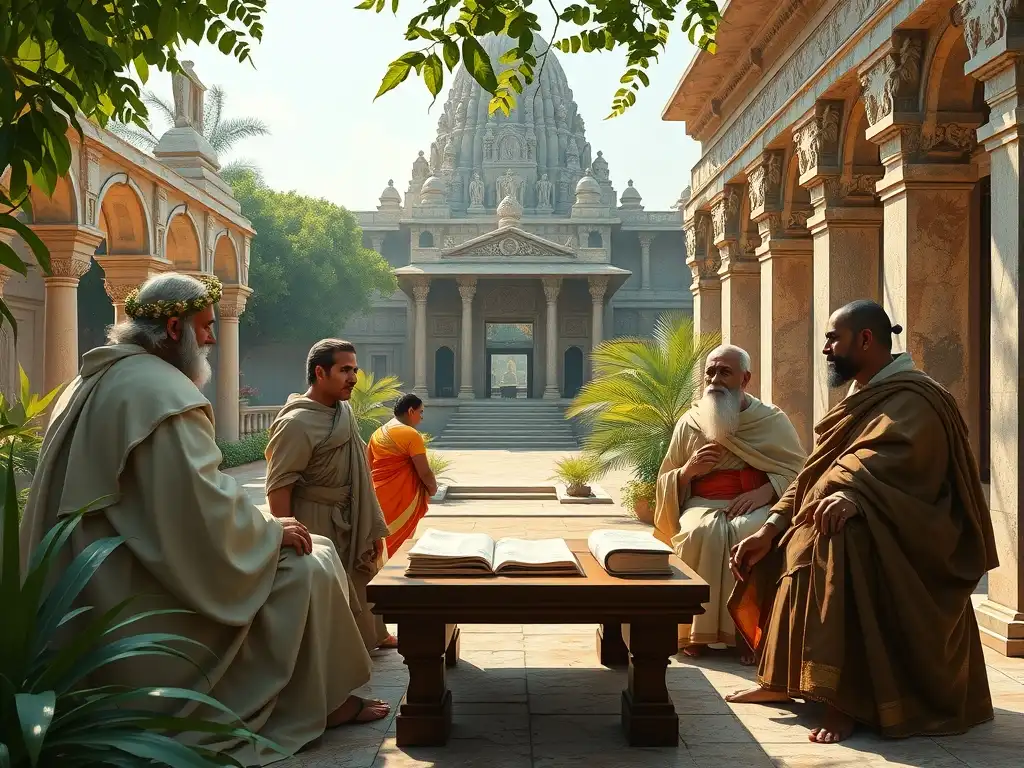
The influence of Greek philosophers on ancient Indian thought represents a fascinating chapter in the historical tapestry of cultural exchanges between civilizations. As ancient India engaged with neighboring cultures, particularly during the era of Alexander the Great and the subsequent Hellenistic period, a rich dialogue emerged that shaped philosophical, scientific, and artistic paradigms in India. This article delves into the profound impact that Greek philosophical traditions had on Indian intellectual discourse, illuminating the ways in which these interactions fostered a dynamic exchange of ideas, ultimately enriching the cultural landscape of ancient India.
Overview of Greek Philosophy
Greek philosophy, originating in the 6th century BCE, is characterized by its emphasis on rational inquiry, ethics, and metaphysics. Thinkers such as Socrates, Plato, and Aristotle laid the groundwork for various branches of knowledge, exploring questions of existence, morality, and the nature of knowledge itself. The core tenets of Greek philosophy not only influenced the Western intellectual tradition but also found their way into the realms of Indian thought, where they were synthesized with indigenous philosophical systems such as Vedanta, Buddhism, and Jainism.
Key elements of Greek philosophy that resonated within Indian thought include:
- Ethics and Morality: The exploration of virtuous living and the pursuit of the good life.
- Metaphysics: Questions about the nature of reality, existence, and the cosmos.
- Logic and Rhetoric: The development of structured argumentation and discourse.
Significance of Cultural Exchanges Between Greece and India
The cultural exchanges between Greece and India were not merely superficial; they involved deep philosophical inquiries and dialogues that transcended geographical boundaries. This exchange was facilitated through trade routes, diplomatic missions, and the conquests of Alexander the Great, leading to the establishment of the Greco-Bactrian Kingdom and later the Indo-Greek Kingdom. These interactions allowed for the cross-pollination of ideas, which had lasting implications for both cultures.
The significance of these exchanges can be summarized as follows:
- Mutual Enrichment: Indian thinkers incorporated Greek ideas into their own philosophical frameworks, leading to new schools of thought.
- Transmission of Knowledge: Greek texts were translated and studied in India, fostering a spirit of inquiry and debate.
- Artistic Synergy: The fusion of Greek and Indian artistic styles can be seen in sculptures, architecture, and literature.
Historical Context of Greek Philosophers in India
Understanding the historical context of Greek philosophers in India requires a closer examination of the timeline and key events that marked their influence. The interactions between these two great civilizations opened avenues for philosophical discourse that would resonate through the ages.
Timeline of Greek Influence on Indian Thought
- 4th Century BCE: Alexander the Great's invasion of India introduces Greek culture to the Indian subcontinent.
- 3rd Century BCE: The establishment of the Indo-Greek Kingdom, where Hellenistic ideas permeate Indian society.
- 1st Century BCE to 1st Century CE: Flourishing of Buddhist thought influenced by Hellenistic philosophy, especially in regions like Gandhara.
Key Events in Cultural Interactions
Several pivotal events highlight the deepening ties between Greek and Indian intellectual traditions:
- The Arrival of Greek Philosophers: Figures such as Megasthenes, the ambassador to the Mauryan court, documented Indian society and philosophy, bridging two worlds.
- The Spread of Buddhism: The interaction of Greek and Indian thought is particularly evident in the spread of Buddhism, which adapted certain Greek philosophical concepts.
- The Silk Road: This ancient trade route facilitated the exchange of not just goods, but also ideas, reinforcing the interconnectedness of these great civilizations.
The legacy of Greek philosophers in ancient Indian thought exemplifies a significant period of cultural exchange that enriched both societies. The dialogues and interactions that emerged during this time laid the foundation for future philosophical developments and continue to resonate within the intellectual traditions of both Greece and India.
Major Greek Philosophers and Their Ideas
The influence of Greek philosophers on ancient Indian thought is profound and multifaceted, having shaped various philosophical traditions in India. Prominent thinkers such as Socrates, Plato, and Aristotle introduced concepts that resonated with Indian philosophical pursuits, particularly in ethics, metaphysics, and epistemology. Their ideas often paralleled those found in Indian philosophies like Buddhism, Jainism, and Vedanta, leading to a rich tapestry of intellectual exchange.
Socrates emphasized the importance of questioning and dialogue, which can be seen in the Indian tradition of dialectical reasoning. Plato’s theory of Forms introduced an idealistic framework that found echoes in the Indian conception of ultimate reality. Aristotle’s empirical approach to knowledge and ethics provided a practical dimension that influenced various Indian schools, including the Nyaya and Vaisheshika systems. These interactions laid the groundwork for a unique synthesis of Greek and Indian philosophical ideas.
Socrates and the Quest for Knowledge
Socrates, one of the foundational figures of Western philosophy, is renowned for his dialectical method, often termed the Socratic method, which involves rigorous questioning to stimulate critical thinking and illuminate ideas. His assertion that "the unexamined life is not worth living" resonates strongly in Indian philosophy, particularly in the teachings of figures like Buddha and Mahavira, who advocated for self-inquiry and introspection.
In the Indian context, Socratic questioning parallels the methods employed in the Upanishads, where dialogue is used to explore deep metaphysical concepts. The emphasis on moral integrity and the pursuit of virtue in Socratic thought also finds a counterpart in the ethical teachings of Indian sages. This alignment suggests a shared understanding of the importance of knowledge and virtue in living a fulfilling life.
Plato's Ideals and Their Reflection in Indian Philosophy
Plato’s philosophy, particularly his theory of Forms, posits that beyond the physical world lies a realm of ideal forms or perfect representations of concepts. This idea has intriguing parallels in Indian thought, especially within the Advaita Vedanta tradition, which speaks of a singular reality (Brahman) behind the myriad forms of existence.
Furthermore, Plato’s notion of the philosopher-king as the ideal ruler mirrors the Indian concept of the enlightened ruler found in texts like the Arthashastra. Both philosophies advocate for wise governance grounded in a deep understanding of truth and justice. The dialogues and writings of Plato may have influenced Indian thinkers, prompting them to explore the relationship between ethics, governance, and the nature of reality.
Aristotle’s Contributions and Their Resonance in Indian Thought
Aristotle’s comprehensive approach to philosophy emphasized empirical observation and categorization, laying the groundwork for the scientific method. His work in ethics, particularly the notion of achieving eudaimonia (flourishing or happiness) through virtuous living, resonates with Indian ethical frameworks, especially in the context of Dharma.
The Indian Nyaya school, known for its logical and epistemological rigor, exhibits similarities with Aristotle’s emphasis on logic and the pursuit of knowledge. Indian scholars often engaged with Aristotelian concepts, adapting them to fit their philosophical narratives, which demonstrates the lasting impact of Aristotle’s thoughts on the intellectual landscape of ancient India.
The Reception of Greek Philosophical Ideas in Ancient India
The reception of Greek philosophical ideas in ancient India was marked by a complex interplay of adaptation and integration. As trade routes opened and cultural exchanges flourished, Indian philosophers encountered Greek thought, leading to significant intellectual developments. This exchange was facilitated by various factors, including the conquests of Alexander the Great, which brought Greek culture into closer contact with Indian traditions.
Adoption of Greek Philosophy in Indian Schools of Thought
As Greek philosophical ideas permeated Indian thought, they were adopted and adapted by various philosophical schools. The interaction between Greek and Indian scholars led to a synthesis of ideas, particularly in the fields of logic, ethics, and metaphysics. For instance, the early Buddhist texts show a remarkable understanding of Greek logical principles, which were integrated into their arguments and teachings.
The influence was not limited to formal philosophical schools; it also permeated popular thought and literature. The dialogues between Indian and Greek thinkers contributed to an enriched philosophical discourse, where ideas were exchanged and reinterpreted, leading to the evolution of distinct philosophical traditions in India.
Influence on Indian Philosophers and Texts
The impact of Greek philosophy on Indian thinkers is evident in the writings of various scholars, such as Nagarjuna and Shankara. These philosophers engaged with concepts introduced by their Greek counterparts, often addressing similar questions regarding existence, morality, and knowledge.
Moreover, texts like the Arthashastra reflect an understanding of Greek ideas regarding governance and ethics, showcasing the blend of practical and theoretical insights drawn from this cross-cultural dialogue. The mutual influence between Greek and Indian philosophies enriched both traditions, fostering a legacy of intellectual curiosity that continues to inspire scholars today.
The legacy of Greek philosophers profoundly influenced ancient Indian thought, fostering a rich dialogue that contributed to the evolution of philosophical inquiry in both cultures. The interactions between these civilizations not only broadened the horizons of intellectual pursuit but also laid the groundwork for future philosophical explorations.
Comparative Analysis: Greek and Indian Philosophical Traditions
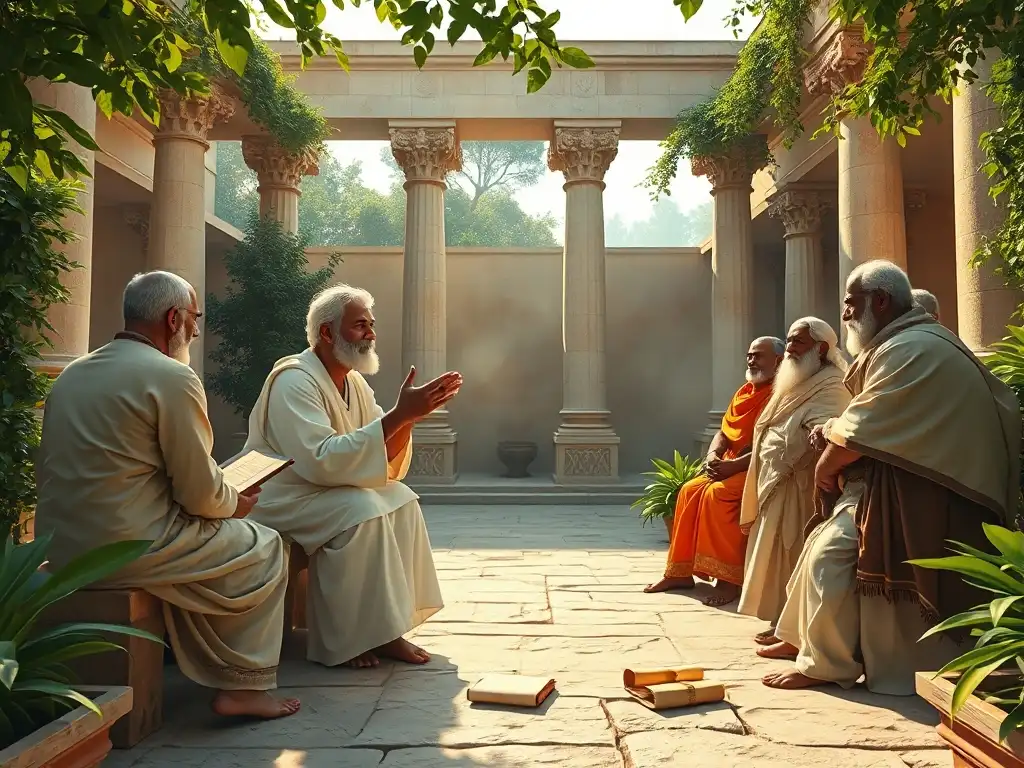
The philosophical traditions of Greece and India, while emerging from distinct cultural contexts, exhibit a fascinating interplay of ideas and concepts that have shaped their respective intellectual landscapes. Both traditions grapple with fundamental questions regarding existence, the nature of reality, ethics, and the pursuit of knowledge, yet they do so through different lenses and methodologies. This comparative analysis highlights the rich dialogues and exchanges that occurred between Greek and Indian philosophers, ultimately contributing to the evolution of thought in both civilizations.
Similarities Between Greek and Indian Philosophical Concepts
One of the most striking similarities between Greek and Indian philosophical traditions is their shared inquiry into the nature of reality. Both traditions explore metaphysical questions, with Greek philosophers like Plato and Aristotle contemplating the essence of existence, while Indian philosophers such as the Upanishadic sages and Buddhists delve into the nature of the self and the universe.
Additionally, ethical considerations are central to both traditions. The Greek concept of virtue, as articulated by philosophers like Socrates and Aristotle, resonates with the Indian emphasis on dharma, or righteous living. Both systems advocate for the pursuit of a moral life, emphasizing the importance of ethical behavior and the cultivation of virtues as pathways to a fulfilled existence.
Furthermore, the emphasis on reason and rational thought is a hallmark of both philosophical traditions. The Greeks fostered a culture of rational inquiry, exemplified by Socratic questioning, while Indian schools of thought, particularly Nyaya, emphasized logical reasoning and debate as essential components of philosophical discourse.
Differences in Methodologies and Approaches
Despite the similarities, significant differences exist between Greek and Indian philosophical methodologies. Greek philosophy often adopts a more systematic and formalized approach, characterized by rigorous analysis and dialectical reasoning. Philosophers like Aristotle developed comprehensive systems that categorized knowledge and explored the natural world through empirical observation and logical deduction.
In contrast, Indian philosophy frequently employs a more introspective and experiential approach. Schools such as Vedanta and Buddhism emphasize meditation and inner contemplation as pathways to understanding reality. This experiential aspect often leads to a focus on personal enlightenment and subjective experience, diverging from the objective analysis typical of Greek thought.
Moreover, the Greeks tended to separate philosophy from religion, viewing it as a distinct discipline, while Indian philosophy is often deeply intertwined with spiritual practices and religious beliefs. The pursuit of knowledge in India frequently includes mystical elements, whereas Greek philosophers generally sought knowledge through rational discourse and empirical evidence.
The Impact of Greek Philosophers on Indian Education and Learning
The influence of Greek philosophers on Indian education and learning is a testament to the cultural exchanges that occurred during antiquity. As trade routes flourished and empires expanded, ideas traveled alongside goods, leading to the introduction of Hellenistic concepts into Indian educational systems.
Introduction of Hellenistic Ideas in Indian Education Systems
The arrival of Hellenistic ideas in India coincided with the conquests of Alexander the Great and subsequent interactions between Greek and Indian scholars. This period marked a significant exchange of knowledge, where Indian scholars were exposed to Greek thought, particularly in areas such as mathematics, astronomy, and logic.
Greek educational methodologies, characterized by their emphasis on debate and critical thinking, began to influence Indian learning practices. Institutions such as taxila and nalanda became centers of learning where ideas from both traditions converged. The incorporation of Greek texts and philosophical ideas into syllabi facilitated a broader educational framework that encouraged intellectual discourse and cross-cultural dialogue.
Influence on the Development of Indian Universities
The establishment and development of ancient Indian universities were significantly shaped by the influx of Greek philosophical thought. These institutions, renowned for their rigorous academic standards, adopted a more structured approach to education that paralleled Greek practices.
For instance, the curriculum at these universities often included subjects such as logic, ethics, and metaphysics, drawing on Greek philosophical influences. The pedagogical methods, which emphasized dialectics and discussion, mirrored those found in Greek schools, fostering an environment of inquiry and exploration.
This synthesis of Greek and Indian educational traditions not only enriched the academic landscape of ancient India but also laid the groundwork for future intellectual endeavors, highlighting the enduring legacy of Greek philosophers on Indian thought and education.
Lasting Legacy of Greek Philosophers in Indian Culture
The influence of Greek philosophers on Indian culture extends far beyond mere intellectual exchanges; it has permeated various aspects of Indian life, including philosophy, art, literature, and ethics. The arrival of Greek thinkers in India, particularly during and after the conquests of Alexander the Great in the 4th century BCE, served as a catalyst for a rich dialogue between Hellenistic and Indian thought. This interaction led to a synthesis of ideas that shaped the intellectual landscape of ancient India.
One of the prominent figures, Megasthenes, who documented his observations of Indian society and culture, provided insights into the governance, social structures, and philosophical inclinations of the time. His accounts not only introduced Greek thought to India but also highlighted the similarities and differences that facilitated a deeper understanding of both cultures. The resulting legacy is a blend of Hellenistic philosophical inquiry and Indian spiritual traditions, fostering a unique intellectual environment that continued to evolve over the centuries.
Greek Influence on Indian Art and Literature
The impact of Greek philosophers is also evident in Indian art and literature, particularly during the Mauryan and post-Mauryan periods. The fusion of Greek and Indian artistic techniques is most notably seen in the Gandhara school of art, which emerged in the northwest region of India. This school is characterized by its blend of Hellenistic and Indian styles, evident in the sculptures of the Buddha and other deities that exhibit Greek artistic principles such as drapery, proportion, and realism.
Moreover, Greek literary forms and themes influenced Indian literature, particularly in the realms of drama and poetry. The introduction of narrative styles and character development by Greek playwrights can be traced in the works of Indian dramatists like Kalidasa and Bhasa. This cross-cultural exchange not only enriched Indian literature but also allowed for the exploration of universal themes such as love, morality, and the human condition, reflecting the philosophical underpinnings laid down by Greek thinkers.
The Role of Greek Thought in Shaping Indian Ethics and Morality
Greek philosophers, particularly Socrates, Plato, and Aristotle, contributed significantly to the discourse on ethics and morality, which resonated with Indian philosophical thought. The emphasis on rational inquiry and ethical living in Greek philosophy found parallels in Indian traditions, particularly in the teachings of the Upanishads and the ethical frameworks of Buddhism and Jainism.
Socratic methods of dialogue and inquiry encouraged a critical examination of moral values, fostering a culture of philosophical debate that became integral to Indian discourse. The acceptance of ethical relativism and the exploration of virtue as a means to attain a good life were concepts that bridged Greek and Indian thought, influencing moral philosophy in India. This interplay facilitated a broader understanding of ethics that transcended regional and cultural boundaries, enriching the moral fabric of Indian society.
Conclusion: The Enduring Influence of Greek Philosophers on Indian Thought
The enduring influence of Greek philosophers on Indian thought is a testament to the rich tapestry of cultural exchanges that have shaped civilizations. The philosophical dialogue initiated by these thinkers laid the groundwork for future generations to explore complex ideas about existence, ethics, and governance, fostering an environment of intellectual curiosity and innovation.
Summary of Greek Philosophers' Contributions to Indian Philosophy
Greek philosophers contributed significantly to Indian philosophy by introducing critical thinking and ethical inquiry. Their ideas on metaphysics, ethics, and political philosophy provided a framework that complemented and enriched existing Indian thought. The synthesis of Greek and Indian philosophies resulted in a more nuanced understanding of various philosophical themes, influencing schools of thought and philosophical practices in India.
Reflections on the Importance of Cultural Exchanges in Shaping Civilizations
Cultural exchanges, such as the interaction between Greek and Indian civilizations, play a crucial role in shaping the development of societies. These exchanges foster mutual understanding and respect, allowing for the sharing of ideas, beliefs, and practices that can lead to innovation and progress. The legacy of Greek philosophers in India exemplifies how cross-cultural interactions can enrich civilizations, paving the way for a more interconnected world. As history shows, these exchanges not only benefit the cultures involved but also contribute to the global tapestry of human thought and creativity.
- Introduction to Greek Philosophers Influence on India
- Historical Context of Greek Philosophers in India
- Major Greek Philosophers and Their Ideas
- The Reception of Greek Philosophical Ideas in Ancient India
- Comparative Analysis: Greek and Indian Philosophical Traditions
- The Impact of Greek Philosophers on Indian Education and Learning
- Lasting Legacy of Greek Philosophers in Indian Culture
- Conclusion: The Enduring Influence of Greek Philosophers on Indian Thought
- What was the role of Greek philosophers in shaping Indian thought?
- How did the interaction between Greek and Indian cultures occur?
- Which Greek philosophers had the most impact on Indian philosophy?
- What were the key contributions of Greek philosophy to Indian thought?
- How does the legacy of Greek philosophers continue to be relevant today?
Frequently Asked Questions
What was the role of Greek philosophers in shaping Indian thought?
Greek philosophers introduced new ideas and concepts that influenced Indian thinkers, blending Western and Eastern philosophies.
How did the interaction between Greek and Indian cultures occur?
The interaction occurred largely through trade and conquests, particularly after Alexander the Great's invasion, which led to the exchange of philosophical ideas.
Which Greek philosophers had the most impact on Indian philosophy?
Philosophers like Plato and Aristotle significantly influenced Indian scholars, particularly in areas such as logic, ethics, and metaphysics.
What were the key contributions of Greek philosophy to Indian thought?
Greek philosophy contributed to the development of rationalism, scientific inquiry, and debate, enriching the intellectual landscape of ancient India.
How does the legacy of Greek philosophers continue to be relevant today?
The legacy persists in modern philosophical discourse, encouraging critical thinking and the synthesis of diverse ideas, which remains vital in contemporary Indian thought.
Final Reflection: The Enduring Influence of Greek Philosophers on Indian Thought
The dialogue between Greek philosophers and ancient Indian thinkers is not merely a historical curiosity; it is a profound testament to the interconnectedness of human thought. Today, as we navigate an increasingly globalized world, the exchange of ideas across cultures remains vital. The philosophical inquiries initiated by figures like Socrates, Plato, and Aristotle resonate deeply within the fabric of Indian philosophy, demonstrating that the quest for knowledge transcends geographical boundaries and time. This legacy continues to inspire contemporary discourse, urging us to explore the rich tapestry of ideas that shape our understanding of existence.
Cross-cultural influences have always played a pivotal role in shaping societies, and the impact of Greek philosophy on Indian thought is a prime example of this dynamic interplay. The synthesis of these two rich traditions has fostered a unique philosophical landscape that encourages critical thinking and spiritual exploration. As we reflect on this legacy, we are reminded of the words of the philosopher Jiddu Krishnamurti: The ability to observe without evaluating is the highest form of intelligence.
This observation underscores the importance of embracing diverse perspectives, a lesson that remains crucial in our increasingly polarized world.
As we conclude our exploration of the Greek philosophers' influence on India, I invite you to reflect on the power of ideas and the importance of open-mindedness in your own life. Consider how the philosophical traditions that have shaped your worldview can be enriched by the insights of others.
Engage with different perspectives, challenge your assumptions, and allow the wisdom of the past to guide you toward a more profound understanding of the present. In doing so, you not only honor the legacy of these great thinkers but also contribute to the ongoing dialogue that defines our shared human experience.
Ignite Your Curiosity: Dive Deeper into Ancient Thought!
Thank you for taking the time to explore the fascinating intersection of Greek philosophers and ancient Indian thought. We hope you discovered insights that inspire you to contemplate the rich tapestry of philosophies that have shaped our world. Now, let's keep the momentum going with some engaging steps you can take!
- Explore the writings of influential Greek philosophers and their potential impact on Indian philosophy by visiting your local library or utilizing online resources.
- Join online forums or communities dedicated to philosophical discussions to share your insights and learn from others.
- Create a personal journal or blog where you can connect your reflections on ancient philosophies with contemporary challenges and ideas.
What connections have you noticed between ancient Greek and Indian philosophies that resonate with you today? We invite you to share your thoughts below!