
The Evolution of Buddhist Leadership: From the Buddha to the Modern Era


Welcome to Ancient India History, where we embark on a captivating journey through the vibrant tapestry of ancient Indian civilizations. In this exploration, we delve into the evolution of Buddhist leadership throughout history, tracing its profound impact from the time of the Buddha to the modern era. What shaped the philosophies and practices of leadership in Buddhism, and how did they influence society? Prepare to uncover the intricate connections between spirituality and governance, and discover how these ancient teachings continue to resonate today. Read on to enrich your understanding of this remarkable legacy!
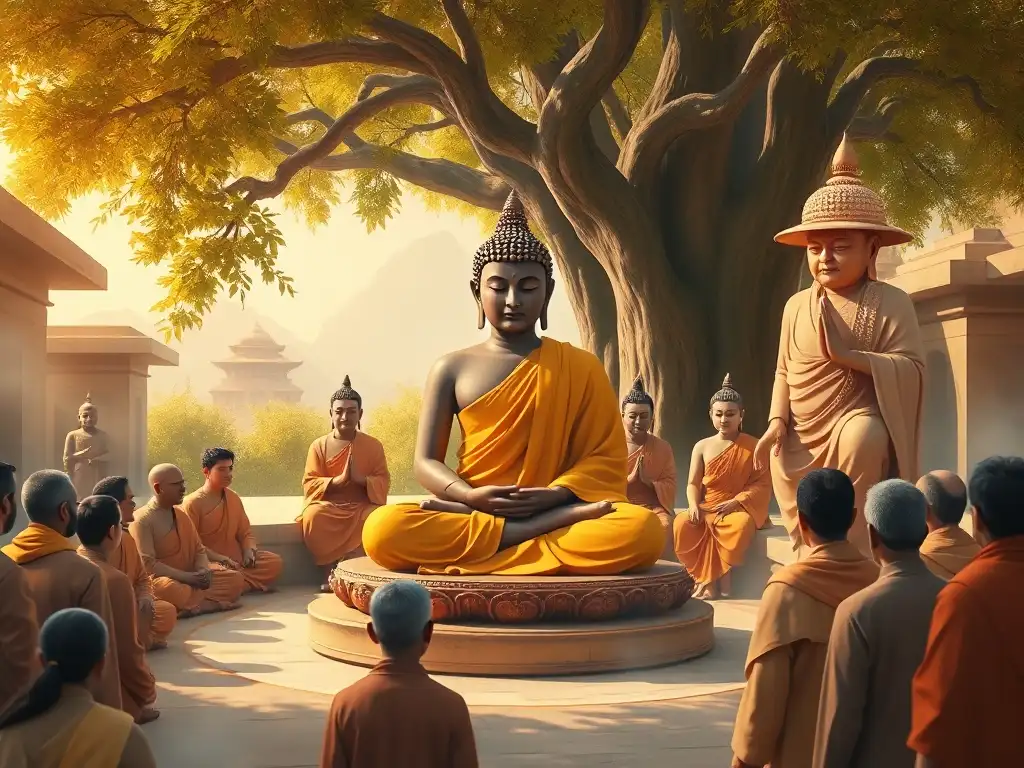
Introduction to Buddhist Leadership Throughout History
Buddhist leadership throughout history has played a crucial role in shaping not only the spiritual landscape of ancient India but also the broader cultural and philosophical discourse that influenced subsequent civilizations. This article seeks to explore the evolution of Buddhist leadership, tracing its roots from the historical figure of Siddhartha Gautama, known as the Buddha, to contemporary interpretations and practices. Understanding this evolution provides insight into how Buddhist leadership has adapted to various social, political, and cultural contexts over centuries, reflecting the diverse expressions of Buddhism across different regions.
Overview of Buddhist Leadership
Buddhist leadership is characterized by its emphasis on ethical conduct, wisdom, and compassion, forming the backbone of the monastic community as well as lay practices. The leaders within this tradition, ranging from the Buddha himself to modern-day teachers, have not only served as spiritual guides but also as custodians of the teachings and practices of Buddhism. Their roles have evolved over time, influenced by historical circumstances, cultural interactions, and internal developments within the tradition.
- Types of Leadership:
- Monastic Leaders: Those who embody the ascetic ideals of Buddhism, often leading through example.
- Lay Leaders: Individuals who engage with the community, promoting Buddhist values in everyday life.
- Scholarly Figures: Teachers and scholars who interpret and disseminate Buddhist texts and philosophy.
Importance of Buddhist Leadership in Ancient Indian Religions
The significance of Buddhist leadership within the context of ancient Indian religions cannot be overstated. Buddhist leaders have been instrumental in promoting social justice, ethical living, and the pursuit of enlightenment. Their influence extended beyond religious boundaries, impacting social norms, governance, and intercultural exchanges.
- Key Contributions:
- Social Reform: Many Buddhist leaders advocated for the rights of marginalized communities, challenging the rigid caste system.
- Cultural Exchange: Buddhist missionaries and leaders facilitated the spread of ideas and practices across Asia, creating a rich tapestry of cultural interaction.
- Philosophical Developments: The leadership within Buddhism has contributed to significant philosophical debates, shaping the intellectual history of ancient India.
The Buddha: The Foundation of Buddhist Leadership
Siddhartha Gautama: Life and Teachings
Siddhartha Gautama, who would become known as the Buddha, was born into a royal family in what is now Nepal around the 6th century BCE. His quest for understanding the nature of suffering led him to renounce his privileged life and embark on a journey of asceticism. After years of rigorous practice, he attained enlightenment under the Bodhi tree, where he discovered the Four Noble Truths and the Eightfold Path, foundational teachings that continue to guide followers.
- Key Events in His Life:
- Birth and Prophecy
- The Four Sights: Encountering suffering, old age, sickness, and death
- Enlightenment and the First Sermon
The Role of the Buddha as a Leader
As the founder of Buddhism, the Buddha's approach to leadership was innovative for its time. He eschewed traditional hierarchical structures and instead emphasized a community-oriented approach. His teachings encouraged followers to seek their own understanding and experience of truth rather than relying solely on authority.
- Leadership Qualities:
- Compassion: The Buddha's compassion for all beings was a cornerstone of his leadership.
- Wisdom: His profound insights into human nature and suffering guided his followers.
- Inclusiveness: The Buddha welcomed people from all walks of life into his community.
Early Buddhist Community and Leadership Structure
Following the Buddha's enlightenment, he established a monastic community known as the Sangha, which became the backbone of Buddhist leadership. The Sangha was characterized by its democratic principles, with decisions often made collectively rather than imposed by a singular authority.
- Leadership Structure:
- Elders and Monks: Senior members of the Sangha provided guidance and teachings.
- Lay Followers: Engaged in supporting the monastic community while practicing the Dharma in their daily lives.
The evolution of Buddhist leadership from the time of the Buddha to the modern era showcases a remarkable journey of adaptation, resilience, and influence that has left an indelible mark on the spiritual and cultural heritage of ancient India and beyond.
The Spread of Buddhism: Leadership in the Early Sangha

The early Sangha, or community of monks, played a crucial role in the spread of Buddhism across ancient India and beyond. After Siddhartha Gautama attained enlightenment and became the Buddha, he established a monastic order that was pivotal in disseminating his teachings. The Sangha was not just a religious community; it was a movement that embraced various social strata, allowing individuals from diverse backgrounds to participate in the spiritual journey.
The leadership within the Sangha was characterized by a decentralized model, where experienced monks held authority based on wisdom and virtue rather than formal titles. This structure fostered a sense of collective leadership that emphasized communal decision-making and mutual support. The early Sangha's ability to maintain cohesion and adapt to local cultures facilitated Buddhism's rapid expansion, leading to the establishment of monasteries and lay communities across ancient India.
The Formation of the Sangha: Leadership Dynamics
The formation of the Sangha marked a significant development in Buddhist leadership. Initially composed of the Buddha's followers, the Sangha gradually evolved into a structured community with rules and guidelines codified in the Vinaya Pitaka, one of the three baskets of Buddhist scriptures. This set of rules not only governed monastic conduct but also delineated the responsibilities of leaders within the Sangha.
Leadership dynamics were influenced by the principles of dharma (moral law) and sangha (community), which emphasized collective well-being over individual authority. Senior monks, or bhikkhus, often took on leadership roles, guiding younger monks in their practice and ensuring adherence to the monastic code. This mentorship was vital for the sustainability of the community and the continuity of Buddhist teachings.
Key Figures in Early Buddhist Leadership
Several key figures emerged as prominent leaders in the early Sangha, influencing its direction and expansion. Notable among them was Sariputta, known for his wisdom and deep understanding of the Buddha's teachings. He played a significant role in articulating and disseminating the core tenets of Buddhism, helping to clarify complex philosophical concepts for followers.
Another important figure was Maha Moggallana, renowned for his psychic abilities and strong leadership skills. Together with Sariputta, these two monks were among the Buddha's closest disciples and were instrumental in attracting new followers to the Sangha. Their leadership not only strengthened the community but also established a legacy of mentorship that would shape Buddhist leadership in subsequent generations.
The Role of Monastic Leaders and Their Influence
Monastic leaders in the early Sangha served as vital links between the Buddha's teachings and the lay community. These leaders were responsible for educating new monks, conducting rituals, and guiding lay followers in ethical conduct and meditation practices. Their influence extended beyond the confines of the monastery as they engaged with local populations, often becoming respected figures in their communities.
The monastic leaders also acted as mediators between Buddhist doctrine and the diverse cultural landscapes of ancient India. By adapting teachings to resonate with local customs, they facilitated the integration of Buddhism into various societal contexts. This adaptability was essential for the growth of Buddhism as it spread throughout different regions, including Sri Lanka and Southeast Asia.
Buddhist Leadership During the Mauryan Empire
The Mauryan Empire, particularly during the reign of Ashoka the Great, witnessed a significant evolution in Buddhist leadership. Ashoka's conversion to Buddhism after the Kalinga War marked a turning point in the religion's history, as he became a patron of Buddhism and its teachings. His leadership style exemplified a fusion of political power and spiritual authority, promoting Buddhist values across his vast empire.
Under Ashoka's reign, the Sangha received state support, leading to the establishment of monasteries and educational institutions. This relationship between the state and the Sangha transformed the nature of Buddhist leadership, as monastic leaders gained greater influence in societal affairs and governance.
Ashoka the Great: A Model of Buddhist Leadership
Ashoka the Great is often regarded as a paradigmatic figure in Buddhist leadership due to his commitment to the principles of ahimsa (non-violence) and dharma. His edicts, inscribed on pillars throughout the empire, articulated his vision of governance rooted in compassion and ethical conduct, reflecting core Buddhist values.
Ashoka's leadership was characterized by outreach and dialogue, as he actively engaged with various religious communities and encouraged coexistence. His dedication to spreading the Buddha's teachings extended beyond India, as he sent missionaries to regions such as Sri Lanka and Central Asia, further establishing Buddhism as a prominent religion in the ancient world.
The Edicts of Ashoka and Their Impact on Leadership
The Edicts of Ashoka represent a landmark in the history of Buddhist leadership. These inscriptions served as both a moral guide and a political manifesto, emphasizing the importance of ethical governance and social responsibility. Ashoka's edicts called for compassion, respect for all living beings, and the promotion of justice, principles that resonated deeply with Buddhist teachings.
The impact of these edicts on leadership was profound. They established a model of governance that integrated Buddhist values into statecraft, influencing future rulers and leaders in their approach to power. By prioritizing the welfare of his subjects and advocating for peaceful coexistence, Ashoka set a precedent for leaders who sought to align their authority with ethical principles.
The Integration of Buddhist Leadership in Governance
The integration of Buddhist leadership into governance during the Mauryan Empire marked a significant shift in how religion and politics intersected. Ashoka's reign exemplified this integration, as he actively promoted Buddhist teachings and supported the Sangha through royal patronage. This relationship strengthened the influence of monastic leaders, who became advisors and moral compasses for rulers.
As Buddhism spread, the model established by Ashoka inspired subsequent leaders to adopt similar approaches, blending spiritual guidance with political authority. This synergy ensured that Buddhist leadership remained relevant in societal governance, facilitating the religion's continued growth and adaptation in various cultural contexts. The legacy of this integration can be seen in the subsequent historical development of Buddhist leadership throughout Asia.
The Development of Schools of Buddhism and Leadership Variations
The evolution of Buddhist leadership is closely tied to the development of various schools of thought within Buddhism. From its inception, Buddhism has branched into several distinct traditions, each with its unique interpretations of the Buddha's teachings, practices, and leadership structures. This diversification emerged primarily in response to cultural, geographical, and historical contexts that shaped the Buddhist experience across different regions.
As Buddhism spread from India to other parts of Asia, such as China, Japan, and Tibet, it adapted to local customs and beliefs. This led to the formation of major schools like Theravada, Mahayana, and Vajrayana, each embodying different leadership philosophies and community structures.
For instance, Theravada Buddhism, prevalent in countries like Sri Lanka and Thailand, emphasizes a monastic leadership model centered around the sangha (community of monks) and the adherence to the Pali Canon. In contrast, Mahayana Buddhism, found in East Asia, promotes a more diverse array of leaders, including bodhisattvas—individuals committed to attaining enlightenment for the sake of all beings.
These variations in leadership reflect not only theological differences but also the socio-political landscapes of the regions where these schools flourished. As a result, the leadership models within these schools have evolved over centuries, shaping the practices and governance of Buddhist communities.
Theravada vs. Mahayana: Leadership Styles and Philosophies
Theravada and Mahayana Buddhism present contrasting approaches to leadership, influenced by their foundational philosophies and historical contexts.
In Theravada Buddhism, leadership is predominantly monastic. The role of the bhikkhu (monk) is central, with the sangha holding authority over spiritual matters. The emphasis is on individual enlightenment and strict adherence to the original teachings of the Buddha. Leadership is characterized by a hierarchical structure, where senior monks guide and mentor junior members, reflecting a commitment to preserving the purity of the Buddha's teachings.
Conversely, Mahayana Buddhism advocates for a more inclusive leadership style. This tradition introduces the concept of the bodhisattva—an enlightened being who postpones their own nirvana to help others achieve enlightenment. As a result, Mahayana leadership is often more community-oriented and compassionate, encouraging lay participation alongside monastic efforts. Leaders in this tradition, such as teachers and spiritual guides, often adopt a more approachable demeanor, emphasizing wisdom and compassion over strict adherence to rules.
Both styles of leadership reflect the underlying philosophies of their respective traditions, shaping how Buddhist communities operate and engage with the world.
Key Leaders in Different Buddhist Traditions
Throughout history, numerous leaders have emerged in various Buddhist traditions, each playing a pivotal role in shaping the practice and dissemination of Buddhism.
In Theravada Buddhism, figures such as Buddhaghosa, a 5th-century scholar, significantly influenced the interpretation of the Pali Canon through his commentaries. His works, like the Visuddhimagga (Path of Purification), continue to be essential texts for Theravada practitioners.
In Mahayana Buddhism, leaders like Nagarjuna, a philosopher from the 2nd century CE, were instrumental in developing the concept of "emptiness" (śūnyatā), fundamentally altering the trajectory of Mahayana thought. His writings laid the foundation for later schools, such as Zen and Pure Land, which have produced their own key figures, including Huineng, the sixth patriarch of Zen.
In Tibetan Buddhism, the leadership lineage is often traced through figures like Padmasambhava (Guru Rinpoche), who is credited with establishing Buddhism in Tibet during the 8th century. His teachings and the subsequent lineage of the Dalai Lamas have profoundly impacted Tibetan society, intertwining spiritual leadership with political authority.
These leaders have not only contributed to their respective traditions but have also facilitated the spread and evolution of Buddhism across cultures and epochs.
The Role of Lay Leaders in Buddhist Communities
Lay leaders play a vital role in the functioning and sustainability of Buddhist communities. Unlike monastic leaders, who are primarily focused on spiritual practice and teaching, lay leaders often bridge the gap between the monastic community and the wider society.
In many Buddhist traditions, lay leaders are responsible for organizing community events, fundraising, and ensuring the ongoing support of monastic institutions. They often take on roles such as temple presidents or community organizers, facilitating communication and collaboration among lay practitioners and monks. In Theravada communities, for example, laypeople actively participate in the support of the sangha through almsgiving and attending teachings.
In Mahayana Buddhism, lay practitioners often assume leadership roles that promote the bodhisattva ideal, engaging in social welfare and community service initiatives. This involvement not only supports the spiritual mission of the community but also demonstrates the interconnectedness of lay and monastic life.
The contributions of lay leaders are essential for the vibrancy and growth of Buddhist communities, as they embody the principles of Buddhism in everyday life and foster a culture of mutual support and respect.
Buddhist Leadership in the Medieval Era

The medieval era marked a significant period of development for Buddhist leadership, characterized by the establishment of monasteries, the rise of influential leaders, and the integration of Buddhism into the political sphere. This period saw Buddhism flourishing in various regions, including India, Tibet, and East Asia, leading to unique leadership structures and practices.
The Influence of Tibetan Buddhism on Leadership
Tibetan Buddhism emerged as a distinctive form of Buddhism during the medieval era, with its own unique leadership paradigms. The introduction of the lama system established a new model of spiritual authority, where lamas, or teachers, were revered for their spiritual insight and lineage. The most prominent figure within this system is the Dalai Lama, who serves not only as a spiritual leader but also as a political figure.
The Tibetan model emphasizes the teacher-student relationship, where a lama's guidance is essential for the spiritual development of their disciples. This system has resulted in a rich tradition of scholarship and meditation, fostering a unique blend of spiritual and temporal leadership that has significantly shaped Tibetan culture and society.
Prominent Leaders and Their Contributions to Buddhism
The medieval era witnessed the rise of several prominent leaders who played crucial roles in the advancement of Buddhism.
- Atisha (982-1054 CE): A Bengali scholar and monk, Atisha traveled to Tibet and is credited with revitalizing Buddhism there. His teachings laid the groundwork for the Kadampa school, emphasizing the importance of compassion and ethical conduct.
- Tsongkhapa (1357-1419 CE): The founder of the Gelug school, Tsongkhapa is known for his emphasis on monastic discipline, scholarship, and the integration of philosophy and practice. His teachings have profoundly influenced Tibetan Buddhism and continue to shape its practices.
- Nichiren (1222-1282 CE): A Japanese monk, Nichiren founded the Nichiren school of Buddhism. He emphasized the chanting of the Lotus Sutra as a means to attain enlightenment and played a significant role in establishing a distinct Japanese Buddhist identity.
These leaders not only contributed to the spiritual landscape of their respective traditions but also engaged with social, political, and cultural issues, ensuring the relevance of Buddhism in their societies.
The Role of Kings and Rulers in Promoting Buddhism
Throughout history, kings and rulers have played a pivotal role in the promotion and establishment of Buddhism. Their patronage was crucial for the construction of monasteries, the dissemination of teachings, and the protection of Buddhist practices.
In ancient India, Emperor Ashoka (304-232 BCE) is perhaps the most notable figure in this regard. Following his conversion to Buddhism, he actively promoted the religion throughout his empire, building stupas and edicts that encouraged ethical conduct and non-violence. His reign marked a significant turning point in the history of Buddhism, leading to its spread across Asia.
Similarly, in Tibet, the Tibetan kings such as Songtsen Gampo (605-650 CE) were instrumental in establishing Buddhism as the state religion. They facilitated the translation of Buddhist texts and the construction of temples, which laid the foundation for the flourishing of Tibetan Buddhism.
In Southeast Asia, rulers like those of the Angkor Empire embraced Buddhism, integrating it into their governance and culture. The promotion of Buddhist art, architecture, and scholarship during their reigns left a lasting legacy that continues to influence the region today.
The involvement of kings and rulers in the promotion of Buddhism illustrates the interplay between spirituality and governance, highlighting how leadership can shape the trajectory of religious traditions.
Modern Era: Transformations in Buddhist Leadership
The modern era has witnessed profound transformations in Buddhist leadership, significantly influenced by global dynamics, cultural exchanges, and technological advancements. One of the most significant shifts has been the movement of Buddhism beyond its traditional strongholds in Asia. As the religion spreads across the globe, Buddhist leadership has adapted to various cultural contexts, leading to new interpretations and practices.
In this transformative period, the role of lay practitioners has grown alongside that of monastic leaders, emphasizing inclusivity within communities. This shift reflects a broader understanding of leadership in Buddhism, where authority is not solely derived from monastic status but also from personal practice, wisdom, and the ability to engage with contemporary societal issues.
Moreover, the rise of social engagement and activism among Buddhist leaders has redefined their roles, moving beyond spiritual guidance to encompass social justice and environmental concerns. This evolution illustrates how Buddhist leadership continues to adapt and respond to the needs of society in the modern world.
Contemporary Leaders in Buddhism
Contemporary Buddhist leaders exemplify the diverse manifestations of leadership in today’s context. Figures such as the Dalai Lama, Thich Nhat Hanh, and Pema Chödrön have garnered international recognition and serve as beacons of compassion and mindfulness. Each of these leaders has approached Buddhist teachings with a unique voice, addressing modern challenges through the lens of ancient wisdom.
- The Dalai Lama: A global icon for peace, the Dalai Lama promotes a message of compassion and interfaith dialogue. His efforts to raise awareness about the plight of Tibetans and his teachings on secular ethics have expanded the relevance of Buddhism in the global arena.
- Thich Nhat Hanh: Known for his teachings on mindfulness and engaged Buddhism, Thich Nhat Hanh emphasized the importance of living in the present moment as a path to peace. His mindfulness practices have influenced countless individuals, transcending cultural boundaries.
- Pema Chödrön: As a prominent female teacher in the Tibetan Buddhist tradition, Pema Chödrön focuses on the application of Buddhist principles in everyday life, particularly in dealing with personal suffering and societal hardships. Her accessible teachings resonate with a wide audience and highlight the role of women in Buddhist leadership.
This diverse array of contemporary leaders demonstrates the rich tapestry of Buddhist leadership today, showcasing varying approaches to spiritual guidance and social engagement.
The Impact of Globalization on Buddhist Leadership
Globalization has had a significant impact on Buddhist leadership, facilitating the spread of Buddhist teachings and practices worldwide. This phenomenon has led to increased intercultural dialogue and the fusion of traditional teachings with contemporary issues.
As Buddhism reaches Western audiences, it encounters various philosophical frameworks, which can lead to innovative interpretations of ancient teachings. For instance, mindfulness practices have been widely adopted in psychology and wellness industries, often stripped of their religious context. This adaptation reflects how Buddhist leaders must navigate the complexities of cultural appropriation and the commercialization of their traditions.
Furthermore, globalization has enabled new forms of communication, allowing leaders to reach broader audiences through digital platforms. Social media and online teachings have democratized access to Buddhist wisdom, enabling a more participatory form of leadership. However, this also challenges traditional hierarchies and requires leaders to engage with followers in new and dynamic ways.
Challenges Faced by Modern Buddhist Leaders
Modern Buddhist leaders encounter various challenges as they navigate contemporary society. One significant issue is the increasing secularization of societies, which often leads to a decline in traditional religious authority. Leaders must find ways to remain relevant and connect with individuals who may not identify with organized religion.
Additionally, the rapid pace of change brought about by globalization poses challenges in maintaining the integrity of Buddhist teachings while adapting to new contexts. Leaders often grapple with the balance between preserving tradition and embracing innovation, which can create tension within communities.
Moreover, issues such as environmental degradation, social inequality, and political unrest present ethical dilemmas for Buddhist leaders. They are called to respond to these pressing challenges while remaining true to the core values of Buddhism, such as compassion and non-violence.
Conclusion: The Legacy of Buddhist Leadership Throughout History
The evolution of Buddhist leadership throughout history highlights a rich legacy that has continually adapted to meet the needs of society. From the time of the Buddha to the present, leaders have played pivotal roles in shaping the discourse and practice of Buddhism. Their teachings and actions have left indelible marks on both followers and the wider world.
The Continuing Influence of Historical Leaders on Buddhism Today
The influence of historical leaders in Buddhism is evident in contemporary practices and teachings. Figures such as the Buddha, Ashoka, and Nagarjuna have laid foundational principles that continue to guide modern leaders. Their legacy informs current discussions on ethics, compassion, and the role of Buddhism in addressing societal issues.
Furthermore, the emphasis on community and collective practice, established by early leaders, remains crucial in fostering a sense of belonging and shared purpose among practitioners today. The teachings of historical figures inspire contemporary leaders to engage actively with their communities, promoting a holistic understanding of Buddhist practice that encompasses both spiritual and social dimensions.
Future Directions for Buddhist Leadership in a Changing World
Looking ahead, the future of Buddhist leadership will likely be shaped by ongoing global challenges, including climate change, social injustice, and technological advancements. Leaders will need to embrace new paradigms of leadership that prioritize collaboration, inclusivity, and adaptability.
As Buddhism continues to evolve, there may be a greater emphasis on grassroots movements and lay leadership, reflecting the diverse voices within the tradition. The integration of modern technology into Buddhist practices, such as virtual teachings and online communities, will also redefine how leadership is understood and executed.
Ultimately, the future of Buddhist leadership lies in its ability to remain grounded in ancient wisdom while effectively addressing the complexities of a rapidly changing world. By fostering a spirit of compassion and engagement, modern leaders can continue to uphold and expand the rich legacy of Buddhist leadership throughout history.
- Introduction to Buddhist Leadership Throughout History
- Overview of Buddhist Leadership
- Importance of Buddhist Leadership in Ancient Indian Religions
- The Buddha: The Foundation of Buddhist Leadership
- The Spread of Buddhism: Leadership in the Early Sangha
- Buddhist Leadership During the Mauryan Empire
- The Development of Schools of Buddhism and Leadership Variations
- Buddhist Leadership in the Medieval Era
- Modern Era: Transformations in Buddhist Leadership
- Conclusion: The Legacy of Buddhist Leadership Throughout History
- What are the key characteristics of Buddhist leadership in ancient India?
- How did the Buddha influence leadership styles in ancient India?
- What role did monastic communities play in Buddhist leadership?
- How did Buddhist leadership evolve during the Gupta Empire?
- What are some modern implications of ancient Buddhist leadership principles?
Frequently Asked Questions
What are the key characteristics of Buddhist leadership in ancient India?
Buddhist leadership was characterized by compassion, wisdom, and service to the community. Leaders like the Buddha emphasized ethical conduct and the importance of mindfulness in guiding followers.
How did the Buddha influence leadership styles in ancient India?
The Buddha's teachings promoted a model of leadership based on non-attachment, understanding, and equanimity. His approach encouraged leaders to act with integrity and to prioritize the well-being of their followers.
What role did monastic communities play in Buddhist leadership?
Monastic communities were central to Buddhist leadership, serving as centers of learning, spiritual guidance, and community support. They helped preserve teachings and provided a structured environment for leadership development.
How did Buddhist leadership evolve during the Gupta Empire?
During the Gupta Empire, Buddhist leadership expanded with the support of royalty and patrons, leading to the establishment of monasteries and an increase in Buddhist art and philosophy. This period marked a significant integration of Buddhism into Indian culture.
What are some modern implications of ancient Buddhist leadership principles?
Modern interpretations of Buddhist leadership emphasize mindfulness, ethical decision-making, and community engagement. These principles are increasingly relevant in contemporary discussions about leadership in various fields, including business and social justice.
Final Reflection: The Enduring Legacy of Buddhist Leadership
The evolution of Buddhist leadership throughout history is not merely a chronicle of figures and events; it is a profound narrative that resonates deeply with our contemporary world. As we navigate the complexities of modern life, the teachings and practices of Buddhist leaders remind us of the importance of compassion, mindfulness, and ethical guidance. The relevance of these principles in today’s society is undeniable, as we seek to foster harmony and understanding in an increasingly fragmented world.
Cultural and social landscapes continue to be shaped by the teachings of Buddhist leaders, whose influence transcends time and geography. The principles of Buddhist leadership inspire individuals and communities to cultivate inner peace and collective well-being. As we witness the rise of mindfulness practices in various sectors, it becomes clear that the essence of Buddhist leadership is woven into the fabric of modern life. The mind is everything. What you think, you become.
This quote encapsulates the transformative power of thought and intention that has been central to Buddhist teachings throughout history.
As you reflect on the lessons of Buddhist leadership, consider how you can embody these principles in your own life. Whether through acts of kindness, practicing mindfulness, or fostering a sense of community, each of us has the potential to contribute to a more compassionate world. Embrace the teachings of the past as a guiding light for the future, and let the legacy of Buddhist leadership inspire you to lead with wisdom and compassion in your daily interactions.
Embrace the Journey of Buddhist Leadership Today!
Thank you for taking the time to explore the rich journey of Buddhist leadership with us! You've uncovered the profound evolution of guidance that has shaped countless lives and communities over the centuries. Now, it’s time to take the next step and deepen your connection to this inspiring tradition.
Here are some actionable suggestions you can take right now:
- Engage with local Buddhist communities: Seek out meditation centers or mindfulness groups in your area. Joining a session will allow you to experience the teachings firsthand.
- Dive deeper into Buddhist texts: Consider reading influential books or exploring reputable online resources that focus on the leadership principles of Buddhism. You might uncover insights that could transform your perspective.
- Share your thoughts with friends and family: Initiate a discussion about what you've learned! Sharing knowledge can enhance your understanding and invite new ideas.
What aspect of Buddhist leadership resonates most with you, and how do you envision it impacting your own life?