
The Language of Trade: How Ancient Scripts Facilitated Commerce in India

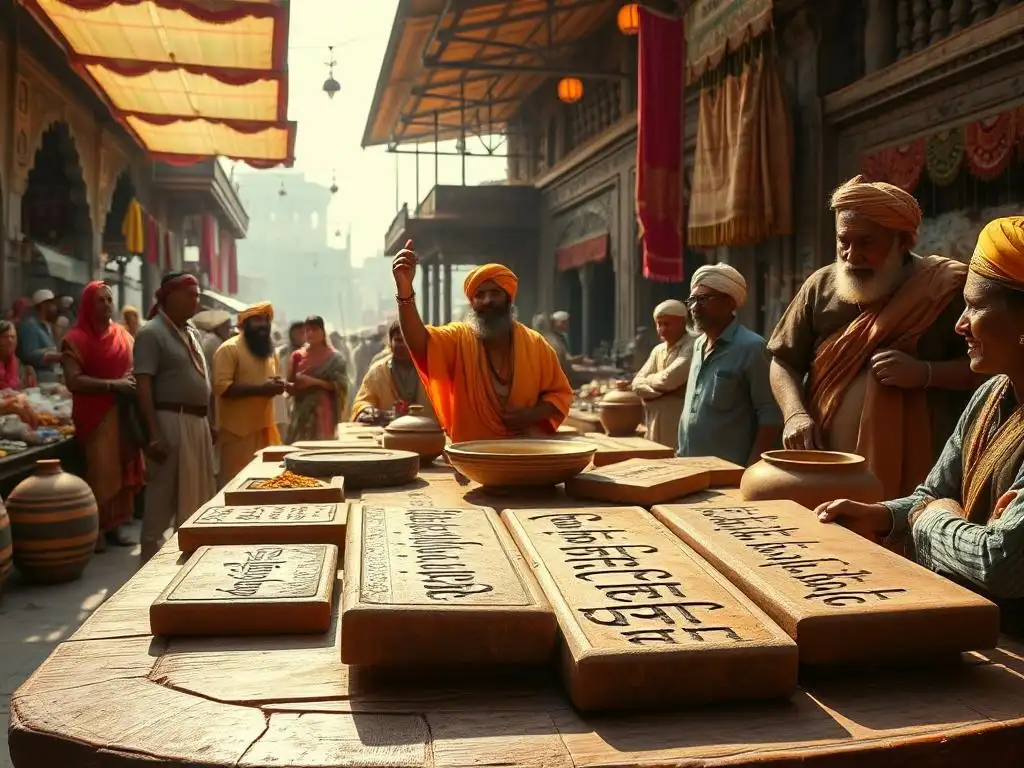
Welcome to Ancient India History, where we invite you to embark on a fascinating journey through the rich tapestry of ancient Indian civilizations. In this exploration, we delve into the ancient Indian trade scripts that not only shaped commerce but also reflected the intricate web of cultural exchanges that defined an era. Discover how these scripts served as the backbone of trade, facilitating connections between diverse communities and laying the groundwork for India's economic prowess.
As you navigate through our content, prepare to unlock the secrets of a language that thrived in the bustling markets of yesteryears. Your adventure into the past begins now!

Introduction to Ancient Indian Trade Scripts
The history of ancient Indian trade is intricately linked to the development and use of various scripts that facilitated commerce across diverse regions. These scripts not only served as means of communication but also played a pivotal role in documenting transactions, establishing trade agreements, and recording trade practices.
From the early inscriptions of the Indus Valley Civilization to the sophisticated writing systems of later empires, ancient Indian trade scripts reflect the rich tapestry of interactions among merchants, traders, and cultures. Understanding these scripts offers valuable insights into how commerce flourished in ancient India and how it laid the foundation for future economic systems.
Importance of Scripts in Ancient Indian Commerce
Ancient Indian trade scripts were essential for several reasons:
- Record Keeping: Scripts allowed merchants to maintain accurate records of transactions, inventory, and agreements. This transparency helped in building trust among traders.
- Standardization: The use of uniform scripts across regions enabled standardization in weights, measures, and trade practices, facilitating smoother transactions.
- Cultural Exchange: Scripts also served as a medium for cultural exchange, enabling the dissemination of knowledge, ideas, and technologies among different civilizations and regions.
The significance of these scripts transcended mere commerce; they were instrumental in shaping the socio-economic landscape of ancient India.
Overview of Ancient Indian Trade Practices
Trade in ancient India was characterized by a variety of practices that evolved over centuries:
- Barter System: Initially, trade relied heavily on the barter system, where goods were exchanged directly without the use of money.
- Use of Currency: With time, the introduction of coins made trading more efficient. Early coins were often inscribed with symbols and scripts, indicating their origin and value.
- Marketplaces: Trade was conducted in bustling marketplaces, where merchants from various regions would gather to exchange goods ranging from spices and textiles to precious stones and metals.
These practices were underpinned by the scripts that documented and regulated commerce, enhancing the efficiency and scope of trade.
Historical Context of Trade in Ancient India
Understanding the historical context of trade in ancient India is crucial to appreciating the role of scripts in facilitating commerce. Trade routes, networks, and centers were vital to the economic prosperity of ancient Indian civilizations.
Trade Routes and Networks in Ancient India
Ancient India was crisscrossed by extensive trade routes that connected it to distant lands. Key features included:
- Overland Routes: The Silk Road and other overland routes facilitated trade with Central Asia, Persia, and beyond.
- Maritime Trade: Coastal trade routes linked Indian ports to Southeast Asia, the Arabian Peninsula, and Africa, enhancing maritime commerce.
These routes not only facilitated the exchange of goods but also the dissemination of scripts, ideas, and cultures, creating a vibrant trade ecosystem.
Major Trade Centers and Their Influence
Several cities emerged as major trade centers in ancient India, contributing significantly to the economy:
- Taxila: A prominent center of learning and trade, Taxila attracted merchants from various regions, fostering cultural and commercial exchanges.
- Pataliputra: As the capital of the Maurya Empire, Pataliputra served as a hub for trade and administration, enhancing its economic influence.
These centers were instrumental in the spread of ancient Indian trade scripts, as they became melting pots of cultures and languages.
Role of Geography in Trade Development
Geography played a critical role in shaping trade in ancient India:
- Natural Resources: The availability of resources like spices, textiles, and precious stones made India a desirable trading partner for many civilizations.
- Strategic Location: India's position between East and West facilitated its role as a bridge for trade, attracting merchants from various regions.
The interplay between geography, trade practices, and the development of ancient Indian trade scripts created a dynamic commercial environment that significantly influenced the history and culture of ancient India. Understanding this intricate relationship is essential for appreciating the contributions of ancient Indian civilizations to global commerce.
Key Ancient Indian Trade Scripts
The evolution of ancient Indian trade scripts reflects the complexities and dynamics of commerce in various periods of Indian history. These scripts not only served as a medium of communication but also played a pivotal role in facilitating trade across regions. Key scripts such as Brahmi, Kharoṣṭhī, and the various regional scripts emerged, each contributing uniquely to the trade practices of their time.
Brahmi, one of the oldest scripts in India, dates back to the 3rd century BCE and is believed to be the ancestor of many Indian scripts today. It was primarily used for inscriptions and documents, including those related to trade. Kharoṣṭhī, on the other hand, was prevalent in the northwestern regions of India and is significant for its use in trade with Central Asia. Additionally, local scripts like Tamil, Telugu, and others developed over time to cater to regional trade needs, underscoring the diversity of languages and scripts in ancient India.
Overview of Major Scripts Used in Trade
The major scripts that facilitated trade in ancient India include:
- Brahmi: Widely used across the Indian subcontinent, it was crucial for documenting trade transactions and agreements.
- Kharoṣṭhī: Used mainly in the northwestern regions, this script was significant for trade interactions with the Persian Empire and Central Asia.
- Aramaic: Although primarily associated with the Persian Empire, Aramaic influenced trade communications in the northwestern parts of India.
- Tamil and Other Regional Scripts: These scripts emerged as local languages developed, allowing for documentation of trade in specific regions like the Tamil Nadu area, which was known for its extensive maritime trade.
These scripts not only enabled merchants to record transactions but also allowed for the exchange of ideas, cultures, and products across vast distances.
The Function of Scripts in Trade Transactions
Scripts served multiple essential functions in trade transactions in ancient India, acting as a bridge between commerce and culture. They were vital for ensuring that trade was conducted efficiently and transparently. The use of written language in trade allowed for the establishment of trust among merchants and facilitated smoother interactions.
Documentation of Goods and Services
One of the primary functions of scripts in trade was the documentation of goods and services. Merchants used written records to list items being traded, their quantities, and their values. This practice helped in:
- Creating Inventory Lists: Keeping track of goods available for trade, which was essential for managing stock and preventing disputes.
- Facilitating Barter Systems: Scripts assisted in recording the terms of barter, specifying what goods were exchanged and their respective values.
- Enabling Transparency: Written documentation reduced misunderstandings and disputes between traders by providing clear records of transactions.
Through the detailed documentation of trade activities, ancient Indian scripts played a critical role in the development of a structured trading environment.
Trade Agreements and Contracts: Written Evidence
Written agreements and contracts were foundational to trade practices in ancient India. Scripts were used to draft formal contracts that included the terms of trade, responsibilities of each party, and the specifics of the goods being exchanged. This formalization of trade agreements ensured:
- Legal Clarity: Written contracts provided legal backing to trade transactions, which was essential in case of disputes.
- Accountability: They held parties accountable for their commitments, promoting trust and reliability in trade relationships.
- Long-Term Relationships: Written records facilitated the establishment of long-term trade partnerships, as terms could be revisited and enforced through documented evidence.
The presence of such contracts reflects the sophistication of trade practices in ancient Indian societies and their reliance on written communication.
The Role of Scripts in Standardizing Trade Practices
Scripts also played a crucial role in standardizing trade practices across regions. The use of written language allowed for the creation of common trade terminologies and definitions, which helped to unify disparate trading practices. This standardization was important for several reasons:
- Consistency in Transactions: Standardized scripts ensured that all parties involved in trade understood the terms and conditions, thereby reducing the likelihood of misunderstandings.
- Facilitating Inter-Regional Trade: By establishing common terms and practices, scripts enabled merchants from different regions to trade more effectively, promoting wider economic interactions.
- Cultural Exchange: The movement of scripts through trade routes contributed to cultural exchanges, as merchants shared not only goods but also linguistic and cultural elements.
Ancient Indian trade scripts were fundamental in shaping the commercial landscape of the time, providing structure, clarity, and efficiency to trade practices that spanned across vast regions.
The Impact of Ancient Indian Trade Scripts on Commerce

Ancient Indian trade scripts played a pivotal role in shaping commercial activities across the subcontinent and beyond. These scripts served not only as a means of communication but also as a foundational tool for the burgeoning economies of ancient India. By facilitating the exchange of goods and services, trade scripts helped establish networks that spanned vast distances, connecting diverse cultures and enabling economic growth.
The earliest known scripts, such as the Indus Valley script, while still undeciphered, suggest a sophisticated level of organization in trade. As commerce expanded, the evolution of scripts like Brahmi and Kharoṣṭhī allowed for more nuanced transactions, record-keeping, and legal agreements. This adaptability of scripts was critical in fostering a thriving marketplace that could support various stakeholders, from local artisans to international traders.
Facilitating Long-Distance Trade
Ancient Indian trade scripts were instrumental in facilitating long-distance trade, particularly along the Indian Ocean and Silk Road routes. Merchants used these scripts to document transactions, trade agreements, and cargo manifests, ensuring clarity and accountability in deals. The ability to record important information on seals and inscriptions allowed traders to communicate effectively across vast geographical barriers, making it easier to engage with merchants from different regions and cultures.
For instance, the use of trade seals, often inscribed with specific symbols and scripts, helped identify commodities and establish ownership. These seals acted as a form of currency and trust, allowing for smoother transactions and reducing the risks associated with long-distance trade. The maritime trade links between India, Southeast Asia, and the Middle East benefited significantly from the use of these ancient scripts, which streamlined operations and encouraged the exchange of goods like spices, textiles, and precious stones.
Enhancing Communication Between Diverse Cultures
The diverse linguistic landscape of ancient India made effective communication essential for trade. Ancient Indian trade scripts enhanced interactions between various cultures, enabling merchants from different backgrounds to engage in commerce. The scripts acted as a common ground, bridging linguistic divides and fostering cross-cultural exchanges.
For example, during the height of the Mauryan Empire, traders from different regions, including Greeks and Persians, were able to communicate through the use of Brahmi and Kharoṣṭhī scripts. This not only facilitated trade but also led to the exchange of ideas, customs, and technologies, contributing to a rich tapestry of cultural interactions. The inscriptions found on trade goods often included multilingual elements, reflecting the cosmopolitan nature of ancient Indian trade.
The Influence of Scripts on Economic Growth and Development
The emergence and proliferation of ancient Indian trade scripts significantly influenced economic growth and development. By providing a standardized method of communication, these scripts enabled more efficient trade practices and legal frameworks. They allowed for the establishment of contracts, debt acknowledgments, and property rights, which were essential for building trust among traders.
Moreover, the widespread use of trade scripts contributed to the growth of urban centers and markets across ancient India. Cities like Pataliputra and Taxila became bustling hubs of commerce, where merchants utilized inscriptions to advertise their goods and services. This economic dynamism was further supported by the development of financial instruments, such as promissory notes, which were often documented using these scripts, allowing for greater capital mobilization and investment opportunities.
Case Studies of Ancient Indian Trade Scripts in Action
Analyzing Trade Inscriptions from the Mauryan Empire
The Mauryan Empire (c. 322–185 BCE) is a prime example of how trade scripts were used to facilitate commerce. Inscriptions from this period, such as those found in the edicts of Ashoka, highlight the importance of trade management and regulation. These inscriptions often contained directives regarding trade practices, taxation, and market regulations, reflecting the state's involvement in promoting and overseeing commerce.
Archaeological evidence, including inscriptions on stone pillars and pottery, reveals the complexities of trade during this era. The presence of Brahmi script on seals indicates that merchants were not only involved in local trade but also engaged in international exchanges, forging connections with distant lands.
The Use of Trade Scripts in the Gupta Era
During the Gupta Empire (c. 240–550 CE), trade scripts evolved further, reflecting the empire's significant economic advancements. The Gupta period is characterized by a flourishing of trade, both domestically and internationally. Trade inscriptions from this time reveal a sophisticated network of commerce, with merchants utilizing scripts to record transactions, tariffs, and trade agreements.
The Gupta scripts also highlight the relationship between trade and administration. Inscriptions found in marketplaces indicate that local governments kept detailed records of trade activities, ensuring fair practices and protecting consumer rights. The flourishing of arts and literature during this period, supported by economic prosperity, can also be attributed to the effective use of trade scripts.
Discoveries of Trade Seals and Their Significance
The discovery of trade seals across various archaeological sites in India has provided invaluable insights into ancient trade practices. These seals, often inscribed with symbols and scripts, served multiple functions, including branding, ownership identification, and facilitating trade transactions.
Notable examples include the seals from the Indus Valley Civilization, which exhibit a range of motifs and script elements. The significance of these seals lies in their ability to convey complex information succinctly, enabling traders to efficiently manage their goods. Additionally, the presence of trade seals in regions far from their origin indicates the extensive trade networks that existed, underscoring the role of ancient Indian scripts in fostering economic interconnectivity.
Conclusion: The Legacy of Ancient Indian Trade Scripts
The ancient Indian trade scripts played a pivotal role in shaping the commercial landscape of India and beyond. These scripts not only facilitated trade among various regions but also contributed to the development of a rich tapestry of cultural exchanges. From the sophisticated Indus Valley script to the inscriptions of the Mauryan and Gupta empires, each script reflected the socio-economic conditions of its time and the intricacies of trade relationships.
As commerce flourished, these scripts evolved, adapting to the changing needs of society. They were instrumental in documenting transactions, trade agreements, and even legal matters, ensuring that commerce was conducted with a sense of accountability and transparency. The legacy of these ancient trade scripts is evident in the way they influenced later scripts and language development in India, paving the way for a robust linguistic heritage that continues to thrive today.
Lasting Influence on Modern Trade Practices
The influence of ancient Indian trade scripts extends far beyond their historical context. The principles of trade and communication established through these scripts have informed modern trade practices in several ways:
- Standardization of Transactions: Just as ancient scripts provided standardized formats for documenting trade, modern commerce relies on standardized contracts and agreements to ensure clarity and mutual understanding.
- Legal Frameworks: The legal aspects of trade, including the resolution of disputes and protection of intellectual property, can trace their roots back to the practices recorded in ancient inscriptions.
- Cultural Exchange: The scripts facilitated not only economic transactions but also the exchange of ideas, technologies, and cultures, a practice that continues in today's globalized economy.
The enduring legacy of these ancient scripts serves as a testament to the sophisticated understanding of commerce that ancient Indian civilizations possessed, making them a significant influence on modern trade practices.
The Importance of Preserving Ancient Scripts for Future Generations
Preserving ancient Indian trade scripts is crucial for several reasons:
- Historical Insight: These scripts provide invaluable insights into the economic systems, trade routes, and cultural exchanges of ancient India. They are essential for understanding the historical context that shaped modern India.
- Cultural Heritage: Ancient scripts are a vital part of India's cultural heritage. Their preservation ensures that future generations can access and appreciate the rich history of their ancestors.
- Linguistic Development: Studying these scripts enhances our understanding of the evolution of languages spoken in India today. This knowledge is vital for linguists and historians alike.
Efforts to preserve these ancient artifacts, whether through digital archiving or conservation practices, are essential to maintain this connection to the past.
Further Reading on Ancient Indian Scripts and Commerce
For those interested in delving deeper into the fascinating world of ancient Indian trade scripts and their role in commerce, a variety of resources are available that cover archaeological findings, linguistic studies, and historical analyses.
Recommended Resources and Literature
- "The Indus Script: Texts, Concordances, and Translations": by Iravatham Mahadevan - A comprehensive resource on the Indus Valley script, providing valuable insights into its role in trade.
- "Ancient Indian Trade and Commerce" by K. R. Sharma - This book explores the economic systems of ancient India, with a focus on trade practices and scripts.
- "The Language of Trade: Scripts and Commerce in Ancient India": by Nirmal Kumar - An academic exploration of the various scripts used in ancient trade and their implications.
These resources offer an extensive view of ancient Indian trade scripts and their significance in the context of commerce and culture.
Notable Archaeological Findings Related to Trade Scripts
Archaeological discoveries have shed light on the use of ancient Indian trade scripts across various sites:
- Harappa and Mohenjo-Daro: Excavations revealed seals with inscriptions that suggest the existence of a complex trade network and commerce based on these scripts.
- The Edicts of Ashoka: These inscriptions provide key insights into the Mauryan Empire’s trade practices and governance, showcasing the importance of written communication in administration and trade.
- Coins from the Gupta Period: Inscribed coins from this era illustrate the evolution of trade practices and the integration of scripts in commercial transactions.
These findings not only enhance our understanding of ancient Indian trade scripts but also highlight their integral role in facilitating commerce across diverse regions.
- Introduction to Ancient Indian Trade Scripts
- Historical Context of Trade in Ancient India
- Key Ancient Indian Trade Scripts
- The Function of Scripts in Trade Transactions
- The Impact of Ancient Indian Trade Scripts on Commerce
- Case Studies of Ancient Indian Trade Scripts in Action
- Conclusion: The Legacy of Ancient Indian Trade Scripts
- Further Reading on Ancient Indian Scripts and Commerce
Frequently Asked Questions
What are ancient Indian trade scripts?
Ancient Indian trade scripts were written forms of communication used for commercial transactions and trade. These scripts played a crucial role in facilitating economic exchanges across different regions.
How did ancient Indian trade scripts influence commerce?
These scripts provided a standardized way to record trade agreements, prices, and goods exchanged, which greatly improved the efficiency of commerce in ancient India and enhanced inter-regional trade.
What civilizations used these trade scripts?
Civilizations like the Indus Valley and later the Maurya and Gupta Empires utilized trade scripts as part of their economic systems, showcasing the diversity of ancient Indian cultures.
Are any ancient Indian trade scripts still deciphered today?
Yes, while many scripts remain undeciphered, some, like the Brahmi and Kharosthi, have been translated and provide insights into ancient trading practices and economic systems.
How can studying ancient trade scripts benefit modern commerce?
Studying these scripts offers valuable lessons on sustainable trade practices, the importance of communication in business, and the historical context of commerce, which can inform modern economic strategies.
Final Reflection: The Enduring Legacy of Ancient Indian Trade Scripts
The exploration of ancient Indian trade scripts reveals not only the intricacies of commerce but also the profound connections between language and culture that have shaped our world today. In an era where globalization is at its peak, understanding how these scripts facilitated trade in ancient India underscores the timeless importance of communication in fostering economic relationships. The legacy of these scripts is a testament to the ingenuity of our ancestors and their ability to adapt and thrive through the power of language.
Cultural and social landscapes are continuously influenced by the foundations laid by ancient practices. The scripts used in trade were more than mere symbols; they were a bridge connecting diverse communities, enabling the exchange of goods, ideas, and cultures. As we navigate our interconnected world, we can draw inspiration from this historical precedent. Language is the road map of a culture. It tells you where its people come from and where they are going.
This quote encapsulates the essence of how ancient trade scripts not only facilitated commerce but also enriched the cultural tapestry of India, reminding us of the shared human experience that transcends time.
As we reflect on the lessons from ancient Indian trade scripts, let us consider how we can apply these insights in our own lives. How can we foster better communication and understanding in our modern interactions? I invite you to explore the power of language in your daily exchanges, whether in business or personal relationships.
Embrace the opportunity to connect with others, just as ancient traders did, and recognize that every conversation has the potential to build bridges and create lasting partnerships. The legacy of these scripts is not just a relic of the past; it is a call to action for us to engage meaningfully with one another in our ever-evolving world.
Uncover the Secrets of Ancient Commerce Today!
Thank you for immersing yourself in the fascinating world of trade and ancient scripts in India! Your interest in how language shaped commerce not only enriches your knowledge but also opens up a gateway to understanding our interconnected past. Now, it's time to take meaningful steps in exploring this vibrant history further.
- Dive deeper into your findings by visiting a local museum or library to discover artifacts or texts that highlight ancient trading practices!
- Share your newfound insights with friends or on social media to spark conversations about how these historical transactions influence modern business and trade!
- Join a community or forum focused on ancient history; engaging with like-minded individuals can unveil even more intriguing stories and discussions!
As you reflect on the powerful role of language in shaping trade, consider this: How do you think ancient scripts continue to influence contemporary commerce frameworks in India and beyond?