
The Unseen Threads: How Indian and Persian Cultures Intertwined Throughout History

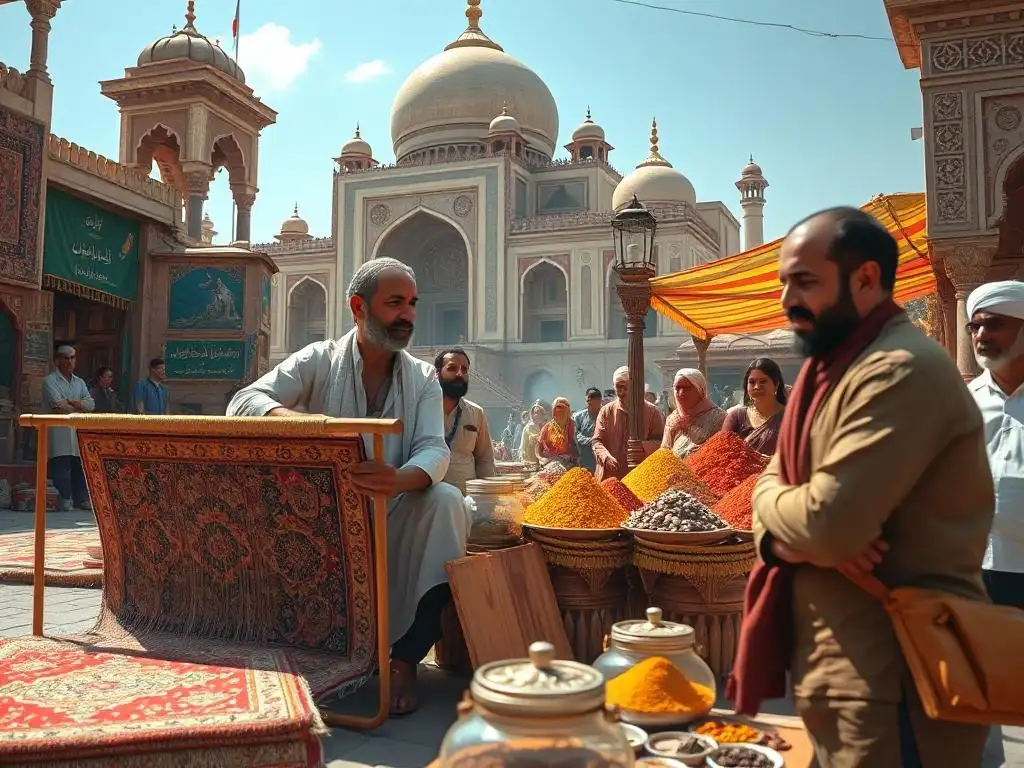
Welcome to Ancient India History, where we embark on a fascinating journey through the vibrant tapestry of India's past. In our featured article, "The Unseen Threads: How Indian and Persian Cultures Intertwined Throughout History," we delve deep into the Indian Persian cultural influences that shaped the very fabric of society. Discover how these two great civilizations interacted, exchanged ideas, and left an indelible mark on each other's cultures. Prepare to be captivated by the stories that reveal the nuances of their shared history and inspire your curiosity to explore even further!
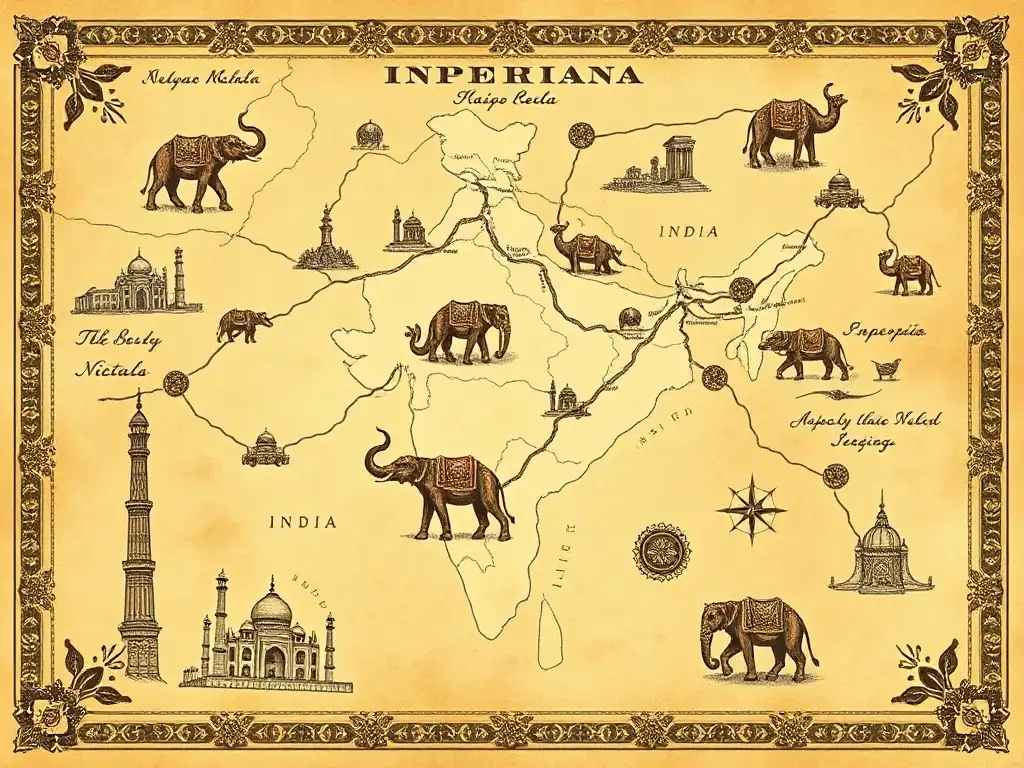
The intricate tapestry of Indian and Persian cultures is woven from centuries of interaction, trade, and shared ideas. Understanding these cultural influences not only illuminates the historical pathways that shaped the subcontinent but also reveals the profound impact of Persian civilization on Indian society and vice versa.
From the early trade routes that linked these regions to the sophisticated exchanges during the Mauryan Empire, the Indian-Persian relationship has been a dynamic interplay of art, philosophy, religion, and governance. This article delves into the unseen threads that connect these two rich cultural heritages, exploring how their intertwining has left an indelible mark on history.
Introduction to Indian-Persian Cultural Influences
Overview of Indian and Persian Civilizations
The Indian and Persian civilizations are among the oldest and most influential cultures in human history. The Indus Valley Civilization, which flourished from approximately 3300 to 1300 BCE, is known for its advanced urban planning and trade networks. On the other hand, the Persian Empire, particularly under the Achaemenids, left a legacy of administrative sophistication and cultural richness that spanned much of the ancient world.
- Indus Valley Civilization:
- Notable for its cities like Harappa and Mohenjo-Daro.
- Advanced in trade, metallurgy, and urban planning.
- Persian Empire:
- Covered vast territories under rulers such as Cyrus the Great and Darius I.
- Contributed significantly to art, architecture, and governance.
Significance of Cultural Interactions
The interactions between Indian and Persian cultures were crucial in shaping the social, political, and religious landscapes of both regions. These exchanges facilitated:
- The transfer of knowledge in various fields including mathematics, astronomy, and medicine.
- The introduction of new artistic styles and motifs that blended the aesthetics of both cultures.
- The spread of religious beliefs, particularly Zoroastrianism and later, Islam, influencing Indian spiritual practices.
Historical Context of Indian-Persian Interactions
The Indus Valley Civilization and Early Trade
The roots of Indian-Persian interactions can be traced back to the Indus Valley Civilization, which engaged in trade with Mesopotamia and the Persian Gulf. Archaeological evidence suggests that goods such as textiles, metals, and beads were exchanged, laying the groundwork for future connections. The Harappans likely influenced early Persian craftsmen and traders, fostering a mutual appreciation that transcended geographical boundaries.
The Achaemenid Empire's Influence on India
During the Achaemenid Empire (c. 550–330 BCE), Persian rulers established control over the northwestern regions of India, particularly under Darius I. This period saw the introduction of Persian administrative practices, which were adopted by local rulers. Additionally, the Royal Road facilitated not just trade but also cultural exchanges, allowing ideas, art, and innovations to flow between the two civilizations.
Cultural Exchanges During the Mauryan Empire
The Mauryan Empire (c. 322–185 BCE) marked a significant phase of Indian-Persian cultural interplay. Under the reign of Ashoka, who embraced Buddhism, cultural exchanges flourished through trade routes, leading to:
- The spread of artistic motifs inspired by Persian designs, evident in sculptures and stupa architecture.
- The influence of Persian governance models on Indian administration, evident in the Mauryan bureaucratic structure.
- A rich exchange of philosophical ideas, blending Indian spiritual concepts with Persian thought.
This historical backdrop sets the stage for a deeper exploration of the specific influences and interactions that define the Indian-Persian relationship, showcasing the enduring legacy of their intertwined cultures.
Key Areas of Indian Persian Cultural Influences
The intertwining of Indian and Persian cultures has led to a rich tapestry of influences across various domains. The key areas where these cultural exchanges manifest prominently include language and literature, art and architecture, and religion and philosophy. Each of these domains reflects the depth of interaction between the two civilizations, showcasing how they shaped each other's identities over centuries.
Language and Literature
One of the most significant areas of Indian-Persian cultural influence is language and literature. The arrival of Persian as a prominent language in India began during the Delhi Sultanate (13th-16th centuries) and continued through the Mughal period. Persian served as the court language, facilitating administration and cultural exchanges among diverse groups.
- Literary Contributions: Persian poets such as Amir Khusrau blended Persian and Indian themes, creating a unique literary style. His works often incorporated Indian folklore, idioms, and even musical forms, establishing a literary bridge between the two cultures.
- Prose and Historical Texts: The influence of Persian extended to prose, where historians like Ibn Battuta and Ziauddin Barani documented Indian society through a Persian lens, enriching the historical narrative of India.
- Language Development: The interaction also led to the emergence of Urdu, which is heavily influenced by Persian vocabulary and grammar. This new language became a symbol of cultural synthesis and has since evolved to reflect the shared heritage of both cultures.
Art and Architecture
Art and architecture represent another pivotal area of Indian-Persian cultural integration. The aesthetic principles and architectural styles of Persia significantly influenced Indian art, especially during the Mughal Empire.
- Mughal Architecture: The Mughal rulers, particularly Akbar, embraced Persian architectural styles, leading to the construction of iconic structures like the Taj Mahal and Fatehpur Sikri. These buildings exhibit intricate Persian motifs, gardens, and complex geometrical designs, merging Persian elegance with Indian aesthetics.
- Miniature Paintings: The tradition of Persian miniature painting found a fertile ground in Indian courts. Artists began to adopt Persian techniques, and themes often depicted Indian landscapes, flora, and fauna, resulting in a distinctive style that fused both cultures.
- Textile and Craftsmanship: Persian influence is also evident in Indian textiles, where intricate designs and techniques such as the use of calligraphy and floral patterns became prominent. The craft of carpet weaving, particularly in regions like Kashmir, showcases the blending of Persian artistry with Indian craftsmanship.
Religion and Philosophy
The religious and philosophical domains also saw substantial exchanges between Indian and Persian cultures. This interplay was marked by a mutual influence that shaped belief systems and philosophical thought.
- Sufism: The arrival of Sufism in India during the medieval period introduced Persian mystical philosophies. Sufi saints, such as Nizamuddin Auliya, attracted followers from different backgrounds, promoting a syncretic approach to spirituality that blended Islamic and Hindu elements.
- Philosophical Texts: Scholars from both cultures engaged in dialogues that enriched philosophical discourse. Persian philosophers often referenced Indian thought, while Indian scholars incorporated Persian ideas, leading to a broader understanding of metaphysics and ethics.
- Religious Syncretism: Festivals, rituals, and even religious practices began to amalgamate, resulting in a unique cultural fabric that reflected the coexistence of various faiths. This synthesis is evident in the works of poets like Kabir, who drew inspiration from both Islamic and Hindu philosophies.
Notable Figures in Indian-Persian Cultural Exchanges
The cultural exchanges between India and Persia were not only the result of broader historical processes but were also driven by notable individuals whose contributions significantly impacted both realms.
Influential Persian Scholars in India
Several Persian scholars made remarkable contributions to Indian culture, academia, and administration. Their influence helped bridge the gap between the two civilizations.
- Al-Biruni: A prominent scholar of the 11th century, Al-Biruni traveled to India and wrote extensively on Indian science, mathematics, and culture. His works provided insights into Indian society and highlighted the achievements of Indian scholars in fields like astronomy and medicine.
- Omar Khayyam: Although primarily known for his poetry, Khayyam's mathematical prowess also found its way into India, influencing local mathematicians. His treatises on algebra and geometry were studied and respected by Indian scholars.
Indian Artists and Their Persian Connections
Indian artists played a crucial role in the cultural synthesis between India and Persia, often adopting and adapting Persian styles to create a unique artistic expression.
- Raja Ravi Varma: Known for his ability to blend Indian themes with European artistic techniques, Varma incorporated elements of Persian art in his paintings, particularly in the representation of figures and landscapes.
- Mughal Painters: Artists at the Mughal court, such as Basawan and Manohar, were heavily influenced by Persian styles. They merged Persian techniques with Indian themes, producing masterpieces that celebrated the beauty of both cultures while depicting historical events and royal life.
The interplay between Indian and Persian cultures continues to enrich the historical narrative of both civilizations, demonstrating the enduring legacy of their interactions.
The Impact of the Mughal Empire on Indian-Persian Relations
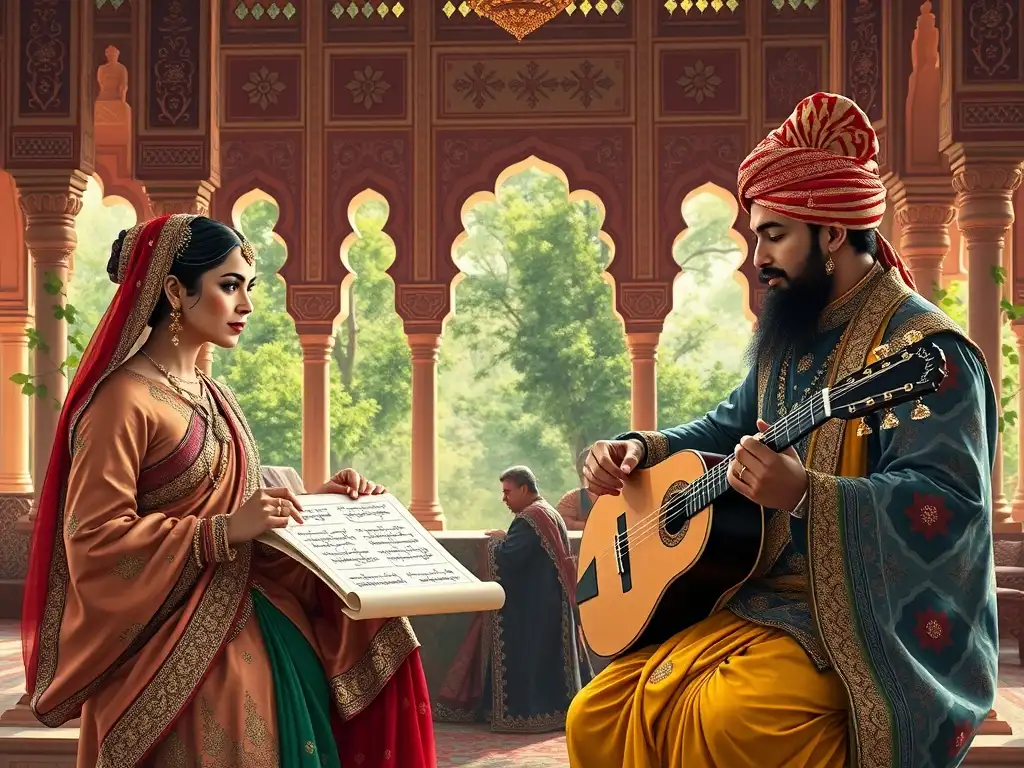
The Mughal Empire, which reigned from the early 16th to the 18th century, was a transformative period that significantly influenced Indian-Persian relations. The Mughals, who were of Central Asian origin and embraced Persian art, culture, and language, established a unique synthesis of Indian and Persian cultures. This interaction began with Babur, the founder of the empire, who brought with him a rich heritage of Persian literature and aesthetics.
Under the Mughals, Persian became the court language and was widely used in administration, literature, and art. This elevation of Persian not only solidified cultural ties but also facilitated the exchange of ideas, technology, and artistic styles between India and Persia. The Mughal emperors, particularly Akbar, Jahangir, and Shah Jahan, were instrumental in promoting a cosmopolitan culture that blended Islamic and Hindu traditions, which further deepened this connection.
The architecture of the Mughal period also bears testimony to Indian-Persian influences, as seen in structures like the Taj Mahal, which combines Persian garden layouts with Indian motifs. The Mughal miniature paintings, characterized by intricate designs and vivid colors, often depicted themes from Persian literature, illustrating the artistic amalgamation that occurred during this period.
The Fusion of Cultures under Mughal Rule
The Mughal Empire was a crucible for cultural fusion, merging elements from Persian, Indian, and Central Asian traditions. This blending can be observed in various facets of life, including language, cuisine, architecture, and art. The Persian language became a significant aspect of Mughal court culture, influencing local dialects and leading to the development of Urdu, which borrowed extensively from Persian vocabulary and syntax.
Culinary practices also saw a remarkable transformation, with Persian dishes like kebabs and biryanis becoming staple foods in Indian cuisine. The Mughal emperors lavishly patronized the arts, leading to the production of exquisite Persian-influenced poetry and prose, with poets like Mirza Ghalib gaining prominence during this era.
In architecture, the Mughal style epitomized the synthesis of Indian and Persian elements, as seen in the grand mosques and palaces that featured Persian calligraphy, intricate tile work, and Indian motifs. Gardens, a hallmark of Persian landscape design, were adapted and integrated into Mughal architecture, creating lush, serene spaces that reflected the harmony of nature and urban life.
Modern Relevance of Indian-Persian Cultural Influences
The historical intertwining of Indian and Persian cultures continues to resonate in contemporary society, highlighting the enduring legacy of their interactions. Indian-Persian cultural influences manifest in various spheres, from literature and music to art and cuisine, illustrating how these ancient ties have evolved yet remained relevant.
Contemporary Cultural Exchange
In today's globalized world, the exchange between Indian and Persian cultures persists through various channels. Literature remains a significant area of interaction, with modern writers drawing inspiration from Persian poetry and storytelling traditions. Furthermore, Bollywood films often incorporate themes and narratives that reflect Persian influences, showcasing the rich tapestry of cultural connection.
Music also illustrates this ongoing exchange, with genres like Qawwali and Ghazal that fuse Indian and Persian musical traditions. Artists and musicians frequently collaborate across borders, enriching the cultural landscape of both nations. Culinary fusion continues to thrive, with restaurants and home cooks blending traditional Indian recipes with Persian flavors, such as saffron and pomegranates, creating a delightful amalgamation of tastes.
The Legacy of Historical Interactions in Modern Society
The legacy of Indian-Persian interactions is evident in the social fabric of contemporary India and Iran. Shared cultural practices, festivals, and traditions continue to thrive, fostering a sense of mutual respect and appreciation. For instance, the celebration of Nowruz, the Persian New Year, is observed in parts of India, particularly among the Parsi community, highlighting the enduring connections between the two cultures.
Moreover, contemporary art and literature often reflect the historical narratives of Indian-Persian relations, with artists and writers exploring themes of identity, heritage, and multiculturalism. Educational exchanges and scholarly collaborations between India and Iran further enrich the understanding of their shared history, ensuring that the unseen threads of their cultural influences remain vibrant and influential in shaping modern society.
The Indian-Persian cultural influences, rooted in centuries of interaction, continue to evolve and enrich the cultural landscapes of both nations, affirming the importance of understanding and celebrating this shared heritage.
Conclusion: The Enduring Tapestry of Indian and Persian Cultures
The intertwining of Indian and Persian cultures has created an intricate tapestry that continues to influence contemporary societies. The historical interactions between these civilizations—through trade, conquest, and the exchange of ideas—have fostered a rich blend of artistic, architectural, and philosophical traditions. From the shared motifs in art and literature to the culinary influences that define the subcontinent’s diverse cuisine, the legacy of this cultural interplay is profound and far-reaching. This conclusion underscores the significance of recognizing these threads that bind the two cultures, enriching our understanding of their histories and contributions to the modern world.
Summary of Key Influences and Contributions
The Indian-Persian cultural influences are particularly evident in several key areas:
- Art and Architecture: The Mughal Empire serves as a prime example of Persian influence on Indian architecture, with the Taj Mahal being a testament to this synthesis. The fusion of Persian gardens with Indian landscaping techniques created stunning gardens that enhanced architectural spaces.
- Literature and Language: Persian poetry greatly influenced Indian literature, particularly during the medieval period. The use of Persian vocabulary in Urdu and Hindi illustrates the linguistic exchange that enriched these languages.
- Philosophy and Religion: The interactions between Persian Zoroastrianism and Indian Hinduism and Buddhism resulted in shared philosophical ideas, impacting spiritual practices and beliefs in both cultures.
- Cuisine: The introduction of Persian culinary techniques and dishes, such as biryani and kebabs, have become integral to Indian cuisine, showcasing the blend of flavors and cooking methods.
This summary highlights the multifaceted nature of Indian and Persian cultural influences, emphasizing their shared history and contributions.
The Importance of Understanding Cultural Intertwining
Understanding the cultural intertwining of India and Persia is essential for several reasons:
- Historical Context: It provides insights into how ancient civilizations interacted, adapted, and influenced each other, shaping their respective identities over time.
- Cultural Appreciation: Recognizing these connections fosters a deeper appreciation for the diversity of cultural expressions and the shared heritage that transcends geographical boundaries.
- Contemporary Relevance: In today’s globalized world, understanding historical cultural exchanges can help promote dialogue and coexistence among diverse communities, drawing from the lessons of the past.
By acknowledging the rich history of Indian-Persian interactions, we can celebrate the resilience and creativity of these cultures, which continue to thrive and inspire future generations.
References
Suggested Readings on Indian-Persian Cultural Influences
- "The Mughal Empire" by John F. Richards: This book provides comprehensive insights into the Mughal period, detailing the cultural exchanges and influences that defined this era.
- "India and Iran: A Cultural History" by R. N. Sharma: This work explores the historical connections between these two civilizations, emphasizing their cultural interactions throughout history.
- "Persian Influence on Indian Art and Architecture" by M. A. Dhaky: This text delves into the specific artistic and architectural contributions that Persian culture made to India.
Academic Sources for Further Exploration
- "The Persian Influence on Indian Literature" by A. K. Ramanujan: An academic exploration of how Persian literature impacted Indian literary traditions, particularly in poetry.
- "Cultural Interactions between Persia and India" in the Journal of Asian Studies: A scholarly article examining the multifaceted cultural exchanges between these regions.
- "Trade and Cultural Exchange between India and Persia during the Medieval Period": An academic paper discussing the economic and cultural interactions that facilitated the blending of Indian and Persian cultures.
By engaging with these resources, readers can deepen their understanding of the Indian-Persian cultural influences and appreciate the historical significance of their intertwined narratives.
- Introduction to Indian-Persian Cultural Influences
- Historical Context of Indian-Persian Interactions
- Key Areas of Indian Persian Cultural Influences
- Notable Figures in Indian-Persian Cultural Exchanges
- The Impact of the Mughal Empire on Indian-Persian Relations
- Modern Relevance of Indian-Persian Cultural Influences
- Conclusion: The Enduring Tapestry of Indian and Persian Cultures
- References
- What are the main cultural influences between India and Persia?
- How did the Indus Valley Civilization impact Persian culture?
- What role did the Mughal Empire play in the Indian-Persian cultural exchange?
- Are there specific art forms that showcase the Indian-Persian connection?
- How did the trade routes facilitate cultural exchange between India and Persia?
Frequently Asked Questions
What are the main cultural influences between India and Persia?
The cultural influences between India and Persia include art, architecture, language, and philosophy, which have evolved through centuries of interaction, especially during the Mughal period.
How did the Indus Valley Civilization impact Persian culture?
The Indus Valley Civilization contributed to early trade networks and cultural exchanges that influenced Persian art and craftsmanship, showcasing a blend of styles.
What role did the Mughal Empire play in the Indian-Persian cultural exchange?
The Mughal Empire significantly enhanced Indian Persian cultural influences through the promotion of literature, cuisine, and architecture, leading to a rich synthesis of both cultures.
Are there specific art forms that showcase the Indian-Persian connection?
Yes, miniature painting, carpet weaving, and calligraphy are notable art forms that reflect the intertwined cultural heritage of Indian and Persian traditions.
How did the trade routes facilitate cultural exchange between India and Persia?
The trade routes allowed for the movement of not only goods but also ideas, leading to a profound exchange of cultural practices, beliefs, and innovations between the two civilizations.
Final Reflection: The Interwoven Legacy of Indian and Persian Cultures
The intricate tapestry of Indian and Persian cultural influences continues to resonate in our contemporary world, reminding us of the profound connections that transcend geographical boundaries. As we navigate an increasingly globalized society, understanding these historical intertwining threads becomes essential. The rich legacies of art, language, and philosophy that emerged from this cultural exchange not only enrich our heritage but also challenge us to appreciate the beauty of diversity in our modern lives.
Cultural influences are not merely relics of the past; they shape our identities and societal norms today. The enduring impact of Indian and Persian interactions can be seen in various aspects of life, from cuisine to literature, and even in the arts. As we reflect on this shared history, we recognize that these influences foster a sense of unity amidst diversity. > “Cultures are not isolated; they are interconnected, and through these connections, we find our shared humanity.” This quote encapsulates the essence of our exploration, urging us to celebrate the beauty of cultural amalgamation.
As we conclude this journey through the unseen threads of history, I invite you to reflect on your own cultural influences and the ways they shape your identity. Consider how the stories of the past can inspire a more inclusive future. Let us embrace the lessons learned from the rich tapestry of Indian and Persian cultures, allowing their legacy to guide us in fostering understanding and appreciation for the diverse world we inhabit. Together, we can weave a brighter future, one that honors the interconnectedness of all cultures.
Discover the Connections: Embrace the Cultural Tapestry!
Thank you for diving into the vibrant history of Indian and Persian cultures with us! Your interest helps illuminate the incredible intertwining of these rich heritages, revealing the beauty of historical connections. Now, let’s build on that knowledge with some actionable steps that can deepen your understanding and appreciation of this cultural tapestry.
- Explore Further: Visit local museums or cultural centers that showcase artifacts from both Persian and Indian traditions to experience the legacy firsthand.
- Engage with Others: Start a conversation with friends about the cultural influences between India and Persia—you might be surprised by what you learn!
- Share Your Thoughts: Write a personal reflection or a blog post about your discoveries and experiences related to this fascinating topic to contribute to the ongoing dialogue.
What aspects of Indian and Persian culture intrigue you the most, and how would you like to explore them further?