
Ancient Indian and Persian Mythology: Parallels and Connections

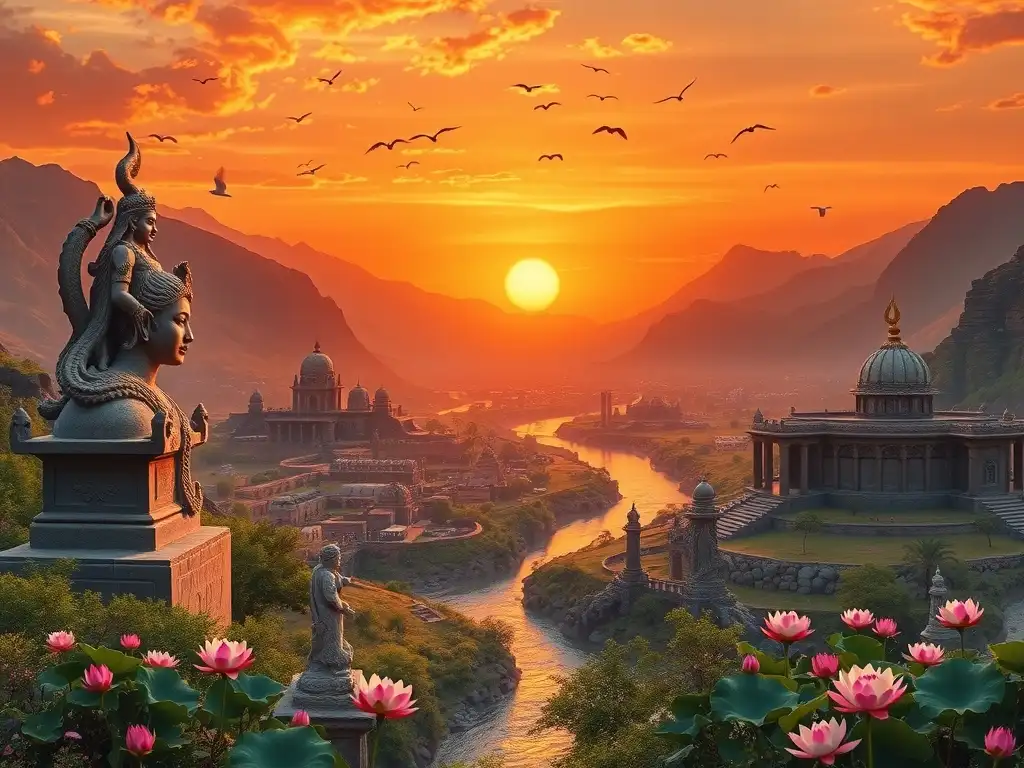
Welcome to Ancient India History, where we embark on a captivating journey through time to uncover the rich tapestry of ancient civilizations. In our exploration today, we delve into the fascinating connections between Ancient Indian and Persian mythology, shedding light on how these two cultures intertwined and influenced one another. What parallels exist in their myths, and how did these narratives shape their societies?
Join us as we unravel the intricate threads of history and discover the profound impact of these ancient stories on the world we know today. Prepare to be intrigued and inspired—there's so much more waiting for you!
Introduction to Ancient Indian and Persian Mythology
The intricate tapestry of ancient Indian and Persian mythology reveals a fascinating interplay of narratives, deities, and cultural beliefs that have shaped the civilizations of both regions. As two of the oldest cultures in the world, India and Persia share a rich historical backdrop characterized by extensive interactions, ranging from trade to conquests.
This article delves into the connections between ancient Indian and Persian mythology, exploring their shared themes, motifs, and influences. By studying these mythological parallels, we gain deeper insights into how these two great civilizations influenced each other and contributed to a broader understanding of human culture and spirituality.
Overview of Ancient Indian Mythology
Ancient Indian mythology is a vast and complex system of beliefs and stories that form the foundation of Hinduism and other Indian religions. Central to this mythology are the Vedas, ancient texts that encompass hymns, philosophy, and rituals. Key figures such as Brahma, Vishnu, and Shiva represent various aspects of the divine, while epics like the Mahabharata and Ramayana narrate tales of heroism, morality, and the cosmic order.
- Key Themes:
- Dharma: The principle of cosmic order and duty.
- Karma: The law of cause and effect governing human actions.
- Moksha: The liberation from the cycle of birth and rebirth.
The stories often illustrate the triumph of good over evil, the importance of righteousness, and the intricate relationships among gods, humans, and the universe.
Overview of Persian Mythology
Persian mythology, deeply rooted in the Zoroastrian tradition, revolves around the teachings of the prophet Zoroaster (or Zarathustra). Central figures include Ahura Mazda, the supreme god representing truth and light, and Angra Mainyu, the spirit of chaos and darkness. The Avesta, the sacred text of Zoroastrianism, contains myths, hymns, and rituals that underscore the duality of existence.
- Key Themes:
- Asha: The principle of truth and order.
- Druj: The concept of falsehood and chaos.
- Fravashi: The guardian spirits that guide and protect.
Persian myths often emphasize the eternal struggle between good and evil, the importance of moral choices, and the cosmic battle that influences human fate.
Importance of Studying Mythological Connections
Examining the connections between ancient Indian and Persian mythology is crucial for several reasons:
- Cultural Exchange: Understanding how these mythologies influenced each other provides insights into the broader cultural exchanges facilitated by trade and migration.
- Historical Impact: Mythological narratives often reflect historical events and societal values, helping us comprehend the evolution of both cultures.
- Shared Human Experience: Myths often address universal themes such as creation, morality, and the afterlife, revealing the commonalities in human thought and spirituality across civilizations.
Historical Context of Indian-Persian Interactions
Trade Routes and Cultural Exchanges
The ancient trade routes, particularly the Silk Road, played a pivotal role in fostering interactions between Indian and Persian cultures. These routes facilitated not only the exchange of goods but also the transmission of ideas, art, and religious beliefs. Merchants, travelers, and scholars traversed these paths, leading to a blending of mythological narratives and symbols.
- Key Trade Goods:
- Spices and textiles from India
- Precious metals and artifacts from Persia
Such exchanges enriched both cultures, leading to the incorporation of elements from one mythological tradition into another.
Influence of Empires on Mythology
The rise and fall of empires significantly influenced the mythologies of both regions. The Maurya Empire in India and the Achaemenid Empire in Persia interacted through conquests and political alliances. These encounters often resulted in the adaptation and reinterpretation of myths to reflect the values and beliefs of the ruling powers.
- Example: The adoption of Zoroastrian concepts into Indian thought during the Achaemenid period.
Key Periods of Interaction between Indian and Persian Cultures
Several key periods marked the interactions between Indian and Persian cultures, each leaving a lasting impact on their respective mythologies:
- Achaemenid Period (550-330 BCE): The Persian Empire's expansion into the Indian subcontinent led to significant cultural exchanges.
- Maurya Empire (322-185 BCE): Diplomatic and trade relations flourished, facilitating the exchange of ideas.
- Post-Alexander Era (4th Century BCE): Following Alexander the Great's conquests, Hellenistic influences began to permeate both cultures, further intertwining their mythological narratives.
By understanding these historical contexts, we can appreciate the depth of the connections between ancient Indian and Persian mythology and the ways they have shaped the cultural landscapes of both civilizations.
Similarities in Mythological Themes
The mythologies of ancient India and Persia share several thematic elements that reflect their intertwined histories and cultural exchanges. Both traditions explore fundamental questions about existence, the cosmos, and the moral order of the universe. Key similarities include creation myths, the characterization of deities, and the dualistic nature of good and evil. These themes not only reveal the philosophical underpinnings of each culture but also highlight how ancient Indian and Persian societies sought to understand their world and the forces that shaped it.
Creation Myths: Comparative Analysis
Creation myths in both Indian and Persian traditions serve as foundational narratives that explain the origins of the universe and humanity. In ancient Indian mythology, particularly within the Rigveda, the hymn of Nasadiya Sukta describes a cosmic void before creation, leading to the emergence of the universe through the actions of a supreme being or force. This aligns with the Persian Avesta, which recounts the creation of the world by Ahura Mazda, who brings order out of chaos.
Both traditions emphasize the role of a divine force in the creation process. In the Indian narrative, the concept of Brahman, the ultimate reality, encapsulates the essence of creation. In contrast, Persian cosmology introduces the duality of Ahura Mazda and Angra Mainyu, where the former symbolizes light and goodness, while the latter represents darkness and chaos. This dualism reflects a shared understanding of the universe's complexity and the constant struggle between order and disorder.
Deities and Divine Figures in Indian and Persian Mythology
The pantheons of ancient Indian and Persian mythologies feature a range of deities that embody various aspects of life and nature. In Hindu mythology, gods like Vishnu, Shiva, and Devi represent preservation, destruction, and creation, respectively. Similarly, in Persian mythology, deities such as Mithras and Anahita play crucial roles in the natural and moral order of the world.
A notable connection is seen in the deity of fire. In Hinduism, Agni is revered as the fire god, a crucial element in rituals and sacrifices. In Persian mythology, Atar serves a similar function, representing purity and the sacred nature of fire. Both cultures attribute transformative power to fire, symbolizing purification and divine presence.
This shared reverence for similar divine figures illustrates how both cultures have shaped their religious practices and societal norms around these powerful symbols.
Concepts of Good and Evil: A Mythological Perspective
The dichotomy of good and evil is a prominent theme in both ancient Indian and Persian mythologies, often depicted through the struggle between divine figures and malevolent forces. In Indian mythology, this is exemplified in the epic tales of the Mahabharata and Ramayana, where the heroes, such as Arjuna and Rama, are pitted against adversaries like Duryodhana and Ravana, representing evil and chaos.
In Persian mythology, the conflict is epitomized in the eternal battle between Ahura Mazda and Angra Mainyu. Ahura Mazda embodies truth and order, while Angra Mainyu symbolizes lies and chaos. This duality reflects deeper philosophical inquiries into morality and the nature of existence, showcasing a shared understanding of the struggle between light and darkness.
Both mythologies emphasize the importance of righteousness (Dharma in Indian thought) and truth (Asha in Persian thought) as guiding principles for humanity. These concepts illustrate how ancient cultures grappled with moral dilemmas and the nature of human existence.
The shared stories and legends between ancient Indian and Persian cultures not only highlight their mythological connections but also provide insight into their historical interactions. These narratives have evolved over centuries, incorporating elements from both traditions and reflecting their cultural exchanges.
The Role of Epics in Both Cultures
Epic literature serves as a crucial medium for the expression of mythological themes in both Indian and Persian civilizations. The Mahabharata and Ramayana are cornerstone texts in Indian culture, weaving intricate tales of gods, heroes, and ethical dilemmas. Similarly, the Shahnameh (Book of Kings) is a monumental epic in Persian literature that chronicles the history of Persia through legendary kings and heroes.
These epics not only celebrate cultural values and historical narratives but also serve to unify communities, instilling a sense of identity and shared history. Through their stories, both the Indian and Persian epics explore the complexities of human nature, the divine, and the moral consequences of one's actions.
Cross-Cultural Influences in Folklore
Folklore represents another layer of shared narratives between ancient Indian and Persian cultures, with tales often featuring similar motifs and archetypes. For instance, fables featuring wise animals or trickster figures are prevalent in both traditions, illustrating moral lessons and cultural values.
The exchange of stories can be traced back to trade routes and conquests that facilitated cultural interactions. Stories of heroes and divine beings traveled across borders, adapting to local contexts while retaining core themes. This cross-pollination enriched both cultures' folklore, leading to a rich tapestry of myths and legends that resonate through time.
Comparative Study of Specific Myths and Legends
A comparative study of specific myths reveals striking parallels between ancient Indian and Persian narratives. For example, the tale of the Churning of the Ocean (Samudra Manthan) in Hindu mythology, where gods and demons collaborate to obtain the nectar of immortality, mirrors similar accounts in Persian mythology involving the creation of the world and the struggle between good and evil.
Another example is the hero figure who undertakes a journey or quest, such as the Indian hero Rama and the Persian hero Rustam. Both characters encounter trials, engage in battles, and ultimately seek to restore order and justice in their respective worlds.
These comparative analyses not only highlight the thematic connections within the mythologies but also underscore the historical interactions that shaped their narratives, fostering a deeper understanding of ancient Indian and Persian cultures.
Symbolism and Cultural Significance
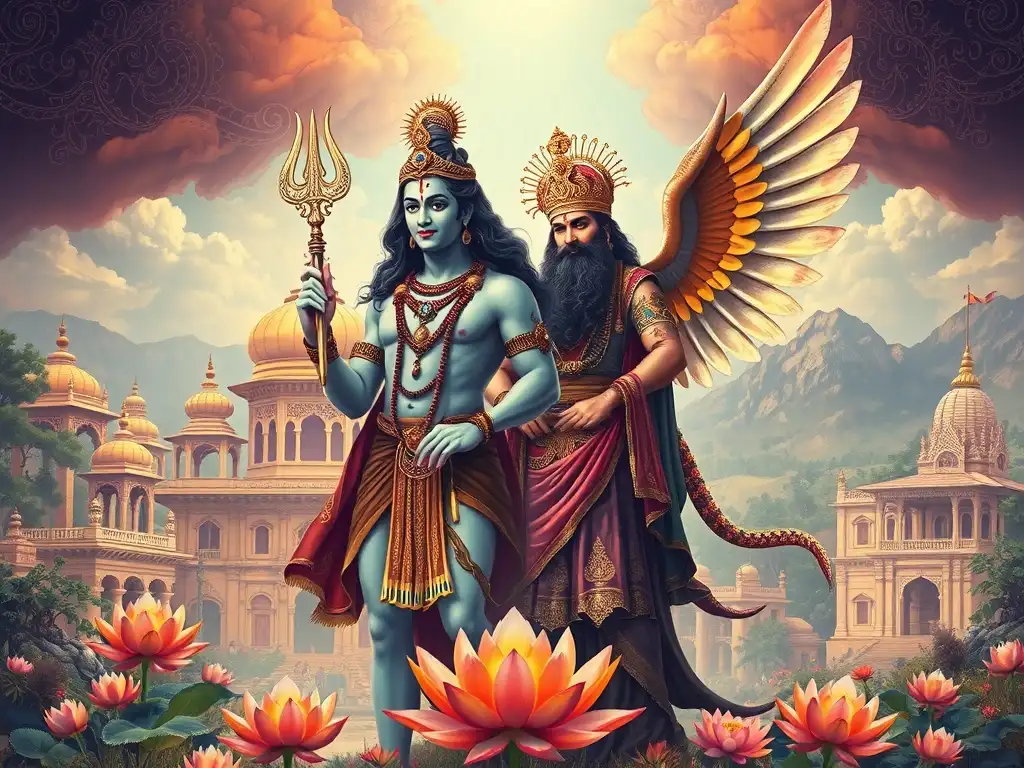
The ancient Indian and Persian mythologies are rich with symbolism, reflecting the values, beliefs, and cultural significance of their respective civilizations. Both mythological traditions utilize symbols as a means of conveying complex ideas and moral lessons, which resonate deeply within their societies. In this context, the symbols often extend beyond mere representation; they serve as a bridge connecting the divine with the mundane, the spiritual with the material, and the past with the present.
The cultural significance of these symbols is evident in their ability to shape identities and worldviews. For instance, in ancient Indian mythology, symbols such as the lotus flower represent purity and spiritual enlightenment, while in Persian mythology, the Faravahar symbolizes the divine spirit and the human soul's journey towards truth. These symbols not only enrich the narratives but also provide a framework through which individuals understand their existence and place in the cosmos.
Use of Symbols in Ancient Indian and Persian Myths
In ancient Indian mythology, symbols often derive from nature and everyday life, embodying deeper philosophical concepts. The serpent, for instance, signifies both danger and transformation, reflecting the duality of existence. Similarly, the cow is revered as a symbol of motherhood and nourishment, highlighting the importance of agriculture and pastoral life in Indian culture.
Conversely, Persian mythology employs symbols that are equally potent. The mythical bird Simurgh represents wisdom and the pursuit of knowledge, while the concept of the “Asha” symbolizes truth and order in the universe. Both traditions demonstrate a profound understanding of the human experience, employing symbols that resonate with universal themes such as creation, destruction, and rebirth.
The Role of Mythology in Cultural Identity
Mythology plays a critical role in shaping cultural identity in both ancient Indian and Persian societies. These narratives serve as foundational texts that articulate values, norms, and historical experiences. In India, epics like the Mahabharata and Ramayana not only tell stories of gods and heroes but also explore themes of dharma (duty), morality, and justice, which remain integral to Indian culture today.
In Persian culture, the Shahnameh (Book of Kings) serves a similar purpose, recounting the history of Iran from mythological times to the Islamic conquest. This epic not only preserves the national identity but also instills a sense of pride and continuity among the Persian people. The intertwining of mythology with cultural identity fosters a shared sense of belonging, highlighting the significance of these narratives in both societies.
Rituals and Practices Inspired by Mythological Narratives
Rituals and practices in ancient Indian and Persian cultures are deeply influenced by mythological narratives. In India, festivals such as Diwali and Holi are steeped in mythology, celebrating the triumph of good over evil and the arrival of spring, respectively. These celebrations are not merely social events; they encapsulate the moral teachings and values derived from mythological stories.
Similarly, Persian rituals, such as Nowruz (the Persian New Year), are rooted in ancient myths. It symbolizes renewal and rebirth, aligning with the myths surrounding the creation and the cyclical nature of time in Zoroastrianism. The integration of mythology into rituals enhances their significance, allowing participants to connect with their cultural heritage and communal identity.
Linguistic Connections and Influences
The linguistic ties between ancient Indian and Persian cultures reveal significant connections that extend into their mythologies. Language serves as a vehicle for the transmission of ideas, stories, and cultural practices, allowing for a deeper understanding of how these two civilizations interacted over centuries.
Language and Mythology: A Historical Overview
The historical interactions between ancient India and Persia facilitated the exchange of linguistic and mythological elements. During the Achaemenid Empire, when Persian influence reached the Indian subcontinent, linguistic borrowings began to shape both cultures. The use of Sanskrit and Old Persian in inscriptions and texts highlights the intertwining of these languages, reflecting a shared cultural milieu.
This linguistic exchange not only influenced vocabulary but also impacted mythological narratives, as stories were adapted and reinterpreted across cultural boundaries. Such historical connections underscore the dynamic nature of language as a living entity that evolves through contact and interaction.
Shared Terms and Concepts in Indian and Persian Languages
Several terms and concepts in ancient Indian and Persian languages reveal significant overlaps, particularly in the context of mythology. For example, the term "deva" in Sanskrit, meaning "god," finds its counterpart in the Avestan term "div," both denoting divine beings. This shared vocabulary suggests a common understanding of divinity, even as the narratives surrounding these gods diverge.
Furthermore, concepts such as creation, destruction, and the afterlife appear in both mythologies, often under different names but reflecting similar themes. The exploration of these shared terms enhances our understanding of how myths evolve and intertwine across cultures, enriching both traditions.
Impact of Language on Mythological Narratives
The influence of language on mythological narratives is profound, as it shapes the way stories are told and understood. In ancient India, the poetic structure of Sanskrit allowed for intricate storytelling, weaving complex metaphors and allegories into the narratives. This linguistic richness enhances the depth and resonance of mythological themes, making them more impactful for the audience.
In Persian culture, the use of poetic forms such as the ghazal and rubaiyat has similarly influenced the expression of mythological stories. The lyrical quality of Persian poetry allows for emotional depth and beauty, drawing readers into the mythological world. The interplay between language and mythology thus not only informs the content of the narratives but also enhances their cultural significance and emotional appeal.
Conclusion: The Legacy of Ancient Indian and Persian Mythology
The interplay between ancient Indian and Persian mythology reveals a rich tapestry of narrative and thematic connections that have shaped the cultural landscapes of both civilizations. The shared elements, such as creation myths, divine hierarchies, and moral teachings, not only reflect a historical dialogue but also illustrate the ways in which these cultures influenced one another through trade, conquest, and intellectual exchange.
The legacies of these mythologies extend far beyond their original contexts, providing a foundation for subsequent literary and artistic traditions. They continue to resonate in contemporary interpretations and adaptations, demonstrating the enduring relevance of these ancient stories. The mutual influences can be seen in various aspects of religion, philosophy, and art, showcasing how ancient Indian and Persian mythologies have enriched one another over the centuries.
Summary of Key Connections and Parallels
Several key connections and parallels stand out in the study of ancient Indian and Persian mythologies:
- Creation Myths: Both cultures feature complex creation narratives. The Indian concept of Srishti (creation) parallels the Persian Zarathustra's creation story, where the universe emerges from chaos through divine will.
- Divine Figures: Deities in both mythologies often share similar attributes and roles. For instance, the Indian god Vishnu, who preserves cosmic order, can be compared to Ahura Mazda in Zoroastrianism, who embodies wisdom and light.
- Moral Teachings: Ethical and moral lessons prevalent in both mythologies highlight the importance of righteousness, truth, and justice, often conveyed through parables and epic tales.
- Cultural Syncretism: The interaction over centuries led to the blending of mythological elements, as seen in texts like the Mahabharata and Shahnameh, where themes of heroism and fate intertwine.
These connections not only indicate a historical relationship but also offer insights into how these civilizations viewed the world around them.
The Continuing Influence of These Mythologies in Modern Culture
The influence of ancient Indian and Persian mythologies persists in modern culture, manifesting in literature, film, and art. Contemporary authors often draw on these mythological themes to explore complex human experiences and societal issues. For example:
- Literature: Novels like The Palace of Illusions by Chitra Banerjee Divakaruni and The Shahnameh adaptations reflect the timeless themes of love, war, and destiny found in ancient tales.
- Film: Bollywood and Persian cinema frequently incorporate mythological elements, portraying characters and narratives that resonate with audiences familiar with these ancient stories.
- Art and Performances: Traditional dance forms and visual arts continue to depict mythological scenes and characters, serving as a bridge between the past and the present.
The ongoing reinterpretation of these mythologies demonstrates their adaptability and relevance in addressing contemporary issues, ensuring their place in modern cultural discourse.
Future Research Directions in Indian-Persian Mythology Connections
The field of Indian-Persian mythology connections is ripe for further exploration. Future research could focus on several key directions:
- Comparative Studies: In-depth comparative analyses of specific mythological texts could uncover more nuanced connections and divergences in themes and narratives.
- Archaeological Evidence: Investigating archaeological findings related to trade routes and cultural exchanges may provide insights into how these mythologies were transmitted and transformed over time.
- Linguistic Studies: Examining the linguistic connections between ancient Indian and Persian languages could reveal how myths were communicated and adapted in different cultural contexts.
- Interdisciplinary Approaches: Incorporating perspectives from anthropology, sociology, and religious studies may enrich our understanding of how these mythologies influenced societal structures and beliefs.
By pursuing these research directions, scholars can contribute to a deeper understanding of the intricate web of connections between ancient Indian and Persian mythologies, illuminating their impact on both historical and contemporary cultures.
- Introduction to Ancient Indian and Persian Mythology
- Historical Context of Indian-Persian Interactions
- Similarities in Mythological Themes
- Shared Stories and Legends
- Symbolism and Cultural Significance
- Linguistic Connections and Influences
- Conclusion: The Legacy of Ancient Indian and Persian Mythology
- What are the main connections between Ancient Indian and Persian mythology?
- How did trade routes contribute to the mythological exchanges between India and Persia?
- What role did the Zoroastrian religion play in shaping Indian mythology?
- Are there specific deities that appear in both Indian and Persian mythology?
- How can understanding these connections enhance our appreciation of ancient cultures?
Frequently Asked Questions
What are the main connections between Ancient Indian and Persian mythology?
The main connections include shared deities, mythological themes, and cultural exchanges resulting from trade and conquest, particularly during the Achaemenid Empire's influence in India.
How did trade routes contribute to the mythological exchanges between India and Persia?
Trade routes facilitated the movement of ideas and stories, allowing merchants and travelers to share mythological tales and cultural practices, blending elements from both civilizations.
What role did the Zoroastrian religion play in shaping Indian mythology?
The Zoroastrian religion introduced concepts like dualism and cosmic struggle, which can be seen echoed in Indian mythological narratives, influencing the development of certain philosophical ideas in ancient Indian thought.
Are there specific deities that appear in both Indian and Persian mythology?
Yes, deities such as Indra and Varuna in Indian mythology find parallels in Persian counterparts like Vayu and Ahura Mazda, showcasing similarities in their roles and attributes.
How can understanding these connections enhance our appreciation of ancient cultures?
Exploring these connections helps reveal the interconnectedness of ancient cultures, highlighting how mythology served as a medium for cultural exchange and influencing social values across regions.
Final Reflection: Exploring the Tapestry of Ancient Indian and Persian Mythology
The intricate connections between Ancient Indian and Persian mythology reveal a rich tapestry of cultural exchange that resonates profoundly in today's world. As we navigate an increasingly interconnected global landscape, understanding these ancient narratives not only enriches our appreciation of diverse cultures but also highlights the universal themes of humanity that transcend time and geography. The parallels drawn in this article serve as a reminder that our stories, despite their origins, often share common threads that bind us together.
The influence of these mythologies continues to shape our cultural and social landscapes, fostering a sense of shared heritage and identity. As we delve into these ancient tales, we uncover not just the beliefs of the past but also their enduring impact on modern society. The echoes of these myths can be seen in literature, art, and even contemporary spiritual practices. Mythology is not a lie; it is a poetic truth.
This quote encapsulates the essence of how these narratives continue to inspire and inform our understanding of the world around us, inviting us to explore the depths of our own cultural identities.
As we reflect on the lessons embedded within these ancient stories, I encourage you to embrace the wisdom they offer. Consider how the themes of love, conflict, and transformation resonate in your own life. Let the connections between Ancient Indian and Persian mythology inspire you to seek out the commonalities in your own experiences and those of others. In doing so, you not only honor the legacy of these rich traditions but also contribute to a more harmonious and understanding world.
Unveil the Mysteries of Mythology Today!
Thank you for diving deep into the fascinating world of Ancient Indian and Persian mythology with us! You've uncovered the rich tapestry of parallels and connections that shape our understanding of these two vibrant cultures. Now, it’s time to take the next step in exploring this captivating realm!
Here’s how you can deepen your exploration and share the magic of mythology:
- Engage with Others: Join a local or online mythology discussion group; share your insights and learn from fellow enthusiasts who are eager to explore these ancient tales.
- Create Your Own Mythical Narrative: Challenge yourself to write a short story or poem inspired by the myths we've discussed—let your creativity flow!
- Spread the Word: Share this article with friends or on social media to spark discussions about the intricate ties between these mythologies.
As you embark on this journey, we would love to hear your thoughts! Which parallels or connections between these mythologies sparked your curiosity the most?