
From Zoroastrianism to Hinduism: Religious Interactions between India and Persia

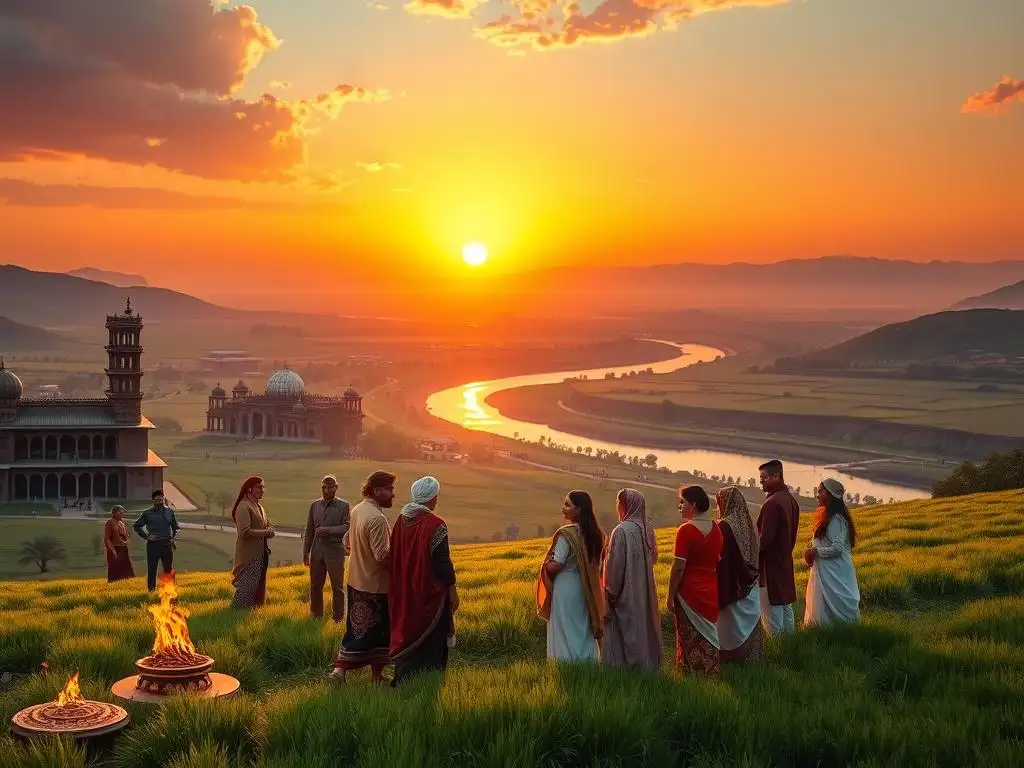
Welcome to Ancient India History, where we embark on a fascinating journey through time to uncover the profound richness of India's ancient civilizations. In our featured article, "From Zoroastrianism to Hinduism: Religious Interactions between India and Persia," we delve into the intricate tapestry of beliefs that shaped the spiritual landscape of these two great cultures. Discover how the threads of faith intertwined, sparking dialogues that transcended borders and time. Join us as we explore these captivating interactions, and prepare to be intrigued by the echoes of history that continue to influence our world today.
- Introduction to Religious Interactions between India and Persia
- Historical Context of Religious Interactions
- Influences of Zoroastrianism on Hinduism
- The Role of Trade in Religious Interactions
- Political and Cultural Exchanges between India and Persia
- The Legacy of Religious Interactions
- Conclusion: The Enduring Impact of Religious Interactions
- References
-
Frequently Asked Questions
- What were the primary religions involved in the interactions between India and Persia?
- How did Zoroastrianism impact Indian religious practices?
- Were there any significant historical events that facilitated religious interactions between India and Persia?
- What role did trade play in the religious interactions between India and Persia?
- How did the legacy of religious interactions between India and Persia manifest in later periods?
- Final Reflection: The Enduring Legacy of Religious Interactions between India and Persia
- Embrace the Wisdom of Ancient Cultures!
Introduction to Religious Interactions between India and Persia
The religious interactions between India and Persia present a fascinating tapestry of cultural exchanges and spiritual dialogues that have significantly shaped the beliefs and practices of both regions throughout history. From the ancient times of the Indus Valley civilization to the flourishing Gupta Empire, the contact between these two civilizations facilitated a rich intermingling of religious ideas, philosophies, and rituals.
This article delves into the intricate dynamics of religious interactions, highlighting the influence of Zoroastrianism on early Hindu thought, the syncretism that emerged from these exchanges, and the broader implications of these interactions for understanding the cultural heritage of ancient India and Persia. By exploring the historical context and the enduring legacies of these interactions, we can gain insights into how religion served as a bridge between two vibrant civilizations, enriching their spiritual landscapes and fostering a legacy of coexistence.
Overview of Zoroastrianism and Hinduism
Zoroastrianism, one of the world's oldest monotheistic religions, originated in ancient Persia around the 6th century BCE. Founded by the prophet Zoroaster (or Zarathustra), this faith centers around the worship of Ahura Mazda, the supreme god, and emphasizes concepts such as dualism, the struggle between good and evil, and the importance of individual choice in determining one’s fate. Key texts like the Avesta guide its followers in ethical living and rituals, establishing a moral framework that resonates with many aspects of later religious traditions.
In contrast, Hinduism, with its roots tracing back to the Vedic period (circa 1500–500 BCE), is a complex and diverse belief system characterized by a multitude of gods, rituals, and philosophical schools. It encompasses a wide range of practices, from devotion (bhakti) to philosophical inquiry, and is deeply intertwined with cultural customs and social structures in ancient India. The Vedas, Upanishads, and epics such as the Mahabharata and Ramayana are foundational texts that articulate the principles of dharma (duty), karma (action), and moksha (liberation).
As these two religions interacted over centuries, various elements from Zoroastrianism found resonance within Hindu practices, leading to a rich exchange of ideas about cosmology, ethics, and the nature of divinity. The fluidity of these interactions fostered a unique environment where beliefs could evolve, allowing adherents to explore concepts of spirituality that transcended geographical and cultural boundaries.
Significance of Religious Interactions in Ancient Civilizations
The significance of religious interactions between India and Persia cannot be overstated. These encounters not only influenced the development of religious thought in both regions but also facilitated broader cultural exchanges that enriched the social fabric of ancient civilizations.
- Cultural Syncretism: The blending of Zoroastrian and Hindu beliefs resulted in a unique syncretism that influenced religious practices and philosophical discourse. For instance, the concept of a divine creator found in Zoroastrianism echoes in certain Hindu philosophies, demonstrating a shared understanding of the divine.
- Trade and Diplomacy: The interaction was often mediated through trade routes, where merchants and travelers carried not just goods but also ideas and beliefs. This economic interdependence fostered diplomatic relations that allowed for more profound exchanges of culture and religion.
- Art and Literature: The artistic expressions of both civilizations were enriched by their interactions. Persian art influenced Indian motifs, while Indian narratives and epics found their way into Persian literature, creating a vibrant cultural dialogue.
- Philosophical Inquiry: Philosophers from both traditions engaged with each other's texts, leading to a deeper understanding of existential questions that transcended their respective contexts. This intellectual exchange contributed to the evolution of philosophical thought in ancient times.
The religious interactions between India and Persia played a critical role in shaping not only the spiritual landscape of both regions but also their cultural and intellectual heritage. Understanding these interactions enriches our appreciation of the complexities and nuances of ancient civilizations, shedding light on their legacies that continue to resonate in contemporary society.
Historical Context of Religious Interactions
The Emergence of Zoroastrianism in Persia
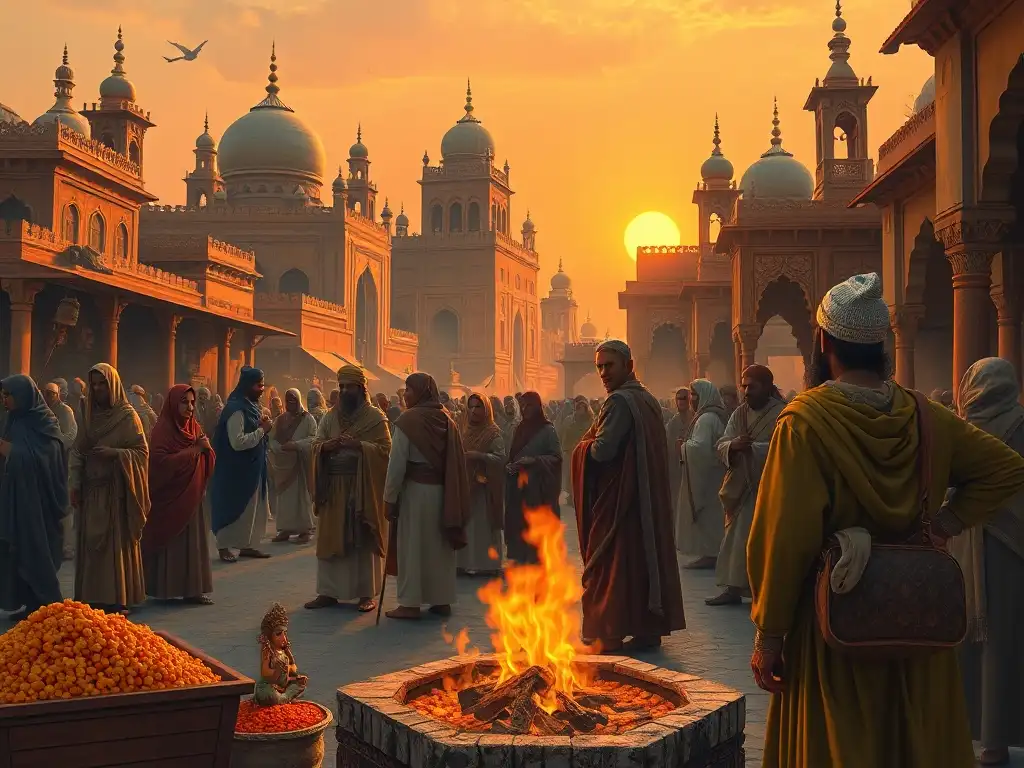
Zoroastrianism, one of the world's oldest monotheistic religions, emerged in ancient Persia around the 6th century BCE. Founded by the prophet Zoroaster (or Zarathustra), this faith introduced several concepts that would later influence various religious traditions, including those in India. Central to Zoroastrianism is the worship of Ahura Mazda, the supreme god, representing truth and order, in contrast to Angra Mainyu, the spirit of chaos and deceit.
The core tenets of Zoroastrianism include:
- Dualism: The belief in the constant struggle between good and evil.
- Moral Responsibility: Emphasis on individual choice and accountability for one's actions.
- Afterlife: The concept of a judgment after death, where one's deeds determine their fate in the afterlife.
Zoroastrianism's teachings would resonate with the Indian philosophical landscape, especially as trade routes and cultural exchanges flourished between the two regions. The Avesta, the sacred text of Zoroastrianism, serves as a significant historical document that provides insights into ancient Persian culture and its interactions with neighboring civilizations, including India.
The Development of Hinduism in Ancient India
Hinduism, one of the oldest religions in the world, evolved over thousands of years in the Indian subcontinent. Its origins can be traced back to the Vedic period (1500-500 BCE), characterized by the composition of the Vedas, a collection of hymns, rituals, and philosophical discourses. As Hinduism developed, it absorbed various cultural and religious influences, including those from Persian traditions.
Key features of Hinduism include:
- Polytheism: The worship of a multitude of deities, each representing different aspects of life and nature.
- Karma and Dharma: The belief in moral law governing individual actions (karma) and the duty or righteousness (dharma) expected from individuals based on their social roles.
- Reincarnation: The notion of rebirth based on one's actions in previous lives.
The interaction between Zoroastrian and Hindu thought facilitated a cross-pollination of ideas. For instance, concepts such as karma and the ethical dualism found in Zoroastrianism resonate with Hindu beliefs about righteousness and moral conduct.
Timeline of Key Interactions between India and Persia
Understanding the historical interactions between India and Persia is crucial for comprehending the religious syncretism that occurred between these civilizations. Here is a timeline highlighting significant events:
| Year | Event | Description |
|---|---|---|
| 6th Century BCE | Emergence of Zoroastrianism | Zoroaster establishes the principles of Zoroastrianism. |
| 5th Century BCE | Persian Empire expands to the Indian subcontinent | The Achaemenid Empire includes parts of northwestern India. |
| 327 BCE | Alexander the Great invades India | Introduces Hellenistic influences, further blending cultures. |
| 3rd Century BCE | Maurya Empire and trade routes begin to flourish | Enhanced interaction between Indian and Persian merchants. |
| 1st Century CE | Influence of Zoroastrian thought on Indian philosophy | Mutual exchanges of ideas through trade and scholarship. |
| 5th Century CE | Gupta Empire flourishes, with Persian influences evident | Artistic and cultural exchanges become prominent. |
These interactions were not merely limited to trade; they fostered a rich tapestry of cultural and religious exchanges, paving the way for a unique blend of beliefs and practices that would shape the spiritual landscape of both regions. The religious interactions between India and Persia during these key periods highlight the dynamic nature of ancient civilizations and their capacity for mutual influence.
Influences of Zoroastrianism on Hinduism

The interactions between India and Persia, particularly during the Achaemenid Empire and later periods, facilitated a rich exchange of religious ideas. Zoroastrianism, the ancient pre-Islamic religion of Persia, exerted significant influences on Hinduism, shaping its beliefs, practices, and textual traditions. Understanding these influences provides valuable insights into how religious interactions between India and Persia have contributed to the development of spiritual thought in both civilizations.
Zoroastrianism and Hinduism share several core beliefs that reflect their common Indo-Iranian heritage. Among these are:
- Cosmic Order (Asha and Rta): Both religions emphasize the importance of a cosmic order. In Zoroastrianism, Asha represents truth and order, while in Hinduism, Rta refers to the principle of natural order. This concept underscores the belief in a structured universe governed by moral laws.
- Ritual Practices: The significance of rituals and offerings is central to both faiths. Zoroastrians perform rituals like the Yasna and the Fravardin, which bear similarities to Hindu pujas and ceremonies aimed at honoring deities and ancestors.
- Ethical Living: Both traditions advocate for ethical conduct. The Zoroastrian principle of "Good Thoughts, Good Words, Good Deeds" parallels the Hindu emphasis on Dharma, urging followers to live righteously and contribute positively to society.
These shared beliefs point to a syncretic relationship where both religions influenced each other's practices, leading to a deeper understanding of morality and spirituality.
The Concept of Dualism and Its Impact
One of the most profound influences of Zoroastrianism on Hinduism is the concept of dualism.
- Good vs. Evil: Zoroastrianism posits a cosmic struggle between Ahura Mazda (the supreme god) and Angra Mainyu (the evil spirit). This dualistic view of the universe resonates with the Hindu concept of good and evil, often personified in deities such as Vishnu and Shiva, respectively.
- Moral Responsibility: The emphasis on individual moral choice in Zoroastrianism significantly impacted Hindu thought. The idea that one's actions can lead to either spiritual advancement or downfall is echoed in various Hindu texts, encouraging personal accountability and ethical decision-making.
- Rebirth and Afterlife: Both religions encompass beliefs in an afterlife and rebirth, with Zoroastrianism envisioning the soul's journey through the Chinvat Bridge. In Hinduism, the cycle of samsara represents a similar journey, reinforcing the moral implications of one's actions during life.
The dualistic framework has led to a more nuanced understanding of morality in Hindu philosophy, fostering a rich discourse on the nature of good and evil.
The Influence of Zoroastrian Texts on Hindu Scriptures
Zoroastrian texts, particularly the Avesta, have left an indelible mark on Hindu scripture through various channels of transmission.
- Mythological Parallels: Several narratives in Zoroastrianism find echoes in Hindu epics. For example, the tale of the hero's battle against chaos in Zoroastrianism is reminiscent of the struggles faced by figures like Arjuna in the Mahabharata, highlighting common mythological themes.
- Philosophical Concepts: The philosophical inquiries found in Zoroastrian texts have influenced Hindu thinkers, particularly in the realm of metaphysics and ethics. Concepts such as the nature of the divine, the essence of the soul (Atman), and the ultimate reality (Brahman) reveal traces of Zoroastrian thought.
- Ritual Texts: The structure and content of certain Vedic texts show similarities with Zoroastrian liturgical practices. The emphasis on fire as a purifying agent is central to both faiths, reinforcing the symbolic value of fire in rituals.
These influences underscore the complexity of religious interactions between India and Persia, showcasing how Zoroastrian texts have enriched Hindu scripture and philosophical thought, thereby contributing to the broader tapestry of ancient Indian spirituality.
The Role of Trade in Religious Interactions
Trade Routes between India and Persia
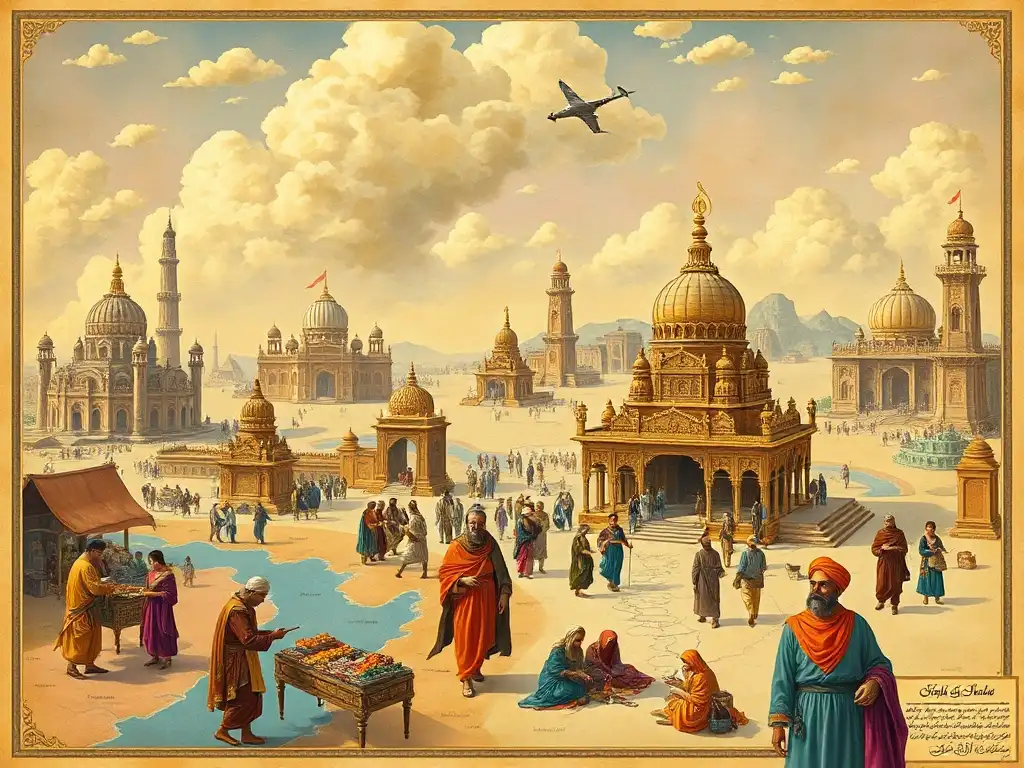
The intricate web of trade routes between India and Persia played a pivotal role in the religious interactions between these two ancient civilizations. The most significant pathways included the Silk Road and the Maritime Spice Routes, which not only facilitated the exchange of goods but also allowed for the transmission of cultural and religious beliefs.
- Silk Road:
- This overland route connected the eastern regions of India with the western territories of Persia and beyond, extending to Europe. Merchants traversed vast distances, carrying silk, spices, and precious stones, but they also transported religious texts and artifacts.
- Major cities along this route, such as Taxila and Ctesiphon, became melting pots of diverse cultures, where Zoroastrians, Buddhists, and later Hindus interacted.
- Maritime Spice Routes:
- By sea, traders navigated the Arabian Sea, linking the ports of western India, like Bharukachchha (modern Bharuch), with Persian ports such as Hormuz. This route was crucial for the exchange of not just spices but also religious philosophies and practices.
- The interactions in port cities often led to the establishment of settlements where diverse communities cohabited, thereby fostering an environment ripe for religious exchanges.
Exchange of Religious Ideas through Commerce
The commercial exchanges between India and Persia were instrumental in the dissemination and adaptation of religious ideas. As merchants traveled, they both influenced and were influenced by the spiritual beliefs of the regions they traversed.
- Zoroastrianism and Hinduism:
- The encounter between Zoroastrian and Hindu ideologies is particularly noteworthy. Concepts such as dualism and the nature of the soul found parallels in both religions, leading to philosophical dialogues that enriched the understanding of spiritual matters.
- The Persian influence can be observed in certain Hindu texts, where elements of Zoroastrian thought were absorbed and reinterpreted.
- Buddhism:
- Buddhism’s spread into Persia, largely through trade, also facilitated a cross-pollination of ideas. Persian rulers, such as the Achaemenids, showed tolerance towards Buddhism, allowing for the establishment of monasteries that became centers of learning and exchange.
- The transmission of Buddhist texts and the adaptation of Buddhist art forms in Persian culture illustrate this intermingling of beliefs, showcasing how commerce acted as a conduit for religious dialogue.
Case Studies of Notable Trade Interactions
Several notable interactions stand out as exemplars of how trade catalyzed religious exchanges between India and Persia.
- The Achaemenid Empire:
- During the reign of Darius I, Persian control extended into the Indus Valley, leading to direct interactions with Indian traders. This period saw the introduction of Zoroastrian elements in local practices, evident in archaeological findings of inscriptions and religious artifacts that blend both traditions.
- The Mauryan Empire:
- Under Ashoka, Indian missionaries traveled to Persia, promoting Buddhism. His edicts reflect a conscious effort to propagate moral and ethical teachings, which resonated with the Zoroastrian emphasis on righteousness. This exchange influenced both religious landscapes, fostering an environment of mutual respect and adaptation.
- Silk Road Cities:
- Cities like Samarkand and Bukhara, situated along the Silk Road, became crucial points for the exchange of not only goods but also religious texts and philosophies. These hubs facilitated dialogues between Hindu, Zoroastrian, and later Islamic scholars, leading to a fusion of thought that enriched the spiritual heritage of both regions.
Through these trade interactions, the religious interactions between India and Persia flourished, showcasing how commerce acted as a powerful catalyst for the exchange of ideas, beliefs, and practices, shaping the spiritual landscapes of both civilizations.
Political and Cultural Exchanges between India and Persia
The Achaemenid Empire’s Influence on Indian Kingdoms
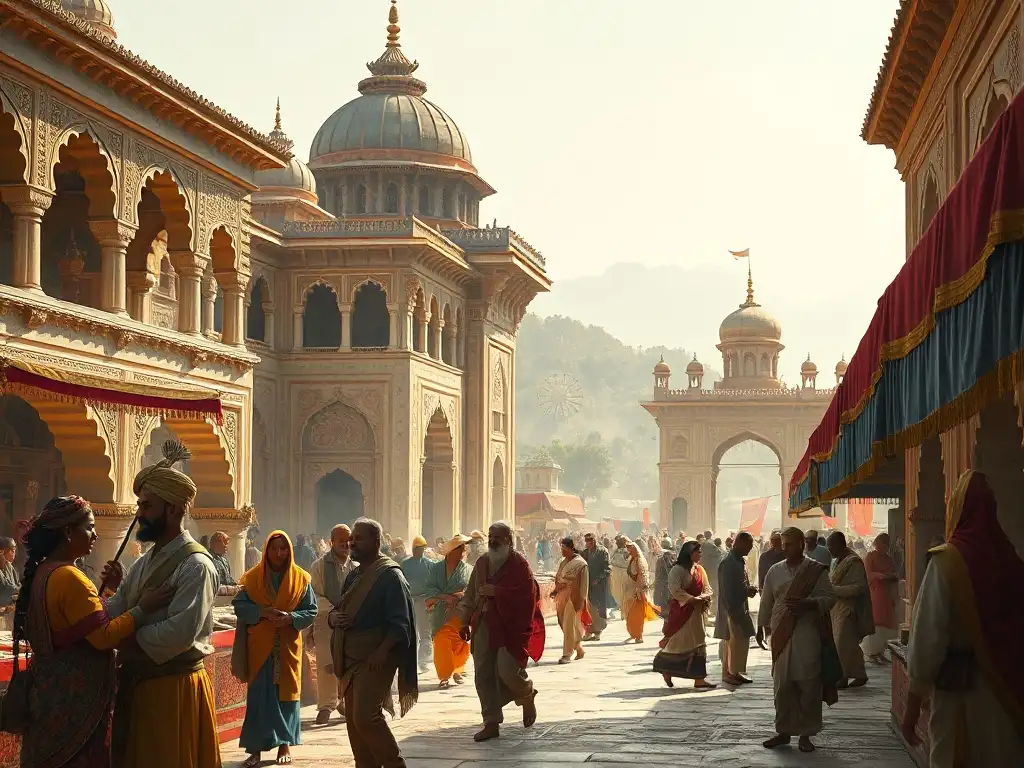
The Achaemenid Empire, established in the 6th century BCE, marked a significant period of political and cultural influence between Persia and India. The empire's reach extended into the northwestern regions of the Indian subcontinent, particularly through the conquests of Darius I. This resulted in the incorporation of Indian territories into the Persian administrative framework, which facilitated a blend of cultures and ideas.
- Tributary States: Indian kingdoms such as Gandhara and parts of the Punjab region became tributary states under Persian control. The Persians introduced their administrative practices, leading to enhanced trade and diplomatic relationships. The establishment of a vast road network, like the Royal Road, facilitated trade routes that connected India with the Persian Empire and beyond.
- Cultural Exchange: As a result of this political integration, various cultural exchanges occurred. Persian practices in governance, art, and architecture influenced Indian rulers. For instance, the use of the Persian language in administration and the adoption of coinage systems were notable changes that emerged during this period.
- Military Alliances: The Achaemenid Empire also engaged in military alliances with Indian rulers, often against common enemies. These collaborations not only strengthened political ties but also led to the sharing of military strategies and technologies, which had a lasting impact on warfare in the region.
Cultural Syncretism in Art and Architecture
The interactions between India and Persia fostered a rich tradition of cultural syncretism, particularly evident in art and architecture. This blend was characterized by the fusion of Persian motifs and styles with indigenous Indian elements.
- Architectural Styles: The introduction of Persian architectural elements, such as domes and intricate carvings, can be seen in structures like the ruins of the ancient city of Taxila. This site exemplifies how Persian architectural techniques were adapted to local building traditions, creating a unique Indo-Persian style.
- Artistic Fusion: In the realm of art, Persian influence is evident in the intricate designs and patterns found in Indian textiles and pottery. The use of vibrant colors and elaborate motifs mirrored Persian aesthetics while incorporating local themes and iconography. This artistic fusion is particularly noteworthy in the sculptures from the Gandhara region, which depict Buddhist themes through a distinctly Persian lens.
- Religious Art: The syncretism also extended to religious art, where depictions of deities often featured elements from both Persian Zoroastrianism and Indian Hinduism. This blending of artistic traditions signifies a deeper cultural integration and mutual respect between the civilizations.
The interactions between India and Persia also led to the sharing and blending of festivals and rituals, enriching the cultural tapestry of both regions.
- Navroz (Nowruz): One of the most significant shared festivals is Navroz, the Persian New Year. Celebrated with great fervor in India, particularly among the Parsi community, this festival symbolizes renewal and the arrival of spring. The customs associated with Navroz, such as preparing special dishes and engaging in communal festivities, reflect a synthesis of Persian and Indian traditions.
- Religious Rituals: Various religious rituals also saw cross-cultural influences. For example, the practice of fire worship, prominent in Zoroastrianism, found a resonance in certain Indian communities. This is evident in the worship of Agni, the fire god in Hinduism, which shares thematic similarities with Zoroastrian fire rituals.
- Shared Mythologies: The narratives and mythologies of both cultures began to intertwine. Stories from the Shahnameh, the epic poem of Persian history, were recast in Indian contexts, illustrating how mythological figures and tales transcended borders, creating a shared cultural heritage.
By examining these aspects of religious interactions between India and Persia, we gain insight into the profound ways in which these two civilizations influenced each other, leading to a rich exchange that shaped their historical and cultural landscapes.
The Legacy of Religious Interactions

The interactions between India and Persia have left a profound legacy that shaped the religious landscape of both regions. These exchanges, particularly during the Achaemenid Empire and later during the Sassanian period, facilitated a blend of beliefs, rituals, and philosophies, influencing the development of various religious practices in India. The syncretism between Zoroastrianism and Hinduism is a prime example of how these two ancient civilizations interwove their spiritual traditions.
Long-term Effects on Religious Practices in India
The long-term effects of religious interactions between India and Persia can be observed in several ways:
- Mythological Convergence: There are notable parallels in mythologies, such as the concept of divine figures and the dualism of good and evil. Zoroastrian teachings introduced ideas about an ultimate battle between Ahura Mazda (the Wise Lord) and Angra Mainyu (the Destructive Spirit), which found echoes in Hindu epics like the Mahabharata, where the struggle between dharma (righteousness) and adharma (unrighteousness) is central.
- Ritual Influences: Certain ritualistic practices in Hinduism, such as fire worship and the significance of purity, show Zoroastrian influence. The sacred fire in Zoroastrianism (Atar) parallels the Agni worship in Hindu rituals, indicating shared reverence for fire as a purifying element.
- Philosophical Exchange: Persian philosophical thought, particularly the dualistic nature of existence, impacted Indian philosophical schools. The emergence of the concept of Maya (illusion) in Hindu philosophy may have been influenced by Zoroastrian dualism, leading to a deeper exploration of reality and existence in subsequent Indian philosophical texts.
The Cultural Exchange and Its Modern Implications
The cultural exchange between India and Persia has enduring implications that extend beyond historical interactions.
- Literature and Language: Persian literature influenced Sanskrit poetry and prose, with various Sanskrit poets adopting Persian themes, styles, and even vocabulary. The presence of Persian words in modern Indian languages, such as Urdu and Hindi, attests to this rich linguistic exchange.
- Art and Architecture: The architectural styles evident in the Indo-Islamic period, showcasing intricate Persian designs, reflect the blending of Indian and Persian aesthetics. This fusion is particularly noticeable in the use of gardens, arches, and intricate tile work, combining the best of both traditions.
- Religious Pluralism: The historical interactions have contributed to the ethos of religious pluralism in India. The acceptance and integration of Zoroastrian ideas within the broader Hindu context fostered a tradition of tolerance and coexistence, which remains a hallmark of Indian society today.
Preservation of Zoroastrian Practices in India
Despite the decline of Zoroastrianism in Persia, its practices have been preserved primarily through the Parsi community in India.
- Cultural Continuity: The Parsis, who migrated to India to escape religious persecution in Persia, have maintained their Zoroastrian customs and rituals. They celebrate traditional festivals such as Navroz (New Year) and Khordad Sal (the birthday of Zoroaster), ensuring that these ancient practices remain vibrant.
- Interfaith Dialogue: The Parsi community has actively engaged in interfaith dialogue, promoting understanding between Zoroastrianism and Hinduism. Their contributions to education, health, and social welfare in India exemplify how ancient religious traditions can coexist and thrive in a modern context.
- Architectural Heritage: The construction of fire temples in India reflects the preservation of Zoroastrian beliefs. These temples serve not only as places of worship but also as cultural centers that celebrate the heritage of the Zoroastrian faith within the diverse tapestry of Indian spirituality.
The religious interactions between India and Persia have not only enriched the spiritual traditions of both civilizations but have also fostered a legacy of cultural exchange and mutual respect that continues to be relevant in today's interconnected world.
Conclusion: The Enduring Impact of Religious Interactions
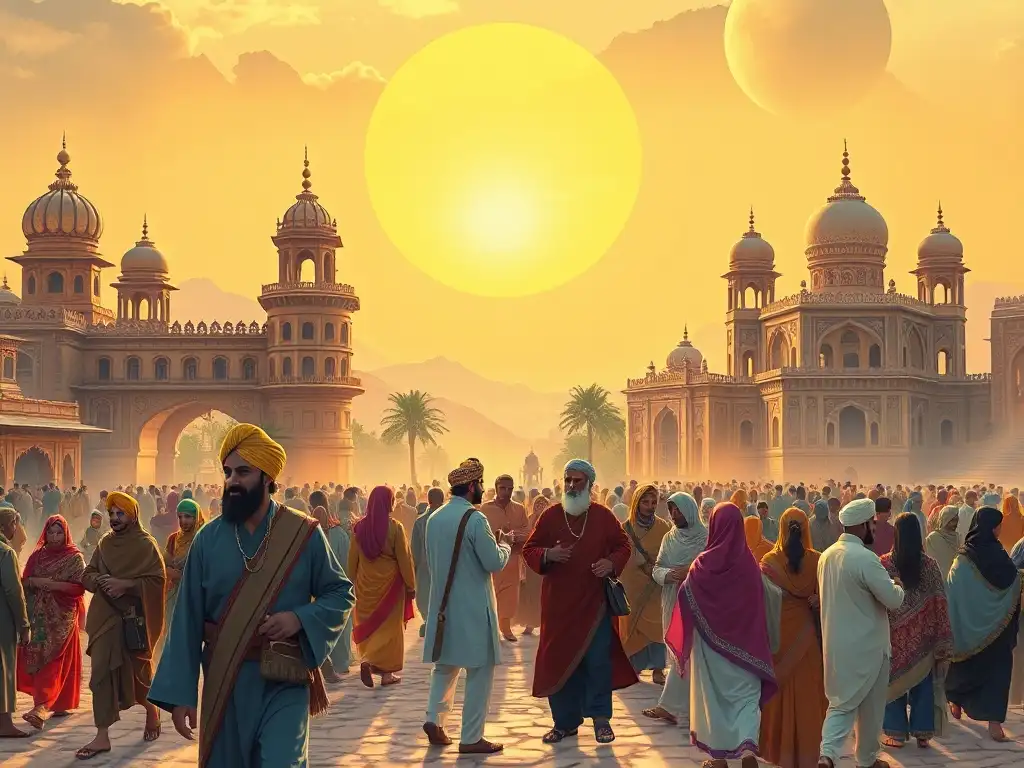
of Religious Interactions between India and Persia
Summary of Key Points
The religious interactions between India and Persia have left an indelible mark on the cultural and spiritual landscapes of both regions. Here are the key points that encapsulate this complex relationship:
- Zoroastrian Influence: The introduction of Zoroastrianism to the Indian subcontinent, particularly in regions like Gujarat, showcased the early religious exchanges. The Parsis, who migrated to India, preserved this ancient faith, blending it with local customs and beliefs.
- Hinduism's Adaptability: As Hinduism evolved, it absorbed various elements from Zoroastrianism, leading to the development of new philosophical ideas and practices. This syncretism is evident in the artworks and texts of the period.
- Cultural Syncretism: The interactions fostered a rich tapestry of cultural exchange, where art, literature, and rituals from both civilizations influenced each other. Notable examples include architectural styles and literary motifs.
- Political Alliances and Religious Tolerance: The establishment of political ties, such as those during the Achaemenid Empire's expansion, facilitated the spread of ideas and fostered an environment of religious tolerance that allowed different faiths to coexist.
- Legacy and Modern Relevance: The enduring impact of these religious interactions is still visible today, as contemporary India continues to celebrate its diverse religious heritage, with influences tracing back to its ancient interactions with Persia.
Reflection on the Importance of Understanding Religious Interactions between India and Persia
Understanding the religious interactions between India and Persia is crucial for several reasons:
- Cultural Heritage: An in-depth appreciation of these interactions helps illuminate the complexities of cultural heritage in both regions. It sheds light on how religions can shape identities, beliefs, and practices over millennia.
- Interconnected Histories: This historical perspective emphasizes the interconnectedness of civilizations, challenging the notion of isolated cultures. By recognizing the shared influences, we can foster a more nuanced understanding of global history.
- Contemporary Relevance: In a world marked by religious and cultural pluralism, understanding past interactions can inform current dialogues about tolerance, coexistence, and mutual respect. It highlights the importance of learning from history to address contemporary issues related to faith and identity.
The religious interactions between India and Persia are not merely a historical footnote but a vibrant part of the ongoing narrative of human civilization. By studying these interactions, we gain insights into the shared human experience, fostering appreciation and respect for diversity in the modern world.
References
Suggested Reading on Zoroastrianism and Hinduism
- "The Zoroastrian Tradition: An Introduction": - This comprehensive book provides insights into the origins, beliefs, and practices of Zoroastrianism, highlighting its influence on neighboring cultures, including Hinduism.
- "Hinduism: A Very Short Introduction": - This concise book offers a clear overview of Hinduism's core beliefs, practices, and historical development, making connections to its interactions with other religions, including Zoroastrianism.
- "Religious Interactions in the Ancient World" - This anthology examines the dynamics of religious exchanges between various civilizations, including India and Persia, and explores the syncretism that emerged from these interactions.
- "The Avesta: The Religious Books of Zoroastrianism": - This pivotal text is essential for understanding Zoroastrian beliefs and rituals, offering a foundational perspective that can be contrasted with Hindu scriptures.
- "The Upanishads: A New Translation": - The Upanishads represent a crucial aspect of Hindu philosophical thought and spirituality, providing a framework for understanding the religious landscape that Zoroastrianism interacted with.
Academic Journals on Ancient Indian and Persian Interactions
- Journal of Ancient Civilizations: This journal frequently publishes articles on the interactions between Indian and Persian civilizations, focusing on cultural exchanges, trade, and religious developments.
- The Journal of Indo-Iranian Studies: Dedicated to the study of India and Iran, this journal includes research on the historical and cultural ties between the two regions, emphasizing religious influences and shared practices.
- Asian Perspectives: This journal highlights archaeological and historical research about ancient Asia, often featuring studies that delve into the interactions between Indian and Persian societies.
- Religions of South Asia: This academic journal explores various religious traditions in South Asia, including the impact of Zoroastrianism on Hindu practices and beliefs, providing valuable insights into the religious interactions of the region.
- The Journal of the Royal Asiatic Society: With a broad focus on Asian studies, this journal frequently includes articles discussing the historical relationships between Indian and Persian civilizations, particularly in the context of religion and cultural exchange.
Frequently Asked Questions
What were the primary religions involved in the interactions between India and Persia?
The primary religions included Zoroastrianism from Persia and Hinduism from India, which influenced each other through cultural and philosophical exchanges.
How did Zoroastrianism impact Indian religious practices?
Zoroastrianism introduced concepts of dualism and ethical monotheism, which resonated with some aspects of Indian spirituality, particularly in the development of Hindu philosophical thought.
Were there any significant historical events that facilitated religious interactions between India and Persia?
Yes, significant events like the Achaemenid Empire's expansion into the Indian subcontinent and the rise of the Gupta Empire allowed for increased cultural exchanges and interactions.
What role did trade play in the religious interactions between India and Persia?
Trade routes, such as the Silk Road, facilitated not only the exchange of goods but also the spread of religious ideas, allowing for a fusion of cultural practices between the two regions.
How did the legacy of religious interactions between India and Persia manifest in later periods?
The legacy can be seen in the syncretic practices that emerged, blending elements of Zoroastrian and Hindu beliefs, influencing Indian philosophy and art in subsequent centuries.
Final Reflection: The Enduring Legacy of Religious Interactions between India and Persia
The intricate tapestry of religious interactions between India and Persia remains profoundly relevant today, as it underscores the power of cultural exchange in shaping belief systems and societal values. In an increasingly interconnected world, understanding these historical dynamics offers invaluable insights into how religions evolve and influence one another, fostering a spirit of tolerance and coexistence. The legacy of Zoroastrianism and Hinduism serves as a testament to the enduring impact of cross-cultural dialogues, reminding us that our differences can lead to rich, shared narratives rather than divisions.
The interactions between these two ancient civilizations have not only shaped their respective religious landscapes but have also left an indelible mark on the broader cultural and social fabric of the region. The blending of ideas, rituals, and philosophies continues to resonate, as seen in the syncretic practices that emerge in contemporary societies.
As Mahatma Gandhi once said, "> The best way to find yourself is to lose yourself in the service of others." This sentiment echoes the essence of these religious interactions, emphasizing the importance of understanding and embracing diverse perspectives in our quest for personal and collective growth.
As we reflect on the lessons drawn from the rich history of religious interactions between India and Persia, let us embrace the call to foster dialogue and understanding in our own lives. Consider how you can engage with different cultures and belief systems, allowing the wisdom of the past to guide your actions today. By doing so, we not only honor the legacy of these ancient traditions but also contribute to a more harmonious and inclusive future for all.
Embrace the Wisdom of Ancient Cultures!
Thank you for diving into the fascinating history of Zoroastrianism and Hinduism, as well as the intricate religious interactions between India and Persia. Your interest in these rich traditions highlights their vital role in shaping cultural exchanges. Now, it's time to take action and explore further!
Here are some steps to enrich your understanding and engage with this remarkable history:
- Visit local museums or online exhibitions that showcase ancient Indian and Persian artifacts to experience history firsthand.
- Join community groups or forums where discussions about ancient religions are lively, allowing you to share insights and learn from others.
- Read a significant book on the topic, such as
What aspect of the interactions between ancient India and Persia intrigues you the most, and how do you think these cultures have influenced modern beliefs?