
Religion and Philosophy: CrossCultural Exchanges between Indian and Persian Thinkers


Welcome to Ancient India History, where we delve into the captivating tapestry of India's past! Here, you will uncover the rich and diverse history, culture, and contributions of ancient Indian civilizations, from the awe-inspiring Indus Valley to the legendary Gupta Empire. In our featured article, "Religion and Philosophy: Cross-Cultural Exchanges between Indian and Persian Thinkers," we invite you to explore the fascinating Indian Persian philosophical exchanges that shaped ideas and beliefs across borders.
What insights did these cultures share, and how did their interactions influence the world? Dive deeper with us and discover the profound connections that continue to resonate today!
- Introduction to Indian Persian Philosophical Exchanges
- Historical Context of Indian Persian Interactions
- Key Indian Thinkers Influenced by Persian Philosophy
- Notable Persian Thinkers and Their Influence on Indian Philosophy
- Themes of Exchange: Religion and Philosophy
- Case Studies of Indian Persian Philosophical Exchanges
- Conclusion: The Enduring Legacy of Indian Persian Philosophical Exchanges
- References
-
Frequently Asked Questions
- What are the main themes of the article on Indian and Persian philosophical exchanges?
- How did Indian and Persian philosophies influence each other?
- What role did trade play in these philosophical exchanges?
- Can you give examples of prominent thinkers from both cultures?
- Why are Indian Persian philosophical exchanges significant today?
- Final Reflection: The Enduring Legacy of Indian-Persian Philosophical Exchanges
- Unveil the Wisdom of Cross-Cultural Philosophy!
Introduction to Indian Persian Philosophical Exchanges
The intricate tapestry of ancient Indian and Persian civilizations not only showcases their unique cultural identities but also highlights the profound philosophical exchanges that occurred between them. The Indian-Persian philosophical exchanges represent a significant chapter in the history of thought, where ideas, beliefs, and practices flowed across borders, enriching both traditions. From the early interactions during the Indus Valley civilization to the flourishing of ideas in the Gupta Empire, these exchanges have left an indelible mark on the intellectual landscapes of South Asia and Persia.
This article delves into the nuances of these interactions, exploring how Indian and Persian thinkers influenced each other, the philosophical frameworks that emerged, and the lasting impact of this cross-cultural dialogue. By examining the historical context and the key figures involved, we aim to illuminate the importance of these exchanges in shaping the philosophical and religious thought of the time.
Overview of Indian and Persian Philosophical Traditions
Indian and Persian philosophical traditions are rich and diverse, each contributing significantly to the broader discourse of human thought.
- Indian Philosophy:
- Rooted in ancient texts such as the Vedas, Upanishads, and later the works of Buddhist and Jain thinkers, Indian philosophy encompasses a range of schools, including Vedanta, Sankhya, and Buddhism.
- Central themes often revolve around dharma (duty/righteousness), moksha (liberation), and the nature of reality, with an emphasis on introspection and the pursuit of knowledge.
- Persian Philosophy:
- Persian thought, influenced by Zoroastrianism and later Islamic philosophy, emphasizes the moral and ethical dimensions of existence, focusing on concepts like Asha (truth/order) and the struggle between good and evil.
- Key figures such as Avicenna and Rumi represent the synthesis of pre-Islamic Persian thought with Islamic philosophy, exploring metaphysics, ethics, and mysticism.
The convergence of these traditions facilitated a rich dialogue that enabled both Indian and Persian thinkers to challenge and refine their ideas, leading to a deeper understanding of universal questions regarding existence, morality, and the divine.
Significance of Cross-Cultural Interactions in Ancient Thought
The cross-cultural interactions between Indian and Persian thinkers were not merely exchanges of ideas but rather catalysts for intellectual evolution. The significance of these interactions can be assessed through several lenses:
- Mutual Enrichment:
- Philosophical dialogues led to the cross-pollination of concepts, such as the Indian understanding of karma influencing Persian notions of morality and justice.
- Translation Movements: The translation of texts and ideas facilitated broader access to philosophical works, allowing thinkers to engage with and critique foreign philosophies.
- Cultural Synthesis:
- The merging of Indian and Persian philosophies resulted in unique syntheses, seen in the works of scholars like Al-Biruni, who integrated Indian astronomical knowledge with Persian science.
- This cultural synthesis helped create a shared intellectual heritage that transcended geographic and linguistic barriers.
- Impact on Later Philosophies:
- The exchanges laid the groundwork for future philosophical movements, influencing Islamic philosophy, medieval European thought, and even contemporary philosophical discussions.
- The legacy of these interactions continues to resonate, as modern scholars explore the enduring relevance of ancient philosophical ideas.
Overall, the Indian-Persian philosophical exchanges highlight the dynamic nature of ancient thought, illustrating how cross-cultural interactions can foster innovation and understanding. As we delve deeper into this fascinating topic, we will uncover specific examples and key figures who played pivotal roles in this intellectual journey.
Historical Context of Indian Persian Interactions

The Indus Valley Civilization and Early Persian Influences
The Indus Valley Civilization (IVC), flourishing around 2500 BCE in present-day Pakistan and northwest India, was one of the world's earliest urban cultures. Although direct evidence of Persian influence during this period is minimal, the geographical proximity and subsequent interactions laid the groundwork for future exchanges. The early Persian communities, particularly those of the Elamite civilization, engaged in trade with regions bordering the IVC, facilitating cultural and economic exchanges.
Archaeological findings suggest that trade routes initiated during this time allowed for the exchange of goods such as textiles, pottery, and precious metals. This economic interaction was a precursor to the philosophical dialogues that would emerge centuries later. The exchange of ideas became more pronounced with the advent of the Achaemenid Empire, which encompassed parts of the Indus region, leading to further cultural synergies.
The Achaemenid Empire's Impact on Indian Philosophical Thought
The Achaemenid Empire (c. 550-330 BCE) marked a significant phase in Indian-Persian philosophical exchanges. Under rulers like Cyrus the Great and Darius I, the empire expanded into the northwestern regions of the Indian subcontinent, integrating various cultures. This expansion facilitated the introduction of Zoroastrian ideas and administrative practices into Indian society.
One notable aspect of this interaction was the introduction of dualistic concepts prevalent in Zoroastrianism. The notion of good versus evil found resonance in Indian philosophical traditions, particularly within the Vedic texts and later Buddhist thought. Philosophers such as Chanakya and thinkers of the Upanishadic period began to incorporate elements of Persian ethical thought into their discourses, enriching the existing frameworks of morality, governance, and metaphysics.
Noteworthy is the influence of Persian language and literary forms, which permeated Sanskrit literature. The incorporation of Persian terminologies into Indian philosophical discourse reflected a deepening intellectual engagement, leading to a unique synthesis of ideas. This cross-pollination of thought is evident in texts such as Mahabharata and the Arthashastra, which exhibit elements of governance and ethics resonant with Persian ideals.
Trade Routes: Connecting India and Persia
The establishment of trade routes between India and Persia significantly contributed to the flow of ideas and philosophies. The Silk Road and maritime routes enabled merchants and scholars to traverse vast distances, exchanging not only goods but also cultural and intellectual capital.
- Silk Road: This extensive network of trade routes connected the East and West, facilitating an exchange of ideas, art, and sciences. Indian traders brought with them not only spices and textiles but also philosophical texts that influenced Persian thought.
- Maritime Trade: Indian ports like Lothal and Surat served as crucial hubs for maritime trade, enabling the transfer of philosophical ideas between Indian and Persian scholars. The spread of Buddhism, particularly, was aided by these maritime connections, which reached Persian territories.
| Trade Route | Key Features | Impact on Exchanges |
|---|---|---|
| Silk Road | Overland trade connecting Asia and Europe | Exchange of philosophies, art, and science |
| Maritime Routes | Sea trade routes linking Indian ports with Persia | Spread of Buddhism and philosophical dialogues |
These trade routes not only facilitated economic prosperity but also served as conduits for the Indian Persian philosophical exchanges that enriched both civilizations. The impact of these interactions is evident in the shared cultural heritage and philosophical dialogues that arose from this vibrant historical tapestry.
Key Indian Thinkers Influenced by Persian Philosophy
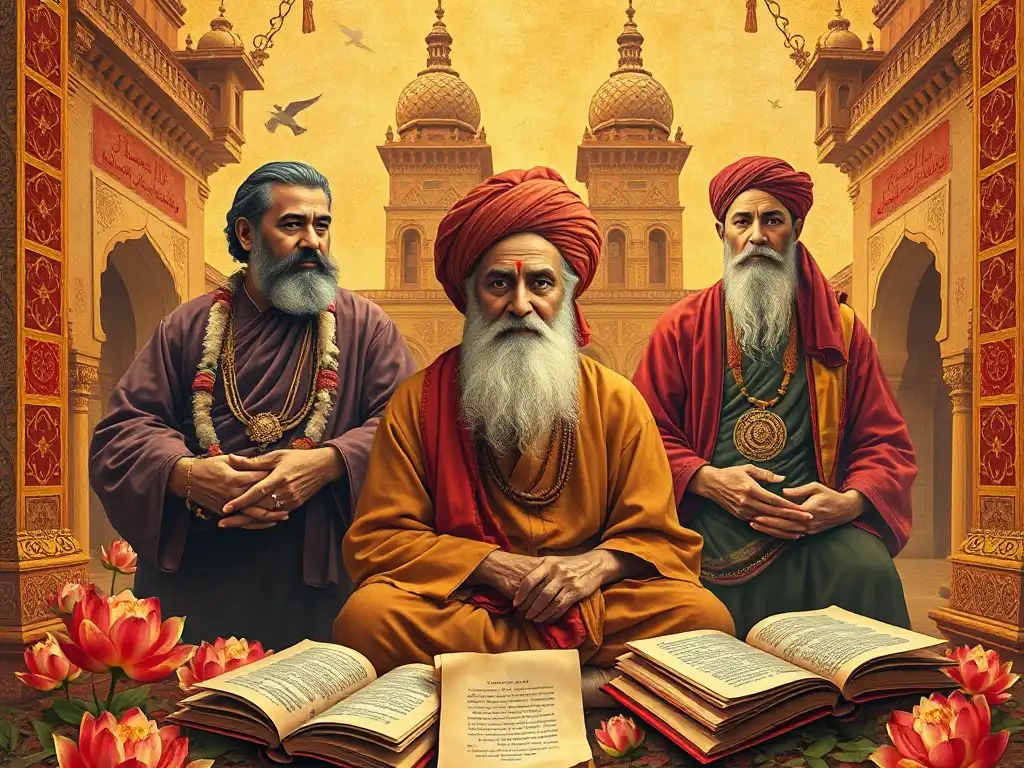
The interplay between Indian and Persian philosophies has led to significant contributions from key Indian thinkers who were influenced by Persian thought. This cross-cultural exchange not only enriched the philosophical landscape of ancient India but also fostered a dialogue that shaped various aspects of science, governance, and spirituality.
Contributions of Aryabhata and His Persian Connections
Aryabhata, one of the most prominent mathematicians and astronomers of ancient India, stands out as a figure deeply influenced by Persian intellectual traditions. His seminal work, the Aryabhatiya, written in 499 CE, reflects a synthesis of knowledge that likely included Persian astronomical insights.
- Astronomical Calculations: Aryabhata introduced innovative methods for calculating the positions of celestial bodies, which bear resemblance to Persian astronomical techniques. His calculations on the circumference of the Earth and the length of the solar year demonstrate a remarkable precision that parallels the advancements made in Persian science.
- Zero and Place Value: The concept of zero, which Aryabhata famously utilized, may have been influenced by earlier Persian numeral systems. The adoption of a place value system in his computations showcases an amalgamation of Indian and Persian mathematical ideas.
Aryabhata's exchanges with Persian scholars, particularly in translating and interpreting astronomical texts, facilitated the spread of knowledge across cultures, ultimately influencing subsequent generations of thinkers in both regions.
The Role of Chanakya in Indian-Persian Philosophical Discourse
Chanakya, also known as Kautilya, was a significant figure in the political philosophy of ancient India. His magnum opus, the Arthashastra, addresses various aspects of statecraft, economics, and military strategy, and exhibits elements of Persian political thought.
- Statecraft and Governance: Chanakya's pragmatic approach to governance echoes Persian administrative practices. His insights into diplomacy and intelligence operations reflect a sophisticated understanding of political strategy that parallels the ethos of Persian rulers.
- Ethics and Morality in Politics: The Arthashastra also delves into the ethical dimensions of leadership, drawing from both Indian and Persian philosophical traditions. Chanakya's emphasis on realpolitik resonates with similar themes found in Persian literature, highlighting the moral complexities faced by leaders.
Through his interactions with Persian thinkers and the adaptation of their ideas, Chanakya played a crucial role in shaping the discourse on governance, establishing a legacy that transcended cultural boundaries.
Influence of Buddhist Thought on Persian Philosophy
The influence of Buddhist thought on Persian philosophy is another noteworthy dimension of Indian-Persian philosophical exchanges. The spread of Buddhism, particularly during the Mauryan Empire, facilitated cultural interactions that enriched both traditions.
- Concepts of Non-violence and Compassion: Buddhist principles of ahimsa (non-violence) and compassion resonated with Persian ethical frameworks. The adoption of these concepts can be seen in various Persian texts that advocate for moral behavior and social justice.
- Philosophical Debates: The dialogue between Indian Buddhist scholars and Persian philosophers led to significant philosophical debates on metaphysics and ethics. The exchange of ideas regarding the nature of reality and the self contributed to a shared intellectual heritage that influenced subsequent philosophical developments in both cultures.
This cross-pollination of ideas not only enriched Persian philosophy but also provided a broader context for understanding the interconnectedness of human thought across civilizations.
The Indian-Persian philosophical exchanges are rich with historical significance, showcasing how key thinkers like Aryabhata and Chanakya integrated Persian ideas into their works. Furthermore, the influence of Buddhist thought on Persian philosophy demonstrates the profound impact of cross-cultural interactions in shaping the intellectual landscape of ancient civilizations.
Notable Persian Thinkers and Their Influence on Indian Philosophy
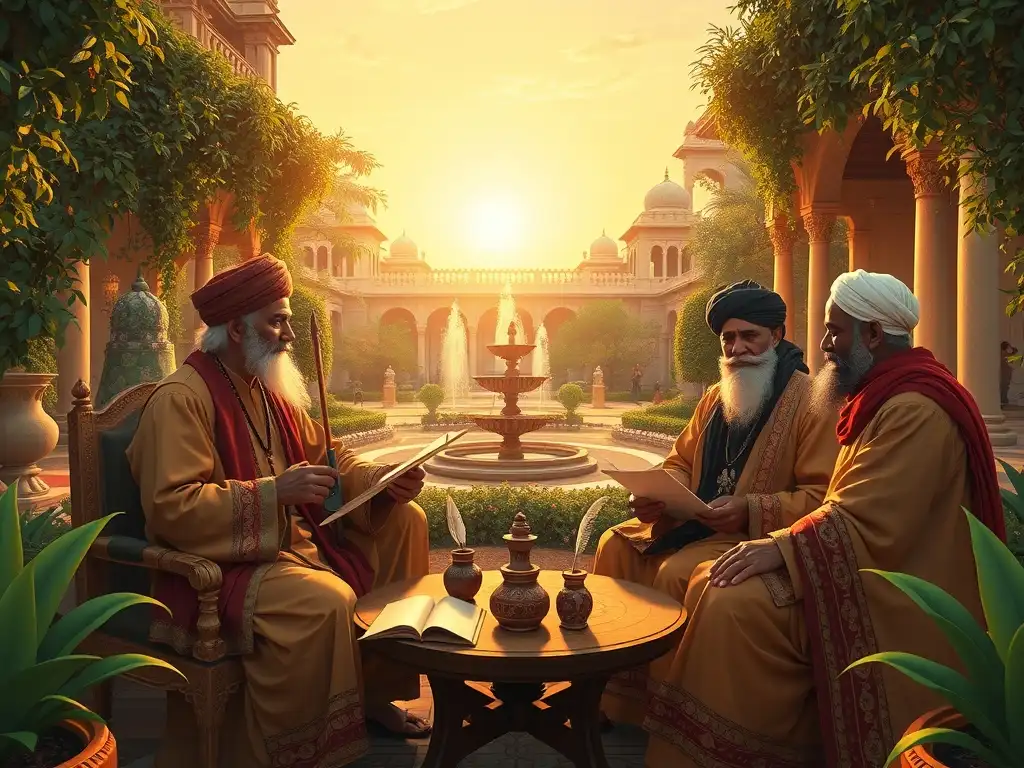
Throughout history, the interaction between Indian and Persian thinkers has been pivotal in shaping philosophical discourse. Notable Persian philosophers have played a significant role in influencing Indian thought, particularly during the medieval period when cultural exchanges flourished due to trade, conquests, and the establishment of empires. These exchanges not only facilitated the transmission of ideas but also led to a synthesis of philosophical concepts that enriched both traditions.
Zoroastrianism and Its Philosophical Implications in India
Zoroastrianism, one of the world's oldest monotheistic religions, originated in ancient Persia and laid the groundwork for various philosophical ideas that found resonance in Indian thought. The core tenets of Zoroastrianism, such as the dualism of good and evil, the significance of free will, and the concept of an eternal soul, parallel many Indian philosophical doctrines.
- Dualism: The Zoroastrian belief in the constant struggle between Ahura Mazda (the supreme god) and Angra Mainyu (the evil spirit) echoes the Indian concept of the eternal conflict between Dharma (righteousness) and Adharma (unrighteousness). This dualistic framework influenced Indian thinkers who sought to understand the nature of good and evil in human existence.
- Moral Responsibility: Zoroastrianism emphasizes individual moral responsibility, a theme that resonates with Indian philosophies such as Karma and Dharma. The idea that one's actions have consequences in this life and beyond is a shared belief that highlights the ethical dimensions of both traditions.
- Eschatology: The Zoroastrian eschatological vision, which includes concepts of judgment and an afterlife, found parallels in various Indian philosophies, including certain interpretations of Hinduism and Buddhism. This shared interest in the fate of the soul after death influenced Indian metaphysical thought.
The integration of Zoroastrian concepts into Indian philosophy occurred through literary exchanges and the migration of Zoroastrians to India, particularly during the Islamic conquests. This blending of ideas significantly enriched the philosophical landscape of the Indian subcontinent.
The Works of Rumi and Their Reception in Indian Thought
Jalal ad-Din Muhammad Rumi, the 13th-century Persian poet and mystic, created works that transcended cultural boundaries, profoundly impacting Indian philosophical and spiritual thought. His poetry, particularly in "Masnavi," conveys deep spiritual insights and emphasizes the unity of existence, which resonated with Indian mystical traditions.
- Sufism and Bhakti: Rumi's Sufi philosophy, with its focus on love, devotion, and the quest for divine union, found parallels with the Bhakti movement in India. Both traditions emphasize personal experience and devotion to God, encouraging individuals to seek a direct relationship with the divine.
- Influence on Indian Poets: Indian poets such as Kabir and Mirabai drew inspiration from Rumi's themes of love and spirituality, weaving similar motifs into their own works. The cross-cultural exchange enriched the vernacular poetry in India, fostering a syncretic approach to spirituality.
- Philosophical Dialogues: Rumi's dialogues on the nature of reality and the self sparked interest among Indian philosophers and mystics, leading to discussions that blended Sufi and Indian metaphysical ideas. His emphasis on the inner journey towards self-realization influenced various Indian philosophical schools.
Rumi's works continue to be studied in India, with translations and adaptations making his poetry accessible to new generations. The enduring impact of his thought exemplifies the rich tapestry of Indian-Persian philosophical exchanges.
Avicenna's Impact on Indian Metaphysical Concepts
Avicenna (Ibn Sina), a prominent Persian philosopher and polymath of the Islamic Golden Age, made significant contributions to metaphysics that influenced Indian philosophical thought, particularly during the medieval period. His works, especially "The Book of Healing" and "The Book of Salvation," introduced complex ideas that were assimilated into Indian metaphysical discourse.
- Essence and Existence: Avicenna's distinction between essence (what something is) and existence (that something is) provided a framework for Indian philosophers to explore similar concepts. This distinction influenced the development of metaphysical thought in both Islamic and Indian traditions, as thinkers sought to understand the nature of reality.
- The Nature of the Soul: Avicenna's exploration of the soul's nature, its immortality, and its relationship to the body influenced Indian philosophers, particularly in the context of Vedanta and Buddhist thought. His ideas on the soul's journey and its connection to the divine found resonance in Indian metaphysical discussions.
- Logical Methodology: Avicenna's logical methodologies, particularly his use of syllogisms and causal reasoning, were adopted by Indian scholars, enhancing the rigor of philosophical inquiry. This exchange of ideas fostered a climate of intellectual growth and innovation.
The integration of Avicenna's metaphysical concepts into Indian philosophy exemplifies the depth of Indian-Persian philosophical exchanges, demonstrating how cross-cultural interactions can lead to profound advancements in thought and understanding.
Themes of Exchange: Religion and Philosophy

Comparative Analysis of Indian and Persian Religious Beliefs
The religious landscapes of ancient India and Persia exhibit profound complexities shaped by diverse cultural influences and historical contexts. At the core of Indian religious beliefs lies Hinduism, characterized by a multitude of deities, rituals, and a strong emphasis on dharma (duty) and karma (action and consequence). In contrast, Zoroastrianism, the dominant religion of ancient Persia, centers around the duality of good and evil, embodied in the conflict between Ahura Mazda (the god of light) and Angra Mainyu (the spirit of darkness).
A notable point of intersection between these belief systems is the concept of life after death. While Zoroastrianism emphasizes the judgment of souls and a final resurrection, Hinduism introduces a cyclical view of existence through reincarnation, where the soul undergoes numerous births until it reaches moksha (liberation). This divergence reflects broader philosophical implications on how each civilization perceives the moral fabric of reality and the ultimate purpose of life.
| Aspect | Indian Beliefs | Persian Beliefs |
|---|---|---|
| Deities | Polytheistic (Brahman, Devas) | Monotheistic (Ahura Mazda) |
| Afterlife | Reincarnation and moksha | Judgment and resurrection |
| Morality | Dharma and karma | Dualistic ethics |
| Rituals | Diverse rituals and festivals | Fire temples and sacred ceremonies |
The interactions between Indian and Persian thinkers fostered a rich dialogue, where Indian philosophies such as Buddhism and Jainism integrated with Zoroastrian ideas, influencing ethical thought and spiritual practices across both cultures.
The Interplay of Ethics and Morality in Indian and Persian Thought
Ethics and morality form critical components of both Indian and Persian philosophies, albeit framed within distinct cultural contexts. Indian thought often emphasizes ahimsa (non-violence) and the principle of dharma, which stipulates that ethical actions must align with one's duties and societal roles. This intricate web of ethical considerations is reflected in texts such as the Bhagavad Gita, where moral dilemmas are explored through the lens of duty and righteousness.
Conversely, Persian thought, rooted in Zoroastrianism, presents a more binary understanding of ethics, contrasting the forces of good and evil. The Avesta, the sacred Zoroastrian scripture, articulates a clear moral dichotomy, urging adherents to choose the path of truth and righteousness (asha) against falsehood (druj). This ethical framework profoundly influenced Persian governance, law, and society.
The convergence of these ethical systems is evident in the philosophical dialogues that emerged during the Maurya and Achaemenid empires. Thinkers from both civilizations engaged in discussions around the nature of justice, governance, and the moral responsibilities of rulers, leading to a cross-pollination of ideas that enriched their respective ethical landscapes.
Mysticism: A Common Thread in Indian and Persian Philosophies
Mysticism serves as a profound common thread between Indian and Persian philosophies, where both traditions explore the nature of the divine and the transcendent experiences of reality. In India, mysticism is deeply woven into the fabric of Hinduism, Buddhism, and Jainism, focusing on achieving direct experiences of the divine through practices such as meditation, yoga, and devotion (bhakti). The Upanishads, which delve into the nature of ultimate reality (Brahman), showcase this mystical pursuit, emphasizing union with the divine.
Similarly, Persian mysticism, notably represented by Sufism, seeks a personal connection with God through love, devotion, and the rejection of materialism. Sufi poets like Rumi and Hafez articulated profound mystical experiences that resonate with the spiritual quests found in Indian traditions. The themes of love, longing, and divine union in Sufi poetry echo the sentiments expressed in Indian mystical literature.
The synthesis of Indian and Persian mysticism can be observed in the philosophical exchanges that flourished along the Silk Road and during the Mughal era, where scholars and mystics from both traditions engaged in dialogue. This blend not only enriched their spiritual practices but also fostered a shared understanding of the ineffable nature of the divine, creating a unique tapestry of cross-cultural mystical thought.
Case Studies of Indian Persian Philosophical Exchanges
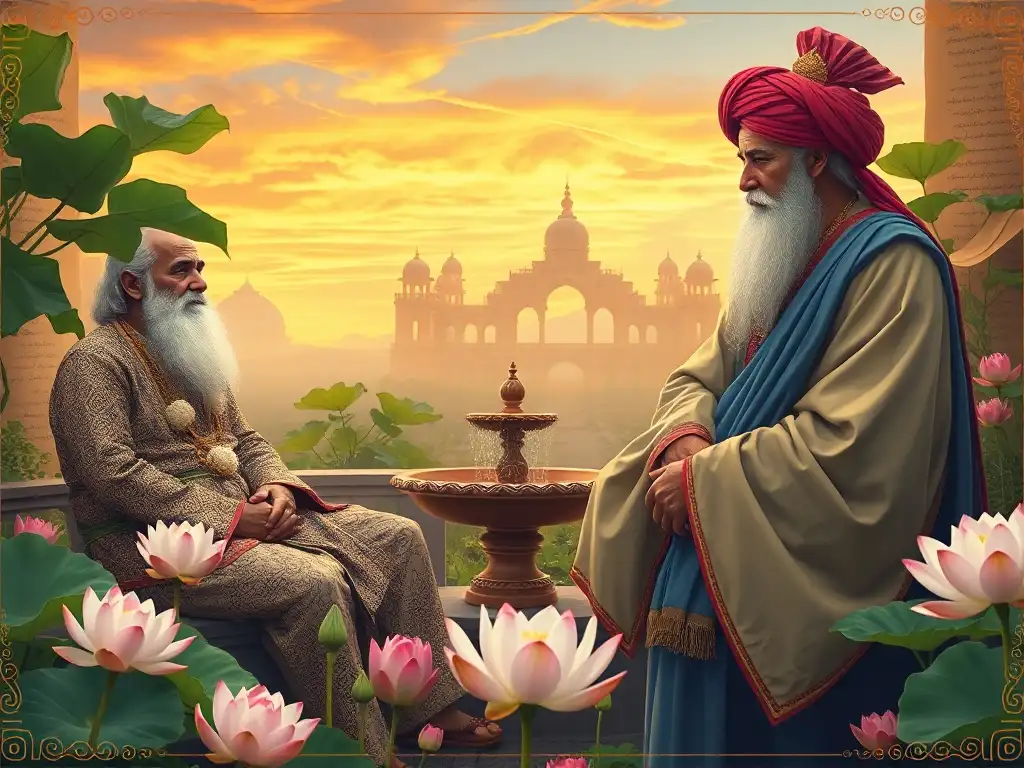
The Influence of Persian Literature on Indian Poets
The interplay between Persian literature and Indian poetry represents a significant area of Indian Persian philosophical exchanges. Persian poetry, characterized by its rich imagery and profound themes, found a receptive audience in India, especially during the medieval period when the Mughal Empire facilitated cultural syncretism.
Notable figures like Amir Khusrau, often referred to as the "father of Urdu literature," exemplify this blending of traditions. Khusrau, a prolific poet, utilized Persian forms and stylistic elements while also incorporating Indian themes and vernacular, creating a unique fusion that enriched the literary landscape of India. His works, such as "Ghazals" and "Qawwalis," exhibit influences from Persian poetic conventions, notably the use of couplets and intricate metaphors.
Additionally, poets like Mirza Ghalib drew heavily from Persian literature, both in form and content. Ghalib's poetry reflects a deep engagement with Persian philosophical themes, exploring concepts of love, existence, and the human condition. This cross-pollination not only shaped the Urdu language but also contributed to the broader philosophical discourse in India.
The cultural exchange was not one-sided; Indian themes permeated Persian literature as well. The adoption of Indian motifs, folklore, and stories into Persian texts illustrates the bidirectional nature of these exchanges. This mutual influence between Indian and Persian poets continues to resonate in contemporary literature, highlighting the enduring legacy of their philosophical dialogues.
Cross-Cultural Philosophical Dialogues: Historical Examples
The historical encounters between Indian and Persian thinkers produced a rich tapestry of cross-cultural philosophical dialogues that shaped the intellectual landscapes of both civilizations. One prominent example is the **dialogue between the Indian philosopher Adi Shankaracharya and Persian scholars during the early medieval period. Shankaracharya's Advaita Vedanta philosophy, which emphasizes non-dualism and the unity of the self with the ultimate reality, found parallels in certain Persian philosophical traditions, particularly those influenced by Zoroastrianism and later Islamic thought.
Another significant instance is the exchange that occurred during the Mughal Empire. The Mughal court became a melting pot of ideas, where Indian philosophers like Raja Jay Singh interacted with Persian scholars, leading to the development of a unique philosophical discourse. This era saw the translation of various texts, such as the Upanishads into Persian, which facilitated a deeper understanding of Indian metaphysical concepts among Persian intellectuals.
Furthermore, the writings of Persian philosophers such as Omar Khayyam and Rumi resonated with Indian thinkers, leading to the incorporation of their ideas into Indian philosophical dialogues. The Sufi tradition, which emphasized love, unity, and the pursuit of the divine, found a receptive audience in Indian spirituality, resulting in a synthesis of thought that enriched both traditions.
These historical examples of Indian Persian philosophical exchanges illustrate a vibrant intellectual tradition marked by mutual respect and curiosity. The dialogues not only expanded the horizons of philosophical thought but also fostered a spirit of inquiry and collaboration that transcended cultural boundaries.
The Legacy of Indian Persian Exchanges in Modern Philosophy
The legacy of Indian Persian exchanges continues to influence modern philosophical thought, underscoring the relevance of historical dialogues in contemporary discourse. In recent years, scholars have revisited the works of medieval Indian and Persian thinkers to glean insights into modern challenges, such as ethics, governance, and spirituality.
The integration of Persian philosophical concepts, particularly those related to humanism and mysticism, has enriched Indian philosophical frameworks. Modern philosophers like Jiddu Krishnamurti and Radhakrishnan have drawn from this rich heritage, emphasizing the importance of cross-cultural dialogue in addressing existential questions.
Moreover, the study of Persian influence on Indian art, literature, and philosophy has gained traction in academic circles, leading to a resurgence of interest in exploring the interconnectedness of these civilizations. This cross-pollination is evident in various domains, from literature to political theory, where ideas once exchanged in the past continue to inform contemporary thought.
The Indian Persian philosophical exchanges not only played a pivotal role in shaping the intellectual currents of their time but also laid the groundwork for ongoing dialogue in modern philosophy. Their legacy serves as a reminder of the rich tapestry of human thought and the importance of cultural interactions in fostering understanding and progress.
Conclusion: The Enduring Legacy of Indian Persian Philosophical Exchanges

The intricate tapestry of Indian Persian philosophical exchanges has woven together rich traditions of thought that have profoundly influenced both cultures. As we reflect on the historical interactions between Indian and Persian thinkers, it becomes evident that these exchanges have not only shaped religious and philosophical discourses but have also contributed to the broader landscape of human knowledge. The legacy of these interactions is visible in various fields, including literature, science, and art, demonstrating a mutual enrichment that transcends geographical boundaries.
Reflections on the Importance of Cross-Cultural Dialogue
Cross-cultural dialogue between Indian and Persian thinkers was pivotal in fostering an environment of intellectual curiosity and collaboration. This dialogue facilitated the exchange of ideas, beliefs, and practices, allowing for:
- Mutual Influence: Philosophical concepts such as Ahimsa (non-violence) found resonance in Persian thought, while Indian reflections on Dharma (duty) enriched Persian ethical perspectives.
- Literary Synergy: The translation of key texts, such as the Upanishads into Persian, not only broadened the intellectual horizons but also inspired literary forms like Sufi poetry, which incorporated Indian motifs.
- Spiritual Interconnections: Both traditions explored themes of the divine, morality, and the nature of reality, leading to a deeper understanding of existential questions shared across cultures.
This ongoing dialogue is essential for fostering tolerance and appreciation among diverse cultures, highlighting how philosophical exchanges can bridge gaps and create a shared understanding of humanity.
Future Directions for Research in Indian Persian Interactions
The field of Indian Persian interactions presents numerous avenues for future research that can further illuminate the complexities of cultural exchanges. Scholars can explore:
- Comparative Analysis: Investigating specific philosophical texts and their influences on each other can reveal deeper insights into how ideas evolved across cultures. For instance, examining the impact of Zoroastrianism on Hindu thought could uncover shared ethical frameworks.
- Historical Contextualization: Understanding the socio-political climates during periods of interaction, such as the Mughal Empire, can provide a richer context for the philosophical exchanges. This includes studying how trade routes facilitated not only economic but also intellectual exchanges.
- Interdisciplinary Approaches: Combining insights from archaeology, linguistics, and anthropology can yield a comprehensive understanding of how philosophical ideas traveled and transformed across borders. Utilizing modern technology, such as digital humanities, can also help in analyzing ancient texts and manuscripts.
- Global Perspectives: Positioning Indian Persian exchanges within a broader framework of global philosophical dialogues can highlight their significance in the world history of thought, showing how they fit into a larger narrative of human intellectual development.
The study of Indian Persian philosophical exchanges continues to be a rich field for exploration, promising to uncover new dimensions of understanding that resonate with contemporary global challenges. The enduring legacy of these interactions not only enriches our appreciation of ancient civilizations but also offers valuable lessons for fostering cross-cultural understanding today.
References
Key Texts and Sources on Indian Persian Philosophical Exchanges
In exploring the rich tapestry of Indian Persian philosophical exchanges, several foundational texts and scholarly works stand out. These sources provide invaluable insights into the intermingling of ideas, beliefs, and practices between Indian and Persian thinkers throughout history.
-
"The Philosophy of the Upanishads" by Paul Deussen
This work examines the philosophical underpinnings of the Upanishads, which influenced not only Indian thought but also had ripples in Persian philosophy through later translations and interpretations.
-
"The Influence of Persian Literature on Urdu Literature" by Gopi Chand Narang
This text delves into how Persian literature, especially during the Mughal era, shaped philosophical and poetic expressions in Indian literature, reflecting cross-cultural exchanges.
-
"Avesta and the Vedas: The Comparison of Indian and Persian Texts" by J. A. B. van Buitenen
This comparative study highlights similarities and differences between the Vedic texts and the Avesta, shedding light on the shared spiritual and philosophical themes.
-
"Persian Philosophers in the Age of Akbar" by Iftikhar A. Malik
This book focuses on the Mughal period, detailing how Persian philosophers, like Nasir al-Din al-Tusi, interacted with Indian scholars, fostering a rich environment for philosophical discourse.
-
"A History of Indian Philosophy" by Surendranath Dasgupta
In the context of Indian philosophy, this comprehensive work includes discussions on the influences and exchanges with Persian thought, particularly during periods of political and cultural integration.
These texts not only serve as key references for understanding Indian Persian philosophical exchanges, but they also enrich our comprehension of how these civilizations contributed to the broader spectrum of global philosophy.
Further Reading on Ancient Indian and Persian Thought
For those interested in delving deeper into the complexities of ancient Indian and Persian thought, the following readings offer additional perspectives and analyses:
-
"The Persian Influence on the Indian Philosophy" by Rafiq Zakaria
This book discusses the profound influence of Persian thought on Indian philosophy, particularly in areas such as metaphysics and ethics during the medieval period.
-
"Indian and Persian Interactions" by T. N. Dharmadhikari
This scholarly work examines the specific interactions between Indian and Persian scholars, providing case studies that illustrate philosophical exchanges and mutual influences.
-
"Sufism and Indian Philosophy" by A. K. Ramanujan
This text explores the connections between Sufism and various Indian philosophical schools, emphasizing the syncretic nature of thought that arose from these exchanges.
-
"The Cultural History of India and Persia" by D. C. Sircar
A comprehensive overview of the historical and cultural interactions, this book looks at how philosophical ideas traveled and transformed between these two great civilizations.
-
"Rethinking the History of Indian Philosophy" by R. K. Sharma
This work challenges traditional narratives and encourages readers to consider the interactions with Persian philosophy as a vital component of the evolution of Indian thought.
These resources will broaden your understanding of how Indian Persian philosophical exchanges shaped not only regional thought but also contributed to the global intellectual landscape.
Frequently Asked Questions
What are the main themes of the article on Indian and Persian philosophical exchanges?
The article explores cross-cultural exchanges between Indian and Persian thinkers, focusing on religion, philosophy, and their mutual influences throughout history.
How did Indian and Persian philosophies influence each other?
Indian and Persian philosophies exchanged ideas and concepts, particularly in fields like metaphysics, ethics, and spirituality, leading to a rich tapestry of thought that shaped both cultures.
What role did trade play in these philosophical exchanges?
Trade routes facilitated not only the exchange of goods but also ideas and knowledge, allowing Indian and Persian thinkers to engage with each other's philosophical and religious texts.
Can you give examples of prominent thinkers from both cultures?
Prominent thinkers include Chanakya from India and Zarathustra from Persia, both of whom contributed significantly to political philosophy and moral thought in their respective societies.
Why are Indian Persian philosophical exchanges significant today?
These exchanges laid the groundwork for modern philosophical discourse and continue to influence intercultural dialogue, highlighting the importance of understanding and collaboration across cultures.
Final Reflection: The Enduring Legacy of Indian-Persian Philosophical Exchanges
The rich tapestry of Indian and Persian philosophical exchanges continues to resonate in our contemporary world, illustrating the profound impact of cross-cultural dialogue. As we navigate an increasingly interconnected society, the insights and wisdom shared between these two ancient civilizations remind us of the power of collaboration and understanding. The philosophical inquiries and spiritual reflections that emerged from this interaction not only shaped their respective cultures but also laid the groundwork for modern thought, emphasizing the timeless relevance of their dialogues.
The ongoing influence of Indian-Persian philosophical exchanges can be seen in various aspects of our cultural and social landscape today. From literature to spirituality, the blending of ideas has fostered a deeper appreciation for diversity and the importance of dialogue in addressing complex issues. As the Persian poet Rumi eloquently stated, The wound is the place where the Light enters you.
This quote encapsulates how the challenges and exchanges between different philosophies can illuminate our understanding of existence, encouraging us to embrace the richness of varied perspectives.
As we reflect on the lessons drawn from the historical interplay between Indian and Persian thinkers, I invite you to consider how these exchanges can inspire your own journey. Take a moment to explore the philosophies that resonate with you, and seek out dialogues that challenge your worldview. By engaging with diverse ideas and fostering connections, we can contribute to a more harmonious and enlightened society, honoring the legacy of those who came before us while paving the way for future generations.
Unveil the Wisdom of Cross-Cultural Philosophy!
Thank you for taking the time to explore the enriching dialogue between Indian and Persian thinkers. By diving into the fascinating exchanges of ideas, you've unlocked new perspectives that can deepen your understanding of philosophy and religion. Now, it's time to take the insights you've gained and turn them into action!
Here are a few ways you can continue your journey of discovery:
- Engage with a Local Philosophy Group: Seek out or create a community where you can discuss and delve deeper into the ideas from this rich cultural intersection.
- Share Your Insights: Start conversations with friends or on social media about what you've learned and its relevance to contemporary thought.
- Explore Lesser-Known Thinkers: Research some lesser-known Indian or Persian philosophers and incorporate their ideas into your discussions and analyses.
What new ideas or connections between cultures are you excited to explore further?