
The Interwoven Tapestry of Indian and Persian Identities through Time

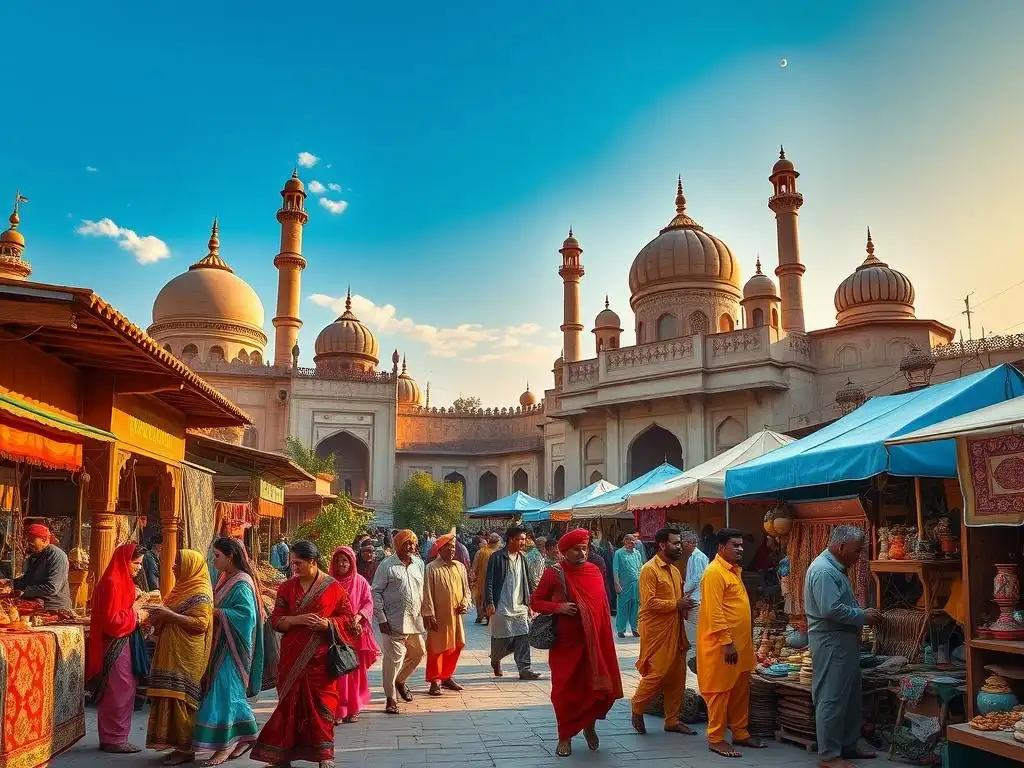
Welcome to Ancient India History, where we embark on a captivating journey through the rich tapestry of India's past. Here, you will uncover the intricate interactions between Indian and Persian civilizations, exploring the profound cultural exchanges that shaped their identities over time. Our featured article, "The Interwoven Tapestry of Indian and Persian Identities through Time," delves into these fascinating connections, revealing how the blending of traditions has influenced art, philosophy, and trade. Prepare to be intrigued as you explore the remarkable stories that highlight the depth and diversity of ancient Indian heritage!
The history of India and Persia is a rich tapestry woven through centuries of cultural exchanges, trade, and interactions. From the ancient civilizations of the Indus Valley to the flourishing Gupta Empire, the connections between these two regions have significantly influenced their respective societies, art, literature, and more.
This article delves into the intricate interplay of Indian and Persian identities, highlighting the profound impact and legacy of their cultural exchanges. By examining the historical context and early interactions, we will uncover how these two great civilizations shaped each other through time, fostering a unique blend of traditions that continues to resonate today.
Introduction to Indian and Persian Cultural Exchanges
The Indian subcontinent and Persia, known today as Iran, have a long-standing history of interaction that dates back thousands of years. This relationship has been characterized by a dynamic exchange of ideas, goods, and cultural practices, which has enriched both civilizations. The Indian Persian cultural exchanges involve not just trade but also shared philosophies, religions, and artistic expressions that have left an indelible mark on both societies.
Significance of Indian Persian Cultural Exchanges
Understanding the significance of Indian Persian cultural exchanges is crucial for several reasons:
- Cultural Enrichment: The amalgamation of Indian and Persian elements has led to a vibrant cultural landscape, influencing art, architecture, music, and literature.
- Trade and Economy: The interactions facilitated trade routes that contributed to the economic prosperity of both regions.
- Religious and Philosophical Influences: The spread of ideas, particularly during the Persian Empire, introduced new philosophies and religious thoughts into Indian society.
These exchanges reflect a relationship that goes beyond mere contact; they showcase a complex interplay of mutual respect and influence that shaped the identities of both cultures.
Overview of Historical Context
The historical backdrop of Indian and Persian interactions is marked by various periods of contact, beginning from the ancient civilizations through to the medieval era. Key events include:
- The arrival of Indo-Aryans and their subsequent interactions with the early Persian tribes.
- The establishment of the Achaemenid Empire, which incorporated parts of the Indian subcontinent.
- The expansion of trade routes during the Silk Road era, which further facilitated exchanges.
These contexts provide a framework for understanding how both civilizations have evolved alongside each other, driven by a shared history of collaboration and exchange.
Early Interactions between India and Persia
The early interactions between India and Persia set the stage for a long-lasting relationship characterized by mutual influence and cultural exchange.
The Indus Valley Civilization and Early Persian Influence
The Indus Valley Civilization (circa 3300–1300 BCE) is one of the earliest urban cultures in South Asia, and it had trade connections with the ancient Persians. Archaeological findings suggest that:
- Trade Goods: Artifacts such as seals, pottery, and metals indicate a vibrant trade network between the Indus Valley and Persian territories.
- Cultural Exchange: The exchange of ideas and practices, including agricultural techniques and craftsmanship, laid the groundwork for future interactions.
These early influences were pivotal in shaping the socio-economic landscape of both regions, establishing a foundation for further cultural exchanges.
Trade Routes: The Silk Road and Maritime Links
The Silk Road and maritime trade routes played a crucial role in fostering Indian Persian cultural exchanges during antiquity. Key aspects include:
- Silk Road: This overland route connected India with Persia and beyond, facilitating the flow of goods such as silk, spices, and precious stones.
- Maritime Trade: Coastal trade links between the Indian subcontinent and Persian Gulf ports allowed for the exchange of not only commodities but also cultural practices and ideas.
These trade networks were instrumental in promoting a rich tapestry of interactions that contributed to the evolution of both Indian and Persian identities over time. Through these routes, merchants, travelers, and scholars shared not only goods but also stories, philosophies, and artistic inspirations, further solidifying the interconnectedness of these ancient civilizations.
The Achaemenid Empire and Its Impact on India
The Achaemenid Empire, which flourished from the 6th to the 4th century BCE, represented one of the largest empires in ancient history, extending from the Balkans to the Indus Valley. Its influence reached deep into Indian territories, not only altering the political landscape but also fostering significant cultural exchanges. The Achaemenids, known for their administrative sophistication and cultural diversity, played a crucial role in shaping the interactions between Indian and Persian civilizations.
Through the establishment of satrapies, or provinces, the Achaemenid Empire integrated various cultures and created a network of trade routes that connected the East and the West. This integration allowed for the exchange of goods, ideas, and customs, leading to a profound transformation in the socio-political dynamics of the regions involved. The Achaemenids' policy of respect for local customs and religions also laid the groundwork for mutual tolerance and understanding between Indian and Persian societies.
Political Relations and Administrative Practices
Political relations between the Achaemenid Empire and Indian states were marked by strategic alliances and military campaigns. The Persian king Darius I extended his empire into the Indian subcontinent, incorporating parts of present-day Punjab and Sindh into his vast dominion. This expansion not only brought new territories under Persian control but also established a framework for governance based on local administrative practices.
The Achaemenid administrative system was notable for its efficiency and organization. Persian satraps governed the Indian regions, implementing policies that often mirrored local traditions. This dual governance model allowed for the preservation of Indian cultural identity while integrating Persian administrative practices. Additionally, the use of Aramaic as a common administrative language facilitated communication and governance across diverse cultures, further solidifying the political bonds between the Achaemenids and Indian states.
Cultural Exchanges: Language, Art, and Religion
Cultural exchanges between the Achaemenid Empire and Indian civilizations were vibrant and multifaceted. One of the most significant impacts was in the realm of language. The introduction of Aramaic and the influence of Persian on local dialects enriched the linguistic landscape of the region. This linguistic intermingling fostered a unique blend of scripts and languages, facilitating communication and cultural exchange.
Art and architecture also flourished during this period, with Persian motifs influencing Indian artistic expressions. The incorporation of Persian architectural styles, such as grand palaces and intricate relief work, can be observed in several ancient Indian structures. Moreover, the spread of Zoroastrianism and other religious ideas from Persia contributed to the religious tapestry of India, leading to a syncretic blend of beliefs that enriched both cultures.
The Maurya Empire: A Nexus of Indian and Persian Cultures
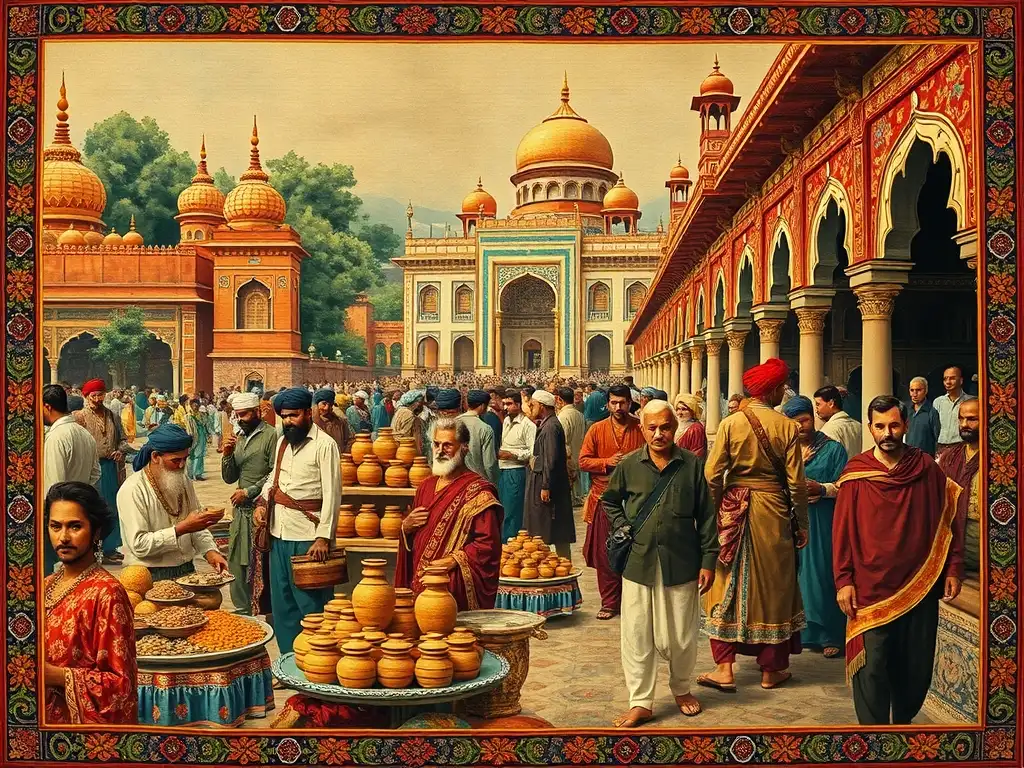
The Maurya Empire, which rose to prominence in the 4th century BCE under Chandragupta Maurya and reached its zenith under Ashoka, further exemplified the intricate cultural exchanges between Indian and Persian civilizations. The Mauryan period was characterized by significant diplomatic relations, trade, and cultural dialogue, which shaped the identity of both empires.
Chandragupta Maurya and Darius I: Diplomatic Ties
The relationship between Chandragupta Maurya and Darius I marked a pivotal moment in Indian-Persian interactions. After overthrowing the Nanda dynasty, Chandragupta sought to establish a powerful empire and recognized the potential benefits of diplomatic ties with Persia. Historical accounts suggest that Darius I and Chandragupta negotiated alliances that not only strengthened their political positions but also facilitated trade across their empires.
These diplomatic ties were crucial for the exchange of resources and knowledge. The Mauryan administration adopted several elements from the Persian model, including administrative structures and military organization. As a result, the Maurya Empire became a nexus of Indian and Persian cultures, blending governance practices and military strategies.
Influence on Governance and Military Strategies
The influence of Persian governance on the Maurya Empire was profound, particularly in relation to administrative practices and military strategies. The Mauryan state adopted a centralized form of administration reminiscent of the Persian satrapy system, which allowed for effective control over vast territories. This centralization enabled the Mauryan rulers to implement policies that promoted trade, agriculture, and infrastructure development.
In military affairs, the Maurya Empire benefited from Persian strategies that emphasized organized warfare and the use of cavalry. This integration of military techniques contributed to the Mauryan Empire's ability to maintain control over its territories and expand its influence. The synthesis of Indian and Persian military practices not only enhanced the effectiveness of the Mauryan army but also reflected the dynamic interplay of cultures that characterized the period.
The Achaemenid and Maurya empires exemplify the rich tapestry of Indian-Persian cultural exchanges, highlighting how political relations, administrative practices, and cultural interactions shaped the identities of both civilizations throughout history.
The Gupta Empire and Persian Influences
The Gupta Empire, which flourished from approximately 240 to 550 CE, is often regarded as a golden age in Indian history, characterized by significant advancements in art, science, and philosophy. During this period, the Gupta rulers established a flourishing trade network that extended not only across the Indian subcontinent but also into Persia and beyond. This facilitated a rich exchange of cultural practices, ideas, and goods.
Persian influences during the Gupta period can be seen in various aspects of Indian society. The trade relationships fostered by the Silk Road and maritime routes allowed for the movement of not just commodities but also intellectual and artistic ideas. This interaction led to a blending of traditions, especially in art and architecture, where Persian motifs and techniques began to influence Indian craftsmanship. Moreover, the Gupta period witnessed the adoption of certain Persian customs within the royal court and administrative practices, further showcasing the intertwining of Indian and Persian identities.
Art and Architecture: The Blending of Styles
The artistic achievements of the Gupta Empire reveal a fascinating blend of Indian and Persian styles. Gupta art is renowned for its intricate sculptures and cave paintings, which demonstrate a high level of skill and aesthetic refinement. However, the influence of Persian art can be observed in various elements, such as the use of floral and geometric patterns and the depiction of mythological themes.
The architecture of the period also reflects this cultural exchange. The construction of rock-cut caves, such as those at Ajanta and Ellora, showcases not only indigenous Indian craftsmanship but also echoes of Persian architectural principles, particularly in the use of arches and domes. This hybridization of styles illustrates how the Gupta Empire served as a conduit for Persian artistic traditions, which were adapted and transformed into a distinctly Indian expression.
Literature and Philosophy: Cross-Pollination of Ideas
The Gupta Empire was a hub for literary and philosophical thought, fostering an environment where ideas from various cultures could converge. The emergence of Sanskrit as a dominant literary language during this time coincided with the influx of Persian literary influences, particularly in poetry and drama.
Persian texts were translated and assimilated into Indian literature, enriching the philosophical discourses of the time. The works of renowned scholars such as Kalidasa reflect this cross-pollination, as they often drew upon themes and motifs found in Persian literature. This exchange not only enhanced the richness of Indian literary traditions but also contributed to a broader understanding of cultural and philosophical concepts, creating a vibrant intellectual tapestry.
The Mughal Era: A Flourishing of Indian Persian Identity
The Mughal Empire, which began in the early 16th century and lasted until the 19th century, represents a pinnacle of Indian-Persian cultural synthesis. The Mughals, who were of Turko-Mongol descent, brought with them a distinct Persian influence that permeated various facets of Indian life. This era saw the flourishing of a unique Indo-Persian culture, characterized by a harmonious blend of Indian and Persian elements.
Under Mughal patronage, the arts, architecture, and literature thrived, leading to a distinctive cultural identity that was marked by the integration of Persian traditions into the Indian milieu. The Mughal rulers, particularly Akbar, promoted policies of religious tolerance and cultural pluralism, which facilitated further exchanges between Indian and Persian cultures.
The Role of Persian Language in Mughal Culture
The Persian language played a pivotal role in the cultural landscape of the Mughal Empire. It became the court language and was used in administration, literature, and poetry. This adoption of Persian catalyzed a significant literary movement, producing a wealth of poetry and prose that integrated Persian themes with Indian narratives.
Prominent poets such as Mirza Ghalib and Faiz Ahmed Faiz epitomized this Indo-Persian literary tradition, crafting works that explored the complexities of love, nature, and spirituality through a unique lens. Persian became a symbol of sophistication and education, and its influence extended beyond literature, shaping the discourse in philosophy and the arts throughout the Mughal period.
Art, Music, and Cuisine: A Synthesis of Traditions
The Mughal era was marked by a remarkable synthesis of artistic traditions, particularly in art, music, and cuisine. Mughal painting, often characterized by vibrant colors and intricate details, drew heavily from Persian techniques while simultaneously incorporating Indian themes and styles. This resulted in a unique artistic form that celebrated the beauty of both cultures.
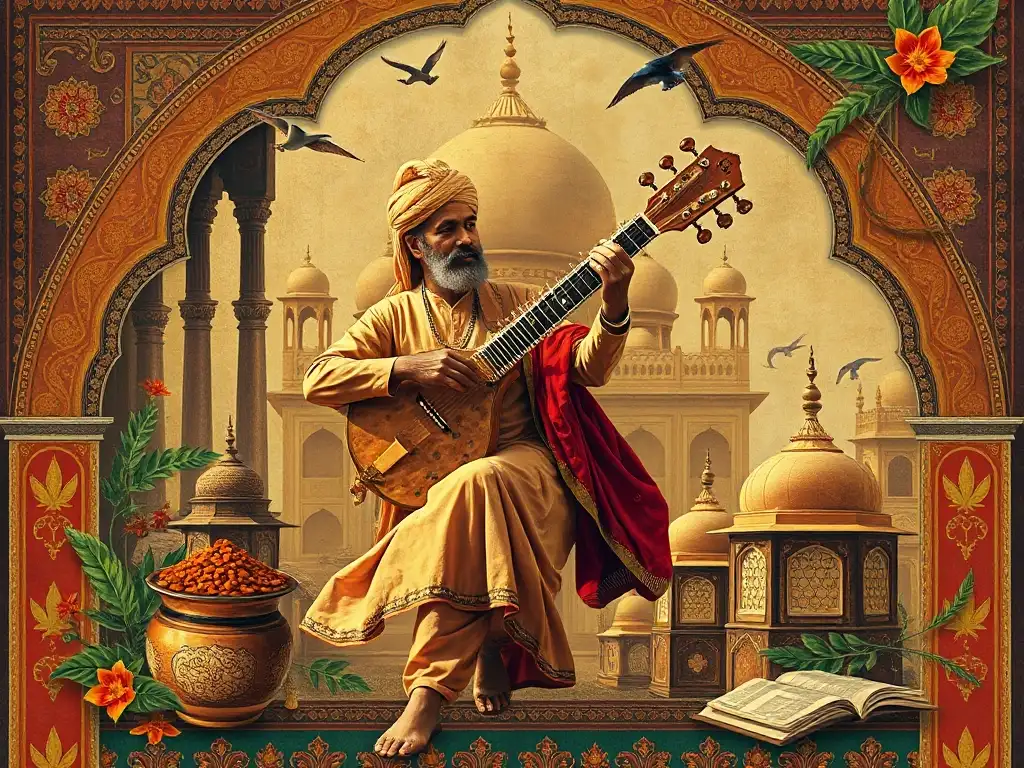
In music, the Mughal courts became centers for the fusion of musical traditions, blending Persian and Indian classical music to create new genres that resonated with diverse audiences. Instruments such as the sitar and tabla gained prominence during this time, symbolizing a harmonious amalgamation of sounds.
Culinary traditions also saw a significant transformation, with Persian influences evident in the Mughal kitchen. The introduction of Persian dishes, such as biryani and kebabs, enriched Indian cuisine, leading to the creation of a unique culinary identity that remains celebrated in contemporary Indian gastronomy. This synthesis of traditions highlights the profound and lasting impact of Indian-Persian exchanges during the Mughal era.
The Decline of Persian Influence in India
The decline of Persian influence in India can be traced through various historical phases, particularly during the late Mughal era and the rise of British colonial power. The Mughal Empire, which reached its zenith in the 17th century, was a significant bearer of Persian culture and language. However, as the empire weakened in the 18th century due to internal strife and external pressures, Persian influence began to wane.
The advent of regional powers, such as the Marathas and Sikhs, further marginalized Persian as the primary cultural language. Additionally, the British East India Company, which gained control over significant portions of India by the mid-18th century, actively promoted English over Persian. The establishment of English as the medium of administration and education led to a gradual decline in the use of Persian literature and art forms, which had once flourished in the courts of the Mughals.
Despite this decline, remnants of Persian influence persisted, particularly in architecture, language, and cuisine, showcasing the complex tapestry of cultural exchanges that had taken place over centuries. The shift in cultural dynamics illustrates not only the decline of Persian influence but also the resilience of Indian identities that absorbed and adapted external influences.
The Impact of Colonialism on Cultural Exchanges
Colonialism deeply affected the cultural exchanges between India and Persia, reshaping the identities and interactions of both civilizations. The British colonial rule introduced new administrative structures, educational paradigms, and cultural policies that significantly altered the landscape of Indian society. The promotion of Western education led to a gradual neglect of traditional Persian arts and literature, significantly impacting the intellectual and cultural exchanges that had thrived under Mughal patronage.
Moreover, the imposition of colonial norms and values caused a sense of alienation from indigenous traditions, including those influenced by Persian culture. This resulted in the fragmentation of cultural identities, where Persian elements, once integral to Indian culture, became relegated to historical memory.
Despite these changes, colonialism also sparked a revival of interest in Persian literature and arts among certain intellectual circles. This revival led to a re-evaluation of shared histories and a renewed appreciation for the interwoven cultural legacies, highlighting the complex nature of cultural identity in the colonial context.
The Evolution of Indian Identity Post-Persian Influence
In the wake of Persian influence's decline and the subsequent colonial impact, Indian identity underwent significant evolution. The late 19th and early 20th centuries saw a resurgence of nationalism, which sought to reclaim and redefine Indian identity in the face of colonial domination. This period was marked by a revival of interest in indigenous cultures, languages, and artistic expressions, including a re-examination of the Persian influences that had shaped Indian culture.
The emergence of new literary movements, such as Urdu poetry and prose, reflected a synthesis of Persian and indigenous elements, creating a unique cultural space that celebrated the shared heritage while asserting an independent Indian identity. Figures like Allama Iqbal and Mirza Ghalib played crucial roles in this cultural renaissance, drawing upon Persian literary traditions to articulate modern Indian thought.
Furthermore, the post-independence era saw continued engagement with Persian culture, particularly in the fields of art, architecture, and literature. Contemporary Indian artists and writers often explore the historical connections with Persia, contributing to a rich tapestry of cultural dialogue that persists in modern India.
Conclusion: The Lasting Legacy of Indian Persian Cultural Exchanges
The legacy of Indian-Persian cultural exchanges is a profound testament to the interwoven identities and shared histories of these two great civilizations. The historical interactions facilitated a rich exchange of ideas, art, and language, which has left an indelible mark on both cultures. From the architectural marvels of Mughal palaces to the poetic traditions that continue to inspire contemporary writers, the influence of Persian culture on India is evident and enduring.
Reflection on Shared Heritage and Cultural Identity
Reflecting on the shared heritage of Indian and Persian identities reveals the depth of cultural interactions that have taken place over centuries. The blending of traditions, especially in art and literature, has created a unique cultural identity that celebrates diversity while fostering unity. This shared heritage acts as a bridge connecting past and present, reminding us of the importance of cultural exchanges in shaping societal values and identities.
The acknowledgment of this shared heritage is crucial in fostering mutual respect and understanding in today's globalized world. By recognizing the roots of our cultural identities, we can appreciate the complex narrative that binds us together, transcending geographical and historical boundaries.
The Contemporary Relevance of Indian Persian Relations
In contemporary times, the relevance of Indian-Persian relations can be observed in various domains, including politics, trade, and cultural exchanges. The resurgence of interest in Persian culture within India is evident in the revival of Persian language courses, art exhibitions, and literary festivals that celebrate the shared heritage of these civilizations.
Moreover, diplomatic initiatives between India and Iran have emphasized the importance of historical ties, fostering a renewed partnership that acknowledges the cultural exchanges of the past while addressing contemporary challenges. This ongoing dialogue not only reaffirms the significance of Indian-Persian relations but also highlights the potential for collaboration in various fields, including trade, technology, and the arts.
The lasting legacy of Indian-Persian cultural exchanges serves as a reminder of the rich tapestry of history that continues to shape identities and interactions today. By embracing this heritage, we can foster a deeper understanding and appreciation of our shared cultures, paving the way for future collaborations and mutual respect.
Further Reading and Resources on Indian Persian Interactions
Exploring the rich tapestry of Indian-Persian cultural exchanges requires delving into various scholarly works and resources. Below are some recommended books, articles, and online materials that provide comprehensive insights into the interactions between these two vibrant civilizations.
Recommended Books and Articles
-
"The Persian Empire: A Historical Encyclopedia" by Mehrdad Kia
This encyclopedia offers detailed insights into the Persian Empire, including its interactions with ancient India. It covers various aspects such as trade, art, and cultural exchanges, providing a foundational understanding of the connections between these civilizations.
-
"India and Iran: A Cultural History" by Richard H. Davis
Davis's work explores the historical ties between India and Iran, emphasizing the cultural, religious, and artistic exchanges that have shaped both societies. The book is rich in examples and provides a thorough analysis of the ongoing interactions over centuries.
-
"The Indus Civilization and the Persian Empire: A Historical Perspective" by R. K. Sharma
This article discusses the early interactions between the Indus Valley civilization and the Persian Empire. It highlights archaeological findings that illustrate trade routes and cultural exchanges, making it a valuable resource for understanding ancient connections.
-
"Cultural Interactions between the Persian and Indian Worlds in the 17th Century" by V. K. Gupta
Gupta's article examines the significant cultural exchanges during the Mughal period, particularly focusing on the arts, language, and literature. It sheds light on how Persian influence permeated various aspects of Indian culture.
-
"The Mughal Empire and Persian Culture" by Sunil Kumar
This book explores the Mughal Empire's adoption of Persian culture, including administrative practices, literature, and art forms. Kumar provides a nuanced view of how Persian identity was interwoven into Indian society during this period.
Online Resources for Deeper Exploration
-
Digital South Asia Library (DSAL)
This extensive online library provides access to a wealth of resources related to South Asian studies, including texts, maps, and images that reflect the historical interactions between India and Persia.
-
The Persian Heritage Foundation
This organization focuses on promoting Persian culture and history. Their website offers articles, research papers, and links to various resources that highlight the cultural exchanges between Persia and India.
-
Archive.org
A treasure trove of digitized historical texts, this platform includes numerous works on Indian-Persian interactions. Researchers can find rare manuscripts and scholarly articles that provide valuable insights into this rich historical relationship.
-
India and Iran: A Cultural Dialogue
This online exhibition hosted by a cultural institution presents artifacts, manuscripts, and artworks that showcase the interactions between Indian and Persian cultures. It offers a visual and textual journey through their shared history.
-
YouTube Lectures and Documentaries
Various educational channels on YouTube host lectures and documentaries that explore Indian-Persian cultural exchanges. These videos often feature expert historians discussing significant events and influences, providing an engaging way to learn about this topic.
By engaging with these resources, readers can gain a deeper understanding of the intricate connections between Indian and Persian identities throughout history, enriching their knowledge of cultural exchanges that have shaped both civilizations.
- Introduction to Indian and Persian Cultural Exchanges
- Early Interactions between India and Persia
- The Achaemenid Empire and Its Impact on India
- The Maurya Empire: A Nexus of Indian and Persian Cultures
- The Gupta Empire and Persian Influences
- The Mughal Era: A Flourishing of Indian Persian Identity
- The Decline of Persian Influence in India
- Conclusion: The Lasting Legacy of Indian Persian Cultural Exchanges
- Further Reading and Resources on Indian Persian Interactions
- What are the main influences of Indian Persian cultural exchanges?
- How did the Indus Valley Civilization impact subsequent cultural exchanges?
- What role did the Gupta Empire play in cultural interactions with Persia?
- How did language evolve due to Indian and Persian interactions?
- What are some examples of artistic fusion resulting from these exchanges?
Frequently Asked Questions
What are the main influences of Indian Persian cultural exchanges?
The Indian Persian cultural exchanges significantly influenced art, architecture, language, and literature, blending elements from both cultures into a unique synthesis that enriched both societies.
How did the Indus Valley Civilization impact subsequent cultural exchanges?
The Indus Valley Civilization laid the groundwork for trade and cultural interactions with neighboring regions, including Persia, facilitating the flow of ideas and goods that contributed to later exchanges.
What role did the Gupta Empire play in cultural interactions with Persia?
During the Gupta Empire, there was a flourishing of trade and intellectual exchange, which promoted the spread of Indian art and philosophy into Persian territories, enhancing the cultural tapestry.
How did language evolve due to Indian and Persian interactions?
The interactions led to the adoption of Persian vocabulary and concepts into Indian languages, notably in Urdu, which emerged as a rich tapestry of linguistic influences from both cultures.
What are some examples of artistic fusion resulting from these exchanges?
Artistic fusion is evident in architecture, such as Indo-Islamic structures, and in miniature painting, where Persian techniques blended with Indian themes, creating a distinct style reflective of both heritages.
Final Reflection: Embracing the Richness of Indian-Persian Cultural Exchanges
The intricate relationship between Indian and Persian cultures is not merely a historical footnote; it is a vibrant tapestry that continues to shape our identities today. As we navigate an increasingly globalized world, the significance of understanding and appreciating these cultural exchanges becomes ever more relevant. The blending of art, language, and philosophy that has occurred over centuries serves as a powerful reminder of our shared human experience and the beauty that arises from diversity.
The ongoing influence of Indian-Persian cultural exchanges can be seen in various aspects of contemporary society, from literature to cuisine, and even in our everyday interactions. This rich heritage fosters a sense of unity and appreciation for the complexities of our identities. As the renowned poet Rumi once said, "> The wound is the place where the Light enters you." This quote resonates deeply, highlighting how the challenges and intersections of our diverse backgrounds can lead to profound growth and enlightenment.
As we reflect on the lessons drawn from the interwoven tapestry of Indian and Persian identities, I invite you to explore how these cultural exchanges can enrich your own life. Consider the ways in which you can embrace diversity, seek understanding, and celebrate the unique contributions of different cultures around you. By doing so, you not only honor the legacy of these intertwined histories but also contribute to a more harmonious and inclusive future for all.
Unveil the Rich Heritage of Indian and Persian Cultures!
Thank you for joining us on this enlightening journey through the intertwined narratives of Indian and Persian identities. By exploring their historical connections, you've gained insight into the vibrant tapestry that has shaped both cultures over time. Now, it’s time to take these insights further!
- Dive Deeper: Research and discover a specific aspect of Indian-Persian history that fascinates you! Consider visiting local libraries or online archives to uncover unique stories that may not be widely known.
- Share Your Knowledge: Engage your friends in conversations about these cultural connections, or share your findings on social media to spark discussions and raise awareness within your community.
- Engage in Community: Join forums or groups dedicated to intercultural studies. Participating actively can inspire others and broaden your understanding!
What aspect of the Indian-Persian connection resonates most with you, and how do you believe it influences our cultural landscape today?