
The Mauryan Empire and the Evolution of Political Institutions in Ancient India


Welcome to Ancient India History, where we embark on a captivating journey through the rich tapestry of ancient Indian civilizations! Dive into the intriguing world of the Mauryan Empire, where political institutions not only shaped governance but also laid the foundation for future empires.
In our featured article, "The Mauryan Empire and the Evolution of Political Institutions in Ancient India," you'll discover how these early structures influenced the course of history and the intricate web of culture and society that flourished during this remarkable period. Join us as we unravel the complexities of ancient governance and invite your curiosity to explore the legacies that continue to resonate today!
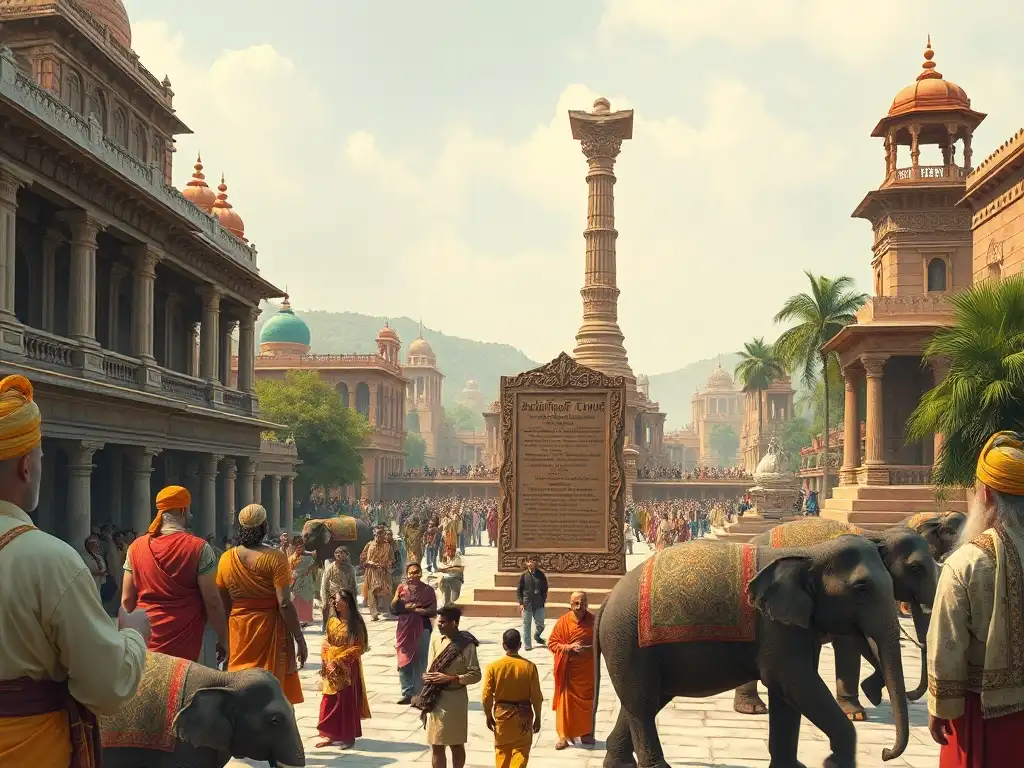
The Mauryan Empire stands as one of the most significant chapters in the history of ancient India, showcasing a complex interplay of governance, culture, and societal organization. Established in the 4th century BCE, the empire marked a pivotal shift in political dynamics, laying the groundwork for sophisticated political institutions that would influence successive civilizations.
The Mauryan Empire is renowned not only for its vast territorial expanse but also for its advancements in administrative practices, which contributed to the evolution of political institutions in ancient India. This article delves into the intricacies of these political frameworks, exploring their origins, development, and the key figures who shaped them, while emphasizing their lasting impact on the subcontinent's history.
Introduction to the Mauryan Empire
Overview of the Mauryan Empire
The Mauryan Empire, founded by Chandragupta Maurya, emerged as a powerful force in ancient India, unifying a fragmented region under a centralized authority. At its zenith, the empire stretched from the eastern coast of India to the northwestern frontiers, encompassing a diverse population with various cultures and languages. The Mauryan period is marked by notable rulers, including the illustrious Ashoka, who is celebrated for his promotion of Buddhism and ethical governance. The empire's capital, Pataliputra, became a hub of political and cultural activity, setting the stage for advancements in administration and law.
Importance of Political Institutions in Ancient India
Political institutions in the Mauryan Empire played a crucial role in maintaining order and governance across its vast territories. These institutions facilitated the implementation of laws, collection of taxes, and management of resources, ultimately contributing to the stability and prosperity of the empire. Understanding these political frameworks provides insight into the governance models of ancient India and their influence on contemporary political thought. The Mauryan Empire's approach to administration, including the use of bureaucracy and local governance, established a precedent for future Indian states, demonstrating the significance of structured political institutions in managing complex societies.
The Formation of Political Institutions in the Mauryan Empire
Historical Context of Political Structures
The formation of political institutions in the Mauryan Empire cannot be viewed in isolation; it was shaped by the historical context of preceding kingdoms and regional powers. Prior to the Mauryan rise, India experienced a variety of governance styles, from small republics to larger monarchies, each contributing to the evolution of political thought. The Mauryan Empire synthesized these influences, adopting and adapting various administrative practices. The emergence of a centralized system under Chandragupta Maurya marked a departure from fragmented local governance, leading to the establishment of a more coherent political structure.
Key Figures Influencing Political Institutions
Several key figures played pivotal roles in shaping the political institutions of the Mauryan Empire. Chandragupta Maurya, as the empire's founder, laid the foundational policies that governed administrative practices. His advisor, Kautilya (Chanakya), authored the Arthashastra, a seminal treatise on statecraft and economic policy, which provided a blueprint for governance. Ashoka, Chandragupta's grandson, further transformed the political landscape by incorporating ethical principles into governance, emphasizing welfare and justice. These leaders, through their visionary policies and philosophies, significantly influenced the trajectory of political institutions in ancient India, setting standards that would resonate through the ages.
Core Political Institutions of the Mauryan Empire
The Mauryan Empire, one of the largest and most influential empires in ancient India, established a complex framework of political institutions that laid the foundation for governance in the region. At the core of these institutions was a centralized authority, epitomized by the emperor, who exercised considerable power over the administration, military, and justice systems.
This centralized governance was complemented by various administrative divisions, which facilitated efficient management across the vast territories of the empire. The Mauryan political structure was characterized by a blend of traditional practices and innovative approaches, which were vital for maintaining order and promoting economic prosperity.
The Role of the Emperor in Governance
The emperor, known as the "Chakravartin," was the supreme ruler of the Mauryan Empire, embodying both political and spiritual authority. The emperor's primary responsibilities included enacting laws, overseeing military campaigns, and ensuring the welfare of the populace. Emperors like Chandragupta Maurya and Ashoka the Great were pivotal in shaping the empire's policies. They wielded immense power and were viewed as the divine representatives of dharma (moral law), which legitimized their rule. The emperor also played a crucial role in diplomatic relations, establishing alliances with neighboring states, and maintaining the empire's integrity through strategic marriages and negotiations.
Administrative Divisions and Their Functions
The Mauryan Empire was divided into several administrative units, including provinces (Mahajanapadas) and districts (Uttarapatha). Each province was governed by a viceroy, known as the "Uparaja," who acted on behalf of the emperor. The provinces were further subdivided into districts, each managed by officers called "Pradeshikas." This hierarchical structure facilitated localized governance, enabling quick responses to regional issues and efficient tax collection. The administrative divisions also played a critical role in implementing central policies and maintaining law and order, thereby ensuring the stability of the empire.
The Council of Ministers and Advisory Bodies
At the heart of the Mauryan political system was the Council of Ministers, known as the "Mantriparishad." This council comprised trusted advisors who assisted the emperor in decision-making processes. The council members were selected based on their expertise in various fields, such as finance, law, and military strategy. They provided counsel on matters of policy, governance, and administration, thus ensuring that the emperor received well-rounded advice. Additionally, advisory bodies, including scholars and religious leaders, influenced governance by integrating ethical and moral considerations into political decisions, reflecting the Mauryan emphasis on dharma.
Evolution of Governance Models in the Mauryan Empire
The governance models in the Mauryan Empire evolved significantly over time, reflecting changes in political philosophy, societal needs, and external pressures. This evolution was marked by a transition from a purely monarchical system to a more bureaucratic approach, which sought to balance power among various institutions and enhance administrative efficiency.
Transition from Monarchical to Bureaucratic Systems
Initially, the Mauryan Empire operated under a predominantly monarchical system, where the emperor held absolute power. However, as the empire expanded, the need for a more structured and accountable governance model became evident. This led to the establishment of a bureaucratic system that emphasized the role of appointed officials and administrative hierarchies. The introduction of various administrative roles, such as tax collectors and judges, allowed for a more systematic approach to governance, ensuring that local issues were addressed effectively while maintaining imperial control.
Influence of Religion on Political Institutions
Religion played a vital role in shaping the political institutions of the Mauryan Empire. Under Emperor Ashoka, Buddhism significantly influenced governance, as he adopted principles of non-violence, tolerance, and welfare into state policy. The promotion of dharma became central to Ashoka's rule, leading to the establishment of edicts that emphasized ethical conduct and social justice. This religious framework not only guided the emperor's decisions but also fostered a sense of unity among diverse communities within the empire, reinforcing the legitimacy of the political institutions.
The Impact of War and Expansion on Governance
The Mauryan Empire's rapid expansion brought about significant changes in its governance structures. Military conquests necessitated the integration of diverse cultures and administrative practices, prompting adaptations in governance to accommodate different populations. The need to maintain control over newly acquired territories led to the establishment of a more sophisticated bureaucratic system, with specialized roles for managing military logistics, taxation, and local governance. Furthermore, the challenges posed by external threats and internal dissent reinforced the importance of a robust political institution capable of responding effectively to crises, thus shaping the evolution of governance in the Mauryan Empire.
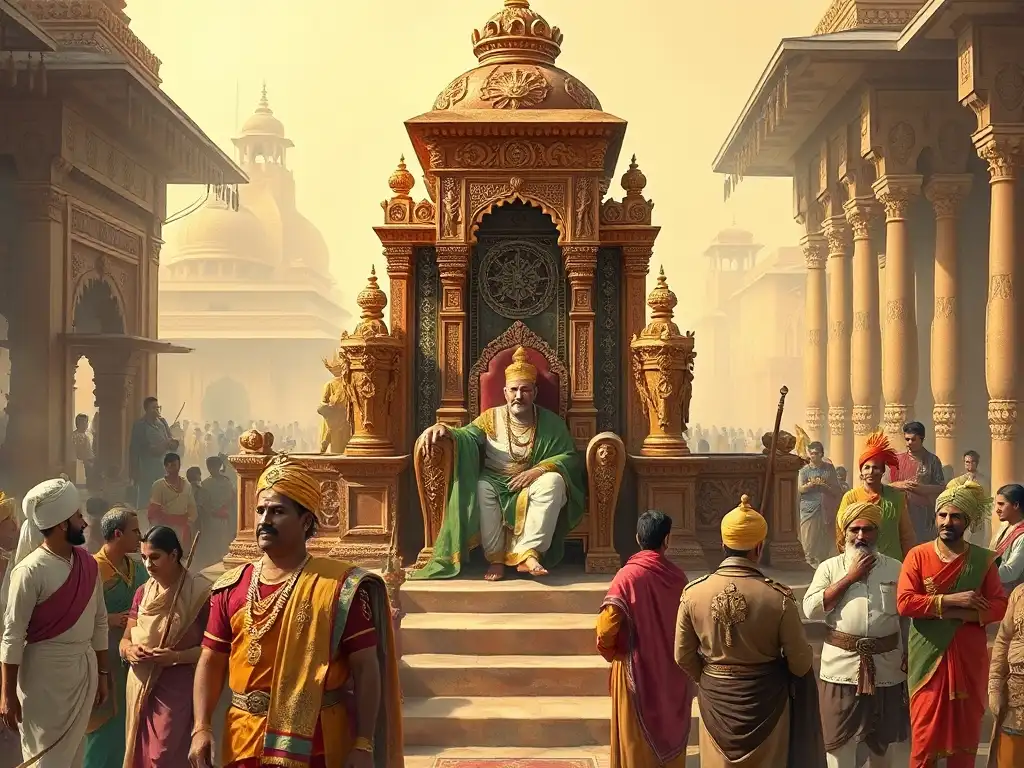
The Mauryan Empire, one of the largest and most powerful empires in ancient India, had a complex social hierarchy that significantly influenced its political institutions. The caste system played a crucial role in shaping the governance structure, which was characterized by a blend of centralized authority and local administration. At the apex of this hierarchy was the emperor, who was considered a divine figure with absolute power over the empire. Below the emperor were various classes, including the warrior class (Kshatriyas), the priestly class (Brahmins), and the merchant and artisan classes (Vaishyas and Shudras).
This social stratification not only defined the roles and responsibilities of individuals within society but also impacted the political landscape. The Brahmins, for instance, held significant sway over political decisions, often serving as advisors to the rulers. The Kshatriyas were responsible for military leadership and protection, while the Vaishyas contributed to the economic activities of the empire. This interdependence among classes ensured that governance was a shared responsibility, albeit within the confines of their prescribed roles.
Moreover, the political institutions established during the Mauryan era were reflective of this social hierarchy. The administration was organized into various levels, from the central government to local governance, where officials were often drawn from the higher echelons of society. This ensured stability and continuity in governance, as the ruling elite maintained control over the administration, while the lower classes were primarily engaged in agrarian and artisanal activities.
Class Structure and Its Effect on Governance
The class structure of the Mauryan Empire had profound implications for governance and political institutions. Each class had designated roles and responsibilities that were not only social but also political. The Kshatriyas, as warriors and rulers, were tasked with the implementation of laws and defense of the empire, while Brahmins provided the necessary religious legitimacy and counsel to the rulers. This relationship between classes fostered a governance model where policy-making was heavily influenced by religious and military considerations.
The Shudras and Vaishyas, although lower in the hierarchy, played essential roles in the economy, which was crucial for sustaining the empire's wealth and resources. Their economic contributions allowed the state to function effectively, supporting the political institutions that governed the empire. This interdependence created a dynamic system where political decisions were often made with consideration of economic stability and social order.
The class structure also meant that political participation was largely restricted to the upper classes, limiting the voice and influence of the lower classes in governance. This lack of representation sometimes led to tensions and dissent, necessitating the use of state mechanisms to maintain order and control, which were reflected in the political institutions of the Mauryan Empire.
Role of Kautilya’s Arthashastra in Political Administration
Kautilya’s Arthashastra is a seminal text that provided a comprehensive guide to political administration, economics, and military strategy during the Mauryan Empire. Written by Kautilya, also known as Chanakya, it laid down the principles of governance that were instrumental in shaping the political institutions of the time. The text emphasized the importance of a strong central authority and detailed the methods for effective administration, including espionage, diplomacy, and military tactics.
One of the key contributions of the Arthashastra was its pragmatic approach to governance. Kautilya advocated for the use of realpolitik, suggesting that rulers should prioritize state security and stability over moral considerations. This often meant employing ruthless tactics to eliminate political rivals and maintain control over the vast empire. The text also elaborated on the roles of various officials, their duties, and the need for a well-structured bureaucracy to implement policies effectively.
Additionally, the Arthashastra highlighted the need for economic prosperity as a foundation for political power. Kautilya argued that a strong economy would enable the state to support its military endeavors and maintain order. The principles outlined in the Arthashastra became foundational to the political institutions of the Mauryan Empire, influencing how rulers approached governance and administration.
Comparative Analysis of Mauryan Political Institutions
The political institutions of the Mauryan Empire can be examined in relation to both pre-Mauryan structures and those of later empires. This comparative analysis reveals the unique characteristics and innovations that defined the Mauryan political landscape.
Comparison with Pre-Mauryan Political Structures
Before the rise of the Mauryan Empire, regional kingdoms and republics featured decentralized governance with varying degrees of power held by local chieftains and assemblies. The political systems were often informal, and authority could be fragmented. In contrast, the Mauryan Empire introduced a centralized administration that was more structured and bureaucratic.
The Mauryan political institutions employed a systematic hierarchy, with the emperor at the top, followed by a cadre of appointed officials who oversaw different regions and functions of governance. This was a significant departure from pre-Mauryan practices, where local rulers often operated independently. The Mauryan model facilitated more coherent policy implementation and resource allocation across the vast empire, reflecting a more sophisticated approach to governance.
Moreover, while pre-Mauryan rulers often relied on kinship and personal loyalty to maintain power, the Mauryan state emphasized meritocratic principles in appointing officials, influenced by guidelines from Kautilya’s Arthashastra. This shift allowed for a more effective administration capable of managing complex governance issues.
Contrasting Mauryan Institutions with Later Empires
When comparing the political institutions of the Mauryan Empire with those of later empires, such as the Gupta Empire, several distinctions emerge. The Gupta Empire, which followed the Mauryan period, is noted for its emphasis on decentralization and local autonomy. While the Mauryan Empire was characterized by a strong central authority, the Guptas allowed for greater regional independence, which led to a different governance style.
The Mauryan system was heavily influenced by Kautilya’s pragmatic approaches, focusing on statecraft, espionage, and military strength to maintain control. In contrast, Gupta rulers adopted a more philosophical approach, often aligning themselves with cultural and religious institutions to legitimize their power. This shift in governance reflected changing societal values and the evolving role of religion in politics.
While the Mauryan Empire laid the groundwork for political institutions that emphasized centralization and bureaucratic efficiency, subsequent empires adapted these principles to suit their contexts, leading to a diverse political landscape in ancient India.
Legacy of Mauryan Political Institutions in Ancient India
The Mauryan Empire, which flourished from 322 to 185 BCE, established a system of political institutions that left an indelible mark on the governance of ancient India. At its core, the Mauryan political structure was characterized by a centralized authority that effectively governed a vast and diverse territory. The emperor, or "Chakravartin," was seen not only as a political leader but also as a moral authority, embodying the ideals of dharma (righteousness) that were vital to the political philosophy of the time.
One of the most significant legacies of the Mauryan political institutions was the establishment of a bureaucratic system that included various officials and departments responsible for different aspects of governance, such as revenue collection, justice, and public works. This administrative framework allowed for efficient management of resources and facilitated communication between the central authority and local administrators.
Additionally, the Mauryan Empire introduced the concept of a unified legal code, which aimed to standardize laws across the vast empire, promoting stability and order. This legal framework influenced subsequent Indian rulers and served as a foundation for later legal systems. The Mauryan legacy also included the promotion of trade and economic policies that enabled commerce to flourish, thus contributing to the empire's prosperity and cohesion.
Influence on Subsequent Indian Empires
The political institutions established during the Mauryan Empire significantly influenced later Indian empires, such as the Gupta Empire. The Gupta period, which followed the Mauryan decline, inherited many of the administrative practices and governance models set forth by the Mauryas. The concept of a centralized monarchy continued, with emperors wielding substantial power while also relying on a network of local governors and officials to maintain order and implement policies.
Moreover, the Mauryan emphasis on moral governance and the protection of dharma resonated with Gupta rulers, who sought to legitimize their authority through similar ideological frameworks. The Gupta administration adopted a bureaucratic structure that echoed the Mauryan system, ensuring continuity in governance and the application of a standardized legal code.
The influence of Mauryan political thought extended beyond governance; it shaped the philosophical discourse surrounding leadership and statecraft in ancient India. Works such as Kautilya's "Arthashastra," which emerged during the Mauryan era, continued to be studied and referenced by later dynasties, reinforcing the importance of strategic governance and ethical leadership.
Contributions to Modern Political Thought in India
The political institutions of the Mauryan Empire also contributed to modern political thought in India, particularly in the realms of governance, ethics, and the relationship between the ruler and the ruled. The emphasis on a ruler's duty to uphold dharma has been echoed in contemporary discourses on ethical leadership and governance in India. Modern Indian political leaders often draw parallels between their responsibilities and the moral imperatives laid out in ancient texts.
Furthermore, the bureaucratic practices initiated during the Mauryan period have had a lasting impact on the structure of modern Indian administration. The principles of centralized governance, accountability, and the need for a well-trained civil service can be traced back to the Mauryan model.
The idea of a legal framework that promotes justice and equality also finds its roots in the Mauryan legacy, influencing the development of India's modern legal system. The emphasis on laws that apply uniformly to all citizens reflects the Mauryan commitment to justice and order, principles that continue to be vital in contemporary Indian society.
Conclusion
Summary of Political Institutions in the Mauryan Empire
The political institutions of the Mauryan Empire were characterized by a centralized authority, a sophisticated bureaucratic system, and a commitment to legal uniformity. The emperor's role as both a political and moral leader created a governance model that emphasized ethical rule and the importance of dharma. These elements collectively facilitated the efficient administration of a vast empire and set a precedent for future Indian political systems.
Final Thoughts on the Evolution of Governance in Ancient India
The evolution of governance in ancient India, marked significantly by the Mauryan Empire, reflects a complex interplay of authority, morality, and administrative innovation. As subsequent empires built upon the foundations laid by the Mauryans, the principles of centralized governance and ethical leadership continued to shape the political landscape of India. Today, the legacy of Mauryan political institutions remains relevant, informing both historical understanding and modern political practices in India.
- Introduction to the Mauryan Empire
- The Formation of Political Institutions in the Mauryan Empire
- Core Political Institutions of the Mauryan Empire
- Evolution of Governance Models in the Mauryan Empire
- Social Hierarchy and Political Institutions
- Comparative Analysis of Mauryan Political Institutions
- Legacy of Mauryan Political Institutions in Ancient India
- Conclusion
- What were the main political institutions in the Mauryan Empire?
- How did the political institutions of the Mauryan Empire influence later empires?
- What role did the Emperor play in the Mauryan political system?
- How did the Mauryan Empire manage its vast territories?
- What were the significance and contributions of the Mauryan political institutions?
Frequently Asked Questions
What were the main political institutions in the Mauryan Empire?
The Mauryan Empire featured a centralized administrative structure with key institutions like the Council of Ministers, provincial governance, and a well-organized bureaucracy to manage its vast territories.
How did the political institutions of the Mauryan Empire influence later empires?
The political institutions established during the Mauryan Empire laid the groundwork for future Indian empires, emphasizing centralization and bureaucratic governance, which became models for subsequent dynasties.
What role did the Emperor play in the Mauryan political system?
The Emperor was the supreme authority in the Mauryan political system, wielding absolute power over legislation, military, and administration, while also being supported by a council to aid in governance decisions.
How did the Mauryan Empire manage its vast territories?
The Mauryan Empire utilized a network of provinces and governors to oversee local administration, ensuring effective control over diverse regions through a well-defined hierarchical structure.
What were the significance and contributions of the Mauryan political institutions?
The political institutions of the Mauryan Empire contributed to political stability, economic prosperity, and the spread of Buddhism and other cultural elements, significantly impacting the subcontinent's history and governance systems.
Final Reflection: The Enduring Legacy of Political Institutions in the Mauryan Empire
The exploration of political institutions in the Mauryan Empire reveals not only the sophisticated governance systems of ancient India but also their profound relevance in today's political discourse. As we navigate the complexities of modern governance, the lessons from the Mauryan Empire remind us that effective political institutions are foundational to societal stability and progress. The intricate balance of power, administration, and public welfare established during this era serves as a striking testament to the enduring nature of well-structured governance.
The Mauryan Empire's political innovations have left an indelible mark on the cultural and social landscape of India and beyond. The principles of justice, administration, and civic responsibility that emerged during this period continue to resonate in contemporary governance. As we reflect on the evolution of political institutions, we can draw inspiration from the words of Chanakya, a key figure in Mauryan politics: There is some self-interest behind every friendship. There is no friendship without self-interests.
This insight underscores the intricate interplay between governance and societal needs, reminding us that political institutions must evolve to meet the changing demands of the populace.
As we conclude our exploration of the Mauryan Empire and its political institutions, I invite you to reflect on how these historical lessons can inform our current political landscape. Consider how the principles of governance from the past can inspire you to engage with your community, advocate for effective political systems, and contribute to the evolution of institutions that prioritize the common good. Let the legacy of the Mauryan Empire guide you in your journey toward fostering a more just and equitable society.
Unveil the Legacy of the Mauryan Empire Today!
Thank you for exploring the fascinating world of the Mauryan Empire with us! We hope you gained valuable insights into the evolution of political institutions that shaped ancient India’s history. Now, it's time to take that knowledge further and engage with this remarkable legacy.
Here are a few actionable steps you can take:
- Dive Deeper: Learn more about key figures of the Mauryan Empire, such as Chandragupta and Ashoka, to uncover their influential roles in shaping governance.
- Join the Conversation: Share this article with friends and fellow history enthusiasts on social media to spark discussions about the impact of ancient political systems.
- Get Creative: Design a visual representation or timeline of the Mauryan Empire’s achievements and share it with our community. Your unique perspective could inspire others!
Which aspect of the Mauryan Empire's political innovations do you find most relevant to today's world?