
How Ancient Indian Trade Routes Facilitated the Spread of Buddhism


Welcome to Ancient India History, where we embark on a captivating journey through the rich tapestry of India's past. In this exploration, we delve into the intricate ancient Indian trade routes that not only facilitated commerce but also played a pivotal role in the spread of Buddhism. Discover how these pathways connected diverse cultures and ideas, shaping the spiritual landscape of ancient India.
Join us as we unravel the fascinating connections between trade and religion, and uncover the profound impact they had on civilization. Get ready to ignite your curiosity and delve deeper into the enchanting world of ancient Indian religions!
- Introduction to Ancient Indian Trade Routes and Buddhism
- The Role of Trade Routes in the Spread of Buddhism
- The Impact of Trade on Buddhist Missionaries
- The Cultural Exchange Along Ancient Indian Trade Routes
- Conclusion: The Lasting Legacy of Ancient Indian Trade Routes on Buddhism
- Further Reading and Resources on Ancient Indian Trade and Buddhism
-
Frequently Asked Questions
- What were the main trade routes in ancient India?
- How did these trade routes contribute to the spread of Buddhism?
- What role did merchants play in spreading Buddhism along these routes?
- Were there specific landmarks associated with the spread of Buddhism along trade routes?
- How did the decline of trade routes affect Buddhism in ancient India?
- Final Reflection: The Enduring Legacy of Ancient Indian Trade Routes and Buddhism
- Explore the Legacy: Take Action on the Lessons of Ancient Trade!
Introduction to Ancient Indian Trade Routes and Buddhism
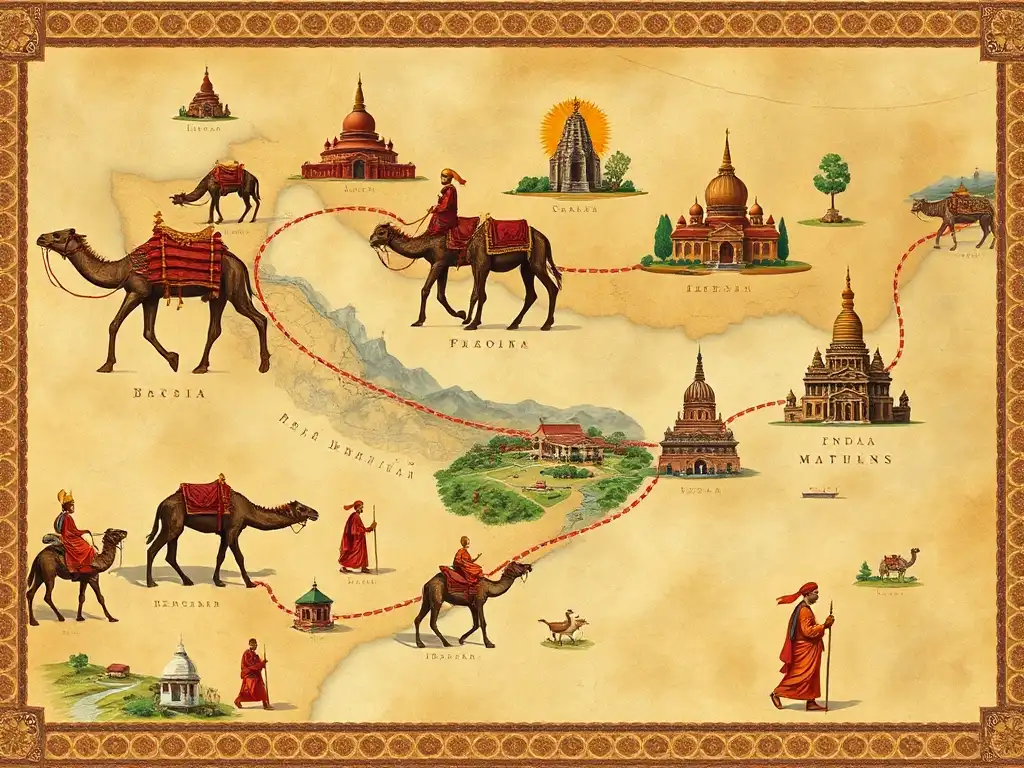
The intricate tapestry of ancient Indian trade routes played a pivotal role in the dissemination of not only goods but also ideas, philosophies, and cultures. Among the most significant of these ideas was Buddhism, which emerged around the 6th century BCE and spread rapidly across the Indian subcontinent and beyond.
As merchants traversed the vast networks of trade routes, they became conduits for the teachings of the Buddha, facilitating the exchange of spiritual and cultural values alongside material goods. This article delves into the relationship between ancient Indian trade routes and the spread of Buddhism, highlighting how commerce and spirituality intertwined to shape the historical and cultural landscape of ancient India.
Overview of Ancient Indian Trade Routes
The trade routes of ancient India were extensive and diverse, creating a complex web that connected regions within the subcontinent and extended to foreign lands. Key routes included:
- The Silk Road: Connecting India to Central Asia and beyond, this route facilitated trade in silk, spices, and precious stones.
- The Grand Trunk Road: A vital artery for trade across northern India, linking the eastern and western parts of the subcontinent.
- Maritime Routes: Navigable waterways enabled trade with Southeast Asia, the Middle East, and even Africa.
These routes were not merely pathways for goods but also served as channels for cultural and religious exchanges. Traders, travelers, and pilgrims often shared stories, philosophies, and religious beliefs, leading to the cross-pollination of ideas.
Importance of Trade in Ancient Indian Civilization
Trade in ancient India was a cornerstone of economic prosperity and social development. Its significance can be understood through several key aspects:
- Economic Growth: Trade routes allowed for the exchange of agricultural products, textiles, metalwork, and handicrafts, contributing to the wealth of various kingdoms and empires.
- Cultural Exchange: The movement of people along trade routes fostered cultural interactions, leading to the exchange of art, literature, and religious ideas. This cultural dynamism was essential for the evolution of Indian civilization.
- Spread of Religions: The mobility of traders and pilgrims facilitated the spread of Buddhism, allowing monks and followers to travel far and wide, establishing monasteries and promoting Buddhist teachings.
Introduction to Buddhism and Its Origins
Buddhism, founded by Siddhartha Gautama, known as the Buddha, emerged in the context of ancient Indian society, marked by a rich tapestry of philosophical thought and religious practices. Key points regarding its origins include:
- Historical Context: Buddhism arose during a time of social and religious upheaval in India, challenging existing beliefs and practices, particularly those of Hinduism and Jainism.
- Core Teachings: The fundamental teachings of Buddhism are encapsulated in the Four Noble Truths and the Eightfold Path, which emphasize the cessation of suffering through ethical living and mental discipline.
- Spread Beyond India: Following its inception, Buddhism quickly spread throughout the Indian subcontinent and into regions like Central Asia, China, and Southeast Asia, aided significantly by the established trade routes.
The ancient Indian trade routes were instrumental in the spread of Buddhism, intertwining commerce with spirituality and leading to a profound impact on the cultural landscape of ancient India and beyond. This exploration of trade and religion provides a deeper understanding of how interconnected these two elements were in shaping the history of the region.
The Role of Trade Routes in the Spread of Buddhism
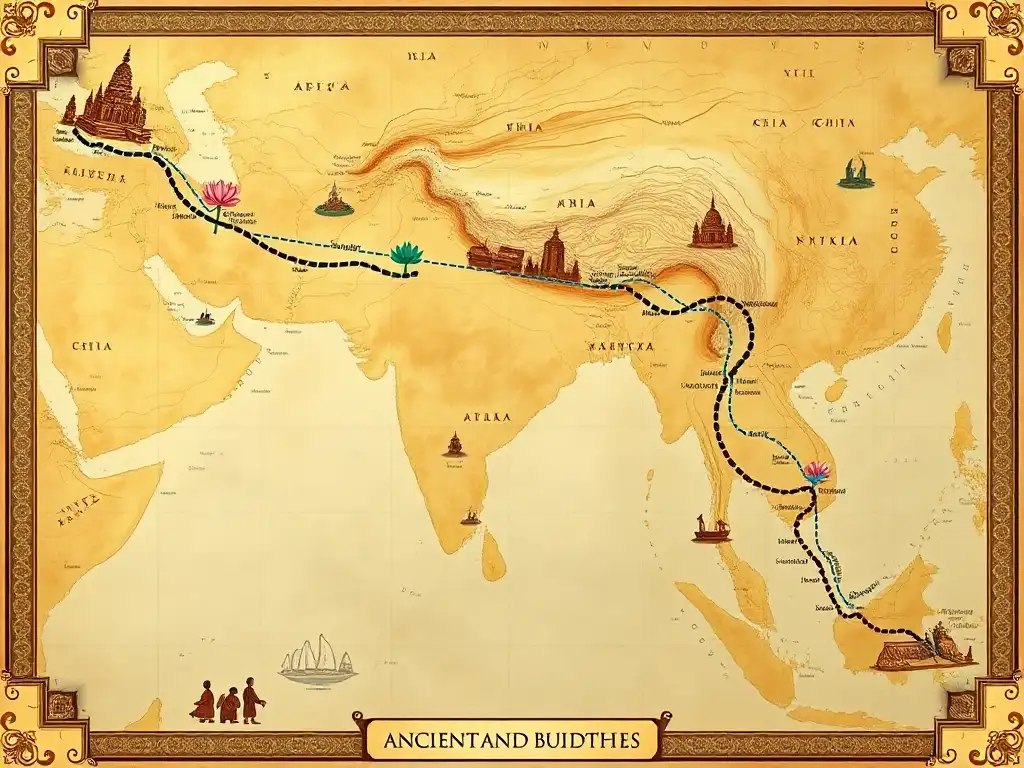
Ancient Indian trade routes played a crucial role in the dissemination of Buddhism, facilitating not only the movement of goods but also the exchange of ideas and cultural practices. As Buddhism emerged in the 5th century BCE in India, its teachings traveled far beyond the subcontinent, largely due to these intricate networks of trade. Merchants, pilgrims, and monks traversed these routes, sharing Buddhist philosophies and practices with diverse communities. The interconnectedness of regions through trade routes allowed Buddhism to flourish across Asia, impacting cultures from Central Asia to Southeast Asia.
Key Trade Routes in Ancient India
The Silk Road and Its Influence on Buddhism
The Silk Road, a sprawling network of trade routes connecting China to the Mediterranean, was instrumental in the spread of Buddhism. This ancient pathway facilitated cultural exchanges between different civilizations. As traders transported silk, spices, and other valuable goods, they also carried Buddhist texts and relics.
Key points about the Silk Road's influence:
- Cultural Exchange: The Silk Road was not just a conduit for material goods; it allowed for the sharing of ideas, art, and religious beliefs.
- Monastic Communities: Along the trade routes, monasteries were established as rest stops for travelers, which became centers for Buddhist learning and practice.
- Buddhist Iconography: Artistic influences from Greco-Buddhist art emerged along the Silk Road, merging Hellenistic styles with Buddhist themes, further embedding Buddhism into the cultural fabric of regions like Gandhara.
The Grand Trunk Road: A Pathway for Spiritual Exchange
The Grand Trunk Road, one of the oldest and longest major roads in Asia, served as a vital artery for trade and pilgrimage in ancient India. This road was crucial for the movement of people, including monks traveling to spread Buddhist teachings.
Significance of the Grand Trunk Road:
- Access to Key Cities: This road connected important centers like Pataliputra (modern Patna) and Taxila, facilitating easy access for pilgrims and traders.
- Buddhist Pilgrimages: The Grand Trunk Road allowed devotees to embark on significant pilgrimages to Buddhist sites, enhancing the religious landscape of the region.
- Cultural Interactions: The road fostered interactions between different communities, promoting the exchange of ideas and practices that enriched Buddhism.
How Trade Facilitated Cultural Exchange
Merchants as Ambassadors of Buddhism
Merchants played a pivotal role in the spread of Buddhism, acting as informal ambassadors. As they traveled, they shared their beliefs and practices with local populations.
Roles of merchants in promoting Buddhism:
- Trade and Teachings: Many merchants engaged in dialogues about Buddhist teachings, thus introducing the religion to new audiences.
- Establishment of Trade Networks: They created networks that connected disparate regions, making it easier for Buddhist monks to travel and share their teachings.
- Support for Monasteries: Wealthy traders often donated to Buddhist monasteries, ensuring their sustainability and furthering the spread of Buddhism.
Interaction Between Different Cultures and Religions
The ancient Indian trade routes fostered an environment of cultural interaction, allowing Buddhism to intertwine with local traditions and beliefs.
Impacts of cultural interaction:
- Syncretism: As Buddhism spread, it often absorbed elements from local religions, leading to a rich tapestry of beliefs and practices.
- Philosophical Exchanges: Dialogue between Buddhist and non-Buddhist thinkers enriched philosophical discourse, allowing for the evolution of Buddhist thought.
- Festivals and Rituals: Trade routes facilitated the sharing of festivals and rituals, leading to a blending of cultural practices that further entrenched Buddhism in various societies.
Ancient Indian trade routes were instrumental in the spread of Buddhism, enabling cultural exchanges that shaped the religion's development and integration into diverse societies. The interconnectivity fostered by trade not only facilitated the movement of goods but also transformed Buddhism into a global religion, leaving a lasting legacy that continues to be felt today.
The Impact of Trade on Buddhist Missionaries
Notable Buddhist Missionaries and Their Journeys
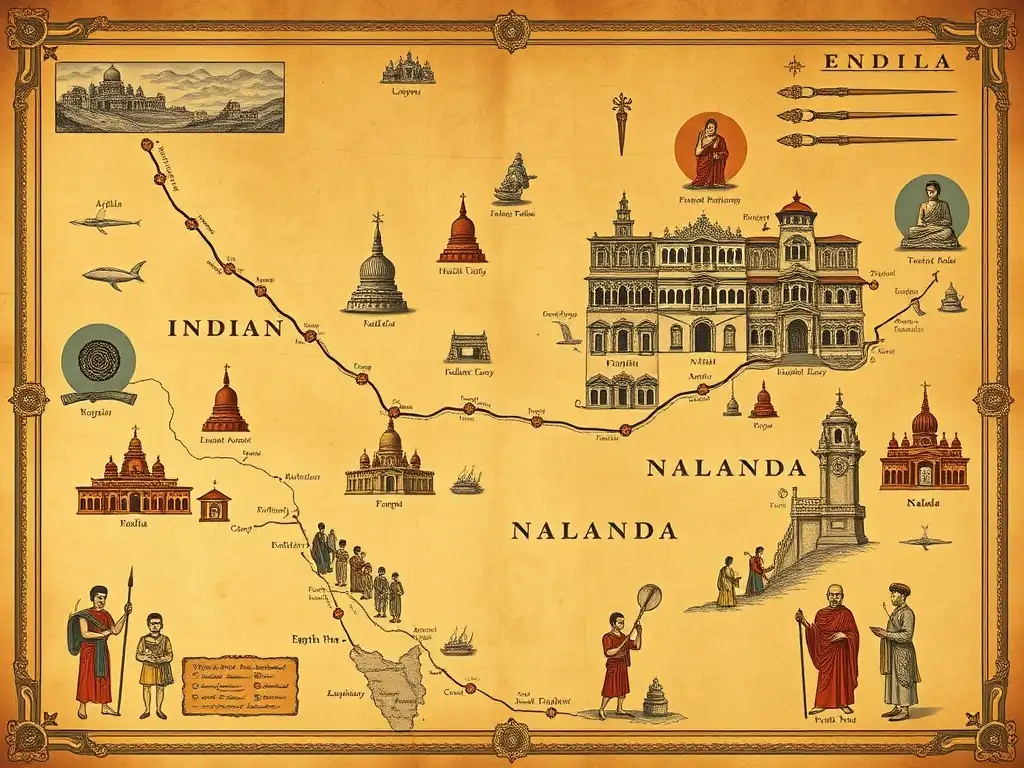
Buddhism's expansion beyond its Indian origins is largely attributed to the efforts of notable missionaries who traversed ancient Indian trade routes. These routes were not merely pathways for goods; they were lifelines that connected diverse cultures and facilitated the exchange of ideas, including spiritual teachings. Key figures such as Bodhidharma, who is credited with bringing Zen Buddhism to China, and Faxian, who traveled to India to collect Buddhist texts, exemplify how trade routes served as conduits for spiritual dissemination.
The travels of these missionaries were often meticulously documented. For instance, Faxian’s journey in the 5th century CE, which he chronicled in his work "A Record of Buddhist Countries," highlights the interconnectedness of trade and religion. He traveled through the Silk Road, visiting various monasteries and collecting texts that would later influence Buddhist thought in China and beyond.
Moreover, the Silk Route was instrumental in the journey of Buddhist monks from the Gandhara region, who introduced Mahayana Buddhism to Central Asia and China. The interactions among traders, monks, and local populations along these routes fostered a rich exchange of ideas and beliefs, ultimately leading to the development of distinct Buddhist schools of thought.
Ashoka's Role in Promoting Buddhism Through Trade
One of the most significant figures in the propagation of Buddhism was Emperor Ashoka, who ruled during the Maurya Dynasty in the 3rd century BCE. Ashoka's conversion to Buddhism marked a pivotal moment in Indian history. He recognized the potential of trade routes in promoting his newly adopted faith and initiated several strategic measures to ensure Buddhism's spread.
Ashoka established Edicts along trade routes, inscribing messages that communicated the core tenets of Buddhism. He sent out missionaries, such as Mahinda, his son, to regions like Sri Lanka, capitalizing on established trade networks. This not only facilitated the exchange of religious ideas but also helped integrate these teachings into the local cultures, demonstrating the powerful synergy between trade and religion.
Furthermore, Ashoka promoted the establishment of monasteries at key trade points, which would later serve as centers for religious learning and dissemination.
The Influence of Silk Traders in Spreading Buddhist Teachings
Silk traders played an essential role in the proliferation of Buddhism across Asia. The Silk Road, a network of trade routes connecting the East and West, enabled merchants to not only exchange luxury goods but also share cultural and spiritual knowledge. As these traders moved through various regions, they carried with them Buddhist texts, artifacts, and teachings.
For example, as traders traveled from India through Central Asia, they introduced Buddhist concepts to regions like Bactria and Khotan. The presence of Buddhist art and iconography in these areas can be traced back to the interactions facilitated by trade. Additionally, the Kushan Empire, which arose along the Silk Road, became a significant supporter of Buddhism, further solidifying the religion's influence throughout the region.
The fusion of trade and religion along these routes was evident in how local communities began to adopt Buddhist principles, leading to the establishment of vibrant Buddhist cultures in places like China, Korea, and Japan, where Buddhism would flourish and evolve.
Establishing Monasteries Along Trade Routes
The establishment of monasteries along ancient Indian trade routes was crucial for the proliferation of Buddhism. These monastic centers served as spiritual sanctuaries and hubs for learning, fostering the growth of Buddhist communities and facilitating the journeys of traders and pilgrims alike.
The Importance of Trade Centers as Buddhist Hubs
Trade centers such as Taxila, Pataliputra, and Ujjain emerged as major hubs for Buddhist activity. These cities not only thrived economically due to their strategic locations on trade routes but also became melting pots of cultures and ideas.
Monasteries in these trade centers played a dual role: they provided lodging and support for weary travelers and merchants, while simultaneously serving as centers for Buddhist teachings. The presence of monks and scholars attracted merchants who sought knowledge and spiritual guidance, leading to the establishment of a vibrant exchange of ideas.
Additionally, the architectural designs of these monasteries often reflected the artistic influences of the various cultures that interacted through trade, further embedding Buddhism into the social fabric of these regions.
How Monasteries Supported Travelers and Merchants
Monasteries along trade routes were essential in offering hospitality to travelers and merchants. They provided food, shelter, and a safe space for rest, which was particularly valuable during long and arduous journeys. This hospitality not only facilitated trade but also encouraged cultural exchanges, as merchants shared stories and ideas with monks and local populations.
The monks, in return, often taught travelers about Buddhist ethics and philosophy. This mutual support system fostered a sense of community along the trade routes, allowing Buddhism to gain a foothold in various regions. The presence of monasteries helped solidify Buddhism's influence, as many merchants would return to their homelands, carrying with them the teachings they had encountered during their travels.
The intricate relationship between ancient Indian trade routes and Buddhism underscores the importance of commerce in the spread of religious ideas. The interconnectivity fostered by trade allowed for a rich exchange of cultural and spiritual concepts, shaping the trajectory of Buddhism as it moved beyond the borders of India.
The Cultural Exchange Along Ancient Indian Trade Routes

Art and Architecture Influenced by Buddhist Trade
The ancient Indian trade routes, such as the Silk Road and the Grand Trunk Road, served not only as conduits for commerce but also as channels for cultural exchange that significantly influenced the art and architecture of regions along these paths. As traders and travelers moved through these routes, they brought with them not only goods but also ideas, beliefs, and artistic styles.
Stupas and Their Significance in Trade Cities
Stupas, which are dome-shaped structures used as a place of meditation and worship in Buddhism, became prominent landmarks in trade cities. The most notable example is the Sanchi Stupa, built during the reign of Emperor Ashoka in the 3rd century BCE. These stupas were often strategically located near trade routes, attracting pilgrims and traders alike, which facilitated cultural interactions between different regions.
- Architectural Features: Stupas typically feature a circular base, a dome, and a spire, symbolizing the universe. The embellishments on these structures often reflect the local art styles influenced by the diverse cultures encountered along trade routes.
- Cultural Significance: As trade cities flourished, stupas became sites for community gatherings and religious discourse, thereby promoting the spread of Buddhist teachings and practices across regions.
Buddhist Artifacts Discovered Along Trade Routes
Archaeological discoveries along ancient trade routes have revealed a wealth of Buddhist artifacts that highlight the cultural exchanges facilitated by trade. These artifacts include:
- Sculptures and Reliefs: Many sculptures depicting the life of Buddha and various Bodhisattvas have been found in regions like Gandhara and Mathura, showcasing a blend of Hellenistic and Indian artistic influences.
- Inscriptional Evidence: Inscriptions found on stone pillars and rocks indicate the spread of Buddhist ideology across trade routes, often in local languages, making the teachings accessible to a broader audience.
Language and Literature: The Spread of Buddhist Texts
The movement of traders and monks along ancient Indian trade routes played a crucial role in the dissemination of Buddhist texts and literature. As these routes connected diverse cultures, they facilitated not only the exchange of goods but also the sharing of knowledge and spiritual teachings.
Translations of Buddhist Scriptures
One of the most significant impacts of ancient Indian trade routes was the translation of Buddhist scriptures into various languages. This translation process was vital for:
- Cross-Cultural Communication: Trade routes connected regions such as Central Asia, China, and Southeast Asia, necessitating the translation of texts to ensure understanding among diverse populations.
- Preservation of Teachings: The translation efforts helped preserve the teachings of Buddhism, making them accessible to non-Sanskrit speaking audiences, which ultimately contributed to the religion's growth beyond India.
The Role of Trade in Disseminating Buddhist Literature
Trade networks not only facilitated the physical movement of texts but also allowed for the establishment of monastic centers that became hubs of learning and literary production.
- Monastic Libraries: Many monasteries along trade routes housed libraries that collected and copied Buddhist texts, ensuring their preservation and dissemination.
- Influence on Local Cultures: As merchants engaged with Buddhist monks, they often took back copies of texts to their homeland, aiding in the adaptation and integration of Buddhist principles into local cultures.
The ancient Indian trade routes were instrumental in the spread of Buddhism through cultural exchanges, architectural influences, and the dissemination of texts, establishing a foundation for the religion's growth across Asia.
Conclusion: The Lasting Legacy of Ancient Indian Trade Routes on Buddhism

Summary of Key Points on Trade and Buddhist Spread
The ancient Indian trade routes were instrumental in the dissemination of Buddhism, creating pathways that facilitated not only the exchange of goods but also the flow of ideas and cultural practices. Key points that highlight this relationship include:
- Geographical Importance: The trade routes connected major urban centers such as Pataliputra, Taxila, and Ujjain, enabling monks and traders to travel and interact. This geographical nexus contributed to the proliferation of Buddhist teachings across vast regions.
- Cultural Exchange: Alongside commodities like silk, spices, and precious stones, Buddhist texts and artifacts traveled these routes. The trade interactions allowed for a rich interchange of religious thoughts, leading to the adaptation of Buddhist practices in various cultures.
- Royal Patronage: Many rulers and merchants who engaged in trade were patrons of Buddhism. The support from influential figures helped establish monasteries and stupas along trade routes, turning them into centers of learning and meditation.
- Silk Road Influence: The Silk Road is one of the most famous ancient trade routes through which Buddhism spread. As merchants traversed this route, they carried with them Buddhist ideologies, significantly impacting regions in Central Asia and beyond.
- Missionary Activity: Buddhist monks often traveled along these trade routes as missionaries, actively promoting the teachings of Buddha. The establishment of monastic communities along these routes ensured the sustenance of Buddhist practices and beliefs.
Reflection on the Interconnectedness of Trade and Religion in Ancient India
The intertwined nature of trade and religion in ancient India is a compelling aspect of its history. The flourishing trade routes not only facilitated economic prosperity but also served as conduits for spiritual and cultural exchange.
- Religious Influence on Trade: The ethical teachings of Buddhism encouraged fair trade practices, which attracted merchant communities. This ethical framework fostered trust and cooperation among traders, further enhancing trade networks.
- Cultural Adaptation and Syncretism: As Buddhism spread through trade, it encountered various belief systems. This interaction often resulted in syncretism, where local customs and Buddhist principles blended, creating unique regional expressions of Buddhism.
- Legacy of Connectivity: The legacy of these ancient trade routes endures, as they laid the groundwork for future cultural and religious exchanges. The principles of connectivity established during this period continue to shape contemporary discussions on globalization and intercultural dialogue.
The ancient Indian trade routes were pivotal in not only the economic landscape of the region but also in shaping the religious trajectory of Buddhism. Their lasting legacy is a testament to the power of interconnectedness in fostering the spread of ideas and beliefs across civilizations.
Further Reading and Resources on Ancient Indian Trade and Buddhism
Recommended Books and Articles
For those interested in delving deeper into the relationship between ancient Indian trade routes and the spread of Buddhism, the following books and articles provide valuable insights and detailed analyses:
-
"The Spread of Buddhism" by Andrew Huxley
This comprehensive book explores the historical context of Buddhism's spread through trade routes, highlighting key figures and events that facilitated its growth. Huxley provides a thorough examination of how trade influenced cultural exchanges.
-
"Buddhism and the Silk Road" by John Simpson
This text discusses the importance of the Silk Road, a significant trade route that connected India with Central Asia and beyond. Simpson details how this network allowed for the transmission of Buddhist texts and ideas.
-
"Ancient Indian Trade and Commerce" by R. C. Majumdar
This work focuses on the economic aspects of ancient India, discussing how trade routes not only fostered commerce but also the spread of religious ideologies, including Buddhism.
-
"Trade Routes of Ancient India" - Journal of Ancient Indian History
An academic article that analyzes various trade routes in ancient India and their impact on cultural diffusion, particularly Buddhism. It provides a well-researched overview of how these routes facilitated interactions among diverse groups.
-
"Buddhism on the Move: The Role of Trade in the Buddhist Diaspora" by Michael Carr
This article examines the significance of trade in the dispersal of Buddhist teachings across Asia, illustrating how merchants acted as conduits of cultural and religious exchange.
Relevant Documentaries and Online Resources
Visual learners may find the following documentaries and online resources useful for understanding the intersection of ancient Indian trade routes and Buddhism:
-
"The Silk Road: Past, Present, Future" (Documentary)
This documentary offers a broad overview of the Silk Road, including its role in the spread of Buddhism from India to other regions. It features expert interviews and stunning visuals of ancient trade routes.
-
"Buddhism: The Story of the Buddha" (BBC Documentary)
A comprehensive documentary that traces the life of Buddha and his followers, linking the historical context of trade routes that facilitated the spread of Buddhism.
-
Online Course: "Trade and Cultural Exchange in Ancient Asia" - Coursera
This course covers various aspects of trade in ancient Asia, with specific modules dedicated to the influence of trade routes on Buddhism and other religions.
-
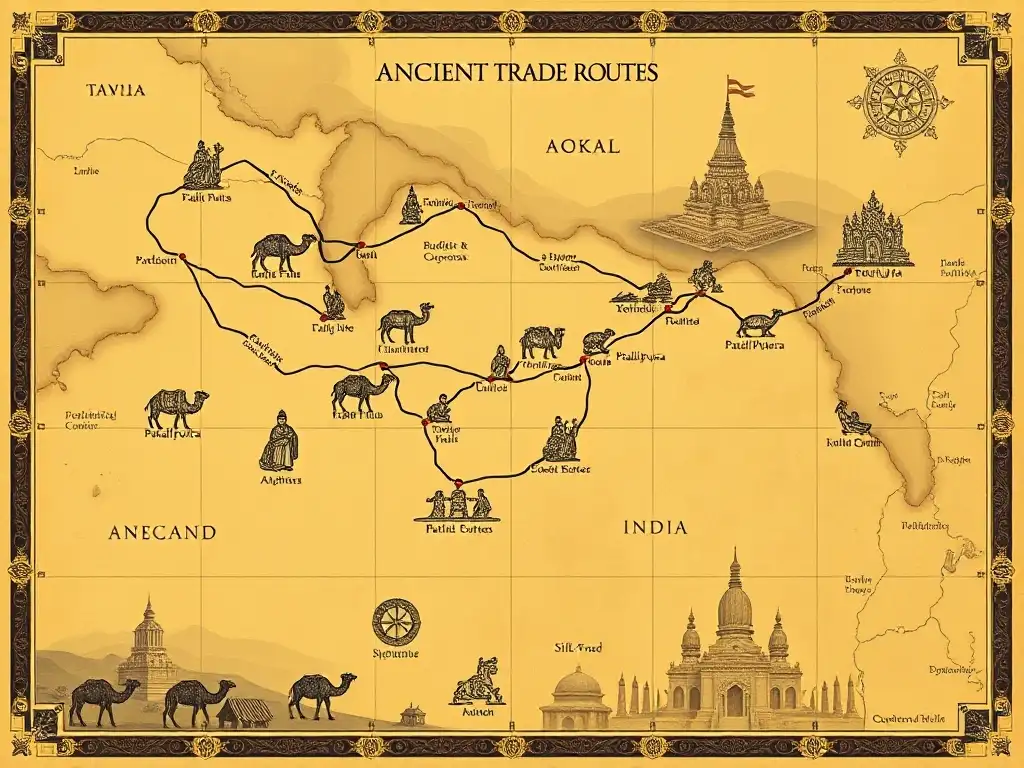
Interactive Map of Ancient Trade Routes
An engaging online resource that allows users to explore ancient trade routes, including those that were pivotal in the spread of Buddhism. It includes detailed descriptions of key locations and their historical significance.
-
"The Impact of Trade on the Spread of Buddhism" - TED-Ed
A short educational video that succinctly explains how trade networks contributed to the dissemination of Buddhist teachings across Asia. It is a great starting point for visual learners.
By exploring these resources, readers can gain a richer understanding of how ancient Indian trade routes played a crucial role in the dissemination of Buddhism, shaping both the religion and the cultures it encountered along the way.
Frequently Asked Questions
What were the main trade routes in ancient India?
Ancient India had several trade routes connecting it to regions like Asia, the Middle East, and Europe, including the Silk Road and maritime routes along the Indian Ocean.
How did these trade routes contribute to the spread of Buddhism?
The trade routes facilitated the exchange of ideas and cultural practices, allowing Buddhism to spread from India to other regions, including Central Asia and Southeast Asia, as traders shared their beliefs.
What role did merchants play in spreading Buddhism along these routes?
Merchants acted as cultural ambassadors, often stopping at monasteries and trading posts where they would share Buddhist teachings, leading to the establishment of Buddhist communities in new areas.
Were there specific landmarks associated with the spread of Buddhism along trade routes?
Yes, important landmarks such as the Nalanda University and various stupas served as centers for Buddhist learning and pilgrimage, attracting traders and travelers along the routes.
How did the decline of trade routes affect Buddhism in ancient India?
The decline of trade routes, due to factors like invasions and economic shifts, led to a decrease in cultural exchange, which contributed to the decline of Buddhism in India, as it became less accessible to new followers.
Final Reflection: The Enduring Legacy of Ancient Indian Trade Routes and Buddhism
The exploration of ancient Indian trade routes and their role in the spread of Buddhism reveals a profound connection between commerce and culture that resonates even today. As we navigate a world increasingly defined by globalization, the historical pathways that once facilitated the exchange of ideas and beliefs remind us of the power of interconnectedness. The legacy of these trade routes is not merely a relic of the past; it is a vibrant thread woven into the fabric of our contemporary society, illustrating how ideas can transcend borders and transform lives.
The influence of these ancient trade routes extends far beyond their geographical significance; they have shaped cultural and social landscapes across centuries. The movement of Buddhist teachings along these routes fostered a spirit of inquiry and acceptance that continues to inspire dialogue and understanding in our modern world. As we reflect on this, we are reminded of the words of the Buddha himself: Just as a candle cannot burn without fire, men cannot live without a spiritual life.
This quote encapsulates the essence of how trade routes served not only as conduits for goods but also as channels for spiritual enlightenment, fostering a rich tapestry of cultural exchange that still informs our global interactions today.
As we conclude this exploration, I invite you to reflect on the lessons of ancient Indian trade routes and Buddhism in your own life. Consider how the principles of openness, curiosity, and compassion can guide your interactions with others in an increasingly interconnected world.
Let the spirit of these ancient pathways inspire you to seek understanding and connection, not just in the realm of commerce but in the broader human experience. Embrace the opportunity to learn from diverse cultures and beliefs, and carry forward the legacy of those who traveled these routes before us, paving the way for a more harmonious future.
Explore the Legacy: Take Action on the Lessons of Ancient Trade!
Thank you for diving into the fascinating world of ancient Indian trade routes and their pivotal role in spreading Buddhism. Your engagement with this rich history is invaluable! Now, let’s harness this knowledge to enrich our understanding of cultural exchange and spiritual growth.
Here are a few steps you can take to deepen your journey:
- Delve Deeper: Visit local museums or libraries that feature artifacts or exhibits related to Buddhism and ancient trade. You may uncover hidden treasures that vividly illustrate these historical connections!
- Share Your Insights: Consider sharing your discoveries with friends or on social media using the hashtag #AncientTrade to spark conversations about the influence of trade on culture and religion.
- Join a Community: Engage with local or online groups dedicated to Buddhism or history. Connecting with others who share your interests can provide fresh perspectives and enhance your understanding of ancient trade routes.
Which aspect of the trade routes and their influence on Buddhism resonates with you the most, and how do you plan to explore it further?