
The Influence of Ancient Indian Mathematics on the Renaissance in Europe


Welcome to Ancient India History, where we invite you to embark on a fascinating journey through time, exploring the rich tapestry of civilizations that have shaped our world. In this article, we delve into a captivating topic: the impact of ancient Indian mathematics on Europe. Did you know that the mathematical innovations from the Indus Valley to the Gupta Empire played a crucial role in sparking the Renaissance?
Prepare to uncover the profound connections between ancient wisdom and modern thought. Join us as we unravel the threads of history that link these two great cultures, igniting your curiosity to learn more about the extraordinary contributions of ancient Indian mathematicians.

The history of mathematics is a fascinating journey that spans across various cultures and epochs, but one of the most significant influences came from ancient India. Ancient Indian mathematics, with its profound concepts and innovative techniques, played a crucial role in shaping mathematical thought and practice not only in the Indian subcontinent but also in Europe during the Renaissance.
This article delves into the rich tapestry of ancient Indian mathematics, exploring its contributions and examining how these ideas impacted European scholars in the late medieval and early modern periods. By understanding the evolution of mathematical concepts in ancient India, we can trace a remarkable line of influence that highlights the interconnectedness of global knowledge systems.
Introduction to Ancient Indian Mathematics
Ancient Indian mathematics is characterized by its remarkable advancements and unique approaches to problem-solving. From the sophisticated techniques used by the mathematicians of the Indus Valley Civilization to the groundbreaking discoveries during the Gupta Empire, Indian mathematicians developed an intricate understanding of numbers, geometry, and algebra. These innovations not only served practical purposes but also contributed to the philosophical and spiritual dimensions of Indian culture.
Overview of Ancient Indian Mathematical Contributions
The contributions of ancient Indian mathematicians are diverse and profound. Key achievements include:
- The invention of zero: A revolutionary concept that transformed mathematics globally.
- The decimal system: An efficient numerical system that laid the groundwork for modern arithmetic.
- Algebra and trigonometry: Advanced mathematical techniques that were instrumental in astronomical calculations.
These contributions reflect a rich mathematical tradition that was deeply intertwined with other fields such as astronomy, architecture, and commerce.
Key Figures in Ancient Indian Mathematics
Several mathematicians stand out in the history of ancient Indian mathematics:
- Aryabhata: Renowned for his work in astronomy and mathematics, Aryabhata introduced the concept of zero and made significant contributions to trigonometry.
- Brahmagupta: Known for his work on algebra and the rules for arithmetic operations with negative numbers, Brahmagupta's texts had a lasting influence on both Indian and Islamic mathematics.
- Bhaskara II: His work in the 12th century, particularly in calculus and number theory, showcased the depth of mathematical understanding in ancient India.
These figures not only advanced mathematical thought in their time but also laid the foundation for future generations.
The Development of Mathematical Concepts in Ancient India
The development of mathematical concepts in ancient India was both innovative and systematic. This section explores some of the key concepts that emerged from this vibrant mathematical tradition.
The Concept of Zero and Its Significance
The introduction of zero as a number and a placeholder was a groundbreaking achievement in mathematics. It allowed for the representation of large numbers and facilitated calculations that were previously cumbersome. The significance of zero transcends mere numerical value; it represents a philosophical shift in understanding the concept of nothingness and infinity. This idea would later influence European mathematicians, fundamentally altering their approach to arithmetic.
The Decimal System and Its Innovations
The ancient Indian decimal system, which uses place value, is one of the most significant contributions to mathematics. This system not only simplified calculations but also enhanced the ability to represent large numbers with ease. The innovations in this system included:
- Place value notation: A crucial advancement that allowed for more complex computations.
- Fractions: Indian mathematicians developed methods for understanding and manipulating fractions, which were essential for trade and commerce.
The adoption of the decimal system in Europe during the Renaissance was instrumental in modernizing European mathematics.
Algebraic Techniques and Their Applications
Ancient Indian mathematicians made significant advancements in algebra, developing techniques that addressed various mathematical problems. Key contributions include:
- Brahmagupta's rules for solving equations: These rules provided methodologies for tackling quadratic equations and contributed to the field of algebra.
- The use of symbols: The introduction of symbols to represent unknowns marked a significant step toward modern algebraic notation.
These techniques not only advanced mathematical theory but also found applications in fields such as astronomy and architecture, influencing practices in Europe as knowledge spread during the Renaissance.
As we delve deeper into the influence of ancient Indian mathematics on the Renaissance in Europe, it is essential to recognize the interconnectedness of knowledge across cultures and time periods. This exploration reveals the profound impact that ancient Indian scholars had on shaping mathematical thought, ultimately contributing to the rich tapestry of global intellectual heritage.
The Transmission of Indian Mathematical Knowledge to Europe
The transmission of ancient Indian mathematics to Europe was a complex process influenced by trade, cultural exchange, and scholarly pursuits. As early as the 1st century CE, Indian mathematicians were developing sophisticated concepts, particularly in areas such as arithmetic, algebra, and geometry. This knowledge began to travel westward, primarily through trade routes and the conquests of various empires. The introduction of Indian mathematical concepts into Europe significantly shaped mathematical thought during the Renaissance, ultimately influencing various fields such as astronomy, navigation, and architecture.
Historical Context: Trade Routes and Cultural Exchange
The ancient trade routes, including the Silk Road and maritime pathways, served as critical conduits for the exchange of ideas between India and Europe. Merchants, travelers, and scholars frequently interacted, allowing for the transfer of not only goods but also knowledge. In addition to trade, the expansion of empires such as the Persian Empire and later the Islamic Caliphates facilitated the flow of Indian mathematical texts into the Middle East and Europe.
During the medieval period, particularly from the 8th to the 12th centuries, there was a notable increase in cultural exchanges due to the rise of Islamic scholars. They translated and preserved many Indian mathematical works, which would later be introduced to Europe as part of the broader Renaissance movement. This interconnectedness between regions underscores the importance of cultural exchange in disseminating mathematical knowledge.
Key Texts: From Brahmagupta to Fibonacci
Several key texts were instrumental in transmitting Indian mathematical knowledge to Europe. One of the most influential works was Brahmagupta's "Brahmasphutasiddhanta," written in the 7th century. This text contained extensive discussions on arithmetic, algebra, and the concept of zero, which would later revolutionize European mathematics.
Another significant text was "Lilavati," also authored by Brahmagupta, which focused on practical mathematics and problem-solving techniques. These texts were translated into Arabic and later into Latin, making them accessible to European scholars.
Fibonacci’s "Liber Abaci," published in 1202, played a crucial role in popularizing the use of Indian numerals in Europe. Fibonacci acknowledged Indian mathematicians' influence and credited them with introducing the positional decimal system. This marked a pivotal moment in the history of mathematics, as it shifted Europe away from Roman numerals toward more efficient numerical systems.
The Role of Islamic Scholars in Bridging Cultures
Islamic scholars were pivotal in bridging the mathematical knowledge of ancient India and Europe. During the Islamic Golden Age (8th to 14th centuries), scholars such as Al-Khwarizmi and Al-Biruni translated and expanded upon Indian mathematical texts. Al-Khwarizmi's works on algebra, particularly his book "Al-Kitab al-Mukhtasar fi Hisab al-Jabr wal-Muqabala," introduced concepts that originated in Indian mathematics, including algorithms and the systematic solution of equations.
These translated texts were brought into Europe through Spain and Sicily, where the Islamic influence was particularly strong. The eventual translation of these works into Latin during the 12th century facilitated the introduction of Indian mathematical concepts into European universities. This exchange not only enriched European mathematics but also led to a broader appreciation of the scientific achievements of other cultures.
The Impact of Ancient Indian Mathematics on European Renaissance
The impact of ancient Indian mathematics on the European Renaissance was profound. It laid the groundwork for significant advancements in various fields, eventually leading to the development of modern mathematics. The introduction of the decimal system and the concept of zero transformed mathematical practices in Europe, allowing for more complex calculations and the development of new mathematical theories.
Adoption of Indian Numerals in Europe
One of the most notable impacts was the adoption of Indian numerals, also known as Hindu-Arabic numerals, in Europe. This numeral system provided a more efficient way to perform calculations compared to the cumbersome Roman numeral system. The use of zero as a placeholder was particularly revolutionary, allowing for a clearer representation of numbers and facilitating more advanced mathematical operations.
By the 15th century, Indian numerals began to replace Roman numerals in Europe, significantly influencing commerce, science, and navigation. This transition marked a critical shift in mathematical practices, enabling scholars and merchants to conduct calculations with greater ease and accuracy.
Influence on European Mathematicians and Thinkers
The influence of ancient Indian mathematics extended to numerous European mathematicians and thinkers. Scholars such as Descartes, Newton, and Galileo were indirectly impacted by the mathematical concepts introduced through the works of Indian mathematicians. The systematic approach to mathematics and the introduction of algebraic techniques from India played a crucial role in shaping their ideas and methodologies.
Moreover, the mathematical principles established by Indian scholars contributed to the growth of calculus and other advanced mathematical fields during the Renaissance. The integration of these ideas into European thought exemplifies the significant legacy of ancient Indian mathematics in shaping the intellectual landscape of Europe.
Case Studies: Notable Figures Influenced by Indian Mathematics
Several notable figures in European history were directly influenced by ancient Indian mathematics.
- Fibonacci: As previously mentioned, he played a crucial role in popularizing the Hindu-Arabic numeral system in Europe through his book "Liber Abaci." His advocacy for this system helped revolutionize European mathematics.
- Rene Descartes: His work in geometry and algebra was influenced by the systematic approaches found in Indian mathematics, particularly in his development of the Cartesian coordinate system.
- Isaac Newton: Newton's mathematical innovations in calculus were informed by the algebraic techniques and numeration systems that had their roots in Indian mathematics.
These case studies highlight the enduring impact of ancient Indian mathematics on European intellectual development, demonstrating that the exchange of knowledge across cultures can lead to profound advancements in human understanding.
Comparative Analysis: Ancient Indian vs. European Mathematical Practices
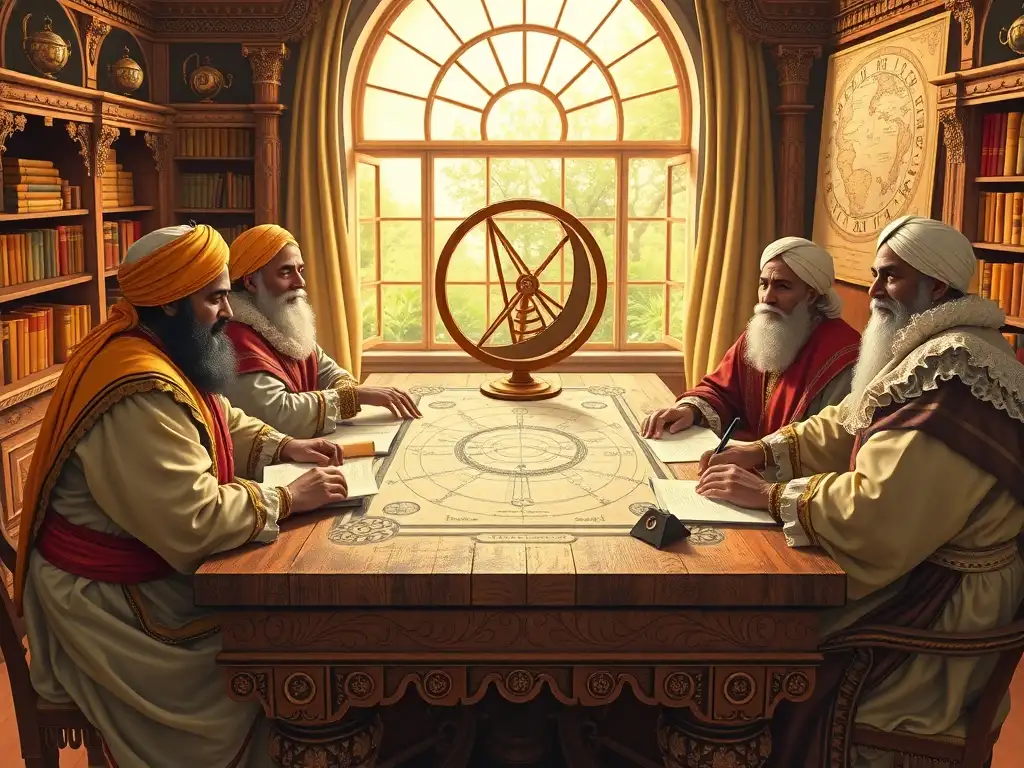
The mathematical practices of ancient India and Europe exhibit both distinct differences and notable similarities. By examining these aspects, we can understand how ancient Indian mathematics laid a foundational role in shaping European mathematical thought during the Renaissance.
Differences in Approaches to Problem Solving
Ancient Indian mathematics is characterized by a unique approach to problem solving, heavily influenced by its philosophical and cultural context. Indian mathematicians, such as Aryabhata and Brahmagupta, emphasized algorithms and practical applications. They often employed methods that were systematic and algorithmic, allowing for efficiency in computations. For instance, the concept of "sunya" (zero) was pivotal in transforming calculations, leading to the development of rules for arithmetic operations involving zero, which was relatively absent in European practices of the time.
In contrast, European mathematics during the medieval period was largely influenced by Greek geometry and algebra. European scholars often focused on theoretical constructs rather than practical problem-solving techniques. The reliance on geometric proofs and theorems dominated the mathematical landscape. This philosophical divide resulted in different educational and pedagogical methods, where Indian scholars favored a more practical mathematical education compared to their European counterparts.
Similarities in Mathematical Concepts and Theories
Despite these differences, there are significant similarities between ancient Indian and European mathematical concepts. Both cultures contributed to the development of algebra, although the terminology and representation differed. Indian mathematicians introduced the concept of algorithms, which were later adopted and adapted by European scholars. The use of the decimal system, including place value concepts, further illustrates this intersection.
Furthermore, both ancient Indian and European mathematicians grappled with similar problems, such as the calculation of areas and volumes. The formulas derived in ancient India for geometric shapes can be seen echoed in later European texts, indicating a cross-cultural exchange of ideas that transcended regional boundaries.
Conclusion: Legacy of Ancient Indian Mathematics on Modern Mathematics
The influence of ancient Indian mathematics on modern mathematics is profound and multifaceted. The foundational concepts established by Indian mathematicians have persisted through centuries and continue to resonate in contemporary numerical systems.
Lasting Influence on Contemporary Numerical Systems
The introduction of the decimal place value system and the concept of zero from ancient Indian mathematics revolutionized global numerical systems. These innovations facilitated more complex calculations and paved the way for modern arithmetic. The adoption of these concepts in European mathematics during the Renaissance marked a significant turning point, leading to advancements in various fields such as astronomy, engineering, and commerce.
Today, the legacy of ancient Indian mathematics is evident in our everyday numerical practices. The integration of zero and the decimal system forms the backbone of not just mathematics but also computer science, economics, and numerous technological advancements.
Reflection on Cultural Exchange and Intellectual Growth
The relationship between ancient Indian mathematics and its influence on European thought exemplifies the rich tapestry of cultural exchange that defined the Renaissance. As scholars from different civilizations interacted, they shared knowledge, techniques, and theories, which contributed to intellectual growth across borders.
This exchange emphasizes the importance of recognizing the interconnectedness of historical mathematical developments. The legacy of ancient Indian mathematics not only shaped European practices but also enriched the global mathematical heritage, highlighting the significance of collaboration and cross-cultural dialogue in the advancement of knowledge.
References and Further Reading
Exploring the influence of ancient Indian mathematics on the Renaissance in Europe involves delving into a wealth of scholarly work that highlights this fascinating intersection of cultures. The following sections outline key texts and suggested literature that provide deeper insights into the mathematical contributions from ancient India and their effects on European thought during the Renaissance.
Key Texts on Ancient Indian Mathematics
-
"The Mathematics of Ancient India" by Kim Plofker
This comprehensive work examines various mathematical concepts originating in ancient India, including arithmetic, algebra, and geometry. Plofker discusses how these ideas were transmitted to the Islamic world and subsequently to Europe.
-
"A History of Indian Mathematics" by C. V. Durell
Durell's text provides a detailed overview of the mathematical achievements in ancient India, including the contributions of notable figures such as Aryabhata and Brahmagupta. It serves as a foundational resource for understanding the development of mathematical ideas that later influenced Europe.
-
"Indian Mathematics: A Historical Perspective" by G. N. Singh
This book explores the historical context of Indian mathematics, focusing on its evolution and the significant texts that emerged from this tradition. Singh emphasizes the cultural and intellectual exchanges that facilitated the transfer of knowledge to Europe.
-
"Mathematics in India" by Kim Plofker
Plofker's exploration of the mathematical landscape in India covers various periods, illustrating how ancient techniques and theories laid the groundwork for future developments, including their eventual impact on European mathematics.
Suggested Literature on the Renaissance and Mathematics
-
"Mathematics in the Renaissance" by J. V. Field
Field's work offers an exploration of the role that mathematics played during the Renaissance, with particular attention to how classical texts, including those influenced by Indian mathematics, shaped mathematical thought in Europe.
-
"The Copernican Revolution: Planetary Astronomy in the Development of Western Thought" by Thomas S. Kuhn
Kuhn discusses the transformation in astronomical thought during the Renaissance, touching on the mathematical techniques that were informed by earlier traditions, including those from ancient India.
-
"The History of Mathematics: A Brief Course" by Roger L. Cooke
This text provides a broad overview of mathematical history, including the Renaissance period. Cooke highlights the contributions of various cultures, including how Indian mathematics influenced European developments.
-
"The Mathematical Thought of the Renaissance" by J. L. Berggren
Berggren delves into the mathematical innovations of the Renaissance, linking them to earlier traditions and illustrating the continuity of knowledge from ancient civilizations, including the significant impact of Indian mathematics.
These resources are essential for anyone interested in understanding the profound influence that ancient Indian mathematics had on the Renaissance in Europe, highlighting the interconnectedness of global intellectual traditions.
- Introduction to Ancient Indian Mathematics
- The Development of Mathematical Concepts in Ancient India
- The Transmission of Indian Mathematical Knowledge to Europe
- The Impact of Ancient Indian Mathematics on European Renaissance
- Comparative Analysis: Ancient Indian vs. European Mathematical Practices
- Conclusion: Legacy of Ancient Indian Mathematics on Modern Mathematics
- References and Further Reading
- What is the significance of ancient Indian mathematics in the context of European history?
- How did the decimal system from ancient India reach Europe?
- What role did Indian scholars play in the development of mathematics?
- How did the introduction of zero affect European mathematics?
- What are some examples of mathematical texts that influenced the Renaissance?
Frequently Asked Questions
What is the significance of ancient Indian mathematics in the context of European history?
Ancient Indian mathematics introduced innovative concepts like the decimal system and zero, which significantly influenced European mathematical practices during the Renaissance.
How did the decimal system from ancient India reach Europe?
The decimal system, developed by ancient Indian mathematicians, was transmitted to Europe through Arabic translations of Indian texts, leading to its adoption in European mathematics.
What role did Indian scholars play in the development of mathematics?
Indian scholars made groundbreaking contributions, particularly in algebra and trigonometry, which laid the foundation for many mathematical principles used in Europe during the Renaissance.
How did the introduction of zero affect European mathematics?
The introduction of zero by ancient Indian mathematicians allowed for more complex calculations and paved the way for advanced mathematical theories that emerged in Europe.
What are some examples of mathematical texts that influenced the Renaissance?
Key texts such as 'Aryabhatiya' by Aryabhata and 'Brahmasphutasiddhanta' by Brahmagupta were critical in transmitting mathematical knowledge from India to Europe, shaping the future of mathematics.
Final Reflection: The Enduring Legacy of Ancient Indian Mathematics
The profound impact of ancient Indian mathematics on the Renaissance in Europe is a testament to the interconnectedness of human knowledge. As we explore the intricate pathways through which mathematical concepts traveled across cultures, we uncover not only the brilliance of Indian scholars but also the transformative power of ideas. The exchange of knowledge that occurred during this period reshaped the very foundations of European thought, illustrating how the seeds of innovation can flourish when nurtured by diverse intellectual traditions.
Clearly, the influence of ancient Indian mathematics extends far beyond its historical context; it continues to resonate in our modern world. The principles and techniques developed by Indian mathematicians laid the groundwork for advancements in various fields, including astronomy, engineering, and economics. Their contributions remind us that the pursuit of knowledge is a collaborative endeavor that transcends borders. As the mathematician Carl Friedrich Gauss once said, Mathematics is the queen of the sciences and number theory is its crown jewel.
This sentiment reflects the timeless nature of mathematical inquiry and its ability to inspire generations.
As we reflect on the lessons drawn from the rich tapestry of ancient Indian mathematics, let us embrace the spirit of curiosity and collaboration that characterized this remarkable exchange of ideas. I invite you to consider how you can apply these lessons in your own life.
Whether through fostering a deeper appreciation for cultural diversity or engaging in interdisciplinary learning, we each have the opportunity to contribute to a legacy of knowledge that honors the past while paving the way for a brighter future. Embrace the journey of discovery, and let the influence of ancient wisdom guide you in your quest for understanding and innovation.
Unveil the Connection: Ancient Wisdom Meets Modern Discovery!
Thank you for diving into the fascinating world of how ancient Indian mathematics shaped the European Renaissance! Your curiosity contributes to a broader understanding of our interconnected histories. Now, it’s time to take that inspiration further and explore the rich legacy that awaits.
Here are some **exciting actions** you can embrace today:
- Delve deeper: Explore texts and resources on ancient Indian mathematicians like Aryabhata and Brahmagupta. Check out local or online libraries for insightful materials that enhance your understanding.
- Share your knowledge: Discuss your discoveries with friends or colleagues. Start a conversation about the significance of cultural exchanges in the field of mathematics!
- Join a community: Engage with online forums or groups that focus on historical mathematics. Collaborate, share insights, and learn from others who share your passion for this captivating subject!
What aspect of ancient Indian mathematics fascinates you the most, and in what ways do you believe it could influence future innovations?