
Aryabhata: The Genius Mathematician Who Revolutionized Ancient Indian Astronomy


Welcome to Ancient India History, where we embark on a fascinating journey through time to uncover the rich tapestry of ancient Indian civilizations. In this exploration, we delve into the groundbreaking contributions of Aryabhata to astronomy, a brilliant mathematician whose insights revolutionized our understanding of the cosmos. Curious about how his theories laid the foundation for modern astronomy? Join us as we unravel the mysteries of his work and its lasting impact on both ancient and contemporary science. Prepare to be captivated by the brilliance of a mind that transcended the ages!
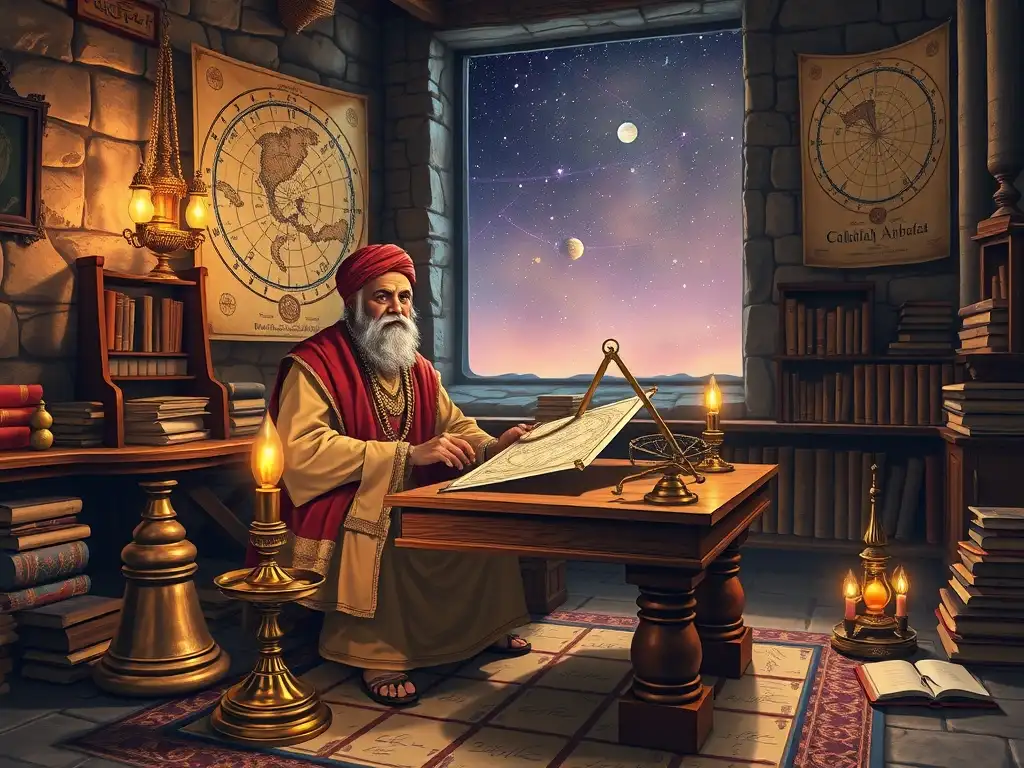
Introduction to Aryabhata and His Era
Aryabhata stands as a monumental figure in the annals of ancient Indian history, particularly renowned for his groundbreaking contributions to the field of astronomy. Born in 476 CE, during the Gupta Empire—a period often heralded as a golden age of science and mathematics—Aryabhata's work laid the foundational principles that would influence not only Indian scholars but also the global understanding of celestial movements and mathematical concepts.
His seminal text, the Aryabhatiya, encapsulates a wealth of knowledge that reveals the sophistication and depth of ancient Indian astronomy, positioning Aryabhata as a pivotal figure whose insights continue to resonate in contemporary scientific discourse.
In this article, we delve into Aryabhata's remarkable contributions to astronomy, exploring the context of his life, the innovations he introduced, and the lasting impact of his work on both ancient and modern science. Understanding Aryabhata's genius provides a glimpse into the rich tapestry of ancient Indian civilization and its profound achievements in the realm of knowledge and scholarship.
Overview of Ancient Indian Astronomy
Ancient Indian astronomy is characterized by its meticulous observations and sophisticated calculations, which date back to the Vedic period. Scholars of this era meticulously studied celestial bodies, leading to the development of various astronomical texts that sought to explain cosmic phenomena. Key concepts such as the sidereal year, the lunar calendar, and the movement of planets were explored, showcasing a deep understanding of time and the cosmos.
- Key Contributions:
- Development of astronomical instruments
- Creation of mathematical models to predict celestial events
- Integration of astronomy with religious and agricultural practices
The contributions of figures like Aryabhata and his predecessors were instrumental in shaping the trajectory of astronomy not only in India but across the world, melding observation with mathematical precision.
The Historical Context of the Gupta Empire
The Gupta Empire, which flourished from approximately 320 to 550 CE, is often regarded as a pinnacle of cultural and intellectual achievement in ancient India. This era was marked by significant advancements in various fields, including literature, philosophy, mathematics, and astronomy. Under the patronage of Gupta rulers, scholars were encouraged to pursue knowledge, fostering an environment where intellect thrived.
- Characteristics of the Gupta Era:
- Flourishing of arts and sciences
- Establishment of universities, such as Nalanda
- Increased trade and cultural exchange
The sociopolitical stability of the Gupta Empire provided a fertile ground for thinkers like Aryabhata to explore and innovate, ultimately leading to revolutionary ideas that would influence generations.
Aryabhata's Life and Background
Aryabhata's life is shrouded in some mystery, yet historical texts provide valuable insights into his upbringing and intellectual milieu. His thirst for knowledge and exceptional aptitude in mathematics set him apart as a prodigy in his time.
Early Life and Education of Aryabhata
Born in Kusumapura (modern-day Patna), Aryabhata is believed to have studied at one of the esteemed centers of learning in ancient India. His education would have encompassed a range of subjects, including mathematics, astronomy, and philosophy, reflecting the comprehensive nature of scholarly pursuits during the Gupta period.
- Key Aspects of Aryabhata's Education:
- Immersion in classical texts
- Engagement with mathematical concepts such as zero and place value
- Exposure to celestial observation techniques
These formative experiences equipped Aryabhata with the knowledge and skills necessary to challenge prevailing astronomical theories and propose innovative solutions.
Influences and Mentors in Aryabhata’s Journey
Throughout his academic journey, Aryabhata was likely influenced by various scholars and mentors, whose teachings shaped his understanding of the universe. The collaborative nature of knowledge-sharing in ancient India allowed for the cross-pollination of ideas, leading to advancements that transcended individual contributions.
- Notable Influences:
- Earlier mathematicians and astronomers such as Brahmagupta and Varahamihira
- Philosophical schools that emphasized logical reasoning and empirical observation
These influences provided Aryabhata with a rich intellectual foundation, enabling him to synthesize existing knowledge and forge new paths in the realm of astronomy and mathematics. His legacy continues to be celebrated as a testament to the brilliance of ancient Indian scholarship.
Key Contributions of Aryabhata to Astronomy
Aryabhata, an eminent mathematician and astronomer of ancient India, made remarkable contributions that significantly influenced the field of astronomy. His works laid the foundation for astronomical calculations and theories that were not only revolutionary for his time but also served as a reference for future scholars. Notably, Aryabhata's emphasis on mathematical precision in astronomical observations marked a significant shift from traditional methods. His pioneering approach helped develop various astronomical tools and methods that enhanced the understanding of celestial phenomena.
One of his key contributions was the introduction of the concept of zero and the decimal place value system, which enabled more complex calculations in astronomy. His influential texts, particularly the Aryabhatiya, systematically detailed astronomical concepts, including the movements of celestial bodies, eclipses, and the calculation of planetary positions. Aryabhata's integration of mathematics and astronomy established a model that would inspire generations of scholars not only in India but across the globe.
Introduction to Aryabhata's Major Works
Aryabhata's most significant work, the Aryabhatiya, composed in 499 CE, is a comprehensive treatise that encompasses various branches of mathematics and astronomy. The text is divided into four sections: Gitika, which deals with time and planetary positions; Ganitaka, focusing on mathematics; Kuttaka, which explains arithmetic and algebraic methods; and Goladhyaya, which discusses spherical astronomy.
In Aryabhatiya, Aryabhata presents numerous formulas and calculations that elucidate the movements of the sun, moon, and planets. His work not only addresses practical astronomical problems but also reflects deep philosophical insights into the nature of the universe. The clarity and precision of his writing made it accessible to scholars of his time, and it continues to be a vital source of knowledge in the history of science.
Aryabhata's Innovations in Astronomical Calculations
Aryabhata introduced several innovations in astronomical calculations that had a lasting impact on the field. One of his notable innovations was the method of calculating the positions of celestial bodies using trigonometric functions. Aryabhata utilized sine and cosine, which facilitated the calculation of angles and distances in astronomy, allowing for more accurate predictions of celestial events.
His systematic approach to calculating eclipses was groundbreaking. Aryabhata proposed a mathematical framework to predict solar and lunar eclipses, highlighting the cyclical nature of their occurrences. This framework was based on a clear understanding of the orbits of celestial bodies, which he illustrated through geometric models.
Moreover, Aryabhata's method of calculating the circumference of the Earth and its rotation was impressive for its time. He estimated the Earth's circumference as approximately 39,968 kilometers, a figure remarkably close to modern measurements. This understanding of the Earth's dimensions was crucial for navigation and timekeeping in ancient India.
The Revolutionary Theories Proposed by Aryabhata
Aryabhata's theories were not just mathematical innovations; they also represented a profound shift in the understanding of the cosmos. Among his contributions, one of the most revolutionary was his heliocentric theory, which posited that the Earth rotates on its axis daily and that the moon shines by reflecting sunlight. This idea challenged the prevailing geocentric models of his time, positioning Aryabhata as a forward-thinking astronomer.
Aryabhata's Heliocentric Theory: A Bold Assertion
Aryabhata's heliocentric theory, while not widely accepted in his era, suggested that the Earth is not the center of the universe but rather revolves around the sun. He argued that the apparent movement of celestial bodies could be explained by the Earth's rotation. This assertion was groundbreaking and laid the groundwork for later astronomical discoveries.
His bold stance on heliocentrism demonstrated an understanding of the complex dynamics of celestial movements and provided a new framework for interpreting astronomical phenomena. Though it took centuries for this theory to gain wider acceptance, Aryabhata's ideas would eventually influence the Copernican revolution in the Renaissance.
The Calculation of Time and Its Significance in Astronomy
Time calculation was a critical aspect of Aryabhata's contributions to astronomy. He introduced a systematic method for measuring time intervals, which included defining a day as the period from one sunrise to the next. Aryabhata also divided the day into smaller units, allowing for precise tracking of celestial movements.
The significance of Aryabhata's time calculations extended beyond mere observation; they were essential for navigation, agriculture, and religious practices. His methods enabled the prediction of celestial events with greater accuracy, which was crucial for the agricultural calendar and the timing of festivals.
Aryabhata's contributions to astronomy were transformative, combining mathematical precision with innovative theories. His work not only advanced the understanding of celestial phenomena in ancient India but also set the stage for future astronomical inquiries, making him a pivotal figure in the history of science.
Aryabhata's Influence on Later Astronomers

Aryabhata's groundbreaking work in mathematics and astronomy laid a strong foundation for subsequent scholars, not just in India but across the globe. His pioneering methods and theories significantly influenced later astronomers, including notable figures like Brahmagupta and Bhaskara I, who expanded upon his concepts. Aryabhata's introduction of zero as a numeral and his positional decimal system revolutionized mathematical calculations, which became essential for astronomical computations.
Furthermore, his treatise, the Aryabhatiya, presented concepts such as the approximation of pi (π) and the calculation of the circumference of the Earth, which were fundamental to future astronomical studies. The clarity and precision of his work encouraged later scholars to explore and refine his methodologies, thereby solidifying his role as a catalyst for advancements in astronomy.
How Aryabhata Inspired Future Generations of Mathematicians
Aryabhata's influence extended beyond merely providing mathematical tools; he inspired a philosophical approach to mathematics and astronomy. His emphasis on empirical observations and logical reasoning encouraged future mathematicians to engage in systematic studies. For example, Aryabhata's approach to solving quadratic equations and his methods for astronomical calculations inspired the likes of Brahmagupta, who further developed these ideas in his own works.
Additionally, Aryabhata's assertion that the Earth rotates on its axis, which was a revolutionary concept at the time, motivated later scholars to pursue deeper investigations into celestial phenomena. His works instigated a tradition of rigorous inquiry that characterized Indian mathematics and astronomy for centuries to come.
The Spread of Aryabhata’s Ideas Beyond India
The impact of Aryabhata’s work was not confined to the Indian subcontinent. His ideas began to spread to other cultures and civilizations, particularly during the Islamic Golden Age. Scholars in the Middle East translated and built upon Aryabhata's writings, which facilitated the transfer of knowledge across borders. Notably, mathematicians in Persia and the Arab world adopted Aryabhata's methods and contributed to the development of algebra and trigonometry.
The transmission of Aryabhata's concepts through translations and commentaries significantly shaped the trajectory of mathematical and astronomical thought in Europe as well. As a result, Aryabhata’s contributions laid the groundwork for the scientific advancements of the Renaissance, showcasing the far-reaching effects of his genius.
Conclusion: The Lasting Legacy of Aryabhata
Aryabhata's legacy is profound and enduring, marking him as one of the most significant figures in the history of mathematics and astronomy. His innovative ideas and methodologies not only transformed the field during his time but also set the stage for future developments. Aryabhata's ability to blend rigorous mathematical concepts with practical astronomical applications has left an indelible mark on scientific inquiry.
The Impact of Aryabhata's Contributions to Astronomy
Aryabhata's contributions to astronomy were revolutionary, particularly his calculations of planetary positions and eclipses. His work demonstrated an advanced understanding of celestial mechanics, which was unprecedented in his time. His methods allowed for more accurate predictions of celestial events, which were crucial for both scientific and religious purposes in ancient India.
Moreover, Aryabhata's introduction of a heliocentric perspective, though not fully developed, hinted at a revolutionary understanding of the solar system that would not be fully realized until centuries later. This foresight underscores Aryabhata's role as a visionary in the field of astronomy.
Reflection on Aryabhata’s Role in Ancient Indian Civilizations
In the context of ancient Indian civilizations, Aryabhata stands as a symbol of intellectual achievement and cultural pride. His work not only advanced the fields of mathematics and astronomy but also contributed to the rich tapestry of Indian scientific heritage. Aryabhata represents the pinnacle of the Gupta Empire's emphasis on knowledge and scholarship, reflecting the era's spirit of inquiry and exploration.
His legacy encourages a deeper appreciation for the contributions of ancient Indian scholars to global knowledge. By examining Aryabhata's life and work, we gain insight into the advanced understanding of mathematics and astronomy that flourished in ancient India, which continues to inspire scholars and enthusiasts around the world today.
Further Reading and Resources
To deepen your understanding of Aryabhata and his significant contributions to astronomy and mathematics, as well as the broader context of ancient Indian science, a variety of resources are available. Here’s a curated list of recommended books and online materials that provide valuable insights into Aryabhata's work and the scientific advancements of the Gupta Empire.
Recommended Books on Aryabhata and Ancient Indian Astronomy
- "Aryabhata: The Astronomer" by K. R. S. Iyengar
- This book delves into Aryabhata's life, his methodologies, and the historical background of his work. It provides a comprehensive analysis of his major contributions to mathematics and astronomy.
- "The History of Mathematics: A Brief Course" by Roger L. Cooke
- While not exclusively focused on Aryabhata, this text offers crucial context on the development of mathematical concepts in various cultures, including ancient India. It highlights Aryabhata's role in the evolution of mathematical astronomy.
- "Mathematics in India" by Kim Plofker
- Plofker's work is an essential read for those interested in the mathematical traditions of India. The book discusses Aryabhata's contributions within the broader framework of Indian mathematics throughout history.
- "Astronomy in Ancient India" by N. N. G. R. Nair
- This book provides an overview of the astronomical knowledge in ancient India, with particular emphasis on Aryabhata's influence on later astronomical thought.
- "Aryabhata: The First Astronomer of the World" by S. R. S. Rao
- A focused exploration of Aryabhata's astronomical theories, this book discusses his innovative ideas and their lasting impact on both Indian and global astronomy.
Online Resources for Learning More about Ancient Indian Contributions to Science
- The Indian Science Congress Association (ISCA)
- Their website offers a wealth of articles and research papers that explore ancient Indian science, including contributions from Aryabhata.
- Internet Archive
- A valuable repository of historical texts and documents, the Internet Archive contains numerous works related to Aryabhata and ancient Indian astronomy that can be accessed for free.
- NASA's Astronomy Education Resources
- NASA provides educational resources that discuss the contributions of various cultures to astronomy, including a section dedicated to ancient Indian astronomers like Aryabhata.
- YouTube Educational Channels
- Channels such as "Crash Course" and "PBS Space Time" often cover topics related to ancient science, including Aryabhata's contributions, in an engaging and easily digestible format.
- Online Courses on Ancient Mathematics
- Platforms like Coursera and edX frequently offer courses covering the history of mathematics that include modules on ancient Indian mathematicians, featuring Aryabhata prominently.
By exploring these resources, readers can gain a richer understanding of Aryabhata's groundbreaking contributions to astronomy and the legacy of ancient Indian civilization in the field of science.
- Introduction to Aryabhata and His Era
- Aryabhata's Life and Background
- Key Contributions of Aryabhata to Astronomy
- The Revolutionary Theories Proposed by Aryabhata
- Aryabhata's Influence on Later Astronomers
- Conclusion: The Lasting Legacy of Aryabhata
- Further Reading and Resources
Frequently Asked Questions
What were Aryabhata's main contributions to astronomy?
Aryabhata's contributions to astronomy include introducing the concept of zero, calculating the circumference of the Earth, and developing methods for predicting eclipses and understanding planetary motion.
How did Aryabhata influence mathematics?
Aryabhata is known for his work in mathematics where he formulated rules for algebra, provided solutions for linear equations, and contributed to trigonometry by defining sine functions.
What is Aryabhata’s notable work?
Aryabhata's most famous work is the Aryabhatiya, which outlines his findings in mathematics and astronomy, illustrating his innovative approaches and the scientific method of his time.
When did Aryabhata live, and what was the historical context?
Aryabhata lived in the 5th century CE during a period of significant cultural and scientific advancement in ancient India, setting the stage for future developments in science and mathematics.
How is Aryabhata remembered today?
Aryabhata is celebrated as a pioneering mathematician and astronomer, with his legacy continuing to influence modern astronomy and mathematics, as well as inspiring future generations of scientists.
Final Reflection: The Enduring Legacy of Aryabhata's Contributions to Astronomy
Aryabhata's groundbreaking work in mathematics and astronomy remains profoundly relevant today, as it laid the foundation for modern scientific thought and inquiry. His innovative approaches and theories not only advanced the understanding of celestial phenomena but also inspired generations of scholars across the globe. In an era where science and technology are rapidly evolving, Aryabhata's contributions remind us of the timeless nature of knowledge and the importance of intellectual curiosity.
The influence of Aryabhata extends far beyond the confines of ancient India; it has permeated the very fabric of our cultural and scientific landscape. His methods of calculation and astronomical observations have shaped the way we perceive the universe. As we continue to explore the cosmos, we can draw inspiration from his pioneering spirit. In the field of mathematics and astronomy, Aryabhata's legacy is a testament to the power of human intellect and perseverance.
As we reflect on Aryabhata's remarkable journey, let us embrace the lessons of innovation, inquiry, and the pursuit of knowledge in our own lives. I invite you to explore the wonders of the universe with the same passion and curiosity that Aryabhata exemplified. Whether through studying the stars, engaging in scientific discourse, or simply seeking to understand the world around you, remember that each of us has the potential to contribute to the ongoing legacy of discovery and enlightenment.
Unveil the Secrets of Aryabhata’s Genius!
Thank you for diving into the captivating world of Aryabhata and his groundbreaking contributions to mathematics and astronomy! We hope you’ve gained a deeper appreciation for how his innovations continue to inspire scientific thought today. Now, let’s take the next step together to explore and celebrate the brilliance of this ancient genius.
Here are a few actions you can take to further connect with Aryabhata's legacy:
- Dive deeper by reading more about Aryabhata's work: Explore our comprehensive article detailing his most influential equations that transformed the field of mathematics.
- Share your thoughts: Discuss Aryabhata’s impact with friends or on social media. Challenge them with some of his mathematical problems!
- Join a community: Get involved in online forums or local study groups focused on ancient mathematics to exchange ideas and insights.
As you reflect on Aryabhata’s remarkable life, consider this: In what ways do you think his innovative ideas could influence modern technology and science today? We’d love to hear your thoughts in the comments!