
How the Gupta Empire Fostered Curiosity and Critical Thinking in Science


Welcome to Ancient India History, where we embark on an enlightening journey through the rich tapestry of India's ancient civilizations. Today, we delve into the Gupta Empire, a remarkable era that not only flourished in science and culture but also ignited the flames of curiosity and critical thinking. Have you ever wondered how this golden age shaped the intellectual landscape of the time? Join us as we uncover the fascinating connections between the Gupta Empire's contributions and the principles that still guide scientific inquiry today. Your exploration begins here—let’s dive deeper into the wonders of ancient Indian history!
- Introduction to the Gupta Empire and Its Influence on Science and Culture
- The Role of the Gupta Empire in Advancing Science
- Fostering Curiosity in the Gupta Empire
- Critical Thinking and Rationalism in Gupta Science
- Cultural Contributions Supporting Scientific Exploration
- Legacy of Gupta Empire Science and Culture
- Conclusion: Celebrating the Gupta Empire's Contributions to Science and Culture
- Frequently Asked Questions
- Final Reflection: The Enduring Legacy of the Gupta Empire in Science and Culture
- Ignite Your Curiosity: Dive Deeper into the Gupta Legacy!
Introduction to the Gupta Empire and Its Influence on Science and Culture
The Gupta Empire, often regarded as a golden age in Indian history, flourished from approximately 320 to 550 CE. This period is marked by significant advancements in various fields, particularly in science and culture, fostering an environment that encouraged curiosity and critical thinking.
The Gupta rulers, known for their patronage of the arts and scholarship, established a vibrant intellectual climate that contributed to groundbreaking developments in mathematics, astronomy, medicine, and more. This article delves into the ways in which the Gupta Empire cultivated a culture of inquiry, highlighting its profound influence on science and culture, and illustrating how these contributions resonate even in contemporary times.
Overview of the Gupta Empire's Historical Context
The Gupta Empire was founded by Maharaja Sri Gupta and reached its zenith under notable emperors such as Chandragupta II and Samudragupta. With its capital at Pataliputra (modern-day Patna), the empire extended across much of the Indian subcontinent, encompassing regions that are now part of modern India, Pakistan, and Bangladesh. The political stability and economic prosperity during this era provided the necessary foundation for cultural and scientific advancements.
- Key Features of the Gupta Empire:
- Political Structure: A centralized administration that promoted trade and commerce.
- Cultural Flourishing: An emphasis on art, literature, and philosophy, leading to the creation of remarkable works such as the plays of Kalidasa and the writings of Aryabhata.
- Religious Tolerance: A multi-religious society that fostered dialogue and the exchange of ideas, contributing to a rich cultural tapestry.
The Gupta Empire's intellectual environment was characterized by the establishment of universities, such as Nalanda, which attracted scholars from various regions. This academic hub played a crucial role in the dissemination of knowledge and the advancement of scientific thought.
Importance of Science and Culture in Ancient Indian Civilizations
The significance of science and culture in ancient Indian civilizations cannot be overstated. During the Gupta Empire, scientific inquiry was not merely an academic pursuit; it was deeply intertwined with cultural practices and philosophical beliefs.
- Contributions to Science:
- Mathematics: The introduction of the concept of zero and the decimal system, which laid the groundwork for modern mathematics.
- Astronomy: Pioneering work in astronomy, including accurate calculations of celestial bodies and the development of astronomical instruments.
- Medicine: Advances in medical sciences, including surgical techniques and herbal medicine, as documented in texts like the Sushruta Samhita.
- Cultural Achievements:
- Literature and Arts: The flourishing of classical literature, poetry, and the visual arts, which reflected the societal values and philosophical inquiries of the time.
- Philosophy and Religion: The integration of scientific thought with philosophical discourse, leading to a better understanding of the natural world and human existence.
The Gupta Empire's dedication to fostering curiosity and critical thinking in the realms of science and culture not only enriched its own society but also laid essential foundations for future generations, both in India and beyond. The legacy of this remarkable period continues to inspire and inform contemporary discourse in various fields of study.
The Role of the Gupta Empire in Advancing Science
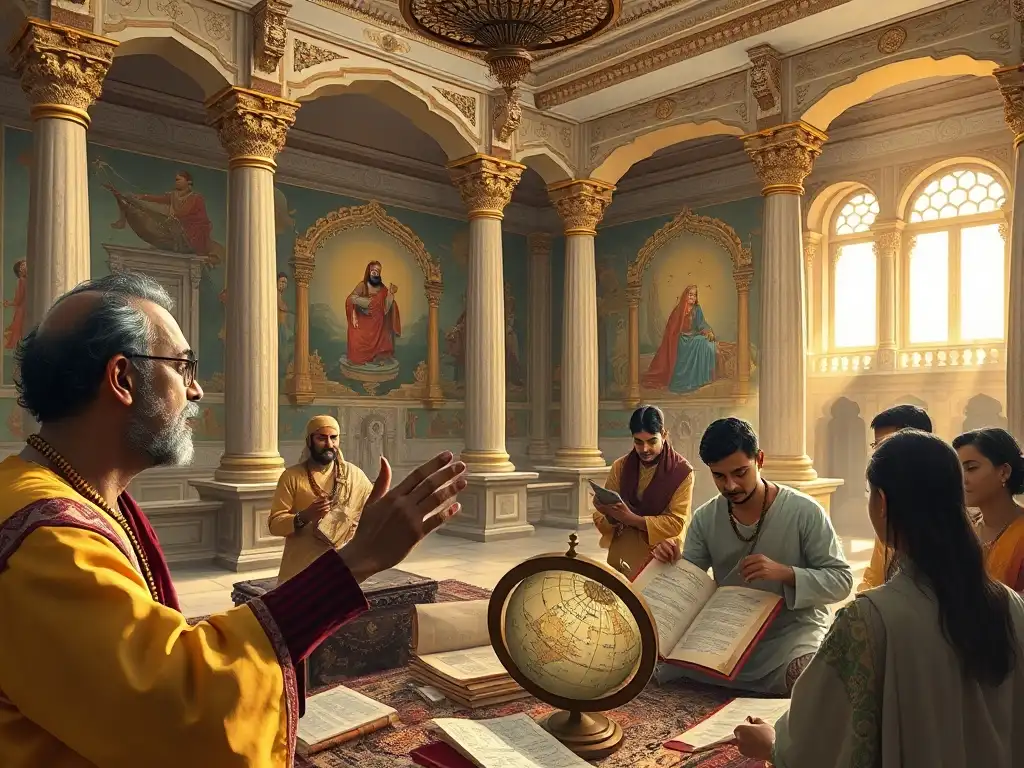
The Gupta Empire, often referred to as the "Golden Age of India," played a pivotal role in fostering an environment conducive to scientific inquiry and intellectual growth. This period, spanning from approximately 320 to 550 CE, was marked by significant advancements in various fields, including mathematics, astronomy, medicine, and metallurgy. The Gupta rulers were not only patrons of the arts but also supporters of educational institutions, which helped cultivate a culture of curiosity and critical thinking.
The empire's emphasis on knowledge and learning can be attributed to several factors. Firstly, the political stability during this era allowed scholars to focus on their studies without the distractions of warfare. Secondly, the flourishing trade routes facilitated exchanges of ideas and knowledge with other cultures, enriching the intellectual landscape. Lastly, the Gupta Empire's integration of religious and philosophical thought with scientific exploration created a holistic approach to understanding the world.
Key Scientific Achievements During the Gupta Period
The Gupta period witnessed remarkable scientific achievements that laid the groundwork for future developments. Some of the key contributions include:
- Mathematics: The introduction of the decimal system and the concept of zero revolutionized mathematical calculations. This was a significant leap that would later influence mathematics globally.
- Astronomy: Accurate calculations of planetary movements and the development of astronomical instruments enhanced the understanding of celestial phenomena.
- Medicine: The compilation of medical texts, such as the "Sushruta Samhita," showcased advanced surgical techniques and herbal remedies, emphasizing a scientific approach to healthcare.
- Metallurgy: Innovations in metallurgy, including the production of high-quality steel, demonstrated advanced scientific techniques and contributed to various applications.
These achievements reflect the Gupta Empire's commitment to knowledge and its impact on not just ancient India but also the broader scientific community.
Prominent Scientists and Thinkers of the Gupta Empire
The Gupta Empire was home to several prominent scientists and thinkers whose contributions have left a lasting legacy. Their works not only advanced their respective fields but also inspired future generations.
Aryabhata: The Pioneer of Mathematics and Astronomy
Aryabhata, one of the most celebrated mathematicians and astronomers of the Gupta period, made groundbreaking contributions that transformed understanding in both mathematics and astronomy. Born in 476 CE, his seminal work, the "Aryabhatiya," outlined various mathematical concepts, including:
- Place Value System: Aryabhata introduced the concept of place value, which is fundamental to the decimal system.
- Zero: He is credited with using a symbol for zero, a revolutionary idea that facilitated complex calculations.
- Trigonometry: Aryabhata’s work included the development of sine functions, which greatly influenced later mathematical studies.
In astronomy, Aryabhata proposed that the Earth rotates on its axis and calculated the circumference of the Earth with remarkable accuracy. His work laid the foundation for future astronomical research and established him as a pioneer in these fields.
Varahamihira: Contributions to Astronomy and Meteorology
Varahamihira, another eminent scholar of the Gupta Empire, made significant strides in the fields of astronomy and meteorology. Flourishing around 505 CE, he is renowned for his comprehensive text, the "Brihat Samhita," which addressed various aspects of science, including:
- Astrology: Varahamihira integrated astrology with astronomy, providing predictions based on celestial movements.
- Meteorology: He was one of the earliest scholars to study weather patterns, contributing to the understanding of climate and its effects on agriculture.
- Architecture: His work included principles of architecture and construction, emphasizing the relevance of astronomy in building design.
Varahamihira's multidisciplinary approach exemplified the Gupta Empire's synergy between science, culture, and practical applications, further solidifying its reputation as a center of knowledge and innovation.
Through the efforts of scholars like Aryabhata and Varahamihira, the Gupta Empire not only advanced science but also cultivated a culture that valued inquiry and critical thought, setting a precedent for future civilizations in the pursuit of knowledge.
Fostering Curiosity in the Gupta Empire
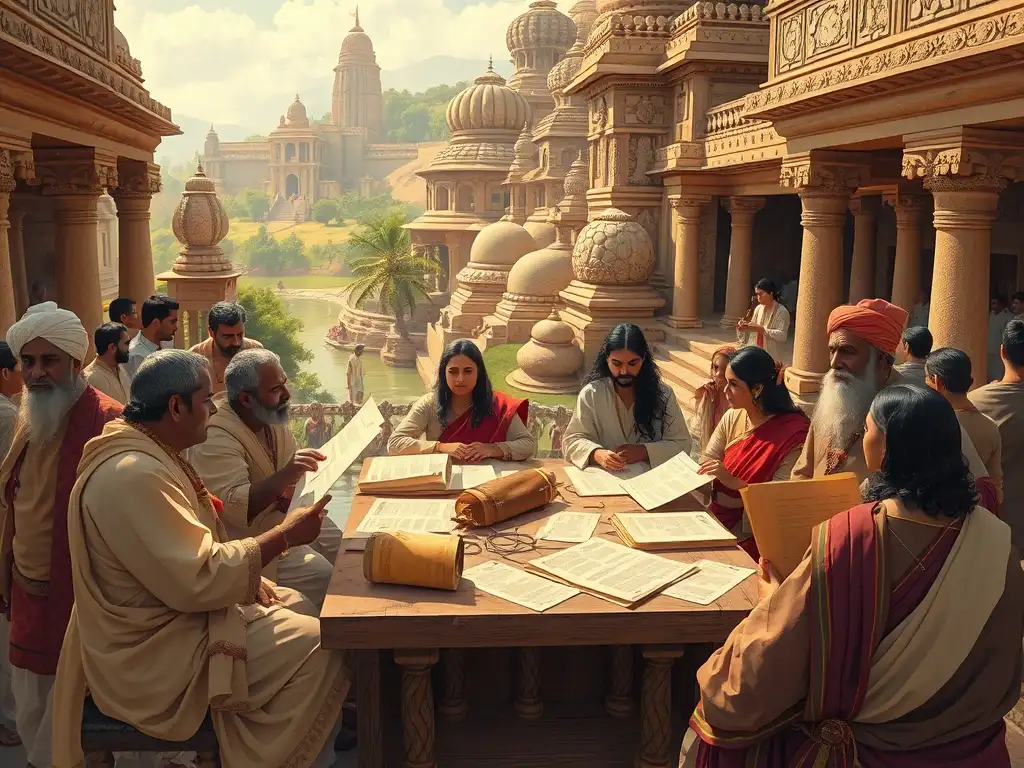
The Gupta Empire, flourishing from approximately 320 to 550 CE, is often celebrated as a golden age of Indian history, particularly in the realms of science and culture. One of the key aspects of this era was its emphasis on cultivating curiosity and critical thinking among scholars and the general populace. This intellectual environment was fostered through the establishment of educational institutions, royal patronage, and a cultural framework that encouraged inquiry and exploration.
Educational Institutions and Their Impact on Scientific Inquiry
During the Gupta period, several educational institutions emerged as significant centers of learning. These institutions played a crucial role in shaping scientific thought and promoting a culture of inquiry.
Nalanda University: A Hub of Knowledge and Learning
Nalanda University, established in the 5th century CE, stands out as one of the most prominent educational institutions of the Gupta Empire. It attracted students and scholars from various parts of the world, including China, Tibet, Korea, and Mongolia. The university was renowned for its comprehensive curriculum, which included subjects such as astronomy, mathematics, medicine, and philosophy.
- Multidisciplinary Approach: Nalanda emphasized a multidisciplinary approach to education, encouraging students to explore different fields of knowledge. This holistic learning environment fostered critical thinking and creativity in scientific pursuits.
- Notable Scholars: The university was home to several eminent scholars, including Aryabhata and Varahamihira, who made significant contributions to mathematics and astronomy. Aryabhata's work on the approximation of π (pi) and the concept of zero revolutionized mathematical thought.
- Debates and Discussions: Nalanda also facilitated rigorous debates and discussions among students and faculty, further promoting a culture of inquiry. These intellectual exchanges were essential in developing analytical skills and enhancing scientific understanding.
The legacy of Nalanda University is a testament to the Gupta Empire's commitment to fostering curiosity and critical thinking in science and mathematics.
The Influence of Patronage on Scientific Endeavors
The Gupta rulers recognized the importance of science and education in enhancing their empire's prestige and stability. As a result, they actively supported and patronized scholars and researchers, creating an environment conducive to scientific advancement.
Royal Support for Scholars and Researchers
The Gupta emperors, particularly Chandragupta II and his successors, provided significant patronage to scholars, which played a pivotal role in scientific progress during this era.
- Financial Support: The royal court offered financial resources to scholars for their research and studies, allowing them to pursue their inquiries without the burden of economic constraints. This funding enabled groundbreaking discoveries in various scientific fields.
- Recognition of Talent: Emperors often recognized and honored talented scientists and mathematicians, which not only boosted the individuals' morale but also encouraged others to engage in scientific endeavors. This recognition included titles, gifts, and positions within the royal court.
- Collaborative Environment: The Gupta Empire's royal patronage created a collaborative environment where scholars could work together, share ideas, and validate each other's findings. This synergy among researchers led to significant advancements in astronomy, mathematics, and medicine.
In essence, the Gupta Empire's emphasis on education and royal support significantly contributed to a vibrant scientific culture that not only fostered curiosity but also laid the foundations for future advancements in science and technology.
Critical Thinking and Rationalism in Gupta Science

The Gupta Empire, often hailed as a golden age of Indian civilization, made significant strides in various fields, particularly in science and mathematics. Central to this advancement was the cultivation of critical thinking and rationalism, which laid the groundwork for rigorous scientific methodologies. This intellectual environment spurred curiosity and innovation, allowing scholars to explore and challenge existing knowledge.
The Evolution of Scientific Methodologies in Ancient India
During the Gupta period, the scientific methodologies adopted by scholars evolved significantly. Unlike previous eras, where empirical observation was often overshadowed by dogma, Gupta thinkers emphasized the importance of observation, experimentation, and reasoning. This shift can be attributed to several key factors:
- Influence of Earlier Texts: The works of earlier thinkers, such as Aryabhata and Brahmagupta, provided a foundation that Gupta scholars built upon. They encouraged systematic empirical observation and mathematical precision.
- Interdisciplinary Approach: Scholars began to integrate knowledge from various fields, such as astronomy, medicine, and mathematics. This cross-pollination of ideas fostered a more holistic understanding of scientific principles.
- Documentation and Dissemination: The Gupta Empire saw a rise in the production of texts and treatises that documented scientific processes and findings. Notable texts like the Aryabhatiya and Brahmasphutasiddhanta became essential references, promoting the sharing of knowledge across generations.
The methodologies developed during this time laid the groundwork for what we now recognize as the scientific method. Scholars emphasized hypothesis formation, experimentation, and the importance of repeatable results.
Debates and Discussions in Science: The Gupta Perspective
The Gupta Empire was characterized by a vibrant intellectual culture that encouraged debates and discussions among scholars. These dialogues were instrumental in refining scientific theories and methodologies.
- Public Forums: Scholars often participated in public debates, where they presented their findings and challenged each other's conclusions. These forums were crucial in fostering a spirit of inquiry and critical examination of ideas.
- Collaborative Research: Many scholars worked in groups, sharing insights and methodologies. This collaborative approach allowed for the cross-examination of results and the development of more robust theories.
- Cultural Exchange: The Gupta Empire was a melting pot of cultures, with interactions among various civilizations. This exchange of ideas led to the integration of diverse perspectives in scientific discussions, enriching the intellectual landscape.
The emphasis on debate and discussion not only advanced scientific knowledge but also promoted a culture of skepticism and inquiry, essential components of rational thought.
The Role of Logic and Philosophy in Scientific Thought
Logic and philosophy played a critical role in the scientific advancements of the Gupta Empire. The integration of philosophical principles into scientific inquiry fostered a more analytical approach to understanding the natural world.
- Nyaya Philosophy: The Nyaya school of philosophy, which focused on logic and epistemology, significantly influenced Gupta scholars. It emphasized the importance of valid reasoning and inference in the pursuit of knowledge, allowing scientists to develop sound arguments and theories.
- Mathematical Logic: The application of logical principles to mathematics was particularly notable. Scholars like Varahamihira utilized logical reasoning to derive conclusions in astronomy and astrology, merging the disciplines in unique ways.
- Ethical Considerations: Gupta scholars also contemplated the ethical implications of scientific discoveries, reflecting a deep understanding of the responsibility that comes with knowledge.
This philosophical underpinning not only enriched scientific inquiry but also ensured that the pursuit of knowledge was aligned with moral considerations, promoting a balanced approach to science and culture in the Gupta Empire.
The Gupta Empire's contributions to science and culture were profound, fostering an environment where curiosity and critical thinking thrived. This legacy continues to influence contemporary scientific thought and methodologies.
Cultural Contributions Supporting Scientific Exploration

The Gupta Empire, often referred to as the Golden Age of India, was marked by remarkable advancements in various fields, including science and culture. This period fostered an environment where scientific exploration thrived, supported by rich cultural contributions that emphasized knowledge and inquiry. The cultural milieu of the Gupta Empire played a pivotal role in shaping the scientific discourse of the time.
The Interconnection Between Art, Literature, and Science
The flourishing of art and literature during the Gupta period was closely linked to scientific exploration. This relationship can be observed in several ways:
- Patronage of Scholars: The Gupta rulers were known to be great patrons of the arts and sciences. They encouraged scholars, poets, and artists to collaborate, leading to a cross-pollination of ideas. For instance, the famous mathematician Aryabhata was a product of this rich cultural environment, where poetry and mathematics were seen as complementary disciplines.
- Literary Works Influencing Scientific Thought: Texts like the Aryabhatiya not only showcased mathematical concepts but also drew on poetic forms, illustrating how literary techniques could enhance the communication of scientific ideas. The blending of narrative and scientific exposition made complex concepts more accessible and engaging.
- Art as a Medium for Scientific Concepts: Gupta art often depicted scientific themes, such as astronomy and nature. Temples and sculptures from this era include intricate carvings that reflect astronomical knowledge, such as celestial bodies and their movements, demonstrating a deep understanding of the cosmos.
This symbiosis between art, literature, and science created an environment rich in intellectual curiosity, enabling scholars to draw inspiration from multiple disciplines, ultimately leading to groundbreaking scientific advancements.
The Impact of Religion and Philosophy on Scientific Inquiry
The religious and philosophical landscape of Gupta India significantly influenced the approach to scientific inquiry. Both Hinduism and Buddhism provided frameworks that encouraged critical thinking and exploration of the natural world.
Hinduism and Its Influence on Scientific Concepts
Hinduism contributed to the scientific discourse through its philosophical teachings and texts. Several aspects illustrate this influence:
- Cosmology and the Universe: Hindu cosmology, as outlined in texts like the Vedas and Puranas, presented intricate models of the universe, time cycles, and celestial phenomena. These ideas inspired scholars to explore astronomy and mathematics, fostering a scientific approach to understanding the cosmos.
- Mathematics in Religious Practices: The necessity for precise calculations in rituals, such as determining auspicious times (muhurtas) and constructing altars, led to advancements in mathematics. The introduction of concepts like zero and the decimal system, attributed to Indian mathematicians, can be traced back to these religious practices.
- Philosophical Inquiry: The emphasis on darshanas (philosophical schools of thought) encouraged critical thinking and debate. Scholars were motivated to question and explore the nature of reality, existence, and the laws governing the universe, laying the groundwork for scientific inquiry.
Buddhism and Rational Thought in Gupta Society
Buddhism, too, played a significant role in promoting rational thought during the Gupta Empire:
- Empirical Observation: Buddhist philosophy emphasized the importance of observation and experience. This empirical approach encouraged scholars to engage in scientific inquiry based on observation rather than solely relying on doctrinal teachings.
- Focus on Ethics and the Natural World: The ethical teachings of Buddhism promoted a respect for life and nature, leading to explorations in biology and medicine. The study of medicinal plants and their properties, as documented in texts like the Sushruta Samhita, reflects this scientific curiosity rooted in ethical considerations.
- Interdisciplinary Dialogue: The coexistence of Buddhism and Hinduism during the Gupta period fostered dialogue between different schools of thought. This exchange of ideas led to the integration of various philosophical perspectives, enriching the scientific discourse and encouraging a more holistic understanding of the world.
The Gupta Empire's contributions to science and culture were deeply intertwined with its religious and philosophical frameworks. This rich tapestry of cultural influences not only fostered curiosity but also laid the foundation for significant scientific advancements that would resonate throughout history.
Legacy of Gupta Empire Science and Culture

The Gupta Empire, often termed the "Golden Age" of India, stands out not just for its political prowess but also for its profound contributions to science and culture. The legacy of Gupta science and culture is characterized by advancements that laid the groundwork for future generations of scholars, influencing fields such as mathematics, astronomy, medicine, and philosophy. This legacy is not merely historical; it resonates in modern scientific practices and thought processes.
Lasting Impacts on Future Generations of Scholars
The Gupta period nurtured an environment rich in intellectual pursuit, where curiosity was not just encouraged but celebrated. Scholars such as Aryabhata and Varahamihira made groundbreaking contributions that would echo through the ages.
- Mathematics: Aryabhata's work on the place value system and the concept of zero revolutionized mathematics. His treatise, Aryabhatiya, introduced methods for solving quadratic equations and calculating the area of a triangle, which are foundational in mathematics today.
- Astronomy: Varahamihira's Brihat Samhita compiled knowledge from various traditions and included theories on eclipses and planetary movements. His approach to astronomy emphasized observation and empirical evidence, establishing a framework that modern science still values.
- Medicine: The Sushruta Samhita, attributed to Sushruta, is one of the earliest surgical texts, detailing procedures with precision. The emphasis on anatomy and surgery during this time exemplified a critical approach to medical science, influencing practices that exist in contemporary medicine.
The educational institutions, notably the Nalanda University, attracted scholars from across the globe, fostering an exchange of ideas that further enriched the intellectual landscape. This tradition of learning and inquiry inspired later generations, as scholars built upon the Gupta foundations, leading to advancements during the medieval period and beyond.
The Gupta Empire's Role in Shaping Modern Scientific Thought
The intellectual currents of the Gupta Empire significantly shaped modern scientific thought, with their methodologies and discoveries continuing to influence various domains.
- Scientific Methodology: Gupta scholars employed a systematic approach to inquiry, emphasizing observation, experimentation, and rational thinking. This method laid the groundwork for the scientific method as understood in modern times, prioritizing evidence and logical reasoning.
- Philosophy of Science: The philosophical underpinnings developed during the Gupta era, particularly regarding the nature of reality and knowledge, contributed to the evolution of scientific thought. The integration of philosophy with scientific inquiry allowed for a holistic understanding of phenomena, paving the way for interdisciplinary approaches in contemporary research.
- Global Influence: The Gupta Empire's advancements in science and culture were not confined to India. They reached far beyond, influencing the Islamic Golden Age and European Renaissance. The transmission of texts and ideas facilitated a global dialogue that enriched scientific exploration across civilizations.
The legacy of the Gupta Empire in science and culture is characterized by a commitment to inquiry, critical thinking, and a systematic approach to knowledge. This legacy not only shaped the intellectual landscape of the time but also laid the cornerstone for future generations, influencing modern scientific thought and practices that continue to evolve today. The contributions of this era exemplify the enduring impact of Gupta science and culture, highlighting its significance in the broader narrative of human knowledge.
Conclusion: Celebrating the Gupta Empire's Contributions to Science and Culture

The Gupta Empire, often referred to as the Golden Age of India, was a period that saw remarkable advancements in various fields, particularly in science and culture. This era not only fostered an environment conducive to intellectual growth but also laid the foundational principles that would influence generations to come. By encouraging curiosity and critical thinking, the Gupta Empire created a vibrant culture of inquiry that propelled scientific exploration and cultural development.
Reflection on the Importance of Curiosity and Critical Thinking in Ancient India
Curiosity and critical thinking were central to the intellectual climate of the Gupta Empire. Scholars and thinkers of this time were not merely passive recipients of knowledge; they actively questioned established norms and sought to expand the boundaries of human understanding. This spirit of inquiry is exemplified in the works of renowned figures like Aryabhata and Varahamihira, who made significant contributions to mathematics and astronomy.
- Mathematics: Aryabhata introduced concepts such as the place value system and the concept of zero, which were revolutionary for their time. His work encouraged further exploration into arithmetic and algebra, driven by a fundamental curiosity about numbers and their relationships.
- Astronomy: Varahamihira's treatises, particularly the Brihat Samhita, reflect a profound curiosity about celestial phenomena and their impact on Earth. His analytical approach to astronomy exemplifies the critical thinking that characterized Gupta scholars.
In addition, the rich tapestry of philosophical thought during this period encouraged debate and discussion, fostering an environment where questioning was not only permitted but celebrated. This approach to knowledge was instrumental in developing a scientific mindset that valued evidence and reasoning.
The Gupta Empire's Enduring Influence on Contemporary Science and Culture
The legacy of the Gupta Empire's contributions to science and culture remains evident in modern times. The principles established during this Golden Age continue to resonate within various disciplines, influencing contemporary practices in both scientific inquiry and cultural expression.
| Aspect | Gupta Contributions | Modern Influence |
|---|---|---|
| Mathematics | Development of the numeral system | Use of the decimal system in mathematics |
| Astronomy | Early astronomical calculations | Foundation for modern astronomy |
| Medicine | Ayurvedic practices refined | Continued relevance in holistic health |
| Art and Literature | Flourishing of literature and arts | Inspiration for contemporary art forms |
In contemporary science, the fundamental concepts laid down by Gupta scholars can be seen in the methodologies and frameworks used today. The importance of empirical evidence, logical reasoning, and mathematical principles can be traced back to this period. Culturally, the arts and literature produced during the Gupta Empire continue to inspire modern artists and writers, emphasizing storytelling, aesthetics, and philosophical depth.
The Gupta Empire's commitment to fostering curiosity and critical thinking not only enriched its own civilization but also set the stage for future advancements. The echoes of this Golden Age are felt across the world, reminding us of the profound impact of ancient Indian contributions to science and culture.
Frequently Asked Questions
What was the Gupta Empire known for in terms of science and culture?
The Gupta Empire is celebrated for its significant advancements in science and culture, including developments in mathematics, astronomy, and art that laid the groundwork for future innovations.
How did the Gupta Empire promote critical thinking?
The empire fostered an environment of curiosity and critical thinking through the establishment of universities, such as Nalanda, which encouraged scholarly pursuits and debate among students.
What contributions did the Gupta Empire make to mathematics?
The Gupta period saw the introduction of concepts such as zero and the decimal system, which are fundamental to modern mathematics and have had a lasting impact on the field.
Can you name some famous figures from the Gupta Empire?
Prominent figures include Aryabhata, a renowned mathematician and astronomer, and Kalidasa, a celebrated poet and playwright, who exemplified the rich cultural heritage of the era.
How did Gupta art reflect its scientific advancements?
The art of the Gupta Empire, characterized by intricate sculptures and paintings, often depicted themes of science and philosophy, illustrating the deep interconnection between artistic expression and intellectual inquiry during this period.
Final Reflection: The Enduring Legacy of the Gupta Empire in Science and Culture
The Gupta Empire's remarkable contributions to science and culture continue to resonate in today's world, reminding us that curiosity and critical thinking are the cornerstones of human advancement. In an era where information is abundant yet often superficial, the Gupta Empire serves as a beacon, illustrating how a society can flourish through inquiry and intellectual exploration. Their legacy challenges us to embrace a mindset that values knowledge and encourages innovation.
_The influence of the Gupta Empire on our cultural and scientific landscape is profound and ongoing. Their advancements in mathematics, astronomy, and medicine laid the groundwork for future generations, fostering a spirit of inquiry that transcends time and geography. "The greatest discoveries are made when we dare to ask questions," encapsulates the essence of their approach to knowledge. This spirit of curiosity is not just a relic of the past; it is a vital component of our present and future, urging us to question, explore, and innovate in every field of study.
As you reflect on the lessons from the Gupta Empire, consider how you can cultivate curiosity and critical thinking in your own life. Embrace the questions that challenge your understanding and seek knowledge beyond the surface. Whether in your personal endeavors or professional pursuits, let the legacy of the Gupta Empire inspire you to foster a culture of inquiry and innovation. The journey of discovery is ongoing, and each of us has the potential to contribute to the rich tapestry of human knowledge.
Ignite Your Curiosity: Dive Deeper into the Gupta Legacy!
Thank you for exploring the fascinating world of the Gupta Empire and its remarkable contributions to science! Your interest in how curiosity and critical thinking flourished during this golden age enhances our understanding of history and its lasting impact on knowledge today. Now, it's time to take the next step in your journey of discovery!
- Explore additional readings on ancient scientific advancements by visiting our comprehensive resource library.
- Share your newfound knowledge with friends or classmates—initiate a discussion about how the Gupta Empire's innovative approaches can inspire contemporary education.
- Engage with our community! Leave a comment below sharing your thoughts on how curiosity can shape our future.
What insights from the Gupta Empire will you apply to ignite creativity and critical thinking in your own life?