
The Role of Geography in Shaping IndianGreek Interactions

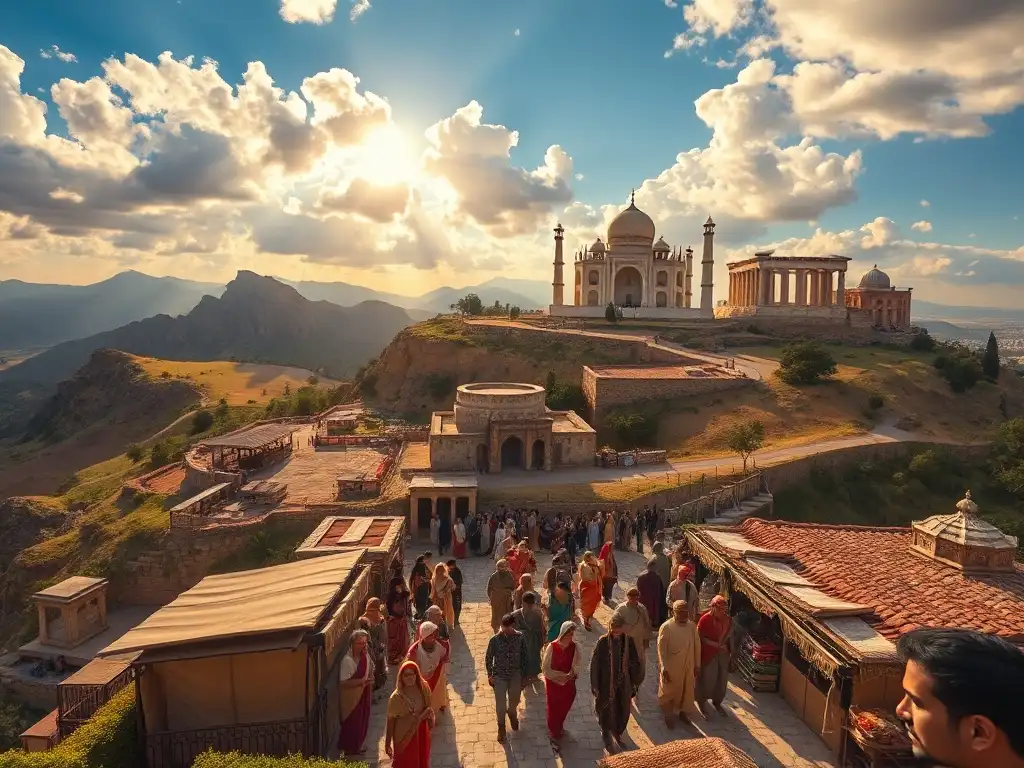
Welcome to Ancient India History, where we embark on a journey through the vibrant tapestry of ancient Indian civilizations. Here, we delve into the fascinating Geography of Indian Greek interactions, uncovering how the unique landscapes and geographical features of this region not only shaped trade and cultural exchanges but also influenced the very fabric of society during those pivotal times. Are you curious about the intertwining paths of these two great cultures? Join us as we explore the profound impact of geography on their interactions and discover the legacies that still resonate today.
Introduction to Indian-Greek Interactions
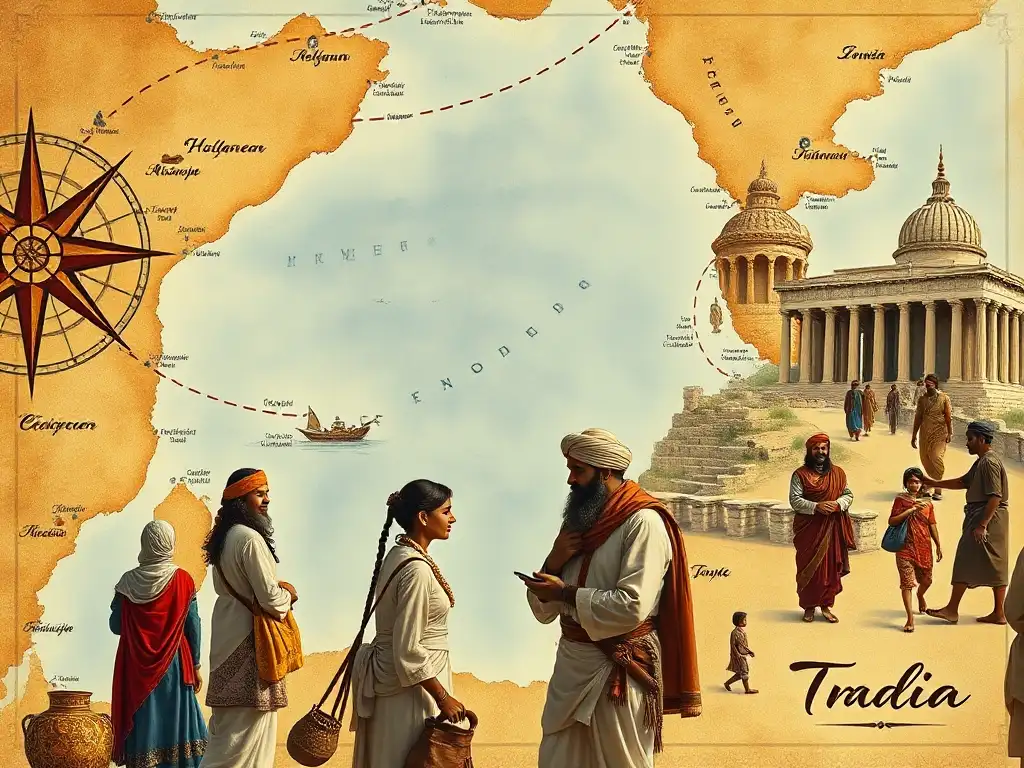
The interactions between ancient India and Greece represent a fascinating chapter in the history of cross-cultural exchanges. This relationship, which burgeoned starting around the 4th century BCE, was characterized by significant trade, philosophical exchanges, and the mingling of cultural practices.
As these two diverse civilizations engaged with one another, the geography of Indian-Greek interactions played a crucial role in shaping the dynamics of their relationship. From the majestic mountains of the Himalayas to the vast expanse of the Arabian Sea, the geographical features not only facilitated communication and exchange but also influenced the political and economic landscapes of both regions.
Overview of Historical Context
The historical context of Indian-Greek interactions is rooted in the conquests of Alexander the Great, whose campaigns through the Persian Empire brought him into contact with the Indian subcontinent. Following his foray into India, the establishment of the Indo-Greek Kingdoms further solidified these interactions, leading to a blend of cultures, ideas, and trade practices. The subsequent Hellenistic influence on Indian art, science, and philosophy reflects the profound impact of these geographical and cultural exchanges.
Importance of Geography in Historical Relations
Geography served as both a bridge and a barrier in the relations between India and Greece. The strategic location of India along trade routes connected to the Mediterranean facilitated the exchange of goods such as spices, textiles, and precious metals. Moreover, geographical features such as rivers and mountain ranges shaped not only the movement of people and goods but also the spread of ideas and beliefs. Understanding how geography influenced these interactions is essential for comprehending the complexities of Indian-Greek relations.
The Geography of Indian-Greek Interactions
Geographic Features Influencing Relations
The geography of the Indian subcontinent and the regions of ancient Greece includes various features that significantly affected their interactions:
- Mountain Ranges: The Himalayas acted as a formidable barrier, limiting direct contact between the two civilizations. However, passes like the Khyber Pass facilitated trade and military expeditions.
- Rivers: Major rivers such as the Indus and the Ganges served as vital arteries for trade and communication, connecting various regions of India and allowing them to engage with foreign traders, including the Greeks.
- Trade Routes: The establishment of trade routes, including the Silk Road, created pathways for commercial exchanges and cultural interactions. These routes often traversed challenging terrains but yielded significant economic benefits.
- Coastal Access: The Arabian Sea provided access to maritime trade, allowing Greek merchants to engage with Indian ports. This coastal geography opened new avenues for interaction, leading to the exchange of goods, ideas, and cultural practices.
Through these geographical features, the interactions between India and Greece were molded, leading to a rich tapestry of cultural synthesis that still resonates in history today.
Impact of Geography on Trade and Cultural Exchange
The geography of ancient India and Greece played a pivotal role in facilitating trade and cultural exchanges between the two civilizations. The vast distances and diverse terrains meant that interactions were not only dependent on land routes but also on maritime pathways. India's strategic location along the trade routes of the Indian Ocean allowed for direct maritime trade with Mediterranean civilizations. This connection enabled the flow of goods, ideas, and cultural practices across regions.
The mountainous regions of the Hindu Kush and the vast deserts of Persia created natural barriers, but they also served as corridors for trade. Caravans traversed these challenging terrains, linking the Indian subcontinent with the Hellenistic world. The Silk Road, while primarily associated with land trade, also had maritime extensions that connected to ports in India, facilitating the exchange of silk, spices, and precious stones for Greek wine, olive oil, and other goods.
Furthermore, key coastal cities such as Alexandria and the ports of the Malabar Coast emerged as vibrant centers for cultural exchange. These hubs not only facilitated trade but also became melting pots where Indian and Greek cultures mingled, leading to significant influences in art, philosophy, and science.
Trade Networks Connecting India and Greece
Trade networks were foundational in establishing and maintaining connections between ancient India and Greece. The maritime routes, especially those traversing the Arabian Sea, were critical for the exchange of commodities. Indian merchants traded spices, textiles, and gemstones, which were highly sought after in Greek markets. In return, Greeks exported wine, olive oil, and metal goods, fostering a reciprocal economic relationship.
The overland routes were equally significant. The Persian Empire acted as a conduit, connecting Indian territories with Greek city-states through the Royal Road and other established paths. This overland trade network allowed for the exchange of not only goods but also cultural ideas and practices. The establishment of trade settlements and colonies, such as those in the Arabian Peninsula, further solidified these connections.
The trade networks also facilitated the dissemination of religions, particularly Buddhism and Zoroastrianism, influencing the spiritual landscape of both civilizations. This exchange of goods and ideas enriched both cultures, leading to a more interconnected ancient world.
Military and Political Encounters Shaped by Geography
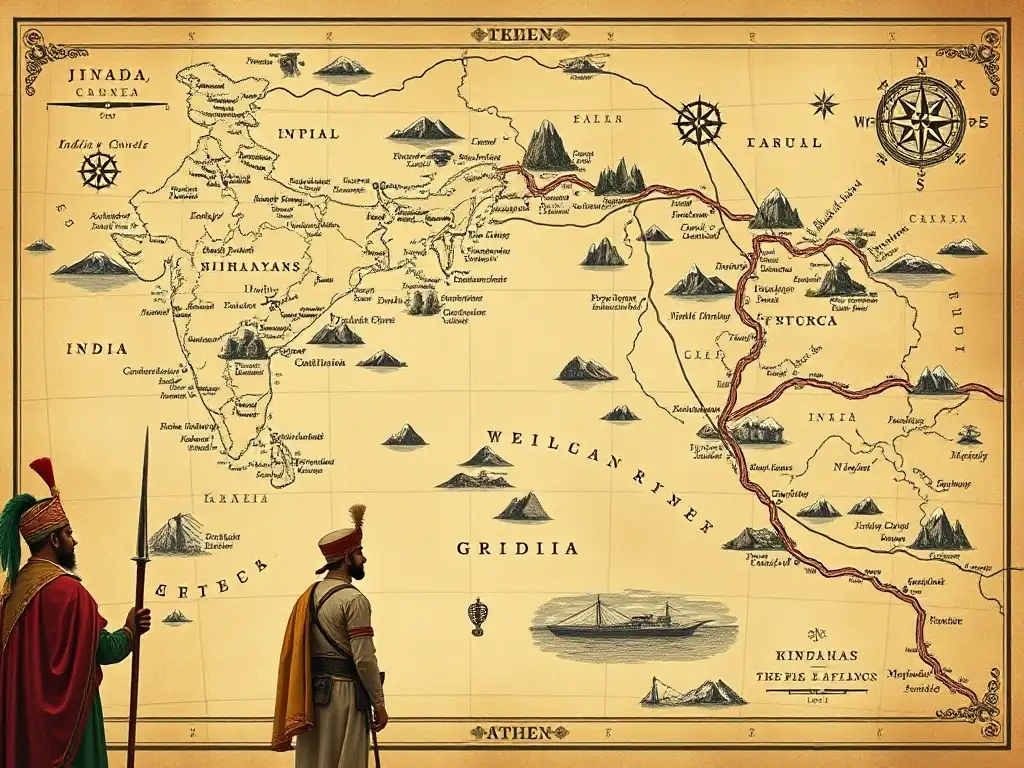
The geography of the Indian subcontinent and Greece significantly influenced military and political encounters between the two civilizations. The rugged terrain of northern India, characterized by its mountains and river valleys, provided both advantages and challenges for military campaigns. It shaped the strategies employed by both Indian and Greek forces during their interactions.
The famed campaigns of Alexander the Great exemplify the impact of geography on military endeavors. His invasion of India was marked by the challenges posed by the monsoon climate, river systems, and the difficult mountainous terrain, which affected troop movements and supply lines. The Battle of the Hydaspes in 326 BCE showcased how geography influenced battle tactics, as the banks of the river presented both opportunities and obstacles for both armies.
Additionally, geographic positioning played a significant role in the political landscape. The vast territories controlled by local Indian rulers, combined with the strategic importance of key locations, such as Punjab, created a complex political environment. Alliances and rivalries were often dictated by geographical considerations, as control of trade routes and fertile lands became paramount for both Indian and Greek leaders.
Geographic Factors in Warfare
Geographic factors were paramount in determining the outcomes of military confrontations between Indian and Greek forces. The diverse landscapes of the Indian subcontinent—ranging from fertile plains to rugged hills—required different military strategies. Armies had to adapt to the climatic conditions, such as the intense heat and monsoons, which could significantly hinder operations.
For instance, the use of war elephants by Indian armies provided a distinct advantage in battle, particularly in the dense forests and uneven terrains where traditional cavalry might struggle. Greek forces, while technologically advanced, had to develop tactics to counter these unique challenges.
Furthermore, the rivers of India, such as the Indus and Ganges, were not only crucial for movement and logistics but also served as natural barriers. They influenced the positioning of troops and the planning of military campaigns. The understanding and exploitation of these geographic features ultimately shaped the effectiveness of military strategies employed by both civilizations, demonstrating that geography was as much a player in warfare as the armies themselves.
The Influence of Geography on Cultural Integration
The geography of the Indian subcontinent played a crucial role in shaping the interactions between Indian and Greek civilizations. The diverse landscapes, ranging from the towering Himalayas to the fertile plains of the Ganges, created both barriers and conduits for cultural exchange. Mountains and rivers not only defined territorial boundaries but also influenced trade routes, migration patterns, and the spread of ideas and beliefs.
The establishment of trade routes, particularly through the northwestern passes, facilitated the flow of goods and people between these two ancient cultures. Geography enabled a blend of customs, languages, and philosophies, allowing for a rich cultural integration that was evident in various aspects of art, architecture, and religion. The unique geographic positions served as melting pots where Indian and Greek civilizations could meet, interact, and mutually enrich each other’s heritage.
Geographic Locations of Interactions
The geographic locations where Indian-Greek interactions occurred were primarily concentrated in the northwestern regions of India, particularly in areas that are part of modern-day Pakistan and Afghanistan. Key areas included:
- The Indus Valley: This region served as a major hub for trade and cultural exchanges due to its proximity to the ancient Persian Empire and later, the Hellenistic world following Alexander the Great's campaigns.
- Taxila: An important center of learning and trade, Taxila was strategically located at the crossroads of various trade routes, linking the Indian subcontinent with Central Asia and the Mediterranean.
- Bactria: This region, located in modern-day Afghanistan, became a significant site for the interactions between Indian and Greek cultures, especially after the establishment of the Greco-Bactrian Kingdom.
These locations not only fostered trade but also became melting pots of ideas, leading to the cross-pollination of cultural practices and innovations.
Case Studies of Geographic Impact
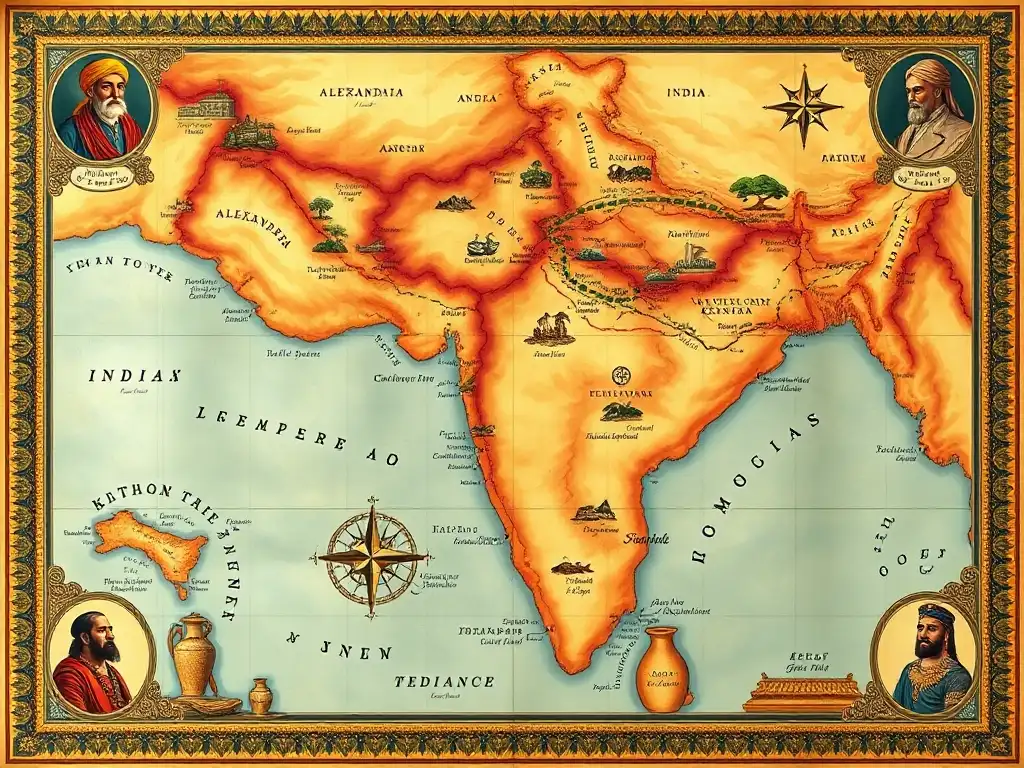
Examining specific case studies reveals the profound impact geography had on Indian-Greek relations, showcasing how geographical factors facilitated or hindered interaction.
The Role of the Indus Valley in Indian-Greek Relations
The Indus Valley, one of the cradles of ancient civilization, was pivotal in the interactions between Indian and Greek cultures. Its strategic location provided access to vital trade routes that connected the Indian subcontinent with the Mediterranean. As Alexander the Great advanced into India, the Indus Valley became a focal point for his campaign, resulting in the establishment of new trade connections and cultural exchanges.
Archaeological evidence suggests that Hellenistic influences permeated the region, manifesting in the art and architecture of the time. The fusion of Greek styles with local traditions led to the emergence of unique artistic expressions, such as the Gandhara art, which blended Hellenistic and Indian motifs, illustrating the transformative effects of geography on cultural integration.
The Influence of Hellenistic Cities in India
Following the conquest of Alexander, several Hellenistic cities were established in the Indian subcontinent, such as Ai-Khanoum and the cities founded by the Greco-Bactrians. These cities served as important centers of trade and culture, where Greek settlers and local populations interacted, exchanged ideas, and established mixed communities.
The spread of Hellenistic philosophy, science, and art in these urban centers played a significant role in reshaping local traditions. For instance, the introduction of Greek-style governance and urban planning influenced the political landscape of the region, while the emergence of new religious syncretism, such as the worship of Greek deities alongside local gods, showcased the enduring impact of these geographic interactions.
Through these case studies, it becomes apparent that the geography of Indian-Greek interactions not only facilitated trade and communication but also fostered a rich tapestry of cultural integration that left a lasting legacy on both civilizations.
Conclusion: The Lasting Legacy of Geography on Indian-Greek Interactions
The intricate tapestry of Indian-Greek interactions was profoundly shaped by geography, influencing trade, cultural exchange, and diplomatic relations. The geographical proximity of regions such as the Indus Valley and the Hellenistic world facilitated not only the movement of goods but also the exchange of ideas, philosophies, and technologies. The mountain ranges and rivers that defined the landscape served as both barriers and conduits, shaping the pathways of interaction. This legacy continues to echo throughout history, illustrating how geography is not merely a backdrop but a dynamic force that molds civilizations.
Summary of Key Geographic Influences
The geographical features of the Indian subcontinent and the Hellenistic world played a pivotal role in shaping their interactions. Key influences include:
- Mountain Ranges: The Hindu Kush and the Himalayas acted as formidable barriers that dictated the flow of people and trade routes. However, certain passes, like the Khyber Pass, provided crucial gateways for cultural and commercial exchanges.
- Rivers: Major rivers, such as the Indus and the Ganges, were essential for agriculture and trade. They facilitated communication and the movement of goods, thereby enhancing economic ties between Indian and Greek traders.
- Coastal Routes: The Arabian Sea and the Persian Gulf served as maritime conduits, enabling Greeks to establish trade links with Indian ports. This maritime connectivity significantly influenced the exchange of goods, such as textiles and spices, and fostered cultural interactions.
These geographic factors were instrumental in fostering a complex web of relationships that defined the Indian-Greek interactions.
Reflection on the Importance of Geography in Historical Context
Understanding the geography of Indian-Greek interactions provides critical insights into the historical context of their relations. Geography not only dictated the physical movement of people and goods but also influenced cultural and intellectual exchanges. For instance, the geographical proximity allowed for the dissemination of various philosophies and artistic styles, leading to a unique blend of Greek and Indian influences.
Moreover, the challenges posed by the varied terrains often necessitated diplomatic efforts and alliances, further intertwining the fates of these civilizations. The legacy of these geographical influences is evident in the lasting impact they had on trade routes, cultural exchanges, and even the spread of religions. This historical perspective highlights the fundamental role geography played in shaping the narrative of Indian-Greek interactions.
Suggested Further Reading on Indian-Greek Interactions
To gain a deeper understanding of the complex relationship between Indian and Greek civilizations, a variety of resources are available that explore their historical, cultural, and geographical contexts.
Recommended Books and Articles
- The Greeks in India by Richard Stoneman: This book provides a comprehensive overview of Greek interactions in India, detailing the exchanges of culture and ideas.
- India and Greece: A Study of Cultural Contacts by K. R. Narayanan: This work examines the cultural exchanges and influences between the two civilizations from a geographical perspective.
- Trade and Traders in the Early Indian Ocean by K. N. Chaudhuri: This book discusses trade networks, including those involving Indian and Greek traders, and their geographical implications.
Online Resources for Deeper Exploration
- The Persepolis Fortification Tablets: A digital archive that includes translations and discussions regarding trade between the Achaemenid Empire and India, providing insights into geographical contexts.
- The Ancient World Online: A resource hub for accessing scholarly articles and research papers on various aspects of ancient civilizations, including Indian-Greek interactions.
- Online lectures and courses: Websites like Coursera and edX offer courses on ancient history that often include modules on Indian-Greek relations and their geographical influences.
Exploring these resources will provide readers with a richer understanding of the geography of Indian-Greek interactions and its lasting impact on both civilizations.
- Introduction to Indian-Greek Interactions
- The Geography of Indian-Greek Interactions
- Impact of Geography on Trade and Cultural Exchange
- Trade Networks Connecting India and Greece
- Military and Political Encounters Shaped by Geography
- The Influence of Geography on Cultural Integration
- Geographic Locations of Interactions
- Case Studies of Geographic Impact
- Conclusion: The Lasting Legacy of Geography on Indian-Greek Interactions
- Suggested Further Reading on Indian-Greek Interactions
- What were the key geographical features influencing Indian-Greek interactions?
- How did geography affect trade between India and Greece?
- What role did the Indus Valley play in Indian-Greek interactions?
- How did geography influence military interactions between India and Greece?
- What was the significance of Alexander the Great's campaign in India?
Frequently Asked Questions
What were the key geographical features influencing Indian-Greek interactions?
The Himalayas, Indus River, and trade routes played crucial roles in facilitating cultural exchanges and economic interactions between Indian and Greek civilizations.
How did geography affect trade between India and Greece?
Geographical features such as mountain passes and ocean routes enabled maritime trade, which was essential for the exchange of goods like spices, silks, and metals.
What role did the Indus Valley play in Indian-Greek interactions?
The Indus Valley served as a significant trade hub, connecting Indian merchants with Greek traders, which fostered cultural diffusion and economic prosperity.
How did geography influence military interactions between India and Greece?
Geographical barriers, such as mountains and rivers, often determined the strategic routes taken by armies, impacting the outcome of conflicts and the nature of diplomatic relations.
What was the significance of Alexander the Great's campaign in India?
Alexander's campaign showcased the interconnectedness of geography, as he traversed diverse landscapes, leading to significant cultural exchanges and the establishment of Hellenistic influence in the region.
Final Reflection: The Geography of Indian-Greek Interactions as a Catalyst for Cultural Exchange
The intricate tapestry of Indian-Greek interactions is deeply woven into the fabric of history, illustrating how geography serves as a vital conduit for cultural exchange and mutual influence. Today, as globalization continues to shrink distances and connect diverse cultures, understanding the geographical factors that shaped these ancient interactions becomes increasingly relevant. The lessons learned from the past remind us of the power of geography in fostering relationships and the potential for collaboration across borders.
The geographical landscape not only facilitated trade and communication between India and Greece but also laid the groundwork for a rich exchange of ideas, philosophies, and art. This ongoing influence can be seen in the way cultures adapt and evolve through interaction. As we reflect on this historical narrative, we are reminded of the words of the philosopher Heraclitus: The only constant in life is change.
This quote resonates profoundly in the context of Indian-Greek interactions, highlighting how geography has always been a dynamic force in shaping cultural identities and fostering innovation.
As we look to the future, let us embrace the lessons of the past and recognize the importance of geography in our own lives. Consider how your surroundings influence your interactions and relationships. In a world that often feels divided, let us strive to build bridges across geographical and cultural boundaries, fostering understanding and collaboration. Reflect on how you can contribute to this ongoing dialogue, drawing inspiration from the rich history of Indian-Greek interactions to create a more interconnected and harmonious world.
Unveil the Rich Tapestry of Indian-Greek Interactions!
Thank you for diving into the fascinating world of Indian-Greek interactions! You've explored how geography shaped these dynamic exchanges throughout history. Now, let’s take the insights you've gained and put them into action.
Here are a few ways you can further enrich your understanding and appreciation of this captivating topic:
- Engage in Local History: Visit a local museum or cultural center showcasing artifacts or exhibits related to Indian and Greek heritage. Discover the connections within your community!
- Join a Discussion Group: Connect with others who share your interest by participating in online forums or local history clubs focused on ancient civilizations. Share your insights and learn from fellow enthusiasts!
- Explore Unique Literature: Read books and articles that highlight the intersections of Indian and Greek cultures. You might uncover fascinating insights and lesser-known narratives!
What aspect of Indian-Greek interactions has inspired you the most, and how do you plan to explore it further?