
The IndoGreek War: A Clash of Civilizations and Its Consequences

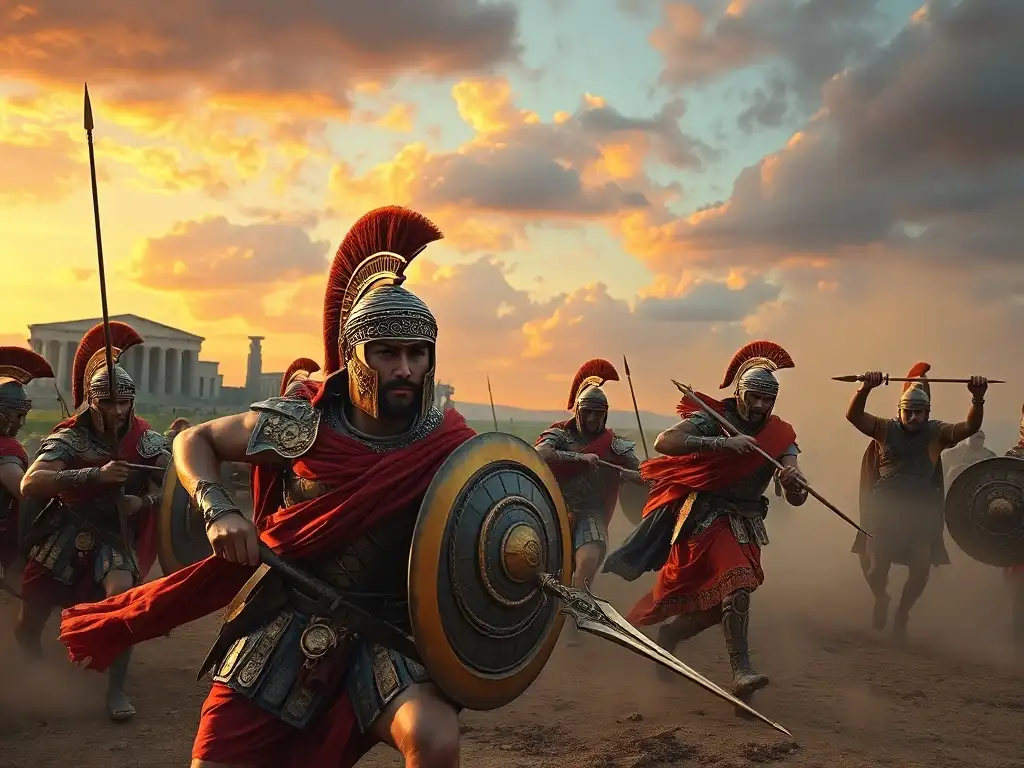
Welcome to Ancient India History, where we embark on a fascinating journey through time, exploring the rich tapestry of India's ancient civilizations. In this article, we delve into the IndoGreek War: A Clash of Civilizations and Its Consequences, examining its historical significance and the profound impact it had on the cultural interactions between India and Greece.
As you uncover the layers of this epic conflict, prepare to be captivated by the stories of valor, exchange, and transformation that shaped the ancient world. Join us as we reveal the intricate threads of history that connect these remarkable civilizations and invite you to discover more about their enduring legacy.
Introduction to the IndoGreek War
The IndoGreek War stands as a pivotal chapter in the annals of ancient history, representing a complex intersection of cultures, politics, and economics between two distinct civilizations: the Indian and Greek. This conflict not only reshaped territorial boundaries but also facilitated a significant exchange of ideas and cultural practices that would leave a lasting impact on both societies.
Understanding the historical significance of the IndoGreek War requires a deep dive into the myriad factors that contributed to its outbreak and the implications that followed. In this article, we will explore the roots of this conflict, the context in which it unfolded, and the enduring legacy it has left on Indian-Greek relations.
Overview of the IndoGreek War
The IndoGreek War, occurring around the 2nd century BCE, primarily involved the Greek rulers who had established their dominion in parts of northwestern India, notably the territories once held by the Mauryan Empire. The most notable figure during this period was Demetrius, who led the Greco-Bactrian forces against various Indian kingdoms. The war was characterized by a series of battles that highlighted not only military strategies but also the contrasting ideologies and cultural values of the two civilizations.
The conflict ultimately resulted in a significant reconfiguration of power dynamics in the region, with the Greeks asserting influence over key areas while simultaneously engaging in cultural assimilation and trade with Indian entities. This interaction sparked a unique blend of Hellenistic and Indian traditions, which would resonate through subsequent generations.
Historical Context of the Conflict
The backdrop of the IndoGreek War can be traced to the fall of the Mauryan Empire, which created a power vacuum in the Indian subcontinent. As local kingdoms vied for supremacy, the Greco-Bactrian Kingdom sought to expand its territory into these fragmented regions. The interactions between these two civilizations were initially marked by trade and diplomacy, but underlying tensions soon escalated into open conflict.
Additionally, the arrival of Alexander the Great in India had set a precedent for Greek involvement in the region, establishing routes and administrative practices that would be exploited by later rulers. This earlier encounter laid the groundwork for both cultural exchange and territorial ambition, setting the stage for the IndoGreek War.
Importance of the IndoGreek War in Ancient History
The IndoGreek War is crucial not only for its military outcomes but also for its profound influence on cultural and intellectual exchanges between Greece and India. The aftermath of the conflict led to:
- Cultural Syncretism: The blending of Greek and Indian art, philosophy, and religious practices.
- Trade Routes: Enhanced trade connections that facilitated the flow of goods, ideas, and cultural practices between the two regions.
- Political Alliances: New political structures and alliances that emerged from the ashes of conflict, influencing subsequent historical developments.
The significance of the IndoGreek War extends beyond its immediate consequences, serving as a reflection of the interactions that shaped ancient civilizations and their enduring legacies.
Causes of the IndoGreek War
Political Tensions Between Indian and Greek Kingdoms
The political landscape of ancient India was rife with tensions and rivalries among various local kingdoms, which often found themselves at odds with one another and with external powers like the Greeks. The aspirations of Greek kings to expand their influence and territory exacerbated these tensions, leading to a series of confrontations.
The ambitions of Greek rulers such as Demetrius and his successors were met with resistance from Indian kingdoms, resulting in a clash of interests that escalated into military conflict.
Economic Factors Leading to Conflict
Economic motivations were also at the heart of the IndoGreek War. The lucrative trade routes connecting the Indian subcontinent with the Mediterranean were of immense interest to Greek merchants and rulers. Control over these routes promised wealth and resources, prompting aggressive strategies to secure dominance in the region.
The desire for access to Indian resources, including spices, textiles, and precious metals, further fueled the conflict, as both sides sought to assert control over these valuable commodities.
Cultural Interactions and Misunderstandings
Cultural interactions between the Greeks and Indians were marked by a rich tapestry of exchange, but they were also fraught with misunderstandings. Differences in language, religion, and social customs often led to misinterpretations that heightened tensions.
The Greeks, with their distinct Hellenistic culture, encountered the diverse traditions of Indian society, resulting in both admiration and conflict. The cultural friction was a significant factor contributing to the escalation of hostilities, as both sides struggled to navigate their differences amidst growing animosities.
Through this exploration of the IndoGreek War, we gain insight not only into the specific events that transpired but also into the broader implications of this conflict for the interconnectedness of ancient civilizations. The historical significance of the IndoGreek War continues to resonate, reminding us of the complex interactions that have shaped human history.
Major Battles of the IndoGreek War
The IndoGreek War, a pivotal conflict in ancient history, comprised several significant battles that shaped the outcome of the war and influenced future interactions between Indian and Greek civilizations. Understanding these battles provides insights into the military strategies and political dynamics of the era.
Key Battles and Their Locations
-
Battle of the Hydaspes (326 BCE)
This battle, fought near the Hydaspes River (modern-day Jhelum River in Pakistan), marked one of the most notable confrontations between the forces of Alexander the Great and King Porus of the Paurava kingdom. The tactical maneuvers employed by Alexander, including his use of cavalry and archers, highlighted the importance of terrain in ancient warfare.
-
Battle of the Indus (325 BCE)
Following the conquest of the Hydaspes, the Battle of the Indus was significant as it involved Alexander's crossing of the Indus River. This engagement showcased the resilience of Indian forces, who employed guerilla tactics to counter the Macedonian phalanx, albeit with limited success.
-
Siege of the Mallian City (325 BCE)
The siege marked a turning point in Alexander's campaign in India. Despite fierce resistance from the Mallians, Alexander's forces ultimately breached the city walls. This battle demonstrated the adaptability of the Greek military in urban warfare, although it came at a high cost to the Macedonian army.
-
Battle of the Persian Gate (323 BCE)
In a later phase of the IndoGreek conflicts, this battle involved a strategic attempt by Indian forces to cut off Alexander's supply lines. The mountainous terrain of the Persian Gate played a crucial role, illustrating the challenges faced by invading armies in unfamiliar landscapes.
Military Strategies Employed by Both Sides
The military strategies of both the Indo-Greek forces reflected their respective strengths and weaknesses:
- Indo-Greek Strategies:
- Cavalry Tactics: The Indo-Greek forces often relied on cavalry flanks to disrupt enemy formations and exploit weaknesses.
- Guerilla Warfare: Indian warriors utilized guerilla tactics, leveraging their knowledge of the terrain to stage ambushes and surprise attacks against the more organized Greek phalanx.
- Greek Strategies:
- Phalanx Formation: The Greeks employed the phalanx, a dense formation of heavily armed infantry, which provided both offensive and defensive advantages.
- Use of Siege Equipment: Alexander's forces adapted siege technologies to breach fortified cities, indicating a blend of engineering prowess and tactical innovation.
Significant Leaders of the IndoGreek War
Key leaders emerged during the IndoGreek War, each playing a crucial role in shaping the conflict:
- Alexander the Great: As the commander of the Macedonian forces, Alexander's military genius and ambition drove the campaign into the Indian subcontinent. His strategic acumen in battles like the Hydaspes showcased his ability to adapt to new challenges.
- King Porus: The ruler of the Paurava kingdom, Porus became renowned for his fierce resistance against Alexander. His leadership during the Battle of the Hydaspes exemplified the valor and strategic depth of Indian kings in the face of foreign invasion.
- Ambhi (King of Taxila): A key player in the war, Ambhi initially allied with Alexander against Porus. His political maneuvering illustrates the complexities of alliances and rivalries in ancient Indian politics.
Consequences of the IndoGreek War
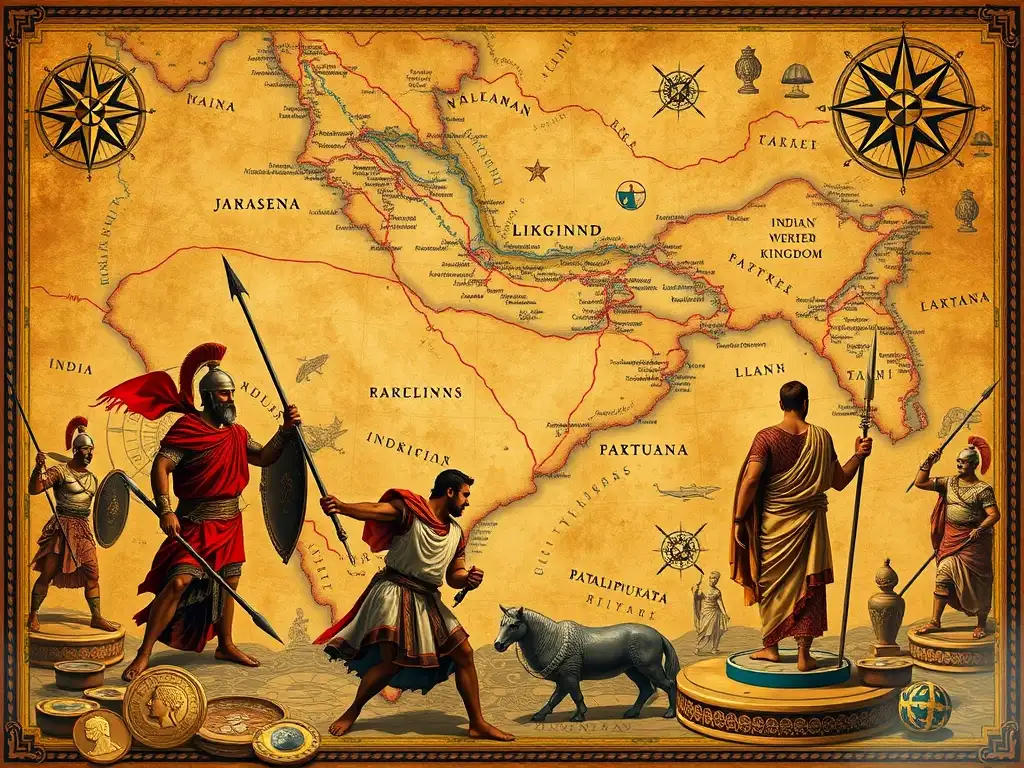
The consequences of the IndoGreek War were profound, affecting both Indian and Greek civilizations and altering the course of their histories.
Immediate Aftermath of the Conflict
In the immediate aftermath of the war, the IndoGreek territory underwent significant political and social changes. Alexander's conquests led to the establishment of several Greek satrapies in the northwest regions of India. However, the death of Alexander in 323 BCE created a power vacuum that prompted local rulers to reclaim autonomy. The subsequent decline of Greek influence in India highlighted the resilience of indigenous governance structures.
Long-term Effects on Indian and Greek Civilizations
The long-term effects of the IndoGreek War catalyzed a series of transformations in both civilizations:
- Cultural Syncretism: The war facilitated cultural exchanges that blended Greek and Indian art, philosophy, and religion. This syncretism laid the groundwork for the development of Greco-Buddhist art, which flourished in regions like Gandhara.
- Political Realignments: The conflict reshaped political landscapes, leading to the rise of new kingdoms such as the Maurya Empire under Chandragupta Maurya, who capitalized on the weakened state of Greek rule to unify large parts of India.
Cultural Exchanges Resulting from the War
The IndoGreek War acted as a conduit for cultural exchanges that enriched both civilizations:
- Art and Architecture: The fusion of Greek and Indian artistic styles resulted in remarkable developments in sculpture and architecture, characterized by the incorporation of Hellenistic elements into Buddhist art.
- Philosophical Influence: The encounter between Greek philosophy and Indian thought prompted dialogues that influenced various schools of philosophy, including the emergence of new ideas in ethics and metaphysics.
- Trade and Commerce: The war opened new trade routes, facilitating economic exchanges that connected the Indian subcontinent with the Mediterranean world, ultimately contributing to the prosperity of both regions.
The IndoGreek War not only marked a significant military conflict but also set the stage for enduring cultural and political transformations that resonated through history. Its historical significance lies in the multifaceted consequences that shaped the trajectory of Indian and Greek civilizations.
Historical Significance of the IndoGreek War
The IndoGreek War marked a pivotal moment in the intricate tapestry of ancient Indian history, showcasing a unique intersection of cultures that would shape the subcontinent's future. This conflict, primarily fought between the Greco-Bactrian Kingdom and various Indian states, not only signified military confrontations but also catalyzed profound socio-political and cultural exchanges. The war's historical significance lies in its role as a conduit for the introduction of Hellenistic influences into India, which would have lasting impacts on art, philosophy, and governance.
The conflict illuminated the complexity of Indian political dynamics during the period, revealing the regional power struggles that characterized the era. Furthermore, it prompted the evolution of military strategies and diplomatic relations, as Indian states adapted to the challenges posed by a foreign adversary. As such, the IndoGreek War serves as a critical point of study for understanding the broader narrative of Indian history and its interactions with external civilizations.
Impact on Indian Society and Governance
The impact of the IndoGreek War on Indian society and governance was multifaceted. One notable effect was the introduction of Hellenistic administrative practices, which influenced local governance structures. The Greeks brought with them new ideas about governance, trade, and urban planning, which were gradually integrated into the existing Indian frameworks.
Moreover, the war fostered a sense of unity among various Indian kingdoms as they confronted a common external threat. This collective response led to temporary alliances that would lay the groundwork for the emergence of larger political entities, such as the Mauryan Empire, which later sought to consolidate power across the subcontinent.
The cultural exchanges resulting from the war also transformed Indian society. The introduction of Greek art and architecture, particularly in the regions of Gandhara and Mathura, resulted in a syncretic style that blended Indian and Hellenistic elements. This fusion can be seen in the depiction of Buddhist figures and motifs, which adopted Greek artistic techniques, thereby enriching India's cultural heritage.
Influence on Greek Settlements in India
The IndoGreek War facilitated the establishment of Greek settlements in various parts of India, particularly in regions like Bactria and Gandhara. These settlements became centers of cultural exchange, where Greek ideas coalesced with local traditions.
As Greek settlers integrated into Indian society, they contributed to the local economies and played crucial roles in trade networks. The establishment of trade routes between the Indian subcontinent and the Mediterranean world was significantly enhanced by these settlements, fostering economic interdependence and cultural dialogue.
Moreover, the Greeks’ presence in India led to the introduction of new technologies and practices, such as coinage, which was adapted and utilized in Indian commerce. This not only revolutionized trade practices but also laid the groundwork for future economic systems in the region.
Legacy of the IndoGreek War in Historical Narratives
The legacy of the IndoGreek War resonates through historical narratives as a symbol of cultural exchange and conflict. Historians often reference this war to illustrate the complexities of ancient Indian interactions with foreign powers. The war is frequently depicted as a microcosm of broader themes, such as the struggle for power, the fluidity of cultural identities, and the richness of cross-cultural encounters.
In the context of historical literature, the IndoGreek War has been romanticized and analyzed through various lenses, making it a subject of interest for scholars and enthusiasts alike. Its representation in ancient texts and modern interpretations underscores the lasting impact of these events on the collective memory of both Indian and Greek cultures.
Conclusion
Summary of Key Points on IndoGreek War Historical Significance
The IndoGreek War stands out as a significant event in ancient history, characterized by its military, cultural, and political ramifications. Key points regarding its historical significance include:
- Cultural Exchange: The war facilitated a blend of Hellenistic and Indian cultures, enriching the artistic and philosophical landscape of India.
- Political Unity: It encouraged Indian states to unite against a common foe, influencing the political dynamics of the region.
- Economic Development: Greek settlements bolstered trade and introduced innovative practices, impacting the economic frameworks of Indian society.
Reflections on the Clash of Civilizations
The IndoGreek War exemplifies the clash of civilizations, where distinct cultures interacted through conflict and cooperation. This engagement illustrates how wars can inadvertently lead to cultural enrichment and transformation. The merging of Greek and Indian elements during and after the war serves as a testament to the resilience of civilizations in the face of adversity, revealing a narrative that transcends mere conflict to highlight the possibilities of unity and shared growth.
Final Thoughts on Indian-Greek Relations and Their Historical Context
In reviewing the IndoGreek War and its consequences, it becomes evident that Indian-Greek relations are a vital chapter in the broader story of human history. The interplay of conflict and cooperation, as seen in the IndoGreek context, underscores the importance of understanding ancient interactions to appreciate the complexities of modern cultural identities. As we reflect on this historical episode, it is essential to recognize the enduring legacy of these interactions, which continue to inform contemporary discussions on cultural exchange and the significance of diplomacy in a diverse world.
- Introduction to the IndoGreek War
- Causes of the IndoGreek War
- Major Battles of the IndoGreek War
- Consequences of the IndoGreek War
- Historical Significance of the IndoGreek War
- Conclusion
Frequently Asked Questions
What was the IndoGreek War?
The IndoGreek War was a series of conflicts between the Indo-Greek Kingdom and various Indian kingdoms, primarily during the 2nd century BCE. It marked a significant encounter between Greek and Indian cultures.
What is the historical significance of the IndoGreek War?
The historical significance of the IndoGreek War lies in its role in the cultural exchange between Greece and India, influencing art, architecture, and trade practices. It helped to lay the groundwork for future interactions between these civilizations.
How did the IndoGreek War affect Indian society?
The IndoGreek War resulted in the spread of Hellenistic culture in India, impacting artistic expressions and leading to the fusion of Greek and Indian styles. This cultural blend enriched the subcontinent’s artistic heritage.
Who were the key figures involved in the IndoGreek War?
Key figures in the IndoGreek War included Demetrius, the Indo-Greek king, and various Indian rulers such as Menander I, who played crucial roles in the conflicts and subsequent peace negotiations.
What were the long-term consequences of the IndoGreek War?
The long-term consequences included the strengthening of trade routes between the East and West, as well as the lasting influence of Hellenistic culture on Indian civilization, which can be seen in art, philosophy, and governance.
Final Reflection: The Enduring Legacy of the IndoGreek War
The IndoGreek War stands as a pivotal moment in history, highlighting the complex interplay of cultures and civilizations that shaped the ancient world. Today, as we navigate an increasingly interconnected global landscape, the lessons from this historical clash resonate more than ever. The war not only marked a significant military confrontation but also initiated a profound cultural exchange that laid the groundwork for future interactions between East and West. Understanding this historical significance allows us to appreciate the intricate tapestry of human civilization and the ongoing impact of such encounters.
The IndoGreek War has profoundly influenced our cultural and social landscape, serving as a reminder of the power of dialogue and exchange. The blending of Hellenistic and Indian cultures during and after the war illustrates how conflict can lead to unexpected outcomes, fostering creativity and innovation. As the philosopher Heraclitus once said, “War is the father of all things,” emphasizing that strife often gives birth to new ideas and perspectives. This historical event encourages us to reflect on how our own conflicts can lead to growth and understanding, rather than division.
As we look to the future, let us take a moment to reflect on the lessons of the IndoGreek War. How can we apply the principles of cultural exchange and understanding in our own lives? I invite you to consider the ways in which you can engage with diverse perspectives, fostering dialogue in your communities. By embracing the lessons from this historical event, we can contribute to a more harmonious world, where the legacies of our past inspire us to build bridges rather than walls.
Engage with the Legacies of the Indo-Greek War!
Thank you for diving into the fascinating narrative of the Indo-Greek War! We hope you've discovered the profound impact this clash of civilizations had on our history. Now, it's your turn to explore further and connect with this rich heritage.
Here are some actionable steps you can take today:
- Delve deeper: Read more articles on ancient Indian civilizations to expand your understanding of how historical events shape our world.
- Share your insights: Discuss the consequences of the Indo-Greek War with friends or in online forums to spark engaging conversations about history.
- Join our community: Subscribe to our newsletter for exclusive content, updates, and discussions on topics in ancient history that matter.
What aspect of the Indo-Greek War surprised you the most? How do you think it has influenced modern civilizations? We invite you to join the conversation below!