
The Role of Ancient Indian Scholars in the Exchange of Knowledge

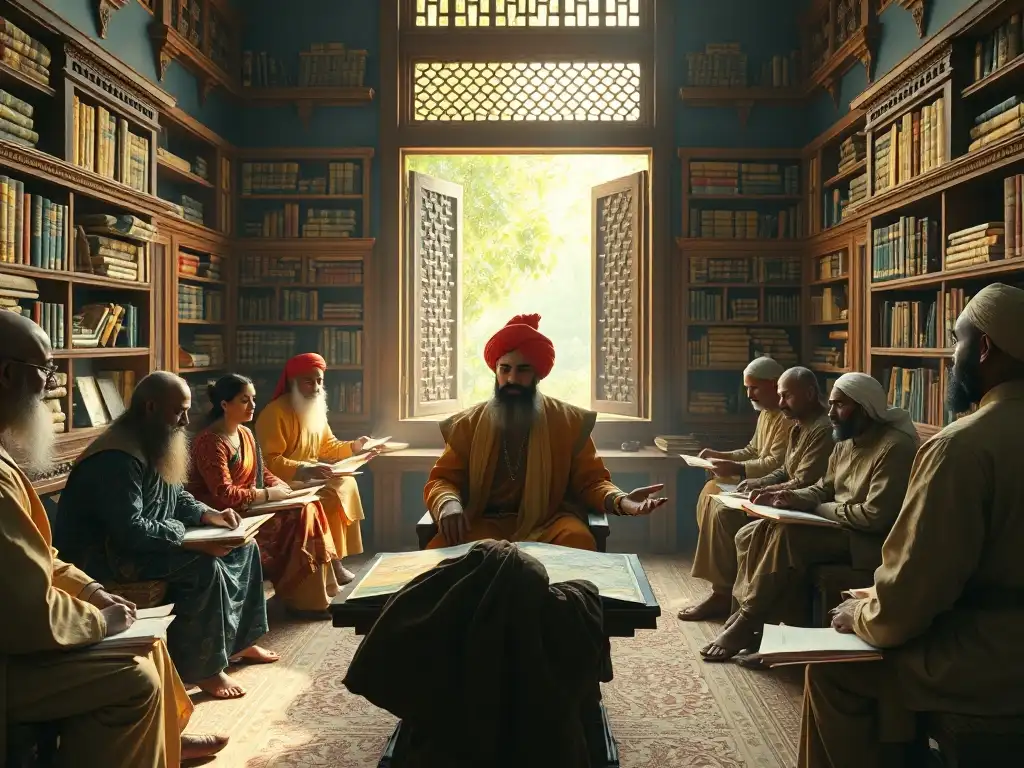
Welcome to Ancient India History, where we embark on a fascinating journey through the rich tapestry of ancient Indian civilizations. Here, we delve into the extraordinary role of ancient Indian scholars in the exchange of knowledge, illuminating how these intellectual pioneers shaped not only their own culture but also influenced civilizations beyond their borders. Prepare to uncover the remarkable stories of collaboration and innovation that defined an era of enlightenment. Join us as we explore the depths of cultural exchanges and their lasting impact, inviting you to discover the wisdom that continues to resonate today.
- Introduction to Ancient Indian Scholars and Knowledge Exchange
- The Historical Context of Ancient Indian Scholars
- Key Contributions of Ancient Indian Scholars to Knowledge Exchange
- Ancient Indian Scholars and Their Interactions with Neighboring Civilizations
- Prominent Ancient Indian Scholars in Knowledge Exchange
- The Impact of Ancient Indian Scholars on Global Knowledge Systems
- Conclusion: The Enduring Legacy of Knowledge Exchange by Ancient Indian Scholars
-
Frequently Asked Questions
- What was the significance of ancient Indian scholars in knowledge exchange?
- How did ancient Indian scholars contribute to mathematics?
- What were the main centers of learning in ancient India?
- How did ancient Indian scholars influence other civilizations?
- What role did texts play in the knowledge exchange of ancient India?
- Final Reflection: The Enduring Legacy of Ancient Indian Scholars in Knowledge Exchange
- Unveil the Wisdom of Ancient Indian Scholars
Introduction to Ancient Indian Scholars and Knowledge Exchange
In the vast tapestry of ancient Indian history, scholars emerged as pivotal figures who not only contributed to the intellectual landscape of their time but also facilitated a rich exchange of knowledge with neighboring civilizations. This interplay of ideas and philosophies significantly shaped various domains, including science, mathematics, philosophy, and medicine.
From the remarkable innovations of the Indus Valley civilization to the profound insights of the Gupta Empire, ancient Indian scholars played a crucial role in the dissemination and adaptation of knowledge. As we delve into this fascinating topic, we will explore the contributions of these scholars and the importance of knowledge exchange in fostering cultural growth and development across regions.
Overview of Ancient Indian Scholars
Ancient India was home to a multitude of scholars whose intellectual pursuits laid the foundation for various fields of study. Among the most notable figures were:
- Aryabhata: A pioneering mathematician and astronomer, Aryabhata's works, such as the Aryabhatiya, introduced concepts like the place value system and the approximation of π (pi).
- Charaka: Renowned for his contributions to medicine, particularly Ayurveda, Charaka's texts emphasized the importance of holistic health and the balance of bodily elements.
- Panini: A grammarian who codified Sanskrit grammar in his work Ashtadhyayi, Panini's rules established a framework that influenced linguistic studies for centuries.
These scholars not only enriched their own disciplines but also engaged with other cultures, leading to a dynamic exchange of ideas. The interactions with civilizations such as Persia, Greece, and China allowed for a cross-pollination of knowledge, resulting in advancements that benefitted all parties involved.
Importance of Knowledge Exchange in Ancient Civilizations
The exchange of knowledge among ancient civilizations was crucial for various reasons:
- Cultural Enrichment: The interaction between Indian scholars and their contemporaries led to an amalgamation of cultures, ideas, and practices, enriching the intellectual heritage of all involved.
- Scientific Advancements: Collaboration with scholars from neighboring regions spurred innovations in mathematics, astronomy, and medicine. For instance, the introduction of Indian numerals to the Arab world significantly impacted global mathematics.
- Philosophical Development: The exchange of philosophical ideas fostered a deeper understanding of ethics, metaphysics, and epistemology, influencing both Indian and foreign thought.
- Trade and Diplomacy: Knowledge exchange often went hand in hand with trade, leading to stronger diplomatic ties. Scholars traveled along trade routes, sharing knowledge as they exchanged goods.
The role of ancient Indian scholars in the exchange of knowledge was not merely academic; it was a cornerstone of cultural interaction that shaped the ancient world. Understanding this dynamic interplay provides valuable insights into how civilizations evolve through shared intellectual endeavors.
The Historical Context of Ancient Indian Scholars

The Indus Valley Civilization: Early Foundations of Knowledge
The Indus Valley Civilization, which thrived between 3300 and 1300 BCE, laid the groundwork for the rich scholarly traditions that would later flourish in ancient India. This civilization is renowned for its advanced urban planning, sophisticated drainage systems, and standardized weights and measures. However, its contributions to knowledge exchange extend beyond mere infrastructure.
- Script and Language: The Indus script, though undeciphered, indicates the presence of a system of writing that suggests a complex society engaged in trade and communication. The use of seals for trade purposes points to an early form of record-keeping and administrative control, facilitating knowledge sharing across regions.
- Mathematics and Geometry: The geometric layouts of Indus cities, such as Mohenjo-Daro and Harappa, reflect a deep understanding of mathematics and geometry. The precise measurements used in urban planning illustrate the early application of mathematical principles, which would later be expanded upon by subsequent scholars.
- Trade Networks: The extensive trade networks established with neighboring civilizations, such as Mesopotamia, enabled an exchange of ideas and knowledge. Artifacts unearthed in archaeological sites reveal that the Indus Valley traders interacted with various cultures, sharing and adopting various practices and technologies.
Vedic Period: The Birth of Scholarly Tradition
The Vedic Period (circa 1500-500 BCE) marked a significant evolution in the intellectual landscape of ancient India. The Vedas, a large body of texts composed during this time, are foundational texts that encapsulate not only spiritual wisdom but also practical knowledge.
- Oral Tradition and Knowledge Transmission: The Vedic texts were transmitted orally for centuries before being written down. This oral tradition emphasized memory and recitation, fostering a community of scholars known as Brahmins who played a crucial role in preserving and disseminating knowledge.
- Philosophical Discourses: The Upanishads, a later part of the Vedic literature, introduced profound philosophical discussions about the nature of reality and human existence. These texts laid the groundwork for various schools of thought, influencing not only Indian philosophy but also engaging with other civilizations, particularly in dialogues concerning metaphysics and ethics.
- Mathematics and Astronomy: The Vedic period also saw advancements in mathematics and astronomy, with scholars developing calculations for timekeeping and rituals. Texts like the Sulbasutras provided instructions for constructing altars, demonstrating a mix of mathematical precision and religious practice.
The Maurya and Gupta Empires: Flourishing Centers of Learning
The Maurya (322-185 BCE) and Gupta (c. 240-550 CE) Empires are often regarded as the golden age of ancient Indian scholarship, marked by significant contributions to various fields, including mathematics, medicine, astronomy, and literature.
- Nalanda University: Established during the Gupta period, Nalanda became one of the world's first residential universities, attracting scholars from across Asia. It served as a hub for knowledge exchange, where texts were studied, translated, and debated. The university's curriculum encompassed subjects like logic, medicine, and metaphysics, facilitating rich interactions among scholars from different cultures.
- Mathematical Innovations: Ancient Indian scholars made remarkable contributions to mathematics during this era. The concept of zero and the decimal system were developed, which later influenced mathematical practices globally. The works of mathematicians like Aryabhata and Brahmagupta showcased advanced understanding of algebra and arithmetic.
- Cultural Syncretism: The flourishing of trade routes during these empires facilitated cultural exchanges with neighboring civilizations. Scholars engaged in dialogues that enriched both Indian and foreign knowledge systems. Buddhist texts, for example, were translated and adapted in various regions, illustrating the dynamic flow of ideas.
The role of ancient Indian scholars in the exchange of knowledge is a testament to the rich intellectual traditions that emerged from the early civilizations of India. Their contributions have had lasting impacts not just within the Indian subcontinent but also across the globe, fostering a legacy of learning that continues to resonate today.
Key Contributions of Ancient Indian Scholars to Knowledge Exchange
Advances in Mathematics and Astronomy by Indian Scholars
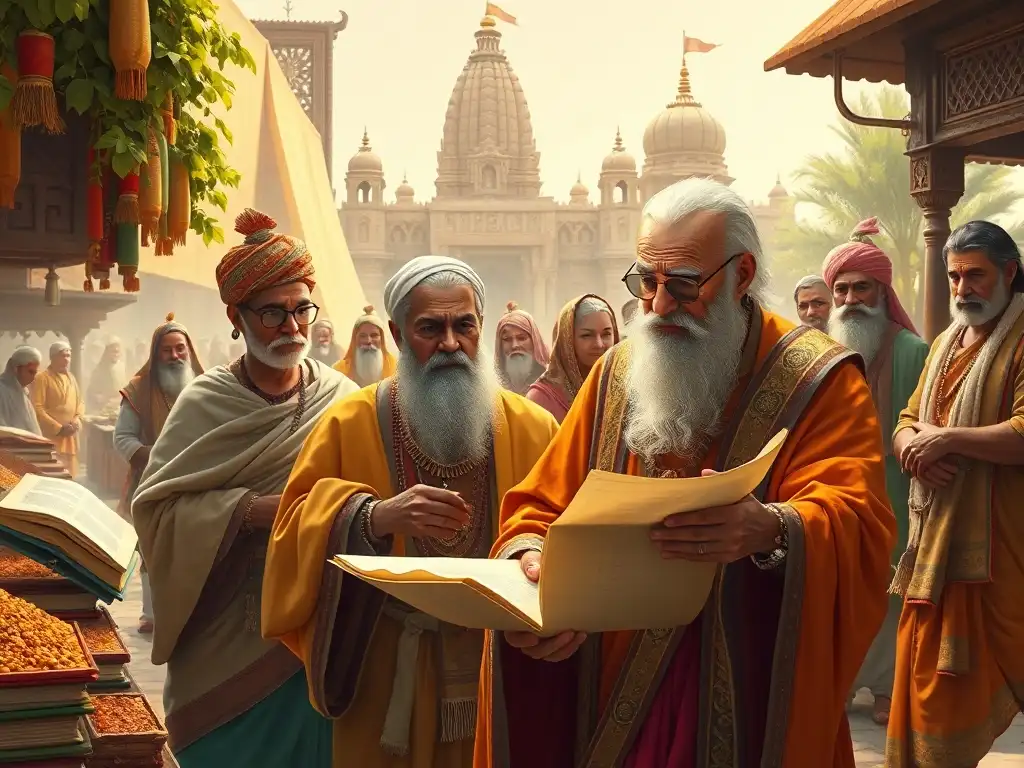
Ancient Indian scholars made remarkable contributions to mathematics and astronomy that played a pivotal role in the knowledge exchange with neighboring civilizations. One of the most notable figures is Aryabhata, who, in the 5th century CE, introduced concepts such as the place-value system and the concept of zero, which are fundamental to modern mathematics. His seminal work, the Aryabhatiya, not only addressed mathematical topics but also laid the groundwork for astronomical calculations.
- Key Concepts Introduced:
- Zero (0): The introduction of zero as a number revolutionized mathematics and facilitated complex calculations.
- Place-Value System: This system enabled the representation of large numbers and simplified arithmetic operations.
Indian scholars also excelled in astronomy, with texts such as the Surya Siddhanta, which detailed astronomical calculations, including the length of the solar year and the positions of celestial bodies.
- Notable Contributions:
- Heliocentric Theories: Some Indian astronomers proposed ideas aligning with heliocentric models, predating similar concepts in Europe.
- Astronomical Instruments: The development of instruments like the gnomon and water clock reflected advanced understanding and innovation in the field.
The influence of these mathematical and astronomical advancements spread to other cultures, including the Islamic Golden Age and later to Europe, facilitating a global exchange of knowledge.
Contributions to Medicine and Ayurveda
The field of medicine in ancient India, particularly through Ayurveda, represents another crucial area where ancient Indian scholars significantly contributed to knowledge exchange. Texts such as the Charaka Samhita and Sushruta Samhita compiled extensive medical knowledge, including surgical techniques and herbal remedies.
- Key Elements of Ayurvedic Medicine:
- Holistic Approach: Ayurveda focuses on the balance of body, mind, and spirit, emphasizing preventive care and natural remedies.
- Surgical Innovations: Sushruta, often referred to as the "father of surgery," detailed over 300 surgical procedures and the use of anesthesia.
Ancient Indian scholars not only advanced medical practices but also shared their findings with neighboring civilizations, influencing medical systems in places like Persia and the Arab world. This exchange cultivated a rich tradition of medical knowledge that would later impact European medicine during the Renaissance.
The Role of Philosophy and Spiritual Texts in Knowledge Dissemination
Philosophy and spiritual texts from ancient India, such as the Vedas, Upanishads, and the Bhagavad Gita, served as vehicles for knowledge exchange, impacting various disciplines, including ethics, metaphysics, and epistemology. These texts conveyed profound ideas that resonated across cultures, promoting dialogue and intellectual discourse.
- Key Philosophical Contributions:
- Concept of Dharma: The notion of duty and righteousness influenced moral philosophy in neighboring cultures.
- Non-Dualism (Advaita): The philosophical framework proposed by Adi Shankaracharya encouraged comparative studies with Western philosophical traditions.
The spread of these texts and their interpretations facilitated cultural exchange, as they were translated and adapted by scholars in Persia, Greece, and beyond. This philosophical dialogue enriched the intellectual landscape of multiple civilizations, fostering a deeper understanding of human existence and the universe.
The contributions of ancient Indian scholars in mathematics, medicine, and philosophy were instrumental in the exchange of knowledge with neighboring civilizations. Their innovations and insights not only advanced their own culture but also laid the foundation for a rich tapestry of global intellectual heritage.
Ancient Indian Scholars and Their Interactions with Neighboring Civilizations
Influence on Persian and Greek Scholars
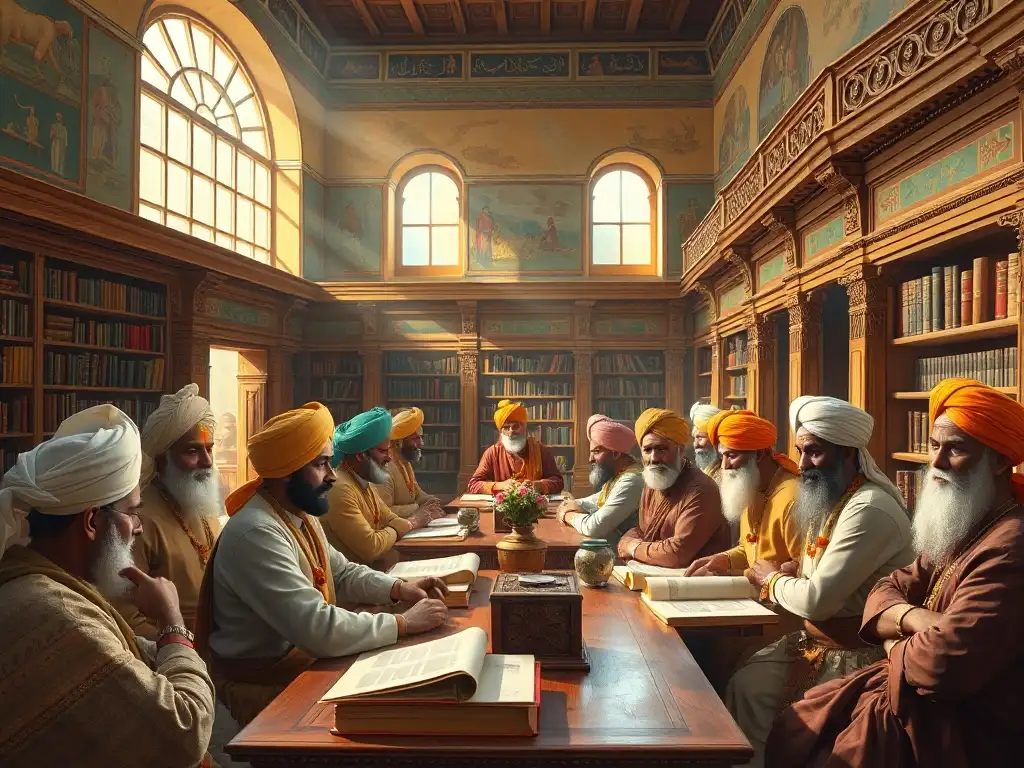
Ancient Indian scholars played a crucial role in shaping the intellectual landscapes of neighboring civilizations, particularly during the periods of interaction with Persian and Greek scholars. The transmission of knowledge occurred through various avenues, including trade, diplomacy, and cultural exchanges.
Notable Contributions:
- Mathematics and Astronomy: Indian mathematicians, such as Aryabhata, influenced Persian scholars with concepts like zero and the decimal system. His works were later translated into Arabic, further spreading these revolutionary ideas.
- Philosophy and Religion: The teachings of Buddhism and Hinduism permeated Persian thought, with scholars like Zoroaster engaging with Indian philosophical concepts. The intercultural dialogue fostered a deeper understanding of ethics and metaphysics in both cultures.
The synthesis of these ideas led to advancements in various fields, including medicine and literature. The rich tapestry of knowledge developed during these exchanges set the stage for future intellectual pursuits across Europe and the Middle East.
The Exchange of Ideas with Chinese Philosophers
The interactions between ancient Indian scholars and Chinese philosophers were marked by a profound exchange of ideas, particularly in the realms of religion, science, and philosophy.
Key Points of Interaction:
- Buddhism as a Bridge: The spread of Buddhism from India to China facilitated intellectual exchanges. Indian scholars, such as Bodhidharma, introduced new philosophical concepts that were integrated into Chinese thought.
- Translation of Texts: The translation of Indian texts into Chinese during the Han dynasty played a significant role in this exchange. Notable translations included the Prajnaparamita Sutras and the Lotus Sutra, which enriched Chinese spirituality and philosophy.
This intellectual cross-pollination led to the development of unique schools of thought in China, such as Chan Buddhism, which emphasized meditation and reaching enlightenment, showcasing the transformative impact of these exchanges on both civilizations.
Trade Routes and the Spread of Knowledge: A Historical Perspective
Trade routes were not just conduits for goods; they were vital channels for the exchange of knowledge and ideas among ancient civilizations. The ancient Silk Road and maritime routes facilitated the movement of scholars and their ideas across regions.
Historical Context:
- Silk Road: This extensive network connected India with Central Asia, Persia, and beyond. Indian scholars traveled along these routes, bringing with them not only trade goods but also scientific knowledge, mathematical concepts, and cultural practices.
- Impact of Maritime Trade: Indian maritime trade with Southeast Asia and the Middle East also played a pivotal role in knowledge dissemination. Navigation techniques, medicinal practices, and agricultural knowledge were shared, influencing local cultures and economies.
The interconnectedness fostered by these trade routes illustrates how ancient Indian scholars contributed significantly to a global exchange of knowledge, shaping the intellectual and cultural landscapes of multiple civilizations in the process.
Prominent Ancient Indian Scholars in Knowledge Exchange
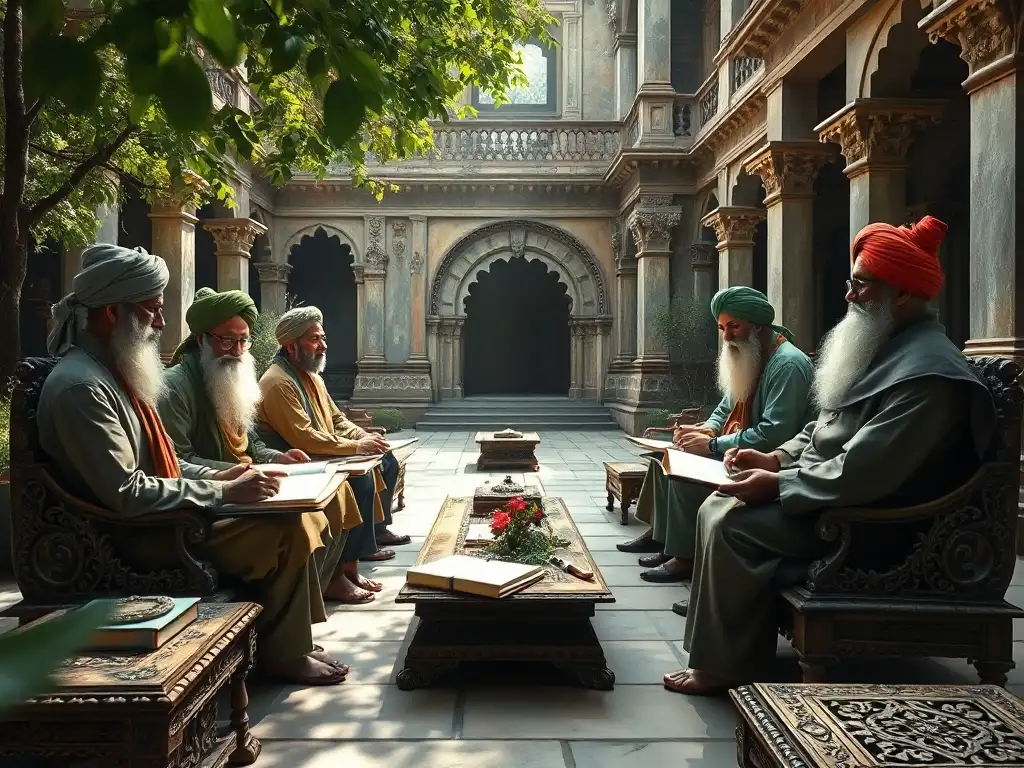
Ancient Indian scholars played a pivotal role in the exchange of knowledge across civilizations, contributing significantly to various fields such as mathematics, medicine, and linguistics. Their work not only influenced contemporaneous cultures but also laid the foundation for future advancements. Here, we delve into some of the most prominent figures whose contributions facilitated this rich exchange of knowledge.
Aryabhata: Pioneer of Mathematics and Astronomy
Aryabhata (476–550 CE) is renowned as one of the greatest mathematicians and astronomers of ancient India. His seminal work, the Aryabhatiya, presents a comprehensive understanding of mathematics and astronomy, encapsulating his theories in a concise format.
Key Contributions:
- Place Value System: Aryabhata introduced the concept of a place value system, which is fundamental to modern mathematics. His methods allowed for efficient calculations, influencing scholars in India and beyond.
- Zero and Decimal System: He was among the first to use the concept of zero as a numeral. This innovation was crucial for the development of mathematics and was later transmitted to the Arab world and Europe.
- Astronomical Calculations: Aryabhata's calculations of the circumference of the Earth and the timing of eclipses were remarkably accurate for his time. His methods of measuring celestial bodies influenced subsequent astronomers in various cultures.
Aryabhata's legacy continues to resonate in modern mathematical and astronomical practices, highlighting the significance of ancient Indian scholars in the global knowledge exchange.
Charaka: The Father of Medicine
Charaka, an ancient Indian physician and the author of the Charaka Samhita, is revered as the father of medicine. His work laid the foundation for Ayurveda, the traditional system of medicine in India, and emphasized the importance of systematic observation and clinical practices.
Key Contributions:
- Holistic Approach: Charaka advocated for a holistic approach to health, focusing on the balance of body, mind, and spirit. This perspective influenced medical practices in other cultures, promoting the idea of treating the individual rather than just the ailment.
- Clinical Observations: His meticulous clinical observations documented various diseases, treatments, and medicinal herbs, providing a wealth of knowledge that was shared with neighboring civilizations.
- Pharmacology: The Charaka Samhita contains extensive information on herbal medicine and pharmacology, which was disseminated along trade routes, influencing practices in other regions.
Charaka’s insights into medicine not only shaped healthcare in ancient India but also contributed to the global exchange of medical knowledge, showcasing the impact of ancient Indian scholars on health practices worldwide.
Panini: The Linguist Who Shaped Sanskrit
Panini, who lived around the 5th to 4th century BCE, is celebrated as the most influential linguist of ancient India. His work on Sanskrit grammar laid the groundwork for the study of linguistics and language structure.
Key Contributions:
- Ashtadhyayi: Panini's magnum opus, the Ashtadhyayi, is a comprehensive grammar of Sanskrit that employs a systematic and mathematical approach to language. This text remains a reference for linguists and scholars even today.
- Morphology and Syntax: His analysis of word formation and sentence structure provided insights that influenced not only Indian languages but also the study of linguistics in the Western world.
- Influence on Other Cultures: Panini's grammatical framework was adopted and adapted by scholars in Persia and the Arab world, leading to significant developments in their respective languages.
Panini's contributions established a robust framework for the study of language, emphasizing the importance of ancient Indian scholars in the broader context of knowledge exchange across civilizations.
The contributions of Aryabhata, Charaka, and Panini exemplify the profound impact of ancient Indian scholars on the exchange of knowledge. Their legacies continue to inspire and shape various fields, illustrating the rich tapestry of cultural interactions that characterized ancient India.
The Impact of Ancient Indian Scholars on Global Knowledge Systems
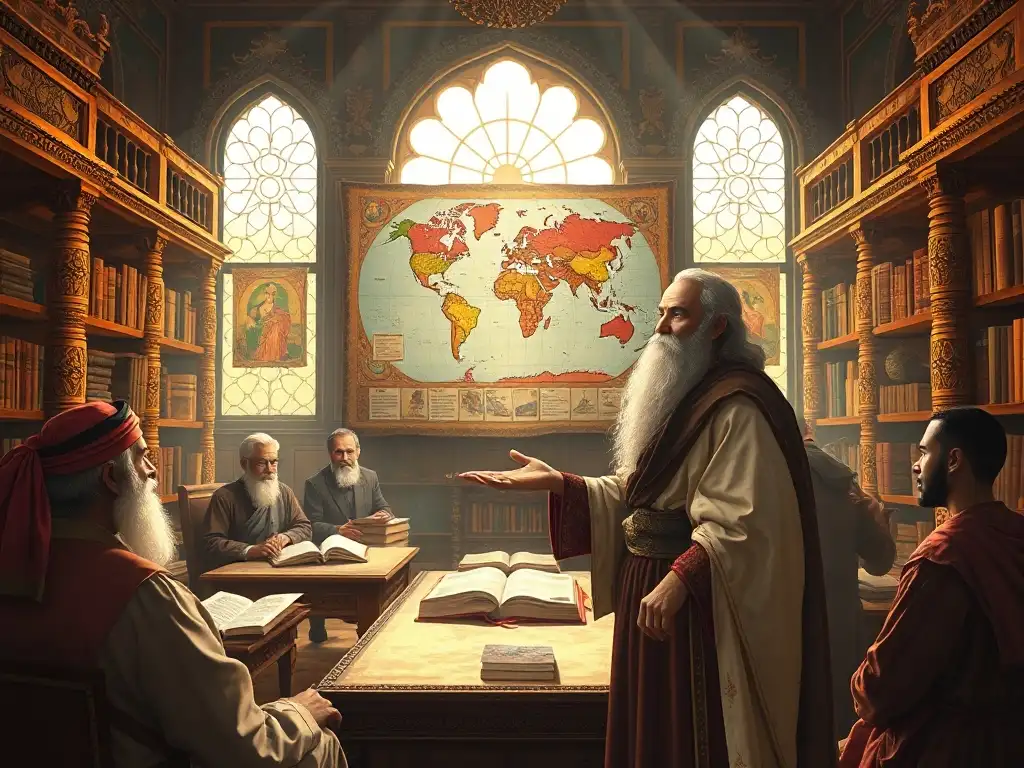
The contributions of ancient Indian scholars to global knowledge systems are profound and multifaceted. These scholars not only advanced various fields of study but also facilitated the exchange of knowledge across cultures. Their impact can be seen in mathematics, astronomy, medicine, and philosophy, forming a bridge that connected the Indian subcontinent with other civilizations.
The Transfer of Knowledge to the Islamic Golden Age
During the Islamic Golden Age (8th to 14th centuries), ancient Indian scholars played a pivotal role in the transfer of knowledge to the Islamic world. This period was marked by a significant interest in science and philosophy, and scholars from various cultures, including India, contributed to this intellectual flourishing.
- Translation Movements: Many ancient Indian texts, particularly in mathematics and astronomy, were translated into Arabic. The works of scholars like Aryabhata and Brahmagupta reached Arabic-speaking scholars, who then built upon these ideas.
- Astronomical Contributions: Indian scholars introduced concepts such as the 0 as a numeral and the decimal system, which were crucial for astronomical calculations. Notably, the astronomical treatise "Surya Siddhanta" was translated and utilized by Islamic astronomers, influencing their own studies of celestial bodies.
The fusion of Indian mathematical concepts with Islamic scholarship created a new paradigm that enriched both traditions.
The Influence of Indian Mathematical Concepts on Europe
The influence of ancient Indian scholars extended beyond the Islamic world and significantly impacted Europe, especially during the Renaissance.
- Introduction of Zero and the Decimal System: Indian mathematicians were instrumental in developing the concept of zero and the decimal system. These innovations were transmitted to Europe through translations of Arabic texts, enabling a mathematical revolution. The work of scholars like Brahmagupta and his rules for arithmetic were pivotal in laying the groundwork for modern mathematics.
- Fibonacci and the Spread of Indian Numerals: The Italian mathematician Fibonacci, in his 1202 work "Liber Abaci," introduced the Hindu-Arabic numeral system to Europe, which included the use of zero. This numeral system gradually replaced Roman numerals and transformed European mathematics.
| Indian Scholar | Contribution | Impact on Other Cultures |
|---|---|---|
| Aryabhata | Concept of zero | Influenced Arabic and European mathematics |
| Brahmagupta | Arithmetic rules | Essential to the development of algebra |
| Bhaskara II | Advanced calculus | Impacted later European mathematical thought |
Legacy of Ancient Indian Scholars in Contemporary Knowledge Systems
The legacy of ancient Indian scholars continues to resonate in contemporary knowledge systems, where their contributions are acknowledged in various fields.
- Mathematics and Science: The principles laid down by Indian mathematicians are foundational in modern mathematics and science. The adoption of the numeral system and mathematical concepts such as algebra and geometry are integral to today's mathematical practices.
- Philosophy and Medicine: Ancient Indian philosophical texts, including those of the Nyaya and Vaisheshika schools, have influenced modern philosophical discourse. Similarly, Ayurvedic medicine, rooted in ancient Indian texts, remains relevant today, offering holistic health approaches.
- Cultural Exchange and Globalization: The knowledge exchange initiated by ancient Indian scholars laid the groundwork for later global interactions. This cultural exchange fostered a spirit of inquiry and collaboration that continues in contemporary academic and scientific communities.
The contributions of ancient Indian scholars to knowledge exchange have had lasting impacts on global knowledge systems, shaping mathematics, science, and philosophy across cultures. Their legacy is a testament to the rich tradition of scholarship in ancient India, which not only advanced local knowledge but also facilitated a broader intellectual dialogue that remains vital today.
Conclusion: The Enduring Legacy of Knowledge Exchange by Ancient Indian Scholars

The legacy of ancient Indian scholars in the realm of knowledge exchange is profound and far-reaching. Their contributions not only enriched their own civilization but also influenced neighboring cultures and beyond. Through various forms of scholarship—ranging from mathematics and astronomy to philosophy and medicine—these scholars facilitated a vibrant exchange of ideas that helped shape the intellectual landscape of the ancient world. Such interactions were characterized by a spirit of inquiry and collaboration that transcended borders, leading to advancements that are still celebrated today.
The works of scholars like Aryabhata, who revolutionized mathematics with concepts such as zero and the place value system, and Charaka, who laid the foundations of Ayurveda, exemplify the significant impact of ancient Indian scholarship. Their knowledge was not confined within the subcontinent; rather, it traveled along trade routes, influencing scholars in Persia, Greece, and even as far as China. This cross-pollination of ideas underscores the importance of cultural exchange as a catalyst for intellectual growth.
Reflection on the Importance of Cultural Exchange
Cultural exchange has always played a crucial role in the development of civilizations, and ancient India was no exception. The interactions between ancient Indian scholars and their counterparts in other regions fostered an environment ripe for innovation. For instance, the spread of Indian numerals to the Arab world significantly influenced mathematics in Europe, showcasing how knowledge transcends geographical boundaries.
Key Aspects of Cultural Exchange:
- Mutual Enrichment: The exchange allowed for the sharing of diverse perspectives, which led to richer understanding and development of various fields.
- Trade Routes as Conduits: Important trade routes, such as the Silk Road, served as conduits for not just goods, but also ideas, philosophies, and scientific knowledge.
- Translation Movements: The translation of texts from Sanskrit into Arabic and other languages was pivotal in preserving and disseminating ancient knowledge.
The enduring impact of these exchanges can be seen in how they laid the groundwork for future generations of scholars and thinkers, emphasizing the importance of collaboration and the sharing of knowledge across cultures.
The Continuing Relevance of Ancient Indian Scholarship Today
The relevance of ancient Indian scholarship persists in contemporary society as we continue to draw inspiration from their teachings and methodologies. The principles established by ancient scholars in various disciplines are still applicable and influential in modern academic and professional fields.
Areas of Continuing Influence:
- Mathematics: The concept of zero and the decimal system, credited to Indian mathematicians, remains fundamental in mathematics and technology today.
- Medicine: Ayurveda's holistic approach to health and wellness is gaining recognition and integration into modern health practices, highlighting ancient wisdom's applicability.
- Philosophy: The philosophical teachings of figures like Gautama Buddha and Adi Shankaracharya continue to shape spiritual and ethical discussions worldwide.
The knowledge exchange fostered by ancient Indian scholars not only contributed to their own civilization but also laid the foundation for a legacy that continues to inspire and inform various fields today. Their ability to transcend cultural boundaries and engage in meaningful dialogue serves as a reminder of the importance of collaboration and understanding in our increasingly interconnected world.
Frequently Asked Questions
What was the significance of ancient Indian scholars in knowledge exchange?
Ancient Indian scholars played a crucial role in the exchange of knowledge across cultures, contributing to fields such as mathematics, astronomy, and philosophy.
How did ancient Indian scholars contribute to mathematics?
Ancient Indian scholars, like Aryabhata and Brahmagupta, made significant contributions to mathematics, including the concept of zero and advanced techniques in algebra and geometry.
What were the main centers of learning in ancient India?
Prominent centers of learning included Nalanda and Takshashila, where scholars from various regions gathered to share and develop knowledge in numerous disciplines.
How did ancient Indian scholars influence other civilizations?
Through trade routes and cultural exchanges, ancient Indian scholars disseminated their knowledge to civilizations like the Greeks and Arabs, profoundly impacting their scientific and philosophical thought.
What role did texts play in the knowledge exchange of ancient India?
Ancient texts, such as the Vedas and Upanishads, served as fundamental sources of knowledge and were translated and adapted by scholars worldwide, facilitating a cross-cultural exchange of ideas.
Final Reflection: The Enduring Legacy of Ancient Indian Scholars in Knowledge Exchange
The contributions of ancient Indian scholars to the exchange of knowledge remain profoundly relevant today. In a world increasingly defined by globalization and interconnectedness, the wisdom and insights shared by these scholars serve as a reminder of our collective potential to learn from one another. Their pioneering work in fields such as mathematics, astronomy, and philosophy not only laid the groundwork for future generations but also illustrates the timeless nature of knowledge as a bridge between cultures.
The influence of ancient Indian scholars extends far beyond their time, shaping the cultural and intellectual landscape of civilizations across the globe. Their commitment to inquiry and dialogue fostered an environment where ideas could flourish, transcending geographical boundaries. As the renowned philosopher and historian Will Durant once said, ">Civilization exists by geological consent, subject to change without notice."
This quote encapsulates the essence of knowledge exchange, highlighting its dynamic nature and the importance of adaptability in the face of evolving challenges. The legacy of these scholars encourages us to embrace curiosity and collaboration, reminding us that the pursuit of knowledge is a shared journey.
As we reflect on the lessons imparted by ancient Indian scholars, let us take this opportunity to engage with the world around us. Consider how you can contribute to the ongoing exchange of knowledge in your own life. Whether through sharing insights, learning from diverse perspectives, or fostering dialogue within your community, each of us has the power to honor this rich tradition. Embrace the spirit of inquiry and collaboration, and together, we can continue to build bridges of understanding that honor the legacy of those who came before us.
Unveil the Wisdom of Ancient Indian Scholars
Thank you for immersing yourself in the fascinating world of ancient Indian scholarship! You've gained valuable insights into how these brilliant minds paved the way for knowledge exchange that continues to influence us today. Now, it’s time to put that knowledge into action!
Here’s how you can further engage with the rich legacy of ancient Indian scholars:
- Explore the works of a renowned ancient scholar by reading a translated text or summary available online.
- Join a local or online discussion group dedicated to ancient history to share insights and learn from others.
- Share your newfound knowledge with friends or on social media to inspire interest in the contributions of these scholars.
How do you perceive the influence of ancient Indian scholarship shaping our understanding of the world today?