
The Impact of Trade on the Cultural Dynamics of Ancient Indian Civilizations

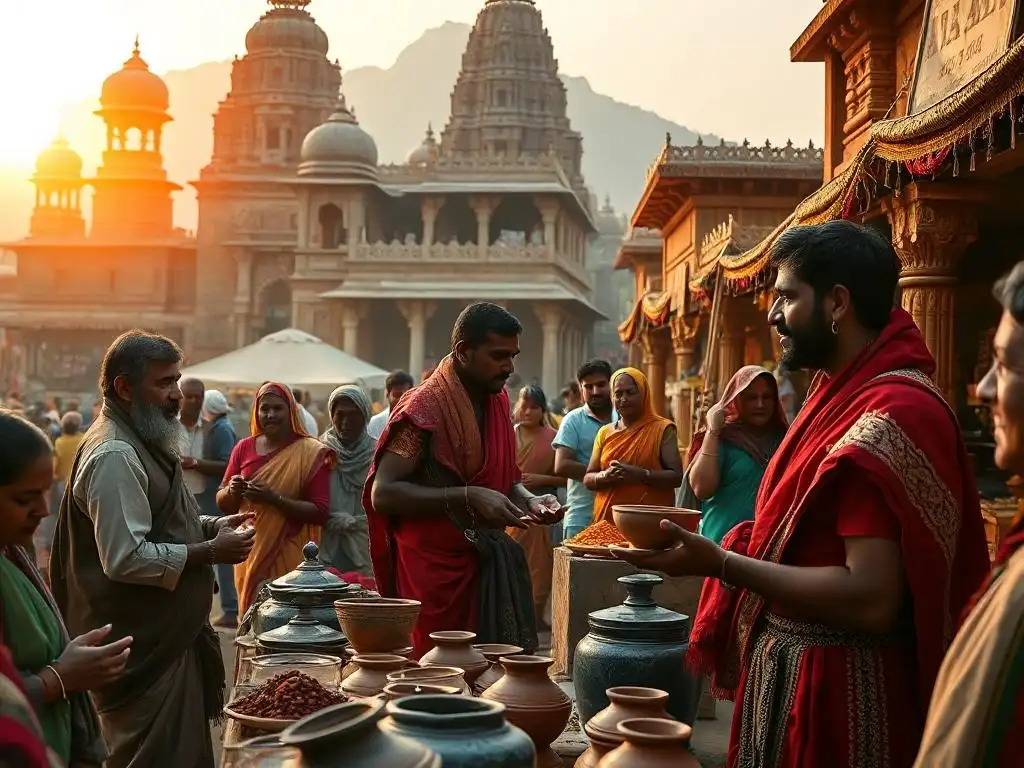
Welcome to Ancient India History, where we embark on an enlightening journey through the vibrant tapestry of ancient Indian civilizations. Here, we dive deep into the intricate relationship between trade and culture, uncovering how the bustling exchanges of goods and ideas shaped the societal dynamics from the Indus Valley to the Gupta Empire. Are you ready to explore the profound impact of commerce on cultural evolution and discover the legacies that continue to influence us today? Join us as we unravel the fascinating stories that define the heart of Ancient India.
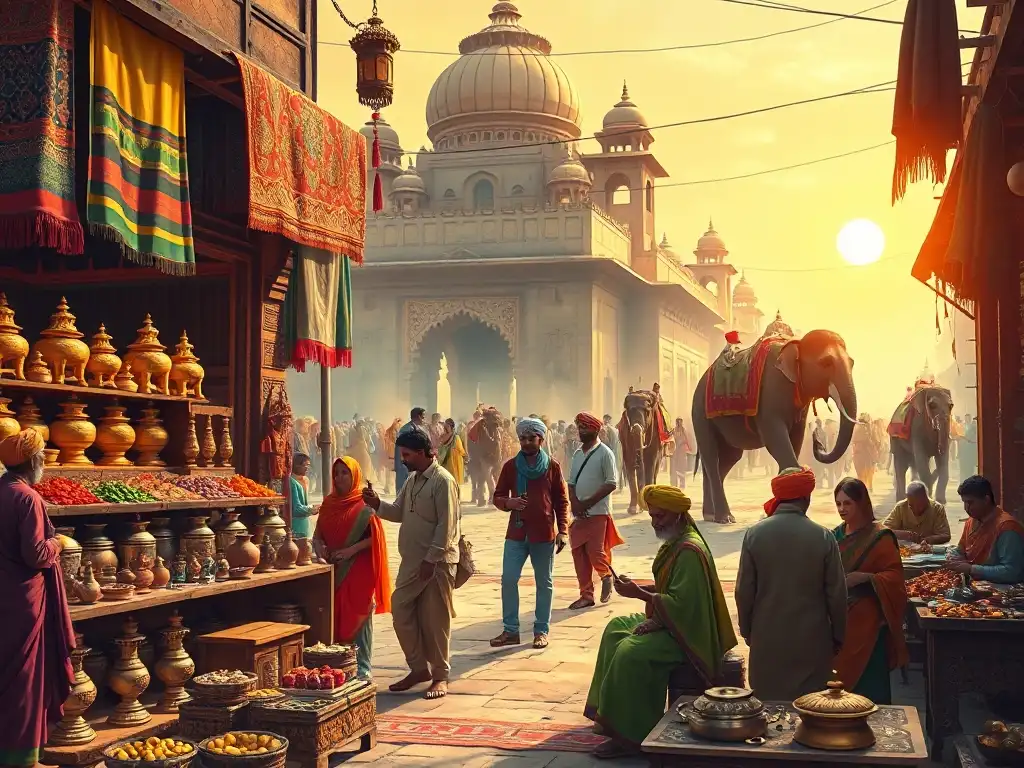
Introduction to Trade and Culture in Ancient India
Trade has played a pivotal role in shaping the cultural dynamics of ancient Indian civilizations. From the bustling markets of the Indus Valley to the flourishing trade hubs of the Gupta Empire, the exchange of goods and ideas significantly influenced the social fabric, artistic expressions, and religious practices of the time.
As merchants traversed vast distances to bring exotic products from far-off lands, they also transported cultural elements that enriched the local traditions of India. This article delves into the intricate relationship between trade and culture in ancient India, highlighting how these interactions fostered a vibrant tapestry of civilization that continues to resonate today.
Overview of Ancient Indian Civilizations
Ancient India is characterized by a series of remarkable civilizations, each contributing uniquely to the historical narrative of the subcontinent. Key civilizations include:
- Indus Valley Civilization (c. 3300–1300 BCE): Known for its advanced urban planning and trade networks.
- Vedic Period (c. 1500–500 BCE): Marked by the emergence of the Vedas, this period saw the development of early social structures and trade with neighboring cultures.
- Maurya Empire (c. 322–185 BCE): Under leaders like Ashoka, this empire expanded trade routes and cultural exchanges.
- Gupta Empire (c. 320–550 CE): Often referred to as a golden age, it witnessed significant advancements in arts, sciences, and trade.
These civilizations interacted with each other and with neighboring regions, creating a rich cultural milieu that was deeply influenced by trade networks.
Significance of Trade in Cultural Exchange
Trade was not merely an economic activity; it was a vital conduit for cultural exchange. The interactions that occurred through trade led to the following developments:
- Spread of Ideas: Philosophies, religions, and technologies were shared along trade routes. For instance, the spread of Buddhism from India to Central Asia and beyond.
- Artistic Influences: Artistic styles and motifs were exchanged, as seen in the Gandhara art, which combined Greek and Indian elements due to trade with Hellenistic cultures.
- Culinary Exchange: The introduction of new spices and cooking techniques enriched local cuisines, showcasing the diversity brought by trade interactions.
Historical Context of Trade in Ancient India
Understanding the historical context of trade in ancient India requires an exploration of the trade routes and major trading partners.
Trade Routes in Ancient India
Ancient India was crisscrossed by numerous trade routes that facilitated the movement of goods and ideas. Some notable routes included:
- Silk Road: Connecting India to Central Asia and beyond, this route facilitated the exchange of silk, spices, and precious stones.
- Maritime Trade Routes: Through the Arabian Sea and the Bay of Bengal, Indian traders engaged in maritime commerce with East Africa, the Middle East, and Southeast Asia.
- Overland Routes: Routes through the Khyber Pass and the northern mountain passes enabled trade with regions such as Persia and beyond.
These routes were essential for the exchange of not only goods but also cultural and intellectual ideas.
Major Trade Partners and Their Cultures
Ancient Indian civilizations engaged with a variety of cultures through trade, leading to a rich tapestry of interactions. Major trade partners included:
- Persians: The interaction with Persian culture introduced new administrative techniques and artistic influences.
- Greeks: Following Alexander's conquests, Greek influence permeated Indian art and philosophy.
- Southeast Asian Kingdoms: Trade with kingdoms like Funan and Srivijaya led to cultural exchanges, including the spread of Hinduism and Buddhism.
These interactions highlight the profound impact of trade on the cultural dynamics of ancient India, shaping not only its economy but also its identity.
The Role of Trade in Shaping Cultural Dynamics
Trade played a pivotal role in shaping the cultural dynamics of ancient Indian civilizations by facilitating the exchange of goods, ideas, and practices across diverse populations. The network of trade routes established by ancient Indian merchants connected them with various regions, including the Middle East, Southeast Asia, and Africa. This interaction not only enhanced economic prosperity but also led to profound cultural exchanges that influenced social structures, religious beliefs, and artistic expressions.
As trade flourished, cities such as Harappa and Mohenjo-Daro became melting pots of cultural diversity. Merchants and travelers brought with them their customs, languages, and traditions, which merged with local practices to create a rich tapestry of cultural identity. Additionally, the demand for luxury goods like spices, textiles, and precious metals drove innovations in craftsmanship and artistic techniques, further enriching the cultural landscape.
Economic Influence on Cultural Practices
The economic impact of trade on cultural practices in ancient India can be observed through several key areas:
- Art and Craftsmanship: The influx of wealth from trade resulted in the patronage of artisans and craftsmen. This led to the development of distinct art forms, such as intricate pottery, textiles, and sculptures, showcasing influences from other cultures. For example, the famous Ajanta Caves reflect a fusion of local and foreign artistic styles, influenced by the Silk Road trade.
- Religious Practices: The movement of people and ideas through trade routes facilitated the spread of religious beliefs. Buddhism and Jainism, for instance, gained prominence as merchants traveled, bringing their teachings to new regions. Trade also allowed for the introduction of foreign deities and rituals, which were often assimilated into local practices.
- Dietary Changes: With the exchange of goods, ancient Indians were exposed to new foods and spices, which transformed culinary practices. The introduction of ingredients like rice from Southeast Asia and various spices from the Middle East influenced regional cuisines, leading to a more diverse food culture.
Cultural Syncretism Resulting from Trade
Cultural syncretism in ancient India is a testament to the blending of diverse traditions that occurred through trade. This phenomenon can be analyzed through various aspects:
- Language and Literature: The mingling of traders from different linguistic backgrounds led to the development of new dialects and literary forms. Sanskrit, for instance, absorbed foreign words and expressions, enriching its vocabulary. Trade also facilitated the exchange of literary works, enhancing the literary tradition in ancient India.
- Philosophy and Thought: The interaction with various philosophical traditions, particularly during trade with the Hellenistic world, fostered a cross-pollination of ideas. Concepts from Greek philosophy found their way into Indian thought, influencing schools of philosophy such as Nyaya and Vaisheshika.
- Festivals and Celebrations: Trade routes acted as conduits for the exchange of cultural festivals. Merchants often celebrated their own customs, which were adopted and adapted by local populations. For instance, the celebration of Diwali and other festivals saw influences from various cultural practices, enriching the spiritual and communal life of ancient Indians.
Case Studies: Specific Examples of Trade and Cultural Exchange
The Indus Valley Civilization
The Indus Valley Civilization (c. 3300–1300 BCE) exemplifies the early impact of trade on cultural dynamics. Archaeological evidence suggests that it was engaged in extensive trade with Mesopotamia, exchanging goods such as cotton textiles, beads, and pottery. This interaction led to the exchange of artistic motifs and techniques, which are evident in the craftsmanship of both regions. The uniformity of weights and measures used in trade indicates a sophisticated economic system, allowing for the efficient exchange of goods and cultural practices.
The Maurya Empire
The Maurya Empire (c. 322–185 BCE) marked a significant period of trade expansion in ancient India. Under Emperor Ashoka, trade networks flourished, connecting India with regions as far as the Mediterranean. The spread of Buddhism during this period can be attributed to trade routes that facilitated the movement of missionaries and traders alike. The Rock Edicts of Ashoka highlight the integration of ethical principles derived from trade interactions, emphasizing social responsibility and moral conduct.
The Gupta Empire
The Gupta Empire (c. 320–550 CE) is often regarded as a golden age of cultural and intellectual achievement, largely fueled by trade. The empire’s geographical position allowed it to control vital trade routes, which enhanced economic prosperity. This wealth contributed to advancements in art, science, and literature, as seen in the works of Kalidasa and Aryabhata. The cultural exchanges fostered by trade during this period also led to the spread of Hinduism and Buddhism throughout Southeast Asia, illustrating the lasting influence of trade on cultural dynamics in ancient India.
The intricate relationship between trade and culture in ancient India is a profound example of how economic interactions can shape societal values, artistic expressions, and religious practices, leading to a rich and diverse cultural heritage.
The Impact of Trade on Language and Literature
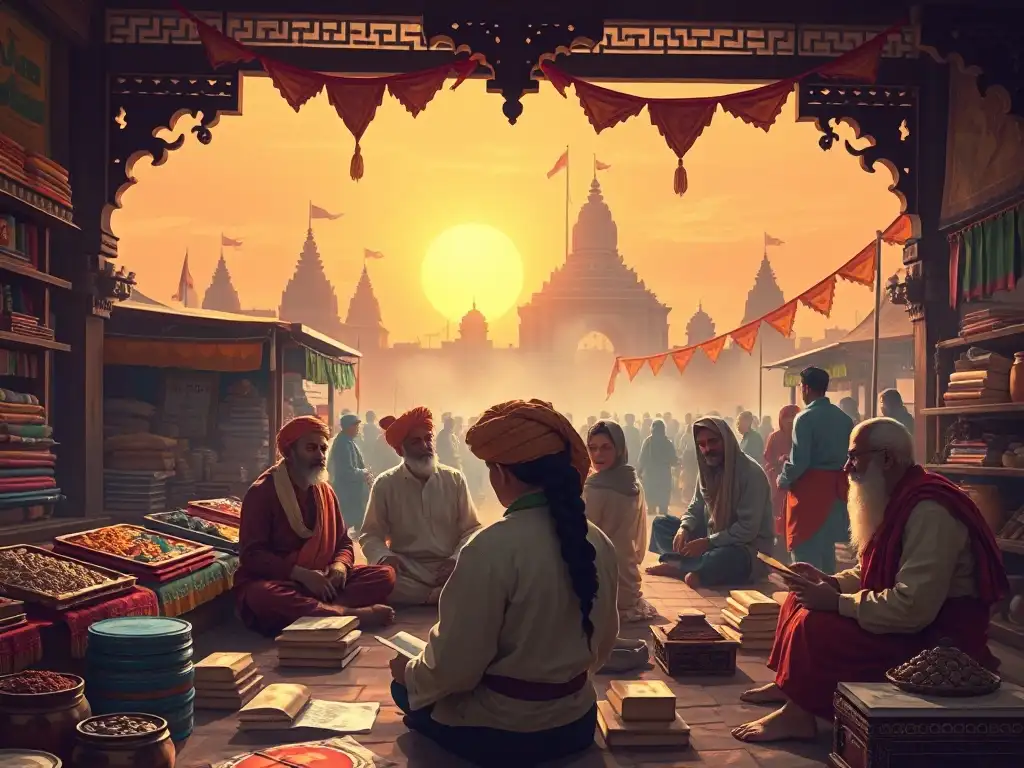
The intersection of trade and culture in ancient India profoundly influenced the development of language and literature. As trade flourished, diverse linguistic exchanges occurred, leading to the emergence of new literary forms and the enrichment of existing ones. The vibrant tapestry of interactions among various civilizations not only fostered economic prosperity but also facilitated the sharing of ideas, stories, and cultural values.
The Spread of Languages through Trade
Trade routes acted as conduits for linguistic exchange, allowing merchants, travelers, and diplomats to share their languages. The bustling markets of cities like Taxila and Pataliputra became melting pots of languages, where Indo-Aryan dialects mingled with Dravidian tongues and foreign languages like Persian and Greek. This linguistic interaction was particularly evident during the Maurya and Gupta Empires, where trade with distant lands such as the Mediterranean and Southeast Asia introduced new vocabulary and expressions.
Inscriptions and trade documents from this period reveal a rich linguistic diversity, with terms borrowed from various languages reflecting the multicultural nature of ancient Indian society. The emergence of Sanskrit as a literary language was significantly influenced by these exchanges, as it absorbed vocabulary and stylistic elements from regional languages and dialects.
Literary Exchange and Its Cultural Significance
Trade not only facilitated the exchange of goods but also the sharing of literary works. The ancient Indian trade networks allowed for the dissemination of texts, poetry, and philosophical treatises across regions. The Sanskrit epics, such as the Mahabharata and Ramayana, likely traveled along trade routes, influencing local cultures and inspiring adaptations in various languages.
Moreover, interactions with neighboring civilizations, such as the Persians and Greeks, led to the incorporation of new literary themes and motifs into Indian literature. This cross-pollination enriched the literary traditions of ancient India, giving rise to new genres and styles. The synthesis of diverse literary influences illustrates how trade served as a catalyst for cultural dynamism, ultimately shaping the identity of Indian literature.
Trade and Religion: A Cultural Catalyst
Trade routes were not only vital for the exchange of goods but also for the spread of religious beliefs and practices. The movement of people along these routes facilitated the introduction of new religions to various regions of India, leading to a rich tapestry of spiritual traditions.
The Spread of Religions via Trade Routes
Buddhism and Jainism, for instance, gained significant traction along trade routes, with merchants often serving as patrons and propagators of these faiths. The establishment of stupas and monasteries in key trading cities helped disseminate religious teachings, attracting pilgrims and traders alike. Similarly, Hinduism, with its vast pantheon of deities, adapted to incorporate various regional beliefs and practices, influenced by the diverse cultures encountered through trade.
Additionally, the Silk Road played a crucial role in the exchange of religious ideas, with the transmission of Buddhist texts and artifacts to Central Asia and beyond. This resulted in the establishment of strong cultural connections, as traders carried their beliefs and practices to new territories, further intertwining trade and religion.
Festivals and Cultural Celebrations Influenced by Trade
The interaction of diverse cultures through trade also led to the emergence of unique festivals and cultural celebrations in ancient India. Merchants and traders often brought their customs, rituals, and festivities to the regions they visited, which sometimes influenced local traditions. For instance, the celebration of Diwali, although rooted in Hindu mythology, absorbed elements from various regional practices and became a pan-Indian festival celebrated with vibrant regional variations.
Moreover, trade-related festivities, such as harvest festivals, were influenced by the agricultural cycles and trade practices of different regions. These celebrations fostered communal bonds and reflected the cultural exchange that was integral to the fabric of ancient Indian society. The blending of traditions and the adoption of new cultural practices underscore the impact of trade as a driving force behind the evolution of festivals and cultural expressions in ancient India.
Conclusion: The Lasting Legacy of Trade on Ancient Indian Culture
The trade routes of ancient India not only facilitated the exchange of goods but also served as conduits for cultural interactions that profoundly shaped the civilization's development. These interactions enriched Indian society, leading to the infusion of diverse ideas, artistic expressions, and religious practices.
The impact of trade on ancient Indian culture can be observed through the adoption of foreign influences, the diffusion of Indian art and architecture, and the fostering of cosmopolitan cities that thrived on cross-cultural exchanges. Ultimately, the legacy of this dynamic interplay between trade and culture remains evident in modern India, where the echoes of ancient interactions continue to inform contemporary practices and beliefs.
Summary of Key Impacts of Trade on Culture
- Cultural Exchange: Trade networks connected India with various regions, such as the Middle East, Southeast Asia, and Africa, allowing for the exchange of not only goods but also ideas, religions, and philosophies. This cultural melting pot enriched Indian society and contributed to its diversity.
- Artistic Influences: The influx of foreign artisans and traders led to the blending of artistic styles and techniques. For example, the Greco-Buddhist art of Gandhara illustrates how Hellenistic influences merged with Buddhist themes, creating unique artistic expressions.
- Religious Syncretism: Trade facilitated the spread of various religious beliefs, including Buddhism and Jainism, which traveled beyond Indian borders. Conversely, the arrival of new religious practices, such as Zoroastrianism and later Islam, influenced Indian spiritual life.
- Urban Development: Trade hubs like Taxila and Pataliputra became centers of learning and cultural exchange, attracting scholars, artists, and traders. These cities played a crucial role in the dissemination of knowledge and culture throughout the subcontinent.
- Economic Prosperity: The wealth generated from trade allowed for the patronage of arts and education, leading to advancements in literature, science, and philosophy. The flourishing of trade thus directly contributed to the intellectual and cultural richness of ancient India.
Reflection on Modern Implications of Ancient Trade Practices
The ancient trade practices of India have left a significant imprint on modern society, shaping not only India's economy but also its cultural identity. Today, the principles of multiculturalism and coexistence that emerged from these historical trade interactions are critical in a globalized world. The lessons learned from ancient trade networks emphasize the value of collaboration and mutual respect among diverse cultures.
Furthermore, the historical significance of trade in promoting economic growth and cultural exchanges can inform contemporary trade policies, as nations increasingly recognize the importance of cultural diplomacy in fostering international relationships. By reflecting on the past, modern societies can better navigate the complexities of globalization while celebrating the rich tapestry of human culture.
References for Further Reading on Trade and Culture in Ancient India
Recommended Books and Articles
-
"The Ancient Indian Economy: The Role of Trade" by R.S. Sharma
This book explores the economic structures of ancient India and the pivotal role of trade in shaping society.
-
"Trade and Civilization in the Indian Ocean World" by K.N. Chaudhuri
An analysis of how trade influenced cultural exchanges in the Indian Ocean region, with a focus on India.
-
"India: A History" by John Keay
This comprehensive history covers various aspects of India's past, including trade and its cultural implications.
-
"Cultural Interactions in the Indian Ocean World" edited by Ashwini Tambe and Sanjay Subrahmanyam
A collection of essays that delve into the cultural exchanges facilitated by trade in the Indian Ocean.
Online Resources for Ancient Indian Trade and Culture
- The British Museum: Offers an extensive collection of artifacts and resources related to ancient Indian trade, including online exhibitions.
- Ancient Indian History and Culture: A dedicated platform with articles, timelines, and resources that explore the trade dynamics and cultural impacts of ancient India.
- Digital South Asia Library: A comprehensive digital resource that includes maps, texts, and images related to ancient Indian trade routes and cultural exchanges.
- The Indian Council of Historical Research (ICHR): Provides access to research papers and articles on various aspects of Indian history, including trade and cultural interactions.
By exploring these resources, readers can gain deeper insights into the significant role of trade in shaping the cultural landscape of ancient India.
- Introduction to Trade and Culture in Ancient India
- Historical Context of Trade in Ancient India
- The Role of Trade in Shaping Cultural Dynamics
- Case Studies: Specific Examples of Trade and Cultural Exchange
- The Impact of Trade on Language and Literature
- Trade and Religion: A Cultural Catalyst
- Conclusion: The Lasting Legacy of Trade on Ancient Indian Culture
- References for Further Reading on Trade and Culture in Ancient India
- What role did trade play in ancient Indian civilizations?
- How did cultural dynamics influence trade in ancient India?
- What were some key trade routes in ancient India?
- How did trade impact the spread of religions in ancient India?
- What contributions did ancient Indian civilizations make to global trade?
Frequently Asked Questions
What role did trade play in ancient Indian civilizations?
Trade was a catalyst for cultural exchange, facilitating the movement of goods, ideas, and technologies across regions, enhancing cultural diversity.
How did cultural dynamics influence trade in ancient India?
The cultural values of ancient India shaped trade practices, including the establishment of trade routes and the integration of local customs into commercial activities.
What were some key trade routes in ancient India?
Ancient India was connected by significant trade routes such as the Silk Road and maritime paths that linked it to Southeast Asia, the Middle East, and beyond.
How did trade impact the spread of religions in ancient India?
Trade routes served as conduits for the dissemination of religious beliefs, including Buddhism and Hinduism, promoting cross-cultural interactions among diverse communities.
What contributions did ancient Indian civilizations make to global trade?
Ancient India contributed spices, textiles, and precious stones to global markets, influencing trade practices and establishing India as a crucial player in the world economy.
Final Reflection: The Interwoven Tapestry of Trade and Culture in Ancient India
The intricate relationship between trade and culture in ancient India remains profoundly relevant today, as it highlights how economic exchanges shape societal values and cultural identities. In an era where globalization is at the forefront of our interactions, understanding the historical context of trade's influence on cultural dynamics allows us to appreciate the rich tapestry of diversity that characterizes modern societies. The lessons from ancient Indian civilizations remind us that trade is not merely a transactional activity but a powerful catalyst for cultural exchange and transformation.
Culture is a living entity, continuously evolving through interactions and exchanges. The impact of trade on the cultural landscape of ancient India is a testament to this dynamic process. As merchants traversed vast distances, they brought with them not only goods but also ideas, beliefs, and practices that enriched local cultures. This exchange fostered a sense of interconnectedness that transcended geographical boundaries. Trade is the bridge that connects different worlds, allowing for the flow of ideas and cultures.
The enduring legacy of this interconnectedness is evident in the diverse cultural expressions we see today, reminding us of the importance of embracing and celebrating our shared histories.
As we reflect on the lessons from ancient Indian trade and culture, let us consider how we can apply these insights in our own lives. Take a moment to explore the cultural exchanges happening around you—whether through food, art, or ideas—and recognize the beauty in diversity. Embrace the opportunity to learn from others and contribute to a more inclusive society. By fostering connections and understanding across cultures, we can honor the rich heritage of our past while paving the way for a more harmonious future.
Thank you for diving into the fascinating world of ancient Indian civilizations and their rich tapestry woven through trade and cultural exchange. Your interest in this topic not only expands your knowledge but also connects you to the roots of diverse cultural dynamics.
Now that you’ve explored the intricate relationships between trade and culture, here are some engaging steps you can take to deepen your understanding and contribute to the discussion:
- Dive Deeper: Visit a local museum or library to discover artifacts and texts that illuminate the ancient Indian trade routes and their cultural impacts.
- Share Your Insights: Engage in discussions with friends or online communities—sharing your knowledge can spark fascinating conversations!
- Join a Workshop: Consider participating in a workshop or lecture focused on ancient Indian history to connect with fellow enthusiasts and experts.
What aspect of ancient trade and culture resonates most with you, and how do you think it shapes our understanding of modern societies?