
The Influence of Indian Cosmology on Southeast Asian Worldviews


Welcome to Ancient India History, where we embark on a fascinating journey through the rich tapestry of ancient Indian civilizations. Delve into the profound impact of Indian cosmology on Southeast Asian worldviews, a captivating topic that reveals how cultural exchanges shaped the beliefs and practices across regions. As we uncover the intricate connections between these ancient cultures, you'll discover how the wisdom of the past continues to resonate in today's world. Prepare to be intrigued and inspired—your exploration of history starts here!
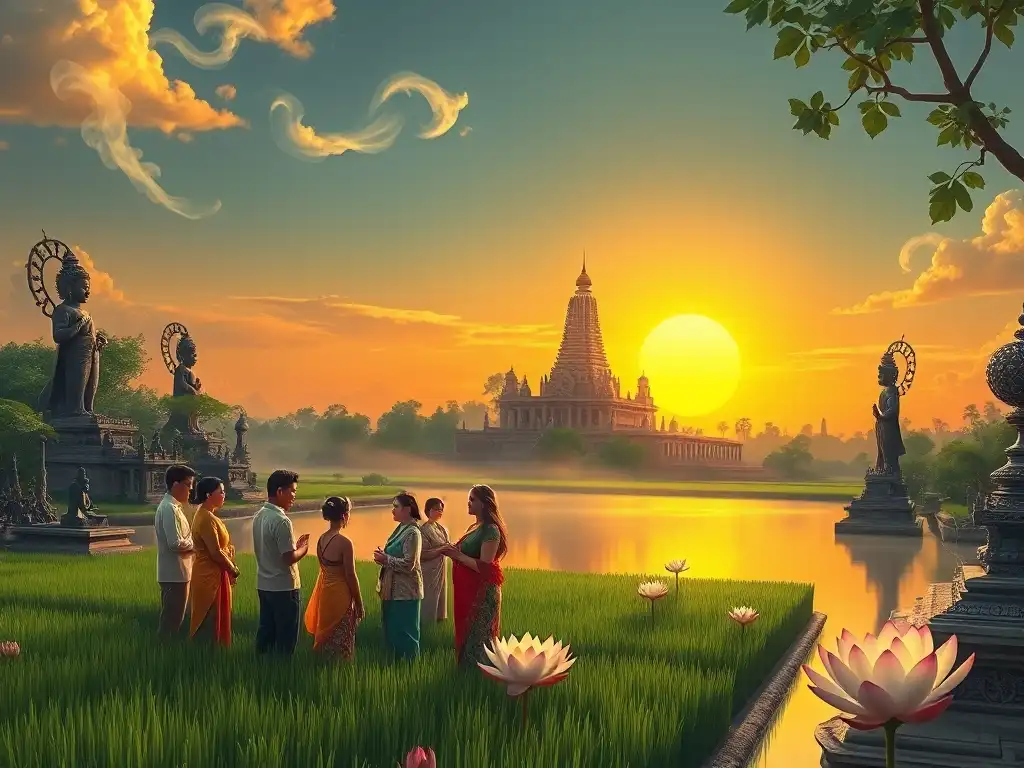
Introduction to Indian Cosmology and Southeast Asian Influence
The interplay between Indian cosmology and Southeast Asian worldviews is a fascinating study of cultural exchange that has shaped the spiritual and philosophical landscapes of the region. Indian cosmology, characterized by its rich tapestry of beliefs about the universe, time, and existence, has significantly influenced the ways in which Southeast Asian cultures perceive their place in the cosmos.
This article delves into the intricate connections between these two regions, exploring how Indian cosmological concepts have permeated Southeast Asian thought, religion, and social structures. By examining the historical context and the significance of these exchanges, we can better appreciate the profound impact of Indian cosmology on Southeast Asia's diverse cultural fabric.
Overview of Indian Cosmology
Indian cosmology is deeply rooted in the ancient texts and traditions of the Indian subcontinent. It encompasses a wide range of beliefs, philosophies, and practices that articulate the nature of the universe and humanity's role within it. Key elements include:
- Cyclic Time: Unlike linear conceptions of time, Indian cosmology often views time as cyclical, with the cosmos undergoing endless cycles of creation and destruction (cosmic cycles known as kalpas).
- Interconnectedness: The belief in the interconnectedness of all beings and the universe is central to many Indian philosophies, emphasizing that every action has a consequence.
- Divine Presence: Various deities and spiritual beings play crucial roles in the cosmological framework, influencing everything from natural phenomena to human destiny.
These concepts not only shaped Indian thought but also provided a framework for understanding the universe that was adopted and adapted by various Southeast Asian cultures.
Significance of Southeast Asian Worldviews
Southeast Asia is a region characterized by its rich tapestry of cultures and traditions. The worldviews of these cultures often reflect a synthesis of indigenous beliefs and the influence of external philosophies, particularly those derived from Indian cosmology. Key aspects include:
- Cultural Syncretism: Southeast Asian societies have a history of integrating diverse influences, leading to unique blends of spiritual practices that often incorporate Indian cosmological elements.
- Religious Adaptation: Hinduism and Buddhism, both of which hold significant ties to Indian cosmology, have been adapted in various ways across Southeast Asia, influencing local practices, rituals, and beliefs.
- Art and Architecture: The impact of Indian cosmology is also evident in the artistic expressions and architectural styles, such as those seen in temples and religious structures throughout the region.
Understanding these worldviews is crucial for analyzing the broader cultural exchanges that have shaped Southeast Asian societies.
Historical Context of Indian Cosmology
The historical context of Indian cosmology provides insight into how these ideas were transmitted to Southeast Asia. This section explores the ancient beliefs and philosophies that laid the groundwork for this influence.
Ancient Indian Beliefs and Philosophies
The foundations of Indian cosmology can be traced back to ancient texts such as the Vedas, Upanishads, and Puranas. These scriptures articulate complex cosmological ideas, including:
- The Structure of the Universe: Concepts of Brahman (the ultimate reality) and Atman (the individual soul) highlight the relationship between the cosmos and the individual.
- Cosmological Cycles: Detailed accounts of the cosmic cycles, including the creation and dissolution of the universe, reflect a deep understanding of time and existence.
- Philosophical Schools: Various schools of thought, such as Vedanta and Samkhya, contributed to the discourse on cosmology, influencing how individuals and societies understood their existence in relation to the universe.
These ancient beliefs provided a fertile ground for the dissemination of cosmological ideas across borders.
The Spread of Indian Cosmology to Southeast Asia
The spread of Indian cosmology to Southeast Asia occurred through multiple channels, including trade, migration, and cultural exchanges. Notable pathways include:
- Trade Routes: The establishment of maritime trade routes facilitated not only the exchange of goods but also ideas, with Indian merchants and travelers introducing cosmological concepts to local populations.
- Cultural Interactions: The arrival of Indian settlers and the establishment of Hindu and Buddhist kingdoms in Southeast Asia led to the incorporation of Indian cosmological ideas into local traditions.
- Artistic and Literary Exchanges: The translation of Indian texts and the adaptation of Indian art forms further solidified the presence of Indian cosmology in Southeast Asia.
This complex interplay of factors ultimately led to a rich intermingling of beliefs, resulting in a unique Southeast Asian synthesis of Indian cosmological thought.
Key Elements of Indian Cosmology
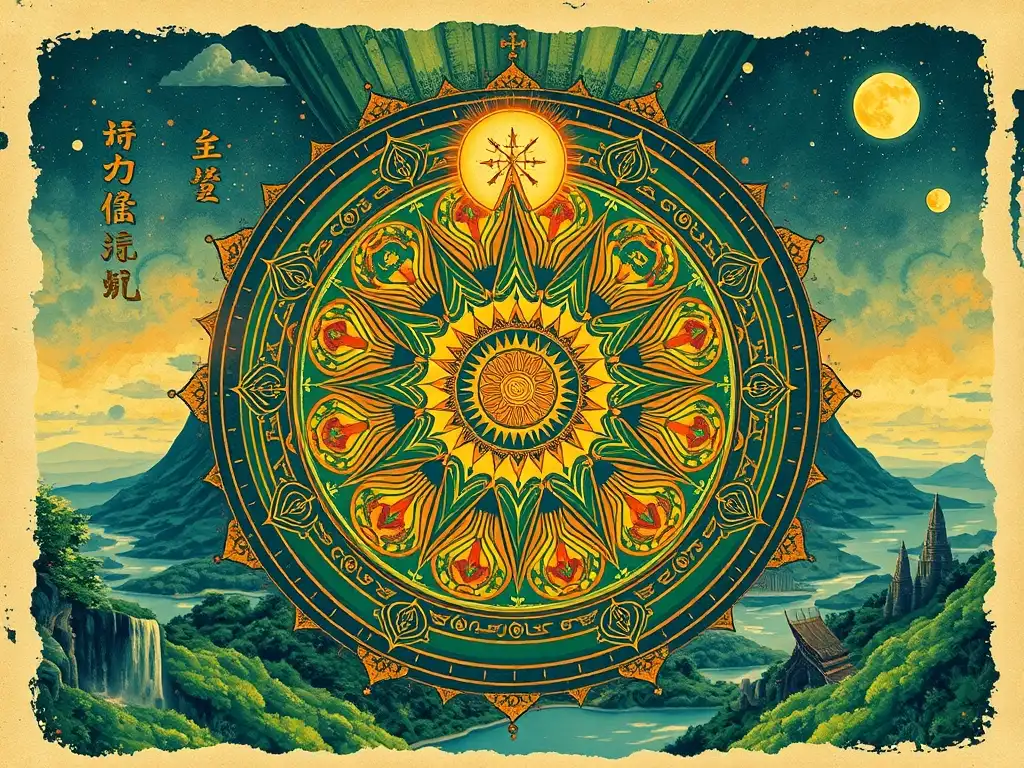
Indian cosmology is a complex and intricate framework that has significantly influenced various cultures throughout history, particularly in Southeast Asia. At its core, Indian cosmology encompasses a variety of concepts related to the universe's structure, the nature of time, and the interplay of divine forces. This framework is rooted in ancient texts such as the Vedas, Upanishads, and Puranas, which outline a vision of the universe that is both cyclical and intertwined with spirituality.
Key elements include the concepts of Brahman (the ultimate reality), Karma (the law of cause and effect), and the cyclical nature of time represented through Yugas (ages). These ideas have not only shaped philosophical discourse in India but have also permeated the cultural and spiritual landscapes of Southeast Asia.
Concepts of Space and Time in Indian Thought
In Indian thought, space and time are not perceived as linear constructs but as cyclical and interconnected dimensions. The concept of Kalachakra, or the "Wheel of Time," illustrates this cyclical nature, wherein time is divided into vast epochs that repeat in a rhythmic cycle. Each Yuga represents a phase in this cycle, influencing both cosmic events and human existence.
This perspective emphasizes the transient nature of life and the universe, inviting individuals to reflect on their actions and their impact on the cosmic order. The interplay between space and time in Indian cosmology has encouraged a worldview that sees the universe as a living entity, where every action reverberates throughout time and space, influencing various cultural practices in Southeast Asia.
The Role of Deities and Divine Forces
Deities play a central role in Indian cosmology, representing various aspects of the universe and the divine order. Major deities such as Vishnu, Shiva, and Devi embody fundamental cosmic principles and are often depicted in narratives that explain the creation, preservation, and destruction of the universe. In Southeast Asia, these deities were adapted and integrated into local traditions, leading to a rich tapestry of religious practices.
For instance, the Hindu god Vishnu is revered in many Southeast Asian cultures as a protector and preserver, often associated with the concept of dharma (cosmic law and order). This adaptation reflects a synthesis of Indian cosmological ideas with local beliefs, creating a unique spiritual landscape across the region.
Cosmic Order and Harmony in Indian Cosmology
The concept of Rta, or cosmic order, is foundational to Indian cosmology, signifying the underlying principle that governs the universe's harmony. This order is perceived not only in the celestial realm but also in human society and natural phenomena. The alignment of individual actions with this cosmic order is seen as essential for maintaining balance in the universe.
In Southeast Asia, this idea of harmony resonates with traditional practices that emphasize respect for nature and community, illustrating how Indian cosmological principles have been woven into the fabric of daily life. Festivals, agricultural cycles, and social rituals often reflect this pursuit of harmony, showcasing the enduring influence of Indian cosmology on Southeast Asian worldviews.
Manifestations of Indian Cosmology in Southeast Asia
The influence of Indian cosmology on Southeast Asian cultures is evident in various forms, ranging from architecture to art and cultural practices. These manifestations serve as a testament to the profound impact that Indian thought has had on the region, shaping its spiritual and cultural identity.
Architectural Influences: Temples and Sacred Spaces
One of the most visible manifestations of Indian cosmology in Southeast Asia is found in the architectural design of temples and sacred spaces. Structures such as Angkor Wat in Cambodia and the Prambanan Temple in Indonesia exhibit distinct features rooted in Indian cosmological principles. These temples are often aligned with cardinal directions and reflect celestial patterns, embodying the idea of the universe in physical form.
The layout and symbolism of these spaces are designed to create a microcosm that mirrors the cosmic order, inviting worshippers to connect with the divine. The architectural grandeur of these sites not only serves as a focal point for religious practice but also as a cultural bridge that highlights the shared heritage of Indian and Southeast Asian civilizations.
Art and Symbolism: Representations of Cosmological Ideas
Art in Southeast Asia has been heavily influenced by Indian cosmological concepts, with numerous artworks depicting myths, deities, and cosmological symbols. Intricate carvings, bas-reliefs, and paintings often illustrate narratives from Hindu epics like the Ramayana and Mahabharata, conveying deeper philosophical meanings and cosmological insights. Symbols such as the lotus, representing purity and spiritual awakening, are prevalent in various art forms, linking the material world to the divine. This artistic expression not only serves aesthetic purposes but also functions as a medium for conveying complex ideas about the universe, reinforcing the connection between Indian cosmology and Southeast Asian cultural identity.
Cultural Practices: Festivals and Rituals
Cultural practices in Southeast Asia, including festivals and rituals, deeply reflect the influence of Indian cosmology. Many local celebrations incorporate elements of Hindu and Buddhist cosmological beliefs, emphasizing themes of rebirth, renewal, and cosmic harmony. For instance, the Balinese Hindu festival of Nyepi, or the Day of Silence, embodies the cyclical nature of time and the importance of introspection and purification.
Similarly, the Khmer New Year integrates cosmological ideas about renewal and the cyclical nature of existence, with rituals designed to align participants with cosmic forces. These practices not only preserve ancient traditions but also exemplify how Indian cosmological influences have been adapted and integrated into the fabric of Southeast Asian cultures.
Comparative Analysis of Southeast Asian Worldviews
The worldviews of Southeast Asian cultures have been significantly shaped by Indian cosmological concepts, which were introduced through trade, migration, and cultural exchanges. This interaction led to a blending of indigenous beliefs with Indian philosophical ideas, resulting in rich and diverse cosmological frameworks across the region. To understand this influence, it is essential to analyze both the similarities and unique adaptations of these worldviews in Southeast Asia, which reflect a harmonious integration of local traditions with Indian thought.
Similarities with Indian Cosmological Concepts
Southeast Asian worldviews often mirror key aspects of Indian cosmology, particularly in their understanding of the universe, time, and the nature of existence. For instance, the cyclical view of time, which is a prominent feature in Indian philosophy, is also evident in many Southeast Asian cultures. This perspective sees time as a repeating cycle of creation, preservation, and destruction, akin to Indian concepts of kalachakra (the wheel of time).
Moreover, the idea of a multiverse, where various realms coexist, is a shared belief. This is reflected in the Southeast Asian understanding of various dimensions of existence, including the spiritual and material worlds. The influence of concepts like karma and dharma from Indian cosmology can also be seen in the moral frameworks of these cultures, where actions in this life influence one's future existence.
Unique Adaptations and Interpretations in Southeast Asia
While Indian cosmological concepts provided the foundational ideas, Southeast Asian cultures have uniquely adapted and interpreted these notions to fit their local contexts. For example, the Hindu-Buddhist cosmology often seen in Southeast Asia incorporates local deities, spirits, and ancestral worship, blending them with Indian gods and philosophical ideas.
In addition, the integration of animistic beliefs into the broader cosmological framework is prevalent. Spirit worship and the significance of natural elements are often interwoven with Indian cosmology, creating a syncretic belief system that resonates with local populations. This adaptability illustrates how Southeast Asian cultures have not only accepted Indian ideas but have also transformed them to reflect their unique identities.
Case Studies of Specific Cultures (e.g., Khmer, Javanese)
Examining specific cultures, such as the Khmer and Javanese, reveals the profound impact of Indian cosmology on their worldviews. The Khmer Empire, influenced by Indian culture, adopted Hinduism and Buddhism, which shaped their architectural and artistic expressions, as seen in the temples of Angkor Wat. The layout of these temples is emblematic of cosmological beliefs, reflecting the Indian idea of Mount Meru as the center of the universe.
Similarly, the Javanese culture exhibits a blend of Indian cosmological ideas with local beliefs, particularly in the way they perceive the relationship between the spiritual and physical worlds. The concept of Bhinneka Tunggal Ika (unity in diversity) reflects a cosmological understanding that embraces multiple beliefs coexisting harmoniously. This unique adaptation demonstrates how Indian cosmology has been contextualized within Javanese culture, enriching their worldview.
The Impact of Indian Cosmology on Southeast Asian Religions

The influence of Indian cosmology extends deeply into the religious practices of Southeast Asia, particularly in the realms of Hinduism and Buddhism. The transmission of these religions brought with it a plethora of cosmological ideas that were integrated into the religious beliefs and practices of the region.
Influence on Hinduism and Buddhism in Southeast Asia
Hinduism and Buddhism, as they spread through Southeast Asia, carried with them intricate cosmological frameworks. The concepts of rebirth, the cycle of existence, and the interdependence of all beings have become fundamental aspects of both religions in the region. Temples, rituals, and mythologies often incorporate these cosmological themes, illustrating their significance in religious practice.
For instance, in Bali, the Hindu cosmological framework emphasizes the balance between the spiritual and material worlds, which is evident in their numerous rituals and offerings designed to maintain harmony in the universe. Similarly, in Theravada Buddhist practices, the understanding of karma and the cycle of rebirth reflects Indian cosmological ideas, shaping the moral and ethical teachings within the religion.
Cross-Cultural Exchange of Religious Practices
The cross-cultural exchange of religious practices between India and Southeast Asia has created a dynamic landscape of beliefs and rituals. Festivals, rites of passage, and community gatherings often showcase a blend of Indian and indigenous elements. This synthesis has fostered a rich tapestry of religious expression that is unique to each Southeast Asian culture.
For example, the celebration of Nyepi in Bali integrates Hindu cosmology with local customs, marking a day of silence that reflects on the balance of the cosmos. Similarly, the incorporation of Indian epics, such as the Ramayana and Mahabharata, into local storytelling traditions demonstrates how these texts have been adapted to convey moral lessons and cultural values that resonate with Southeast Asian audiences.
The influence of Indian cosmology on Southeast Asian worldviews and religions has led to a rich interplay of ideas, beliefs, and practices, creating a unique cultural landscape that honors both its Indian heritage and indigenous traditions.
Modern Perspectives on Indian Cosmology’s Influence
In the contemporary era, the influence of Indian cosmology on Southeast Asian worldviews continues to be a significant area of study. Scholars recognize that ancient Indian concepts, such as the cyclical nature of time and the interconnectedness of all beings, have had profound impacts on the spiritual and philosophical frameworks of Southeast Asian cultures. For instance, the Indian notion of dharma, which encompasses duty, morality, and law, has been integrated into the social and political systems of various Southeast Asian nations, shaping governance and societal norms.
Furthermore, the representation of cosmological themes in art, literature, and architecture across Southeast Asia reflects the deep-seated influence of Indian cosmology. Temples, sculptures, and rituals often depict cosmic narratives and deities, illustrating the synthesis of Indian beliefs with local traditions. This blending of cosmological ideas has contributed to a unique Southeast Asian identity while preserving elements of Indian heritage.
Continued Relevance in Contemporary Southeast Asian Cultures
Today, the remnants of Indian cosmological influence are evident in various cultural practices throughout Southeast Asia. Festivals, rituals, and traditional performances often showcase themes rooted in Indian mythology and cosmology. For example, the Hindu festival of Diwali is celebrated in Indonesia and Malaysia, highlighting the enduring legacy of Indian cultural practices.
Moreover, contemporary Southeast Asian literature frequently revisits Indian epics like the Ramayana and Mahabharata, which serve not only as sources of inspiration but also as frameworks for exploring local themes and moral dilemmas. The cosmological concepts inherent in these texts resonate with current societal challenges, illustrating their continued relevance.
In addition, the integration of Indian cosmology into the educational systems of several Southeast Asian countries has fostered a deeper understanding of this cultural exchange, encouraging students to explore their historical connections to Indian civilization. This ongoing engagement with Indian cosmology reflects its adaptability and significance in shaping modern Southeast Asian identities.
Academic Perspectives on Cultural Exchange
Academics have increasingly focused on the implications of cultural exchange between ancient India and Southeast Asia through the lens of Indian cosmology. Researchers emphasize the multidimensional nature of this interaction, which encompassed not only religious and philosophical ideas but also art, literature, and governance structures.
The scholarship often highlights the role of trade routes in facilitating this exchange. Maritime trade between India and Southeast Asia led to the movement of ideas alongside goods, creating a dynamic environment where cultural practices could flourish. The exchange was not one-sided; Southeast Asian societies also adapted and transformed Indian cosmological concepts to fit their local contexts, resulting in a rich tapestry of beliefs and practices.
Furthermore, interdisciplinary studies combining archaeology, anthropology, and history have unearthed evidence of Indian cosmological influence in Southeast Asian artifacts and sites. This collaborative approach has provided a more nuanced understanding of how these ancient ideas have been transmitted, transformed, and retained over centuries.
Conclusion: The Lasting Legacy of Indian Cosmology in Southeast Asia
The enduring impact of Indian cosmology on Southeast Asian worldviews underscores the significance of early cultural exchanges. This legacy, rooted in shared beliefs and practices, continues to shape the spiritual and philosophical landscapes of the region. Understanding this influence not only enriches our knowledge of Southeast Asian history but also highlights the interconnectedness of global cultures.
Summary of Key Influences and Transformations
The key influences of Indian cosmology on Southeast Asia include the adoption of cyclical time concepts, the incorporation of dharma in socio-political structures, and the representation of Indian deities in local art and architecture. Additionally, the transformation of Indian epics into Southeast Asian narratives showcases the adaptability of these cosmological themes to local contexts. This dynamic interplay has resulted in a unique blend of Indian and Southeast Asian cultural identities.
Future Research Directions on Indian Cosmology and Southeast Asian Worldviews
Future research on Indian cosmology and its influence on Southeast Asian worldviews may explore several avenues. Firstly, a deeper examination of the specific mechanisms through which these cosmological ideas were transmitted—such as trade, migration, and textual exchange—could provide insights into the complexities of cultural interactions.
Moreover, longitudinal studies examining how these influences have evolved in response to modernity and globalization could shed light on the contemporary relevance of ancient cosmological concepts. Finally, interdisciplinary approaches that integrate perspectives from cultural studies, religious studies, and environmental studies may yield a richer understanding of the lasting legacy of Indian cosmology in shaping Southeast Asian identities.
- Introduction to Indian Cosmology and Southeast Asian Influence
- Overview of Indian Cosmology
- Historical Context of Indian Cosmology
- Key Elements of Indian Cosmology
- Manifestations of Indian Cosmology in Southeast Asia
- Comparative Analysis of Southeast Asian Worldviews
- The Impact of Indian Cosmology on Southeast Asian Religions
- Modern Perspectives on Indian Cosmology’s Influence
- Conclusion: The Lasting Legacy of Indian Cosmology in Southeast Asia
- What is Indian cosmology?
- How did Indian cosmology influence Southeast Asian cultures?
- What are some examples of Southeast Asian civilizations that were impacted by Indian cosmology?
- How did trade contribute to the spread of Indian cosmology in Southeast Asia?
- What role did Buddhism play in transmitting Indian cosmology to Southeast Asia?
Frequently Asked Questions
What is Indian cosmology?
Indian cosmology refers to the ancient understanding of the universe in Indian philosophy, encompassing concepts of creation, time, and the structure of the cosmos, deeply rooted in texts like the Vedas and Upanishads.
How did Indian cosmology influence Southeast Asian cultures?
The influence of Indian cosmology on Southeast Asian cultures is evident in their art, architecture, and religious practices, where concepts of Brahman, Maya, and karma were integrated into local beliefs and traditions.
What are some examples of Southeast Asian civilizations that were impacted by Indian cosmology?
Civilizations such as the Khmer Empire, Srivijaya, and Majapahit adopted elements of Indian cosmology, reflected in their temple architecture, such as Angkor Wat, and their mythologies, which often feature Hindu deities.
How did trade contribute to the spread of Indian cosmology in Southeast Asia?
Trade routes were vital for cultural exchange, allowing Indian cosmology to permeate Southeast Asian societies through merchants who brought not just goods but also religious texts, art, and philosophical ideas.
What role did Buddhism play in transmitting Indian cosmology to Southeast Asia?
Buddhism served as a significant channel for transmitting Indian cosmology to Southeast Asia, with foundational texts and concepts like samsara and nirvana influencing local spiritual practices and thought systems.
Final Reflection: The Enduring Legacy of Indian Cosmology in Southeast Asia
The profound influence of Indian cosmology on Southeast Asian worldviews is not merely a historical footnote; it is a vibrant thread woven into the fabric of contemporary culture. As we navigate a world increasingly characterized by globalization and cultural exchange, the echoes of ancient beliefs and practices continue to shape our understanding of existence, spirituality, and the cosmos. The intricate interplay between these two regions serves as a testament to the power of ideas to transcend borders and time, reminding us that our worldviews are often a mosaic of diverse influences.
The impact of Indian cosmology on Southeast Asia is a living legacy, one that informs not only religious practices but also art, architecture, and social structures. The rich tapestry of myths and philosophies that originated in India has found fertile ground in the cultures of Southeast Asia, fostering a unique synthesis that continues to inspire. As the scholar Romila Thapar once noted, History is not just a record of the past; it is a living dialogue between cultures.
This dialogue is evident in the myriad ways Southeast Asian societies have embraced and adapted Indian cosmological concepts, creating a dynamic cultural landscape that reflects both continuity and change.
As we reflect on the lessons of this cross-cultural exchange, I invite you to consider how the principles of Indian cosmology can enrich your own worldview. What aspects of these ancient beliefs resonate with you, and how might they inform your understanding of your place in the universe?
Embrace the opportunity to explore the interconnectedness of cultures and ideas, and let this exploration inspire you to cultivate a deeper appreciation for the diverse influences that shape our lives today. In doing so, we honor the legacy of Indian cosmology while also paving the way for a more inclusive and enriched future.
Unveil the Mysteries of Indo-Southeast Connections!
Thank you for diving into the fascinating world of Indian cosmology and its profound impact on Southeast Asian perspectives. We hope you gained a deeper understanding of how these ancient philosophies continue to shape cultures today. Now, it’s time to take inspired action!
- Explore further by reading texts from both Indian and Southeast Asian traditions to enhance your knowledge.
- Share your insights with friends or on social media to spark meaningful conversations about the influence of these worldviews.
- Join our community and connect with fellow enthusiasts to discuss and share knowledge about ancient cultures and their enduring legacies.
Which aspect of Indian cosmology captivates you the most, and in what ways do you believe it has shaped modern Southeast Asian cultures?