
The Relationship Between Ancient Indian Trade and Technological Advancements


Welcome to Ancient India History, where we embark on a fascinating journey through the rich tapestry of civilizations that shaped the Indian subcontinent. In our featured article, we delve into the intriguing relationship between ancient Indian trade technology advancements and the flourishing economies of the past. Discover how innovations in trade not only transformed commerce but also laid the foundation for cultural exchanges that resonate even today.
Join us as we explore the remarkable contributions of ancient Indian societies and uncover the secrets that made them pioneers in the art of trade. Ready to dive deeper? Your journey begins now!
Introduction to Ancient Indian Trade
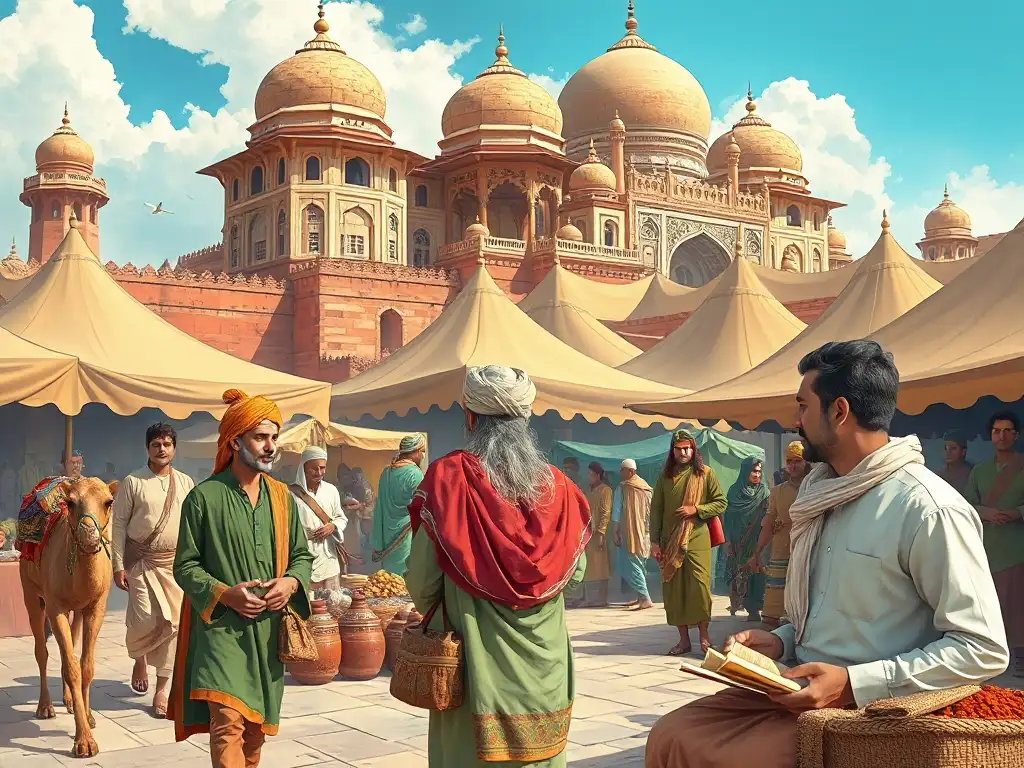
The intricate tapestry of ancient Indian trade reveals a profound connection between commerce and technological advancements that shaped the course of Indian civilization. From the bustling markets of the Indus Valley to the vibrant exchanges along the Silk Road and maritime routes, trade played a pivotal role in the development of societal structures, cultural exchanges, and technological innovations.
The interplay between ancient Indian trade and technology advancements not only facilitated economic prosperity but also fostered a rich exchange of ideas, goods, and knowledge across regions. This article delves into the historical significance of trade in ancient India, exploring the major trade routes that contributed to its thriving economy and the technological innovations that emerged from these interactions.
Overview of Ancient Indian Trade
Ancient Indian trade can be traced back to the Indus Valley Civilization (c. 3300–1300 BCE), where evidence of trade practices, including the use of standardized weights and measures, has been uncovered. The strategic geographical location of India, bordered by the Himalayas to the north and surrounded by the Indian Ocean to the south, positioned it as a critical hub for trade between East and West.
Trade during ancient times was not limited to goods; it also encompassed the exchange of cultural and scientific knowledge, which significantly influenced technological advancements. Whether through trade caravans traversing the arid deserts or ships sailing across the seas, ancient Indian merchants played a crucial role in connecting disparate cultures and facilitating the flow of innovations.
Importance of Trade in Ancient Indian Civilizations
Trade was fundamental to the economic framework of ancient Indian civilizations. It not only provided sustenance and wealth but also engendered social cohesion and cultural exchange. The prosperity generated by trade enabled the rise of powerful kingdoms and empires, such as the Maurya and Gupta dynasties, which further invested in infrastructure and technological advancements.
The impact of trade on society can be summarized as follows:
- Economic Growth: Trade fostered wealth accumulation, leading to urbanization and the development of sophisticated city-states.
- Cultural Exchange: Interactions with foreign traders brought diverse cultural influences, enriching Indian society with new ideas, religions, and artistic expressions.
- Technological Innovations: The demands of trade encouraged the development and adoption of various technologies, from advanced shipbuilding techniques to the improvement of agricultural practices.
Key Trade Goods in Ancient India
The array of goods traded in ancient India illustrates its economic diversity and the technological advancements that supported such trade. Key commodities included:
- Spices: India was renowned for its spices, such as black pepper, cardamom, and cinnamon, which were highly sought after in international markets.
- Textiles: Cotton and silk textiles from India were prized for their quality and craftsmanship, facilitating extensive trade across Asia and beyond.
- Metals: The trade of precious metals and alloys, including gold, silver, and bronze, was vital for economic transactions and technological advancements in metallurgy.
- Jewelry and Gems: India was famous for its exquisite jewelry and gemstones, which were important trade items along various routes.
Major Trade Routes of Ancient India
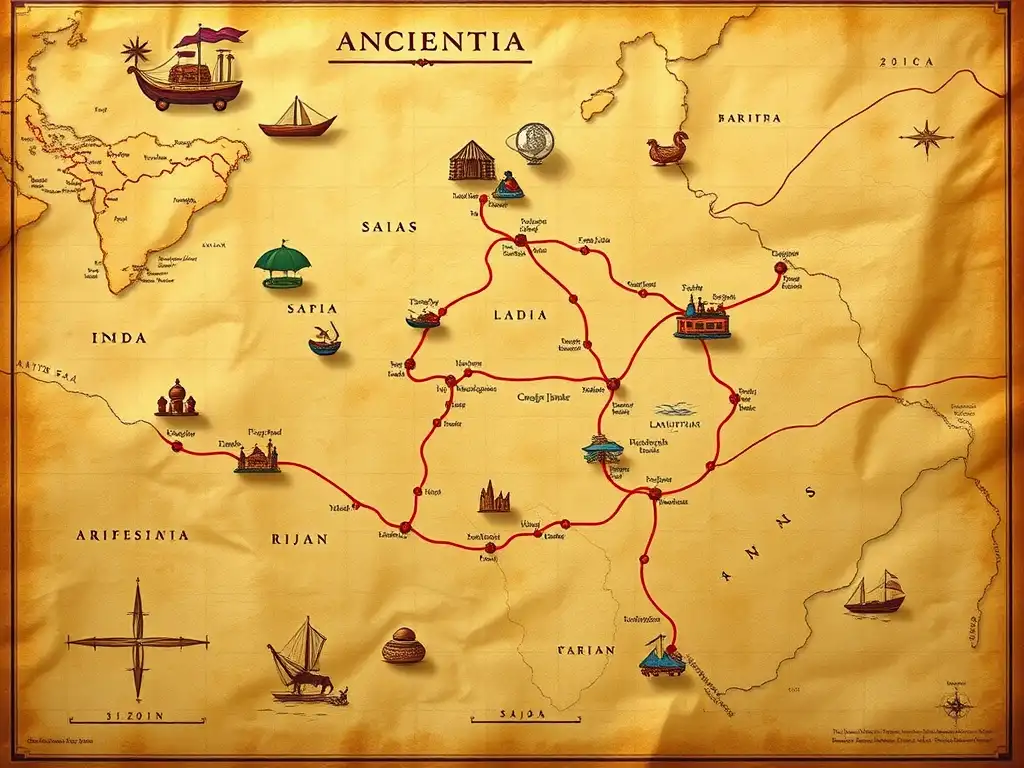
Ancient Indian trade routes were not merely paths for commerce; they were conduits of cultural and technological exchange that facilitated interactions between diverse populations. Among the most significant routes were:
The Silk Road and Its Influence on Indian Trade
The Silk Road, a network of trade routes connecting China to the Mediterranean, also extended into the Indian subcontinent. This route allowed for the exchange of silk, spices, and other luxury goods, as well as the introduction of new technologies, such as papermaking and the compass, into India. The interactions along the Silk Road helped to cultivate a rich tapestry of cultural exchange, influencing art, science, and technology.
The Spice Route: Connecting India to the World
The Spice Route was another critical channel through which India exported its renowned spices to various parts of the world, including Europe, the Middle East, and Southeast Asia. This trade not only enriched Indian merchants but also led to advancements in navigation and shipbuilding technology, as traders sought to optimize their routes and minimize risks.
Coastal Trade Routes: Maritime Connections
The coastal trade routes along the Indian Ocean facilitated maritime trade with countries such as Arabia, Africa, and Southeast Asia. Indian shipbuilders developed advanced vessels capable of withstanding long sea voyages, which greatly enhanced trade efficiency. This maritime commerce played a significant role in the diffusion of ideas and technologies across regions, contributing to the overall growth of ancient Indian civilizations.
The relationship between ancient Indian trade and technological advancements is a testament to the dynamic interactions that shaped Indian history. By exploring these connections, we can gain a deeper appreciation for the contributions of ancient Indian civilizations to global trade and technology.
Technological Advancements in Ancient India
Ancient India was a cradle of innovation, where various technological advancements significantly influenced trade and economic practices. The ingenuity of its people led to the development of sophisticated techniques and tools that facilitated commerce, agriculture, and transportation. From the urban planning of the Indus Valley Civilization to the navigational skills of traders on the seas, technological advancements played a pivotal role in enhancing trade efficiency and expanding market reach.
An important aspect of these advancements was metallurgy, with ancient Indians excelling in the production of high-quality steel and alloys. The famed Wootz steel, known for its strength and durability, was a sought-after commodity in international markets, establishing ancient India as a leader in metallurgical innovation. Furthermore, advancements in textile production, particularly with cotton and silk, not only enriched local economies but also placed Indian goods at the forefront of global trade networks.
Innovations in Transportation Technology
Transportation technology in ancient India evolved to meet the growing demands of trade. The introduction of wheeled vehicles, such as carts and chariots, revolutionized the movement of goods overland. These innovations allowed for faster travel and the ability to transport larger quantities of merchandise, enhancing trade efficiency.
Additionally, ancient Indian shipbuilding techniques contributed to maritime trade. The construction of sturdy vessels, equipped with sails for improved navigation, enabled traders to traverse the Indian Ocean and engage with distant civilizations. The use of monsoon winds was ingeniously harnessed, allowing for seasonal trading patterns that maximized the efficiency of maritime routes.
Agricultural Technologies that Supported Trade
Agricultural advancements were crucial for sustaining the trade economy of ancient India. The development of irrigation systems, including canals and water management techniques, facilitated the cultivation of surplus crops, notably rice, wheat, and spices. This surplus not only fed the local population but also provided essential goods for trade.
The introduction of ploughs, along with crop rotation and other agrarian practices, improved agricultural productivity. As a result, ancient Indian traders had access to a variety of agricultural products that were highly sought after in regional and international markets. These advancements ensured a stable food supply, which in turn supported population growth and increased demand for trade.
The Interconnection Between Trade and Technology
The relationship between trade and technology in ancient India was symbiotic. As trade flourished, it created a demand for new technologies, while technological innovations further spurred trade growth. This dynamic interplay facilitated a vibrant exchange of ideas and practices across various regions, enriching the cultural and economic landscape of ancient India.
How Trade Stimulated Technological Innovations
Trade acted as a catalyst for technological innovation in ancient India. Exposure to foreign markets and diverse cultures encouraged artisans and inventors to adopt and adapt new technologies. For instance, interactions along trade routes introduced new agricultural practices, such as crop diversification and the use of new tools, which were subsequently integrated into local farming methods.
Moreover, the exchange of ideas was not limited to agriculture; artisans specializing in metallurgy and textiles often learned from foreign techniques, leading to the refinement of their own methods. This flow of knowledge was vital in fostering an environment of continuous improvement and innovation.
Examples of Technological Exchange Along Trade Routes
Several key trade routes, including the Silk Road and maritime pathways, served as conduits for technological exchange. Indian traders were instrumental in disseminating advancements in mathematics, astronomy, and medicine to other cultures. For example, the numeral system developed in ancient India had a profound impact on mathematics in the Middle East and beyond.
Additionally, the exchange of goods such as spices, textiles, and metals often came with the transfer of knowledge. The introduction of Indian agricultural products like sugarcane and medicinal herbs to other regions exemplifies how trade routes facilitated not just commerce but also cultural and technological exchanges.
Impact of Trade on Local Inventions and Adaptations
Trade significantly influenced local inventions and adaptations throughout ancient India. As markets expanded, the need for improved production techniques led to the invention of specialized tools and machinery. For example, the demand for textiles prompted innovations in spinning and weaving technologies, which improved efficiency and quality.
Moreover, local artisans often adapted foreign technologies to suit their specific needs, resulting in unique inventions that reflected regional characteristics. This adaptability not only enhanced local economies but also contributed to the diverse tapestry of ancient Indian culture, showcasing how trade and technology were intricately linked in shaping civilization.
Case Studies of Trade and Technology in Ancient India
The relationship between ancient Indian trade and technological advancements is evident in various historical case studies that highlight how commerce spurred innovation and vice versa. These examples showcase the sophistication of trade systems and the technologies that supported them, illustrating the dynamic interplay between economic activity and technological progress throughout ancient Indian history.
The Role of the Indus Valley Civilization in Trade and Technology
The Indus Valley Civilization (c. 3300–1300 BCE) is a prime example of early trade and technological development. This ancient civilization, known for its advanced urban planning, featured well-structured cities such as Harappa and Mohenjo-Daro. The people of the Indus Valley engaged in extensive trade with neighboring regions, including Mesopotamia, which facilitated the exchange of goods such as textiles, beads, and metals.
Technological advancements during this period included:
- Standardized Weights and Measures: The Indus Valley Civilization developed a system of weights and measures that regulated trade, ensuring fair transactions.
- Dockyards and Shipping: Archaeological evidence suggests that the civilization had sophisticated dockyards, particularly in Lothal, allowing for maritime trade.
- Artisan Techniques: Skilled artisans produced high-quality pottery, metalwork, and jewelry, which were not only for local consumption but also for export.
These technological innovations laid the groundwork for a thriving trade network that influenced subsequent civilizations.
Technological Contributions of the Maurya Empire
The Maurya Empire (c. 322–185 BCE) marked a significant period in Indian history, characterized by political unity and economic prosperity. The advancements in trade technology during this era were crucial for enhancing trade routes and facilitating commerce across vast distances.
Key contributions included:
- Infrastructure Development: The Mauryan rulers invested in the construction of roads, which improved connectivity between major cities and trade centers. The famous Grand Trunk Road, for example, became a vital artery for trade.
- Standardization of Currency: The introduction of a standardized currency facilitated smoother transactions and contributed to the growth of markets.
- Innovative Transportation: The Mauryas utilized a variety of transportation methods, including elephants and horse-drawn carts, which enabled the efficient movement of goods.
These advancements not only boosted internal trade but also opened avenues for international commerce with regions such as Persia and Central Asia.
Gupta Empire: A Golden Age of Trade and Innovation
The Gupta Empire (c. 320–550 CE) is often referred to as a golden age of Indian history, marked by remarkable achievements in various fields, including trade and technology. The period saw a flourishing of commerce and the emergence of new technologies that further enhanced trade practices.
Significant developments included:
- Expansion of Trade Routes: The Guptas established and maintained extensive trade networks, connecting India with the Mediterranean and Southeast Asia.
- Advancements in Navigation: The use of maritime technologies, such as improved shipbuilding techniques, facilitated overseas trade.
- Cultural Exchanges: Trade during the Gupta period fostered cultural interactions, leading to the exchange of ideas, art, and science, which contributed to technological advancements.
The synergy between trade and technology during the Gupta Empire significantly influenced the economic landscape of ancient India and beyond.
The Legacy of Ancient Indian Trade Technology Advancements
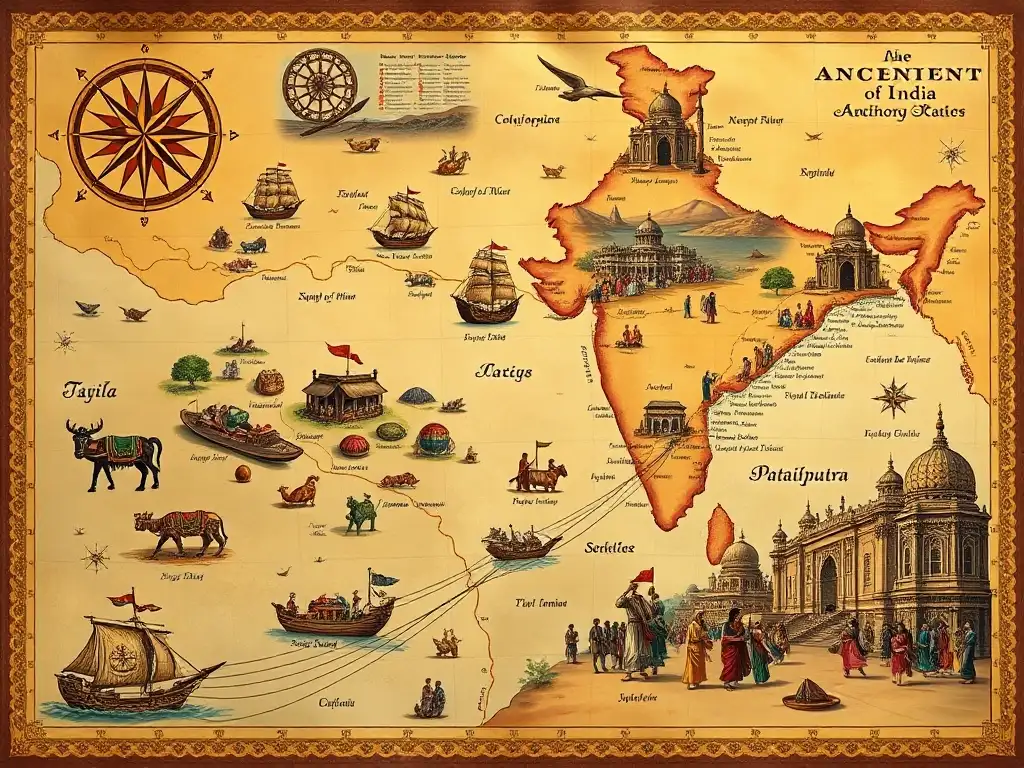
The advancements in trade technology during ancient India have left a lasting legacy that continues to influence modern trade practices. Understanding this legacy provides insights into how historical innovations shape contemporary economic systems.
Long-term Effects on Modern Trade Practices
The trade systems established in ancient India laid the foundations for modern trade practices. Key aspects include:
- Global Trade Networks: The ancient trade routes, such as the Silk Road and maritime paths, set precedents for today's global trade networks, emphasizing the importance of connectivity.
- Commodity Exchange: The standardization of weights, measures, and currency introduced by ancient civilizations has influenced current trading practices, ensuring fairness and transparency in transactions.
These historical practices underpin the complexities of modern economics, demonstrating the continuity of trade principles over millennia.
Influence on Subsequent Technological Developments
The technological advancements seen in ancient Indian trade have influenced subsequent innovations across various domains. For example:
- Transportation Technologies: The methods developed for transporting goods, such as the use of ships and caravans, were foundational for later advancements in logistics and supply chain management.
- Architectural Innovations: The construction techniques used in ancient trading hubs have informed modern city planning and infrastructure development.
This lineage of technological progress underscores the importance of ancient Indian contributions to the global technological landscape.
Preservation of Ancient Trade Knowledge in Modern India
Modern India has preserved much of the knowledge related to ancient trade practices and technologies. This preservation is evident in:
- Cultural Heritage: Many traditional crafts and trade practices continue to thrive in India, reflecting techniques passed down through generations.
- Educational Institutions: Universities and research centers in India study ancient trade practices, ensuring that the knowledge of historical advancements is not lost.
- Tourism and Cultural Exchange: Historical trade sites attract tourists, fostering an appreciation of India’s rich trading heritage and its impact on contemporary society.
By valuing and maintaining this ancient wisdom, modern India continues to celebrate its historical roots while integrating them into its contemporary economic framework.
Conclusion
The exploration of ancient Indian trade and its correlation with technological advancements reveals a vibrant tapestry of interactions that shaped not only the subcontinent but also influenced global trading practices. The synthesis of commerce and innovation in ancient India was pivotal in laying the groundwork for future economic systems. By analyzing the trade routes, goods exchanged, and the technologies developed, we understand how these factors interlinked to foster a culture of progress and exchange.
A closer look at the various trade networks, such as those connecting to the Silk Road, illustrates how ancient Indian societies were not isolated but rather part of a broader economic landscape. This interconnectedness facilitated an exchange of ideas, techniques, and goods that propelled technological advancements, from metallurgy to textile production. Thus, the legacy of ancient Indian trade extends beyond mere economic transactions; it encapsulates a profound influence on cultural and technological evolution.
Summary of Key Points on Ancient Indian Trade and Technological Advancements
- Diverse Trade Routes: Ancient India was strategically positioned along major trade routes, including the Silk Road and maritime paths, enabling extensive trade with various civilizations, such as the Greeks, Romans, and Chinese.
- Goods and Commodities: The trade included a rich variety of goods, such as spices, textiles, gems, and agricultural products, which were not only in demand locally but also internationally, reinforcing India's economic significance.
- Technological Innovations: The trade necessitated advancements in technology, including improved shipbuilding techniques for maritime trade and innovations in metallurgy and pottery, which were essential for both production and packaging of goods.
- Cultural Exchange: The interaction through trade fostered cultural exchanges, leading to shared knowledge, philosophies, and artistic influences, which were critical in shaping the cultural landscape of ancient India.
- Economic Impact: The wealth generated from trade allowed for the patronage of innovations and developments in various fields including mathematics, astronomy, and architecture, showcasing the integral role of trade in the advancement of technology.
Reflection on the Importance of Understanding Ancient Trade Systems
Understanding the ancient trade systems of India is crucial for several reasons. Firstly, it highlights the ingenuity and adaptability of ancient civilizations in responding to economic demands, which is a testament to their advanced organizational skills and technological prowess.
Secondly, examining these trade networks provides insights into the socio-economic structures of ancient societies, revealing how trade influenced urbanization, cultural interactions, and the diffusion of knowledge across regions. This understanding fosters a greater appreciation for the complexities of ancient economies and their impact on modern trade practices.
Lastly, the study of ancient Indian trade and its technological advancements underscores the importance of historical knowledge in informing current economic strategies and technological innovations. By learning from past successes and failures, contemporary societies can better navigate the challenges of globalization and economic interdependence.
References
List of Sources and Further Reading on Ancient Indian Trade Technology Advancements
- Books:
- "The Ancient Indus Valley: New Perspectives" by Jane McIntosh
- "India and the Indian Ocean: An Essay on the Influence of Sea Power on Indian History" by K. N. Chaudhuri
- "Trade and Traders in Early Indian Society" by A. D. P. K. Bhatia
- Articles:
- "Trade Routes of Ancient India" - Journal of Ancient Civilizations
- "Technological Innovations in the Harappan Civilization" - Archaeological Review
- Websites:
- Ancient History Encyclopedia: Trade in Ancient India
- Indian Council of Historical Research: The Role of Trade in Ancient Indian Society
These resources provide a comprehensive overview of the relationship between ancient Indian trade and technological advancements and can serve as a foundation for further exploration into this fascinating topic.
- Introduction to Ancient Indian Trade
- Overview of Ancient Indian Trade
- Importance of Trade in Ancient Indian Civilizations
- Key Trade Goods in Ancient India
- Major Trade Routes of Ancient India
- Technological Advancements in Ancient India
- The Interconnection Between Trade and Technology
- Case Studies of Trade and Technology in Ancient India
- The Legacy of Ancient Indian Trade Technology Advancements
- Conclusion
- References
- What were the key trade routes in ancient India?
- How did technological advancements impact ancient Indian trade?
- What role did metalworking play in trade during ancient India?
- How did ancient Indian civilizations influence global trade?
- What were some cultural exchanges resulting from ancient Indian trade?
Frequently Asked Questions
What were the key trade routes in ancient India?
Ancient India had significant trade routes like the Silk Road and the Maritime Trade Routes, which facilitated the exchange of goods and cultural ideas with various civilizations.
How did technological advancements impact ancient Indian trade?
Technological advancements such as the development of navigation techniques and improved shipping vessels greatly enhanced trade efficiency, allowing for longer journeys and the transport of larger quantities of goods.
What role did metalworking play in trade during ancient India?
Metalworking in ancient India led to the production of valuable items like tools, coins, and jewelry, which were significant in both local economies and in international trade.
How did ancient Indian civilizations influence global trade?
Ancient Indian civilizations contributed to global trade by exporting spices, textiles, and medicinal products, influencing the economies and cultures of regions as far as Rome and Southeast Asia.
What were some cultural exchanges resulting from ancient Indian trade?
Ancient Indian trade fostered cultural exchanges that included the spread of religions like Buddhism and Hinduism, as well as artistic styles and scientific knowledge across Asia and beyond.
Final Reflection: The Enduring Legacy of Ancient Indian Trade and Technology
The intricate relationship between ancient Indian trade and technological advancements continues to resonate in our modern world. As we explore the historical significance of trade routes and innovations, we uncover a profound truth: the exchange of goods and ideas not only shaped civilizations but also laid the groundwork for future advancements. The legacy of ancient Indian trade serves as a reminder of how interconnected our world has always been, and how the flow of knowledge can spark innovation across cultures.
Cultural and social landscapes have been profoundly influenced by the technological innovations that emerged from ancient Indian trade practices. From the development of advanced metallurgy to the introduction of new agricultural techniques, these advancements have had lasting impacts on societies far beyond their origins. As we reflect on this rich history, we are reminded of the words of Mahatma Gandhi: A nation's greatness is measured by how it treats its weakest members.
This quote resonates deeply, as it underscores the importance of sharing knowledge and resources, a principle that was at the heart of ancient trade practices.
As we look toward the future, let us take a moment to reflect on how the lessons from ancient Indian trade can inspire us today. Consider how you can foster connections in your own life, whether through collaboration, sharing ideas, or embracing diversity. By doing so, we honor the spirit of innovation that has been passed down through generations. Let us commit to building bridges, both literally and metaphorically, to create a world where knowledge and technology continue to flourish, just as they did in the vibrant tapestry of ancient Indian trade.
Uncover the Secrets of Ancient Indian Trade!
Thank you for delving into the fascinating world of ancient Indian trade and its profound impact on technological advancements! You've gained insights into how these connections shaped not just a civilization, but the very essence of innovation. Now, let’s take a step further and explore how you can contribute to this legacy.
- Dive deeper into the rich history of trade by visiting your local library or exploring credible online resources to learn about ancient trade routes and their influence on technology.
- Share your newfound knowledge with friends or family by initiating conversations or organizing a small discussion group; inspire others to appreciate the brilliance of ancient Indian ingenuity.
- Join our community by signing up for our newsletter to receive updates on additional articles and discussions that highlight ancient India's impact on global history!
What aspect of ancient Indian trade do you find most surprising, and how do you think it has influenced our technological landscape today?