
The Vedas and Their Role in Ancient Indian Education Systems

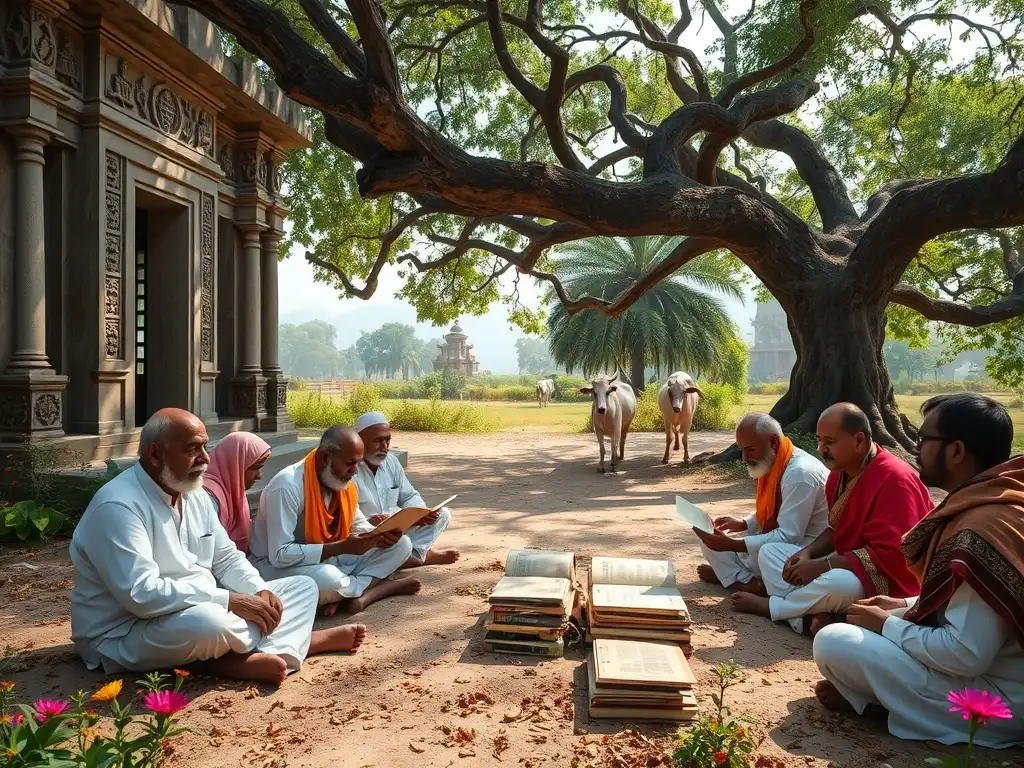
Welcome to Ancient India History, where we embark on a fascinating journey through time to uncover the rich tapestry of ancient Indian civilizations. In this exploration, we delve into the profound impact of the Vedas in ancient Indian education, revealing how these sacred texts shaped the learning systems and cultural ethos of the time. Have you ever wondered how the wisdom of the Vedas influenced the minds of scholars and students alike?
Join us as we unravel the layers of knowledge and tradition that laid the foundation for one of the world's most remarkable educational systems. Your adventure into the depths of epic literature begins here!
- Introduction to the Vedas and Their Significance in Ancient Indian Education
- The Vedas: An Overview
- The Role of the Vedas in Ancient Indian Education Systems
- The Influence of Vedic Texts on Educational Philosophy
- Comparisons of Vedic Education with Other Ancient Civilizations
- Challenges Faced by Vedic Education Systems
- Conclusion
- References and Further Reading
- Frequently Asked Questions
- Final Reflection: The Enduring Legacy of the Vedas in Ancient Indian Education
- Unveil the Wisdom of the Vedas: Transform Your Learning Journey!
Introduction to the Vedas and Their Significance in Ancient Indian Education
The Vedas hold a paramount place in the tapestry of ancient Indian civilization, serving not only as sacred texts but also as the bedrock of educational systems that flourished in India. Composed in Sanskrit, these texts are among the oldest religious scriptures in the world, reflecting the spiritual, philosophical, and cultural ethos of the time. The Vedas encompass a vast array of knowledge, including rituals, hymns, and philosophical discourses, and their teachings profoundly influenced various aspects of life, including education.
In ancient Indian society, the transmission of knowledge was of utmost importance, and the Vedas played a pivotal role in shaping the pedagogical frameworks that guided scholars and students alike. This article delves into the significance of the Vedas in ancient Indian education, exploring how these texts not only served as sources of spiritual wisdom but also as fundamental pillars that structured the educational practices of the time.
Overview of the Vedas in Ancient Indian Culture
The Vedas can be categorized into four main texts: the Rigveda, Samaveda, Yajurveda, and Atharvaveda. Each of these texts serves distinct purposes:
- Rigveda: A collection of hymns and praises dedicated to various deities, reflecting early spiritual beliefs and rituals.
- Samaveda: Primarily focused on melodies and chants, it emphasizes the musical aspect of worship and ritual.
- Yajurveda: Contains prose mantras and instructions for rituals, playing a crucial role in the performance of ceremonies.
- Atharvaveda: Unlike the other three, it includes spells, charms, and practical wisdom, addressing everyday life and societal issues.
These texts were not merely religious scriptures; they were also vehicles of knowledge that encompassed various fields such as philosophy, astronomy, medicine, and ethics. The study of the Vedas was integral to the education of the elite, particularly within the Brahminical tradition, where learning was highly esteemed.
Importance of Education in Ancient Indian Society
Education in ancient India was deeply intertwined with the social and spiritual fabric of society. It was not merely a means to acquire knowledge but was viewed as a holistic process aimed at nurturing the intellect and character of individuals. The Vedas were central to this educational philosophy, emphasizing not just rote learning but also critical thinking and moral development.
Key aspects of education in ancient Indian society included:
- Gurukul System: Education was conducted in ashrams (hermitages) under the guidance of a guru (teacher), where students lived, learned, and engaged in discussions on various subjects.
- Subject Diversity: Beyond the Vedas, students were educated in a wide range of subjects, including grammar, logic, mathematics, and the arts, reflecting a comprehensive approach to learning.
- Moral and Ethical Training: The Vedas imparted lessons on ethics and dharma (righteousness), reinforcing the importance of moral conduct in personal and societal life.
This multifaceted educational approach fostered a culture of inquiry and debate, allowing ancient Indian civilization to thrive intellectually and spiritually. The enduring legacy of the Vedas in ancient Indian education continues to inspire contemporary educational philosophies and practices.
The Vedas: An Overview
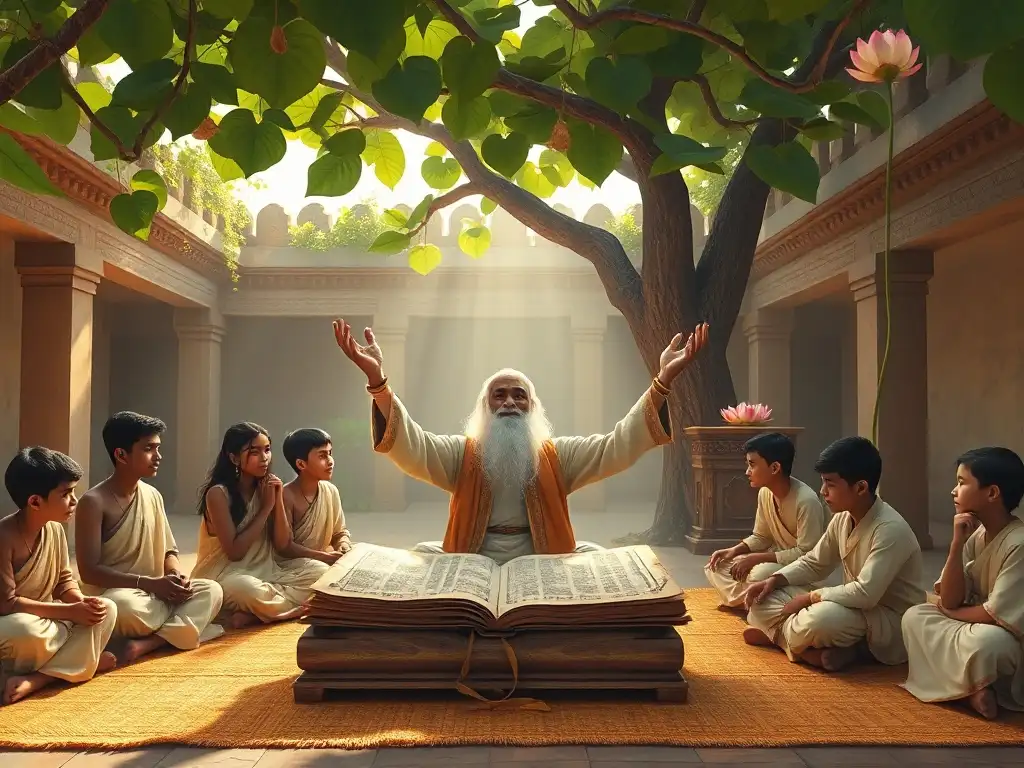
The Vedas are the oldest sacred texts of Hinduism, composed in ancient Sanskrit and foundational to Indian philosophy, religion, and education. Their name, derived from the Sanskrit word "veda" meaning "knowledge," signifies not only religious wisdom but also the vast knowledge encapsulated within them. The Vedas are a collection of hymns, rituals, and philosophical discourses that have played a critical role in shaping the cultural landscape of ancient India.
Definition and Structure of the Vedas
The Vedas are traditionally classified into four main texts, each serving a distinct purpose within the ancient Indian education systems. They are:
- Rigveda: The oldest and most important Veda, it consists of hymns dedicated to various deities.
- Samaveda: Primarily concerned with melodies and chants, it serves as a guide for performing rituals.
- Yajurveda: A collection of prose mantras used in rituals, it focuses on the practical aspects of worship.
- Atharvaveda: This Veda includes hymns and incantations that address everyday life, health, and societal issues.
Each Veda is composed of four main parts:
- Samhitas: Collections of hymns and verses.
- Brahmanas: Texts that explain the rituals and their meanings.
- Aranyakas: Philosophical discussions and meditative practices.
- Upanishads: Philosophical treatises that explore the nature of reality and the self.
This structured approach to knowledge made the Vedas essential in training scholars and priests, who were responsible for preserving and transmitting this knowledge through oral tradition.
The Four Vedas: Rigveda, Samaveda, Yajurveda, and Atharvaveda
The four Vedas each have unique characteristics that contributed to various aspects of ancient Indian education:
- Rigveda: With over a thousand hymns, the Rigveda is a treasure trove of spiritual and philosophical insights. It emphasizes the importance of knowledge and learning, often praising wisdom as paramount.
- Samaveda: This Veda's musical elements highlight the role of sound and rhythm in education. The chants from the Samaveda were integral in teaching students the art of recitation and chanting, which was vital for rituals.
- Yajurveda: The Yajurveda's focus on rituals and ceremonies reflects its educational purpose in training priests. It provided practical knowledge essential for conducting various sacrifices and ceremonies, thus shaping the vocational training aspect of ancient education.
- Atharvaveda: Unlike the other three, the Atharvaveda includes a variety of topics, including medicine, magic, and social issues. Its content shows a more holistic approach to education, addressing practical knowledge needed in daily life.
The interplay between these Vedas created a comprehensive educational system that catered to spiritual, philosophical, and practical knowledge, thereby shaping the intellectual landscape of ancient India.
Historical Context of the Vedas in Ancient India
The Vedas were composed over a vast period, traditionally believed to have begun around 1500 BCE during the early Vedic period. This era marked the transition from the nomadic lifestyle of the Indo-Aryans to settled agricultural communities. The Vedas reflect the socio-political and cultural dynamics of their time, providing insights into the lives of ancient Indians.
The educational systems in ancient India were primarily oral, relying on the memorization and recitation of texts. The Vedas served as the foundation of this system, with students, known as "shishyas," receiving instruction from a guru. The rigorous training involved not only learning the Vedas by heart but also understanding their deeper meanings and applications.
The role of the Vedas in ancient Indian education extended beyond mere textual study. They were integral to rituals, moral conduct, and societal norms, influencing all aspects of life. The philosophical inquiries found in the Upanishads, part of the Vedic tradition, also laid the groundwork for later schools of thought, impacting the development of Hindu philosophy.
The Vedas played a pivotal role in ancient Indian education, providing a rich repository of knowledge that shaped the intellectual and spiritual lives of generations. Their influence continues to resonate in contemporary Indian society, highlighting the enduring legacy of the Vedas in ancient Indian education.
The Role of the Vedas in Ancient Indian Education Systems

Vedic Education: Gurukula System
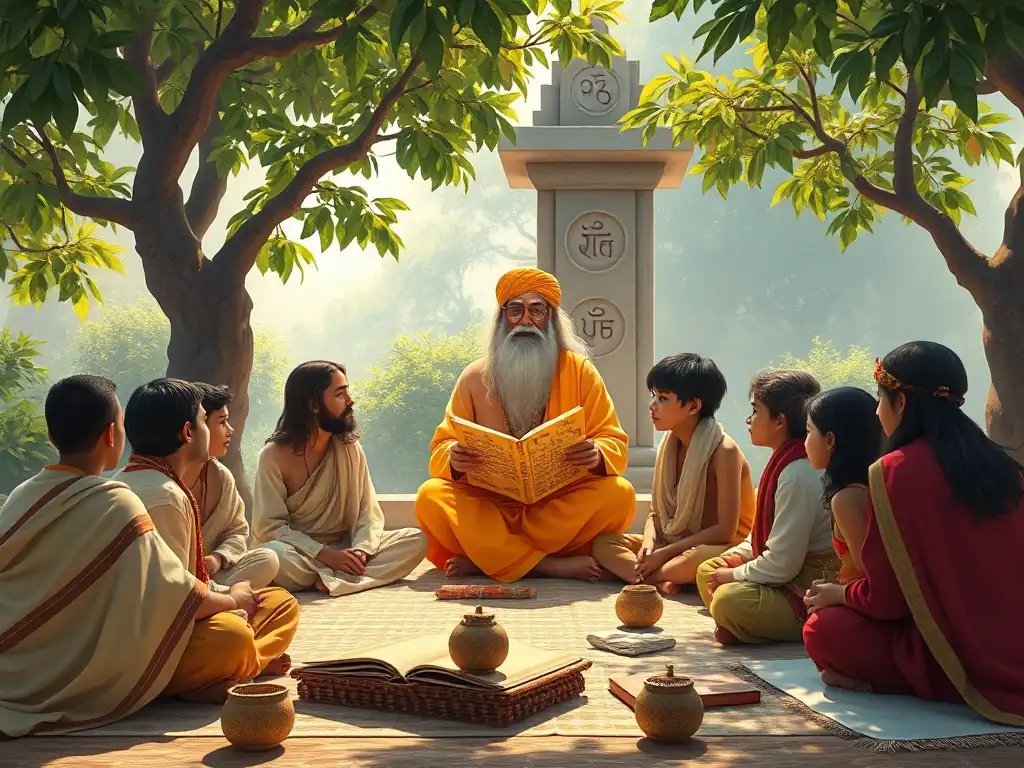
The Gurukula system was a hallmark of ancient Indian education, deeply intertwined with the teachings found in the Vedas. This system was characterized by a close student-teacher relationship, where students, known as shishyas, lived with their guru in a residential setting called the gurukula. The education was holistic, focusing on both spiritual and practical knowledge, with the Vedas serving as the foundational texts.
- Structure and Environment:
- The gurukula was typically situated in serene, natural surroundings, promoting a conducive learning atmosphere.
- Education was often personalized, allowing for a tailored approach depending on the student’s capabilities and interests.
- Curriculum:
- The curriculum revolved around the four Vedas: Rigveda, Samaveda, Yajurveda, and Atharvaveda.
- Students learned through shravana (listening), manana (reflection), and nididhyasana (meditation), emphasizing the retention and understanding of knowledge.
- Duration and Stages:
- The duration of study varied, lasting from several years to decades, depending on the complexity of the subjects.
- Upon completion, students underwent a ritual called upanayana, marking their initiation into formal education.
Teaching Methods Derived from the Vedas
Teaching methods in ancient Indian education were intricately linked to the Vedic texts, ensuring that the knowledge was not only transmitted but also deeply understood and internalized.
- Oral Tradition:
- The primary method of teaching was oral transmission. The guru recited verses from the Vedas, encouraging students to memorize them. This practice emphasized clear pronunciation and intonation, vital for preserving the texts' integrity.
- Interactive Discussions:
- Students engaged in dialogues with their gurus, fostering critical thinking and analytical skills. These discussions often revolved around philosophical interpretations and practical applications of Vedic teachings.
- Practical Experiments:
- Education was not confined to theoretical learning. Students participated in rituals and ceremonies, applying their knowledge practically. This experiential learning was crucial in fields like medicine, astronomy, and architecture.
- Use of Mnemonics:
- To aid memory, various mnemonic devices were employed. Rhymes and rhythms were used to help students memorize complex verses and teachings, ensuring the longevity of Vedic knowledge.
Subjects and Disciplines Influenced by the Vedas
The Vedas significantly shaped the subjects and disciplines taught in ancient Indian education, extending beyond religious studies to encompass a wide array of knowledge domains.
- Philosophy:
- Vedic texts laid the groundwork for Indian philosophical thought, influencing schools such as Vedanta and Samkhya, which explored metaphysical concepts and the nature of reality.
- Mathematics and Astronomy:
- The observation of celestial bodies and the development of calendars were rooted in Vedic literature. Ancient Indian scholars made significant contributions to mathematics, including the concepts of zero and the decimal system, often derived from Vedic knowledge.
- Medicine (Ayurveda):
- The principles of health and wellness found in the Vedas contributed to the development of Ayurveda, an ancient system of medicine that emphasizes balance and holistic healing.
- Arts and Music:
- The Samaveda, in particular, focused on musical chants and rituals. This influence extended to classical music and dance forms, which incorporated Vedic concepts and rituals.
The Vedas played an essential role in shaping ancient Indian education systems, influencing various disciplines and teaching methods that have left a lasting legacy in India’s cultural and intellectual history.
The Influence of Vedic Texts on Educational Philosophy
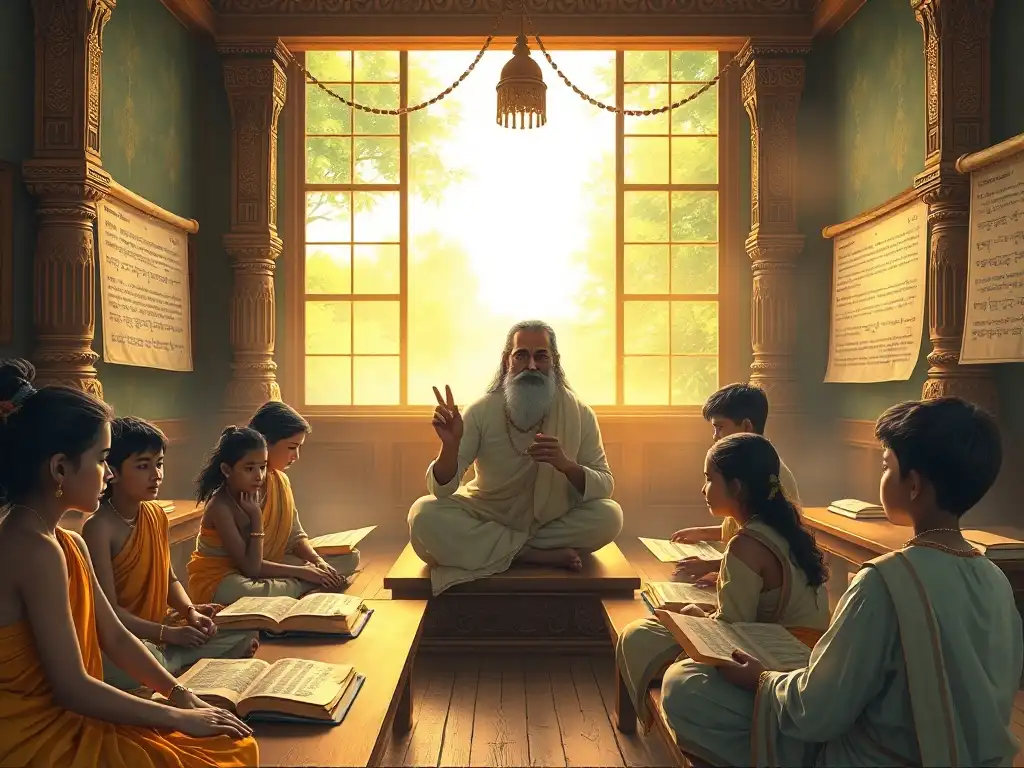
The Vedas, comprising the Rigveda, Samaveda, Yajurveda, and Atharvaveda, are not only foundational texts of ancient Indian spirituality but also significant contributors to the educational philosophies that shaped ancient Indian civilization. Their influence on educational systems can be observed through their emphasis on knowledge, ethics, and holistic learning, which were essential for the development of a knowledgeable and virtuous society.
Key Educational Philosophies Derived from Vedic Teachings
The educational philosophies rooted in Vedic teachings emphasize several core principles:
- Holistic Development:
- The Vedas advocate for the development of the mind, body, and spirit. Education was seen as a means to achieve a balanced and comprehensive growth of an individual.
- This holistic approach is reflected in the Gurukul system, where students lived with their teachers, learning not only academics but also arts, sciences, and moral values.
- Inquiry and Rational Thinking:
- The Vedic texts encourage a spirit of inquiry, urging students to question and explore the world around them.
- This philosophical stance laid the groundwork for critical thinking, fostering a culture where knowledge was pursued through dialogue and debate.
- Moral and Ethical Education:
- Ethical teachings found in the Vedas emphasize values such as truthfulness, compassion, and duty (Dharma).
- Education was not merely about acquiring knowledge but also about cultivating character, ensuring that students grew into responsible and ethical members of society.
The Concept of Knowledge and Learning in the Vedas
The Vedas present a profound understanding of knowledge and learning, expressed through various dimensions:
- Types of Knowledge: The distinction between Parā Vidyā (higher knowledge, spiritual wisdom) and Aparā Vidyā (lower knowledge, worldly knowledge) is fundamental. The Vedas advocate for a balance between both forms, promoting the idea that true knowledge transcends mere intellectual understanding.
- Learning Methods:
- The practice of Shruti (hearing) and Smriti (remembrance) was central to Vedic education. Students committed texts to memory, ensuring that knowledge was preserved and transmitted through generations.
- The use of chanting and recitation not only facilitated memorization but also deepened the understanding of the texts, fostering a connection between the learner and the sacred.
- Role of the Teacher: The Guru held a pivotal role in the educational process, embodying wisdom and guiding students in their intellectual and spiritual journeys. This relationship was built on respect and devotion, emphasizing the importance of mentorship in education.
Integration of Spirituality and Education in Vedic Studies
In ancient India, the integration of spirituality and education was seamless, as reflected in the following aspects:
- Rituals and Learning: Education was often accompanied by rituals that invoked divine blessings. The performance of Yajnas (sacrificial ceremonies) was believed to enhance the learning process, linking the acquisition of knowledge with spiritual growth.
- Sacred Texts as Educational Tools:
- The Vedas themselves served not just as spiritual guides but also as texts for philosophical inquiry, logic, and ethics. They provided a framework for understanding the cosmos and humanity's place within it.
- The study of the Vedas was considered a pathway to attain Moksha (liberation), highlighting the belief that education transcended material existence and led to spiritual enlightenment.
- Community and Learning: Education in Vedic times was often communal, with knowledge shared among peers. This collaborative environment fostered a sense of unity and collective growth, essential for societal harmony.
The Vedas in ancient Indian education were more than texts; they were the bedrock upon which a rich educational philosophy was built, integrating knowledge, ethics, and spirituality in a way that profoundly influenced subsequent generations.
Comparisons of Vedic Education with Other Ancient Civilizations
Comparison with Greek Education Systems
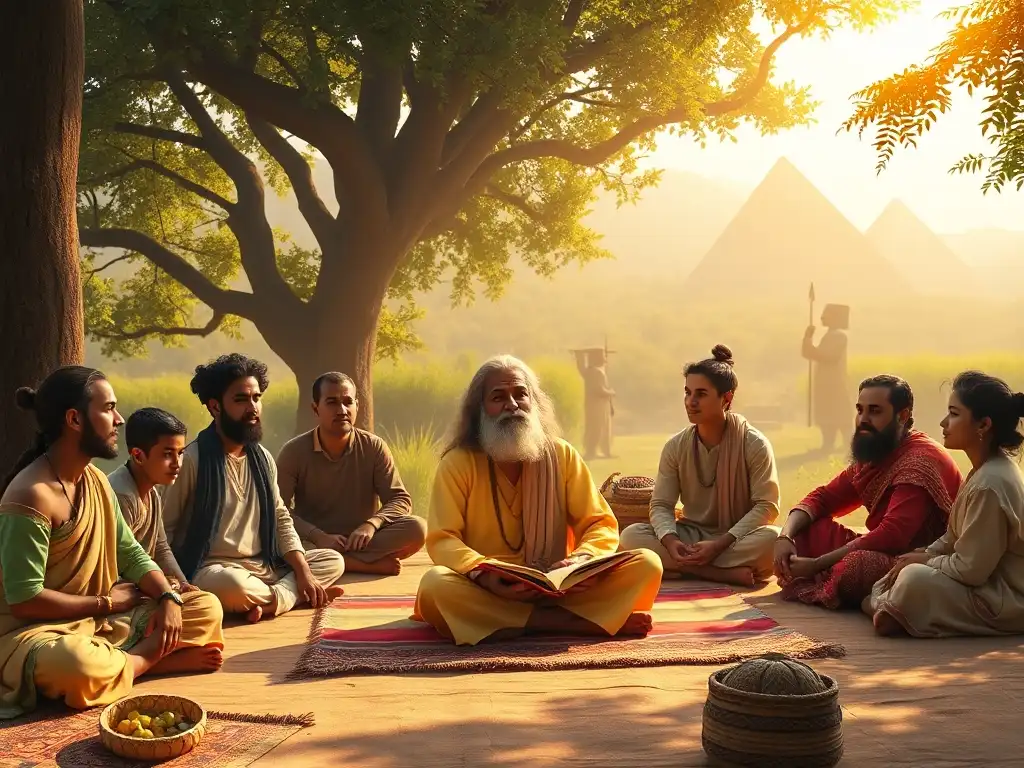
The education systems of ancient India, particularly those influenced by the Vedas, present a fascinating contrast to the educational philosophies of ancient Greece. While both cultures prioritized knowledge and intellectual development, their methodologies and underlying philosophies diverged significantly.
- Philosophical Foundations:
- Vedic Education: Rooted in spiritual and religious texts, Vedic education emphasized the pursuit of knowledge as a means of understanding the cosmos and one’s place within it. The four Vedas—Rigveda, Samaveda, Yajurveda, and Atharvaveda—were central to this education, focusing on rituals, hymns, and philosophical inquiries.
- Greek Education: In contrast, Greek education was more secular, with a strong emphasis on rhetoric, philosophy, and empirical observation. Thinkers like Socrates, Plato, and Aristotle championed critical thinking and debate, shaping an educational structure that valued individual reasoning and civic responsibility.
- Structure and Methodology:
- Vedic Institutions: Education was primarily conducted in Gurukuls, where students lived with their gurus (teachers) in a communal setting. This system promoted personalized instruction and a deep, immersive learning experience. The focus was on oral transmission of knowledge, memorization, and recitation.
- Greek Schools: Greek education evolved into more formal institutions like the Academy founded by Plato and the Lyceum established by Aristotle. These schools encouraged group discussions and written examinations, fostering a competitive environment for intellectual discourse.
- Curriculum Focus:
- Vedic Studies: The curriculum revolved around the study of the Vedas, along with subjects such as grammar, philosophy, mathematics, and astronomy. Students were trained to understand complex texts, often involving rote learning and extensive memorization.
- Greek Curriculum: In ancient Greece, the curriculum included a diverse range of subjects such as mathematics, music, physical education, and philosophy, focusing on developing well-rounded citizens capable of contributing to society.
- Goals of Education:
- Vedic Education Goals: The ultimate goal was self-realization and spiritual enlightenment, reflecting the belief that knowledge was a pathway to understanding the divine and achieving moksha (liberation).
- Greek Education Goals: The aim was to cultivate active citizens who could engage in public life and contribute to the democratic state, with a strong emphasis on ethics and the development of personal virtue.
Influence of Vedic Education on Other Asian Cultures
The Vedic education system has had a lasting impact on various Asian cultures, notably influencing educational practices in regions such as Southeast Asia, Tibet, and beyond. This influence can be seen in several ways:
- Cultural Transmission:
- The spread of Vedic texts and philosophies through trade routes and cultural exchanges facilitated the adoption of Vedic educational principles in neighboring cultures. As traders and scholars traveled, they carried with them the ideals of Vedic learning, which were integrated into local educational frameworks.
- Buddhism and Tibetan Education:
- The rise of Buddhism in the 5th century BCE saw the adaptation of Vedic educational practices. Monastic schools in Tibet, for instance, adopted the focus on oral traditions and spiritual texts. The emphasis on meditation and philosophical inquiry in Buddhist education reflects the foundational elements of Vedic thought.
- Southeast Asian Kingdoms:
- In regions such as Cambodia and Indonesia, the influence of Vedic education can be observed in the establishment of centers of learning that mirrored the Gurukul system. These institutions often combined Vedic teachings with local customs, leading to a unique blend of Hindu and Buddhist educational practices.
- Language and Literature:
- The Sanskrit language, as the medium of instruction in Vedic education, played a pivotal role in shaping the literary traditions of several Asian cultures. The adoption of Sanskrit in religious and administrative texts in places like Bali and Java signifies the lasting legacy of Vedic education.
Summary
The comparisons of Vedic education with other ancient civilizations, particularly Greek education, reveal distinct philosophies, methodologies, and goals. While Vedic education prioritized spiritual enlightenment and knowledge transmission through oral traditions, Greek education focused on secular knowledge and critical discourse. Additionally, the influence of Vedic education on other Asian cultures highlights its significant role in shaping educational practices across the continent, fostering a legacy that continues to resonate today.
Challenges Faced by Vedic Education Systems

The Vedic education system, rooted deeply in ancient Indian society, encountered numerous challenges that impacted its effectiveness and evolution. These challenges were primarily social, cultural, and structural, shaping the way knowledge was transmitted and the accessibility of education for various communities.
The Vedic education system was primarily an oral tradition, where knowledge was passed down from guru (teacher) to shishya (student). While this method ensured a rich exchange of ideas, it also posed significant challenges.
- Caste System: The rigid caste hierarchy in ancient India limited access to Vedic education. Traditionally, only the Brahmins, or priestly class, had the privilege to learn and teach the Vedas. This exclusivity marginalized other groups, such as the Shudras, who were often denied educational opportunities. The limited participation of lower castes led to a lack of diverse perspectives in scholarship and interpretation of Vedic texts.
- Gender Restrictions: Women faced substantial barriers in accessing Vedic education. Although there were instances of learned women, such as Gargi and Maitreyi, they were exceptions rather than the norm. The societal belief that women should focus on household duties rather than scholarly pursuits curtailed their educational opportunities, resulting in a loss of potential intellectual contributions from half the population.
- Geographical Barriers: The vastness of ancient India and the varied regional practices created disparities in educational access. Students often had to travel long distances to attend gurukuls (traditional schools), which were predominantly situated in urban centers. This geographical limitation meant that many in rural areas remained uneducated, further entrenching social inequalities.
- Religious and Philosophical Conflicts: The emergence of various philosophies, such as Buddhism and Jainism, presented a challenge to the Vedic tradition. These new schools of thought often critiqued Vedic rituals and texts, leading to a decline in the authority of the Vedas in some regions. The competition for followers and resources forced Vedic education to adapt, sometimes compromising its core teachings to remain relevant.
The intersection of these social and cultural challenges significantly influenced the landscape of Vedic education, necessitating adaptations that would endure throughout ancient Indian history.
Transition and Transformation of Vedic Education Over Time
As ancient Indian society evolved, so too did the Vedic education system. The transformation was marked by several key shifts that reflected both internal dynamics and external influences.
- Emergence of New Educational Models: By the later Vedic period, the traditional gurukul system began to evolve. The introduction of more structured forms of education, such as the establishment of monasteries and formalized institutions, provided alternative avenues for learning. These changes allowed a broader segment of society to engage with Vedic knowledge, fostering a more inclusive educational environment.
- Integration with Other Philosophies: The interaction with rival philosophical systems led to a synthesis of ideas. Vedic teachings began to incorporate concepts from Buddhism and Jainism, resulting in a more holistic approach to education. This integration enriched the curriculum and made Vedic education more appealing to a diverse audience.
- Textualization of Knowledge: With the advent of writing, particularly during the later phases of the Vedic era, there was a significant shift from oral transmission to written texts. The codification of the Vedas and the subsequent development of key commentaries allowed for a wider dissemination of knowledge. This transition ensured that Vedic teachings could be preserved and studied by future generations, even beyond the traditional classroom settings.
- Influence of Empires: The rise of powerful empires, such as the Maurya and Gupta Empires, played a crucial role in transforming Vedic education. Patronage from rulers led to the establishment of universities, like Nalanda and Takshashila, where Vedic studies flourished alongside other disciplines. This institutional support not only legitimized Vedic education but also encouraged scholarly debate and research.
The challenges faced by Vedic education systems were significant and varied, impacting their evolution throughout ancient Indian history. The ability of these systems to adapt and transform in response to social, cultural, and philosophical changes ensured the continuity and relevance of Vedic knowledge for centuries to come.
Conclusion
Summary of the Vedas' Impact on Ancient Indian Education
The Vedas, comprising four primary texts—Rigveda, Samaveda, Yajurveda, and Atharvaveda—served as the cornerstone of ancient Indian education. Their profound influence extended beyond mere spiritual teachings, shaping the educational practices and philosophical frameworks of ancient Indian society.
- Curriculum Foundations:
- The Vedas introduced a structured curriculum, emphasizing subjects such as grammar, philosophy, and rituals.
- They established foundational principles for the study of Sanskrit, which was crucial for both comprehension and communication in scholarly discourse.
- Pedagogical Approaches:
- The oral tradition of learning, vital in Vedic education, involved gurukulas (teacher-student residences), where students would engage in intensive study through memorization and recitation.
- The teacher-student relationship was highly valued, fostering a deep respect for knowledge and wisdom.
- Cultural and Ethical Norms:
- The Vedic texts contributed to the ethical framework of society, instilling values such as dharma (duty) and karma (action) in students, which guided their personal and civic lives.
- Ritualistic practices described in the Vedas were integral to education, linking learning with spirituality and community.
The Vedas' impact on ancient Indian education was profound, creating a comprehensive system that integrated knowledge, ethics, and spiritual understanding.
The Legacy of Vedic Education in Modern Indian Learning Systems
The legacy of Vedic education continues to resonate within modern Indian learning systems, influencing various aspects of education today.
- Curricular Influence:
- Many contemporary educational practices in India reflect the Vedic emphasis on holistic education, promoting a balance between intellectual, emotional, and spiritual growth.
- Subjects such as Sanskrit literature and philosophy still find their place in academic curricula, showcasing the enduring relevance of Vedic texts.
- Teacher-Student Dynamics:
- The traditional guru-shishya (teacher-student) model remains a hallmark of Indian education, emphasizing mentorship and personal connection, reminiscent of Vedic practices.
- Modern educational reforms are increasingly recognizing the value of this relationship, aiming to foster deeper learning experiences.
- Ethical Education:
- Vedic principles of dharma and karma continue to enrich moral education, encouraging students to engage with ethical dilemmas and societal responsibilities.
- Initiatives promoting values-based education draw inspiration from Vedic teachings, aiming to cultivate responsible citizens.
The Vedas in ancient Indian education not only established a rigorous and comprehensive educational framework but also laid the groundwork for ethical and philosophical inquiry that persists in modern Indian learning systems. Their legacy is a testament to the enduring power of ancient wisdom in shaping contemporary educational paradigms.
References and Further Reading
Suggested Literature on the Vedas and Ancient Indian Education
-
The Vedas: An Introduction to Hinduism's Sacred Texts
This comprehensive guide delves into the origins and significance of the Vedas in ancient Indian education. It explores how these texts shaped the spiritual and intellectual landscape of early Indian society.
-
Vedic Education: Historical Perspectives
This book provides an in-depth analysis of the educational systems that emerged from Vedic teachings. It discusses the methodologies of instruction prevalent during the Vedic period, emphasizing the role of oral transmission in preserving knowledge.
-
The Role of the Vedas in Shaping Indian Philosophy
This literature examines the philosophical underpinnings of the Vedas and their influence on subsequent Indian thought. It highlights the integration of Vedic principles into educational practices.
-
Rituals and Education in the Vedic Tradition
Focusing on the intersection of ritual and learning, this text outlines how Vedic rituals became integral to educational frameworks, affecting both spiritual and academic development.
-
Sources of Indian Tradition: Vedas and Beyond
This anthology includes essays that explore the broader context of the Vedas within Indian history, including their impact on educational practices and cultural evolution.
Key Resources for Exploring Vedic Teachings and Philosophy
-
Online Archives of Vedic Texts
A collection of digitized Vedic texts, providing access to original manuscripts and translations. This resource is invaluable for researchers and students interested in studying the Vedas in their historical context.
-
The Oxford Handbook of Hindu Philosophy
This handbook offers a detailed overview of the philosophical dimensions of the Vedas and their impact on Indian education systems. It features contributions from leading scholars in the field.
-
Vedic Studies: A Historical Overview
A critical resource that traces the evolution of Vedic studies and their relevance to contemporary education in India. It discusses how ancient educational practices continue to influence modern thought.
-
Courses on Vedic Philosophy and Education
Various online platforms offer courses that focus on Vedic philosophy, its educational implications, and its relevance in today's world. These courses often include interactive discussions and materials for deeper learning.
-
Scholarly Journals on Indian Philosophy
Journals such as the Journal of Indian Philosophy and Studies in Vedic Culture publish peer-reviewed articles that explore the relationship between Vedic texts and educational systems in ancient India.
These references and resources provide a comprehensive foundation for understanding the significant role of the Vedas in ancient Indian education, facilitating further exploration and study.
Frequently Asked Questions
What are the Vedas?
The Vedas are the oldest sacred texts of Hinduism, composed in ancient Sanskrit. They consist of four collections: Rigveda, Samaveda, Yajurveda, and Atharvaveda, forming the foundation of ancient Indian philosophy and education.
How did the Vedas influence education in ancient India?
The Vedas served as the primary source of knowledge and wisdom, guiding educational practices. They emphasized rituals, philosophy, and moral values, shaping the curriculum in ancient Gurukuls and other educational institutions.
Were the Vedas accessible to all in ancient India?
Access to the Vedas was initially limited to the Brahmin class, who were responsible for their preservation and transmission. However, over time, interest in Vedic texts grew among other groups, leading to a broader dissemination of knowledge.
What role did oral tradition play in the transmission of the Vedas?
The oral tradition was crucial for the preservation and transmission of the Vedas, as they were passed down through generations by recitation. This method ensured accuracy and understanding in the teachings of ancient Indian education.
How are the Vedas relevant to modern education?
The teachings of the Vedas continue to influence modern educational philosophies, emphasizing the importance of holistic learning, moral values, and the integration of spiritual and intellectual development in education systems today.
Final Reflection: The Enduring Legacy of the Vedas in Ancient Indian Education
The Vedas in ancient Indian education were not merely texts; they were the foundation of a holistic learning system that shaped the intellectual and spiritual fabric of society. Today, as we navigate an increasingly complex world, the principles embedded in these ancient scriptures resonate with our quest for knowledge and wisdom. The Vedas remind us that education is not just about acquiring information but about cultivating a deeper understanding of ourselves and our place in the universe.
The influence of the Vedas extends far beyond their historical context; they continue to inspire contemporary educational philosophies and practices. The emphasis on experiential learning, moral values, and the pursuit of truth found in the Vedic texts has permeated various aspects of modern education. As Mahatma Gandhi once said, Live as if you were to die tomorrow. Learn as if you were to live forever.
This quote encapsulates the essence of Vedic education, urging us to embrace lifelong learning as a means to enrich our lives and contribute positively to society.
As we reflect on the teachings of the Vedas, let us consider how we can integrate their wisdom into our own educational journeys. How can we cultivate a learning environment that values inquiry, ethics, and personal growth? I invite you to explore the principles of Vedic education in your own life, whether through formal study or personal reflection. By doing so, we honor the legacy of the Vedas and contribute to a more enlightened and compassionate world.
Unveil the Wisdom of the Vedas: Transform Your Learning Journey!
Thank you for diving into the fascinating world of the Vedas and their profound impact on ancient Indian education systems. You’ve uncovered valuable insights that can enrich your understanding of history and culture. Now, let’s take some empowering steps to connect more deeply with this knowledge!
- Dive deeper into the Vedic texts by accessing online libraries or resources dedicated to ancient Indian scriptures.
- Share your discoveries! Discuss your insights with friends or join a community interested in ancient education systems to expand your perspective.
- Impress your peers by exploring innovative applications of Vedic principles in modern learning; consider how these teachings can influence education today!
How do you think the principles of Vedic education can shape today’s learning environments? We invite you to share your thoughts below!