
The Role of Metaphor and Allegory in Hindu Philosophical Discourse


Welcome to Ancient India History, where we delve into the rich tapestry of one of the world's oldest civilizations. In this exploration, we invite you to uncover the profound Hindu philosophy metaphor and allegory that permeates ancient texts and teachings. This fascinating article, "The Role of Metaphor and Allegory in Hindu Philosophical Discourse," will not only illuminate the intricate layers of meaning within Hindu thought but also reveal how these literary devices have shaped the spiritual landscape of India. Join us on this intellectual journey and discover the timeless wisdom that continues to resonate today!
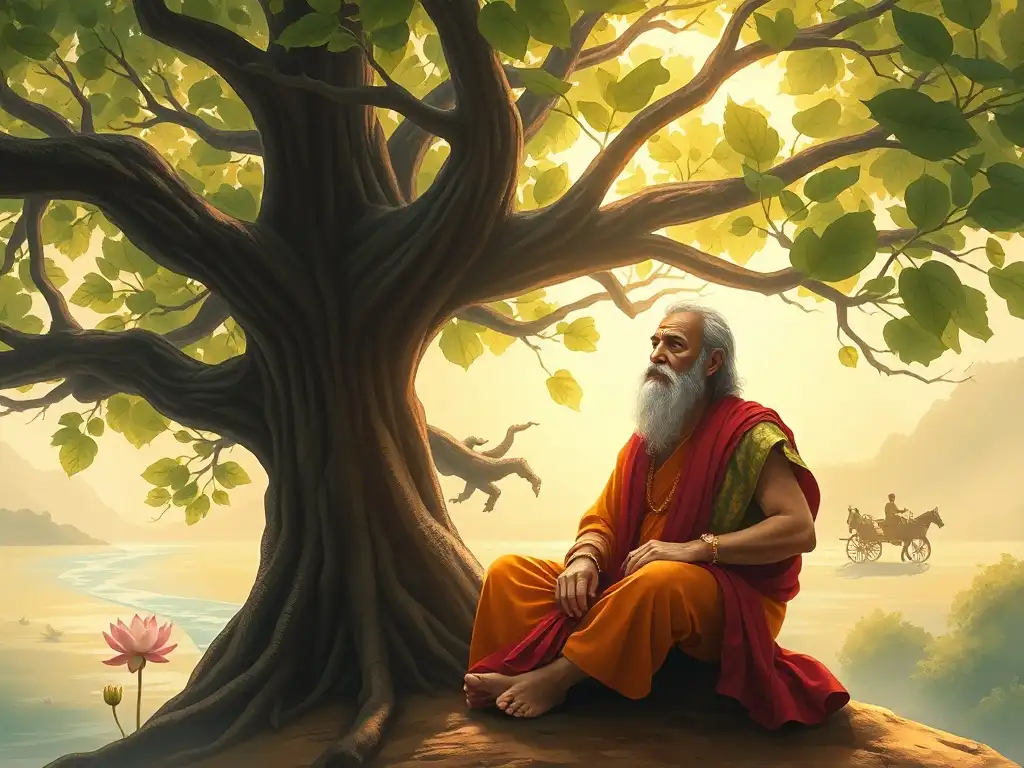
Hindu philosophy is a profound and intricate field of study that encompasses a wide array of concepts, beliefs, and teachings. Central to this philosophical discourse is the use of metaphor and allegory, which serve as essential tools for conveying complex ideas and spiritual truths. These literary devices are not merely decorative; they play a pivotal role in shaping the understanding of core philosophical principles within Hinduism. By examining the rich tapestry of Hindu thought, we can appreciate how metaphor and allegory facilitate deeper insights into the nature of existence, the self, and the cosmos.
The following sections will explore the significance of these literary devices in Hindu philosophy, revealing their impact on ancient texts and the evolution of metaphorical language over time. As we delve into this topic, we will uncover the ways in which metaphor and allegory have enriched the philosophical landscape of ancient India, providing a framework for spiritual exploration and intellectual inquiry.
Introduction to Hindu Philosophy: Metaphor and Allegory
Understanding the Importance of Symbolism in Hindu Thought
Symbolism is a cornerstone of Hindu philosophy, allowing complex spiritual concepts to be communicated in a way that resonates with practitioners and scholars alike. Metaphor and allegory serve as vehicles for expressing abstract ideas about the divine, morality, and the nature of reality. Through these devices, intricate concepts such as dharma (duty), karma (action), and moksha (liberation) are elucidated, making them more accessible and relatable.
- Metaphors in Hindu philosophy often draw on nature, everyday life, and traditional stories to illustrate deeper truths.
- Allegories, on the other hand, convey moral lessons through narratives that often feature moral dilemmas or supernatural elements.
By employing these techniques, Hindu philosophers engage readers and listeners, inviting them to reflect on their own experiences and beliefs.
The Intersection of Metaphor and Allegory in Ancient Texts
Ancient Hindu texts are rich with metaphorical and allegorical content, often intertwining these devices to enhance their teachings. Works such as the Bhagavad Gita and the Upanishads provide prime examples of how these literary forms are used to explore profound philosophical questions.
- The Bhagavad Gita employs allegory through the dialogue between Arjuna and Krishna, where the battlefield represents the inner struggles of life.
- The Upanishads utilize metaphors to convey concepts like the relationship between the individual soul ( atman) and the universal spirit ( Brahman), often describing it as a drop of water in the ocean.
These intersections not only enrich the texts but also allow for multiple interpretations, fostering a dynamic understanding of Hindu philosophy.
Historical Context of Metaphor in Hindu Philosophy
Evolution of Metaphorical Language in Ancient Indian Scriptures
The use of metaphor in Hindu philosophy has evolved significantly over centuries, reflecting the changing cultural and intellectual landscape of ancient India. Early texts, such as the Vedas, laid the groundwork for symbolic language, often using metaphors related to rituals and cosmology. As philosophical inquiry deepened, later works incorporated more nuanced and abstract metaphorical expressions.
- The Brahmanas and Aranyakas expand on Vedic metaphors, introducing more complex allegorical narratives.
- The Darshanas (philosophical schools) further developed metaphorical language, exploring diverse perspectives on existence and consciousness.
This evolution demonstrates the adaptability of metaphor in conveying philosophical concepts, allowing for rich discourse across various schools of thought.
Key Texts and Their Use of Metaphor and Allegory
Several key texts stand out for their innovative use of metaphor and allegory, shaping the discourse of Hindu philosophy.
| Text | Key Metaphors/Allegories | Themes Explored |
|---|---|---|
| Bhagavad Gita | The battlefield as a metaphor for life's struggles | Duty, righteousness, self-realization |
| Upanishads | Atman as a drop in the ocean of Brahman | Unity of self and universal consciousness |
| Puranas | Stories of divine avatars as allegories for moral lessons | Dharma, virtue, and cosmic order |
These texts not only exemplify the rich use of metaphor and allegory but also serve as foundational works for understanding the complexities of Hindu philosophical thought. Through them, we can appreciate how these devices contribute to a deeper comprehension of life's most profound questions.
The Function of Metaphor in Hindu Philosophical Discourse
Metaphor plays a crucial role in Hindu philosophical discourse, serving as a powerful tool to express abstract concepts and deep spiritual truths. Through the use of metaphor, complex ideas are distilled into relatable imagery, enabling practitioners and scholars alike to engage with profound philosophical insights. This linguistic device not only enriches philosophical texts but also facilitates a deeper connection with the teachings of Hinduism.
Conveying Complex Concepts through Simple Imagery
One of the primary functions of metaphor in Hindu philosophy is to simplify intricate and often elusive concepts. For instance, the metaphor of the "lotus" is frequently used to illustrate purity and spiritual awakening. The lotus flower, which rises from muddy waters yet blooms pristine and beautiful, symbolizes the journey of the soul towards enlightenment, transcending the impurities of the material world. This simple yet vivid imagery makes the concept of spiritual evolution more accessible and relatable to individuals from various backgrounds.
Moreover, metaphors like "the ocean of existence" are commonly employed to convey the vastness of the universe and the interconnectedness of all beings. Such imagery allows practitioners to contemplate the relationship between the individual self (Atman) and the universal consciousness (Brahman) without becoming overwhelmed by abstract philosophical jargon.
Enhancing Spiritual Understanding and Insight
Metaphors also serve to enhance spiritual understanding by inviting deeper contemplation. In Hindu philosophy, the practice of meditation often employs metaphors to guide practitioners toward transcendent experiences. For example, the metaphor of the "inner light" encourages individuals to seek the divine spark within themselves, prompting introspection and self-discovery.
Additionally, the use of metaphor in sacred texts, such as the Bhagavad Gita, enriches the dialogue between the characters, allowing readers to derive multiple layers of meaning. The dialogue between Arjuna and Krishna is laden with metaphors that address duty, righteousness, and the nature of reality, prompting readers to reflect on their own lives and choices in the light of these teachings.
Bridging the Gap between the Material and the Spiritual
Metaphors in Hindu philosophy effectively bridge the gap between the material and spiritual realms. By utilizing everyday experiences and objects as metaphors for spiritual truths, philosophers create a tangible connection between the physical world and higher existential realities. This approach encourages individuals to recognize the divine presence in all aspects of life, fostering a sense of unity with the cosmos.
For instance, the metaphor of "the chariot" in the Bhagavad Gita symbolizes the body, with the senses as the horses and the mind as the reins. This imagery illustrates the importance of self-control and discipline in navigating the journey of life, where the ultimate goal is to align one's actions with dharma (righteousness). Such metaphors help practitioners understand their spiritual path in relation to their everyday experiences, reinforcing the idea that spirituality is not separate from life but deeply intertwined with it.
Allegory in Hindu Philosophy: A Deeper Examination
Allegory serves as another significant literary device in Hindu philosophical discourse, allowing for the expression of moral, ethical, and spiritual teachings through narrative. Allegorical stories often convey profound truths about human nature, society, and the cosmic order, making them an essential part of Hindu literature and philosophy.
Defining Allegory within Hindu Texts
In the context of Hindu philosophy, allegory is a narrative that uses symbolic figures, events, or characters to convey deeper meanings and truths. This literary form allows for the exploration of complex ideas in a manner that is engaging and accessible. Allegorical narratives often feature divine or semi-divine characters representing various aspects of human experience and moral dilemmas.
An example of this can be found in the story of the Ramayana, where the character of Rama embodies the ideal of dharma (righteousness), while his adversary Ravana symbolizes the forces of adharma (unrighteousness). Through their interactions, the text explores themes of duty, ethics, and the nature of good and evil, providing readers with rich allegorical insights into the moral fabric of life.
Prominent Allegorical Stories in Hinduism
Hinduism is replete with prominent allegorical stories that illustrate its philosophical tenets. The Panchatantra, a collection of fables, serves as an excellent example. Each story is crafted to impart wisdom on governance, relationships, and ethical dilemmas through animal characters that represent different human traits. These tales not only entertain but also serve as valuable lessons on moral conduct and the complexities of human behavior.
Another significant allegory is found in the Bhagavad Gita, where the battle of Kurukshetra symbolizes the internal struggle between good and evil within each individual. The characters of Arjuna and Krishna represent the human soul and divine guidance, respectively. This allegorical framework encourages readers to reflect on their own conflicts and decisions, emphasizing the importance of aligning one's actions with higher spiritual principles.
Through these allegorical narratives, Hindu philosophy communicates profound lessons about life, morality, and spirituality, inviting practitioners to engage with the teachings on a deeper level.
The Role of Metaphor and Allegory in Ethical Teachings
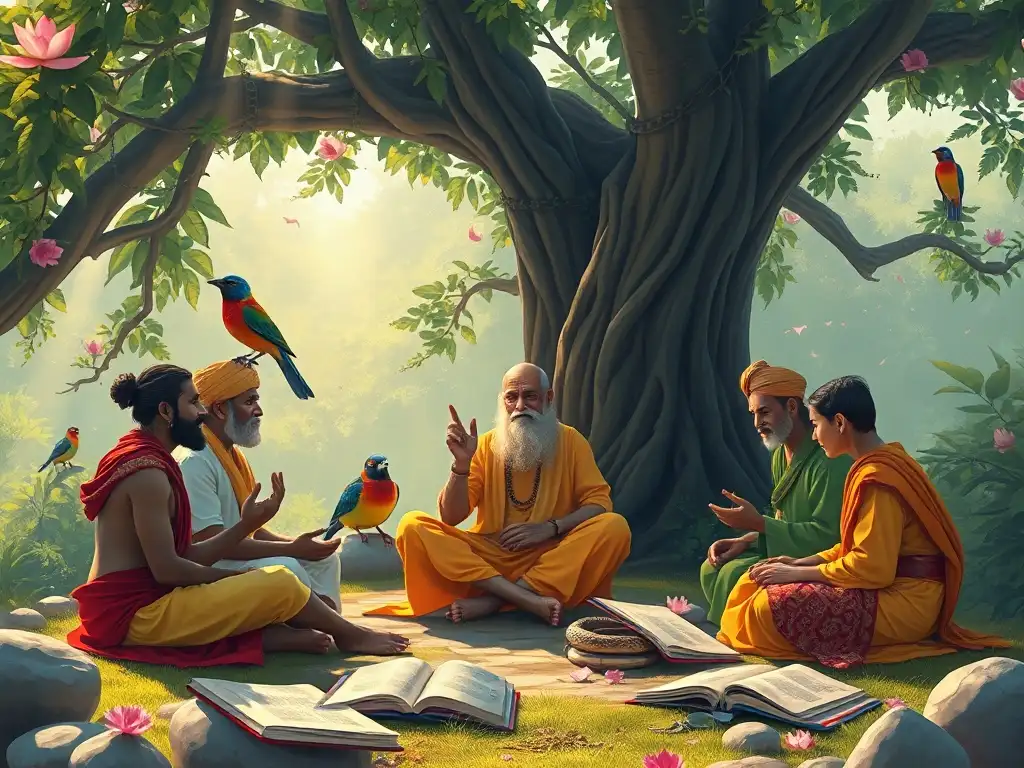
Metaphor and allegory play a pivotal role in conveying ethical teachings within Hindu philosophical discourse. Through the use of vivid imagery and symbolic narratives, complex moral concepts become accessible and relatable. This approach not only aids in the retention of teachings but also engages the audience on an emotional level, prompting deeper reflection on ethical dilemmas.
In Hindu texts such as the Mahabharata and the Upanishads, metaphorical language is frequently employed to illustrate principles of dharma (righteousness) and karma (action). The stories and parables embedded in these texts serve as moral guides, encouraging individuals to contemplate their choices and the consequences of their actions. By utilizing allegorical figures and scenarios, Hindu philosophy effectively communicates the nuances of ethical behavior, fostering a richer understanding of morality.
Teaching Morality and Dharma through Symbolism
Symbolism in Hindu philosophy often manifests through metaphors that encapsulate core ethical teachings. For instance, the concept of dharma is sometimes represented by the image of a wheel, signifying the cyclical nature of life and the continuous pursuit of righteousness. This imagery highlights the importance of adhering to one's duty while navigating the complexities of existence.
Various mythological narratives also serve as powerful allegories for moral lessons. The story of King Harishchandra, known for his unwavering commitment to truth, exemplifies the trials one may face in upholding dharma. Such narratives not only provide guidance but also inspire individuals to embody similar virtues in their lives.
The use of metaphors extends beyond mere storytelling; it invites practitioners to engage in self-reflection. For instance, the metaphor of the lotus flower, which blooms beautifully despite its roots in muddy waters, symbolizes purity of action and thought amidst worldly challenges. This powerful imagery encourages individuals to maintain integrity and compassion, regardless of external circumstances.
Real-Life Applications: How Metaphors Influence Ethical Decisions
Metaphors and allegories in Hindu philosophy have practical implications for ethical decision-making. By providing relatable narratives, these tools help individuals navigate moral dilemmas in their personal and professional lives. For example, the metaphor of Arjuna’s dilemma in the Bhagavad Gita illustrates the conflict between personal desires and ethical duties. This narrative resonates with many, as it reflects common struggles faced in contemporary society.
In real-life scenarios, individuals often draw parallels between their situations and allegorical stories from Hindu texts. This connection allows them to view their ethical challenges through a broader lens, fostering a deeper understanding of the consequences of their choices. By engaging with these metaphors, individuals can cultivate a more robust moral compass that guides their actions.
Furthermore, the practice of employing metaphors in ethical discussions can enhance communication and understanding. In educational settings, teachers often use allegorical narratives to illustrate complex moral concepts, making them more relatable and easier to grasp for students. This method not only aids in comprehension but also sparks meaningful conversations about morality and ethics.
Comparative Analysis: Metaphor and Allegory in Other Philosophical Traditions
The use of metaphor and allegory is not unique to Hindu philosophy; similar techniques can be observed across various philosophical traditions. While the cultural contexts may differ, the underlying purpose of utilizing these literary devices remains consistent: to convey complex ideas in an accessible manner.
Similarities and Differences with Western Philosophical Discourse
In Western philosophical traditions, metaphors and allegories have also played a significant role in ethical discourse. For example, Plato's Allegory of the Cave serves as a powerful metaphor for enlightenment and the pursuit of truth. While both Western and Hindu traditions utilize allegory to explore moral concepts, they often approach the implications of ethical behavior from different angles.
Hindu philosophy tends to emphasize the interconnectedness of all beings and the cyclical nature of life, as illustrated through metaphors like the wheel of dharma. In contrast, Western ethical frameworks, influenced by individualism, may focus more on the autonomy of the individual in moral decision-making. Despite these differences, both traditions highlight the importance of metaphor as a tool for ethical exploration.
Influences of Eastern Philosophy on Global Thought
Eastern philosophy, including Hindu thought, has made significant contributions to global philosophical discourse. The rich tapestry of metaphors and allegories found in Hindu texts has influenced various fields, including psychology, literature, and ethics. Concepts such as karma and non-attachment have transcended cultural boundaries, resonating with individuals worldwide.
Moreover, the emphasis on metaphor in Eastern philosophy has inspired Western thinkers to explore similar approaches within their own frameworks. The integration of allegorical narratives in contemporary discussions about ethics and morality reflects the enduring legacy of Hindu philosophy and its capacity to inform diverse perspectives on human behavior. By bridging cultural divides, the metaphorical richness of Hindu philosophy continues to shape and enhance global ethical discourse.
The Modern Relevance of Hindu Philosophy Metaphor and Allegory
Hindu philosophy, rich with metaphors and allegories, continues to resonate in modern contexts, offering profound insights that transcend time. The use of metaphor in Hindu texts serves not only to convey complex ideas but also to bridge the gap between the abstract and the tangible. Its relevance today can be observed in various domains, such as literature, psychology, and spirituality, where these age-old narratives influence contemporary thought. As society grapples with existential questions and the nature of reality, the allegorical narratives found in Hindu philosophy provide frameworks for understanding the human condition, ethics, and the quest for self-realization.
Moreover, the adaptability of these metaphors allows them to be reinterpreted through modern lenses, creating a dialogue between ancient wisdom and contemporary issues. This dynamic interplay ensures that the teachings of Hindu philosophy remain a vital part of ongoing philosophical discourse, prompting individuals to explore their meanings in light of current societal challenges. The metaphors of transformation, duality, and unity, for instance, resonate deeply in discussions about identity, diversity, and interconnectedness in today's globalized world.
Contemporary Interpretations and Applications
In contemporary society, scholars and spiritual practitioners alike are revisiting the rich metaphorical language of Hindu philosophy to derive new meanings. Texts such as the Bhagavad Gita and the Upanishads are continuously analyzed for their allegorical content, revealing insights that are applicable to modern dilemmas. For example, the metaphor of the charioteer in the Bhagavad Gita symbolizes the role of an individual’s consciousness in navigating the complexities of life, offering a framework for personal responsibility and ethical decision-making.
Furthermore, metaphors from Hindu philosophy have found their way into modern self-help literature and motivational speaking. Concepts such as "Maya" (illusion) are employed to discuss the nature of reality and perception in personal development contexts. This reflects a growing trend where ancient wisdom is synthesized with contemporary psychological insights, creating a holistic approach to understanding human behavior and motivation.
The Influence on Modern Spiritual Practices
The metaphors and allegories of Hindu philosophy have also significantly influenced various modern spiritual practices, such as yoga and meditation. These practices often integrate the symbolic meanings of Hindu texts, encouraging practitioners to explore deeper layers of consciousness and self-awareness. For instance, the metaphor of the lotus flower, which symbolizes purity and enlightenment rising from murky waters, is frequently invoked in meditation sessions to inspire practitioners to transcend their challenges and attain higher states of awareness.
Moreover, contemporary spiritual leaders draw upon these rich allegorical narratives to foster a sense of community and shared purpose. By using familiar metaphors, they create pathways for individuals to connect with profound philosophical concepts, making them accessible and relevant in today’s spiritual landscape. This transformative power of metaphor within spiritual practices continues to shape the experiences and understandings of countless individuals seeking meaning in their lives.
Conclusion: The Enduring Legacy of Metaphor and Allegory in Hindu Philosophy
The legacy of metaphor and allegory within Hindu philosophy remains robust, serving as a vital means of conveying complex philosophical concepts. As modern society evolves, the relevance of these ancient narratives becomes increasingly apparent, providing timeless wisdom that addresses contemporary issues. The capacity of metaphor to encapsulate profound truths ensures that it remains a central feature of philosophical discourse, allowing individuals to explore the intricacies of existence, morality, and spirituality.
The Lasting Impact on Indian Culture and Thought
The influence of Hindu philosophical metaphors extends beyond individual understanding to shape broader Indian culture and thought. These metaphors have permeated literature, art, and even politics, reflecting the values and beliefs that underpin Indian identity. Whether through storytelling in classical literature or visual representations in traditional art forms, the allegorical elements of Hindu philosophy continue to inspire and inform various aspects of cultural expression.
Furthermore, the enduring presence of these metaphors in Indian thought serves as a reminder of the interconnectedness of life, promoting a holistic understanding of existence that is crucial in today's fragmented world. The ability to convey complex ideas through simple yet potent imagery ensures that these philosophical concepts remain relatable and impactful across generations.
Future Directions in the Study of Hindu Philosophical Metaphors and Allegories
As scholars and practitioners explore the depths of Hindu philosophical metaphors and allegories, future research may focus on interdisciplinary approaches that integrate insights from fields such as cognitive science, linguistics, and cultural studies. By examining how these metaphors function in different contexts, researchers can uncover new layers of meaning and application, enriching the understanding of Hindu philosophy in the modern age.
Moreover, as globalization continues to influence cultural exchanges, there is potential for cross-cultural comparisons of metaphorical language in philosophy. Such studies could illuminate universal themes present in Hindu allegories, fostering deeper appreciation and dialogue among diverse philosophical traditions. This exploration promises to keep the discourse around Hindu philosophy vibrant and relevant, ensuring that the rich tapestry of metaphor and allegory continues to inspire future generations.
- Introduction to Hindu Philosophy: Metaphor and Allegory
- Historical Context of Metaphor in Hindu Philosophy
- The Function of Metaphor in Hindu Philosophical Discourse
- Allegory in Hindu Philosophy: A Deeper Examination
- The Role of Metaphor and Allegory in Ethical Teachings
- Comparative Analysis: Metaphor and Allegory in Other Philosophical Traditions
- The Modern Relevance of Hindu Philosophy Metaphor and Allegory
- Conclusion: The Enduring Legacy of Metaphor and Allegory in Hindu Philosophy
- What is the significance of metaphor in Hindu philosophy?
- How do allegories enhance the understanding of Hindu texts?
- Can you provide examples of metaphor and allegory in Hindu scriptures?
- How has the interpretation of metaphors evolved in Hindu philosophy?
- Why are metaphor and allegory important in conveying philosophical ideas?
Frequently Asked Questions
What is the significance of metaphor in Hindu philosophy?
Metaphors in Hindu philosophy serve as powerful tools for conveying complex spiritual concepts and truths that are often beyond direct expression.
How do allegories enhance the understanding of Hindu texts?
Allegories in Hindu literature use symbolic narratives to illustrate moral and philosophical lessons, making them more relatable and easier to comprehend for readers.
Can you provide examples of metaphor and allegory in Hindu scriptures?
The Bhagavad Gita and the Upanishads are rich with metaphors and allegories, such as the relationship between Krishna and Arjuna, which symbolizes the inner conflict of the self.
How has the interpretation of metaphors evolved in Hindu philosophy?
Interpretations of metaphors in Hindu philosophy have evolved over time, reflecting changes in cultural contexts and philosophical thought, leading to various layers of meaning.
Why are metaphor and allegory important in conveying philosophical ideas?
Metaphor and allegory are crucial because they allow for a deeper exploration of abstract ideas, making them accessible and engaging for both scholars and general readers in the study of Hindu philosophy.
Final Reflection: The Enduring Power of Metaphor and Allegory in Hindu Philosophy
In an age where the complexities of human experience often elude straightforward explanation, the use of metaphor and allegory in Hindu philosophical discourse remains profoundly relevant. These literary devices not only enrich the narratives of ancient texts but also serve as bridges connecting timeless wisdom to contemporary dilemmas. As we navigate the intricacies of modern life, the insights derived from these metaphors can illuminate our paths, reminding us that the essence of our existence often lies beyond the literal.
The influence of metaphor and allegory extends far beyond the pages of sacred texts; it permeates our cultural and social landscapes, shaping our understanding of identity, morality, and spirituality. These narratives invite us to explore deeper meanings and challenge our perceptions, fostering a sense of unity in diversity. As the philosopher Rumi once said, The wound is the place where the Light enters you.
This sentiment echoes the transformative power of allegorical interpretation, encouraging us to embrace our struggles as opportunities for growth and enlightenment.
As you reflect on the insights shared in this article, I invite you to consider how the metaphors and allegories in your own life can guide you toward greater understanding and compassion. Embrace the stories that resonate with you, and let them inspire your journey. By engaging with the rich tapestry of Hindu philosophy, you can cultivate a deeper awareness of your own experiences and contribute to a more profound dialogue about the human condition. Remember, the narratives we choose to live by can shape not only our lives but also the world around us.
Uncover the Depths of Hindu Philosophical Thought!
Thank you for diving deep into the fascinating world of metaphors and allegories in Hindu philosophy! You've unlocked valuable insights into how these powerful tools shape understanding and comprehension in this rich tradition. Now it’s time to take inspired action!
- Explore further: Read foundational texts such as the Bhagavad Gita or Upanishads to see metaphors in action and understand how they convey profound ideas.
- Join the conversation: Share your thoughts on social media or with friends about your interpretations of metaphors in daily life and how they connect to Hindu philosophies.
- Participate in a local discussion group or online forum focused on ancient philosophies to deepen your understanding and exchange ideas with others.
What metaphor or allegory resonates with you the most in the context of Hindu philosophical thought? Let's spark a discussion!