
Administrative Reforms of the Maurya Empire: A Study in Change and Adaptation


Welcome to Ancient India History, where we invite you to journey through the vibrant tapestry of ancient Indian civilizations. From the enigmatic Indus Valley to the grandeur of the Gupta Empire, our exploration unveils the remarkable contributions and rich culture that shaped a nation. In our featured article, "Administrative Reforms of the Maurya Empire: A Study in Change and Adaptation," we delve into the innovative strategies that transformed governance during one of history's most influential empires.
What changes sparked a new era of administration, and how did they resonate through time? Join us as we uncover these intriguing developments and encourage you to dive deeper into the legacy of Ancient India.

Introduction to the Maurya Empire
The Maurya Empire, one of the most significant and influential empires in ancient Indian history, played a pivotal role in shaping the region's political, economic, and cultural landscape. Spanning from approximately 322 BCE to 185 BCE, this empire was marked by remarkable advancements in administration, governance, and public infrastructure.
The administrative reforms of the Maurya Empire were not merely a response to the needs of the time but a profound transformation that laid the groundwork for future governance in India. In this article, we will explore the intricate details of these reforms, their historical context, and their lasting impact, particularly focusing on the keyword administrative reforms Maurya Empire.
Overview of the Maurya Empire
The Maurya Empire was founded by Chandragupta Maurya, who united various Indian states and established a centralized government. Under the reign of his grandson, Ashoka the Great, the empire reached its zenith, encompassing a vast territory that included present-day India, Pakistan, and parts of Afghanistan and Bangladesh. The empire is notable for its sophisticated bureaucracy, which was essential for managing its diverse population and extensive resources. Key features of the Maurya administrative system included:
- Centralized Authority: A strong central government that exercised control over various regions.
- Bureaucratic Structure: A well-organized bureaucracy that facilitated efficient governance.
- Legal Reforms: Codification of laws to ensure justice and order.
The Maurya Empire's administrative reforms not only enhanced the efficiency of governance but also promoted social welfare, economic stability, and cultural unity across the vast territories.
Importance of Administrative Reforms in Ancient India
Administrative reforms during the Maurya Empire were groundbreaking and set precedents for future Indian governance. These reforms were crucial for several reasons:
- Stability and Order: They brought about a sense of stability in a region often plagued by fragmentation and chaos.
- Economic Prosperity: Efficient administration facilitated trade, agriculture, and industry, contributing to economic growth.
- Cultural Integration: Reforms promoted the spread of ideas and cultural practices, fostering a sense of identity among diverse populations.
Given these aspects, the administrative reforms of the Maurya Empire are regarded as a significant milestone in the history of ancient Indian civilizations.
Historical Context of Administrative Reforms
The Political Landscape Before the Maurya Empire
Before the rise of the Maurya Empire, ancient India was characterized by a multitude of regional kingdoms, each with its own governance systems. This political fragmentation often led to conflicts and instability, hindering economic development and social cohesion. Notable kingdoms like the Nanda Dynasty and various Mahajanapadas had varying degrees of administrative sophistication, but none managed to unify the subcontinent effectively. The lack of a centralized authority made it difficult to implement widespread reforms or ensure consistent governance across regions.
Factors Leading to Reform in Administration
Several factors contributed to the need for administrative reforms during the Maurya Empire:
- Unification of Territories: The consolidation of power under Chandragupta Maurya necessitated a structured administrative framework to manage the diverse and vast empire effectively.
- Military Campaigns: The need to maintain a strong military presence required efficient resource allocation and management.
- Economic Challenges: The empire faced economic challenges that demanded reforms to improve tax collection, trade regulation, and agricultural productivity.
These factors collectively underscored the necessity for comprehensive administrative reforms, paving the way for the innovations that would characterize the Maurya Empire's governance.
Key Administrative Reforms of the Maurya Empire

The Maurya Empire, which flourished from 322 to 185 BCE, is renowned for its sophisticated administrative framework that laid the foundation for governance in ancient India. The empire's administrative reforms were pivotal in unifying a vast territory, which included diverse cultures and languages. The key reforms introduced during this period focused on centralization, revenue collection, and judicial processes, each designed to enhance the efficiency and effectiveness of governance.
A notable aspect of the Mauryan administration was its emphasis on a well-structured hierarchy. The empire was divided into provinces, each governed by officials who reported directly to the emperor. This hierarchical organization allowed for streamlined decision-making and communication, ensuring that imperial edicts were effectively implemented across the regions.
Centralized Administration
The Maurya Empire is distinguished by its centralized administration, a system that was revolutionary for its time. At the helm was the emperor, who wielded absolute authority over the state. The centralized structure facilitated coherent policies and unified governance across the vast empire.
To manage the extensive territories, the Mauryan administration was divided into several provinces, known as Mahajanapadas. Each province was overseen by a governor, often a royal family member or a trusted official, ensuring loyalty to the emperor. These governors were responsible for local administration, tax collection, and law enforcement, enabling the central authority to maintain control over far-flung areas.
Additionally, the Mauryan Empire established a network of officials and bureaucrats who were tasked with implementing policies and maintaining order. The use of written edicts, such as the famous inscriptions of Ashoka, further exemplified the centralized nature of governance, as they communicated the emperor's directives to the populace.
Revenue Collection Reforms
Revenue collection was a critical aspect of the Maurya Empire's administrative reforms. Recognizing the need for a steady income to fund the state apparatus and military campaigns, the Mauryan rulers instituted a systematic approach to taxation.
The empire implemented a standardized tax regime that included land revenue, trade taxes, and various levies on goods and services. This uniformity in taxation not only increased the predictability of revenue flows but also reduced corruption and exploitation by local officials. The Mauryan state maintained detailed records of land ownership and agricultural production, which facilitated accurate tax assessments.
Moreover, the establishment of a bureaucracy dedicated to revenue collection improved efficiency. This included the recruitment of skilled personnel who were trained in accounting and fiscal management, ensuring that taxes were collected fairly and systematically. The reforms in revenue collection not only bolstered the empire's finances but also supported public works and welfare programs, enhancing the overall stability of the state.
Judicial Reforms
The Maurya Empire also made significant strides in judicial reforms, which were essential for maintaining law and order. The legal system was centralized, with the emperor serving as the ultimate authority on legal matters.
To enhance the administration of justice, the Mauryan rulers established a codified set of laws that were accessible to the public. This legal codification fostered a sense of fairness and transparency in the judicial process. Local courts were established, presided over by appointed judges who enforced these laws, thereby making justice more attainable for the common citizen.
Additionally, the Mauryan Empire recognized the importance of a fair trial and the rights of individuals. Legal proceedings were documented, ensuring that decisions were based on established laws rather than arbitrary judgments. The emphasis on justice not only helped in resolving disputes but also strengthened public trust in the administration, contributing to social cohesion within the empire.
Impact of Administrative Reforms on Governance
The administrative reforms of the Maurya Empire had profound implications for governance, fundamentally altering the relationship between the state and its subjects. These changes fostered a more efficient and responsive government, which was crucial for maintaining stability in such a vast and diverse empire.
Improvement in Governance Efficiency
One of the most significant impacts of the administrative reforms was the marked improvement in governance efficiency. The centralized structure allowed for quicker decision-making and implementation of policies, as information moved swiftly through the hierarchical layers of administration.
The establishment of provincial governors and bureaucratic systems meant that local issues could be addressed promptly, minimizing delays that often plagued decentralized systems. This efficiency not only facilitated the collection of taxes and enforcement of laws but also enabled the state to respond effectively to external threats and internal conflicts.
Additionally, the emphasis on trained bureaucrats ensured that governance was in the hands of capable individuals who could execute the emperor's vision effectively. This professionalism in administration contributed to a stable political environment, which is crucial for economic growth and social development.
Strengthening of State Control
The Mauryan administrative reforms significantly strengthened state control over its territories. The centralized authority of the emperor, reinforced by a network of loyal governors and officials, minimized the likelihood of rebellion and dissent.
By implementing a standardized legal code and a consistent tax system, the Maurya Empire curtailed the arbitrary powers of local leaders and reduced the potential for corruption. This consolidation of power allowed the Mauryan rulers to project authority across the empire, fostering a sense of unity among diverse populations.
Furthermore, the communication of imperial edicts through inscriptions and public announcements served to remind subjects of their obligations to the state and the consequences of disobedience. This effective control mechanism played a pivotal role in maintaining order and stability, critical for the empire's longevity.
Influence on Regional Administration
The administrative reforms of the Maurya Empire had lasting effects on regional governance that extended beyond its decline. The principles of centralized administration, systematic revenue collection, and judicial fairness influenced subsequent Indian states and dynasties.
For instance, the Gupta Empire, which followed the Maurya, adopted many of these administrative practices, refining them to suit its own context. The emphasis on a strong central authority, along with efficient tax collection and legal systems, became hallmarks of governance in ancient India.
Moreover, the Mauryan model of administration served as a template for many regional powers in India, demonstrating the effectiveness of a structured bureaucracy in managing diverse populations. The legacy of the Maurya Empire's administrative reforms continues to be recognized as a foundational element in the evolution of governance in ancient India.
Adaptation of Administrative Practices
The Maurya Empire, under the leadership of Chandragupta Maurya and later his grandson Ashoka, implemented significant administrative reforms that were pivotal in adapting governance to the vast and diverse territories under their control. The empire's administrative structure was characterized by a blend of traditional practices and innovative strategies that catered to the unique needs of its populace. This adaptability was essential for managing a diverse population spread across varied geographical and cultural landscapes.
Key features of the administrative adaptation included the establishment of a centralized bureaucracy, which enabled efficient governance across the empire. The Mauryas utilized a well-defined hierarchy of officials, known as the Amatyas, to oversee different administrative functions. This system ensured that local governance was responsive to central directives while still addressing regional concerns.
Furthermore, the Maurya Empire employed a system of provinces, or Mahajanapadas, each governed by appointed officials. This decentralization allowed for localized decision-making, which was crucial in regions with distinct cultural identities. The flexibility in administrative practices meant that policies could be tailored to meet the specific requirements of various communities, thus fostering stability and loyalty among the subjects.
Localization of Administration
Localization played a critical role in the administrative reforms of the Maurya Empire. Recognizing the vastness of the empire, the Mauryas established a system wherein local governance was empowered to address the unique challenges faced by different regions. Each province was governed by a Rajuka, who was responsible for implementing the central policies while also adapting them to local conditions.
Local assemblies, known as Gram Sabhas, were also instituted, allowing community participation in governance. These bodies provided a platform for local issues to be discussed and resolved, fostering a sense of ownership among the populace. By integrating local leaders into the administrative framework, the Mauryan Empire enhanced its legitimacy and effectiveness, securing the support of various social groups.
This localized approach not only facilitated efficient governance but also promoted cultural integration and respect for regional customs. Such strategies ensured that the administration remained relevant and responsive, which was essential in maintaining order and allegiance throughout the empire.
Flexibility in Governance Strategies
The Mauryan Empire demonstrated remarkable flexibility in its governance strategies, which allowed it to adapt to changing circumstances and challenges. The rulers were keen observers of the socio-political landscape and employed various methods to maintain stability and control. For instance, Ashoka's reign marked a shift towards Dharma-based governance, emphasizing moral and ethical principles in administration.
This approach included the promotion of non-violence, welfare programs, and the establishment of Rock Edicts, which communicated the emperor's policies directly to the populace. By fostering a governance style rooted in compassion and ethical conduct, Ashoka not only secured loyalty but also unified the diverse subjects of the empire under a common moral framework.
Moreover, the Mauryan administration was adept at employing a mix of coercive and conciliatory tactics. While military might was used to maintain order, the administration also relied on diplomacy and negotiation to resolve conflicts with local rulers and tribal societies. This dual strategy of governance allowed the Mauryans to manage unrest effectively and adapt to the changing dynamics of power within their vast territories.
Integration of Diverse Cultures
The Maurya Empire was a melting pot of various cultures, languages, and religions. The administrative reforms implemented by the Mauryas actively sought to integrate these diverse groups into the imperial framework. This integration was essential not only for governance but also for fostering a cohesive identity among the subjects.
The Mauryan administration recognized the significance of cultural diversity and promoted policies that encouraged mutual respect and coexistence. Religious tolerance was a hallmark of Ashoka’s reign, as he famously embraced Buddhism while also respecting other faiths such as Jainism and Hinduism. This inclusiveness extended to administrative practices, where local customs and traditions were acknowledged and preserved within the governance structure.
Additionally, the Mauryan Empire facilitated cultural exchanges through trade and communication, which further enriched the empire's social fabric. By integrating diverse cultures into the administrative framework, the Mauryas laid the groundwork for a unified yet pluralistic society that thrived on its rich heritage.
Comparative Analysis of Mauryan Administrative Reforms
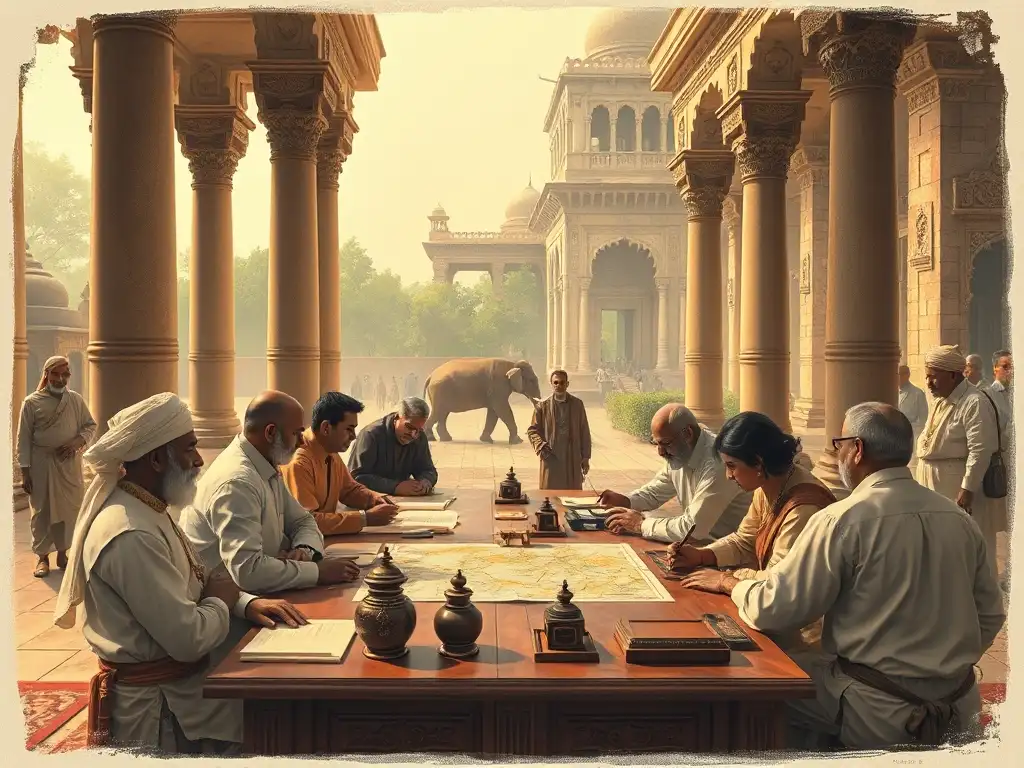
The administrative reforms of the Maurya Empire can be examined through a comparative lens, highlighting distinctions with both the pre-Mauryan systems and later Indian empires. Such comparisons provide insights into the evolution of governance in ancient India.
Comparison with Pre-Mauryan Administrative Systems
Before the rise of the Maurya Empire, Indian governance was often fragmented, characterized by numerous small kingdoms and republics, each with its own administrative practices. The pre-Mauryan systems lacked the centralized authority that the Mauryas implemented, leading to inefficiencies and conflicts among competing powers.
The Mauryas introduced a comprehensive administrative framework that centralized authority while allowing for regional autonomy. Unlike earlier systems, which relied heavily on local chieftains and kinship ties, the Mauryan administration was bureaucratically structured, with appointed officials overseeing various administrative domains. This shift not only streamlined governance but also enhanced the empire's capacity to implement policies uniformly across its extensive territories.
Additionally, the Mauryas placed a greater emphasis on record-keeping and documentation, which was relatively absent in pre-Mauryan systems. This focus on administrative efficiency and accountability marked a significant advancement in governance.
Comparison with Later Indian Empires
In comparison to later Indian empires, such as the Gupta Empire, the Mauryan administrative reforms showcased both similarities and differences. The Gupta Empire adopted many of the centralized practices established by the Mauryas, yet it also placed greater emphasis on local governance and the autonomy of regional rulers.
While the Mauryan administration was characterized by a strong central authority, the Gupta rulers often relied on feudal systems, granting local rulers more power and responsibility. This shift allowed for a more decentralized form of governance, which sometimes led to greater local autonomy but also posed challenges in terms of maintaining a unified imperial identity.
Moreover, the Mauryan Empire's approach to integrating diverse cultures was more pronounced, particularly during Ashoka’s reign. The emphasis on moral governance and ethical administration was a defining feature of the Mauryan era, while later empires may have prioritized military prowess and territorial expansion over cultural integration.
The administrative reforms of the Maurya Empire represented a significant evolution in governance that set foundational principles for subsequent Indian civilizations. The combination of centralized authority, localized administration, and cultural integration highlighted the Mauryan commitment to effective governance, which was both innovative and adaptive to its diverse population.
Conclusion
The administrative reforms of the Maurya Empire marked a significant evolution in governance, showcasing a blend of centralized authority and local autonomy. Under the leadership of Chandragupta Maurya and later his grandson, Ashoka, the empire established a robust framework that not only facilitated efficient governance but also fostered social harmony and economic development.
The innovative administrative practices, such as the establishment of a spy network and the use of provincial governors, served as a model for subsequent empires in India and beyond. This comprehensive approach to administration enabled the Maurya Empire to maintain control over a vast and diverse territory, ensuring stability and prosperity.
The reforms were not merely bureaucratic; they were deeply intertwined with the cultural and ethical fabric of the empire. Ashoka’s promotion of Dhamma exemplifies how governance can be aligned with moral principles, influencing not just the administration but also the subjects' daily lives. Overall, the administrative strategies implemented during the Maurya Empire reflect a period of remarkable change and adaptation, leaving a profound impact on the Indian subcontinent's political landscape.
Summary of Key Points on Administrative Reforms
- Centralization of Power: The Maurya Empire established a strong centralized government that exercised authority over vast territories, which was crucial for maintaining order and implementing reforms.
- Provincial Governance: The creation of provinces, each governed by a viceroy, allowed for localized administration while keeping ultimate control centralized.
- Spy Networks: An extensive network of spies was established to monitor both officials and the populace, ensuring compliance with imperial directives and preventing corruption.
- Legal Reforms: The codification of laws and regulations helped standardize governance across the empire, contributing to a sense of unity and justice.
- Economic Policies: The Mauryan administration implemented significant economic reforms, including tax systems that promoted agricultural productivity and trade.
Lasting Legacy of the Maurya Empire's Administrative Practices
The administrative reforms of the Maurya Empire left a lasting legacy that influenced subsequent Indian dynasties. The emphasis on centralized governance, effective taxation, and legal standardization became foundational principles for later rulers. Moreover, the ethical governance promoted by Ashoka's Dhamma continued to resonate through Indian political thought, inspiring future leaders to consider the moral implications of their rule.
The Maurya Empire's administrative practices also offered a framework for intercultural governance, as seen in the way they managed diverse populations across the empire. This adaptability ensured that the Mauryan administrative model served as a reference point for centuries, impacting governance in regions beyond India as well. The principles established during this period laid the groundwork for a tradition of administrative sophistication that would endure in Indian history.
References
Key Texts and Sources on Mauryan Administration
- Kautilya's Arthashastra - An ancient Indian treatise on statecraft, economic policy, and military strategy, which provides insights into the administrative practices of the Maurya Empire.
- Ashoka's Edicts - A collection of inscriptions on pillars and rocks that reflect Ashoka's policies and principles, particularly his commitment to Dhamma and governance.
- The History of India by Romila Thapar - A comprehensive examination of India's history, including the political and administrative developments during the Maurya period.
Suggested Further Reading on Ancient Indian Governance
- "The Mauryan Empire" by R. C. Majumdar - An in-depth exploration of the Maurya Empire's political structure and governance.
- "Ancient Indian Historiography" by B. N. Mukherjee - A study of how Indian history has been recorded and interpreted, with specific attention to the Mauryan period.
- "The Idea of India" by Sunil Khilnani - This book discusses the historical foundations of modern India, highlighting the legacy of ancient governance systems, including those from the Maurya Empire.
- Introduction to the Maurya Empire
- Overview of the Maurya Empire
- Importance of Administrative Reforms in Ancient India
- Historical Context of Administrative Reforms
- Key Administrative Reforms of the Maurya Empire
- Impact of Administrative Reforms on Governance
- Adaptation of Administrative Practices
- Comparative Analysis of Mauryan Administrative Reforms
- Conclusion
- References
- What were the key administrative reforms of the Maurya Empire?
- How did Ashoka contribute to the administrative reforms?
- What role did the taxation system play in the Maurya Empire's administration?
- How did the Maurya Empire influence future Indian administrations?
- What was the significance of the Maurya Empire's reforms in historical context?
Frequently Asked Questions
What were the key administrative reforms of the Maurya Empire?
The Maurya Empire implemented significant administrative reforms such as the establishment of a centralized government, a structured bureaucracy, and the use of regional governors to maintain control over vast territories.
How did Ashoka contribute to the administrative reforms?
Ashoka, the most renowned Mauryan ruler, promoted Dhamma and emphasized ethical governance, leading to reforms that focused on social welfare, justice, and the well-being of his subjects.
What role did the taxation system play in the Maurya Empire's administration?
The taxation system was crucial for the Maurya Empire's economy, enabling the government to fund public projects and maintain a strong military, thereby reinforcing the power of the central authority.
How did the Maurya Empire influence future Indian administrations?
The administrative framework established during the Maurya Empire set a precedent for future Indian states, influencing governance structures, legal systems, and bureaucratic practices for centuries to come.
What was the significance of the Maurya Empire's reforms in historical context?
The administrative reforms of the Maurya Empire marked a transformative era, showcasing a shift towards organized governance that balanced power and responsibility, greatly impacting the political landscape of ancient India.
Final Reflection: Embracing Change through Administrative Reforms of the Maurya Empire
The administrative reforms of the Maurya Empire serve as a powerful reminder of the importance of adaptability in governance. In today's rapidly changing world, the lessons learned from the Mauryan approach to administration resonate profoundly. The ability to implement effective reforms not only shaped the empire's success but also laid the groundwork for future governance models. Understanding these historical changes can inspire contemporary leaders to embrace innovation and flexibility in their own administrative practices.
The legacy of the Maurya Empire's administrative reforms continues to influence our cultural and social landscape, reminding us that effective governance is a dynamic process. The principles of organization, accountability, and responsiveness that emerged during this period are still relevant today, as societies strive for better governance. The greatest danger in times of turbulence is not the turbulence; it is to act with yesterday's logic.
This quote encapsulates the need for modern leaders to learn from the past while adapting to the present challenges, much like the Mauryan leaders did centuries ago.
As we reflect on the transformative administrative reforms of the Maurya Empire, let us consider how we can apply these lessons in our own lives and communities. I invite you to think critically about the systems around you and seek opportunities for positive change. Whether in your workplace, local government, or personal endeavors, remember that embracing change and fostering adaptability can lead to significant progress. Together, we can honor the legacy of the Maurya Empire by championing reforms that promote growth, inclusivity, and resilience in our ever-evolving world.
Embrace the Lessons of Change and Adaptation!
Thank you for exploring the fascinating world of the Maurya Empire's administrative reforms with us! You've uncovered vital insights into how change drives progress. Now, it's time to take that knowledge and put it into action.
Here are a few steps you can take to further engage with this topic:
- Dive Deeper: Explore the impact of these reforms on contemporary governance—read related articles and participate in discussions within our Ancient India History community.
- Share Your Thoughts: Engage in conversations about these findings with friends or within social media groups! Share this article to raise awareness and invite opinions on how historical changes can inspire modern adaptations.
- Reflect and Apply: Think about how adaptability influences your own life. Write down one change you can embrace today that reflects the resilience demonstrated by the Maurya Empire.
What aspect of the Maurya Empire's adaptations do you find most relevant to today's world? Your insights could spark an enlightening discussion!