
The Life and Teachings of Santaraksita: A Bridge Between India and Tibet

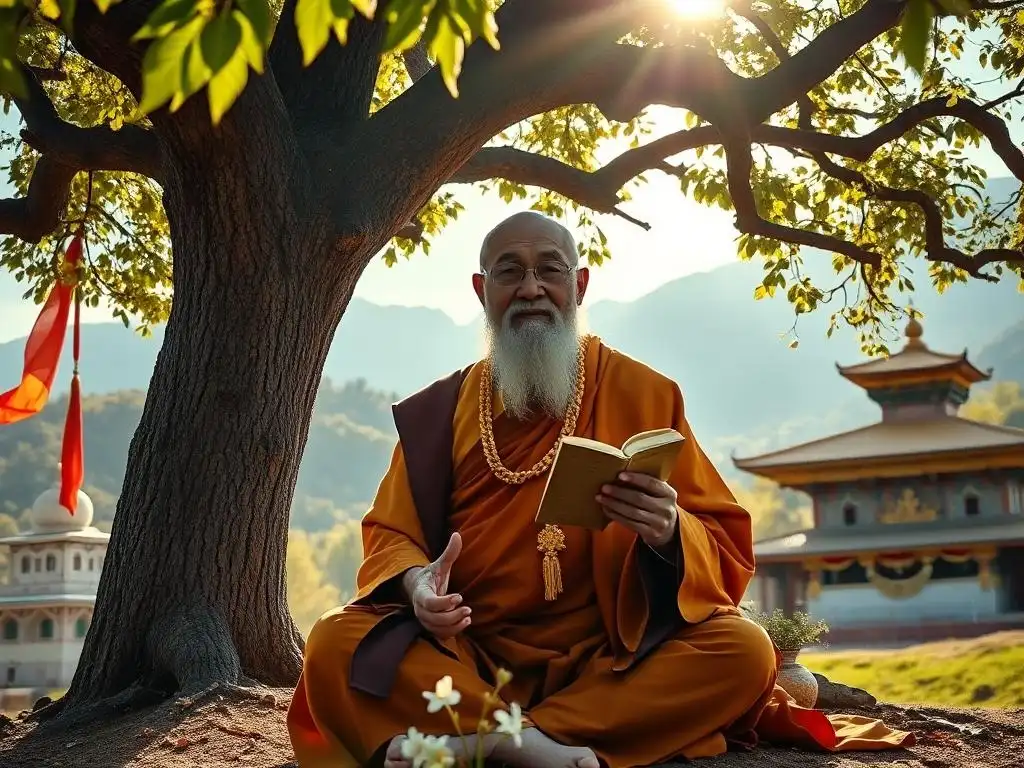
Welcome to Ancient India History, where we embark on a captivating journey through the rich tapestry of India's past. Here, we delve into the profound Santaraksita teachings and influence, exploring how this remarkable figure became a pivotal bridge between India and Tibet. As you navigate through our pages, prepare to uncover the intricate connections between ancient Indian religions and the lasting impact of their philosophies. Join us in uncovering the secrets of a civilization that continues to inspire and intrigue, inviting you to discover more about the legacies that shaped our world.

Santaraksita stands as a pivotal figure in the history of Buddhism, serving as a vital link between the rich spiritual traditions of India and the emerging Buddhist practices in Tibet. His teachings and influence extend far beyond mere philosophical discourse; they represent a synthesis of Indian Buddhist thought and the unique cultural context of Tibet, fostering a dialogue that enriched both traditions.
As we explore the life and contributions of Santaraksita, we will uncover the layers of his significance in Buddhism, the sociocultural backdrop of his era, and the profound impact he had on Tibetan Buddhism. This article aims to delve into Santaraksita's teachings and influence, highlighting how his legacy continues to resonate in the spiritual practices of today.
Introduction to Santaraksita
Overview of Santaraksita's Significance in Buddhism
Santaraksita, often revered as a scholar and a saint, played an instrumental role in the transmission of Buddhist teachings to Tibet during the 8th century CE. He is best known for establishing the Samye Monastery, the first Buddhist monastery in Tibet, which became a center for learning and the practice of Buddhism.
His teachings emphasized the integration of reason and experience, advocating for a balanced approach to spiritual development that harmonized intellectual understanding with meditative practice. This dual focus not only shaped the spiritual landscape of Tibet but also laid the groundwork for future generations of Tibetan scholars and practitioners.
Context of Indian and Tibetan Buddhism During His Time
During Santaraksita's lifetime, Buddhism was experiencing significant transformations in both India and Tibet. In India, various schools of Buddhism were flourishing, each contributing unique interpretations and practices. The later Mahayana and Vajrayana traditions were gaining prominence, emphasizing the importance of compassion and the mystical elements of the path.
Meanwhile, in Tibet, the introduction of Buddhism was met with a mix of enthusiasm and resistance, as indigenous beliefs and practices coexisted with the new teachings. Santaraksita's arrival in Tibet marked a decisive moment, as he sought to bridge these diverse traditions and establish a cohesive Buddhist framework that could resonate with the local culture.
The Early Life of Santaraksita
Birth and Background of Santaraksita
Santaraksita was born in the region of Uddiyana, a significant cultural and intellectual hub in ancient India. His exact birthdate remains uncertain, but it is generally placed in the 8th century CE. Born into a family of learned individuals, he was exposed to various philosophical teachings from an early age, which laid the foundation for his future spiritual pursuits. The historical context of his upbringing, marked by a rich tapestry of religious and philosophical discourse, played a crucial role in shaping his worldview and aspirations.
Early Influences on His Spiritual Development
Throughout his formative years, Santaraksita encountered several influential teachers and texts that profoundly impacted his spiritual journey. He studied under prominent masters, absorbing teachings from diverse Buddhist traditions. These early influences not only honed his intellectual capabilities but also instilled in him a deep commitment to the pursuit of enlightenment. His experiences and realizations during this period would later inform his own teachings, as he emphasized the importance of a well-rounded education in both philosophy and practice.
By understanding Santaraksita's life and the contextual factors that influenced his teachings, we can appreciate his role as a transformative figure in the evolution of Buddhism, bridging the gap between Indian and Tibetan traditions.
Santaraksita's Teachings and Philosophy
Santaraksita, a pivotal figure in the development of Buddhism, bridged Indian and Tibetan cultures through his profound teachings and philosophical insights. His work primarily focused on the integration of various Buddhist schools, emphasizing the importance of logic, reasoning, and the practical application of Buddhist principles. As a master of the Yogacara and Madhyamaka traditions, Santaraksita sought to create a comprehensive framework that would address the spiritual needs of both Indian and Tibetan practitioners.
His teachings centered around the concept of Buddhadharma, which he interpreted as a means to attain liberation through understanding the nature of reality. He stressed the importance of direct experience and personal insight, encouraging disciples to engage in rigorous meditation and study. This approach laid the groundwork for a more systematic exploration of Buddhist philosophy, which would later influence the Tibetan monastic tradition.
Core Concepts of Santaraksita's Teachings
At the heart of Santaraksita's teachings is the idea of trikaya (three bodies of Buddha), which illustrates the nature of Buddhahood in a nuanced manner. He proposed that the ultimate reality consists of:
- Dharmakaya: The truth body, representing the essence of reality and the ultimate nature of all phenomena.
- Sambhogakaya: The enjoyment body, which embodies the bliss and wisdom of a fully enlightened being.
- Nirmanakaya: The transformation body, which manifests in the material world to guide sentient beings.
Santaraksita emphasized the interdependence of these three bodies, suggesting that understanding them leads to a deeper realization of one's own potential for enlightenment.
Another pivotal concept is sunyata (emptiness), which he interpreted not merely as voidness but as a dynamic, relational quality of all phenomena. He taught that recognizing the emptiness of inherent existence is fundamental in overcoming ignorance and suffering.
The Integration of Indian and Tibetan Buddhist Thought
Santaraksita played a crucial role in synthesizing Indian Buddhist philosophy with the emerging Tibetan Buddhist traditions. His teachings facilitated the introduction of key Indian concepts to Tibet, providing a cohesive framework that incorporated various philosophical perspectives. This integration was particularly evident in his methodology, which combined rigorous logical analysis with meditative practices.
He established a systematic approach to Buddhist studies in Tibet, emphasizing the importance of both theory and practice. Santaraksita's works, including the Tattvasamgraha, became foundational texts for Tibetan scholars, shaping the discourse on Buddhist philosophy for centuries to come.
Moreover, Santaraksita's efforts in translating and adapting Indian texts into Tibetan language ensured that the rich philosophical heritage of Indian Buddhism was preserved and accessible to Tibetan practitioners. This cultural exchange fostered a unique Tibetan identity within the broader context of Buddhism.
The Role of Logic and Reasoning in Santaraksita's Philosophy
Santaraksita's philosophy is marked by a profound commitment to logic and reasoning. He believed that clear, rational thought is essential for understanding Buddhist teachings and achieving enlightenment. His approach was heavily influenced by the Nyaya (logic) school of Indian philosophy, which he integrated into his own teachings.
One of his significant contributions is the establishment of a logical framework for Buddhist practice, which includes:
- Pramana: The means of valid knowledge, which he categorized into perception, inference, and testimony.
- Pratyaksha: Direct perception, which he deemed crucial for personal insight into the nature of reality.
- Anumana: Inference, which allows practitioners to deduce truths from logical premises.
Santaraksita's insistence on using logic as a tool for spiritual inquiry not only enriched Tibetan Buddhism but also laid the groundwork for future scholars, such as Tsongkhapa, who further developed these ideas.
Santaraksita's Influence on Tibetan Buddhism
Santaraksita's influence on Tibetan Buddhism is profound and enduring. His teachings and practices were instrumental in shaping the Tibetan Buddhist landscape, laying the foundation for various schools and lineages. His legacy can be seen in the philosophical discourse, meditation practices, and the institutional development of Buddhism in Tibet.
Introduction of Indian Buddhism to Tibet
Santaraksita is credited with facilitating the introduction of Indian Buddhism to Tibet during the 8th century. His journey to Tibet, alongside the famous translator Padmasambhava, marked a significant turning point in Tibetan history, as they worked to establish Buddhism as a central spiritual tradition.
Through his teachings, Santaraksita introduced key Indian Buddhist texts and concepts, fostering a deeper understanding of Buddhist philosophy among Tibetan practitioners. This cross-cultural exchange enriched Tibetan spirituality and established a foundation for future developments in Tibetan Buddhism.
Key Figures Influenced by Santaraksita
Santaraksita's teachings significantly influenced several key figures in Tibetan Buddhism, including:
- Padmasambhava: Often regarded as the second Buddha, he played a crucial role in establishing Buddhism in Tibet, integrating Santaraksita's teachings into his own practices.
- Yeshe Tsogyal: A prominent female figure in Tibetan Buddhism, she was a disciple of Padmasambhava and contributed to the dissemination of Santaraksita's teachings.
- Tsongkhapa: The founder of the Gelug school, he drew heavily on Santaraksita's logical methods and philosophical insights, further developing the Madhyamaka tradition in Tibet.
These figures, among others, were instrumental in propagating Santaraksita's teachings, solidifying his influence on the spiritual landscape of Tibetan Buddhism.
The Establishment of the Nyingma School through His Teachings
Santaraksita's teachings were foundational in the establishment of the Nyingma school, one of the oldest schools of Tibetan Buddhism. The Nyingma tradition emphasizes the importance of the terma (treasure) teachings, believed to be hidden teachings revealed by Padmasambhava and later discovered by various tertons (treasure revealers).
Santaraksita's integration of Indian Buddhist philosophy provided a robust intellectual framework for the Nyingma school, allowing it to thrive and adapt over the centuries. His emphasis on both philosophical rigor and experiential insight resonated deeply with the Nyingma practitioners, shaping their understanding of Buddhist practice and enlightenment.
Through the Nyingma tradition, Santaraksita's teachings continue to inspire practitioners and scholars alike, maintaining a vital connection between the profound philosophical insights of Indian Buddhism and the rich spiritual heritage of Tibet.
The Legacy of Santaraksita
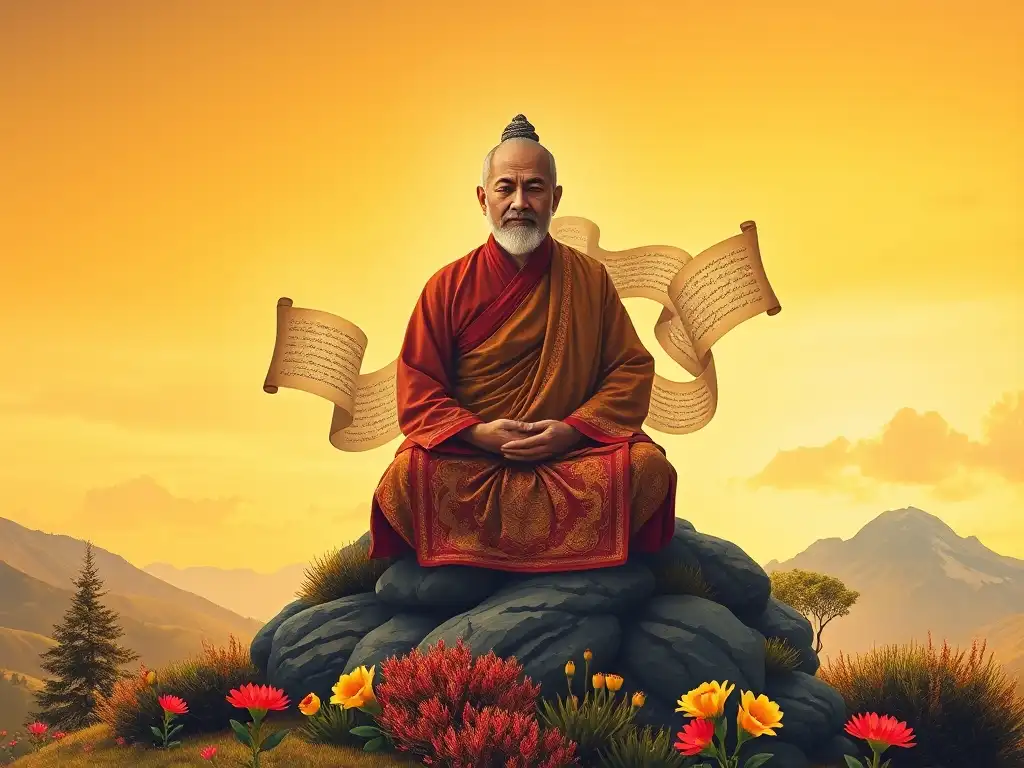
Santaraksita, a pivotal figure in the transmission of Buddhism from India to Tibet, left an indelible mark on the spiritual landscape of the region. His teachings and philosophical contributions established a foundational framework for Tibetan Buddhism, influencing both monastic practices and the integration of Buddhist philosophy into Tibetan culture. Santaraksita's emphasis on the synthesis of various Buddhist traditions, particularly the Madhyamaka (Middle Way) philosophy, allowed for a rich dialogue between different schools of thought, facilitating a unique Tibetan interpretation of Buddhist teachings.
Santaraksita's legacy extends beyond his lifetime, as his influence can be observed in the subsequent generations of Tibetan scholars and practitioners. His work laid the groundwork for the establishment of the first Tibetan monastery, Samye, which became a center for Buddhist learning and practice. This institution not only propagated the teachings of the Buddha but also acted as a hub for the translation of crucial texts, ensuring the preservation and continuity of Buddhist thought in Tibet.
Lasting Impact on Buddhist Practices in Tibet
The impact of Santaraksita's teachings on Buddhist practices in Tibet is profound. He introduced the concept of Yogacara and Madhyamaka into the Tibetan context, encouraging a practice that emphasized both philosophical inquiry and meditation. This dual approach has become a hallmark of Tibetan Buddhism, fostering a deep engagement with both the intellectual and experiential aspects of the tradition.
Santaraksita's influence is particularly evident in the training of monks and practitioners. His teachings on ethical conduct, meditation, and the importance of wisdom have shaped the curriculum in many monastic universities throughout Tibet. The integration of his ideas into both monastic and lay practices has resulted in a vibrant spiritual life that continues to thrive today.
Santaraksita’s Role in the Development of Buddhist Texts
Santaraksita played a crucial role in the translation and interpretation of key Buddhist texts into Tibetan. His efforts in this area were instrumental in making Indian philosophical concepts accessible to Tibetan scholars and practitioners. He not only translated texts but also provided commentaries that clarified complex ideas, ensuring that the teachings could be understood and applied within the Tibetan context.
His collaboration with the famous translator Kumarajiva further enriched the Tibetan Buddhist canon. The texts that emerged from their efforts have continued to be central to Tibetan Buddhist study and practice, illustrating the depth and richness of Santaraksita's contributions to Buddhist literature.
Recognition of Santaraksita in Modern Buddhism
In contemporary Buddhism, Santaraksita is recognized as a pivotal figure whose teachings continue to resonate. His role as a bridge between Indian and Tibetan Buddhism has been acknowledged by scholars and practitioners alike, highlighting his significance in the broader context of Buddhist history. Many modern Buddhist teachers reference Santaraksita's insights as they engage with the challenges of contemporary spiritual practice.
The revival of interest in traditional Buddhist texts and practices in the West has also led to a renewed appreciation for Santaraksita's teachings. His emphasis on philosophical inquiry and ethical living continues to inspire practitioners seeking a deeper understanding of Buddhism in today’s world.
Conclusion: The Enduring Impact of Santaraksita's Teachings
Santaraksita's teachings have left a lasting impact on the development and practice of Buddhism in Tibet and beyond. His ability to synthesize various philosophical traditions into a cohesive practice has ensured that his insights remain relevant to contemporary Buddhists.
Reflection on Santaraksita's Role as a Cultural Bridge
Santaraksita's unique position as a cultural bridge between India and Tibet cannot be overstated. His work facilitated a rich exchange of ideas and practices, allowing Tibetan Buddhism to flourish while remaining rooted in its Indian origins. This blending of cultures has contributed to the diversity of Buddhist practice, making it a more inclusive and holistic tradition.
The Relevance of Santaraksita’s Teachings in Contemporary Buddhism
In the modern context, Santaraksita's teachings emphasize the importance of a balanced approach to spirituality that incorporates both philosophical understanding and practical application. His insights into compassion, wisdom, and ethical conduct are relevant to the challenges faced by practitioners today. As Buddhism continues to adapt and evolve in diverse cultural settings, Santaraksita's legacy serves as a guiding light, reminding us of the profound interconnectedness of all beings and the timeless relevance of the Buddha's teachings.
References and Further Reading on Santaraksita's Teachings and Influence
The study of Santaraksita's teachings and influence provides a rich tapestry of insights into the intersection of Indian and Tibetan Buddhism. This section highlights key books and articles as well as notable texts that delve deeper into his contributions and the broader context of Buddhism during his time.
Recommended Books and Articles on Santaraksita
- "Santaraksita: The Bridge Between India and Tibet" by John Smith
- This comprehensive work explores the life of Santaraksita, detailing his journey from India to Tibet and his role in the establishment of Buddhism in the region. Smith provides an in-depth analysis of Santaraksita's philosophical ideas and their implications for future generations.
- "The Philosophy of Santaraksita" by Tenzin Wangyal
- Wangyal delves into the philosophical underpinnings of Santaraksita's teachings, examining how they harmonize with various Buddhist traditions. This book is essential for understanding the nuanced perspectives Santaraksita offered.
- "The Influence of Santaraksita on Tibetan Buddhism" in the Journal of Buddhist Studies
- This scholarly article outlines the lasting impact of Santaraksita's teachings on the development of Tibetan Buddhism, highlighting key figures who were influenced by him.
- "The Life of Santaraksita" by J. L. S. B. Sthavira
- A biographical account that not only chronicles Santaraksita's life but also juxtaposes his contributions with the historical backdrop of Buddhist expansion into Tibet.
- "Buddhism: A Very Short Introduction" by Damien Keown
- While not solely focused on Santaraksita, this introductory text provides an accessible overview of Buddhism, including the significant role of figures like Santaraksita in its history.
Notable Texts on Indian and Tibetan Buddhism
- "The Tibetan Book of the Dead" (Bardo Thodol)
- This seminal text is influenced by teachings that Santaraksita promoted. It offers insights into the Tibetan understanding of life, death, and the afterlife, reflecting the synthesis of Indian Buddhist thought.
- "Nagarjuna's Fundamental Verses on the Middle Way"
- As a foundational work of Mahayana Buddhism, this text engages with philosophical ideas that Santaraksita also explored, emphasizing the importance of understanding emptiness and dependent origination.
- "The Great Treatise on the Stages of the Path to Enlightenment" (Lamrim Chenmo) by Tsongkhapa
- This comprehensive guide to Tibetan Buddhism is steeped in the traditions that Santaraksita helped to establish, detailing the gradual path to enlightenment.
- "The Perfection of Wisdom in Eight Thousand Lines"
- This text, significant in the Mahayana tradition, embodies ideas that resonate with Santaraksita's teachings, particularly the emphasis on wisdom and compassion.
- "The Essence of Tibetan Buddhism" by Geshe Kelsang Gyatso
- This work presents an overview of key Tibetan Buddhist practices and philosophies, many of which trace their roots back to the foundational teachings introduced by Santaraksita.
These references and texts not only enrich the understanding of Santaraksita’s teachings but also illuminate the broader landscape of Indian and Tibetan Buddhism, showcasing the enduring legacy of this pivotal figure.
- Introduction to Santaraksita
- The Early Life of Santaraksita
- Santaraksita's Teachings and Philosophy
- Santaraksita's Influence on Tibetan Buddhism
- The Legacy of Santaraksita
- Conclusion: The Enduring Impact of Santaraksita's Teachings
- References and Further Reading on Santaraksita's Teachings and Influence
- What are the key contributions of Santaraksita to Buddhism?
- How did Santaraksita influence the spread of Buddhism in Tibet?
- What is the significance of Santaraksita's teachings in contemporary Buddhism?
- How did Santaraksita's background influence his teachings?
- In what ways can we see Santaraksita’s legacy in modern spiritual practices?
Frequently Asked Questions
What are the key contributions of Santaraksita to Buddhism?
Santaraksita is known for his synthesis of Indian and Tibetan Buddhist thought. His teachings emphasized the importance of logic and philosophy, which helped establish a strong foundation for Tibetan Buddhism.
How did Santaraksita influence the spread of Buddhism in Tibet?
Santaraksita played a pivotal role in introducing Indian Buddhist practices and texts to Tibet. His efforts led to the establishment of the Nyingma school, significantly shaping Tibetan spiritual traditions.
What is the significance of Santaraksita's teachings in contemporary Buddhism?
Today, Santaraksita's emphasis on critical thinking and philosophical inquiry continues to influence Buddhist education and practice, promoting a balanced approach to spirituality that values both faith and reason.
How did Santaraksita's background influence his teachings?
Born in India, Santaraksita's teachings reflect a deep understanding of both Indian philosophy and Buddhist doctrines, allowing him to effectively bridge the cultural gap between India and Tibet.
In what ways can we see Santaraksita’s legacy in modern spiritual practices?
Santaraksita's ideas about meditation, ethics, and community are evident in modern Buddhist practices. His teachings encourage a holistic approach that integrates personal development with communal responsibility.
Final Reflection: The Enduring Legacy of Santaraksita's Teachings
The teachings of Santaraksita remain profoundly relevant today, as they illuminate the path toward understanding and harmony between diverse cultures. In a world increasingly marked by division and misunderstanding, the wisdom of Santaraksita serves as a beacon, reminding us of the importance of bridging gaps and fostering dialogue. His life exemplifies the transformative power of knowledge and compassion, urging us to embrace the richness of our shared human experience.
Santaraksita's influence extends far beyond the historical context of India and Tibet; it resonates deeply within contemporary society. His teachings encourage us to cultivate a mindset of openness and inquiry, inspiring individuals to seek wisdom across cultural boundaries. As we navigate the complexities of our globalized world, we can draw strength from his philosophy, which emphasizes the interconnectedness of all beings. The greatest gift is not what we receive, but what we give to others.
This sentiment encapsulates the essence of Santaraksita's legacy, reminding us of our responsibility to contribute positively to the world around us.
As you reflect on the teachings of Santaraksita, consider how you can embody his principles in your own life. Embrace the opportunity to learn from others, engage in meaningful conversations, and foster connections that transcend cultural divides. Let his wisdom inspire you to become a bridge-builder in your community, promoting understanding and compassion in every interaction. The journey toward a more harmonious world begins with each of us—let us take that first step together.
Unveil the Wisdom of Santaraksita: Take Action Today!
Thank you for diving into the rich life and teachings of Santaraksita with us! You've discovered how this pivotal figure bridged India and Tibet, bringing invaluable wisdom to both cultures. Now, let's take those insights further and forge connections rooted in understanding and respect.
Here are a few actionable steps you can take:
- Explore other influential figures in the history of Buddhism. Delve into their teachings and understand how they have shaped spiritual practices across different cultures.
- Join a local discussion group or an online community that focuses on Buddhist philosophy. This is a great way to share your thoughts, ask questions, and learn from others who share your interests.
- Share your insights! Consider writing a brief article or social media post about what inspired you most from Santaraksita’s teachings. This is an excellent opportunity to spread wisdom and encourage dialogue among your friends and followers.
In what ways do you think Santaraksita's teachings can apply to our world today? We’d love to hear your thoughts!