
Mathematical Puzzles of the Gupta Era: Engaging Minds Through Challenges

Welcome to Ancient India History, where we embark on a fascinating journey through the rich tapestry of ancient Indian civilizations! In our latest exploration, we delve into the captivating world of the Gupta Empire and its remarkable mathematical puzzles. These intricate challenges not only reflect the intellectual prowess of the era but also invite you to engage your own mind in the spirit of curiosity and discovery.
What secrets lie within these ancient riddles? Join us as we unravel the complexities of Gupta-era mathematics and uncover the legacy that continues to influence modern thought. Dive in and let's explore together!
- Introduction to Gupta Empire Mathematical Puzzles
- Historical Context of Mathematical Puzzles in the Gupta Empire
- Notable Gupta Empire Mathematical Puzzles
- Techniques and Methods Used in Gupta Mathematical Puzzles
- Educational Significance of Gupta Empire Mathematical Puzzles
- Conclusion: The Enduring Impact of Gupta Empire Mathematical Puzzles
-
Frequently Asked Questions
- What were the Gupta Empire mathematical puzzles known for?
- How did the Gupta Empire contribute to mathematics?
- Are there any specific puzzles from the Gupta Era that are still popular today?
- How did these mathematical puzzles reflect the culture of the Gupta Empire?
- Where can I find more information about Gupta Empire mathematical puzzles?
- Final Reflection: The Enduring Legacy of Gupta Empire Mathematical Puzzles
- Engage Your Mind with Gupta Era Puzzles!
Introduction to Gupta Empire Mathematical Puzzles
The Gupta Empire, often referred to as the "Golden Age of India," marked a significant period of cultural, scientific, and mathematical advancements from approximately 320 to 550 CE. During this era, a remarkable array of intellectual pursuits flourished, particularly in the field of mathematics. The Gupta mathematicians not only made substantial contributions to various mathematical concepts but also developed engaging puzzles and challenges that served as tools for education and mental exercise.
These mathematical puzzles of the Gupta era are not merely historical artifacts; they reflect the innovative spirit and intellectual curiosity that characterized ancient Indian civilization. In this article, we will delve into the origins, significance, and influence of these mathematical puzzles, exploring how they engaged minds and contributed to the rich tapestry of ancient Indian mathematics.
Overview of the Gupta Empire's Contribution to Mathematics
The Gupta Empire is renowned for its foundational contributions to mathematics, which laid the groundwork for future developments in the field. Notable mathematicians of this period, such as Aryabhata and Brahmagupta, made groundbreaking advancements that are still recognized today. Here are some key contributions:
- Decimal System: The Gupta mathematicians played a crucial role in popularizing the decimal system, which is the basis for modern arithmetic. This system included the use of zero as a placeholder, a revolutionary concept for mathematics.
- Algebra: They laid the foundations of algebra with the introduction of various equations and solutions. Brahmagupta’s work, particularly, presented rules for solving linear and quadratic equations.
- Trigonometry: The Gupta period saw significant advancements in trigonometry, including the development of sine and cosine functions, which are critical to modern mathematics.
- Mathematical Puzzles: Engaging mathematical puzzles were crafted, serving not only as intellectual challenges but also as educational tools. These puzzles often incorporated practical applications and helped in developing logical thinking among students.
The contributions of the Gupta Empire to mathematics were profound, influencing subsequent generations of mathematicians both in India and around the world. The legacy of these intellectual pursuits is evident in many contemporary mathematical concepts and practices.
Importance of Mathematical Puzzles in Ancient Indian Culture
Mathematical puzzles during the Gupta era held a special place in ancient Indian culture, serving multiple purposes that extended beyond mere entertainment. Here are some reasons why these puzzles were significant:
- Educational Tools: Puzzles were often used as pedagogical instruments to teach mathematical concepts in a fun and engaging way. They encouraged critical thinking and problem-solving skills among students.
- Cultural Reflection: These puzzles reflected the values and philosophical underpinnings of ancient Indian culture, promoting intellectual discourse and curiosity. They were often intertwined with literature and art, showcasing the holistic approach to knowledge in ancient India.
- Community Engagement: Solving puzzles was a communal activity that brought people together, fostering a sense of camaraderie and shared learning. This social aspect of mathematics was crucial in enhancing communal ties.
- Mental Agility: Engaging with mathematical puzzles helped sharpen the minds of individuals, promoting cognitive skills that were essential for various fields, including astronomy, engineering, and commerce.
Through these multifaceted roles, mathematical puzzles not only enriched the intellectual landscape of the Gupta Empire but also contributed to the overall cultural heritage of ancient India, emphasizing the importance of learning and inquiry in society.
Historical Context of Mathematical Puzzles in the Gupta Empire
The Gupta Era: A Golden Age of Science and Mathematics
The Gupta Empire, which flourished from approximately 320 to 550 CE, is often referred to as a golden age for science and mathematics in ancient India. This period witnessed groundbreaking advancements in various fields, most notably in mathematics, astronomy, and medicine. The mathematicians of this era were not only creators of numerical theories but also adept puzzle makers, crafting challenges that engaged scholars and enthusiasts alike.
During this time, notable mathematicians such as Aryabhata and Brahmagupta emerged, whose contributions laid the foundations for future mathematical exploration. Aryabhata, for instance, introduced concepts such as zero and the decimal system, which revolutionized mathematical practices. In his seminal work, Aryabhatiya, he posed several mathematical puzzles that illustrated complex problems through intriguing challenges.
Puzzles were not merely recreational; they served a didactic purpose, facilitating the learning of mathematical concepts and enhancing analytical skills. The Gupta scholars often embedded these puzzles within larger mathematical treatises, encouraging readers to think critically and develop problem-solving strategies.
The cultural climate of the Gupta Empire also played a crucial role in the proliferation of mathematical puzzles. The patronage of arts and sciences by Gupta rulers provided an environment where intellectual pursuits thrived. Scholars collaborated across disciplines, creating a rich tapestry of knowledge that included not just mathematics but also philosophy, literature, and art.
Influences on Mathematical Thought During the Gupta Period
The Gupta period's mathematical thought was influenced by earlier Indian traditions and outside interactions, which shaped the development of mathematical puzzles.
- Indus Valley Civilization: The mathematical principles that emerged from the Indus Valley Civilization (circa 3300–1300 BCE) laid the groundwork for subsequent developments in the Gupta era. The use of weights and measures in trade and the construction of urban layouts necessitated mathematical understanding, which evolved over time into more abstract concepts.
- Vedic Texts: The Vedic texts, particularly the Shulba Sutras, provided foundational knowledge on geometry and measurement. These texts introduced concepts of constructing altars and sacrifices that involved intricate geometric shapes, inspiring later mathematicians to formulate puzzles based on these principles.
- Cultural Exchanges: The Gupta Empire was characterized by extensive trade and cultural exchanges with other civilizations, including the Greeks and Persians. This interaction facilitated the exchange of ideas and mathematical techniques, enriching the mathematical landscape. For instance, the introduction of Greek geometrical concepts influenced the formulation of puzzles that involved spatial reasoning and logical deductions.
- Philosophical Underpinnings: The philosophical traditions of the time also influenced mathematical thought. The idea of Brahman—the ultimate reality—paralleled the search for truth in mathematics, leading to a deeper inquiry into the nature of numbers and their relationships. This philosophical context encouraged mathematicians to create puzzles that were not only intellectually stimulating but also reflective of a broader quest for knowledge.
The Gupta Empire's mathematical puzzles emerged from a rich historical backdrop characterized by earlier traditions, cultural exchanges, and philosophical inquiries. These puzzles not only served as a means of engagement but also reflected the sophisticated mathematical thought that defined this remarkable period in ancient Indian history.
Notable Gupta Empire Mathematical Puzzles
The Gupta Empire, spanning from approximately 320 to 550 CE, is renowned not only for its advancements in art and literature but also for its significant contributions to mathematics. During this era, various mathematical puzzles emerged that were not merely recreational but also served as educational tools, enhancing critical thinking and problem-solving skills among scholars. These puzzles reflect the ingenuity of Gupta mathematicians and their understanding of numbers, geometry, and algebra, laying foundational concepts that would influence future generations.
Famous Mathematical Puzzles from the Gupta Era
Among the notable mathematical puzzles from the Gupta era are those that challenge the intellect while seamlessly integrating mathematical principles. Here are three famous puzzles that exemplify the creativity and depth of the mathematical thought during this period:
- The Problem of Two Cows
- The Water Tank Riddle
- The Merchant's Profit Problem
These puzzles highlight the application of mathematical concepts in everyday situations, showcasing how the Gupta mathematicians utilized problems to engage and educate.
Analysis of Key Puzzles and Their Solutions
Puzzle 1: The Problem of Two Cows
This puzzle presents a scenario involving two cows, where the challenge is to determine how the cows can share a limited resource equitably.
The Riddle:
Two cows are grazing in a field that can sustain only a certain amount of grass. If one cow eats more than the other, it will deplete the resource and eventually lead to starvation for both. How can they divide the grass to ensure both survive?
Solution:
The solution involves applying the concept of ratios and proportions. By establishing a grazing schedule that allows each cow to eat a proportional amount based on their size and nutritional needs, both cows can thrive. This riddle illustrates the importance of resource management and equitable sharing, vital concepts in agricultural practices of the time.
Puzzle 2: The Water Tank Riddle
This riddle focuses on the timing and flow of water, highlighting the importance of measurement and efficiency.
The Riddle:
A water tank has two pipes: one fills the tank at a rate of 5 liters per hour, while the other drains it at a rate of 3 liters per hour. If both pipes are open, how long will it take to fill the tank of 40 liters?
Solution:
To solve this, we first calculate the net flow rate:
- Filling pipe: 5 liters/hour
- Draining pipe: 3 liters/hour
- Net rate = 5 - 3 = 2 liters/hour
To fill a 40-liter tank at a net rate of 2 liters/hour, the time required is:
\[
\text{Time} = \frac{\text{Total Volume}}{\text{Net Flow Rate}} = \frac{40 \text{ liters}}{2 \text{ liters/hour}} = 20 \text{ hours}
\]
This puzzle emphasizes the significance of understanding flow rates and timing in resource management, a key aspect of Gupta engineering and irrigation practices.
Puzzle 3: The Merchant's Profit Problem
This puzzle involves commerce and profit calculation, integral to trade during the Gupta period.
The Riddle:
A merchant buys a set of goods for 100 gold coins. He sells half of the goods at a profit of 20% and the other half at a loss of 10%. What is the overall profit or loss?
Solution:
- First Half:
- Cost = 50 gold coins (half of 100)
- Selling Price = Cost + Profit = 50 + (0.20 × 50) = 50 + 10 = 60 gold coins
- Second Half:
- Cost = 50 gold coins
- Selling Price = Cost - Loss = 50 - (0.10 × 50) = 50 - 5 = 45 gold coins
- Total Selling Price:
- 60 + 45 = 105 gold coins
- Overall Profit:
- Total Selling Price - Total Cost = 105 - 100 = 5 gold coins profit
This puzzle not only illustrates profit and loss calculations but also reflects the complexities of trade, which was a significant aspect of the Gupta economy.
These mathematical puzzles from the Gupta Empire not only showcase the intellectual prowess of the time but also serve as a testament to the enduring legacy of ancient Indian mathematics. Through engaging challenges like these, Gupta mathematicians contributed to the evolution of mathematical thought, influencing generations to come.
Techniques and Methods Used in Gupta Mathematical Puzzles

The Gupta Empire, renowned for its significant contributions to mathematics, employed various techniques and methods that shaped the mathematical puzzles of the era. These techniques not only reflected the sophisticated understanding of mathematical concepts but also laid the foundation for future developments in the field.
Problem-Solving Approaches in Gupta Mathematics
The ancient mathematicians of the Gupta period utilized several problem-solving approaches that are still relevant today. These methods included:
- Logical Reasoning: Gupta mathematicians emphasized logical reasoning, which enabled them to approach problems systematically. They often formulated problems in a way that required careful analysis, encouraging deeper engagement with mathematical concepts.
- Trial and Error: This method was frequently used in puzzles, where mathematicians would test various hypotheses or solutions until finding one that satisfied the conditions of the problem. It fostered creativity and innovation in problem-solving.
- Inductive Reasoning: Many Gupta mathematical puzzles required the use of inductive reasoning, where general principles were derived from specific examples. This technique helped in establishing patterns and formulating general rules that could be applied to solve more complex problems.
- Algorithmic Thinking: The Gupta era saw the development of step-by-step procedures for solving mathematical problems, akin to modern algorithms. This structured approach allowed for efficient problem-solving and is evident in the puzzles created during this time.
The above approaches not only enhanced mathematical understanding but also engaged scholars and learners in a thought-provoking manner, making the study of mathematics an interactive experience.
The Role of Geometry and Algebra in Puzzles
Geometry and algebra played crucial roles in the mathematical puzzles of the Gupta Empire, showcasing the advanced level of mathematical thought during this period.
- Geometric Concepts: Many puzzles were based on geometric principles, such as area, volume, and the properties of shapes. For instance, problems involving the calculation of areas of triangles and rectangles were common, promoting an understanding of spatial relationships and geometric reasoning.
- Algebraic Techniques: Algebra emerged as a powerful tool in solving mathematical puzzles. The use of symbols to represent unknown values allowed mathematicians to formulate equations and inequalities, facilitating the resolution of complex problems. This algebraic thinking is evident in puzzles that required finding unknown quantities based on given conditions.
- Integration of Geometry and Algebra: The Gupta mathematicians often integrated geometric and algebraic methods to create multifaceted puzzles, requiring solvers to apply both fields of study. For example, a puzzle might involve calculating the dimensions of a geometric figure while also incorporating algebraic expressions to represent its properties.
The interplay between geometry and algebra in Gupta mathematical puzzles not only enriched the intellectual landscape of the time but also set the stage for future advancements in mathematics, influencing scholars for centuries to come. By engaging with these puzzles, individuals could develop critical thinking skills and a deeper appreciation for the beauty of mathematics within the framework of ancient Indian civilization.
Educational Significance of Gupta Empire Mathematical Puzzles
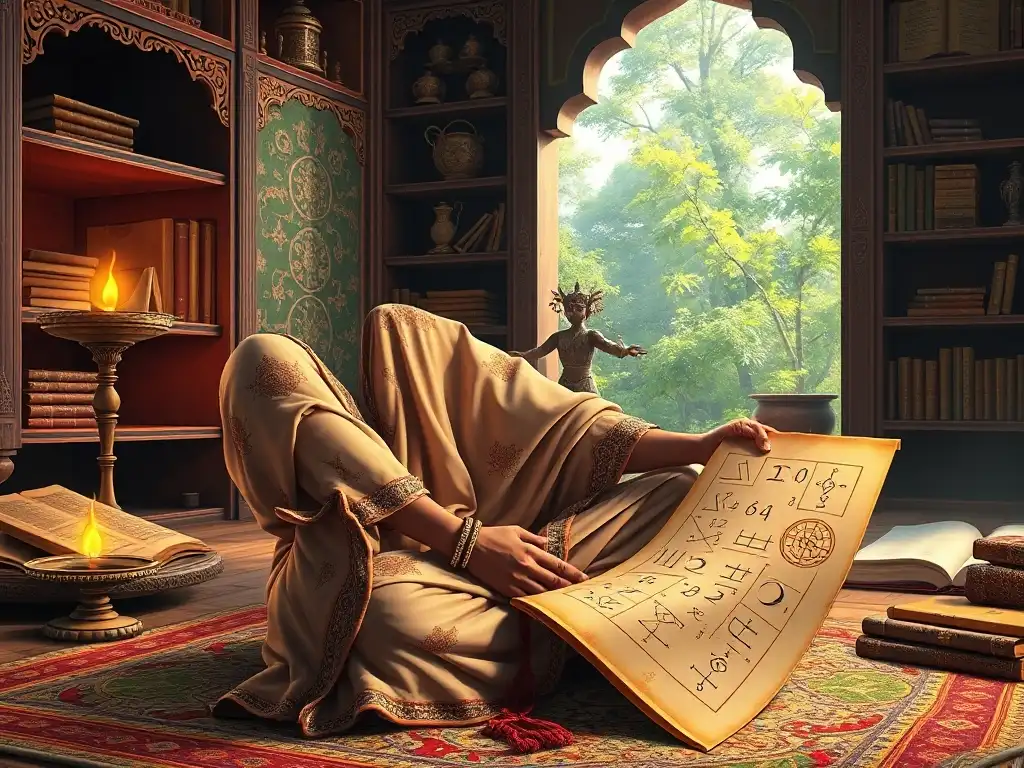
The mathematical puzzles of the Gupta Empire were not merely tools for entertainment; they served a profound educational purpose that shaped the intellectual landscape of ancient India. These puzzles were intricately woven into the fabric of society, promoting critical thinking, logical reasoning, and problem-solving skills among students and scholars alike.
How Mathematical Puzzles Engaged Minds in Ancient India
During the Gupta period (approximately 240-550 CE), the emphasis on mathematics and astronomy led to the creation of various puzzles and riddles aimed at enhancing cognitive abilities. These puzzles often involved arithmetic, geometry, and algebraic concepts that were crucial for everyday life, such as trade, land measurement, and architecture.
- Cognitive Development: Engaging with mathematical puzzles was an effective way to stimulate the brain. Scholars, as well as students, were encouraged to solve complex problems that required innovative thinking. For example:
- Puzzles involving the division of land among heirs, which prompted students to apply their understanding of fractions and ratios.
- Problems related to calculating the area of various geometric shapes, enhancing spatial awareness.
- Cultural Integration: These mathematical challenges were often presented in the form of stories or folklore, making them culturally relevant. This fusion of mathematics with narrative not only made learning enjoyable but also helped in retaining knowledge. The use of rhymes and patterns in the puzzles further facilitated memory retention.
- Community Engagement: Mathematical puzzles fostered a sense of community as they were commonly discussed in gatherings. Scholars would challenge each other with new riddles, promoting a culture of intellectual debate and collaboration. The presence of such puzzles in social settings signifies their role in creating an engaged and educated populace.
In essence, the mathematical puzzles of the Gupta Empire were designed to sharpen the intellect and instill a sense of curiosity about the world. These challenges not only reflected the advanced understanding of mathematics in ancient India but also served as a bridge between learning and everyday life.
Legacy of Gupta Mathematical Puzzles in Modern Education
The influence of Gupta Empire mathematical puzzles extends beyond their time, leaving a lasting legacy in contemporary educational practices. The principles and methods employed in these ancient challenges have inspired modern pedagogical approaches, particularly in mathematics education.
- Problem-Solving Approach: Today, educators emphasize the importance of critical thinking and problem-solving in mathematics. The Gupta puzzles exemplified this approach, encouraging learners to explore multiple methods to arrive at a solution. This has led to the development of inquiry-based learning models that prioritize understanding over rote memorization.
- Cultural Relevance in Education: The integration of cultural narratives with mathematical concepts, as seen in Gupta puzzles, has been adopted in modern curricula. By contextualizing mathematics within familiar stories or real-world situations, educators help students connect abstract concepts with practical applications.
- Encouraging Collaborative Learning: The communal aspect of solving puzzles during the Gupta era is mirrored in modern classrooms where group activities and peer learning are encouraged. Collaborative problem-solving not only enhances understanding but also fosters social skills among students.
The mathematical puzzles of the Gupta Empire were not only significant for their time but continue to resonate within modern educational frameworks. By engaging minds and igniting curiosity, these puzzles have paved the way for a richer understanding of mathematics and its applications in both historical and contemporary contexts.
Conclusion: The Enduring Impact of Gupta Empire Mathematical Puzzles
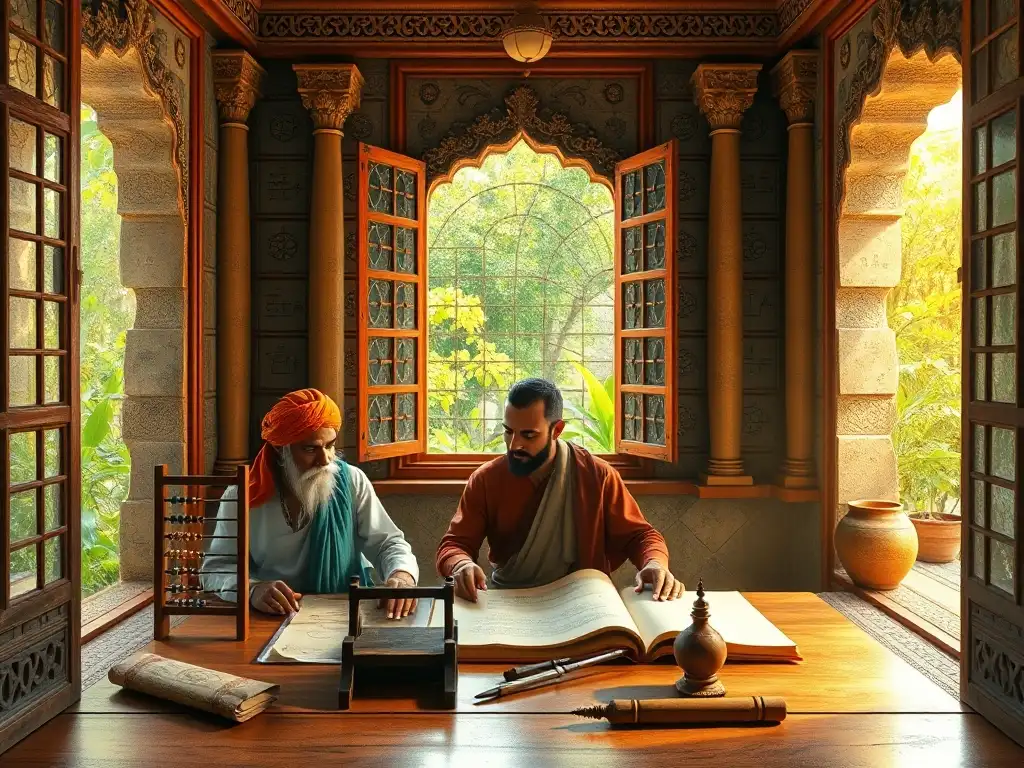
The Gupta Empire, often hailed as the Golden Age of India, is not only renowned for its advancements in the arts and sciences but also for its profound influence on mathematics. The mathematical puzzles that emerged during this period serve as a testament to the intellectual curiosity and creativity of scholars who thrived under Gupta patronage. These puzzles were not mere recreational challenges; they were instrumental in enhancing logical thinking and problem-solving skills, laying the groundwork for later mathematical advancements.
By engaging with these puzzles, students and scholars of the time could explore complex mathematical concepts in an interactive manner. This approach not only fostered a deeper understanding of mathematics but also integrated it within the broader spectrum of education and culture. The mathematical puzzles of the Gupta Empire have left an enduring legacy, influencing both Indian and global mathematical thought.
Reflection on the Cultural and Educational Importance
The puzzles from the Gupta period reflect a vibrant culture that valued intellectual pursuits. They were often incorporated into educational curriculums, serving as tools for teaching various mathematical concepts, including geometry, arithmetic, and algebra.
- Cultural Integration:
- These puzzles were often rooted in daily life and cultural practices, making mathematics relatable and practical.
- They reflected societal values, such as the importance of logical reasoning and strategic thinking.
- Educational Framework:
- The use of puzzles in education highlights the innovative pedagogical methods of the time, emphasizing active learning and critical thinking.
- Scholars like Aryabhata and Brahmagupta contributed significantly to this educational landscape, promoting not only theoretical knowledge but also practical problem-solving skills.
- Legacy and Influence:
- The mathematical techniques and puzzles developed during the Gupta Empire influenced later mathematicians in India and beyond.
- Many of these puzzles have transcended time, continuing to engage modern mathematicians and enthusiasts alike.
Future Research Directions on Gupta Mathematics and Puzzles
As we advance our understanding of the Gupta Empire's contributions to mathematics, several research directions warrant exploration:
- Comparative Studies:
- Investigating the similarities and differences between Gupta mathematical puzzles and those from other ancient cultures, such as the Greeks or Chinese, could reveal cross-cultural influences and independent innovations.
- Mathematical Techniques:
- A deeper analysis of the specific mathematical techniques employed in these puzzles could shed light on the evolution of mathematical thought in India.
- Exploring how these techniques were applied in various fields, such as astronomy and architecture, would provide a comprehensive view of their significance.
- Pedagogical Approaches:
- Researching the educational methodologies used in Gupta mathematics can inform modern teaching practices.
- Understanding how these puzzles were integrated into learning can inspire contemporary educators to adopt similar strategies that promote critical thinking and engagement.
- Digital Humanities:
- Utilizing modern technology to digitize and analyze ancient texts related to Gupta mathematics can make these puzzles more accessible to a global audience.
- This approach could also facilitate collaborative research efforts, connecting scholars from different disciplines and regions.
The Gupta Empire mathematical puzzles stand as a rich reservoir of knowledge, inviting further inquiry and appreciation. Their enduring impact on mathematics, education, and culture continues to inspire and challenge minds, bridging the past with the future.
Frequently Asked Questions
What were the Gupta Empire mathematical puzzles known for?
The Gupta Empire mathematical puzzles were renowned for their innovative problem-solving techniques and creativity, showcasing the advanced mathematical concepts of that era.
How did the Gupta Empire contribute to mathematics?
The Gupta Empire made significant contributions through the development of algebra, geometry, and number systems, influencing future generations of mathematicians globally.
Are there any specific puzzles from the Gupta Era that are still popular today?
Yes, many puzzles from the Gupta Era have been preserved and are still enjoyed today, often focusing on logical reasoning and numerical challenges that engage thinkers of all ages.
How did these mathematical puzzles reflect the culture of the Gupta Empire?
These mathematical puzzles reflected the intellectual curiosity and cultural emphasis on learning, fostering a rich environment for scholars and thinkers.
Where can I find more information about Gupta Empire mathematical puzzles?
You can explore more about Gupta Empire mathematical puzzles in resources focused on ancient Indian mathematics and historical texts that document the era’s mathematical innovations.
Final Reflection: The Enduring Legacy of Gupta Empire Mathematical Puzzles
The exploration of Gupta Empire mathematical puzzles reveals a fascinating intersection of culture, intellect, and creativity that remains relevant today. In an age where critical thinking and problem-solving skills are more essential than ever, these ancient challenges not only showcase the ingenuity of their time but also serve as a reminder of the timeless nature of mathematics. The ability to engage minds through puzzles is a powerful tool that transcends generations, encouraging us to think deeply and innovatively.
The influence of these mathematical puzzles extends beyond mere numbers; they have woven themselves into the fabric of our cultural and educational landscapes. As we navigate through modern complexities, the lessons embedded in these ancient challenges resonate profoundly. The Gupta era's emphasis on logic and reasoning continues to inspire educators and learners alike, fostering a love for mathematics that is both engaging and enriching. Mathematics is the music of reason.
– James Joseph Sylvester. This quote encapsulates the harmony found in the puzzles of the Gupta Empire, reminding us that mathematics is not just about calculations but about the beauty of thought.
As we reflect on the significance of these mathematical puzzles, I invite you to embrace the spirit of inquiry and challenge in your own life. Consider how you can incorporate problem-solving into your daily routine, whether through puzzles, games, or collaborative discussions. Let the legacy of the Gupta Empire inspire you to engage with mathematics not just as a subject, but as a means of connecting with the world around you. Together, let us celebrate the joy of discovery and the power of challenges to ignite our minds and shape our futures.
Engage Your Mind with Gupta Era Puzzles!
Thank you for exploring the fascinating world of mathematical puzzles from the Gupta Era! We hope you’ve gained insight into how these challenges not only entertained but also sharpened intellect during ancient times. Now, let’s turn that inspiration into action!
- Dive deeper into history: Explore additional resources on our website to uncover more intriguing puzzles from this remarkable period in history.
- Share the challenge: Encourage your friends and family to solve a puzzle together, creating a fun and engaging experience!
- Join our community: Connect with fellow history enthusiasts in the comments below or on our social media pages to discuss strategies and share your favorite puzzles!
What modern challenges do you think could benefit from the problem-solving techniques used in ancient mathematics? **We would love to hear your thoughts! **