
Iconography in Gupta Religion: Deities and Their Artistic Interpretations

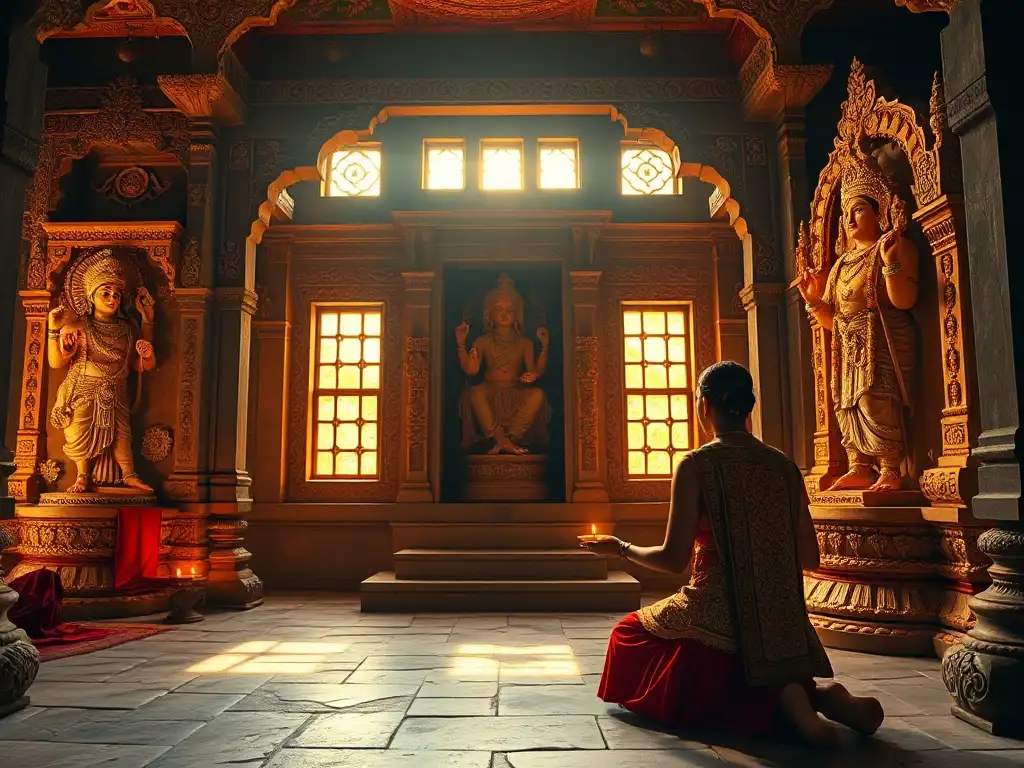
Welcome to Ancient India History, where we embark on a fascinating journey through the rich tapestry of ancient Indian civilizations. Here, you will uncover the intricacies of Gupta Empire religious iconography, a captivating exploration that reveals how deities were artistically portrayed and revered in a society brimming with spiritual depth.
As you delve into our featured article, "Iconography in Gupta Religion: Deities and Their Artistic Interpretations," prepare to discover the profound connections between art and faith that shaped an era. Join us as we unravel the mysteries and marvels of this pivotal period in history, inviting you to explore further and ignite your curiosity about the past!
- Introduction to Gupta Empire Religious Iconography
- Key Deities in Gupta Religion
- Artistic Interpretations of Deities in Gupta Iconography
- Evolution of Gupta Religious Iconography
- Symbolism and Themes in Gupta Religious Iconography
- Conclusion
- References
-
Frequently Asked Questions
- What is the significance of Gupta Empire religious iconography?
- How did the Gupta Empire influence religious art?
- What are some common deities depicted in Gupta iconography?
- How did regional variations affect iconography during the Gupta Empire?
- What materials were commonly used in Gupta religious art?
- Final Reflection: The Enduring Legacy of Gupta Empire Religious Iconography
- Unveil the Divine: Deepen Your Connection with Gupta Iconography!
Introduction to Gupta Empire Religious Iconography
The Gupta Empire, often referred to as the "Golden Age of India," represents a pinnacle of cultural and artistic achievement in ancient Indian history. Flourishing between the 4th and 6th centuries CE, this period is marked by significant advancements in various fields, including science, literature, and, notably, religion.
One of the most compelling aspects of Gupta culture is its rich religious iconography, which not only reflects the spiritual beliefs of the time but also showcases the exquisite craftsmanship of Gupta artisans. Through intricate sculptures, paintings, and architectural designs, the iconography of this era provides a window into the religious practices and deities that shaped the lives of the people.
This article delves into the fascinating world of Gupta Empire religious iconography, exploring the deities that were worshipped and how their artistic interpretations have evolved. By examining the symbolism and meaning behind these representations, we can gain a deeper understanding of the spiritual landscape of ancient India and the enduring influence of Gupta art on subsequent cultures.
Overview of the Gupta Empire and Its Cultural Significance
The Gupta Empire emerged in northern India, unifying various regions under a centralized governance that promoted peace and stability. The empire’s expansion fostered trade and cultural exchange, leading to an unprecedented flourishing of arts and sciences. During this period, the foundations of classical Indian culture were laid, influencing many aspects of life, including religion.
Key highlights of the Gupta Empire include:
- Political Stability: Strong leadership under emperors like Chandragupta II facilitated a cohesive cultural identity.
- Cultural Renaissance: The era saw a revival in literature, with renowned poets and playwrights like Kalidasa emerging.
- Religious Diversity: The empire was characterized by a synthesis of Hinduism, Buddhism, and Jainism, which is vividly reflected in its art and iconography.
The artistic expressions of the Gupta period, particularly in religious contexts, served not only as objects of worship but also as means of conveying complex philosophical ideas and cultural narratives.
Importance of Iconography in Gupta Religion
Iconography in Gupta religion plays a crucial role in understanding the spiritual life and beliefs of the time. It encompasses the symbols, motifs, and representations of deities, each meticulously crafted to convey specific meanings and attributes. This artistic expression reflects not only the religious sentiments of the people but also the socio-political context in which these artworks were created.
Some of the key aspects of Gupta religious iconography include:
- Symbolism: Each deity is depicted with unique symbols that represent their powers and attributes. For instance, Vishnu is often shown with a conch shell, discus, and mace, symbolizing his role as the preserver of the universe.
- Artistic Techniques: Gupta artisans employed advanced techniques such as carving and bronze casting, leading to lifelike representations that capture the divine essence of the deities.
- Cultural Exchange: The influence of Buddhist iconography is evident, showcasing the coexistence and mutual respect among different religious practices during the Gupta period.
The study of Gupta Empire religious iconography thus provides invaluable insights into the beliefs and values of ancient Indian civilizations, highlighting the interconnectedness of art, culture, and religion during this remarkable era.
Key Deities in Gupta Religion
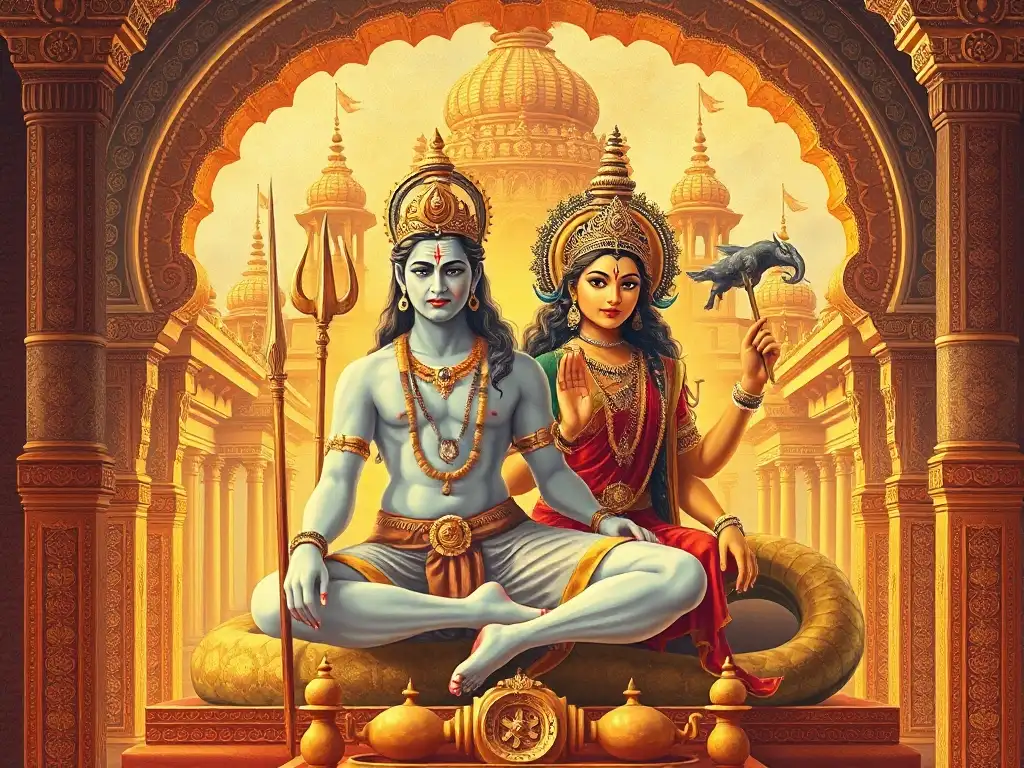
The Gupta Empire, often referred to as the Golden Age of India, was a period marked by significant advancements in art, culture, and religion. Central to the religious practices of this era were various deities, each embodying distinct philosophical concepts and attributes. The artistic interpretations of these deities reveal the socio-religious landscape of the Gupta period, showcasing an intricate blend of local traditions and broader Hindu beliefs. Below, we delve into the key deities revered during the Gupta Empire and their artistic representations.
Vishnu: The Preserver and His Symbolism
Vishnu, one of the principal deities in Hinduism, is known as the Preserver and protector of the universe. His iconography during the Gupta period is rich and varied, reflecting his significance in both religious and cultural spheres.
Iconography and Symbols
- Four Arms: Vishnu is typically depicted with four arms, each holding symbolic items: a conch (shankha), a discus (chakra), a mace (gada), and a lotus (padma). These items represent his divine powers and roles in the cosmic order.
- Color: Often portrayed with a deep blue or dark complexion, Vishnu's color symbolizes the infinite sky and the depths of the cosmos.
- Avatars: The concept of avatars is crucial in Gupta art, where Vishnu's incarnations, such as Rama and Krishna, are depicted in various forms. For instance, sculptures often illustrate key events from the Ramayana and Mahabharata, showcasing his divine play (lila).
Artistic Representations
The Gupta period saw a flourish of temple architecture adorned with intricate sculptures of Vishnu. Notable examples include:
- Temple Reliefs: Many temples feature detailed reliefs depicting Vishnu in various avatars, surrounded by celestial beings and devotees. These scenes not only serve a religious purpose but also reflect the art and craft of the period.
- Statues: Large statues of Vishnu, often found in temple sanctums, exhibit a blend of grace and strength, embodying the deity's dual nature as both a protector and a preserver.
Shiva: The Destroyer and His Artistic Representations
Shiva, the Destroyer, is another key deity in Gupta religious iconography, representing transformation and regeneration. His multifaceted nature is captured through various artistic forms during the Gupta era.
Iconography and Symbols
- Trident (Trishula): Shiva is often depicted holding a trident, symbolizing his dominion over the three realms – physical, mental, and spiritual.
- Third Eye: His third eye signifies perception beyond ordinary sight, representing wisdom and the ability to destroy ignorance.
- Nataraja: As the Lord of Dance, Shiva is frequently represented in the form of Nataraja, dancing amidst flames, symbolizing the cosmic cycles of creation and destruction.
Artistic Representations
The Gupta period produced remarkable sculptures and carvings of Shiva that encapsulate his dynamic character:
- Cave Temples: The famous rock-cut caves at Ellora and Ajanta contain exquisite representations of Shiva, illustrating both his ascetic and household forms, often alongside his consort Parvati.
- Bas-reliefs: Many temples feature bas-reliefs showing scenes from Shiva’s life, including the Tandava dance, which reflects the rhythmic cycles of the universe.
Devi: The Goddess and Her Forms in Gupta Art
Devi, representing the divine feminine, holds a significant place in Gupta religious iconography. Her various forms, such as Durga and Kali, symbolize strength, motherhood, and the protective aspect of femininity.
Iconography and Symbols
- Multiple Arms: Devi is frequently depicted with multiple arms, each wielding different weapons, signifying her power to combat evil and protect her devotees.
- Lion or Tiger: Often shown riding a lion or tiger, this symbolizes her courage and ferocity in battle against demons and negativity.
- Attributes of Abundance: In some representations, she is adorned with ornaments and surrounded by symbols of prosperity, emphasizing her nurturing and maternal qualities.
Artistic Representations
Gupta art offers a variety of artistic interpretations of Devi, showcasing her importance in the spiritual life of the period:
- Sculptures: Temples from the Gupta era often feature intricate sculptures of Devi, portraying her in fierce forms like Durga slaying the buffalo demon Mahishasura, emphasizing the triumph of good over evil.
- Paintings: The frescoes found in Ajanta caves also highlight the divine feminine, illustrating scenes from Devi’s mythology, which reinforces her role as a protector and nurturer.
The Gupta Empire's religious iconography, particularly concerning these key deities, reveals a rich tapestry of beliefs and artistic expression. Through the detailed representations of Vishnu, Shiva, and Devi, we gain insight into the spiritual priorities and cultural values of a civilization that profoundly influenced the course of Indian history.
Other Significant Deities: Brahma and Others
In addition to the prominent deities such as Vishnu and Shiva, the Gupta Empire's religious landscape was rich with various other significant deities, each representing unique aspects of life, nature, and the cosmos. Understanding the role of these deities helps to paint a comprehensive picture of Gupta religious iconography.
Brahma: The Creator God
Brahma, the god of creation, occupies a central position in Hindu cosmology. Often depicted with four faces, symbolizing the four Vedas, and four arms, Brahma represents the source of all knowledge and creation. His iconography is characterized by:
- Lotus Flower: A common attribute symbolizing purity and the unfolding of creation.
- Sacred Texts: Often seen holding the Vedas, emphasizing his role as the divine author of knowledge.
- Sitting Posture: Brahma is frequently depicted seated on a lotus, which signifies spiritual awakening and the emergence of life from chaos.
In Gupta art, Brahma's representations are not as prevalent as Vishnu or Shiva, yet they reflect a reverence for his role in the cosmic cycle of creation, preservation, and destruction.
Other Deities: A Diverse Pantheon
The Gupta period also witnessed the veneration of several other deities, reflecting the rich tapestry of beliefs and practices among ancient Indians. Key among them are:
- Durga: The fierce goddess representing the power of femininity and the protector of dharma. Often depicted riding a tiger or lion, she embodies strength and the ability to overcome evil.
- Kartikeya: The god of war and victory, usually shown with six heads and riding a peacock. His iconography highlights themes of valor and protection.
- Saraswati: The goddess of knowledge, music, and art, Saraswati is depicted with a veena (a musical instrument), symbolizing the importance of education and the arts in Gupta culture.
These deities not only played crucial roles in the spiritual lives of the people but also found expression in various forms of art, including sculptures, paintings, and temple architecture. Their representations often incorporated intricate details that conveyed their divine attributes and stories, thus enriching the visual and spiritual landscape of the Gupta Empire.
The Role of Iconography in Religious Practices
The iconography of these deities served not just as artistic expressions but also as focal points for worship and ritual practices. Temples dedicated to these gods and goddesses often featured elaborate carvings and sculptures that depicted various myths and legends associated with them. This artistic portrayal helped devotees connect with the divine, reinforcing their beliefs and practices.
By examining the iconography of Brahma and other significant deities within the Gupta Empire, we gain insight into the complex religious dynamics and cultural values of the time. The diversity of deities worshipped, along with their artistic interpretations, illustrates the rich spiritual heritage that characterized ancient Indian civilization during the Gupta period.
Artistic Interpretations of Deities in Gupta Iconography
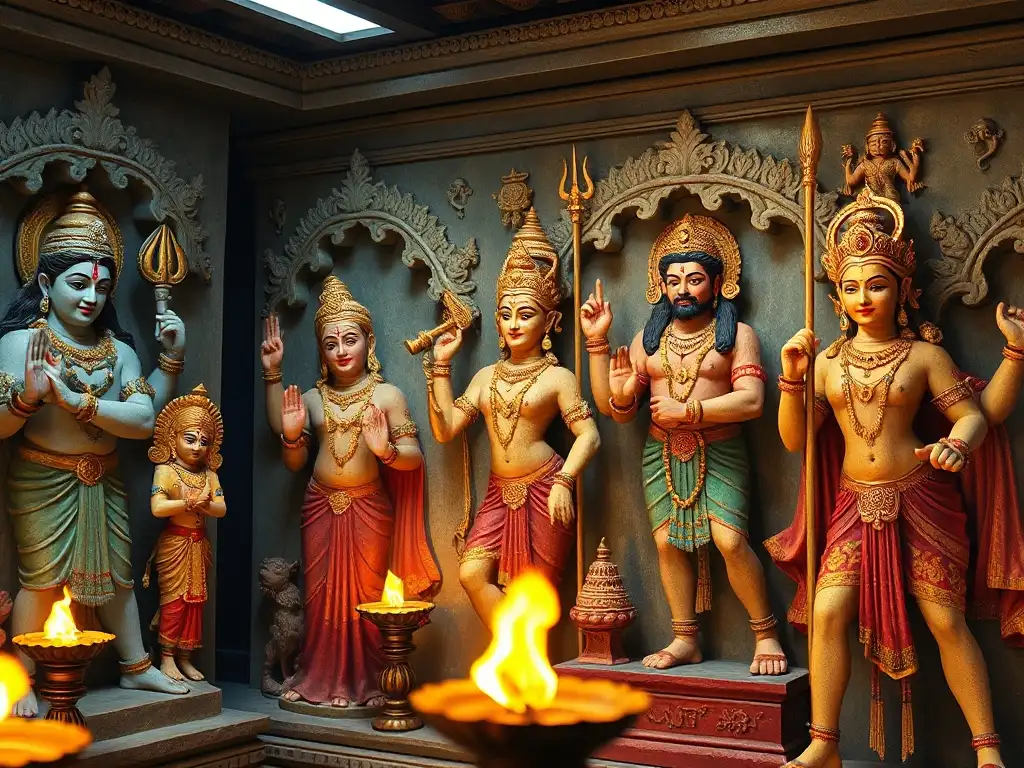
The Gupta Empire, often referred to as the "Golden Age of India," is renowned for its remarkable advancements in art and culture, particularly in the realm of religious iconography. During this period, the representation of deities saw a significant evolution, characterized by intricate artistic interpretations that embodied the spiritual and philosophical ideals of the time. This section delves into the various forms of artistic expressions used to depict deities, highlighting their cultural significance and the techniques employed by artists of the Gupta period.
Sculptural Representations of Deities
Sculpture during the Gupta Empire flourished with the portrayal of deities that were not only aesthetically pleasing but also laden with symbolic meanings. The sculptures from this era reflect a shift towards more naturalistic forms, showcasing a blend of spiritual and human attributes in the divine figures.
Materials and Techniques Used in Gupta Sculpture
The Gupta artisans predominantly utilized materials such as sandstone, bronze, and marble, each chosen for its durability and aesthetic potential. The craftsmanship involved intricate carving techniques that brought out detailed features of the deities.
- Sandstone: Commonly used for large temple sculptures, it allowed for detailed carvings and was readily available in many regions.
- Bronze: This material was favored for smaller, portable images and ritual objects, often cast using the lost-wax technique, which ensured fine details and smooth surfaces.
- Marble: Less common but used for significant religious sculptures, marble provided a luminous quality that enhanced the divine representation.
The techniques employed included chisel and hammer work, which was pivotal in achieving the fine details in facial expressions, clothing drapery, and ornamentation. Additionally, the use of polishing tools helped create the smooth finishes that are characteristic of Gupta sculptures.
Notable Sculptures and Their Locations
The Gupta period boasts several notable sculptures that exemplify religious iconography. Some of the most significant include:
| Sculpture Name | Location | Description |
|---|---|---|
| The Varaha Avatar | Udayagiri Caves | A depiction of Vishnu in the form of a boar, intricately carved with detailed textures. |
| Buddha Statues | Sarnath and Mathura | These statues reflect the serene and meditative aspects of Buddhism, showcasing the influence of Gupta artistry. |
| Kankali Devi Temple | Bhopal | Features exquisite relief sculptures of various deities, evidencing the fusion of art and devotion. |
These sculptures not only served as objects of worship but also acted as a means of conveying complex theological concepts to the devotees.
Painting and Mural Traditions
In addition to sculpture, the Gupta period saw a significant development in painting and mural traditions, particularly in temples and monasteries. These artworks often depicted scenes from Hindu mythology, Buddhist teachings, and Jain narratives, bringing religious stories to life through vibrant colors and detailed compositions.
Techniques in Gupta Religious Paintings
The techniques employed in Gupta painting involved the use of natural pigments derived from minerals, plants, and other organic sources, ensuring rich and lasting colors. Artists applied these pigments on a variety of surfaces, including walls, ceilings, and wooden panels.
- Fresco Techniques: Many murals were created using the fresco technique, where pigments were applied onto wet plaster, allowing for vibrant colors that bonded with the wall.
- Miniature Paintings: Smaller-scale paintings on palm leaves or cloth became popular, showcasing intricate details and elaborate narratives, often used in manuscripts.
The artistic style of Gupta paintings is characterized by their graceful figures, elaborate costumes, and a keen sense of movement and expression that conveyed the emotional depth of the depicted scenes.
Famous Temples with Iconographic Murals
Several temples from the Gupta period are celebrated for their stunning murals that exemplify the religious iconography of the time. Some of these include:
| Temple Name | Location | Notable Features |
|---|---|---|
| Ajanta Caves | Maharashtra | Renowned for its elaborate Buddhist murals that depict Jataka tales. |
| Bodh Gaya | Bihar | Features murals portraying the life of Buddha, showcasing spiritual enlightenment. |
| Dashavatara Temple | Deogarh | Known for its intricate carvings and murals depicting the ten avatars of Vishnu. |
These temples serve as a testament to the artistic prowess of the Gupta artisans and their ability to convey complex religious narratives through visual art.
The Gupta Empire's religious iconography is a rich tapestry of sculptural and painting traditions that reflect the spiritual beliefs and artistic innovations of ancient Indian civilization. Through detailed representations of deities and their narratives, Gupta art continues to inspire and educate about the profound cultural heritage of this remarkable period.
Evolution of Gupta Religious Iconography
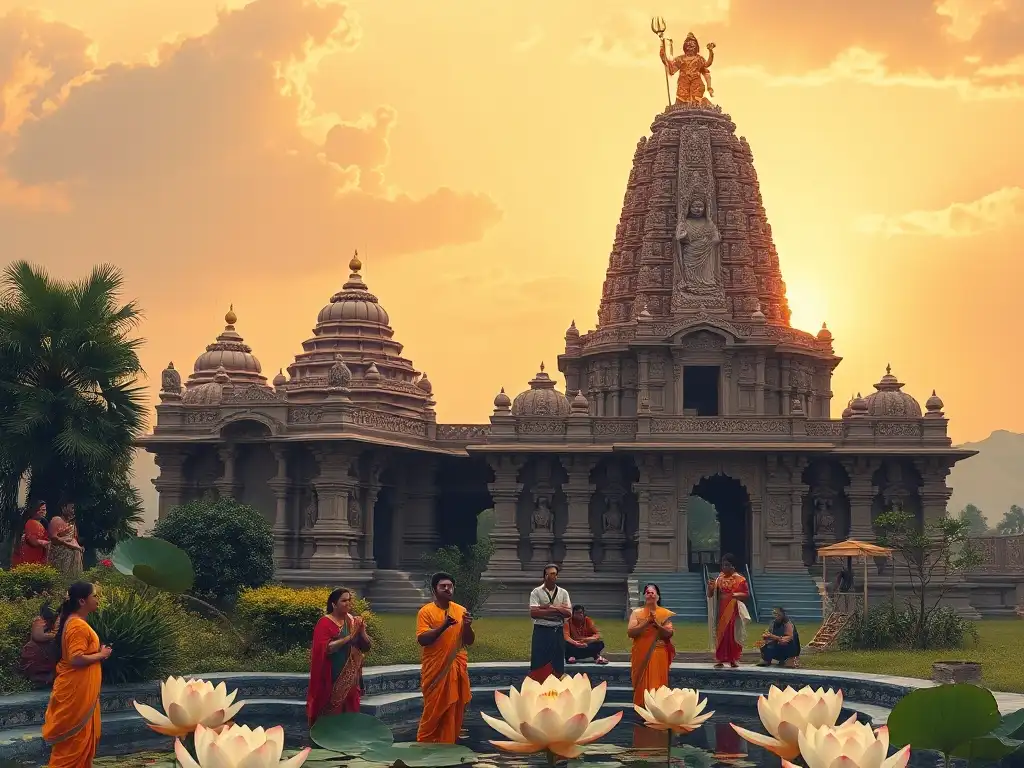
Historical Context of Religious Art During the Gupta Period
The Gupta Empire, often referred to as the "Golden Age" of India, flourished approximately from 320 to 550 CE. This era was marked by significant advancements in arts, science, and philosophy, with religious art playing a pivotal role in expressing the spiritual and cultural ethos of the time. During this period, religious iconography became increasingly intricate, reflecting the diverse beliefs and practices of Hinduism, Buddhism, and Jainism.
The patronage of kings and wealthy merchants greatly influenced the production of religious art. Temples emerged as centers of worship and artistic expression, adorned with sculptures and reliefs depicting various deities. The emergence of texts such as the Puranas during this time also contributed to the proliferation of iconographic themes, providing detailed descriptions of divine forms and their attributes.
Influence of Earlier Indian Art Forms on Gupta Iconography
Gupta religious iconography did not arise in isolation but was deeply influenced by earlier Indian art forms, particularly those from the Maurya and post-Mauryan periods. The Mauryan art, characterized by its grand scale and realism, laid the groundwork for Gupta developments. Notably, the Buddhist sculptures from this period, such as the Sanchi Stupa, showcased a blend of naturalism and symbolic representation, which the Gupta artists adopted and refined.
Key features inherited from earlier traditions include:
- Symbolism: The use of symbolic elements, such as the lotus and the wheel, which denote purity and the cycle of life.
- Aniconic Representations: Early Buddhist art often represented the Buddha through symbols (e.g., footprints, stupa) rather than direct imagery. The Gupta period transitioned to more anthropomorphic representations, yet the symbolic underpinnings remained.
- Regional Styles: Different regions contributed unique styles, like the Madhya Pradesh and Uttar Pradesh schools, which influenced the nuances of Gupta iconography.
These foundational elements of earlier Indian art allowed Gupta artists to innovate while maintaining continuity, resulting in a distinctive style that emphasized both the divine and the human experience.
Interaction with Other Cultures: Indian and Hellenistic Influences
The Gupta Empire's extensive trade networks and cultural exchanges with neighboring regions facilitated significant cross-cultural interactions, particularly with Hellenistic art forms. Following the conquests of Alexander the Great, Greek influence permeated through Indian art, especially in the northwest. This interaction is evident in several aspects of Gupta religious iconography:
- Naturalism and Realism: Hellenistic art's emphasis on naturalism inspired Gupta sculptors to depict deities with more realistic human features, expressions, and postures.
- Iconography of Deities: The incorporation of motifs such as drapery and movement in sculpture reflects Hellenistic techniques, enhancing the dynamism of figures like Vishnu and Shiva.
- Architectural Elements: The use of Corinthian columns and intricate friezes in temple architecture showcased a blend of Indian and Hellenistic styles.
This synthesis of influences enriched Gupta religious iconography, allowing it to resonate with both local and foreign audiences, thereby solidifying its place in the broader context of ancient art and culture. The resulting artworks not only served religious purposes but also stood as a testament to the Gupta Empire's cosmopolitan ethos.
Symbolism and Themes in Gupta Religious Iconography
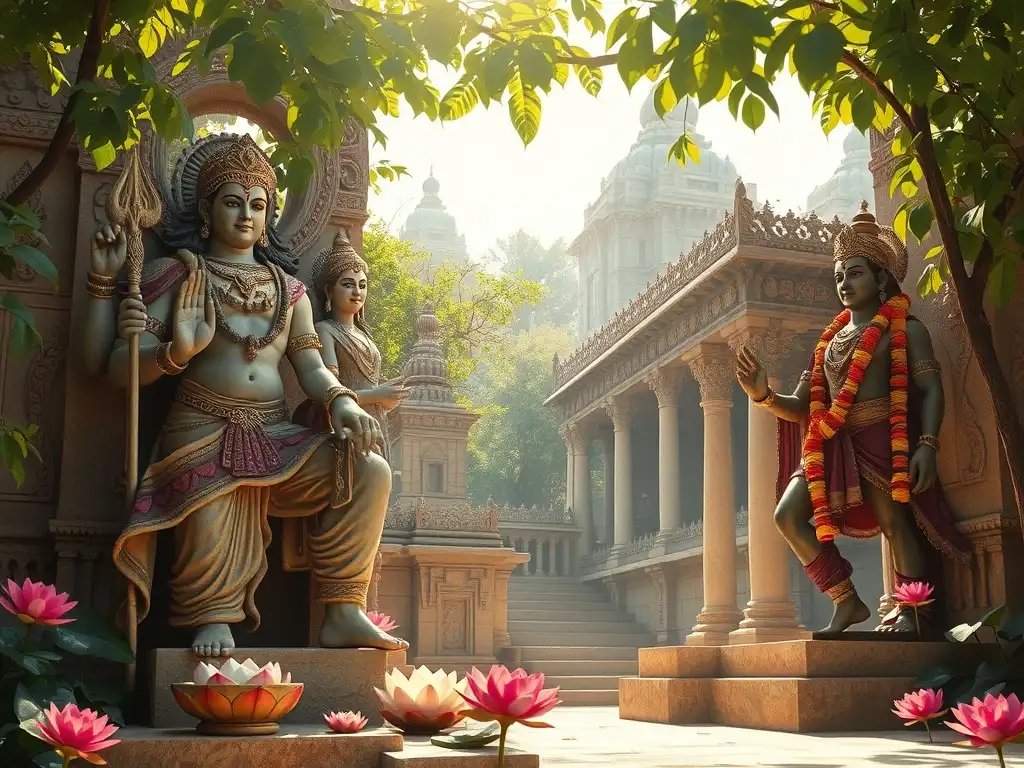
Common Symbols Associated with Gupta Deities
The Gupta Empire, flourishing from approximately 320 to 550 CE, was a period marked by a profound evolution in art and religious expression. Central to this artistic development was the use of symbols that conveyed deeper meanings associated with the deities worshipped during this era. Understanding these symbols is crucial for appreciating the intricate layers of Gupta religion.
- Lotus Flower: A predominant symbol in Gupta iconography, the lotus represents purity and spiritual awakening. Often depicted rising from muddy waters, it signifies the transcendence of the physical realm and the attainment of enlightenment. For instance, deities like Lakshmi are frequently portrayed sitting on a lotus, emphasizing their divine nature and connection to prosperity.
- Conch Shell (Shankha): This sacred object is commonly associated with Vishnu and signifies the cosmic sound of creation. In Gupta art, the conch often appears in the hands of deities, symbolizing the call to righteousness and the importance of dharma in the universe.
- Wheel (Dharmachakra): The wheel symbolizes the cycle of birth, life, and death, as well as the path of dharma. The presence of the Dharmachakra in Gupta art serves as a reminder of the Buddha's teachings and the importance of following the right path.
- Nimbu (Lemon): Occasionally seen in sculptures, the lemon symbolizes prosperity and good fortune. Its inclusion in iconography reflects the cultural beliefs surrounding auspiciousness and the blessings bestowed by deities.
- Garuda: The mythical bird and vehicle of Lord Vishnu, Garuda represents speed, power, and the ability to overcome obstacles. In Gupta art, Garuda is often depicted in dynamic poses, signifying the protection offered by divine forces.
These symbols not only enhance the aesthetic appeal of the artworks but also serve as conduits for conveying the moral and spiritual values of the Gupta society.
Themes of Dharma and Cosmic Order in Art
The Gupta Empire's religious iconography profoundly reflects the themes of dharma and cosmic order, which were central to both the spiritual and social fabric of the time. These themes are intricately woven into the artistic expressions found in temples, sculptures, and murals.
- Dharma: The concept of dharma, or righteous duty, is a recurring motif in Gupta art. Deities are depicted in ways that illustrate their roles in maintaining cosmic balance. For example, images of Shiva performing the cosmic dance (Tandava) symbolize the cyclical nature of creation and destruction, reinforcing the necessity of adhering to one's duty within the universe.
- Cosmic Order: The Gupta period saw a blend of religious traditions, including Hinduism, Buddhism, and Jainism. This syncretism is exemplified in the depiction of cosmic themes where the universe is portrayed as a harmonious entity. Artworks often represent the cosmic ocean, with deities emerging from it, symbolizing the emergence of order from chaos.
- Narrative Scenes: Many Gupta artworks narrate stories from sacred texts, emphasizing moral lessons and the importance of virtuous living. For instance, scenes depicting the life of Buddha focus on his journey towards enlightenment, serving as a guide for followers on their path to spiritual fulfillment.
- Symbolic Architecture: Gupta temples are designed not only as places of worship but also as representations of the cosmic universe. The layout often mirrors the structure of the universe, with the sanctum sanctorum (garbhagriha) representing the center of creation. This architectural symbolism reinforces the connection between the divine and the physical world.
The artistic interpretations during the Gupta Empire thus serve not only as visual representations but also as profound statements on the spiritual and ethical principles that governed ancient Indian society. Through their detailed imagery and rich symbolism, Gupta religious iconography continues to inspire and inform our understanding of this remarkable period in history.
Conclusion
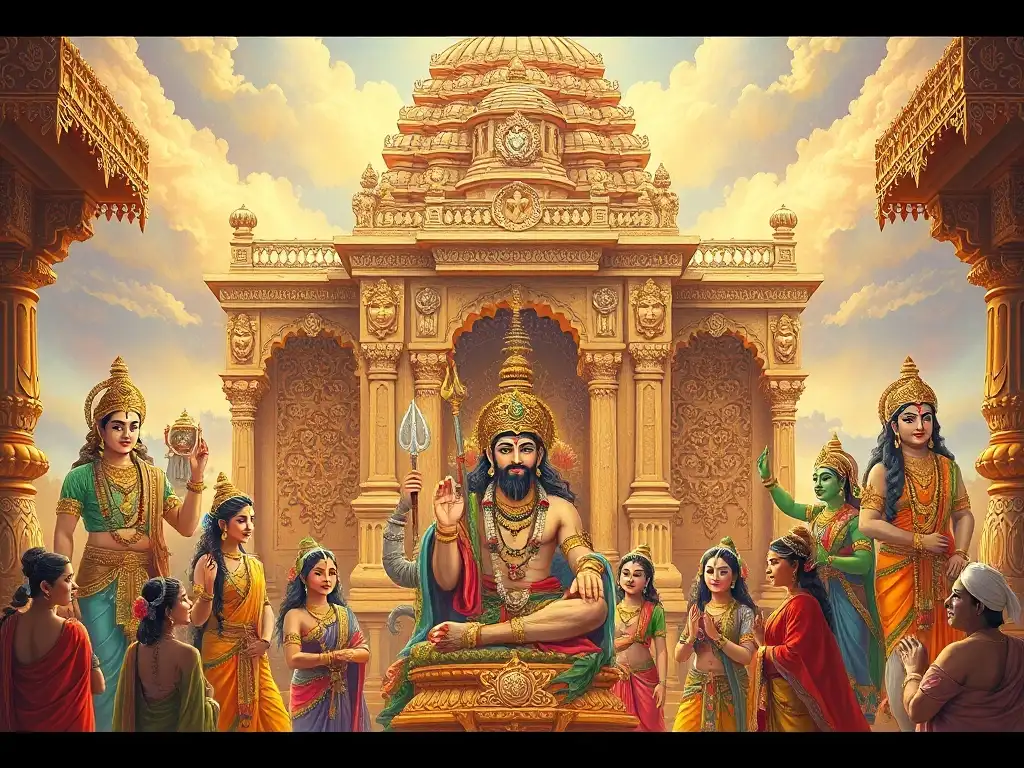
Summary of Gupta Empire Religious Iconography
The Gupta Empire, often referred to as the "Golden Age of India," witnessed a remarkable flourishing of art and culture, particularly evident in its religious iconography. This period, spanning from approximately 320 to 550 CE, saw the emergence of distinct artistic styles that represented various deities and religious themes, primarily influenced by Hinduism, Buddhism, and Jainism.
The depiction of deities during this era was characterized by a blend of realism and idealism, showcasing intricate details and expressive forms. Artists utilized a variety of materials, including stone, metal, and terracotta, to create sculptures and reliefs that captured the divine essence of the figures. This artistic expression was not merely decorative; it served as a medium for religious devotion, education, and the transmission of cultural values.
Notable deities represented in Gupta iconography include:
- Vishnu: Often depicted in a variety of avatars, including Krishna and Rama, Vishnu’s representations highlight his role as the preserver and protector of the universe.
- Shiva: Frequently shown in his cosmic dance (Nataraja) or in tranquil meditative poses, Shiva’s iconography emphasizes his dual nature as both creator and destroyer.
- Buddha: The artistic interpretations of Buddha during the Gupta period reflect the evolution of Buddhist art, with the introduction of distinctive features such as the ushnisha (topknot) and elaborate mudras (hand gestures).
The Gupta period also introduced the use of symbolic motifs and elaborate iconography, such as the lotus flower, which signifies purity and spiritual awakening. These elements contributed to a rich visual language that conveyed complex theological concepts.
The Legacy of Gupta Iconography in Later Indian Art and Culture
The artistic innovations of the Gupta Empire laid the groundwork for subsequent developments in Indian art and culture. The iconographic styles and techniques that emerged during this period profoundly influenced later artistic traditions, including the medieval and modern phases of Indian art.
- Continuity of Themes: Many motifs and themes established in Gupta iconography continued to appear in later art forms, such as the exquisite temple sculptures of the medieval period. The depiction of deities with the same iconographic attributes ensured a sense of continuity in religious representation.
- Regional Variations: As the Gupta Empire's influence spread, local artisans began to adapt Gupta styles to reflect regional characteristics. This led to a diverse array of artistic expressions, each incorporating elements of Gupta iconography while also integrating local traditions and beliefs.
- Influence on Architecture: The principles of iconography inspired the architectural designs of temples, where the placement of deities in sculptures played a significant role in temple layout and structure. Temples built in the subsequent centuries often adhered to Gupta styles, showcasing deities in dynamic poses and elaborate narratives.
- Cultural Syncretism: Gupta iconography also fostered an environment of cultural syncretism, where Hindu, Buddhist, and Jain iconography coexisted and influenced one another. This blending of traditions enriched the spiritual and artistic landscape of India.
The Gupta Empire's religious iconography not only enriched the spiritual lives of its contemporaries but also left a lasting legacy that continues to resonate in Indian art and culture today. The intricate representations of deities and the sophisticated artistic techniques developed during this period set a benchmark for future generations, ensuring that the Gupta contribution remains a cornerstone of India's rich cultural heritage.
References
Key Texts and Resources on Gupta Empire Religious Iconography
The Gupta Empire, often referred to as the Golden Age of India, has a wealth of resources that delve into its rich religious iconography. The following texts are essential for understanding the intricate relationships between art, religion, and culture during this period:
- "The Art of the Gupta Period" by J.C. Harle
- This comprehensive volume examines various art forms, including sculpture and temple architecture, highlighting their religious significance.
- "Indian Art and Culture" by S. P. Gupta
- A pivotal resource for exploring the historical context of Gupta art, this book discusses iconographic elements and their meanings.
- "Gupta Sculpture: A Study of Iconography" by S. K. Jain
- Jain’s detailed analysis focuses specifically on the iconographic representations of deities, offering insights into their cultural impact.
- "The Gupta Period: A Cultural History" by R. C. Sharma
- This work encapsulates the social and religious dynamics of the Gupta Empire, providing context for the artistic expressions of the time.
- "Temples of the Gupta Period" by R. S. Sharma
- An examination of the architectural styles and iconography found in Gupta temples, illustrating their religious significance and artistic achievement.
Suggested Further Reading on Ancient Indian Art and Culture
To enhance your understanding of ancient Indian art and culture beyond the Gupta Empire, consider exploring the following texts:
- "A History of Indian Art" by H. Bhatt
- This extensive work provides a chronological overview of Indian art, including the pre-Gupta and post-Gupta periods, offering a broader context for the evolution of iconography.
- "The Origins of Indian Iconography" by M. L. Bhargava
- A foundational text that explores the roots of Indian iconography, tracing influences from earlier civilizations like the Indus Valley through the Gupta period.
- "The Hindu Temple: An Introduction to Its Meaning and Forms" by George Michell
- This book delves into the architectural and iconographic features of Hindu temples, many of which were influenced by Gupta aesthetics.
- "Art and Religion in India" by H. C. Ray
- An exploration of how religious beliefs shaped artistic practices in India, with specific references to the Gupta era.
- "Cultural History of Ancient India" by D. N. Jha
- Jha’s work provides a broader cultural perspective, examining the interplay of religion, art, and society across various ancient Indian civilizations.
These texts will enrich your understanding of Gupta Empire religious iconography and its lasting influence on Indian art and culture.
Frequently Asked Questions
What is the significance of Gupta Empire religious iconography?
Gupta Empire religious iconography reflects the artistic expressions and spiritual beliefs of the time, showcasing how deities were represented visually in various forms, including sculptures and murals.
How did the Gupta Empire influence religious art?
The Gupta Empire is known for its golden age of art, where religious themes were prevalent, merging Hindu, Buddhist, and Jain traditions, which shaped the iconography and styles that continue to influence Indian art today.
What are some common deities depicted in Gupta iconography?
Common deities include Vishnu, Shiva, and Buddha, each represented with distinct symbolism and attributes that convey their significance in religious practices and beliefs during the Gupta period.
How did regional variations affect iconography during the Gupta Empire?
Regional variations led to diverse artistic styles and interpretations of deities, influenced by local traditions and cultural exchanges, which enriched the overall iconographic repertoire of the Gupta Empire.
What materials were commonly used in Gupta religious art?
Artists in the Gupta Empire primarily used materials such as stone, bronze, and terracotta to create intricate sculptures and carvings that depicted religious themes, showcasing their craftsmanship and aesthetic sensibilities.
Final Reflection: The Enduring Legacy of Gupta Empire Religious Iconography
The exploration of Gupta Empire religious iconography reveals not only the artistic brilliance of the era but also its profound spiritual significance that resonates even today. As we delve into the intricate depictions of deities and their narratives, we uncover a rich tapestry of beliefs that shaped the cultural landscape of ancient India. This artistic expression serves as a testament to the enduring power of faith and creativity, reminding us that art can transcend time and continue to inspire generations.
Clearly, the influence of Gupta religious iconography extends far beyond its historical context, permeating contemporary discussions on spirituality and identity. The intricate sculptures and paintings from this period not only reflect the religious fervor of the time but also continue to inspire modern artists and spiritual seekers alike. Art is the most beautiful of all lies.
This quote encapsulates the essence of how these artistic interpretations serve as a bridge connecting the past with the present, inviting us to reflect on our own beliefs and values.
As we conclude this exploration, I invite you to reflect on the lessons embedded within Gupta Empire religious iconography. Consider how the themes of devotion, creativity, and cultural identity resonate in your own life. Let the beauty and depth of these ancient representations inspire you to seek out and celebrate the artistic expressions of your own beliefs, fostering a deeper connection with both your heritage and the world around you. Embrace the opportunity to carry forward the legacy of creativity and spirituality that has shaped human experience throughout history.
Unveil the Divine: Deepen Your Connection with Gupta Iconography!
Thank you for exploring the fascinating world of Gupta religion and its remarkable deities with us! We hope you’ve gained a deeper appreciation for the intricate artistry and spiritual significance behind these powerful symbols. Now, let’s dive into practical steps that can enhance your understanding and connection to this rich cultural heritage.
- Visit a museum or gallery showcasing Gupta art or ancient Indian artifacts to see these icons up close and fully appreciate their intricate details.
- Join an online community dedicated to ancient Indian history to share insights and engage in meaningful discussions with others who are equally passionate about this topic.
- Create your own artistic interpretation of a Gupta deity; you might be surprised by how much this process enhances your understanding and appreciation of their significance!
What insights or new understandings have you gained about the connection between these deities and their artistic representations? We invite you to share your thoughts below!