
Philosophy and Thought: The Intellectual Renaissance of the Gupta Period

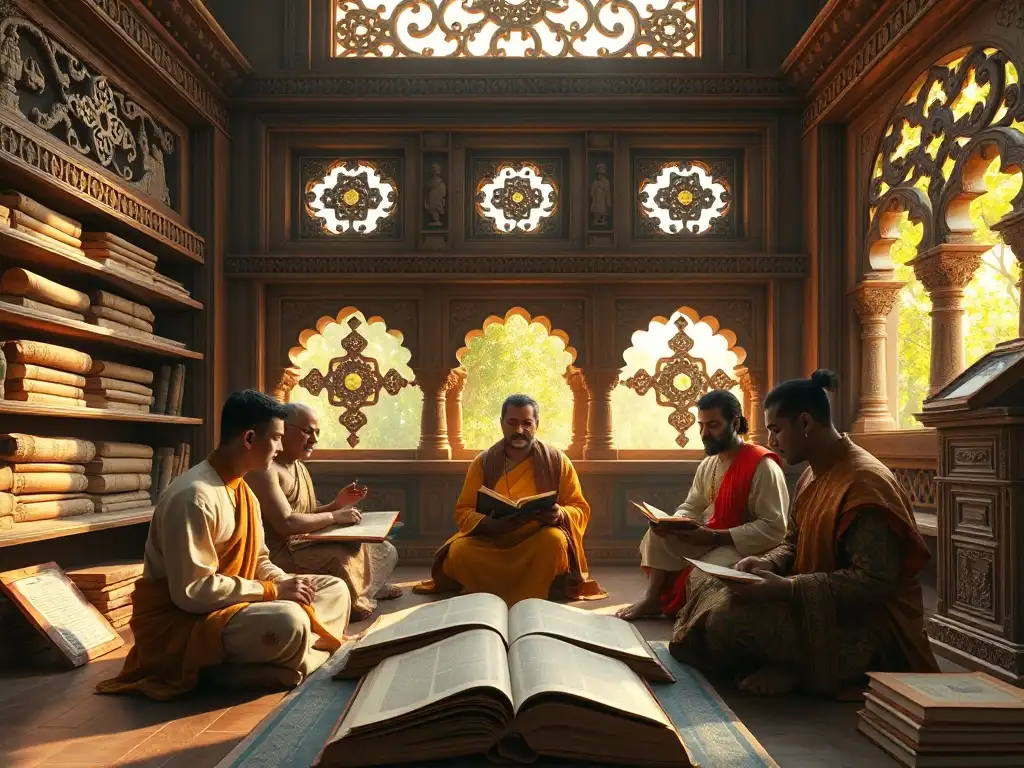
Welcome to Ancient India History, where we invite you to embark on a journey through the rich tapestry of India's past. In our featured article, "Philosophy and Thought: The Intellectual Renaissance of the Gupta Period," we delve into a time marked by profound intellectual advancements and cultural flourishing. Discover how the Gupta period shaped philosophical discourse and laid the groundwork for future thought. Are you ready to unlock the secrets of ancient wisdom and explore the legacies that continue to influence us today? Join us as we unravel the complexities of this remarkable era!
- Introduction to Gupta Period Philosophy and Thought
- Historical Context of the Gupta Period
- Major Philosophical Schools During the Gupta Period
- Key Philosophers of the Gupta Period
- Major Themes in Gupta Philosophy and Thought
- The Impact of Gupta Period Philosophy on Later Indian Thought
- Conclusion: The Lasting Influence of Gupta Period Philosophy and Thought
-
Frequently Asked Questions
- What was the significance of the Gupta period in Indian history?
- How did Gupta period philosophy influence later thought?
- What are some major philosophical contributions from the Gupta period?
- How did the Gupta Empire promote intellectual pursuits?
- What role did religion play in the philosophy of the Gupta period?
- Final Reflection: The Enduring Legacy of Gupta Period Philosophy and Thought
- Unveil the Wisdom of the Gupta Period!
Introduction to Gupta Period Philosophy and Thought
The Gupta period, often regarded as the Golden Age of India, marked a significant turning point in the realms of art, science, and philosophy. During this period, which spanned from approximately 320 to 550 CE, the Indian subcontinent witnessed a remarkable flourishing of intellectual endeavors, leading to profound developments in various domains of thought. This era was characterized by an unparalleled synergy between spirituality and rational inquiry, resulting in a vibrant tapestry of philosophical schools and ideas that continue to influence contemporary thought.
In this exploration of the Gupta period philosophy and thought, we will delve into the intricacies of the intellectual renaissance that defined this epoch. We will investigate the contributions made by scholars, philosophers, and thinkers of the time, assessing their impact on both Indian and global intellectual traditions. The significance of philosophical discourse during the Gupta period extends beyond mere academic curiosity; it reflects the cultural and spiritual evolution of a civilization that sought to understand the cosmos and humanity's place within it.
Overview of the Gupta Empire's Intellectual Renaissance
The Gupta Empire is often celebrated for its contributions to various fields, including mathematics, astronomy, and literature. However, its intellectual renaissance was especially profound in the realm of philosophy. Scholars like Vatsyayana and Aryabhata emerged during this time, advancing ideas that would shape Indian thought for centuries to come.
- Key Philosophical Schools:
- Vedanta: Focused on the nature of ultimate reality and the self.
- Buddhism: Continued to flourish, emphasizing ethics and metaphysics.
- Jainism: Promoted non-violence and truth, contributing to moral philosophy.
The Gupta period also saw the revival and consolidation of ancient texts, leading to extensive commentaries and new interpretations that enriched the existing philosophical landscape. This intellectual activity was further supported by royal patronage, allowing scholars to engage in deep philosophical inquiry without the constraints of economic hardship.
Significance of Philosophy and Thought in Ancient India
Philosophy during the Gupta period was not just an academic exercise; it played a crucial role in shaping the ethical, moral, and spiritual dimensions of society. The debates and dialogues that flourished during this time helped define the cultural ethos of ancient India.
- Influence on Society:
- Encouraged critical thinking and rational discourse.
- Fostered a sense of unity among diverse cultural and religious groups.
- Provided frameworks for understanding life's complexities and the nature of existence.
The philosophical advancements of the Gupta period laid the groundwork for future intellectual pursuits in India and beyond. The ideas that emerged during this time continued to resonate, influencing medieval and modern philosophies across the world, thus underscoring the enduring legacy of Gupta period philosophy and thought.
Historical Context of the Gupta Period

The Gupta period, often referred to as the Golden Age of India, spanned from approximately 320 to 550 CE. This era was marked by significant advancements in various fields, particularly in philosophy, science, and the arts. The establishment of the Gupta Empire by Chandragupta I set the stage for a flourishing intellectual environment where scholars and thinkers could thrive.
The Rise of the Gupta Empire
The Gupta Empire emerged as a powerful political entity following the decline of the Kushan Empire. Chandragupta I’s ascension to the throne around 320 CE marked the beginning of a new dynasty that would unite much of northern India. This unification was critical as it created a stable environment conducive to intellectual pursuits and cultural development.
- Key Factors Behind the Rise:
- Political Stability: The Gupta rulers implemented effective governance, which reduced internal conflicts and fostered unity.
- Economic Prosperity: Trade flourished during this period, leading to increased wealth and patronage for scholars and artisans.
- Cultural Syncretism: The blending of various cultural influences from previous empires, such as the Mauryan and Kushan, enriched philosophical thought.
The rise of the Gupta Empire not only solidified political power but also created a fertile ground for philosophical exploration, allowing thinkers to delve into subjects such as ethics, metaphysics, and epistemology.
Socio-Political Landscape Influencing Philosophy
The socio-political landscape of the Gupta period played a pivotal role in shaping the philosophy and thought of the time. The interplay between religion, social structure, and governance created an environment that encouraged intellectual inquiry.
- Religious Influence:
- Hindu Renaissance: The Gupta period saw a revival of Hindu philosophy, with the emergence of theistic schools such as Vaishnavism and Shaivism. Thinkers like Adi Shankaracharya contributed to Advaita Vedanta, emphasizing non-duality and the nature of reality.
- Buddhism and Jainism: While Hinduism flourished, Buddhism and Jainism continued to be significant, influencing philosophical discourse through concepts of karma and liberation.
- Caste System and Social Structure:
- The rigid caste system provided a framework within which intellectual pursuits were categorized. Scholars often belonged to the Brahmin class, which allowed them to dedicate their lives to study and teaching.
- This social stratification also influenced the themes of philosophical inquiry, as discussions around duty (dharma) and ethics often reflected the values of the time.
- Royal Patronage:
- The Gupta rulers were known for their patronage of the arts and sciences. This support enabled the establishment of universities, such as Nalanda, which became centers for philosophical learning and debate.
- Notable philosophers and scholars, including Kalidasa and Aryabhata, flourished under this patronage, making significant contributions to literature and mathematics.
The socio-political landscape of the Gupta period not only fostered a rich intellectual environment but also influenced the prevailing philosophies. The convergence of various religious ideologies, social structures, and royal patronage contributed to a significant intellectual renaissance that defined Gupta period philosophy and thought.
Major Philosophical Schools During the Gupta Period

Overview of Key Philosophical Schools
The Gupta period, often referred to as the Golden Age of India, was marked by a flourishing of philosophical thought and intellectual inquiry. During this time, several major philosophical schools emerged, each contributing uniquely to the rich tapestry of Gupta period philosophy and thought. These schools include:
- Advaita Vedanta: A non-dualistic school of thought that emphasizes the oneness of the individual soul (Atman) and the ultimate reality (Brahman). Key figures such as Adi Shankaracharya later drew upon earlier ideas from this tradition.
- Nyaya: Focused on logic and epistemology, the Nyaya school developed rigorous methods for debate and reasoning, significantly influencing Indian philosophy's methodologies.
- Vaisheshika: This school concentrated on metaphysics and natural philosophy, proposing a unique categorization of reality into substances, qualities, and actions, contributing to the understanding of the physical world.
- Samkhya: An enumerative philosophy that delineates the dualism between consciousness (Purusha) and matter (Prakriti). It provided a systematic approach to understanding the nature of existence.
- Mimamsa: This school focused on ritual and ethics, emphasizing the importance of dharma (duty) and the performance of Vedic sacrifices, thus intertwining philosophy with religious practice.
The Role of Hindu Philosophy in the Gupta Era
Hindu philosophy during the Gupta period was characterized by a synthesis of various schools, which fostered a broader intellectual environment. This era saw a resurgence of interest in the Vedas and Upanishads, leading to a revival of spiritual and philosophical discourse. The philosophical inquiries of the time were deeply intertwined with religious practices and texts, emphasizing the following aspects:
- Integration of Philosophy and Religion: Philosophers sought to reconcile metaphysical ideas with practical ethics, often using texts like the Bhagavad Gita as a reference point for discussions on duty, righteousness, and the nature of the self.
- Development of New Commentaries: Scholars such as Kumarila Bhatta and Prabhakara wrote extensive commentaries on earlier texts, which not only preserved but also expanded upon traditional ideas, facilitating a more accessible philosophical discourse.
- Impact on Art and Culture: The philosophical ideas of the Gupta period influenced various art forms, including sculpture and literature, reflecting the interconnectedness of thought and cultural expressions.
Contributions of Buddhism and Jainism to Gupta Thought
Buddhism and Jainism also played significant roles in shaping the intellectual landscape of the Gupta period. Their contributions can be seen in several key areas:
- Philosophical Dialogues: Both religions offered alternative perspectives on ethics, metaphysics, and the nature of reality, prompting dialogues that enriched philosophical discourse.
- Emphasis on Non-violence (Ahimsa): Jainism's principle of non-violence influenced not only ethical considerations in philosophy but also the socio-political landscape of the time, promoting a culture of peace and tolerance.
- Buddhist Logic and Epistemology: The development of Buddhist logic by scholars such as Dignaga and Dharmakirti introduced critical methods of reasoning that were later integrated into broader philosophical discussions, affecting schools like Nyaya.
- Cultural and Artistic Influence: The philosophical ideas of Buddhism and Jainism also found expression in the art and architecture of the period, with stupas and temples reflecting their teachings and values, thus reinforcing their philosophical significance.
The Gupta period was a vibrant era of philosophical synthesis, where Hindu, Buddhist, and Jain thought coexisted and interacted, leading to profound contributions that continue to influence Indian philosophy and culture today.
Key Philosophers of the Gupta Period

The Gupta period, often referred to as the Golden Age of India, was marked by significant advancements in various fields, including philosophy and thought. This era saw the emergence of prominent thinkers whose contributions laid the foundation for various disciplines, ranging from mathematics to literature, and astrology. The intellectual renaissance during this time fostered a rich cultural environment that influenced subsequent generations. Below, we delve into the key philosophers of the Gupta period and their significant contributions.
Prominent Thinkers and Their Contributions
The Gupta period was characterized by a vibrant intellectual landscape, where thinkers not only advanced their respective fields but also influenced broader philosophical discourses. Below are some of the most notable philosophers and their contributions during this era:
Aryabhata: Mathematics and Astronomy
Aryabhata, one of the most celebrated mathematicians and astronomers of ancient India, made groundbreaking contributions that have had a lasting impact on the fields of mathematics and astronomy. His seminal work, the Aryabhatiya, composed in 499 CE, covers a wide range of topics, including:
- Mathematics: Aryabhata introduced the concept of zero and the place value system, which revolutionized numerical calculations. He provided methods for calculating squares and square roots, and his work on arithmetic operations was foundational.
- Astronomy: Aryabhata proposed a heliocentric model of the solar system, asserting that the Earth rotates on its axis, which was a radical departure from the geocentric views predominant at the time. He also accurately calculated the circumference of the Earth and the length of the solar year.
Aryabhata’s work not only laid the groundwork for future mathematicians but also influenced Islamic scholars during the medieval period, highlighting the global significance of his contributions.
Kalidasa: Literature and Aesthetics
Kalidasa stands as one of the greatest poets and dramatists of ancient India, whose works exemplify the richness of Gupta period literature. His masterpieces, such as Shakuntala and Meghaduta, are celebrated for their:
- Literary Style: Kalidasa's use of exquisite imagery and profound emotional depth resonates throughout his poetry and plays. His ability to blend nature with human emotions creates a unique aesthetic experience that continues to captivate audiences.
- Cultural Significance: His works reflect the values, traditions, and philosophies of Gupta society, often exploring themes of love, nature, and the divine. Kalidasa's influence can be seen in later Indian literature, where his stylistic elements and themes are emulated.
The aesthetic principles articulated in Kalidasa's works contributed significantly to the development of Indian literary criticism and the broader understanding of aesthetics in art and literature.
Varahamihira: Astrology and Natural Sciences
Varahamihira was a polymath whose expertise spanned various disciplines, including astrology, astronomy, and natural sciences. His principal work, the Brihat Samhita, is a comprehensive text that covers a wide array of topics:
- Astrology: Varahamihira's contributions to astrology are particularly noteworthy. He systematized astrological knowledge and introduced various techniques for predicting events based on planetary positions, which were widely adopted in subsequent astrological practices in India.
- Natural Sciences: Beyond astrology, he explored topics such as meteorology, agriculture, and architecture, emphasizing the relationship between celestial phenomena and earthly events. His observations on weather patterns and agricultural practices demonstrated an early understanding of environmental science.
Varahamihira's interdisciplinary approach not only enriched the fields of astrology and natural sciences but also laid the groundwork for future explorations in these areas.
The Gupta period philosophy and thought encompassed a diverse range of disciplines, with each philosopher contributing uniquely to the intellectual discourse of their time. The innovations and insights from thinkers like Aryabhata, Kalidasa, and Varahamihira continue to resonate in various fields, showcasing the enduring legacy of this remarkable era in ancient Indian history.
Major Themes in Gupta Philosophy and Thought

The Concept of Dharma and Ethics
During the Gupta period, the concept of Dharma played a pivotal role in shaping philosophical thought and ethical practices. Dharma, which translates to moral law or duty, was integral to both individual behavior and social order. Philosophers of this era emphasized the importance of adhering to one’s Dharma as a means of achieving societal harmony and personal fulfillment.
- Varna System and Dharma:
- The Gupta Empire continued the Varna system, which categorized society into four main groups: Brahmins, Kshatriyas, Vaishyas, and Shudras. Each group had its own Dharma, influencing moral and ethical responsibilities.
- For instance, Brahmins were expected to engage in spiritual practices and teaching, while Kshatriyas were tasked with protection and governance.
- Literary Works:
- Texts such as the Manusmriti provided guidelines on ethical conduct and social duties, reflecting the philosophical underpinnings of Dharma during this period.
- The emphasis on Ahimsa (non-violence) and Satya (truthfulness) illustrated the moral fabric woven into the Gupta ethical framework.
- Impact on Governance:
- Rulers often adopted the principles of Dharma as a foundation for governance, viewing themselves as custodians of moral order. This alignment of ethical principles with political authority fostered a sense of legitimacy among the populace.
The Interplay of Religion and Philosophy
The Gupta period witnessed a remarkable fusion of religion and philosophy, where the two domains influenced and enriched one another. This synthesis led to a unique intellectual milieu characterized by diverse religious philosophies.
- Hindu Philosophy:
- The revival of Hindu thought during this period saw the emergence of influential schools such as Vedanta and Sankhya. Philosophers like Adi Shankaracharya later contributed to the interpretation of the Vedas, promoting non-dualism and the unity of the Atman (soul) with Brahman (universal spirit).
- Bhakti movement also gained momentum, emphasizing personal devotion to deities, which shaped philosophical discussions around love, ethics, and the nature of God.
- Buddhism and Jainism:
- The intellectual landscape also included significant contributions from Buddhism and Jainism, which offered alternative philosophical perspectives. The teachings of Nagarjuna and Vasubandhu in Buddhism explored concepts of emptiness and consciousness, while Jain philosophy emphasized non-violence and asceticism.
- The Six Orthodox Schools of Indian Philosophy further showcased this interplay, where diverse religious beliefs coalesce into a comprehensive understanding of existence.
- Cultural Syncretism:
- The Gupta Empire was marked by cultural syncretism, where philosophical ideas were exchanged across faiths. This interaction fostered a rich dialogue on morality, the nature of the self, and the universe, ultimately enhancing the intellectual depth of the period.
Influence of Ancient Texts and Scriptures
The Gupta period was deeply influenced by ancient texts and scriptures, which served as foundational pillars for philosophical thought. The resurgence of interest in classical literature and scriptures facilitated a robust intellectual environment.
- Vedic Texts:
- The Vedas and Upanishads remained central to philosophical discourse, providing insights into metaphysics, ethics, and the nature of reality. Their interpretations during the Gupta period laid the groundwork for subsequent philosophical developments.
- Commentaries on these texts by various scholars enriched the understanding of complex philosophical concepts, making them accessible to a broader audience.
- Epics and Puranas:
- The Mahabharata and Ramayana, as well as various Puranas, contributed narratives that embodied moral and philosophical teachings. The allegorical tales within these texts illustrated the practical application of Dharma in everyday life.
- Philosophers utilized these stories to convey ethical dilemmas and moral choices, bridging the gap between abstract thought and lived experience.
- Impact on Education:
- The establishment of educational institutions, such as Nalanda, played a crucial role in disseminating knowledge derived from these ancient texts. Scholars and students engaged in rigorous debates, interpreting and expanding upon foundational philosophies.
- This scholarly activity not only preserved ancient wisdom but also catalyzed intellectual advancements that would influence future generations.
The philosophical landscape of the Gupta period was marked by a rich interplay of Dharma, religion, and ancient texts. These elements combined to create a vibrant intellectual renaissance that profoundly influenced the course of Indian philosophy and thought. The legacy of Gupta period philosophy continues to resonate in contemporary discussions on ethics, spirituality, and the pursuit of knowledge.
The Impact of Gupta Period Philosophy on Later Indian Thought

The Gupta period, often referred to as the Golden Age of India, was not only a time of political stability and economic prosperity but also an era marked by significant advancements in philosophy and thought. This intellectual renaissance laid the groundwork for many philosophical traditions that would shape Indian thought in the centuries to come. The philosophical developments during this period were characterized by a synthesis of earlier ideas and the emergence of new concepts that continued to resonate throughout Indian history.
Legacy of Gupta Philosophical Ideas
The philosophical landscape of the Gupta period was marked by the flourishing of various schools of thought, including Vedanta, Mimamsa, and the rise of new interpretations within Buddhism and Jainism. The legacy of Gupta philosophy can be seen in several key areas:
- Integration of Diverse Philosophies: The Gupta philosophers adeptly integrated ideas from the Vedas, Upanishads, and the evolving Buddhist and Jain traditions. This synthesis not only enriched Indian philosophy but also fostered a culture of dialogue among different schools of thought.
- Advancements in Logic and Epistemology: The work of scholars such as Kumarila Bhatta and Adi Shankaracharya during and after the Gupta period introduced rigorous methods of reasoning and epistemological inquiry. Their contributions laid the foundations for later developments in logic, emphasizing the importance of rational discourse in philosophical debate.
- Ethics and Morality: Gupta philosophy placed a strong emphasis on ethics, particularly through texts like the Manusmriti. The moral frameworks developed during this time continued to influence social norms and legal systems in India, promoting a sense of dharma (duty) that would persist throughout Indian history.
- Influence on Literature and Arts: Philosophical ideas from the Gupta period permeated literature and art, with works like Kālidāsa's plays and poetry reflecting deep philosophical themes. This literary tradition would inspire subsequent generations of writers and thinkers.
Influence on Subsequent Indian Philosophical Movements
The philosophical contributions of the Gupta period had a profound impact on later Indian philosophical movements, shaping the discourse well into the medieval and modern eras:
- Development of Neo-Vedanta: The teachings of the Gupta period, particularly the Advaita Vedanta philosophy articulated by Adi Shankaracharya, influenced the later development of Neo-Vedanta in the 19th century. Thinkers like Swami Vivekananda drew heavily from Gupta philosophical concepts, emphasizing the universality of truth and the importance of self-realization.
- Revival of Buddhist Thought: The Gupta period also saw a revival of interest in Buddhist philosophy, especially the Mahayana traditions. This revival influenced later Buddhist philosophers like Nagarjuna and Vasubandhu, who built upon Gupta-era ideas to develop complex metaphysical systems.
- Impact on Islamic Philosophy: With the advent of Islamic philosophy in India, the synthesis of Gupta philosophical ideas with Islamic thought led to the emergence of syncretic philosophies in the medieval period. Thinkers such as Ibn Arabi and later Indian philosophers would engage with Gupta concepts, creating a rich tapestry of intellectual exchange.
- Continuity of Ethical Thought: The ethical frameworks established during the Gupta period remained influential in the writings of later philosophers, including those in the Bhakti movement. The emphasis on morality and social duty continued to shape Indian society’s philosophical underpinnings.
The Gupta period philosophy and thought not only defined an era of intellectual brilliance but also created a resilient legacy that influenced a myriad of subsequent philosophical movements in India. The synthesis of ideas and the emphasis on rational discourse established during this time would continue to resonate, shaping Indian thought for generations to come.
Conclusion: The Lasting Influence of Gupta Period Philosophy and Thought

The Gupta period, often referred to as the Golden Age of India, was not just a time of political stability and economic prosperity, but also a pivotal era for the development of philosophy and thought. The intellectual achievements during this time laid the foundations for various fields, including mathematics, astronomy, and literary criticism. The philosophical discourse that emerged during this period was characterized by a synthesis of various schools of thought, including Hinduism, Buddhism, and Jainism, showcasing a remarkable pluralism.
Reflection on the Intellectual Contributions of the Gupta Empire
The intellectual contributions of the Gupta Empire are immense and multifaceted. Notably, philosophers such as Aryabhata and Varahamihira made groundbreaking advancements in mathematics and astronomy. Aryabhata's work, the Aryabhatiya, introduced concepts such as the place value system and the approximation of π (pi) as 3.1416, which were revolutionary for the time. Varahamihira's Brhat Samhita offered insights into astrology, meteorology, and architecture, reflecting the integration of scientific inquiry with philosophical exploration.
In addition to mathematics and astronomy, the period also saw significant developments in metaphysical and ethical thought. Philosophers like Vatsyayana and Buddhaghosa contributed to the discourse on ethics, epistemology, and the nature of reality, emphasizing the importance of reason and experience in the pursuit of knowledge. Their works, such as the Nyaya Sutras and the Kama Sutra, not only shaped philosophical thought but also provided practical guidance on living a balanced and meaningful life.
The Gupta period philosophy was also marked by a deep engagement with spiritual questions. The intersection of philosophy and spirituality during this era facilitated a dialogue between different belief systems, promoting an environment where ideas could flourish. This cultural and philosophical milieu contributed to the flourishing of the arts, literature, and science, creating a legacy that would influence future generations.
The Importance of Studying Gupta Period Philosophy Today
Studying the philosophy and thought of the Gupta period is essential for several reasons. First, it offers insights into the foundational principles of Indian philosophy, many of which continue to resonate in contemporary thought. The synthesis of diverse philosophical traditions during this time serves as a reminder of the importance of dialogue and coexistence in a pluralistic society.
Moreover, exploring the intellectual achievements of the Gupta Empire can inspire current and future scholars to engage with complex philosophical questions. The period's emphasis on critical thinking and empirical inquiry is particularly relevant today, as we navigate an increasingly complex world filled with ethical dilemmas and scientific challenges.
In addition, understanding Gupta period philosophy can enhance our appreciation for the cultural heritage of India. It highlights the contributions of ancient Indian philosophers to global thought, illustrating that the roots of many modern philosophical concepts can be traced back to this vibrant era. By examining the rich tapestry of ideas from the Gupta period, we can foster a deeper understanding of not only Indian culture but also the universal quest for knowledge and wisdom.
The Gupta period philosophy and thought represent a significant chapter in the history of human intellect. Its lasting influence continues to shape philosophical discourse today, making it an essential area of study for anyone interested in the evolution of ideas and the cultural legacy of ancient Indian civilizations.
Frequently Asked Questions
What was the significance of the Gupta period in Indian history?
The Gupta period is often referred to as a Golden Age in India, marked by advancements in science, literature, and art. It laid the foundations for many philosophical and cultural developments.
How did Gupta period philosophy influence later thought?
Philosophy during the Gupta period emphasized rationality and debate, significantly influencing later Indian schools of thought, including Vedanta and Buddhism. These ideas contributed to a rich intellectual tradition.
What are some major philosophical contributions from the Gupta period?
Key contributions include classical texts on logic, ethics, and metaphysics, alongside the flourishing of Sanskrit literature. Notable philosophers like Aryabhata and Kalidasa emerged during this time.
How did the Gupta Empire promote intellectual pursuits?
The Gupta Empire established universities, such as Nalanda, which became centers of learning and discussion. This environment encouraged the exchange of ideas and helped cultivate a vibrant intellectual community.
What role did religion play in the philosophy of the Gupta period?
Religion, particularly Hinduism and Buddhism, profoundly influenced philosophical thought during the Gupta period. The integration of spiritual and intellectual pursuits created a unique philosophical landscape.
Final Reflection: The Enduring Legacy of Gupta Period Philosophy and Thought
The Gupta period stands as a remarkable testament to the power of intellectual exploration and philosophical inquiry. In an age where knowledge was not merely accumulated but celebrated, the profound advancements in philosophy and thought during this era continue to resonate in our contemporary world. The principles and ideas that emerged from this golden age of Indian history not only shaped the cultural landscape of their time but also laid the groundwork for future generations to engage with complex philosophical questions and ethical dilemmas.
The influence of Gupta period philosophy and thought is palpable in today's cultural and social discourse. As we navigate an increasingly complex world, the insights from this period remind us of the importance of critical thinking and moral reasoning. The dialogues initiated by thinkers of the Gupta era encourage us to reflect on our values and beliefs. As Mahatma Gandhi once said, The best way to find yourself is to lose yourself in the service of others.
This sentiment encapsulates the ethical dimensions explored by philosophers during the Gupta period, urging us to consider our responsibilities to one another and the world around us.
As we contemplate the lessons from the Gupta period, I invite you to reflect on how these timeless philosophies can inform your own life. Consider how the principles of inquiry, ethics, and social responsibility can guide your actions and decisions today.
Embrace the spirit of exploration that characterized this remarkable era, and let it inspire you to engage deeply with the world, fostering a culture of thoughtfulness and compassion in your own community. The legacy of Gupta period philosophy and thought is not just a relic of the past; it is a call to action for each of us to contribute to a more thoughtful and enlightened future.
Unveil the Wisdom of the Gupta Period!
Thank you for diving into the fascinating world of the Gupta Period and exploring the profound insights of its intellectual renaissance. You've uncovered the importance of philosophy in shaping societies, and now it’s time to take that knowledge further!
Here are a few actionable steps to deepen your understanding and engage with this rich historical legacy:
- Explore texts from Gupta philosophers: Seek out key writings of thinkers like **Aryabhata** and **Kalidasa** to enhance your perspective on their contributions.
- Share your insights: Discuss your newfound knowledge with friends or on social media—spark a conversation about the impact of philosophy on modern society!
- Join a community: Look for forums or local groups that focus on ancient philosophies. Engaging with others can lead to new discoveries and enriching discussions.
What philosophical insights from the Gupta Period do you think have the power to influence our modern world?