
Water Scarcity in Ancient India: Coping Mechanisms and Innovations

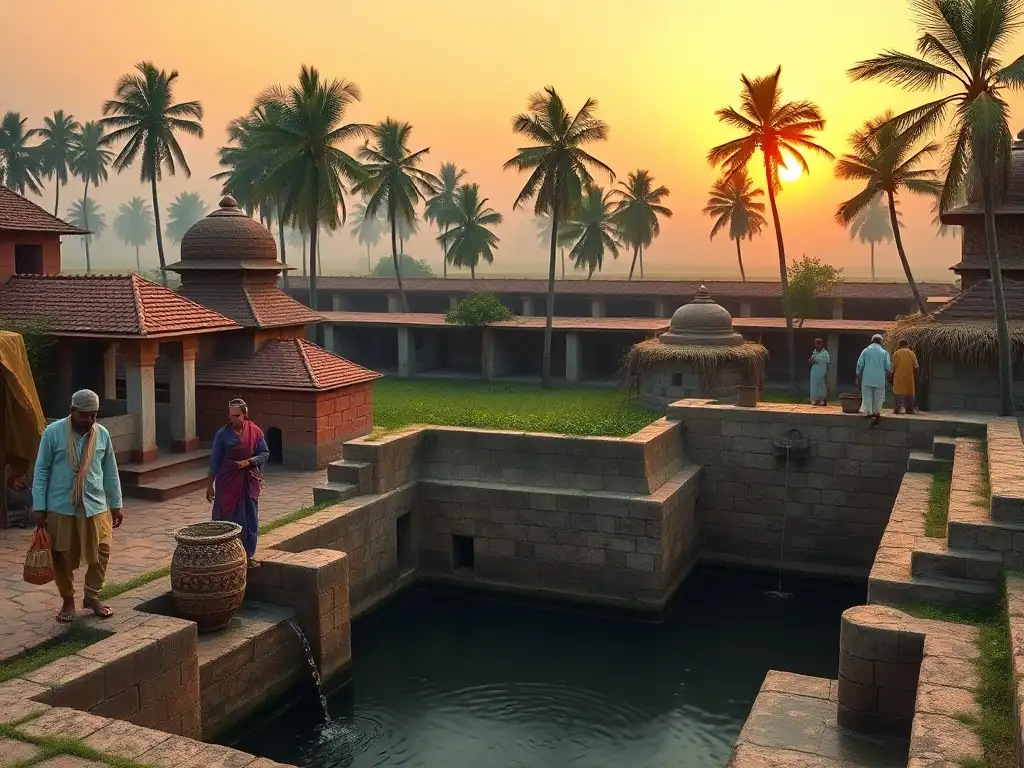
Welcome to Ancient India History, where we delve into the fascinating tapestry of one of the world’s oldest civilizations. In this exploration, we uncover the intricate water management systems that thrived in ancient India, a testament to their ingenuity in the face of challenges like water scarcity. As you journey through our featured article, “Water Scarcity in Ancient India: Coping Mechanisms and Innovations,” prepare to be captivated by the innovative strategies that not only sustained agriculture but also shaped the economy of ancient Indian societies.
Join us as we reveal the secrets of their remarkable resilience and the rich cultural legacy that continues to inspire today. Dive deeper and discover how these ancient practices resonate in our modern world!
- Introduction to Water Scarcity in Ancient India
- Causes of Water Scarcity in Ancient India
- Historical Context of Water Management in Ancient India
- Water Management Practices in the Indus Valley Civilization
- Innovations in Water Management During the Vedic Period
- Gupta Empire: Advancements in Irrigation Techniques
- Coping Mechanisms Adopted by Ancient Indian Civilizations
- Innovations in Irrigation Systems
- Case Studies of Successful Water Management in Ancient India
- Lessons Learned from Ancient India Water Management
- Conclusion
-
Frequently Asked Questions
- What were the main water management techniques used in ancient India?
- How did ancient Indian civilizations deal with water scarcity?
- What role did the Indus Valley Civilization play in water management?
- How did the Gupta Empire contribute to water management innovations?
- Why is the study of ancient India water management important today?
- Final Reflection: The Enduring Legacy of Ancient India's Water Management
- Embrace Sustainable Practices Today!
Introduction to Water Scarcity in Ancient India
Water scarcity has been a persistent challenge throughout human history, and ancient India is no exception. The civilizations that flourished in this region faced significant hurdles due to the variances in climate, geography, and seasonal rainfall patterns. From the sophisticated urban planning of the Indus Valley Civilization to the innovative irrigation techniques of the Gupta Empire, the people of ancient India developed a myriad of strategies to manage their water resources effectively.
Understanding these methods not only sheds light on the ingenuity of these civilizations but also emphasizes the importance of sustainable water management practices that remain relevant today. This article delves into the intricate systems of water management in ancient India, focusing on how these early societies adapted to water scarcity, the innovations they introduced, and the significance of their coping mechanisms in the context of their agricultural and economic frameworks.
Overview of Ancient India Water Management
The management of water resources in ancient India was a multifaceted endeavor that evolved over millennia. Civilizations such as the Indus Valley, known for its advanced urban infrastructure, employed a range of techniques to harness and distribute water. Some notable methods included:
- Rainwater Harvesting: This technique involved capturing and storing rainwater, which was crucial during dry periods.
- Canal Systems: Ancient engineers constructed elaborate canal systems to divert river water for agricultural use, enhancing crop yields and supporting larger populations.
- Stepwells and Tanks: These structures were built to store water and provide access to it during dry seasons. They also served as community gathering spots, underscoring their social significance.
In addition to these methods, ancient texts and archaeological discoveries reveal a complex understanding of hydrology that guided water management practices. For instance, the Rigveda mentions the importance of rivers and water bodies, reflecting their centrality in the socio-religious life of the people.
Importance of Coping Mechanisms in Ancient Civilizations
Coping with water scarcity was not merely a practical concern but also a critical factor that influenced the survival and prosperity of ancient civilizations. The ability to adapt to water shortages through innovative techniques and communal efforts was integral to sustaining agriculture, which in turn supported trade and economic stability. Some key points to consider include:
- Resilience of Agricultural Systems: Effective water management allowed for the cultivation of diverse crops, which was essential for food security.
- Social Cohesion: The collective efforts required for large-scale irrigation projects fostered social ties and community collaboration.
- Cultural Significance: Water bodies were often revered in religious practices, highlighting the deep cultural connection ancient Indians had with their water sources.
Through these coping mechanisms, ancient Indian civilizations not only managed their immediate water needs but also laid the groundwork for future generations to build upon. The lessons learned from their experiences continue to inform contemporary discussions on water sustainability and management practices.
Causes of Water Scarcity in Ancient India
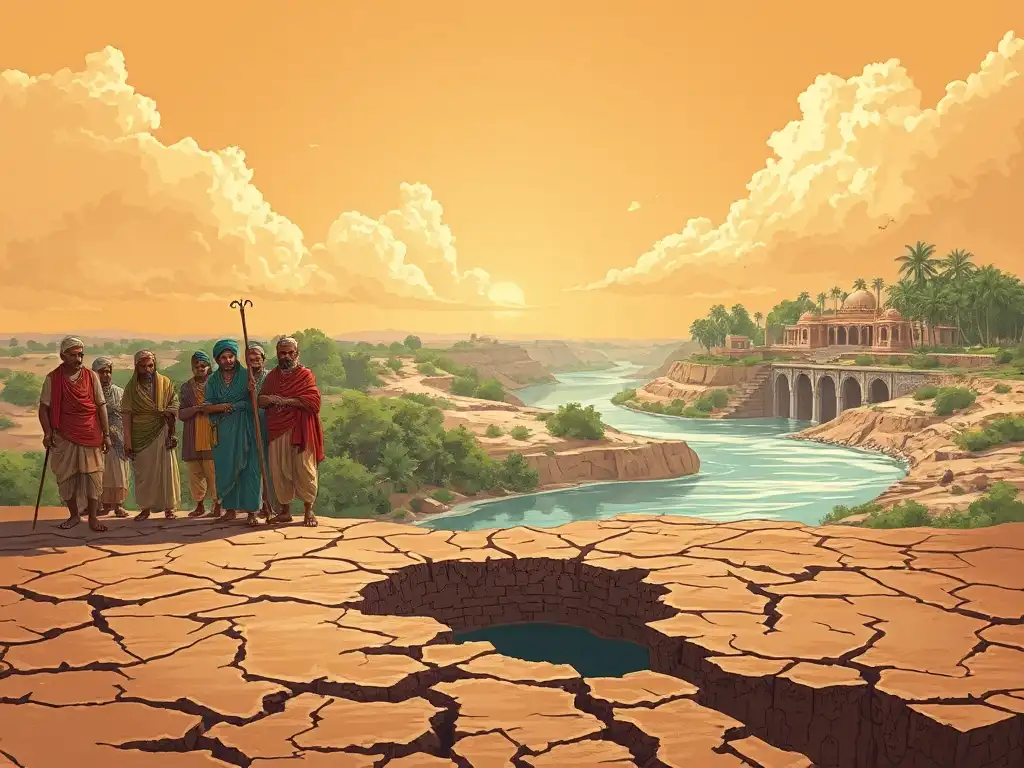
Climate and Geography: Factors Influencing Water Availability
Water scarcity in ancient India can be largely attributed to the region's diverse climate and geographical features. The subcontinent experiences a variety of climatic zones, from the arid deserts of Rajasthan to the monsoon-driven regions of the Gangetic plains. Each of these climates impacted water availability in significant ways.
-
Monsoon Dependency:
The Indian subcontinent relies heavily on the southwest monsoon, which typically occurs from June to September. A weak monsoon season could lead to severe water shortages, impacting agricultural output. Historical records indicate that prolonged drought periods, such as those during the Harappan civilization (around 2600–1900 BCE), resulted in the decline of urban centers due to failed harvests.
-
Geographical Limits:
Key geographical features, such as the Himalayas and the Thar Desert, played a crucial role in defining water availability. The snowmelt from the Himalayas was vital for rivers like the Ganges, but variations in snow accumulation due to climate change impacted river systems. Conversely, arid regions faced harsh conditions that limited the presence of surface water bodies, exacerbating water scarcity.
-
Soil Types and Erosion:
Different soil types across India affected water retention. Regions with sandy soils, like parts of Gujarat and Rajasthan, had lower water-holding capacities, leading to increased irrigation demands. On the other hand, fertile delta regions like the Ganges had better water retention, but over-cultivation led to soil erosion and degradation, further complicating water management.
Population Growth and Agricultural Demands
As ancient Indian civilizations evolved, so did their populations and the corresponding demands for water resources. The interplay between population growth and agriculture is a critical factor in understanding water scarcity issues.
-
Demographic Expansion:
The rise of urban centers and an increase in the population during the Vedic period (around 1500–500 BCE) heightened the need for reliable water sources. Cities like Varanasi and Pataliputra expanded rapidly, leading to increased agricultural demands to support the growing populace.
-
Agricultural Practices:
The shift from subsistence farming to more intensive agricultural practices required significant water resources. Crops like rice, which necessitate abundant water, became staples in certain regions. As farming practices intensified, the reliance on irrigation systems increased, placing additional pressure on existing water resources.
-
Trade and Economic Growth:
The flourishing of trade routes during the Maurya and Gupta empires (around 322 BCE to 550 CE) led to further population increases. The need to support not only local markets but also long-distance trade prompted advancements in agriculture, which in turn escalated water demands.
Both climatic and demographic factors contributed to water scarcity in ancient India. The challenges posed by these factors set the stage for innovative water management practices that would emerge as civilizations sought solutions to sustain their growing needs.
Historical Context of Water Management in Ancient India
Water scarcity has been a pressing issue throughout history, and ancient India was no exception. The diverse geographical landscape, varying climates, and seasonal monsoons shaped the ways in which ancient Indian civilizations approached water management. The understanding of water as a vital resource led to the development of sophisticated systems to harness and distribute water effectively.
The early inhabitants of the Indus Valley Civilization (circa 3300-1300 BCE) demonstrated advanced knowledge in urban planning that prioritized water management. They constructed well-planned cities with drainage systems, reservoirs, and wells, showcasing an intricate relationship with their environment. The significance of water management continued to evolve through subsequent periods, including the Vedic era and the Gupta Empire, where innovations and advancements further refined irrigation practices.
Water Management Practices in the Indus Valley Civilization
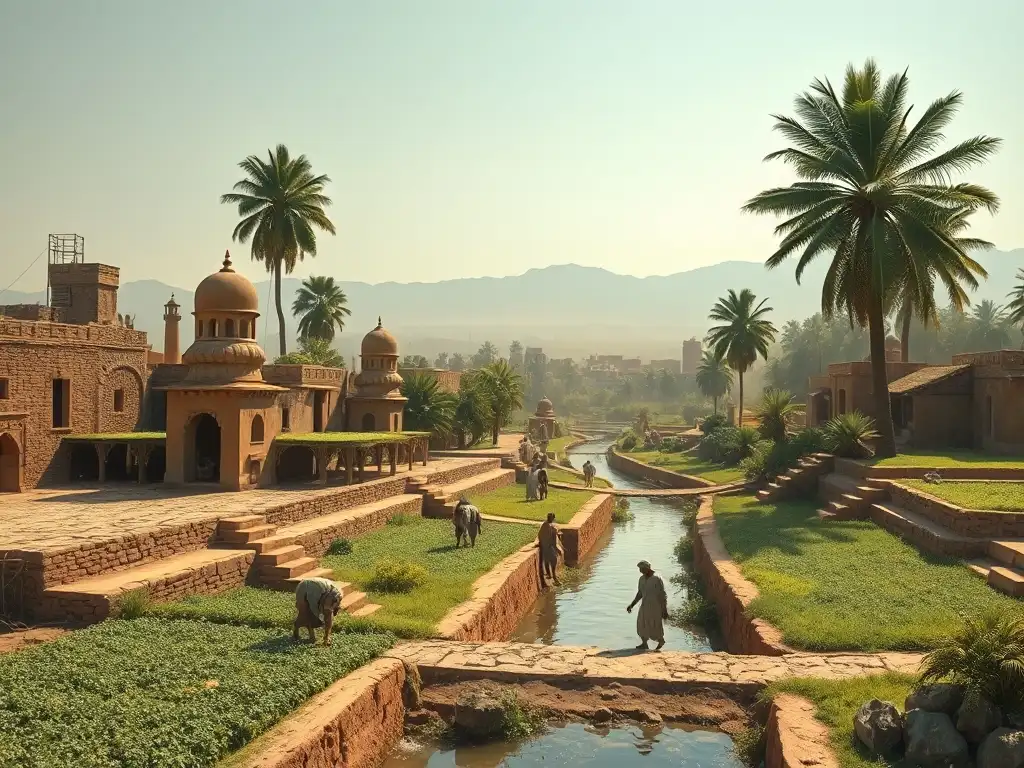
The Indus Valley Civilization stands out as one of the earliest examples of organized water management. Key practices included:
- Well Construction: Residents built individual and community wells that provided a reliable source of drinking water. These wells were often lined with bricks and had deep structures to access groundwater efficiently.
- Drainage Systems: The cities of Harappa and Mohenjo-Daro featured sophisticated drainage systems. Houses were equipped with toilets connected to a centralized drainage network, which directed wastewater away from living areas, contributing to public health and hygiene.
- Reservoirs and Water Storage: Large reservoirs, such as the one found in Dholavira, were constructed to collect and store rainwater. These reservoirs not only provided water during dry spells but also played a crucial role in agriculture, supporting crop irrigation.
- Canal Systems: Evidence suggests that the Indus Valley people may have employed canal systems to divert water from rivers for irrigation purposes. This innovation allowed for the cultivation of crops in arid regions, enhancing agricultural productivity.
The water management practices during this civilization laid the foundation for future innovations in ancient India, demonstrating a deep understanding of hydrology and community needs.
Innovations in Water Management During the Vedic Period
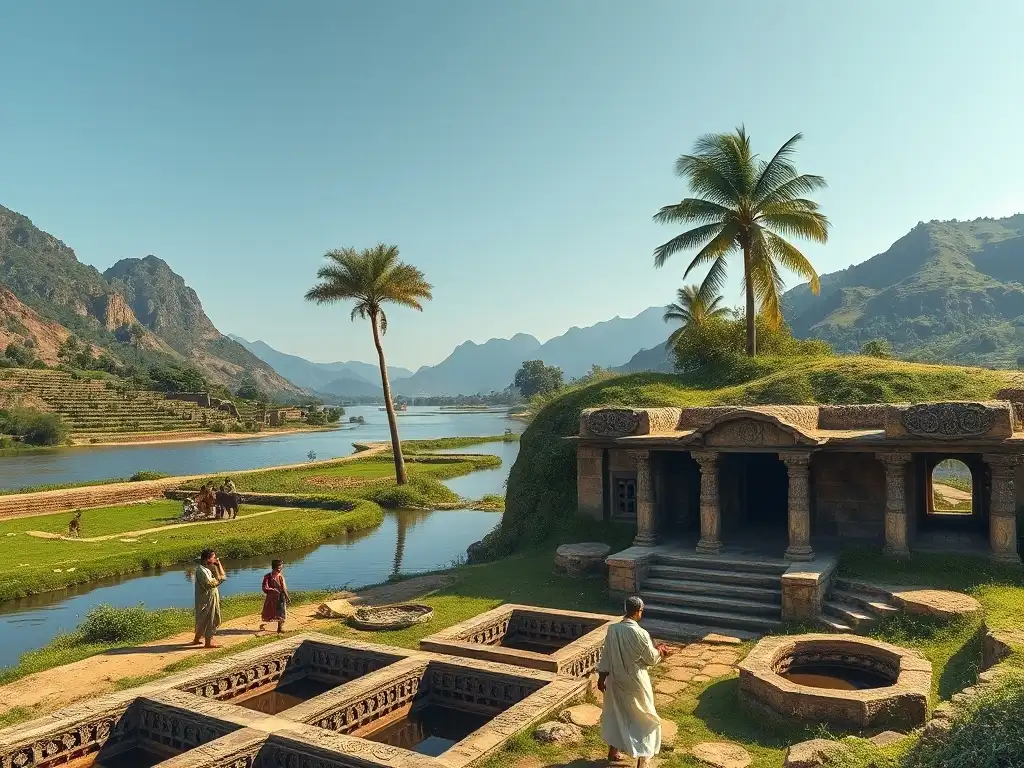
The Vedic period (circa 1500-500 BCE) marked a transition in water management practices, influenced by cultural and religious beliefs. Innovations during this time included:
- Rainwater Harvesting: Communities began to develop techniques to collect and store rainwater more effectively. This practice was particularly important in regions with unpredictable monsoon patterns.
- Sacred Water Bodies: Water bodies such as lakes and ponds were often considered sacred. The construction of these water bodies not only served practical purposes but also reinforced social and religious practices, promoting community involvement in water conservation.
- Irrigation Techniques: The Vedic texts mention the use of various irrigation techniques, including the use of dikes and embankments to control water flow. This allowed for the expansion of agriculture into previously uncultivated lands.
- Cisterns and Tanks: The development of cisterns and tanks for storing water became prominent. These structures were essential for ensuring a steady water supply, especially during dry seasons.
The innovations of the Vedic period reflected an evolving understanding of water management, merging practical applications with cultural significance, and setting the stage for further advancements in later periods.
Gupta Empire: Advancements in Irrigation Techniques
The Gupta Empire (circa 320-550 CE) is often hailed as a golden age in Indian history, marked by significant developments in science, art, and culture. Water management during this period saw notable advancements:
- Canal Systems: The Gupta period saw the expansion of canal networks, which facilitated the irrigation of vast agricultural lands. These canals were strategically constructed to divert river water to fields, enhancing agricultural yields.
- Emphasis on Agriculture: The Gupta rulers recognized the importance of agriculture for economic stability. This led to state-sponsored irrigation projects, which included the construction of extensive canal systems and the maintenance of existing water bodies.
- Technological Innovations: Advances in technology, such as the development of water-lifting devices like the noria (a water wheel), improved the efficiency of irrigation practices. These devices allowed for the elevation of water from rivers to fields, making irrigation more accessible.
- Agricultural Manuals: Texts such as the Krishi Parashara provided detailed guidelines on agriculture and irrigation methods. These manuals reflected the sophisticated understanding of crop cycles and the need for effective water management.
Overall, the Gupta Empire's focus on irrigation techniques and agricultural development played a crucial role in ensuring food security and economic prosperity, marking a significant chapter in the history of ancient India water management.
Coping Mechanisms Adopted by Ancient Indian Civilizations

Ancient Indian civilizations developed various innovative coping mechanisms to tackle the challenges of water scarcity. These methods were not merely practical solutions but also reflected a profound understanding of their environment. The need for sustainable water management was recognized early on, leading to the implementation of techniques that would allow communities to thrive even in arid conditions. Below, we explore three primary water management strategies: rainwater harvesting, the construction of tanks and reservoirs, and the use of wells and stepwells.
Rainwater Harvesting Techniques
Rainwater harvesting in ancient India was a sophisticated method that allowed communities to collect and store rainwater for future use. This technique was vital for agriculture, especially in regions with unpredictable monsoon patterns.
- Methods of Collection:
- Rooftop Harvesting: In many ancient urban settlements, roofs were designed to channel rainwater into storage systems. The collected water was typically filtered through sand or gravel to ensure purity.
- Surface Runoff Capture: Communities would construct channels or ditches to direct surface runoff from fields into artificial ponds or cisterns, thus maximizing water capture during the rainy season.
- Cultural Significance:
- The practice of rainwater harvesting was not only practical but held cultural significance as well. It was often associated with religious beliefs, where the preservation of water was seen as a duty to the environment and the community.
The effectiveness of these techniques can be illustrated by the success of regions like Rajasthan, where rainwater harvesting systems are still in use today, showcasing their long-term viability.
Construction of Tanks and Reservoirs
The construction of tanks and reservoirs was another pivotal strategy employed by ancient Indian civilizations to manage water scarcity. These structures served as vital sources of irrigation and drinking water.
- Types of Tanks:
- Village Tanks: These were small-scale water bodies constructed to store rainwater for agricultural use. They played a crucial role in sustaining local crops and livestock.
- Large Reservoirs: Some civilizations, such as the Chola dynasty, built extensive reservoirs that could support larger populations and enable more extensive agricultural activities.
- Engineering Techniques:
- The engineering skills of ancient Indians were remarkable. They utilized techniques like earth embankments and stone masonry to create durable structures capable of holding large volumes of water.
- Examples: The Kallanai dam, built by the Chola king Karikala in the 2nd century CE, is one such example that still functions today, illustrating the advanced understanding of hydraulic engineering at the time.
These tanks not only served practical purposes but also facilitated social gatherings and played a role in local ecosystems, supporting diverse wildlife.
Wells and Stepwells: Community Solutions to Water Scarcity
Wells and stepwells represent another ingenious solution to water scarcity in ancient India. These structures provided reliable access to groundwater, particularly in regions where surface water was limited.
- Wells:
- Simple wells were dug into the ground to access groundwater. These were essential for both drinking water and irrigation, especially in arid regions.
- Construction Techniques: Techniques varied from simple hand-dug pits to more complex systems involving brick or stone lining to prevent collapse.
- Stepwells:
- Stepwells are an architectural marvel of ancient India. These multi-storied structures allowed individuals to descend to the water level, providing access to water even during dry spells.
- Cultural Importance: Stepwells were not merely functional; they often served as social and religious spaces. For example, the famous Rani ki Vav in Gujarat is adorned with intricate carvings and served as a gathering place for communities.
The significance of wells and stepwells can be seen in the way they fostered community bonds and ensured the survival of populations in water-scarce regions.
Ancient Indian civilizations exemplified remarkable ingenuity in their approaches to water management. Through rainwater harvesting, the construction of tanks and reservoirs, and the development of wells and stepwells, they effectively navigated the challenges of water scarcity. These coping mechanisms not only highlight their advanced understanding of hydrology but also their commitment to community welfare and sustainability.
Innovations in Irrigation Systems
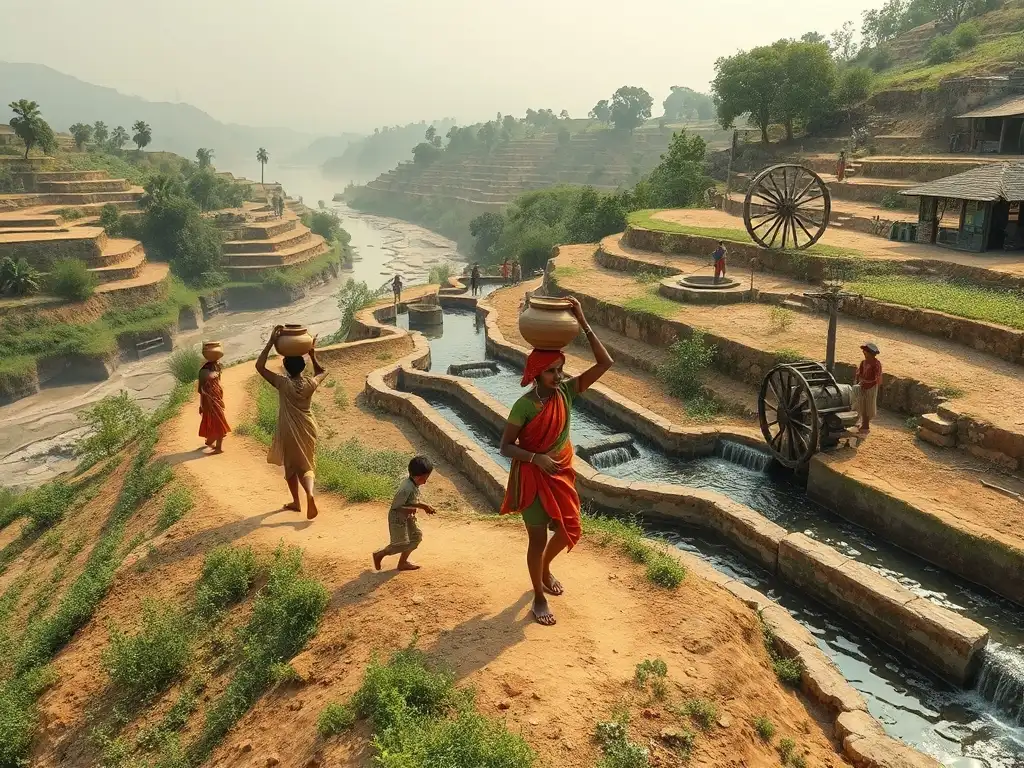
Ancient India showcased remarkable innovations in irrigation systems that were essential to support agriculture in a region characterized by varying rainfall patterns and water scarcity. These innovations not only facilitated the effective use of water resources but also contributed to the growth of agriculture, which was the backbone of the ancient Indian economy. Various techniques and systems developed over centuries reveal the ingenuity of ancient Indian civilizations in managing water resources.
The Role of Canals and Water Channels in Agriculture
The construction of canals and water channels was a significant achievement in ancient India’s water management system. These canals facilitated the diversion of water from rivers and lakes to agricultural fields, ensuring a reliable supply of water for irrigation.
- Major Canal Systems:
- The Indus Valley Civilization is known for its advanced drainage system, which included canals that transported water to fields. Archaeological evidence suggests that they constructed extensive networks for agricultural purposes.
- The Mauryan Empire also invested in canal construction, as documented in texts like the Arthashastra, which emphasized irrigation as vital for enhancing agricultural productivity.
- Benefits of Canals:
- Canals helped in reducing the dependency on monsoon rains, allowing farmers to cultivate crops even during dry spells.
- They facilitated the transportation of goods, boosting trade alongside agricultural practices.
The effectiveness of these systems can be seen in the enhancement of crop yields and the overall prosperity of ancient agrarian societies, demonstrating the critical role of irrigation in their economy.
Use of Water Lifting Devices and Their Impact on Farming
Water lifting devices were pivotal in ancient India for accessing groundwater and moving water from lower to higher elevations. Various types of devices were utilized, showcasing the ingenuity and adaptability of farmers.
- Types of Water Lifting Devices:
- Screw Pumps: Known as Archimedes' screw, these devices were used to lift water for irrigation purposes, particularly in regions with limited access to surface water.
- Persian Wheels: This device, also known as potter’s wheel, allowed for efficient lifting of water from wells. It comprised a large wheel turned by an animal or human power, which helped in drawing water for fields.
- Impact on Agriculture:
- These devices significantly increased the area under cultivation by enabling farmers to irrigate land that would otherwise be barren.
- Enhanced water access allowed for the cultivation of multiple crops throughout the year, contributing to food security and economic stability.
The use of such innovative water lifting technologies illustrates the proactive approach of ancient Indian societies in overcoming challenges posed by water scarcity.
Crop Rotation and Sustainable Practices to Optimize Water Use
To optimize water use and ensure sustainable agriculture, ancient Indian farmers employed various practices, with crop rotation being one of the most effective techniques.
- Principles of Crop Rotation:
- Farmers alternated the types of crops sown in a field across seasons to maintain soil fertility and reduce water consumption. For instance, legumes would be planted to fix nitrogen in the soil, reducing the need for chemical fertilizers.
- Benefits of Sustainable Practices:
- Crop rotation minimized the depletion of soil nutrients, thus maintaining agricultural productivity over time.
- It reduced the risk of pest and disease outbreaks, leading to healthier crops and more efficient water use.
- Other Sustainable Innovations:
- Farmers also practiced intercropping, where different crops were grown together, which optimized water use and improved yield.
- The harvesting of rainwater through traditional catchment systems further enhanced water availability during dry periods.
These sustainable practices not only helped in managing water resources efficiently but also laid the foundation for resilient agricultural systems that could withstand climatic variations.
The innovative irrigation systems of ancient India reflect a deep understanding of water management that was crucial for agricultural success. From the strategic use of canals and water-lifting devices to the implementation of sustainable farming practices, ancient Indian civilizations exemplified how to thrive in the face of environmental challenges.
Case Studies of Successful Water Management in Ancient India
The Dhanushkodi Tanks: A Model for Ancient Water Conservation
The Dhanushkodi Tanks, located at the southeastern tip of Pamban Island in Tamil Nadu, represent a significant achievement in ancient India water management. These tanks were constructed during the reign of the Chola dynasty around the 9th century CE. Designed to capture and store monsoon rainwater, the Dhanushkodi Tanks illustrate a sophisticated understanding of hydrology and the importance of water conservation.
Key Features of the Dhanushkodi Tanks:
- Strategic Location: Positioned near the coast, the tanks utilized the natural topography to maximize water catchment.
- Construction Techniques: Made of stone and clay, the tanks featured sloped sides to facilitate easy access to water while minimizing evaporation.
- Water Filtration: The design incorporated natural filtration systems using sand and gravel, ensuring the captured water was clean and safe for consumption.
- Community Involvement: The construction and maintenance of the tanks involved local communities, promoting a sense of ownership and responsibility towards water resources.
The success of the Dhanushkodi Tanks can be attributed to their sustainable design and the emphasis on community engagement, which ensured their longevity and effectiveness in providing water to surrounding areas. This ancient system not only fulfilled immediate water needs but also served as a model for future water conservation practices.
The Stepwells of Gujarat: Engineering Marvels for Water Storage
The stepwells of Gujarat are another remarkable example of ancient India water management. These intricately designed structures, built primarily between the 11th and 16th centuries, reflect the ingenuity of ancient engineers in addressing water scarcity issues in arid regions.
Characteristics of Stepwells:
- Architectural Design: Stepwells feature a series of steps leading down to the water level, allowing easy access to water regardless of the season. This vertical design maximizes storage while minimizing evaporation.
- Seasonal Adaptation: Many stepwells are designed to capture rainwater during the monsoon season, replenishing groundwater supplies as well.
- Cultural Significance: Beyond their practical use, stepwells often served as social and cultural hubs, where communities gathered for rituals, festivals, and communal activities.
| Stepwell Name | Location | Date of Construction | Capacity |
|---|---|---|---|
| Rani ki Vav | Patan | 11th century | Approx. 30,000 liters |
| Adalaj Stepwell | Adalaj | 15th century | Approx. 50,000 liters |
| Uparkot Stepwell | Junagadh | 12th century | Approx. 40,000 liters |
The stepwells of Gujarat are not only a testament to the architectural brilliance of ancient India but also highlight the cultural and social importance of water management in sustaining communities. These structures demonstrate how ancient civilizations effectively addressed the challenges of water scarcity through innovative engineering solutions and communal cooperation.
Both the Dhanushkodi Tanks and the stepwells of Gujarat serve as exemplary case studies in ancient India water management. They reflect a deep understanding of local ecosystems and the importance of sustainable practices that continue to inspire modern water conservation efforts.
Lessons Learned from Ancient India Water Management
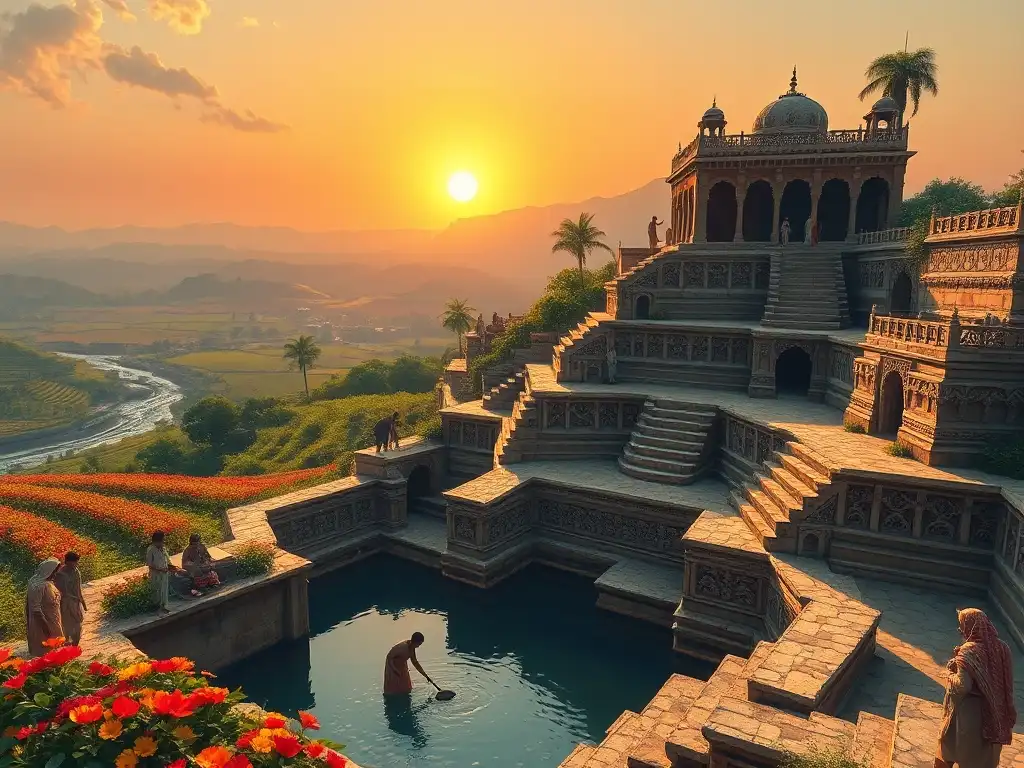
Ancient India is renowned for its sophisticated approach to water management, particularly in the face of recurring water scarcity. The civilizations that flourished in this vast subcontinent, such as the Indus Valley civilization and later dynasties, developed innovative strategies to harness, store, and distribute water effectively. These methods were not only practical but also sustainable, offering valuable lessons for contemporary society.
Sustainable Practices for Modern Water Scarcity Issues
One of the most notable aspects of ancient Indian water management was the emphasis on sustainability. Techniques such as rainwater harvesting, the construction of stepwells, and the use of tanks and reservoirs played a critical role in ensuring a reliable water supply.
- Rainwater Harvesting: Ancient communities built systems to collect and store rainwater, which significantly reduced dependence on rivers and groundwater. This practice is particularly relevant today as urban areas face increasing water shortages.
- Stepwells: These structures provided access to groundwater, facilitating the collection of water even during droughts. The architectural ingenuity of stepwells ensured that water was accessible year-round, which is a model that modern cities can learn from, particularly in arid regions.
- Tanks and Reservoirs: Ancient settlements often constructed large tanks to capture monsoon rains. This not only provided irrigation for crops but also helped recharge groundwater supplies. Modern water management can benefit from similar large-scale storage solutions, especially as climate change alters precipitation patterns.
Incorporating these practices into contemporary water management strategies can help mitigate the impacts of water scarcity. As cities expand and populations grow, the lessons from ancient India remind us of the importance of adapting and innovating sustainable practices.
The Relevance of Ancient Techniques in Today's Context
The techniques and principles of ancient India water management are remarkably relevant in today's context. The challenges posed by climate change, population growth, and urbanization necessitate a reevaluation of our current water management practices.
- Community Involvement: Ancient methods often involved collective efforts from communities, fostering a sense of ownership and responsibility. Implementing community-based water management systems today can enhance resource sustainability and ensure equitable distribution.
- Integrated Water Resource Management (IWRM): The holistic approach of ancient water systems, which considered the interconnectedness of water resources, agriculture, and community needs, aligns with the modern concept of IWRM. This method promotes the coordinated development and management of water, land, and related resources to maximize economic and social welfare without compromising the sustainability of vital ecosystems.
- Cultural Reverence for Water: Ancient Indian societies held water in high regard, often integrating spiritual beliefs into their water management practices. This cultural dimension is crucial in fostering respect and conservation efforts in modern water management strategies.
The rich heritage of ancient India’s water management practices offers invaluable insights for contemporary society facing water scarcity. By studying and applying these lessons, we can develop more resilient and sustainable approaches to water management that honor both our past and future.
Conclusion
Summary of Ancient India's Water Management Strategies
Ancient India faced significant challenges related to water scarcity, primarily due to its diverse geography and climate variations. To tackle these issues, the civilizations developed innovative water management strategies that not only ensured the survival of their populations but also supported agricultural productivity.
- Rainwater Harvesting: One of the most remarkable techniques was the practice of rainwater harvesting. By constructing large reservoirs and ponds, ancient Indian societies could capture and store rainwater during monsoon seasons. For instance:
- Stepwells: These were intricately designed to access groundwater, allowing communities to draw water year-round.
- Bawris: These are traditional water storage systems designed to collect rainwater for community use.
- Irrigation Systems: The development of sophisticated irrigation systems was crucial for agriculture in regions with insufficient rainfall. Techniques included:
- Canals: Major rivers were harnessed through canal systems, which enabled the distribution of water to fields.
- Terracing: In hilly areas, terracing minimized soil erosion and maximized water retention.
- Crop Rotation and Soil Management: Ancient farmers practiced crop rotation and used organic materials to enhance soil fertility, which improved the efficiency of water use in agriculture.
- Community Management: Water resources were often managed communally, fostering cooperation among villagers to ensure equitable access to water. This included shared maintenance of irrigation infrastructure.
These methods exemplified the ingenuity of ancient Indian civilizations in overcoming environmental constraints, and their knowledge laid the foundation for sustainable agricultural practices.
The Legacy of Ancient Innovations in Modern Agriculture
The water management techniques developed in ancient India continue to resonate in modern agricultural practices, particularly in regions facing similar water scarcity issues. The relevance of these ancient innovations can be observed in various contemporary agricultural methods:
- Sustainable Farming: The principles of rainwater harvesting and efficient irrigation are now being revived to create sustainable farming practices. Modern farmers are increasingly adopting methods that reduce dependence on monsoon rains and enhance water conservation.
- Organic Farming: The use of organic materials to improve soil health, a practice common in ancient times, is gaining traction in today's farming communities. This not only boosts crop yields but also ensures that water is utilized more effectively.
- Community-Based Water Management: The communal management of water resources is being re-evaluated as a viable way to ensure equitable access and sustainability. Initiatives that involve local communities in the management of irrigation systems have shown promising results in increasing both efficiency and cooperation.
- Technological Integration: Modern technologies such as GIS (Geographic Information Systems) and remote sensing are helping to improve the efficiency of ancient practices. These technologies facilitate better planning and management of water resources, drawing on the foundational strategies developed in ancient India.
The enduring legacy of ancient India’s water management practices offers valuable lessons for addressing contemporary water scarcity challenges. Their innovative approaches underscore the importance of sustainability and community involvement, principles that remain vital in today’s agricultural landscape.
Frequently Asked Questions
What were the main water management techniques used in ancient India?
Ancient India employed various innovative techniques such as stepwells, tank systems, and canal irrigation to efficiently manage water resources in response to scarcity.
How did ancient Indian civilizations deal with water scarcity?
To cope with water scarcity, civilizations developed community-based solutions like constructing reservoirs and rainwater harvesting systems that ensured a steady supply of water.
What role did the Indus Valley Civilization play in water management?
The Indus Valley Civilization is renowned for its advanced drainage systems and well-planned urban layouts, showcasing their sophisticated approach to water management.
How did the Gupta Empire contribute to water management innovations?
During the Gupta Empire, there were significant advancements in irrigation techniques and water storage systems, reflecting their understanding of sustainable agriculture and resource use.
Why is the study of ancient India water management important today?
Studying ancient India water management provides valuable insights into sustainable practices that can inform modern solutions to current water scarcity challenges around the globe.
Final Reflection: The Enduring Legacy of Ancient India's Water Management
The lessons learned from ancient India’s water management practices are more relevant today than ever. As we face escalating water scarcity and climate change, the innovative coping mechanisms developed by our ancestors serve as a beacon of hope and a source of inspiration. The ingenuity displayed in ancient India not only highlights the importance of sustainable practices but also reminds us that effective water management is crucial for the survival of civilizations.
The cultural and social landscapes of ancient India were profoundly shaped by their relationship with water. From the intricate stepwells to the sophisticated irrigation systems, these innovations were not merely technological feats but reflections of a society that understood the value of water as a lifeline. As we navigate the complexities of modern water crises, we can draw parallels to the wisdom of the past. Water is the source of life, and managing it wisely is the key to our survival.
This sentiment echoes through the ages, urging us to honor the legacy of those who came before us.
As we look to the future, let us take a moment to reflect on our own relationship with water. How can we apply the lessons of ancient India’s water management to our contemporary challenges? I invite you to consider the role you can play in promoting sustainable water practices in your community. Whether through conservation efforts, supporting innovative technologies, or simply raising awareness, each action contributes to a larger movement towards a more sustainable future. Together, we can honor the wisdom of our ancestors and ensure that water remains a precious resource for generations to come.
Embrace Sustainable Practices Today!
Thank you for taking the time to explore the incredible adaptations and innovations that ancient India employed to combat water scarcity. Understanding these solutions not only enriches our knowledge of history but also inspires us to implement sustainable practices in our own lives. Let’s build upon this knowledge with actions that can make a difference today!
- Start a rainwater harvesting system at your home to conserve water and mimic the ancient methods discussed.
- Join a local environmental group to engage in community efforts focused on water conservation and sharing historical techniques.
- Share your insights! Discuss this article with friends and family to spread awareness about the significance of water management.
How will you apply lessons from ancient India to address today’s water challenges in your community?