
The Maurya Empire's Contribution to Science and Mathematics: Key Figures


Welcome to Ancient India History, where we dive deep into the rich tapestry of one of the world's oldest civilizations. In today's exploration, we unravel the remarkable contributions of the Maurya Empire to the realms of science and mathematics. From groundbreaking theories to influential figures, the legacy of this era continues to inspire and intrigue. Are you ready to uncover the secrets of ancient Indian ingenuity? Join us as we journey through time and discover how these advancements shaped not only their world but ours as well!
- Introduction to the Maurya Empire's Contribution to Science and Mathematics
- Key Figures in Maurya Empire Science and Mathematics
- The Role of Education and Institutions in Advancing Science and Mathematics
- The Maurya Empire's Influence on Subsequent Civilizations
- Conclusion: The Lasting Legacy of the Maurya Empire in Science and Mathematics
-
Frequently Asked Questions
- What were the main contributions of the Maurya Empire to science and mathematics?
- Who were the key figures in the Maurya Empire known for their work in science and mathematics?
- How did the Maurya Empire influence later developments in science and mathematics?
- What role did the Nalanda University play in the scientific advancements during the Maurya Empire?
- How did the Maurya Empire integrate science and mathematics into daily life?
- Final Reflection: The Enduring Legacy of the Maurya Empire in Science and Mathematics
- Unveil the Legacy of Science and Mathematics!
Introduction to the Maurya Empire's Contribution to Science and Mathematics

The Maurya Empire, which flourished from 322 BCE to 185 BCE, stands as one of the most significant dynasties in ancient Indian history. Renowned for its political prowess and extensive territorial reach, the empire also made remarkable contributions to science and mathematics that have had a lasting impact on the world.
The period marked advancements in various fields, including astronomy, mathematics, and engineering, laying foundational principles that would influence future generations. This article delves into the key figures of the Maurya Empire who played pivotal roles in these advancements, highlighting their innovations and the broader significance of their work within the context of ancient Indian civilization.
Overview of the Maurya Empire
The Maurya Empire was established by Chandragupta Maurya and reached its zenith under the reign of Ashoka the Great. Spanning across much of the Indian subcontinent, the empire is notable not only for its military and administrative achievements but also for its cultural and intellectual contributions.
- Key Highlights of the Maurya Empire:
- Chandragupta Maurya: The founder who unified various smaller kingdoms.
- Ashoka's Reforms: Promoted Buddhism and non-violence, influencing cultural and scientific thought.
- Trade and Economy: Enabled the exchange of ideas and knowledge across regions.
The empire's extensive trade networks facilitated the movement of scholars, which contributed to the cross-pollination of ideas, particularly in science and mathematics.
Significance of Science and Mathematics in Ancient India
Science and mathematics in ancient India were not merely academic pursuits; they were deeply intertwined with daily life, spirituality, and governance. The Maurya Empire recognized the importance of these fields, leading to significant advancements that still resonate today.
- Key Contributions Include:
- Astronomy: The development of astronomical tools and theories that influenced later works.
- Mathematics: Innovations in numeral systems, including the concept of zero and the decimal system.
- Architecture and Engineering: Advanced techniques in construction and urban planning.
The emphasis on empirical observation and rational thought during this period laid the groundwork for future scientific inquiry, demonstrating the Maurya Empire's vital role in the evolution of knowledge in ancient India.
Key Figures in Maurya Empire Science and Mathematics
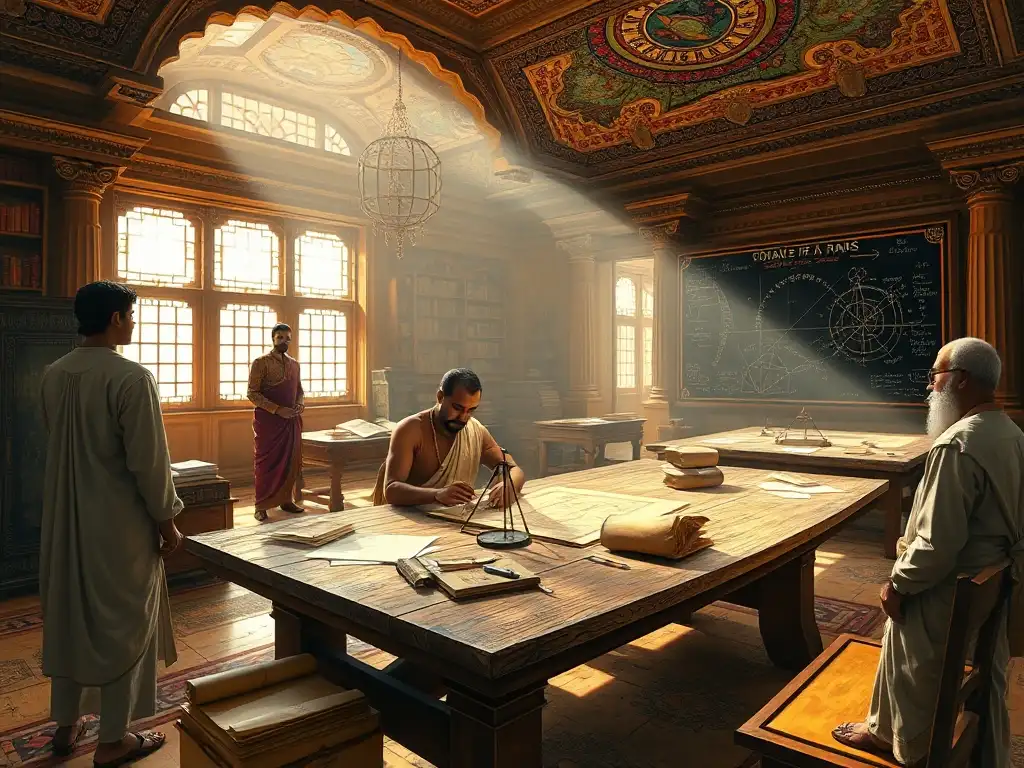
Aryabhata: The Pioneer of Indian Mathematics
Aryabhata, one of the most prominent figures in the realm of ancient Indian science and mathematics, made significant contributions during the time of the Maurya Empire. His works laid the foundation for mathematical concepts that are still relevant today.
Contributions to Mathematics
Aryabhata introduced several revolutionary ideas in mathematics:
- Place Value System: He utilized a place value system, which is essential for understanding numbers. This framework is a precursor to the decimal system we use today.
- Zero Concept: Aryabhata is credited with the early use of zero as a placeholder. This concept was crucial for calculations and has been fundamental to mathematics globally.
- Algebraic Formulations: He developed methods for solving quadratic equations and provided rules for arithmetic operations, significantly advancing algebra.
A key excerpt from Aryabhata’s work highlights his mathematical prowess:
The area of a triangle is given by the formula: Area = (1/2) × base × height.
Innovations in Astronomy
Aryabhata's influence extended beyond mathematics into the field of astronomy:
- Earth's Rotation: He proposed that the Earth rotates on its axis, a radical idea for his time, which explained the apparent movement of stars and planets.
- Accurate Calculations: His calculations of the solar year (365.358 days) and the distance of the moon were remarkably precise, demonstrating a sophisticated understanding of celestial bodies.
- Eclipses: Aryabhata provided explanations for lunar and solar eclipses, attributing them to the shadows of Earth and the moon, respectively, marking a significant advancement in astronomical science.
Varahamihira: The Astrologer and Mathematician
Varahamihira, another leading figure during the Maurya Empire, made substantial contributions to both astrology and mathematics. His extensive knowledge and comprehensive works marked a significant period in Indian scientific history.
Notable Works and Theories
Varahamihira is best known for his seminal texts, which include:
- Brihat Samhita: A comprehensive encyclopedia covering various subjects, including astrology, weather predictions, and architecture. It is a vital source of knowledge for understanding ancient Indian science.
- Pancha Siddhantika: This text discusses five astronomical treatises, consolidating earlier knowledge and presenting his theories on planetary motion and eclipses.
His work emphasized the link between mathematics and astrology, showcasing the intricate relationship between these fields in ancient India.
Impact on Indian Astronomy
Varahamihira's influence on astronomy was profound:
- Astrological Predictions: His methods for calculating planetary positions and predicting astrological events were widely adopted and refined over centuries.
- Integration of Mathematics and Astronomy: He advocated for the use of mathematical precision in astronomy, paving the way for future astronomers and mathematicians in India.
- Cultural Influence: His contributions shaped the cultural landscape of India, as astrology played a significant role in societal decisions, including marriage and agriculture.
Both Aryabhata and Varahamihira were instrumental in advancing the fields of science and mathematics during the Maurya Empire. Their groundbreaking work not only influenced their contemporaries but also laid the groundwork for future generations in India and beyond.
Brahmagupta: The Mathematician of the Maurya Era
Brahmagupta, often heralded as one of the most significant mathematicians of ancient India, made substantial contributions to mathematics during the Maurya Empire's height. Although the exact dates of his life remain somewhat debated, it is widely accepted that he flourished in the 7th century CE, in a period closely associated with the influence of the Maurya Empire. His most notable work, the "Brahmasphutasiddhanta," laid the foundation for mathematical concepts that would resonate through the ages.
Brahmagupta's scholarship transcended mere calculation; he engaged deeply with the philosophical implications of numbers and their applications in various fields, including astrology and astronomy. His writings not only reflect a sophisticated understanding of mathematics but also highlight the interconnectedness of mathematics with other disciplines during his time.
Major Contributions to Arithmetic and Algebra
Brahmagupta's contributions to arithmetic and algebra are particularly groundbreaking. He is often credited with formalizing rules for dealing with numbers, including the treatment of zero as a number in its own right. This was a revolutionary concept that enhanced the understanding of numerical systems. The principles he established for arithmetic operations involving zero and negative numbers were sophisticated for his time and laid the groundwork for future mathematical exploration.
In his seminal work, Brahmagupta provided a comprehensive set of rules for arithmetic operations such as addition, subtraction, multiplication, and division. His approach to algebra involved solving quadratic equations and providing methods for determining solutions to problems involving unknowns. Notably, he formulated an early version of the quadratic formula, which is still taught in modern mathematics classes today.
Additionally, Brahmagupta's work included practical applications of mathematics in areas such as land measurement and taxation, illustrating the everyday significance of his mathematical theories. This blend of theory and application underscores the importance of his contributions to both the academic and practical realms of mathematics.
Influence on Later Mathematical Developments
Brahmagupta's influence extended far beyond his own era, shaping mathematical thought in India and beyond. His work was foundational for later mathematicians, including Bhaskara I and Bhaskara II, who built upon his principles and expanded the field of mathematics in innovative ways. The concept of zero and its operations, as presented by Brahmagupta, played a crucial role in the development of the decimal system, which is integral to modern mathematics.
Moreover, Brahmagupta's ideas traveled beyond India, influencing mathematicians in the Islamic world during the medieval period. His texts were translated and studied, contributing to the rich tapestry of global mathematical knowledge. This cross-cultural exchange highlights the essential role that Brahmagupta played in the evolution of mathematics as a discipline, cementing his legacy as a pivotal figure in the history of science and mathematics stemming from the Maurya Empire.
As scholars continue to explore the contributions of Brahmagupta, it becomes evident that his insights laid critical groundwork not only for Indian mathematics but also for the global mathematical community, showcasing the enduring impact of the Maurya Empire on the advancement of science and mathematics.
The Role of Education and Institutions in Advancing Science and Mathematics

The Maurya Empire, renowned for its political and military prowess, also made significant strides in education, particularly in the fields of science and mathematics. This advancement was largely facilitated by the establishment of educational institutions that focused on a diverse curriculum, fostering a culture of inquiry and scholarship. The emphasis on education during this era was not merely a reflection of societal values but also a strategic approach to governance that empowered citizens through knowledge.
Nalanda University: A Hub of Knowledge
Nalanda University, founded in the 5th century BCE, stands as one of the most prominent educational institutions of the Maurya Empire. It was not only a center for Buddhist learning but also a beacon of knowledge across various disciplines, including science and mathematics.
Curriculum and Focus on Science and Mathematics
The curriculum at Nalanda was comprehensive, featuring a wide range of subjects. Mathematics was integral to the studies, encompassing areas such as:
- Arithmetic: Understanding numbers and basic operations.
- Geometry: The study of shapes, sizes, and properties of space, crucial for architecture and astronomy.
- Astronomy: Techniques for celestial navigation and understanding planetary movements.
Students engaged in rigorous training, often involving practical applications of mathematical principles in fields like architecture and trade. The institution attracted scholars from across Asia, creating a vibrant exchange of ideas and knowledge.
Other Educational Centers in the Maurya Empire
Apart from Nalanda, several other educational centers flourished during the Maurya Empire, each contributing to the advancement of learning in science and mathematics.
Contributions to Learning and Scholarship
- Taxila: This ancient city was another significant educational hub, with a curriculum that included mathematics, medicine, and military science. Taxila's scholars, such as Panini, laid the groundwork for linguistics and grammar, which indirectly supported mathematical precision in language.
- Ujjain: Known for its astronomical observatories, Ujjain played a crucial role in developing astronomical mathematics. Scholars like Aryabhata, although later, were influenced by the foundational work established during the Maurya period.
- Bharuch: This port city was vital for trade and commerce, necessitating advanced mathematical skills for merchants and traders. Educational institutions here emphasized practical mathematics, such as accounting and geometry for land measurement.
These centers collectively fostered a scholarly environment that not only advanced science and mathematics but also integrated these disciplines with philosophy, ethics, and practical applications, thereby enriching the cultural fabric of the Maurya Empire. The legacy of these educational institutions continues to resonate in the modern understanding of ancient Indian contributions to science and mathematics.
The Maurya Empire's Influence on Subsequent Civilizations

Transition to the Gupta Empire
The Maurya Empire, which thrived from approximately 322 to 185 BCE, laid the foundational framework for the subsequent Gupta Empire, often referred to as the Golden Age of India. The scientific and mathematical advancements of the Maurya period directly influenced the intellectual environment of the Gupta era, which flourished from around 320 to 550 CE.
During the Mauryan Empire, notable figures such as Chanakya (Kautilya) emphasized the importance of knowledge and governance, which set the stage for the Gupta scholars who further developed these ideas. The administrative and educational reforms initiated under the Mauryan rule promoted a culture of learning that persisted into the Gupta period.
Continuation of Scientific and Mathematical Traditions
The Gupta Empire inherited and expanded upon the scientific and mathematical traditions established by the Mauryans. This continuity is evident in several key areas:
- Mathematics: The concepts of zero and the decimal system, which saw significant refinement during the Gupta period, had their roots in earlier Mauryan contributions. Mathematicians like Aryabhata would later build on these foundational ideas.
- Astronomy: The astronomical observations conducted during the Maurya Empire informed the Gupta scholars, who would produce significant texts such as "Aryabhatiya," laying the groundwork for future astronomical studies in India.
- Medicine: The medical treatises from the Maurya period, such as those attributed to Sushruta, were further developed in Gupta times, leading to advancements in surgical techniques and herbal medicine.
This transition from the Maurya to Gupta Empire is characterized by a synergistic relationship, where previous knowledge was not only preserved but also enhanced, demonstrating the enduring legacy of Mauryan intellectual contributions.
Global Impact of Mauryan Contributions
The influence of the Maurya Empire extends beyond the Indian subcontinent, impacting various cultures and civilizations around the world.
Influence on Other Cultures and Civilizations
Several factors contributed to the global impact of Mauryan science and mathematics:
- Trade Routes: The extensive trade networks established during the Maurya Empire facilitated cultural exchanges between India and other civilizations, including the Hellenistic world and Southeast Asia. These interactions allowed for the dissemination of mathematical concepts and scientific knowledge.
- Buddhism and Cultural Exchange: The spread of Buddhism, which was promoted by the Mauryan Emperor Ashoka, helped relay Indian scientific and mathematical ideas across Asia. Buddhist texts often contained mathematical elements, influencing cultures in regions such as China and Central Asia.
- Integration with Greek Knowledge: The confluence of Indian and Greek scientific thought during this period enriched both civilizations. The Mauryan Empire's advancements in mathematics and astronomy were recorded and adapted by Greek scholars, creating a fusion of ideas that benefitted both traditions.
The contributions of the Maurya Empire to science and mathematics not only shaped the future of India but also resonated across the globe, leaving an indelible mark on the intellectual heritage of various civilizations. The legacy of this ancient empire continues to be relevant, demonstrating the profound impacts of its scientific advancements.
Conclusion: The Lasting Legacy of the Maurya Empire in Science and Mathematics
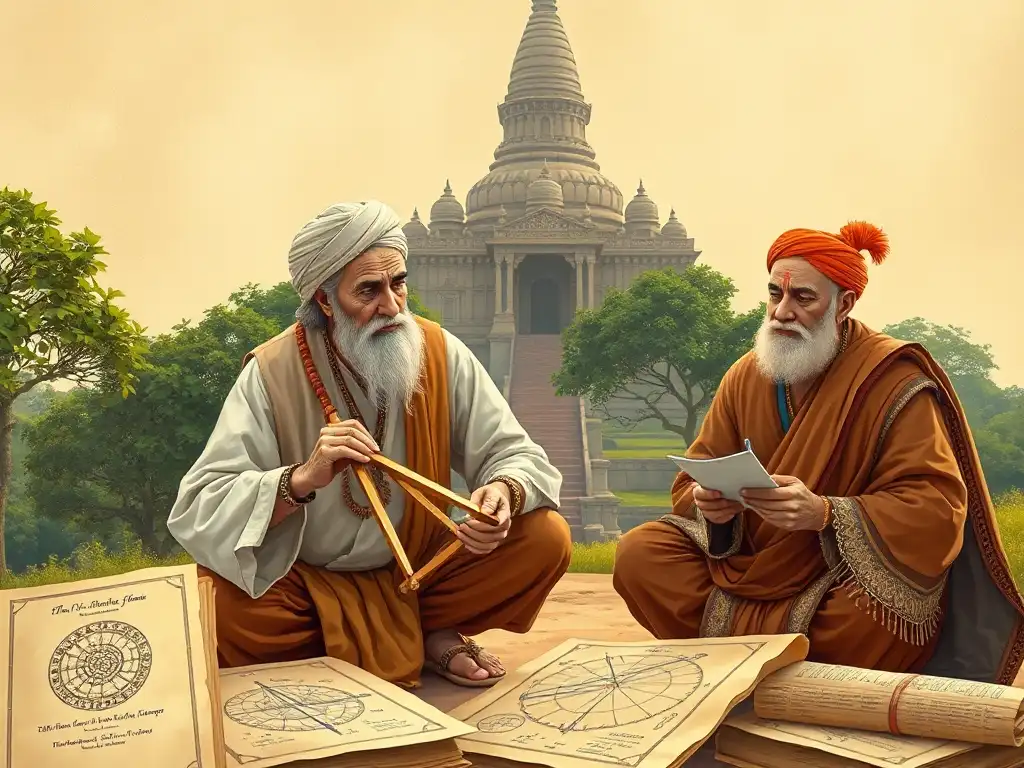
Summary of Key Contributions
The Maurya Empire, flourishing from 322 to 185 BCE, is renowned for its profound contributions to science and mathematics, which laid the groundwork for future advancements in these fields. Key figures such as Aryabhata and Brahmagupta emerged during this period, making significant strides in various disciplines.
- Mathematical Innovations
- Decimal System: The concept of zero and the decimal place value system were pivotal contributions that revolutionized mathematics globally.
- Geometry: The Maurya period saw advancements in geometry, particularly in calculating areas and volumes, which were essential for architecture and land measurement.
- Astronomy
- Celestial Calculations: Astronomers like Aryabhata made notable contributions, including the calculation of the Earth's circumference and the length of a year with remarkable accuracy.
- Planetary Motion: The study of planetary motion and eclipses was advanced, providing insights that influenced subsequent astronomical studies.
- Medicine
- Ayurveda: The Maurya Empire saw the consolidation of Ayurvedic medicine, emphasizing herbal treatments, surgical techniques, and holistic health practices.
- Surgical Instruments: Innovations in surgical tools and methods were documented, showcasing the advanced understanding of human anatomy.
- Engineering and Architecture
- Infrastructure Development: The Mauryan emperors invested in extensive infrastructure, including roads and irrigation systems, demonstrating an understanding of engineering principles.
- Stupas and Pillars: Architectural feats such as the construction of stupas and Ashoka's pillars reflect the application of advanced mathematical concepts in design.
Reflection on the Importance of Ancient Indian Science and Mathematics
The contributions of the Maurya Empire to science and mathematics extend beyond their historical context; they represent a pivotal moment in the evolution of human knowledge. The methodologies and discoveries made during this era laid the foundation for later scholars and civilizations, influencing not only India but also the broader world.
- Cultural Exchange: The exchange of ideas between the Maurya Empire and other contemporary civilizations facilitated the dissemination of scientific knowledge, enriching the global intellectual landscape.
- Legacy of Learning: The emphasis on empirical observation and logical reasoning in the Mauryan period instilled a culture of inquiry that persisted throughout Indian history, encouraging future generations of scholars.
The Maurya Empire's science and mathematics contributions are a testament to the intellectual richness of ancient Indian civilization. By studying these advancements, we gain insight into the sophisticated understanding of the natural world that existed long before modern scientific practices. The legacy of this era continues to inspire contemporary scientific exploration and mathematical thought.
Frequently Asked Questions
What were the main contributions of the Maurya Empire to science and mathematics?
The Maurya Empire made significant strides in mathematics and astronomy, with advancements in concepts like zero, the decimal system, and detailed astronomical observations.
Who were the key figures in the Maurya Empire known for their work in science and mathematics?
Notable figures include Aryabhata, who made pioneering contributions in astronomy and mathematics, and Varahamihira, known for his work on astrology and mathematical calculations.
How did the Maurya Empire influence later developments in science and mathematics?
The Maurya Empire's innovations laid the groundwork for future scholars, influencing the Golden Age of Indian Mathematics and contributing to global scientific advancements.
What role did the Nalanda University play in the scientific advancements during the Maurya Empire?
Nalanda University became a renowned center for learning, attracting scholars who studied subjects like mathematics, astronomy, and philosophy, fostering an environment of intellectual growth.
How did the Maurya Empire integrate science and mathematics into daily life?
The Maurya Empire utilized mathematics for trade, agriculture, and architecture, ensuring that scientific principles were embedded in everyday activities and governance.
Final Reflection: The Enduring Legacy of the Maurya Empire in Science and Mathematics
The contributions of the Maurya Empire to science and mathematics remain profoundly relevant today, as they laid the groundwork for many modern scientific principles and mathematical concepts. The innovations and intellectual advancements during this period not only shaped the ancient world but also continue to influence contemporary thought, highlighting the empire's pivotal role in the evolution of human knowledge.
The legacy of the Maurya Empire is a testament to the power of inquiry and intellectual pursuit, which has shaped our cultural and social landscape. The works of key figures like Aryabhata and Varahamihira serve as reminders of the importance of scientific exploration and mathematical reasoning in our lives. Science knows no country, because knowledge belongs to humanity, and is the torch which illuminates the world.
This quote encapsulates the spirit of the Maurya Empire's contributions, emphasizing that the pursuit of knowledge transcends borders and time.
As we reflect on the lessons from the Maurya Empire, let us embrace the spirit of curiosity and innovation that defined this remarkable period. I invite you to explore the realms of science and mathematics in your own life, seeking knowledge and understanding in every endeavor. By doing so, we honor the legacy of those who came before us and contribute to a future where the pursuit of knowledge continues to thrive.
Unveil the Legacy of Science and Mathematics!
Thank you for exploring the remarkable contributions of the Maurya Empire to science and mathematics. Your interest in these key figures not only broadens your knowledge but also honors the rich history that has shaped our understanding of the world.
Now, it's time to take your curiosity further! Consider these actions to deepen your engagement with this fascinating topic:
- Dive deeper: Research one of the prominent scholars from the Maurya period and share your findings with others. Whether it's through a blog post or a social media update, spread the knowledge!
- Join an online community focused on Ancient Indian history to discuss and exchange insights about the incredible achievements of the Maurya Empire.
- Create a personal project, such as a timeline or infographic, showcasing the evolution of scientific thought during this great era. Let your creativity shine!
What aspect of the Maurya Empire's contributions to science and mathematics surprised you the most? How do you think these contributions influence our world today? We’d love to hear your thoughts!