
The Spiritual and Philosophical Contributions of Mauryan Thinkers

Welcome to Ancient India History, where we embark on a journey through the rich tapestry of ancient Indian civilizations. This week, we delve into the profound world of Mauryan thinkers and their spiritual philosophy, exploring how their insights have shaped not only their time but also the philosophical landscape of future generations. As you navigate through the depths of this fascinating era, prepare to uncover the wisdom, cultural richness, and transformative ideas that emerged from the Mauryan Empire. Join us as we unravel the mysteries of ancient thought and discover how these philosophical contributions continue to resonate today!
- Introduction to Mauryan Thinkers and Their Spiritual Philosophy
- Key Mauryan Thinkers and Their Contributions
- The Interplay of Religion and Philosophy in Mauryan Thought
- Legacy of Mauryan Thinkers in Spiritual Philosophy
- Conclusion: The Lasting Legacy of Mauryan Thinkers
- Frequently Asked Questions
- Final Reflection: The Enduring Legacy of Mauryan Thinkers' Spiritual Philosophy
- Unveil the Wisdom of Mauryan Thinkers!
Introduction to Mauryan Thinkers and Their Spiritual Philosophy
The Maurya Empire, which flourished from 322 to 185 BCE, represents a pivotal period in ancient Indian history characterized by significant political, cultural, and philosophical advancements. At the heart of this empire were its thinkers, whose spiritual philosophies laid the groundwork for subsequent Indian thought and influenced various aspects of society, governance, and personal conduct.
These thinkers, associated with the Mauryan dynasty, are remembered not only for their contributions to religious and philosophical discourse but also for how their ideas shaped the moral and ethical compass of their time. This article delves into the profound spiritual philosophies espoused by Mauryan thinkers, exploring their impact on the broader landscape of ancient Indian civilization and their lasting legacy.
Overview of the Maurya Empire
The Maurya Empire was established by Chandragupta Maurya and expanded under the rule of his grandson, Ashoka the Great. With its capital at Pataliputra, this empire became one of the largest in the ancient world, encompassing vast territories across the Indian subcontinent. The political structure of the Maurya Empire was marked by a centralized administration, which facilitated the spread of ideas and ideologies.
Key features of the Maurya Empire include:
- Cultural Flourishing: The empire was a melting pot of diverse cultures, languages, and traditions.
- Administrative Innovations: Advanced bureaucratic systems were established for efficient governance.
- Economic Prosperity: Trade routes flourished, connecting India with other civilizations, enhancing economic stability.
The Mauryan period also saw the emergence of significant philosophical schools, where thinkers such as Chanakya, Ashoka, and various monks contributed to a rich dialogue on ethics, governance, and spirituality.
Significance of Spiritual Philosophy in Ancient India
Spiritual philosophy during the Maurya Empire played a crucial role in shaping not only individual beliefs but also societal norms. The teachings of Mauryan thinkers emphasized the importance of dharma (moral duty) and ahimsa (non-violence), which became foundational principles in Indian philosophy.
Key aspects of spiritual philosophy in this era include:
- Ethical Governance: Ashoka's edicts reflect a commitment to moral leadership, promoting welfare and compassion.
- Interconnectedness of Life: The emphasis on non-violence and respect for all living beings fostered a culture of tolerance and coexistence.
- Influence of Buddhism: The spread of Buddhism during Ashoka's reign introduced new spiritual dimensions, advocating for introspection and personal enlightenment.
The spiritual philosophies articulated by Mauryan thinkers not only influenced the socio-political landscape of their time but also laid the groundwork for future philosophical explorations in India, leaving a legacy that continues to resonate in contemporary thought.
Key Mauryan Thinkers and Their Contributions
Ashoka the Great: A Beacon of Spiritual Enlightenment
Ashoka the Great, the third emperor of the Maurya Dynasty, is often hailed as one of the most significant figures in the history of ancient India. His reign, which lasted from 268 to 232 BCE, marked a transformative period characterized by a profound commitment to spiritual philosophy and ethical governance. Ashoka's conversion to Buddhism after the Kalinga War catalyzed his dedication to the principles of non-violence, compassion, and moral conduct, which became cornerstones of his administration.
Ashoka's approach to leadership was not merely pragmatic; it was deeply rooted in a spiritual ethos that sought to elevate the moral fabric of society. He believed that the welfare of his subjects was paramount and that true power lay in the ability to inspire ethical behavior rather than exerting force. This belief led to the establishment of policies that promoted social harmony and the welfare of all beings.
Ashoka’s Edicts and Their Philosophical Implications
One of the most notable contributions of Ashoka was the issuance of his edicts, inscriptions carved on rocks and pillars throughout his empire. These edicts served as a public declaration of his principles and policies, reflecting his spiritual philosophy. They emphasized the importance of Dharma (moral law), tolerance, and compassion, which resonated with the teachings of Buddhism.
For instance, the Rock Edict II calls for respect toward all religious sects and advocates for mutual understanding, stating, "All religions should reside everywhere." This illustrates Ashoka’s belief in the importance of coexistence and the moral duty of rulers to promote peace. The edicts also addressed social issues, such as the welfare of animals and the care of the sick, demonstrating Ashoka's holistic view of governance that intertwined spiritual philosophy with practical ethics.
The Role of Buddhism in Ashoka's Reign
Buddhism played a pivotal role in shaping Ashoka's spiritual philosophy. After witnessing the devastating consequences of war, he embraced the teachings of the Buddha, which emphasized non-violence (Ahimsa) and the pursuit of enlightenment. Ashoka's patronage significantly contributed to the spread of Buddhism both within and beyond India.
Under Ashoka's reign, Buddhist monasteries were established, and missionaries were dispatched to various regions, including Sri Lanka and Central Asia. This not only facilitated the growth of Buddhism as a major world religion but also helped integrate its ethical teachings into the daily lives of his subjects. By promoting Buddhist values, Ashoka aimed to create a more compassionate society, which he believed was essential for a harmonious empire.
Chanakya (Kautilya): The Strategist with a Spiritual Vision
Chanakya, also known as Kautilya, was another key figure of the Maurya Empire whose intellectual prowess and strategic acumen were critical in consolidating Ashoka's power. Often regarded as the father of political science in India, Chanakya authored the Arthashastra, a comprehensive treatise that blends political theory with practical governance.
His insights into statecraft were not solely based on expediency; they were infused with a deeper philosophical understanding of human nature and ethics. Chanakya’s teachings advocated for a ruler to possess not only political skill but also a moral compass, emphasizing that true leadership requires wisdom and virtue.
The Arthashastra: Merging Politics with Philosophy
The Arthashastra serves as a remarkable fusion of political strategy and ethical considerations. It outlines various aspects of governance, including economics, military strategy, and diplomacy, while also addressing the moral responsibilities of a ruler. Chanakya asserted that the ultimate goal of governance is the welfare of the state, which can only be achieved through a balance of power and righteousness.
For example, Chanakya famously stated, "There is some self-interest behind every friendship. There is no friendship without self-interests. This is a bitter truth." This perspective illustrates his pragmatic approach to politics, where he recognized the complexities of human relationships and the necessity for a ruler to navigate them with wisdom and discernment.
Chanakya’s Views on Morality and Governance
Despite his pragmatic outlook, Chanakya did not disregard the importance of morality in governance. He believed that ethical leadership was essential for the stability and prosperity of the state. His writings emphasized that a king should embody virtues such as integrity, justice, and benevolence.
Chanakya's perspective on governance was that a ruler must not only act in the interest of the state but also uphold the moral values that bind society together. He articulated that "A person should not be too honest. Straight trees are cut first and honest people are screwed first." This quote reflects his understanding that moral rigidity could be detrimental in the realm of politics, yet he simultaneously promoted the idea that true strength lies in ethical governance.
The spiritual philosophies of Mauryan thinkers like Ashoka and Chanakya had a profound impact on ancient Indian civilization, intertwining ethical considerations with political strategy and laying the foundation for a governance model that prioritized the welfare of the populace. Their contributions continue to resonate in discussions of leadership and ethical governance today.
The Influence of Jain Philosophy During the Maurya Period
The Maurya period (322-185 BCE) marked a significant era in Indian history, characterized by the flourishing of various philosophical and spiritual schools of thought. Among these, Jain philosophy emerged as a prominent influence, particularly during the reign of Emperor Ashoka, who is often associated with the promotion of non-violence and ethical governance. Jainism, with its rigorous ethical code and profound spiritual insights, shaped the sociopolitical landscape of the time and left a lasting impact on Indian thought.
The Mauryan Empire witnessed a confluence of ideas, where Jainism interacted with other philosophical traditions, including Buddhism and Hinduism. The teachings of Jain thinkers emphasized the importance of ahimsa (non-violence) and asceticism, which resonated with the broader spiritual discourse of the era. Jainism's commitment to non-violence influenced Ashoka's policies, leading him to adopt a more compassionate approach to governance after the Kalinga War. This shift not only transformed the political ethos of the Maurya Empire but also contributed to the cultural and spiritual richness of ancient India.
Key Jain Thinkers and Their Impact
Several key Jain thinkers played a crucial role in the development and dissemination of Jain philosophy during the Maurya period. Among them, the most notable is Mahavira, the 24th Tirthankara, who is often credited with formalizing the teachings of Jainism. His emphasis on personal spiritual development and strict adherence to ethical principles laid the groundwork for Jain communities to flourish.
Another significant figure is Umaswati, also known as Umasvami, whose work, the Tattvartha Sutra, synthesized various Jain doctrines and made them accessible to a broader audience. This text became foundational for Jain philosophy, providing a comprehensive overview of Jain beliefs, cosmology, and ethics. Umaswati’s teachings on the nature of the soul and the importance of right knowledge, faith, and conduct continue to influence Jain thought and practice to this day.
The contributions of these thinkers were not limited to spiritual matters; they also engaged with the social and political issues of their time. Jain scholars often served as advisors to rulers, promoting values of justice, mercy, and non-violence, which were essential for the stability of the Mauryan Empire.
Principles of Non-Violence and Spirituality in Jainism
At the core of Jain philosophy is the principle of ahimsa, or non-violence, which advocates for the protection of all living beings. This fundamental tenet shaped not only individual conduct but also social and political norms during the Maurya period. Jains believe that every action has consequences, and thus, practicing non-violence is essential for spiritual liberation (moksha).
In addition to ahimsa, Jainism emphasizes aparigraha (non-possessiveness) and samyak darshana (right perception). The principle of aparigraha promotes detachment from material possessions, encouraging individuals to lead simple and ascetic lifestyles. This ideal resonated with many during the Maurya period, as it provided an alternative to the prevailing materialistic values of society.
The spiritual practices of Jainism, such as meditation and fasting, are designed to cultivate inner peace and self-discipline. These practices not only enhance personal spirituality but also contribute to a harmonious society by promoting compassion and understanding among individuals. The Mauryan emphasis on ethical governance, influenced by Jain principles, paved the way for a more humane and enlightened approach to leadership, underscoring the profound impact of Jain philosophy on the spiritual landscape of ancient India.
The Interplay of Religion and Philosophy in Mauryan Thought

The Mauryan Empire, flourishing from the 3rd to the 2nd century BCE, is renowned not only for its political achievements but also for its profound spiritual and philosophical contributions. The thinkers of this era engaged deeply with the prevailing religious traditions, notably Hinduism, Buddhism, and Jainism, weaving them into a tapestry of thought that would influence generations.
The spiritual philosophy of Mauryan thinkers often reflected a synthesis of these diverse religious ideologies. They explored fundamental questions about existence, morality, and the nature of the divine, leading to rich philosophical discourses. This interplay is exemplified in the writings and teachings of key figures such as Ashoka, who, after his conversion to Buddhism, sought to govern with compassion and moral rectitude, emphasizing dharma (righteousness) over mere political power.
The Role of Hinduism in Shaping Mauryan Spirituality
Hinduism played a crucial role in the spiritual landscape of the Mauryan Empire. The Vedic texts and Upanishads, which formed the bedrock of Hindu philosophical thought, were essential in guiding the ethical and spiritual framework within which Mauryan thinkers operated.
- Key Concepts:
- Dharma: The concept of duty and righteousness was pivotal. Mauryan rulers, particularly Ashoka, embraced this as a guiding principle in governance.
- Karma: The idea that actions have consequences reinforced moral behavior among the populace.
- Moksha: The pursuit of liberation from the cycle of rebirth influenced various philosophical schools during this epoch.
The Mauryan period saw a rise in the synthesis of these ideas with local beliefs and practices, leading to a more inclusive and holistic approach to spirituality. Temples and rituals flourished, and texts were composed that reflected this confluence of thought.
Comparative Analysis: Buddhism vs. Jainism in Mauryan Philosophy
The Mauryan Empire was a significant period for the development of both Buddhism and Jainism, two religions that emerged as critiques of the prevailing Vedic traditions and offered alternative spiritual philosophies.
- Buddhism:
- Core Teachings: Founded by Siddhartha Gautama (the Buddha), Buddhism emphasized the Four Noble Truths and the Eightfold Path as a means to attain enlightenment. The moral precepts encouraged non-violence (ahimsa), compassion, and detachment from material possessions.
- Ashoka’s Influence: Ashoka's embrace of Buddhism led to its spread throughout the empire. He promoted the values of compassion and non-violence, which were seen as essential to a just society.
- Jainism:
- Core Principles: Jain philosophy centers around the concepts of non-violence (ahimsa) and truth (satya). The Jain community emphasized strict asceticism and the idea of liberation through self-discipline and renunciation.
- Philosophical Contributions: Jain thinkers contributed significantly to the discourse on metaphysics and ethics, influencing the broader philosophical landscape of the Mauryan period.
Comparative Insights
| Aspect | Buddhism | Jainism |
|---|---|---|
| Approach to Ahimsa | Advocated for compassion and non-violence, especially after Ashoka’s conversion. | Emphasized strict non-violence, even to the point of avoiding harm to microorganisms. |
| Path to Liberation | Follow the Eightfold Path to attain Nirvana. | Achieve liberation through strict ascetic practices and self-discipline. |
| View of the Self | Anatta (no permanent self); focus on overcoming desire. | A permanent soul (jiva) that is trapped in the cycle of rebirth and can attain liberation. |
The philosophical contributions of Mauryan thinkers, influenced by both Buddhism and Jainism, provided a rich dialogue about the nature of existence, ethics, and the pursuit of spiritual enlightenment. As a result, the era laid the groundwork for the spiritual and philosophical developments that would continue to shape Indian thought for centuries to come.
Legacy of Mauryan Thinkers in Spiritual Philosophy
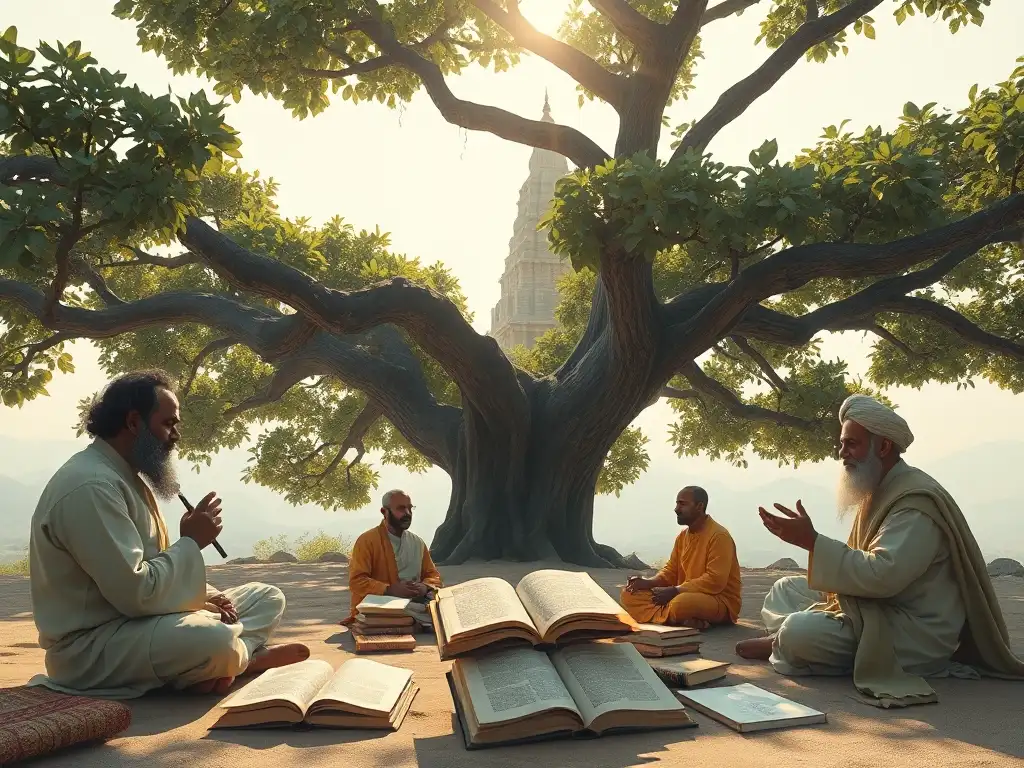
The Mauryan Empire, which thrived from the 4th to the 2nd century BCE, was a significant period in ancient India that produced some of the most influential spiritual and philosophical thinkers. Notably, figures such as Ashoka, Chanakya, and various Buddhist scholars contributed to a rich legacy that shaped not only their contemporaneous society but also the spiritual landscape of future generations. The spiritual philosophy of Mauryan thinkers is characterized by its emphasis on ethical governance, compassion, and the pursuit of truth, which resonated deeply within the cultural fabric of India and beyond.
Influence on Subsequent Indian Philosophical Traditions
The philosophical contributions of Mauryan thinkers laid the groundwork for several key Indian philosophical traditions. Their focus on ethical principles and moral governance can be seen as a precursor to later schools of thought, including:
- Buddhism: Ashoka's promotion of Buddhism and its core tenets of compassion, non-violence, and the middle path had a profound impact on Indian spirituality. His edicts, inscribed on pillars and rocks, emphasized dharma (righteousness) and the importance of ethical living.
- Jainism: The Mauryan era also coincided with the rise of Jainism, which shares several philosophical underpinnings with Buddhism, particularly the emphasis on non-violence (ahimsa) and truth (satya). The Mauryan rulers' patronage of both religions facilitated a dialogue that enriched their spiritual philosophies.
- Hindu Philosophy: The ethical and moral frameworks established during the Mauryan period influenced later Hindu thinkers, particularly in the development of texts such as the Manusmriti, which articulated duties (dharma) and righteousness.
The philosophical dialogues initiated by Mauryan thinkers not only enriched their own time but also created a philosophical continuum that would influence various schools of thought, including Yoga, Vedanta, and later philosophical movements.
The Enduring Impact on Modern Spiritual Practices
The spiritual philosophy of Mauryan thinkers continues to resonate in contemporary spiritual practices. Their teachings on ethical living, compassion, and mindfulness have found a place in modern spirituality, reflected in various practices such as:
- Mindfulness and Meditation: The emphasis on self-awareness and inner peace, as taught by Buddhist and Jain philosophies during the Mauryan period, has become central to modern mindfulness practices.
- Ethical Living: The principles of ahimsa and satya promoted by Mauryan thinkers are echoed in contemporary movements advocating for vegetarianism, environmental sustainability, and social justice.
- Interfaith Dialogue: The Mauryan tradition of promoting diverse spiritual paths has laid the groundwork for modern interfaith dialogues, encouraging respect and understanding among different religious traditions.
The spiritual philosophy of Mauryan thinkers has had a lasting legacy that informs not only historical philosophical traditions but also contemporary spiritual practices. Their insights continue to inspire individuals seeking to navigate the complexities of modern life with ethical clarity and spiritual depth.
Conclusion: The Lasting Legacy of Mauryan Thinkers

The Mauryan Empire, which thrived from 322 to 185 BCE, is often celebrated not only for its political and military prowess but also for its profound spiritual and philosophical contributions. The thinkers of this era, particularly during the reign of Emperor Ashoka, laid down a legacy that continues to influence contemporary spiritual and ethical discourses. Their emphasis on dharma (righteousness) and ahimsa (non-violence) resonates deeply within modern society, making their teachings perpetually relevant.
Reflection on the Continued Relevance of Their Spiritual Philosophy
The spiritual philosophy articulated by Mauryan thinkers serves as a cornerstone for numerous ethical frameworks in modern times. The principles of ahimsa and dharma not only underscore the importance of moral conduct but also promote a way of living that prioritizes compassion and respect for all forms of life. This is particularly significant in today’s context, where issues such as environmental sustainability and social justice are paramount.
- Ahimsa: The doctrine of non-violence has inspired various global movements, including the civil rights movement led by Mahatma Gandhi. The foundational idea of resolving conflicts through peaceful means rather than violence is a direct reflection of Mauryan philosophical teachings.
- Dharma: The concept of duty and righteousness encourages individuals to act in accordance with ethical principles, fostering a sense of responsibility towards society and oneself. This has implications for modern governance and the rule of law, where ethical leadership is increasingly recognized as vital for societal well-being.
Block quotes from prominent figures often highlight this enduring legacy:
“The greatest way to find yourself is to lose yourself in the service of others.” – Mahatma Gandhi, reflecting the principles of service and selflessness championed by Mauryan thinkers.
The spiritual philosophies of the Mauryan thinkers also contributed to the establishment of a more inclusive society, promoting tolerance and understanding among different communities and beliefs, which is essential for harmony in today’s diverse world.
Final Thoughts on the Contributions of Mauryan Thinkers to Ancient Indian Civilization
The contributions of Mauryan thinkers extend beyond their immediate historical context; they have shaped the very fabric of Indian civilization. Their ideas established a framework for governance and ethics, influencing subsequent dynasties and thinkers throughout the ages.
| Contributions | Impact on Society |
|---|---|
| Promotion of Ahimsa | Fostered a culture of non-violence |
| Emphasis on Dharma | Encouraged ethical governance |
| Advocacy for Tolerance | Promoted harmony among diverse communities |
The spiritual philosophy of Mauryan thinkers encapsulates a profound understanding of human nature and morality. Their teachings continue to inspire and guide individuals and societies towards a more ethical and compassionate existence. As we delve into the depths of ancient Indian civilizations, the legacy of the Mauryan thinkers stands as a testament to the power of philosophy in shaping not just an empire, but the collective conscience of humanity.
Their enduring influence is a reminder that the quest for truth and ethical living is timeless, making the study of Mauryan thinkers' spiritual philosophy not only relevant but essential for navigating the complexities of modern life.
Frequently Asked Questions
What were the main spiritual philosophies of Mauryan thinkers?
Mauryan thinkers contributed significantly to spiritual philosophy by emphasizing non-violence, tolerance, and the pursuit of truth. Their ideas laid the groundwork for later philosophical movements in India.
How did Ashoka's reign influence spiritual thought?
During Ashoka's reign, there was a notable shift toward Buddhism and Dharma, promoting a philosophy based on compassion and ethical governance, which had a lasting impact on Indian spirituality.
Who were some notable Mauryan thinkers?
Key figures among Mauryan thinkers include Chanakya, known for his political treatise Arthashastra, and Brahmin scholars, who contributed to the Vedic and Buddhist philosophies.
What role did religion play in Mauryan philosophy?
Religion was central to Mauryan philosophy, with a focus on both Buddhism and Jainism, advocating for spiritual growth through moral living and ascetic practices.
How did Mauryan thinkers influence later Indian philosophies?
The ideas of Mauryan thinkers laid the groundwork for various philosophical schools in India, fostering a climate of intellectual debate and exploration that influenced future spiritual traditions.
Final Reflection: The Enduring Legacy of Mauryan Thinkers' Spiritual Philosophy
The spiritual and philosophical contributions of Mauryan thinkers remain profoundly relevant today, as they offer timeless insights into the nature of existence and the pursuit of inner peace. In an era marked by rapid change and uncertainty, the teachings of these ancient philosophers remind us of the importance of introspection and ethical living. Their wisdom serves as a beacon, guiding us through the complexities of modern life, urging us to seek balance and harmony within ourselves and with the world around us.
The influence of Mauryan thinkers extends far beyond their historical context, shaping the cultural and social landscape of contemporary society. Their ideas on spirituality and philosophy continue to resonate, inspiring movements focused on mindfulness, compassion, and ethical governance. As we navigate our own paths, we can draw from their teachings to foster a deeper understanding of ourselves and our place in the universe. The greatest wealth is to live content with little.
This quote encapsulates the essence of their philosophy, encouraging us to find richness in simplicity and to cultivate gratitude in our daily lives.
As we reflect on the lessons imparted by Mauryan thinkers, let us embrace the opportunity to integrate their spiritual philosophy into our own lives. Take a moment to consider how their teachings can inspire you to cultivate a more meaningful existence. Whether through meditation, ethical decision-making, or fostering compassion in your interactions, you have the power to carry forward their legacy. In doing so, you not only honor their contributions but also contribute to a more harmonious world for future generations.
Unveil the Wisdom of Mauryan Thinkers!
Thank you for exploring the profound contributions of Mauryan thinkers with us! You've gained insights into how their spiritual and philosophical ideas shaped ancient Indian society and continue to resonate today. Now, it's time to take meaningful steps to deepen your connection with this rich heritage.
Here are a few actions you can take:
- Dive deeper: Read key texts by Mauryan philosophers, such as the Edicts of Ashoka or the Arthashastra, to truly understand their perspectives.
- Share your thoughts: Join our discussion forum and engage with fellow enthusiasts by sharing your reflections on how these teachings apply to contemporary life.
- Explore further: Check out our recommended readings and documentaries on ancient Indian philosophy to expand your knowledge and appreciation.
What insights from Mauryan thinkers do you find most relevant to our modern lives? We encourage you to share your thoughts in the comments below!