
The Philosophical Contributions of Gautama: The Founder of Nyaya


Welcome to Ancient India History, where we embark on an enlightening journey through the rich tapestry of ancient Indian civilizations. In this captivating exploration, we delve into the profound philosophical contributions of Gautama, the visionary founder of Nyaya philosophy. Discover how his insights not only shaped the intellectual landscape of India but also influenced the broader realms of art and architecture.
Join us as we unravel the intricate threads of thought that continue to resonate today, inviting you to explore the wisdom that has stood the test of time. Are you ready to unlock the secrets of Gautama's legacy? Dive deeper with us!
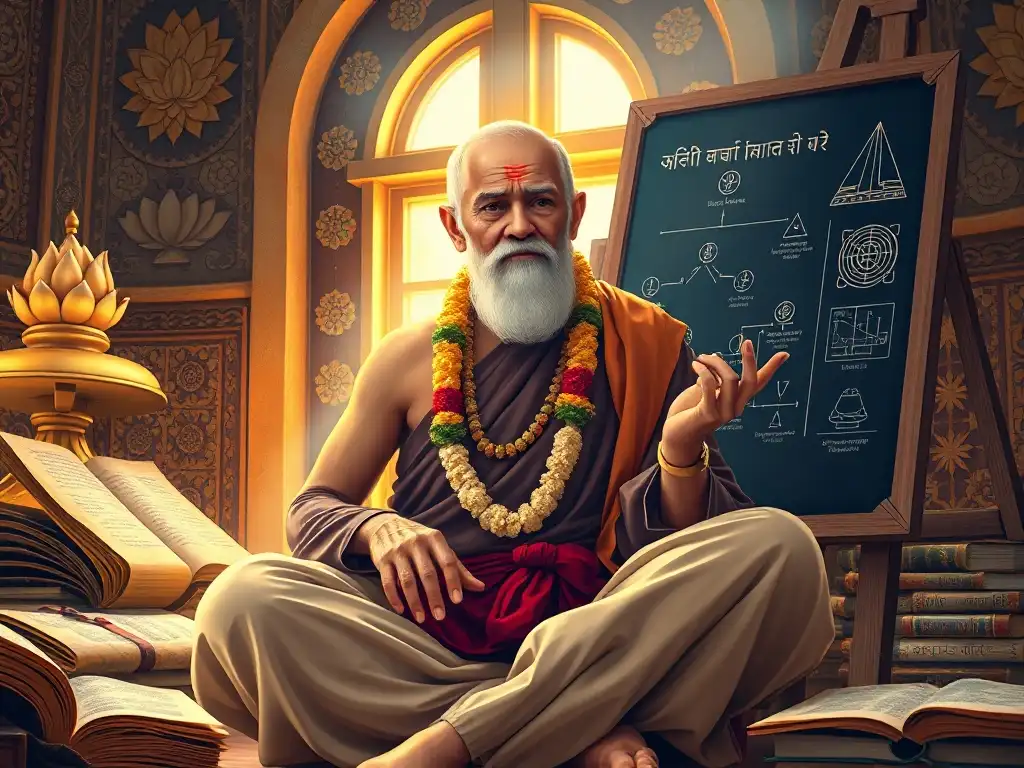
Introduction to Gautama and Nyaya Philosophy
Gautama, also known as Gotama or Akshapada, stands as a pivotal figure in the realm of Indian philosophy, particularly as the founder of Nyaya philosophy. His work, encapsulated in the Nyaya Sutras, lays the foundation for a systematic approach to logic and epistemology that has significantly influenced subsequent schools of thought in ancient India.
Nyaya, which translates to "justice" or "rule," embodies a rigorous method of reasoning aimed at discerning truth and dispelling ignorance through logical analysis. The contributions of Gautama's Nyaya philosophy are profound, addressing critical questions about knowledge, perception, and reality that resonate even in contemporary philosophical discourse.
Overview of Gautama's Life and Historical Context
Gautama lived around the 2nd century BCE during a period marked by intellectual flourishing and cultural development in ancient India. This era saw the emergence of various philosophical schools that sought to explain the nature of existence and the universe. Gautama's Nyaya philosophy emerged as a response to the metaphysical inquiries posed by contemporaneous thinkers, particularly in the context of the Vedic tradition.
He is believed to have been born in a Brahmin family, which likely influenced his engagement with religious texts and practices. Gautama's emphasis on logical reasoning can be seen as a departure from purely ritualistic interpretations of the Vedas, advocating instead for a rational approach to understanding the world. His teachings attracted a significant following, establishing Nyaya as one of the six orthodox schools of Indian philosophy, alongside Vaisheshika, Sankhya, Yoga, Mimamsa, and Vedanta.
Significance of Nyaya Philosophy in Ancient Indian Thought
Nyaya philosophy holds a crucial place in the landscape of ancient Indian thought. It not only provided a framework for logical reasoning but also influenced the development of other philosophical systems. The rigorous analysis of epistemology and logic laid down by Gautama encouraged scholars to explore the nature of knowledge and belief critically.
The importance of Nyaya is underscored by its role in debates concerning metaphysics and ethics during its time. By establishing a systematic method for argumentation and inquiry, Gautama's philosophy served as a vital tool for philosophers to validate their claims and counter opposing views. This emphasis on rational discourse contributed significantly to the intellectual milieu of ancient India, fostering a culture of inquiry that remains relevant in philosophical discussions today.
Core Principles of Gautama's Nyaya Philosophy
The Concept of Pramana (Means of Knowledge)
At the heart of Nyaya philosophy lies the concept of Pramana, which refers to the means or sources of knowledge. Gautama delineated four primary pramanas:
- Pratyaksha (Perception)
- Anumana (Inference)
- Upamana (Comparison)
- Shabda (Testimony)
Each pramana serves as a distinct method for acquiring knowledge, emphasizing the need for reliable sources and validating claims through logical reasoning. This structured approach highlights the importance of discernment and critical thinking in the pursuit of truth.
The Role of Anumana (Inference) in Nyaya
Anumana, or inference, is a fundamental aspect of Gautama's Nyaya philosophy. It allows individuals to draw conclusions based on available evidence, enabling them to make sense of the world through logical deduction. Gautama elaborated on the process of inference, explaining how valid inferences are derived from premises that are universally accepted.
For instance, if smoke is observed on a hill, one may infer the presence of fire based on the established relationship between smoke and fire. This principle of reasoning is crucial not only in philosophy but also in scientific inquiry, where hypotheses are formed based on observed phenomena.
The Importance of Pratyaksha (Perception) in Understanding Reality
Pratyaksha, or perception, is considered the most immediate and direct means of knowledge in Nyaya philosophy. Gautama emphasized that perception is foundational to understanding reality, as it provides firsthand experience that informs our beliefs and knowledge.
In the Nyaya framework, perception is categorized into two types:
- Ordinary perception (e.g., seeing a tree)
- Extraordinary perception (e.g., seeing a mirage)
By analyzing the nature of perception, Gautama sought to delineate between accurate knowledge and misconceptions, reinforcing the idea that a clear understanding of reality is essential for philosophical inquiry.
Gautama's contributions to Nyaya philosophy are not only significant in their historical context but also remain influential in contemporary discussions about knowledge, logic, and the pursuit of truth.
The Structure of Nyaya Logic

Nyaya philosophy, founded by Gautama, is renowned for its systematic approach to logic and reasoning. The structure of Nyaya logic is primarily concerned with the means of obtaining knowledge (pramanas) and the methods used for valid reasoning. It serves as a framework for establishing truth through rigorous analysis, focusing on the validity of arguments and the reliability of knowledge sources.
Nyaya is characterized by its emphasis on a formal structure of argumentation, which includes four essential components: the proposition (pratijna), the reason (hetu), the example (udaharana), and the conclusion (nigamana). This logical framework enables philosophers to dissect arguments clearly, ensuring that each part contributes to the overall validity of the reasoning process.
Furthermore, Nyaya logic is divided into five categories of inference, known as the "five pramanas," which include perception (pratyaksha), inference (anumana), comparison (upamana), verbal testimony (shabda), and non-cognition (anupalabdhi). These categories help to establish a comprehensive understanding of knowledge and its acquisition, forming the backbone of Gautama's philosophical contributions.
Fundamental Categories of Nyaya Logic
To comprehend Nyaya logic, it is crucial to understand its fundamental categories. These categories define the various forms of knowledge and the processes through which one can arrive at truth. The primary categories are:
- Pratyaksha (Perception): This is the direct experience of an object through the senses. It is considered the most reliable source of knowledge in Nyaya philosophy, as it provides immediate awareness.
- Anumana (Inference): This category deals with knowledge that is gained through logical reasoning based on observation. For example, if smoke is observed, one can infer the presence of fire.
- Upamana (Comparison): This involves knowledge acquired through analogy or comparison. It allows one to understand a new concept by relating it to a familiar one.
- Shabda (Verbal Testimony): This category refers to knowledge derived from authoritative sources, such as scriptures or reliable witnesses. It emphasizes the importance of trust in spoken or written words.
- Anupalabdhi (Non-cognition): This addresses the knowledge gained through the absence of an object. For instance, realizing that there is no pot in a room can lead to knowledge about the non-existence of that object.
These fundamental categories form the basis for analyzing and validating arguments within Nyaya philosophy, enabling a structured approach to philosophical inquiry.
Nyaya's Methodology: The Four Steps of Argumentation
Gautama's Nyaya philosophy outlines a precise methodology for argumentation, which consists of four essential steps. This methodology is designed to ensure clarity and logical consistency in philosophical discussions. The steps are as follows:
- Pratijna (Proposition): The argument begins with a statement or claim that needs to be established. This serves as the foundation for the argument.
- Hetu (Reason): Following the proposition, a reason is provided to support the claim. This rationale is crucial for establishing the credibility of the argument.
- Udaharana (Example): To reinforce the argument, examples are introduced. These examples demonstrate the applicability of the reasoning and help clarify the proposition.
- Nigamana (Conclusion): Finally, the argument culminates in a conclusion that synthesizes the earlier components, presenting a coherent resolution to the initial claim.
This structured approach not only facilitates effective debate but also encourages critical thinking and analytical skills, marking a significant contribution to the field of philosophy.
Gautama's Contributions to Epistemology
Gautama's influence on epistemology is profound, as his work laid a strong foundation for understanding the nature and acquisition of knowledge. His contributions have shaped the discourse on how knowledge is defined, validated, and categorized, reflecting a deep engagement with the philosophical questions of his time.
The Nature of Knowledge According to Gautama
According to Gautama, knowledge is a justified true belief that arises from the interaction between the knower and the known. He posits that knowledge is not merely subjective but is rooted in objective reality. Gautama emphasizes the importance of pramanas, the means of knowledge acquisition, which are essential for establishing the authenticity of what is known.
He categorizes knowledge into two types: samyak jnana (correct knowledge) and mithya jnana (incorrect knowledge), which highlights the necessity of discernment in epistemology. This delineation underscores the role of logical reasoning and critical analysis in distinguishing valid knowledge from falsehood.
Distinction Between Valid and Invalid Knowledge
Gautama's Nyaya philosophy meticulously differentiates between valid and invalid knowledge through its framework of pramanas. Valid knowledge is that which is obtained through reliable means, while invalid knowledge can emerge from flawed reasoning or unreliable sources.
This distinction is crucial in Nyaya logic as it not only secures the integrity of philosophical discourse but also emphasizes the importance of rigorous analysis and verification. Gautama’s emphasis on the need for evidence and rational justification sets a precedent for subsequent philosophical inquiry, making it a cornerstone of epistemological thought in ancient Indian philosophy.
Influence of Nyaya on Later Philosophical Traditions
The impact of Gautama's Nyaya philosophy extends beyond its immediate context, influencing various later philosophical traditions both in India and globally. Nyaya's rigorous approach to logic and reasoning has inspired schools such as Vaisheshika, which further developed the concept of categorization in metaphysics, and Mimamsa, which focused on the interpretation of texts and rituals.
Moreover, the principles of Nyaya logic have found resonance in later Indian philosophers like Adi Shankaracharya and Ramanuja, who integrated logical reasoning into their own philosophical frameworks. The analytical methods established by Gautama have also influenced Western philosophy, particularly in areas related to logic, epistemology, and the philosophy of language.
Gautama's contributions to Nyaya philosophy not only enriched the intellectual landscape of ancient India but also laid down fundamental principles that continue to shape philosophical discourse across cultures and epochs.
Gautama's Ethical Perspectives
Gautama, also known as Akshapada, significantly contributed to ethical thought through his formulation of Nyaya philosophy. His approach emphasizes the importance of logical reasoning and epistemology as foundational elements for ethical understanding. According to Gautama, ethical behavior is not merely a matter of following rules but is deeply rooted in the knowledge of what is true and just. This perspective aligns ethical conduct with a well-reasoned understanding of reality, asserting that moral actions stem from clarity in knowledge.
Furthermore, Gautama’s ethical framework establishes a clear connection between the pursuit of truth and ethical living. He posits that individuals must engage in rigorous inquiry to discern right from wrong. In doing so, he highlights the role of rationality in ethical decision-making, suggesting that ethical dilemmas can be navigated through logical analysis and empirical evidence. This approach underscores the potential for ethical relativism to be resolved through objective reasoning.
Ethical Implications of Nyaya Philosophy
The ethical implications of Nyaya philosophy are profound, as they challenge practitioners to consider the impact of their knowledge on moral choices. Nyaya argues that the process of acquiring knowledge—through perception, inference, comparison, and testimony—forms the basis for ethical reasoning. Ethical implications arise from the understanding that knowledge must be applied judiciously in the real world.
In Nyaya, the pursuit of dharma (righteousness) is not only a moral obligation but also a pathway to achieving ultimate liberation (moksha). Gautama’s emphasis on logical reasoning highlights the necessity of ethical inquiry in spiritual practices. This philosophical stance has encouraged subsequent thinkers to explore the intersection between epistemology and ethics, fostering a tradition that values both knowledge and moral responsibility.
The Relationship Between Knowledge and Moral Action
Gautama's Nyaya philosophy posits a direct relationship between knowledge and moral action. He argues that true understanding of the world informs ethical conduct. This epistemic foundation implies that ignorance leads to moral failures, while knowledge empowers individuals to act justly.
In this context, moral actions are seen as extensions of one’s knowledge framework. Gautama emphasizes that ethical actions arise from a clear comprehension of one’s duties and the consequences of one’s actions. Therefore, the cultivation of knowledge is essential for ethical living, suggesting that education and philosophical training are crucial for developing a morally responsible society.
The Impact of Nyaya Philosophy on Subsequent Philosophical Schools

The impact of Nyaya philosophy on subsequent philosophical schools in India is notable, as it laid the groundwork for various ethical and epistemological discussions. Its systematic approach to logic and debate provided a robust framework that influenced later thinkers and schools of thought across Indian philosophy.
Connections Between Nyaya and Vaisheshika
Nyaya and Vaisheshika are closely linked, with both schools sharing foundational concepts in logic and epistemology. While Nyaya primarily focuses on the nature of knowledge and argumentation, Vaisheshika complements this with a detailed analysis of reality through categorization of substances and their properties.
The connection between the two schools is evident in their cooperative discourse, where Nyaya's logical methodologies were applied to Vaisheshika's metaphysical inquiries. This synergy allowed for a more nuanced understanding of existence, where ethical implications of knowledge gained prominence. Together, they fostered a comprehensive philosophical inquiry that addressed both ethical behavior and the nature of reality.
Influence of Nyaya on Sankhya Philosophy
Nyaya philosophy also influenced Sankhya, another significant philosophical system in ancient India. While Sankhya focuses on the dualism of purusha (consciousness) and prakriti (matter), Nyaya’s emphasis on logic and epistemology provided a means to explore the implications of this dualism.
The analytical methods of Nyaya enriched the discussions in Sankhya, particularly regarding the process of understanding reality and the path to liberation. The integration of Nyaya's logical frameworks allowed Sankhya philosophers to refine their arguments concerning the nature of knowledge and its role in achieving liberation, thus marking a significant philosophical evolution.
The Legacy of Nyaya in Modern Philosophy
The legacy of Nyaya philosophy extends far beyond its historical context, influencing modern philosophical thought across cultures. The principles of logical reasoning and critical inquiry established by Gautama continue to resonate in contemporary discussions on ethics, epistemology, and the philosophy of science.
Modern scholars recognize the relevance of Nyaya’s methodologies in addressing current ethical dilemmas and in fostering a rational approach to knowledge acquisition. As philosophy has evolved, the core tenets of Nyaya remain integral to understanding the relationship between truth and moral action, ensuring that Gautama’s contributions continue to shape philosophical discourse today.
Conclusion: The Enduring Relevance of Gautama's Nyaya Philosophy Contributions
Gautama’s contributions to philosophy, particularly through his establishment of Nyaya, have had a profound and lasting influence on Indian thought and beyond. His systematic approach to logic and epistemology provided a framework that not only shaped subsequent philosophical discourse in India but also laid the groundwork for rigorous analytical thinking. The principles of Nyaya, emphasizing rational inquiry and the importance of valid reasoning, resonate with contemporary philosophical discussions and methodologies.
In modern contexts, the relevance of Gautama's ideas can be seen in various disciplines, including philosophy, cognitive science, and law. The emphasis on critical thinking, argumentation, and the pursuit of knowledge through observation and inference are principles that continue to underpin academic rigor and scientific inquiry. In a world increasingly driven by information and the need for discernment, the teachings of Gautama offer valuable insights into navigating complex information landscapes.
Summary of Key Contributions and Ideas
Gautama's Nyaya philosophy is characterized by several key contributions that have shaped its core tenets:
- Pramana (Means of Knowledge): Gautama identified four primary means of acquiring knowledge: perception (pratyaksha), inference (anumana), comparison (upamana), and testimony (shabda). This classification laid the foundation for epistemology in Indian philosophy.
- Logic and Debate: He emphasized the importance of logical reasoning and debate as tools for arriving at truth. The Nyaya Sutras, his seminal work, provide a systematic approach to argumentation, outlining rules for effective discourse.
- Categorization of Reality: Gautama’s framework categorizes reality into various entities and their relationships, allowing for a comprehensive understanding of existence. This categorization aids in philosophical inquiry and promotes clarity in argumentation.
- Defining Validity: Nyaya philosophy introduces rigorous criteria for what constitutes valid reasoning and argumentation, which are essential for philosophical and scientific explorations.
These contributions not only represent significant advancements in philosophical thought but also foster a culture of analytical inquiry that remains relevant in today’s intellectual landscape.
The Importance of Studying Nyaya Philosophy Today
The study of Nyaya philosophy is crucial for several reasons:
- Enhancing Critical Thinking: Engaging with Nyaya cultivates critical thinking skills by encouraging individuals to analyze arguments, evaluate evidence, and construct logical conclusions.
- Interdisciplinary Applications: The principles of Nyaya have implications across various fields, including law, science, and ethics, where logical reasoning and structured argumentation are vital.
- Cultural Heritage: Understanding Nyaya philosophy contributes to a deeper appreciation of India's rich intellectual heritage and its historical contributions to global philosophical thought.
- Addressing Contemporary Issues: The analytical frameworks developed by Gautama can be applied to contemporary philosophical debates, aiding in the resolution of complex ethical, social, and political issues.
In a time when misinformation and dogma are prevalent, the teachings of Gautama serve as a beacon for rational discourse and the pursuit of truth.
References and Further Reading on Gautama and Nyaya Philosophy
To gain a deeper understanding of Gautama and the intricacies of Nyaya philosophy, the following texts and resources are recommended:
Suggested Texts for Deeper Understanding
- Nyaya Sutras by Gautama: The foundational text of Nyaya philosophy, providing insights into its core principles and methodologies.
- A Critical History of Indian Philosophy by Chandradhar Sharma: This work offers a comprehensive overview of Indian philosophical traditions, including Nyaya.
- The Nyaya Theory of Knowledge by G. C. Pande: This book explores the epistemological aspects of Nyaya philosophy in detail.
- Logic and Philosophy in Ancient India by R. N. Dandekar: This text examines the contributions of Indian philosophers to logic and philosophical discourse.
Notable Scholars and Commentators on Nyaya Philosophy
- Vatsyayana: A prominent commentator on Gautama's Nyaya Sutras, known for his work in clarifying and expanding upon Nyaya concepts.
- Udayana: A philosopher who integrated Nyaya with Buddhist ideas, contributing significantly to the evolution of Indian logic.
- Raghunatha Siromani: A key figure in the later development of Nyaya philosophy, known for his extensive commentaries and interpretations.
- Bimal K. Matilal: A modern scholar who has contributed to the understanding of Nyaya and its implications for contemporary philosophy.
Studying these texts and scholars will enrich your understanding of Gautama's Nyaya philosophy and its enduring impact on philosophical thought.
- Introduction to Gautama and Nyaya Philosophy
- Overview of Gautama's Life and Historical Context
- Significance of Nyaya Philosophy in Ancient Indian Thought
- Core Principles of Gautama's Nyaya Philosophy
- The Structure of Nyaya Logic
- Gautama's Contributions to Epistemology
- Gautama's Ethical Perspectives
- The Impact of Nyaya Philosophy on Subsequent Philosophical Schools
- Conclusion: The Enduring Relevance of Gautama's Nyaya Philosophy Contributions
- References and Further Reading on Gautama and Nyaya Philosophy
- What is Gautama's Nyaya philosophy?
- How did Gautama contribute to ancient Indian philosophy?
- What are the key texts associated with Gautama's Nyaya philosophy?
- How does Nyaya philosophy relate to other Indian philosophical schools?
- What impact did Nyaya philosophy have on later philosophical developments?
Frequently Asked Questions
What is Gautama's Nyaya philosophy?
Gautama's Nyaya philosophy is a school of thought in Indian philosophy that emphasizes logic and epistemology as tools for understanding truth and reality. It seeks to define the nature of knowledge and the means to acquire it.
How did Gautama contribute to ancient Indian philosophy?
Gautama's contributions laid the groundwork for logical reasoning and debate in philosophical discourse, establishing important principles such as inference and evidence. His work highlighted the significance of analytical thinking in acquiring knowledge.
What are the key texts associated with Gautama's Nyaya philosophy?
The primary text associated with Gautama is the Nyaya Sutras, which outlines the key concepts and arguments of Nyaya philosophy. This work serves as a foundational text for understanding logical reasoning in ancient India.
How does Nyaya philosophy relate to other Indian philosophical schools?
Nyaya philosophy interacts with other systems like Vaisheshika and Mimamsa, often addressing similar questions about reality, knowledge, and perception. This interaction helps highlight the diversity of thought within ancient Indian philosophy.
What impact did Nyaya philosophy have on later philosophical developments?
Nyaya philosophy influenced subsequent schools of thought, particularly in logic and epistemology, shaping discussions in both ancient and modern philosophy. Its emphasis on rational inquiry continues to resonate in contemporary philosophical debates.
Final Reflection: The Enduring Legacy of Gautama's Nyaya Philosophy
Gautama's Nyaya philosophy contributions remain profoundly relevant in today's world, as they invite us to engage in critical thinking and logical reasoning in our daily lives. In an age where information is abundant yet often misleading, the principles laid out by Gautama serve as a beacon for discerning truth from falsehood. His emphasis on rigorous debate and the pursuit of knowledge challenges us to cultivate a mindset that values inquiry and understanding above all.
The influence of Gautama's teachings extends far beyond the realm of philosophy; they have shaped our cultural and social landscapes by fostering a tradition of rational discourse. As we navigate the complexities of modern society, the ability to analyze arguments and assess evidence becomes increasingly vital. The greatest weapon against stress is our ability to choose one thought over another.
This quote resonates deeply with Gautama's philosophy, as it underscores the power of our reasoning capabilities in overcoming challenges and making informed decisions.
As you reflect on the insights gained from Gautama's Nyaya philosophy, consider how you can apply these principles in your own life. Embrace the spirit of inquiry—ask questions, seek clarity, and engage in thoughtful discussions. By doing so, you not only honor Gautama's legacy but also contribute to a more enlightened and rational society. Let the teachings of Nyaya inspire you to become a seeker of truth, fostering a deeper understanding of the world around you and the ideas that shape it.
Unveil the Wisdom of Gautama: Start Your Journey Today!
Thank you for taking the time to explore the profound philosophical contributions of Gautama, the esteemed founder of Nyaya. We hope you found insights that inspire a deeper understanding of logic and reasoning in ancient thought. Now, it’s time to transform that knowledge into action!
Here are a few steps you can take to dive deeper into this fascinating topic:
- Join a discussion group or online forum dedicated to Indian philosophy where you can share your thoughts and learn from others.
- Explore the foundational texts of Nyaya philosophy to appreciate Gautama’s principles in their original context.
- Write a reflective piece on how Gautama’s ideas can be applied to contemporary philosophical debates and share it with your peers.
Which aspect of Gautama's philosophy resonates most with you, and how can you apply it to today’s dilemmas?