
The Role of Women in Ancient Indian Philosophical Schools: A Hidden Narrative

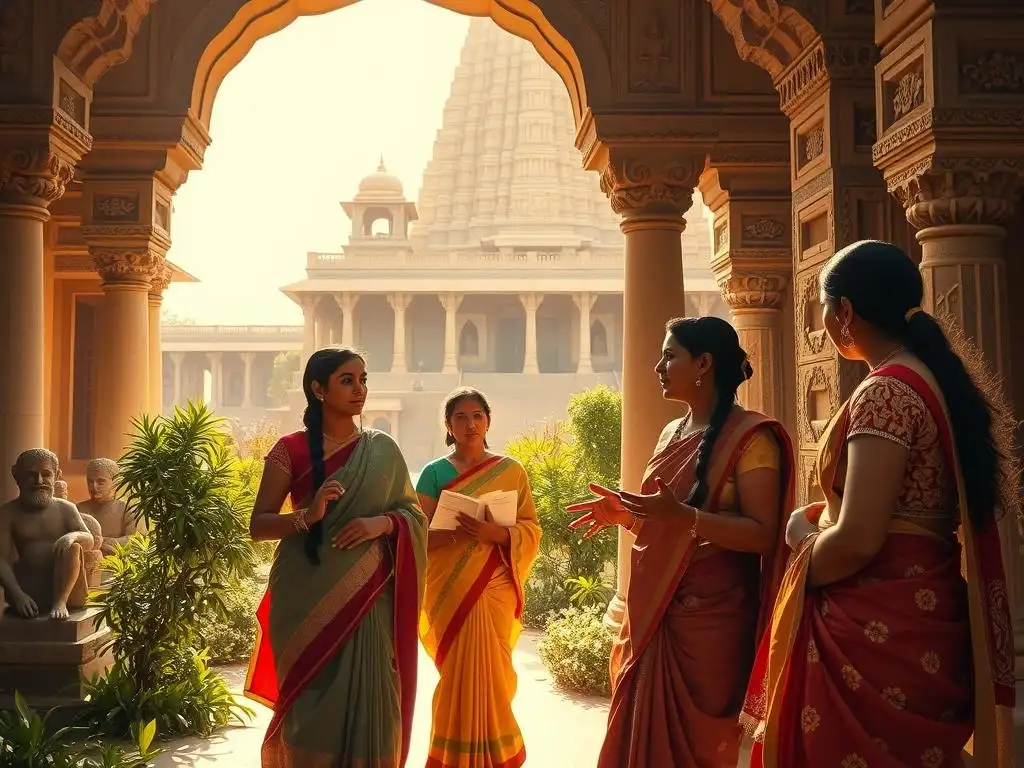
Welcome to Ancient India History, where we invite you to embark on a fascinating journey through the vibrant tapestry of India's rich past. In this exploration, we delve into the often-overlooked narratives that have shaped our understanding of society and thought. Today, we shine a light on Women in Ancient Indian Philosophy, uncovering the profound contributions and perspectives of women within philosophical schools.
What roles did they play in shaping ideas and beliefs? As you dive into our main article, "The Role of Women in Ancient Indian Philosophical Schools: A Hidden Narrative," prepare to discover a world where voices of wisdom transcended gender, inviting you to rethink the legacy of ancient thought. Join us as we peel back the layers of history to reveal the dynamic interplay of culture, philosophy, and gender in ancient India.
Introduction to Women in Ancient Indian Philosophy
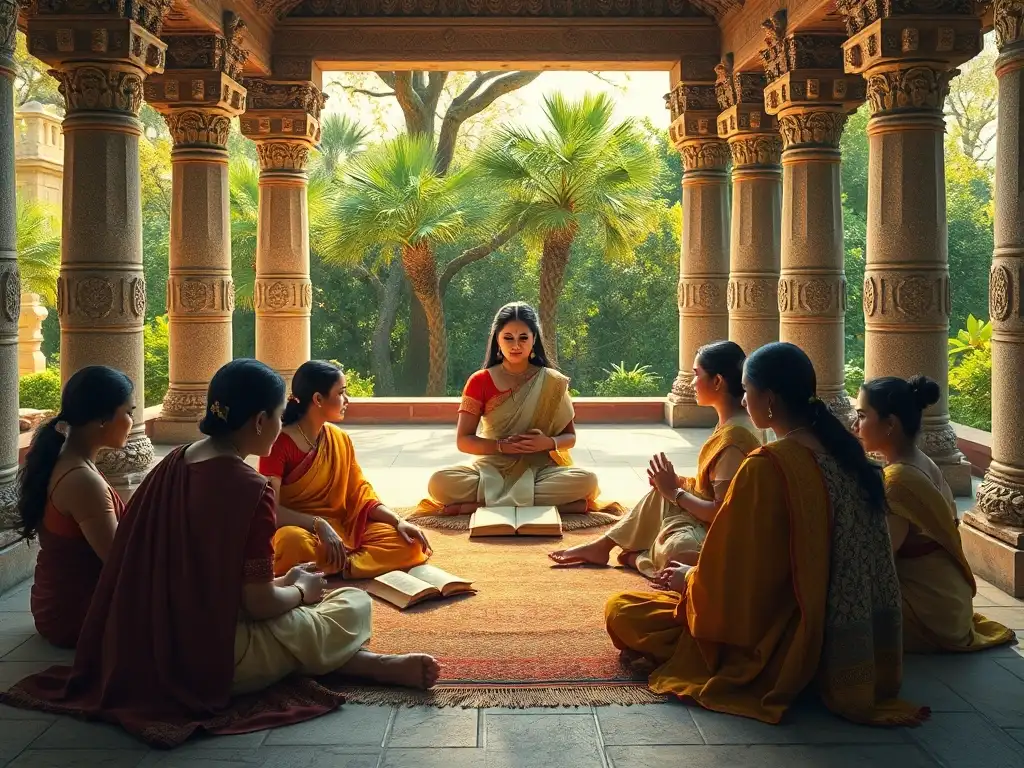
The exploration of women in ancient Indian philosophy unveils a rich tapestry of narratives that often remain obscured in mainstream discourses. Historically, the contributions of women thinkers and philosophers have been overshadowed by their male counterparts, raising critical questions about the inclusivity of philosophical traditions in ancient India.
This article aims to illuminate the significant yet often overlooked role that women played in shaping philosophical schools, particularly within the realms of Nyaya, Vaisheshika, and Sankhya. By examining their contributions, we not only gain insight into the philosophical landscape of ancient India but also challenge contemporary perceptions of gender roles in intellectual traditions.
Overview of Ancient Indian Philosophy
Ancient Indian philosophy is marked by diverse schools of thought, each with unique perspectives on metaphysics, epistemology, and ethics. The Nyaya school, founded by Gautama, emphasizes logic and epistemology, while Vaisheshika, attributed to Kanada, focuses on atomism and the nature of reality. Sankhya, traditionally associated with Kapila, presents a dualistic understanding of reality, distinguishing between consciousness and matter. These philosophical frameworks were not developed in isolation; they were influenced by and responsive to the socio-cultural contexts of their time, including the role of women in intellectual discussions.
- Key Schools of Thought:
- Nyaya: Logic and epistemology
- Vaisheshika: Atomism and metaphysics
- Sankhya: Dualism and the nature of existence
Importance of Gender in Philosophical Discourse
The significance of gender in philosophical discourse cannot be overstated. It is crucial to recognize how gender dynamics shaped the intellectual environment of ancient India. Women engaged in philosophical debates and contributed to the evolution of ideas, yet their narratives often went unrecorded or were marginalized. Their experiences and insights are essential to understanding the full spectrum of ancient Indian thought, providing a more comprehensive view of its development.
Historical Context of Women in Ancient India
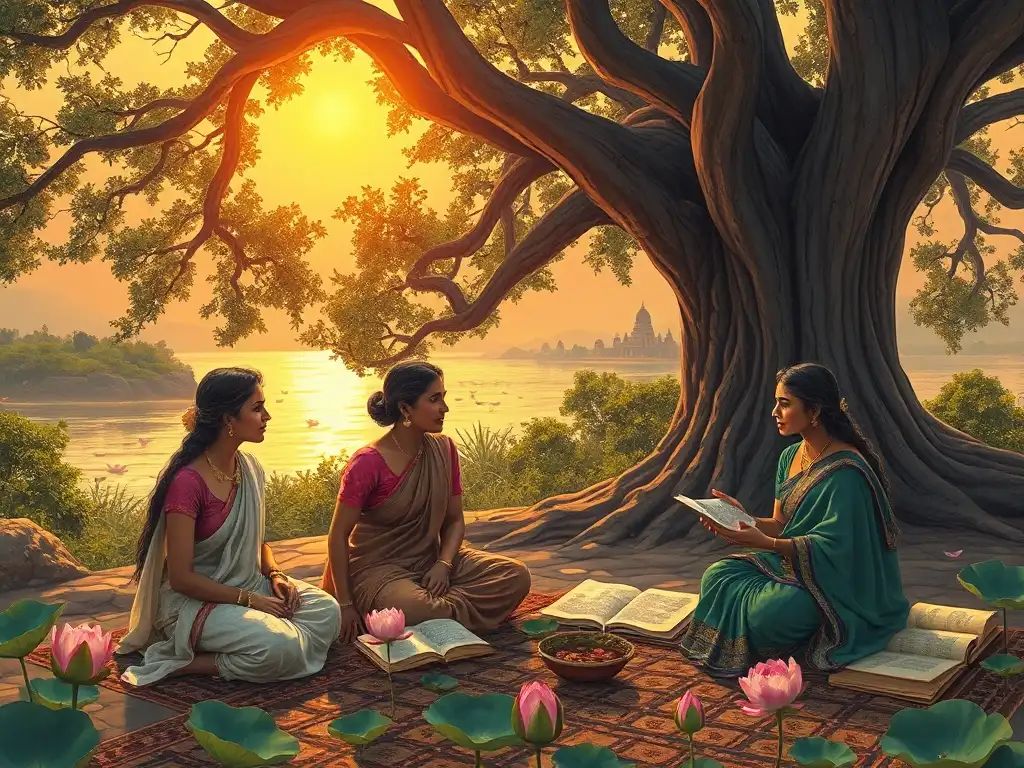
To comprehend the role of women in ancient Indian philosophy, it is essential to situate their contributions within the historical context of ancient Indian society. The societal position of women varied significantly across different periods and regions, influenced by factors such as religion, culture, and the prevailing philosophical ideologies.
Societal Position of Women in Ancient Indian Civilizations
Women in ancient India held diverse roles, ranging from scholars and philosophers to household managers and caregivers. In certain contexts, such as during the Vedic period, women were revered as knowledgeable and wise, with some even participating in philosophical discussions and rituals. However, as societal norms evolved, particularly during the later Vedic and post-Vedic periods, women's roles became increasingly restricted, often relegated to domestic spheres. Despite these restrictions, many women continued to influence philosophical thought, albeit in ways that were not always formally recognized.
Influence of Religion and Culture on Women's Roles
Religion and culture played a pivotal role in shaping the roles of women in ancient Indian society. Texts such as the Manusmriti and various Puranas reflect the complex interplay between religious dictates and societal norms, often prescribing specific roles for women. Nevertheless, there are notable exceptions where women broke barriers, contributing to philosophical discourse and engaging in scholarly pursuits. The narratives of these women, though less prominent, reveal a resilient spirit and intellectual acumen that deserve recognition in the study of ancient Indian philosophy.
The hidden narratives of women in ancient Indian philosophical schools provide a vital lens through which we can explore the depth of their contributions and the complexities of gender in philosophical inquiry. Understanding these dynamics is essential for a more inclusive and nuanced appreciation of ancient Indian philosophy as a whole.
Women in Key Philosophical Schools
The contributions and roles of women in ancient Indian philosophical schools often remain overshadowed by their male counterparts. However, historical texts and narratives reveal that women were not only participants but also influencers in these intellectual traditions. The three primary schools—Nyaya, Vaisheshika, and Sankhya—each offer unique insights into how women were perceived and how they contributed to philosophical discourse. This exploration highlights their intellectual presence and the implications of their thoughts on the broader philosophical landscape.
The Nyaya School and Its Perspectives on Women
The Nyaya school, founded by Gautama (also known as Akshapada), is primarily focused on logic and epistemology. Women in the Nyaya tradition were regarded as capable of intellectual engagement, albeit within a framework that often emphasized their roles as wives and mothers. Texts such as the "Nyaya Sutras" offer glimpses into a society where women were encouraged to engage in philosophical discussions.
Gautama's writings suggest that women's reasoning and understanding could be as profound as men's. However, societal norms tended to restrict their roles primarily to domestic spheres. Despite this, women like Gargi were acknowledged for their intellectual prowess, illustrating that women could and did contribute significantly to philosophical debates. The Nyaya school’s emphasis on debate and logical reasoning provided a platform for women to articulate their philosophical ideas, even if their participation was sometimes limited by social conventions.
The Vaisheshika School's Approach to Gender
The Vaisheshika school, established by Kanada, is known for its atomistic approach to understanding the universe. While this school primarily concentrated on the nature of reality, it also reflected the cultural attitudes toward women in ancient India. The texts from this school often depict women in traditional roles, yet they also hint at a recognition of women's intellectual capabilities.
In the Vaisheshika tradition, women were often viewed through the lens of their relationships with men, primarily as wives and mothers. However, the philosophical discussions were not entirely dismissive of women's contributions. Women were sometimes included in ethical discussions about virtue and morality, indicating that their perspectives were valued in certain contexts. The existence of women like Maitreyi in philosophical dialogues suggests that there was some level of acceptance regarding women's participation in philosophical inquiry, particularly in discussions surrounding ethics and the nature of knowledge.
The Sankhya Philosophy and Women's Roles
Sankhya, attributed to the sage Kapila, represents one of the earliest philosophical systems in India, focusing on the dualism of purusha (consciousness) and prakriti (matter). Within this framework, the role of women is complex. The Sankhya philosophy recognizes prakriti as the source of all material existence, which can be interpreted as granting a certain level of reverence to feminine principles.
Women in Sankhya philosophy were often viewed as embodiments of prakriti, which could either reinforce traditional gender roles or elevate women's status through their association with the creative force of the universe. Philosophers in this school acknowledged the importance of women's experiences in understanding the nature of reality and existence. This dualistic approach allowed for a more nuanced view of women's roles, recognizing their contributions as both philosophical and existential.
Case Studies of Prominent Women Philosophers
The narratives of women like Gargi and Maitreyi illustrate the active engagement of women in ancient Indian philosophy. Their contributions challenge modern perceptions of gender roles in intellectual discourse and highlight the rich tapestry of ideas that women wove into the philosophical traditions of ancient India.
Gargi Vachaknavi and Her Contributions
Gargi Vachaknavi, a prominent figure in Vedic literature, is often celebrated for her profound philosophical inquiries. She is best known for her participation in the philosophical debates at King Janaka's court, where she posed challenging questions to renowned sages. Gargi's contributions to discussions on the nature of the self and the universe reflect her deep understanding of metaphysics and epistemology.
Her most famous dialogue involves questioning the nature of the ultimate reality and the relationship between the finite and the infinite. Gargi's fearless pursuit of knowledge and her ability to engage with male philosophers on equal footing underscore the significant role women played in shaping philosophical thought. Her legacy serves as a testament to the intellectual capabilities of women in ancient India.
Maitreyi and Her Philosophical Insights
Maitreyi, another key figure in ancient Indian philosophy, is best known from the "Brihadaranyaka Upanishad," where she engages in a profound philosophical dialogue with her husband, Yajnavalkya. Maitreyi's inquiry into the nature of immortality and the self reveals her deep intellectual curiosity and philosophical acumen.
Her famous question, asking whether wealth can lead to immortality, marks a pivotal moment in philosophical discourse, emphasizing the importance of knowledge over material possessions. Maitreyi's insights not only contribute to discussions on ethics and metaphysics but also highlight the critical role women played in philosophical debates. Her legacy continues to inspire contemporary discussions on gender and philosophy, reinforcing the idea that women have always been integral to the evolution of philosophical thought in ancient India.
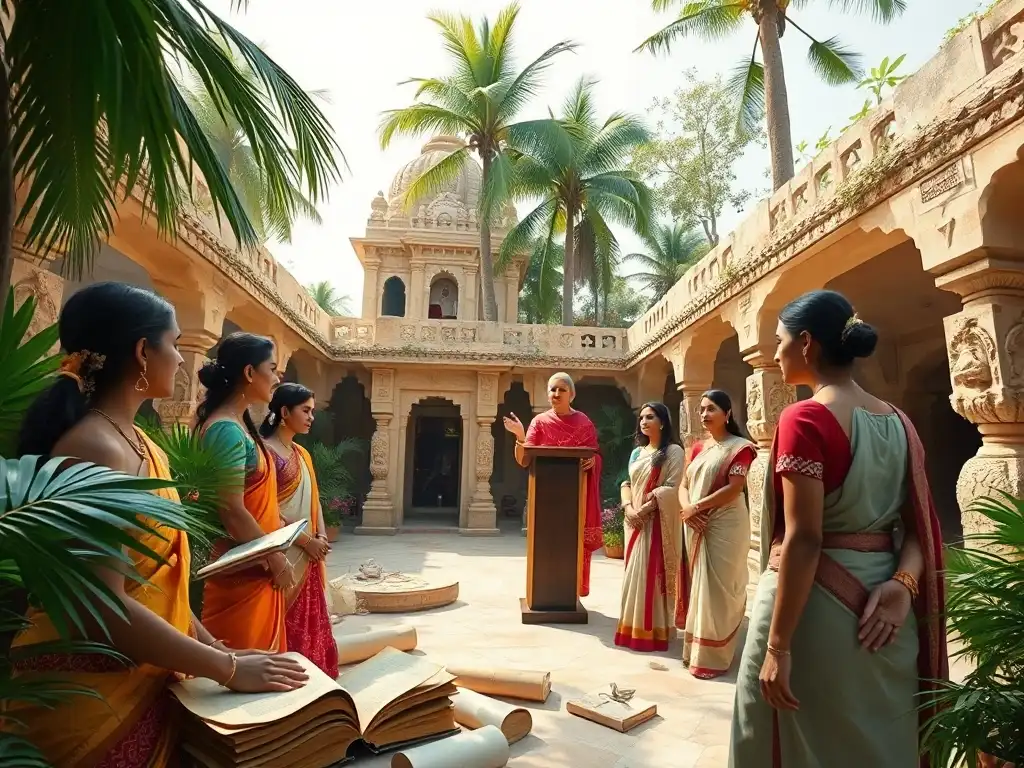
The history of philosophy in ancient India is often dominated by male scholars and thinkers, leading to a significant oversight of women's contributions. Despite the patriarchal structure prevalent in society, women played a vital role in the philosophical discourse of their time. Their narratives, though not extensively documented, reveal a rich tapestry of thought and engagement with philosophical ideas. The contributions of women in ancient Indian philosophy challenge the traditional narratives and demand a reevaluation of historical texts and sources to uncover their roles as philosophers, educators, and transmitters of knowledge.
Overlooked Contributions and Their Significance
Women in ancient India engaged with various philosophical schools such as Nyaya, Vaisheshika, and Sankhya, contributing insights and critiques that shaped their development. Figures like Gargi and Maitreyi are notable examples who participated in philosophical debates and discussions, often challenging male counterparts. Gargi, for instance, is known for her profound questions in the Brahadaranyaka Upanishad, where she engages in dialogues on the nature of reality and the self. Maitreyi, on the other hand, is celebrated for her philosophical inquiries into the nature of immortality and the selfhood in the context of the Brihadaranyaka Upanishad.
These contributions are significant not only for their intellectual content but also for their implications in the wider socio-cultural context. By acknowledging these women's voices, we recognize the diverse perspectives that enriched philosophical discourse and understand that philosophy was not solely a male domain. Their involvement indicates a more inclusive intellectual tradition that is essential for a comprehensive understanding of ancient Indian philosophy.
The Role of Women in Transmission of Philosophical Ideas
Women played a crucial role in the transmission of philosophical ideas across generations. In many ancient Indian families, women were responsible for education and the nurturing of philosophical thought, often serving as the primary educators for their children. This informal yet vital role helped perpetuate philosophical ideas within domestic spaces, allowing for the continuity of knowledge.
Moreover, women were often involved in the oral tradition, which was a primary means of knowledge transmission in ancient India. Their participation in reciting and teaching texts ensured that philosophical ideas were not only preserved but also interpreted and adapted to new contexts. This role of women as educators and custodians of philosophical thought exemplifies their influence in shaping the understanding and evolution of philosophical discourses throughout history.
Conclusion: Reevaluating the Role of Women in Ancient Indian Philosophy
The narratives of women in ancient Indian philosophy reveal a complex interplay of gender and intellect that has been largely neglected in historical accounts. Recognizing their contributions is essential for a holistic understanding of the philosophical landscape of ancient India.
Summary of Women's Contributions Across Philosophical Schools
Women contributed to various philosophical traditions, including Nyaya, Vaisheshika, and Sankhya. Their insights often provided alternative viewpoints that enriched the philosophical dialogues of their time. By participating in debates, asking critical questions, and influencing the next generation of thinkers, women like Gargi and Maitreyi exemplified the dynamic role of women in these schools. Their contributions serve as a reminder that philosophical inquiry was not limited to male philosophers but was a collective endeavor that included the voices of women.
The Importance of Recognizing These Hidden Narratives in Modern Discourse
In contemporary discussions about philosophy, it is crucial to acknowledge the hidden narratives of women in ancient Indian thought. Recognizing their contributions fosters a more inclusive understanding of philosophical traditions and encourages a reevaluation of how history is taught and understood. It also highlights the need for further research into the lives and works of women philosophers, ensuring that their ideas are celebrated and integrated into the broader discourse of philosophy today. By doing so, we not only honor their legacy but also enrich our understanding of the philosophical heritage of ancient India.
References and Further Reading
Exploring the contributions of women in ancient Indian philosophical schools reveals a wealth of knowledge that has often been overlooked. The following texts and resources serve as essential guides for anyone interested in delving deeper into this hidden narrative.
Suggested Texts on Women in Ancient Indian Philosophy
-
"Women in Ancient India" by R. S. Sharma
This book provides an extensive overview of women's roles in various aspects of ancient Indian society, including philosophy. It discusses prominent female figures and their contributions, offering insight into their philosophical thoughts and practices.
-
"The Philosophical Traditions of India" by S. R. Bhattacharya
This text examines various philosophical schools in ancient India, highlighting the involvement of women. It includes discussions on gender dynamics within these schools and the contributions of female philosophers.
-
"Philosophy and Gender in Ancient India" by Kavita S. Sharma
A detailed analysis that focuses specifically on the intersection of philosophy and gender in ancient India. The author explores the writings and teachings of female philosophers, shedding light on their impact and significance.
-
"Women in Indian Philosophy" by A. K. Sharma
This book offers a comprehensive look at the role of women in Indian philosophical discourse, discussing both historical and contemporary perspectives. It highlights the works and thoughts of women philosophers in various schools.
-
"Voices of Women in Ancient Indian Philosophy" by Meena Kumari
This work focuses on the narratives of women philosophers, bringing forward their voices and contributions to ancient Indian thought. It includes translations of texts written by women, providing direct access to their ideas.
Additional Resources for Exploring Ancient Indian Philosophical Schools
-
Online Databases and Archives:
Websites like the Digital Library of India and the Internet Archive can be valuable resources for accessing ancient texts and manuscripts related to women's contributions in philosophy.
-
Academic Journals:
Journals such as the Journal of Indian Philosophy often publish research articles focusing on various aspects of Indian philosophy, including gender studies and the contributions of women.
-
Documentaries and Lectures:
Platforms like YouTube offer lectures and documentaries that discuss the role of women in ancient Indian philosophy. Scholars often provide insights into lesser-known figures and their philosophical contributions.
-
University Courses:
Many universities offer courses on Indian philosophy that include modules on gender studies. Enrolling in these courses can provide a structured approach to understanding the complex narratives surrounding women in ancient Indian thought.
-
Local Libraries and Museums:
Visiting libraries and museums that focus on Indian history and philosophy can also uncover resources, artifacts, and exhibits highlighting the contributions of women in ancient philosophical traditions.
By engaging with these suggested texts and resources, scholars and enthusiasts alike can gain a richer understanding of the significant yet often overlooked role women played in shaping the philosophical landscape of ancient India.
- Introduction to Women in Ancient Indian Philosophy
- Overview of Ancient Indian Philosophy
- Importance of Gender in Philosophical Discourse
- Historical Context of Women in Ancient India
- Women in Key Philosophical Schools
- Case Studies of Prominent Women Philosophers
- The Hidden Narratives of Women in Philosophy
- Conclusion: Reevaluating the Role of Women in Ancient Indian Philosophy
- References and Further Reading
- What was the role of women in ancient Indian philosophy?
- Were there any prominent female philosophers in ancient India?
- How did societal norms affect women's participation in philosophy?
- What contributions did women make to ancient Indian texts?
- How can we uncover the hidden narratives of women in ancient Indian philosophy?
Frequently Asked Questions
What was the role of women in ancient Indian philosophy?
Women played a significant role in ancient Indian philosophy, contributing to various philosophical schools and texts. Their perspectives often shaped discussions on ethics, morality, and spirituality.
Were there any prominent female philosophers in ancient India?
Yes, there were several notable female philosophers, such as Gargi and Maitreyi, who are mentioned in ancient texts. They engaged in debates and contributed to the intellectual discourse of their time.
How did societal norms affect women's participation in philosophy?
Societal norms often restricted women's participation in philosophical discussions, limiting their roles primarily to domestic spheres. However, some women transcended these boundaries, becoming influential thinkers.
What contributions did women make to ancient Indian texts?
Women contributed to various philosophical texts, particularly in areas like ethics and spirituality. Their thoughts and teachings were often recorded in oral traditions before being written down.
Uncovering these hidden narratives involves examining historical texts, oral histories, and scholarly research that highlight women's contributions. This process helps to acknowledge and celebrate their impact on the philosophical landscape of ancient India.
**The exploration of women's roles in ancient Indian philosophical schools reveals a profound truth: the contributions of women have been systematically overlooked, yet their influence is undeniable and pivotal. As we delve into the rich tapestry of philosophical thought, it becomes increasingly clear that recognizing these voices is essential for a comprehensive understanding of our intellectual heritage. The narrative of women in ancient Indian philosophy is not just a historical footnote; it is a vital chapter that shapes our present and future.
Cultural and social landscapes are continually molded by the ideas and philosophies that emerge from diverse voices. The legacy of women in ancient Indian philosophy serves as a reminder that wisdom knows no gender, and the insights of these thinkers are as relevant today as they were centuries ago. The greatest gift of the human spirit is that all human beings can share in the wealth of ideas.
This quote encapsulates the importance of inclusivity in philosophical discourse, urging us to acknowledge and celebrate the contributions of all individuals, regardless of gender.
As we reflect on the lessons from the past, let us commit to fostering an environment where the narratives of women in ancient Indian philosophy are not only acknowledged but celebrated. I invite you to explore these hidden stories in your own life, to seek out diverse perspectives, and to champion the voices that have been silenced for too long. By doing so, we can enrich our understanding of philosophy and create a more inclusive future that honors the contributions of all thinkers.
Unveil the Wisdom of Ancient Women Philosophers!
Thank you for taking the time to explore the significant yet often overlooked contributions of women in ancient Indian philosophical schools. By diving into this hidden narrative, you've enriched your understanding of history and recognized the vital roles these women played in shaping philosophical thought.
Now, it's time to take this newfound knowledge further! Here are some ways you can continue your journey:
- Share Your Insights: Discuss your discoveries with friends and family—initiate a conversation about the impact of women in philosophy and history!
- Explore Further: Delve into the lives of notable female philosophers by accessing recommended resources or books that detail their philosophies and teachings.
- Join the Discussion: Engage with our community through comments or forums on ancientindiahistory.com—your insights are valuable!
Which contributions of ancient women philosophers do you find most inspiring, and how might they influence our perspectives today?