
Sankhya's Influence on Jainism and Buddhism: A Comparative Analysis

Welcome to Ancient India History, where we embark on a fascinating journey through the rich tapestry of India's past. Delve into the intriguing world of Sankhya philosophy, a cornerstone that shaped the intellectual landscapes of both Jainism and Buddhism. In our featured article, "Sankhya's Influence on Jainism and Buddhism: A Comparative Analysis," we unravel the profound connections and philosophical dialogues that emerged from these ancient traditions. Prepare to ignite your curiosity and illuminate your understanding of how these philosophies resonate within the broader context of India's illustrious heritage. Let the exploration begin!
- Introduction to Sankhya Philosophy in Jainism and Buddhism
- Historical Context of Sankhya Philosophy
- Core Principles of Sankhya Philosophy
- Sankhya's Influence on Jainism
- Sankhya's Influence on Buddhism
- Comparative Analysis of Sankhya's Influence
- Conclusion
- References
-
Frequently Asked Questions
- What is Sankhya philosophy?
- How does Sankhya philosophy influence Jainism?
- What are the connections between Sankhya philosophy and Buddhism?
- How do Jainism and Buddhism differ in their interpretation of Sankhya philosophy?
- What are the contributions of ancient Indian civilizations to the development of Sankhya philosophy?
- Final Reflection: The Enduring Legacy of Sankhya Philosophy in Jainism and Buddhism
- Unveil the Richness of Indian Philosophy Today!
Introduction to Sankhya Philosophy in Jainism and Buddhism
The interplay between various philosophical schools has played a significant role in shaping the spiritual and intellectual landscape of ancient India. Among these schools, Sankhya philosophy stands out as a foundational thought system that has profoundly influenced both Jainism and Buddhism. This article delves into the intricate ways in which Sankhya philosophy is woven into the fabric of these two significant religious traditions, exploring its core tenets, its impact on metaphysical concepts, and its ethical implications.
By analyzing these connections, we aim to uncover the shared heritage and distinct trajectories of Jainism and Buddhism, illustrating how they both draw from and diverge from Sankhya philosophy. This comparative analysis not only enriches our understanding of ancient Indian thought but also highlights the relevance of these philosophies in contemporary discussions on spirituality and ethics.
Overview of Sankhya Philosophy
Sankhya philosophy, one of the six orthodox schools of Indian philosophy, is primarily known for its dualistic approach to understanding reality. It posits two fundamental principles: Purusha (consciousness) and Prakriti (matter). This dualism leads to a comprehensive framework that explains the nature of existence, the process of creation, and the liberation of the self.
Key Features of Sankhya Philosophy:
- Dualism: Emphasizes the distinction between the eternal, unchanging consciousness (Purusha) and the temporal, dynamic material world (Prakriti).
- Evolution of the Universe: Describes a systematic process of evolution where the unmanifested Prakriti evolves into the manifest world, leading to the emergence of various entities.
- Liberation (Moksha): Advocates that true knowledge (Jnana) of the distinction between Purusha and Prakriti leads to liberation from the cycle of birth and death (samsara).
The principles of Sankhya have not only influenced philosophical discourse but have also been integrated into the ethical frameworks of various schools, including Jainism and Buddhism, thereby enriching their teachings.
Significance of Comparative Analysis in Ancient Indian Philosophies
The comparative analysis of Sankhya's influence on Jainism and Buddhism serves several important purposes:
- Understanding Interconnectedness: By examining how these philosophies interact, we can appreciate the shared intellectual heritage of ancient India and the development of diverse thought systems.
- Identifying Unique Contributions: While Jainism and Buddhism both draw from Sankhya philosophy, they also reinterpret its principles in unique ways. This analysis highlights the distinct features and contributions of each tradition.
- Relevance to Contemporary Issues: Insights gained from this comparative study can inform modern discussions on ethics, metaphysics, and spirituality, allowing us to draw lessons from ancient wisdom.
- Framework for Further Research: This analysis lays the groundwork for deeper explorations into how philosophical schools influence each other and evolve over time in response to cultural and historical contexts.
By engaging in this comparative study, we not only deepen our understanding of ancient Indian philosophy but also foster a greater appreciation for the complexities of its traditions and their ongoing relevance in contemporary society.
Historical Context of Sankhya Philosophy
Origins of Sankhya Philosophy in Ancient India
Sankhya philosophy, one of the six orthodox schools of Indian philosophy, has its roots deeply embedded in ancient Indian thought. It is traditionally attributed to the sage Kapila, who is often regarded as its founder. The term "Sankhya" literally means "number" or "enumeration," reflecting the school's systematic approach to understanding the universe and experiencing liberation (moksha).
Sankhya philosophy primarily distinguishes between two realities: Purusha (consciousness) and Prakriti (matter). This dualistic framework posits that Purusha is the eternal observer, while Prakriti is the ever-changing material world. The interplay between these two principles gives rise to the myriad forms of existence.
The historical context of Sankhya can be traced back to the Vedic period, where early philosophical thoughts began to crystallize. The Upanishads, particularly the Isha Upanishad and the Kena Upanishad, laid the groundwork for many concepts later developed in Sankhya. By the time of the Maurya Empire (322-185 BCE), Sankhya had gained significant prominence, influencing various philosophical and religious movements, including Jainism and Buddhism.
Key Texts and Influences on Jainism and Buddhism
The influence of Sankhya philosophy on Jainism and Buddhism is profound and multifaceted. Key texts and ideas within these traditions reflect significant elements of Sankhya thought, particularly in their understanding of the nature of reality, the self, and the path to liberation.
- Sankhya Karika: The foundational text of Sankhya philosophy is the Sankhya Karika by Ishvara Krishna, which outlines the principles of Sankhya systematically. Its concepts of the twenty-five principles (tattvas) that constitute reality have resonated with Jain and Buddhist thought, particularly in their discussions surrounding the nature of the self and the material world.
- Jain Texts: Jain philosophy, particularly articulated in the Tattvartha Sutra by Umāsvāti, integrates Sankhya concepts, especially regarding the nature of the soul (jiva) and the material universe (ajiva). The Jain classification of substances mirrors the Sankhya enumeration of principles, showcasing a shared foundational language.
- Buddhist Texts: Buddhism, especially in its early schools, shows significant Sankhya influence through texts such as the Samkhya Pravaja Sutra. The Buddhist notion of anatta (non-self) can be seen as a reaction to the Sankhya view of Purusha, highlighting the philosophical dialogues between these traditions. The emphasis on mindfulness and the understanding of suffering also echoes Sankhya's analytical approach to existence.
- Shared Concepts: Both Jainism and Buddhism adopt Sankhya's emphasis on the dualism of consciousness and matter, though they diverge in their interpretations. For instance, while Sankhya maintains a distinct separation between Purusha and Prakriti, Jainism emphasizes the eternal nature of the soul, whereas Buddhism challenges the existence of a permanent self altogether.
These interactions illustrate how the Sankhya philosophy served as a crucial intellectual foundation for Jainism and Buddhism, facilitating a rich dialogue that shaped their respective doctrines and practices. The comparative analysis of these philosophies reveals a complex tapestry of thought that continues to influence spiritual and philosophical discourse in contemporary India.
Core Principles of Sankhya Philosophy
Sankhya philosophy, one of the oldest philosophical systems in India, forms a foundational aspect of various schools of thought, particularly Jainism and Buddhism. Its core principles revolve around the dualistic understanding of reality, which can be distilled into two primary concepts: Purusha (consciousness) and Prakriti (matter). The Sankhya system provides a systematic enumeration of the constituents of reality, emphasizing the importance of knowledge and liberation.
The philosophy outlines a mechanistic understanding of the universe, proposing that evolution occurs through the interaction of Purusha and Prakriti. This interaction is vital for comprehending the nature of existence and the path toward liberation (moksha). Sankhya's emphasis on empirical knowledge, as opposed to mere belief, has significantly influenced both Jain and Buddhist thought, particularly in their understanding of the self and the material world.
Concept of Purusha and Prakriti
At the heart of Sankhya philosophy is the distinction between Purusha and Prakriti.
- Purusha represents the eternal, unchanging, and transcendent aspect of human existence. It is the true self, or atman, that is detached from physical phenomena.
- Prakriti, on the other hand, is the dynamic and changing aspect of reality, encompassing all material and mental processes. It is often described in terms of the three gunas (qualities):sattva (purity), rajas (activity), and tamas (inertia).
This dualistic framework is crucial for understanding the nature of suffering and liberation in both Jainism and Buddhism. While Jainism views liberation as the soul's freedom from karmic bondage, Buddhism emphasizes the cessation of suffering through the understanding of the self and reality. Both philosophies resonate with the Sankhya view that knowledge of the distinction between Purusha and Prakriti is essential for achieving liberation.
The Theory of Evolution in Sankhya
Sankhya presents a unique theory of evolution that explains the manifestation of the universe through a systematic process. According to Sankhya, the interaction between Purusha and Prakriti leads to the emergence of the mahat (intellect), followed by the ahamkara (ego), and subsequently the five elements (earth, water, fire, air, and space) and the senses.
The sequence can be summarized as follows:
- Purusha interacts with Prakriti.
- This interaction leads to the emergence of mahat (cosmic intelligence).
- From mahat, the ahamkara (individual ego) arises, giving rise to the sense of individuality.
- The five great elements emerge from ahamkara, leading to the physical universe.
This evolutionary model has been influential in both Jainism and Buddhism, as it provides an understanding of the cyclical nature of existence and the importance of self-awareness in transcending the material world. Both traditions incorporate aspects of this theory, particularly the emphasis on understanding the nature of existence to overcome suffering and achieve liberation.
Comparison of Sankhya's Core Principles with Jainism and Buddhism
The interplay between Sankhya philosophy and the teachings of Jainism and Buddhism is evident in several key areas:
| Aspect | Sankhya | Jainism | Buddhism |
|---|---|---|---|
| Nature of Reality | Dualistic: Purusha and Prakriti | Pluralistic: multiple souls and substances | Emptiness: no inherent existence |
| Path to Liberation | Knowledge of Purusha and Prakriti | Liberation through self-discipline and right conduct | Eightfold Path: ethical and meditative practices |
| Concept of Self | Atman as Purusha, separate from body | Jiva (soul) undergoing karmic cycles | Anatta (non-self): absence of a permanent self |
| Role of Knowledge | Central to liberation | Essential for overcoming ignorance | Critical in understanding the Four Noble Truths |
While Sankhya philosophy lays a foundational understanding of the universe through its core principles of Purusha and Prakriti, both Jainism and Buddhism adapt these concepts to their frameworks. Jainism emphasizes the individuality of the soul in the context of karma, while Buddhism focuses on the impermanence of self and the cessation of suffering through enlightenment. The comparative analysis highlights the rich tapestry of philosophical thought in ancient India, illustrating how these traditions interweave and influence one another.
Sankhya's Influence on Jainism
Fundamental Beliefs of Jainism
Jainism is a profound philosophical tradition that emphasizes non-violence (Ahimsa), truth (Satya), and asceticism as its core tenets. Originating around the same time as Buddhism, Jainism holds unique beliefs that distinguish it from other Indian religions. Some fundamental beliefs include:
- Ahimsa (Non-Violence): The principle of non-violence extends to all living beings. Jains practice strict vegetarianism and often avoid activities that may harm even the smallest creatures.
- Anekantavada (Non-Absolutism): This doctrine emphasizes the multiplicity of viewpoints, suggesting that reality can be perceived from various perspectives.
- Karma and Samsara: Jains believe in the cycle of birth and rebirth (samsara) governed by karma, where every action influences future lives.
- Moksha (Liberation): The ultimate goal in Jainism is to attain liberation from the cycle of samsara through purification of the soul.
Jain philosophy is deeply rooted in the idea that the soul is eternal and that liberation can be achieved through self-discipline, meditation, and ascetic practices.
Integration of Sankhya Concepts in Jain Philosophical Thought
Sankhya philosophy, one of the six classical schools of Indian philosophy, significantly influenced Jain thought, particularly in its metaphysical framework. The integration can be observed in several areas:
- Dualism of Purusha and Prakriti: Like Sankhya, Jainism also recognizes a dualistic view of existence, where the soul (jiva) and matter (ajiva) are distinct entities. However, Jainism further elaborates on the concept of jiva, emphasizing its infinite nature and individual karmic accumulation.
- Categories of Reality: Both traditions categorize reality into various principles. While Sankhya enumerates twenty-five principles, Jainism expands this framework by incorporating additional categories such as space (akasha) and time (kala).
- Theory of Evolution: Jain philosophy aligns with Sankhya's evolutionary process, positing that souls evolve through numerous life forms, reflecting a gradual ascent towards liberation. This parallels the Sankhya belief in the evolution of consciousness through various stages.
The incorporation of Sankhya's metaphysical constructs within Jainism enriches the understanding of existence and the journey of the soul toward liberation.
Impact of Sankhya on Jain Ethics and Practices
The ethical practices of Jainism exhibit a clear influence from Sankhya philosophy, particularly in the emphasis on self-control and the cultivation of virtues. Key aspects include:
- Ethical Conduct: Jains adhere to strict ethical codes that mirror the moral dimensions of Sankhya philosophy. The emphasis on non-violence and truthfulness reflects a commitment to ethical living that resonates with the principles of Sankhya.
- Ascetic Practices: The ascetic lifestyle in Jainism aligns with Sankhya’s ideals of renunciation and self-discipline. Jains practice rigorous austerities, including fasting and meditation, to purify the soul and detach from material existence.
- Meditation and Knowledge: The pursuit of knowledge and self-realization through meditation is central to both Sankhya and Jainism. Jains believe that through deep meditation, one can attain a clearer understanding of the nature of reality and the self.
The ethical and practical dimensions of Jainism are deeply intertwined with Sankhya philosophy, highlighting the importance of self-discipline, ethical living, and the quest for liberation in both traditions. As such, the influence of Sankhya can be seen as a pivotal element in shaping Jain moral philosophy and practices.
Sankhya's Influence on Buddhism
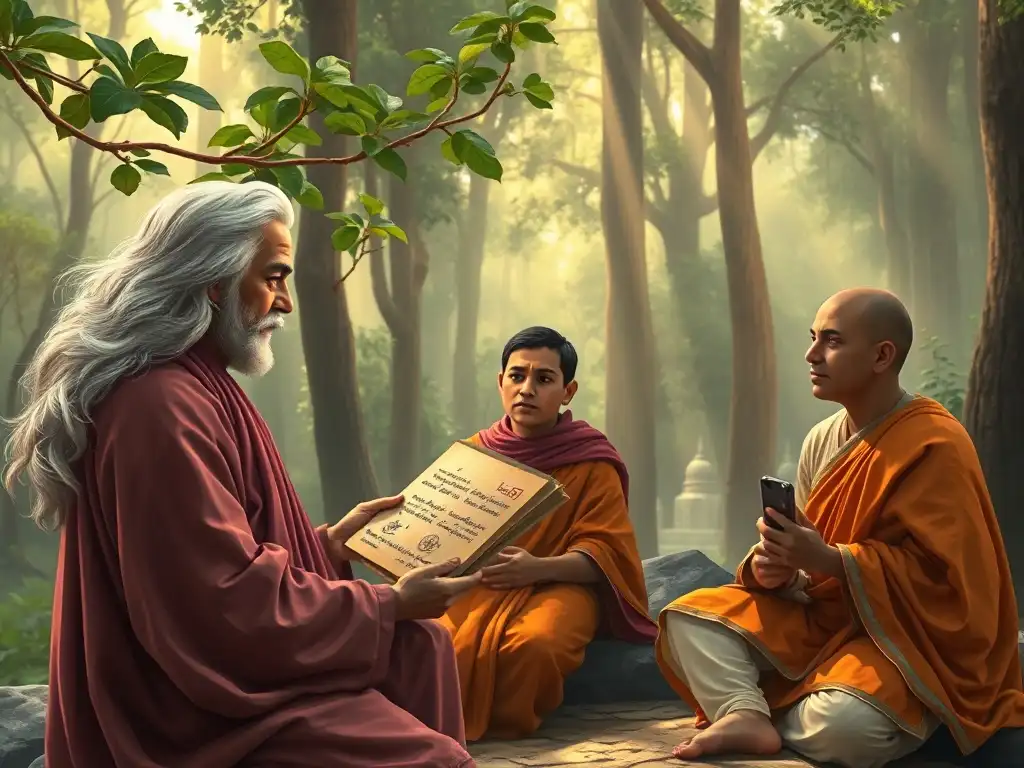
The influence of Sankhya philosophy on Buddhism is an intriguing aspect of Indian philosophical thought. Sankhya, one of the oldest philosophical systems, primarily focuses on the enumeration of principles (tattvas) that constitute reality. Its dualistic nature, distinguishing between purusha (consciousness) and prakriti (matter), resonates deeply with the foundational tenets of Buddhism, particularly in the way both philosophies approach the nature of existence and the path to liberation.
Fundamental Beliefs of Buddhism
Buddhism, founded by Siddhartha Gautama (the Buddha) in the 5th century BCE, is characterized by its core teachings known as the Four Noble Truths:
- Dukkha: The truth of suffering, which asserts that life is filled with suffering and dissatisfaction.
- Samudaya: The cause of suffering, identified as craving or attachment.
- Nirodha: The cessation of suffering, which can be achieved through the extinction of craving.
- Magga: The path leading to the cessation of suffering, known as the Eightfold Path.
Buddhism also emphasizes the concepts of impermanence (anicca), non-self (anatta), and dependent origination (pratītyasamutpāda), which collectively shape its understanding of reality and human existence.
Adoption of Sankhya Ideas in Buddhist Philosophy
The integration of Sankhya ideas into Buddhist philosophy is evident in several ways:
- Dualistic Framework: Like Sankhya, Buddhism recognizes a distinction between the mental and physical realms. While Buddhism does not adopt the exact terminology of purusha and prakriti, it acknowledges the existence of consciousness and its relationship with material existence.
- Tattvas and Dharmas: The concept of constituent principles is echoed in Buddhist thought through the notion of dharmas, which are the fundamental elements of experience. Both systems categorize reality to understand it better, although the classification of dharmas in Buddhism diverges from the Sankhya enumeration.
- Understanding of Liberation: The Sankhya philosophy posits that liberation (moksha) results from the realization of the separation between purusha and prakriti. In Buddhism, liberation (nirvana) is achieved through understanding the nature of suffering and the cessation of desire, reflecting a nuanced adoption of Sankhya’s insights on the nature of existence.
Influence of Sankhya on Buddhist Ethics and Meditation Practices
The ethical frameworks and meditation practices in Buddhism have also been influenced by Sankhya philosophy:
- Ethical Conduct: The Sankhya emphasis on understanding the nature of reality fosters a sense of ethical responsibility. In Buddhism, this is mirrored in the ethical precepts that guide practitioners towards right action (samma kammanta) and right livelihood (samma ajiva), promoting a lifestyle aligned with the understanding of suffering and its cessation.
- Meditation Techniques: Sankhya’s analytical approach to understanding consciousness has parallels in Buddhist meditation practices. Techniques such as Vipassana involve a deep analysis of the mind and body, reflecting the Sankhya method of discerning the interplay between purusha and prakriti. This analytical meditation aims to cultivate insight into the nature of existence, leading to enlightenment.
- Mindfulness and Awareness: The idea of cultivating awareness is central to both systems. In Sankhya, awareness of the distinction between self and nature is crucial, while Buddhism emphasizes mindfulness (sati) as a means to overcome ignorance and attachment. This shared focus on awareness serves as a bridge connecting both philosophical traditions.
The interplay between Sankhya philosophy and Buddhism highlights a rich philosophical dialogue that has shaped the ethical and meditative practices within Buddhism. The foundational ideas of Sankhya provide a framework that complements and enhances Buddhist thought, creating a more profound understanding of existence and the path to liberation.
Comparative Analysis of Sankhya's Influence
The philosophical school of Sankhya has significantly influenced both Jainism and Buddhism, providing a foundational framework that has shaped their doctrines and practices. This comparative analysis explores how Sankhya philosophy interweaves with these two ancient Indian religions, revealing both similarities and differences in their interpretations and applications.
Similarities between Sankhya in Jainism and Buddhism
Both Jainism and Buddhism draw upon the core concepts of Sankhya philosophy, particularly in their understanding of the nature of reality and the self. Here are some notable similarities:
- Dualism: Both Jainism and Buddhism adopt a dualistic approach reminiscent of Sankhya, distinguishing between the material (prakriti) and the spiritual (purusha).
- In Jainism, the soul (jiva) is seen as distinct from the body and matter, emphasizing the importance of the liberation of the soul from the material world.
- In Buddhism, particularly in the teachings of the early schools, this duality manifests in the concept of form and consciousness, highlighting the transient nature of physical existence.
- Karma and Rebirth: Sankhya's exploration of karma is echoed in both philosophies, influencing their doctrines of rebirth and liberation.
- Both religions teach that actions (karma) have consequences that affect future rebirths, and that understanding this relationship is key to achieving liberation (moksha or nirvana).
- Meditative Practices: The emphasis on self-realization through introspection and meditation in Sankhya philosophy is mirrored in Jain and Buddhist practices.
- Jain meditation focuses on the purification of the soul, while Buddhist meditation aims at the realization of the non-self (anatta) and the impermanence of all things.
Differences in Interpretation and Application
While Jainism and Buddhism share similarities with Sankhya philosophy, their interpretations and applications diverge significantly:
- Concept of the Self:
- In Jainism, the self (jiva) is eternal and inherently pure, with the potential for liberation being attainable through right knowledge, right faith, and right conduct.
- Conversely, Buddhism challenges the notion of a permanent self, proposing that the idea of a fixed identity is an illusion that must be transcended for enlightenment.
- Nature of Reality:
- Jain philosophy builds on Sankhya's dualism but posits a more elaborate cosmology that includes a multitude of substances (dravya). Jains believe in the existence of both sentient and non-sentient entities, emphasizing the interdependence of all forms of life.
- In contrast, Buddhism, particularly through the lens of the Madhyamaka school, critiques dualistic distinctions and promotes the view of emptiness (shunyata), suggesting that all phenomena are interdependent and lack inherent existence.
- Path to Liberation:
- The path to liberation in Jainism involves strict adherence to non-violence (ahimsa), truthfulness, and ascetic practices, which are deeply influenced by Sankhya’s ethical implications.
- Buddhism, while also advocating for ethical conduct, emphasizes the Noble Eightfold Path as a means to attain enlightenment, suggesting a more pragmatic approach to overcoming suffering.
The Role of Sankhya in Shaping Jain and Buddhist Philosophies
Sankhya philosophy has played a pivotal role in shaping the philosophical landscapes of both Jainism and Buddhism. Its influence can be observed in several key areas:
- Philosophical Framework: Sankhya serves as a foundational framework that both Jainism and Buddhism have built upon, adapting its concepts to address their unique spiritual goals and doctrinal focuses.
- Ethical Foundations: The ethical principles derived from Sankhya philosophy have also permeated Jain and Buddhist teachings, informing their moral codes and practices aimed at achieving liberation from the cycle of rebirth.
- Dialogue with Other Philosophical Schools: The engagement with Sankhya has prompted Jainism and Buddhism to enter into dialogue with other philosophical schools, such as Nyaya and Vaisheshika, leading to a richer tapestry of philosophical thought in ancient India.
The influence of Sankhya philosophy in Jainism and Buddhism illustrates a complex interplay of ideas that underpins their respective worldviews. While sharing commonalities, both traditions have carved out distinct interpretations that reflect their unique paths toward understanding reality and achieving liberation.
Conclusion
Summary of Key Points on Sankhya Philosophy in Jainism and Buddhism
The exploration of Sankhya philosophy in Jainism and Buddhism reveals several significant intersections and divergences that illuminate the rich tapestry of ancient Indian thought. Here are the key points to remember:
- Dualistic Framework: Both Jainism and Buddhism incorporate aspects of Sankhya's dualism, which posits a distinction between the material and the immaterial (purusha and prakriti). This dualistic approach underscores the importance of understanding the nature of reality in both religions.
- Concept of Liberation: In Jainism, liberation (moksha) is achieved through the purification of the soul, which resonates with Sankhya's emphasis on knowledge and discernment. Conversely, Buddhism introduces the concept of nirvana, emphasizing the cessation of suffering as a path to liberation, showcasing a more pragmatic approach to Sankhya's philosophical underpinnings.
- Karma and Rebirth: Both traditions adopt a sophisticated view of karma, influenced by Sankhya's metaphysical frameworks. Jainism emphasizes strict adherence to non-violence (ahimsa) as a means to mitigate karmic accumulation, while Buddhism presents a more flexible interpretation, focusing on the Four Noble Truths and the Eightfold Path as a guide to overcome suffering.
- Ethical Implications: The ethical dimensions derived from Sankhya philosophy are evident in both systems. Jainism's rigorous ethical code and Buddhist compassion reflect a shared moral foundation, albeit with differing emphases on individual and communal responsibilities.
- Influence on Later Philosophical Schools: The contributions of Sankhya philosophy can be seen as foundational, shaping subsequent philosophical inquiries in ancient India, including those of Nyaya and Vaisheshika, thus reinforcing its significance in the broader philosophical discourse.
The Importance of Understanding Sankhya's Influence in Ancient Indian Philosophy
Understanding the influence of Sankhya philosophy in Jainism and Buddhism is vital for several reasons:
- Historical Context: Grasping the interplay between these philosophical systems provides insights into the development of ancient Indian thought. It showcases how ideas were not created in isolation but rather evolved through dialogue and critique among various schools.
- Philosophical Depth: By studying Sankhya's impacts, one can appreciate the complexity and richness of concepts such as karma, liberation, and ethics. This understanding deepens our appreciation of how these ideas shaped the spiritual and philosophical landscape of ancient India.
- Cultural Legacy: The enduring relevance of these philosophies continues to influence contemporary spiritual practices and philosophical discussions. Recognizing their origins allows for a more informed engagement with modern interpretations and adaptations of these ancient ideas.
- Interdisciplinary Connections: The comparative analysis of Sankhya's influence fosters connections across disciplines, including theology, ethics, and even modern psychology, as many concepts resonate with contemporary philosophical debates.
- Encouragement of Further Research: Recognizing these influences can stimulate further scholarly inquiry into lesser-explored areas of ancient Indian philosophy, fostering a more comprehensive understanding of its vast and diverse intellectual heritage.
The interplay between Sankhya, Jainism, and Buddhism exemplifies the dynamic nature of ancient Indian philosophy, inviting ongoing exploration and dialogue. Understanding these influences not only enriches our knowledge of the past but also enhances our engagement with the philosophical questions that continue to resonate today.
References
Key Texts and Articles
-
Sankhya Philosophy and Its Roots
- Sankhya: A Historical and Philosophical Analysis by Ramesh Kumar
This text delves into the origins and foundational concepts of Sankhya philosophy, providing a comprehensive overview of its development and impact on subsequent philosophical traditions.
-
The Influence of Sankhya on Jainism
- The Interplay of Jainism and Sankhya: A Philosophical Exploration by Anjali Desai
This article analyzes the adoption of Sankhya principles within Jain philosophy, highlighting specific areas where Jain thought has been shaped by Sankhya concepts.
-
Buddhism and Sankhya Philosophy
- Sankhya in the Context of Early Buddhist Thought by Ravi Sharma
Sharma's work examines how early Buddhist texts reflect Sankhya ideas, especially in relation to metaphysics and the nature of existence.
-
Comparative Philosophy
- Comparative Studies in Sankhya, Jainism, and Buddhism edited by Priya Mehta
This collection of essays presents a comparative analysis of the three philosophical schools, exploring their similarities and differences in depth.
-
Sankhya and Its Legacy
- The Legacy of Sankhya in Indian Philosophy by Vikram Malhotra
A detailed examination of how Sankhya philosophy has influenced various Indian philosophical schools, including Jainism and Buddhism.
-
Philosophical Texts
- Tattva Samasa by Ishvara Krishna
This classical text is a primary source for understanding the intricacies of Sankhya philosophy and its implications for other philosophical systems.
-
Academic Journals
- Articles from the Journal of Indian Philosophy often feature research on the intersections of Sankhya with Jain and Buddhist thought.
-
Online Resources
- Stanford Encyclopedia of Philosophy:Sankhya
An accessible entry that outlines the key concepts of Sankhya philosophy and its historical context, including its relationships with other philosophies.
-
Conference Proceedings
- Proceedings of the International Conference on Indian Philosophy often include papers discussing the influence of Sankhya on Jainism and Buddhism.
By consulting these texts and resources, readers can gain a deeper understanding of the nuanced ways in which Sankhya philosophy has shaped both Jainism and Buddhism, enriching the overarching landscape of ancient Indian thought.
Frequently Asked Questions
What is Sankhya philosophy?
Sankhya philosophy is one of the six orthodox schools of Indian philosophy that emphasizes enumeration and categorization of reality. It proposes a dualistic framework of Purusha (consciousness) and Prakriti (matter).
How does Sankhya philosophy influence Jainism?
In Jainism, Sankhya philosophy contributes to the understanding of the nature of the self and the concept of kinship with all living beings. It emphasizes the importance of self-realization and liberation through knowledge.
What are the connections between Sankhya philosophy and Buddhism?
Buddhism shares some epistemological and ontological views with Sankhya, particularly in its analysis of suffering and the nature of reality. Both philosophies focus on the transitory nature of existence and the path to enlightenment.
How do Jainism and Buddhism differ in their interpretation of Sankhya philosophy?
While both traditions draw from Sankhya, Jainism places a stronger emphasis on metaphysics and the soul, whereas Buddhism focuses more on emptiness and the non-self concept, leading to distinct paths towards liberation.
What are the contributions of ancient Indian civilizations to the development of Sankhya philosophy?
Ancient Indian civilizations, especially during the Indus Valley and later periods, provided a rich cultural context for the development of Sankhya philosophy. These contributions include advancements in mathematics, science, and spiritual practices that shaped philosophical discourse.
Final Reflection: The Enduring Legacy of Sankhya Philosophy in Jainism and Buddhism
Sankhya philosophy serves as a foundational pillar that continues to shape the spiritual and philosophical landscapes of Jainism and Buddhism today. As we navigate an increasingly complex world, the insights derived from Sankhya's dualistic framework offer profound guidance on the nature of existence and the pursuit of liberation. This ancient philosophy not only enriches our understanding of these two religions but also invites us to explore the deeper questions of life, consciousness, and the self.
The influence of Sankhya philosophy on Jainism and Buddhism is a testament to its timeless relevance in our cultural and social discourse. As these traditions evolve, they carry forward the core principles of Sankhya, emphasizing the importance of knowledge, self-awareness, and ethical living. This ongoing dialogue between philosophy and practice is beautifully captured in the words of the philosopher Georg Wilhelm Friedrich Hegel: Philosophy is the owl of Minerva, which flies only at dusk.
This reminds us that philosophical insights often emerge when we reflect on our experiences, guiding us toward greater understanding and harmony in our lives.
As we conclude this exploration of Sankhya's influence, I invite you to reflect on how these teachings can resonate within your own journey. Consider how the principles of dualism and self-realization can empower you to navigate the complexities of modern life. Embrace the opportunity to delve deeper into your own beliefs and practices, allowing the wisdom of Sankhya to illuminate your path toward personal growth and spiritual enlightenment.
Unveil the Richness of Indian Philosophy Today!
Thank you for diving into the intricate connections between Sankhya, Jainism, and Buddhism! You've gained valuable insights into how these philosophies interplay and shape the cultural tapestry of ancient India. Now, it's your turn to engage with this rich tradition further.
Take the next step in your journey:
- Deepen your understanding: Explore additional resources or books on Sankhya and its impact on Buddhism and Jainism to broaden your perspective.
- Join the conversation: Share this article with friends or social media groups focused on philosophy and ancient studies to spark meaningful discussions.
- Attend a local lecture: Look for workshops or seminars that cover Indian philosophy. This could open up new avenues for exploration and connection within your community!
What insights about the philosophies discussed surprised you the most, and how do you think they influence modern thinking?