
The Spiritual Essence of Indian Paintings: A Dive into Pattachitra and Madhubani

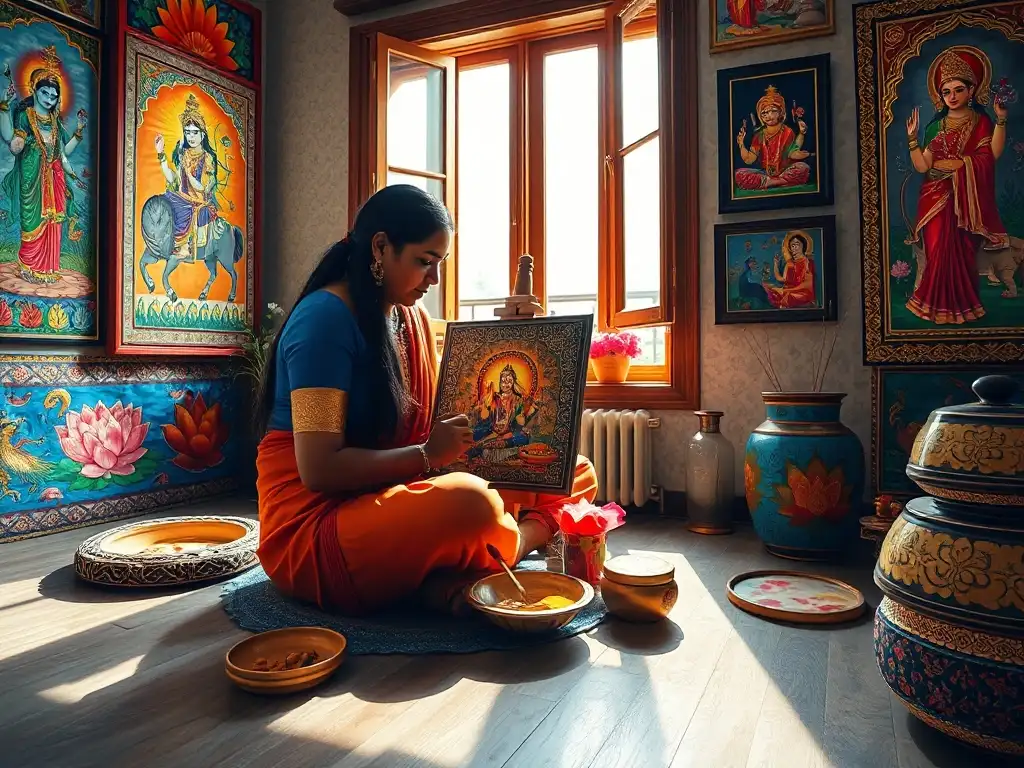
Welcome to Ancient India History, where we embark on an extraordinary journey through time to uncover the rich tapestry of ancient Indian civilizations. Today, we delve into the spiritual significance of Indian paintings, exploring the vibrant worlds of Pattachitra and Madhubani art forms. These masterpieces are not just visually captivating; they embody profound philosophical meanings and cultural narratives that have shaped the spiritual landscape of India for centuries.
Prepare to ignite your curiosity and deepen your understanding as we unravel the layers of history, art, and spirituality that define these timeless works. Join us in this exploration, and discover how every brushstroke tells a story waiting to be unveiled!
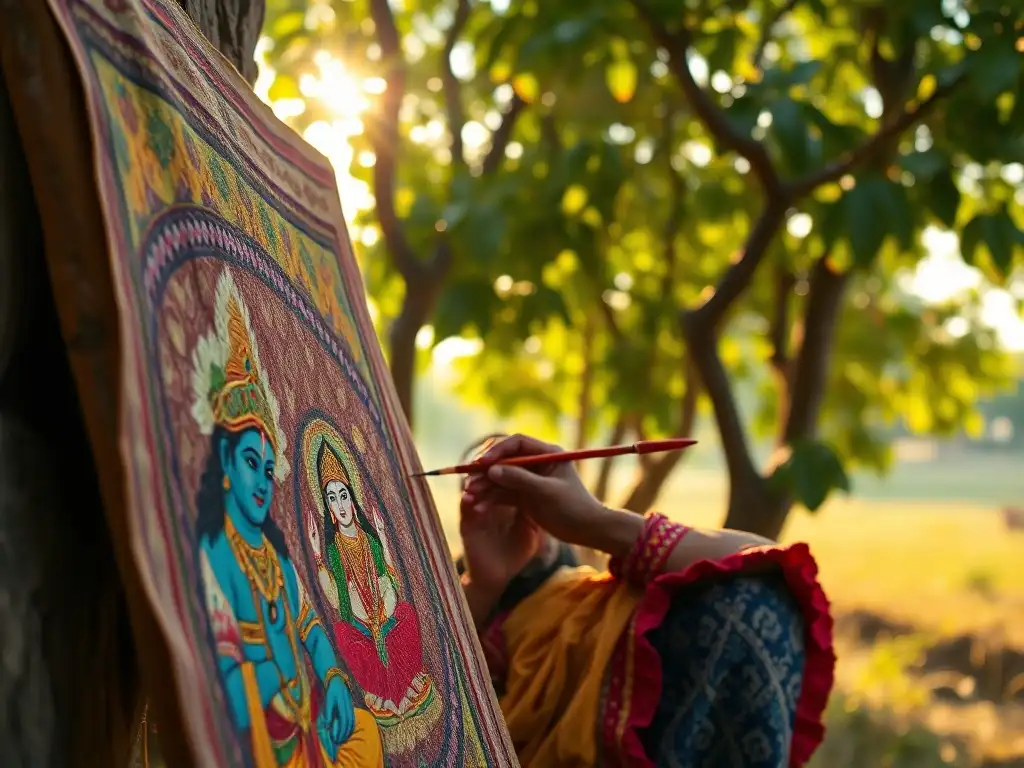
Indian paintings are not merely visual art; they embody a profound spiritual essence that reflects the rich tapestry of beliefs, traditions, and philosophies that have flourished in India over millennia. Among the diverse artistic expressions, the intricate styles of Pattachitra and Madhubani stand out as vivid representations of spiritual narratives and mythological themes.
This article delves into the spiritual significance of Indian paintings, particularly focusing on these remarkable forms, their historical context, and the deep-rooted connection between art and spirituality that continues to inspire and resonate with audiences today. By exploring the nuances of these art forms, we can gain a deeper appreciation for how they encapsulate the spiritual ethos of Indian culture.
Introduction to Indian Paintings
Overview of Indian Art Forms
Indian art forms are as diverse as the country's cultural landscape, encompassing a wide range of styles, techniques, and themes that reflect the multifaceted nature of Indian civilization. From ancient cave paintings to the intricate frescoes of temples, the evolution of Indian art has been influenced by various historical phases, regional variations, and socio-religious contexts. Some prominent forms include:
- Madhubani: Originating from the Mithila region of Bihar, this art form is characterized by its vibrant colors and intricate patterns, often depicting religious and mythological themes.
- Pattachitra: Hailing from Odisha, Pattachitra paintings are known for their intricate detailing and storytelling elements, frequently illustrating tales from Hindu scriptures.
Both styles not only represent aesthetic beauty but also serve as a medium for spiritual expression and cultural storytelling.
Significance of Spirituality in Indian Art
Spirituality has long been an integral aspect of Indian art, shaping its themes, techniques, and practices. The purpose of many Indian paintings transcends mere decoration; they are a means to connect with the divine and express the artist's devotion. The interplay between spirituality and art can be observed through:
- Symbolism: Many paintings incorporate symbols that represent spiritual concepts, such as the lotus (purity) or the peacock (grace).
- Narratives: Artworks often depict stories from religious texts, providing viewers with insights into moral and philosophical teachings.
By engaging with these spiritual dimensions, Indian paintings invite the viewer to reflect on their own beliefs and experiences.
Understanding the Spiritual Significance of Indian Paintings
Exploring the Concept of Spirituality in Art
The concept of spirituality in art is deeply rooted in the idea that art serves as a bridge between the material and the spiritual realms. In Indian culture, this connection is manifested through various practices, including:
- Ritualistic Offerings: Many artists create works as offerings to deities, embedding their spiritual intentions within the art.
- Meditative Processes: The act of creating art can be a form of meditation, allowing artists to channel their spiritual beliefs into their work.
This relationship emphasizes that art is not just for aesthetic pleasure; it is also a vehicle for spiritual exploration and expression.
How Spiritual Themes are Expressed in Indian Paintings
The expression of spiritual themes in Indian paintings is realized through various elements, including:
- Color Use: Colors are often imbued with specific meanings; for example, red may symbolize passion and energy, while blue often represents divinity.
- Imagery: Common motifs include deities, mythological creatures, and natural elements, all serving to convey deeper spiritual truths.
These elements converge to create artworks that are rich in meaning and resonate with the spiritual experiences of both the artists and the viewers, reinforcing the idea that the spiritual significance of Indian paintings is not merely superficial but deeply intertwined with the cultural fabric of India.
Pattachitra: The Storytelling Tradition
Pattachitra is a traditional form of art that originates from the eastern state of Odisha and West Bengal in India. This ancient craft is characterized by its intricate details and mythological narratives, often painted on cloth or dried palm leaves. The term "Pattachitra" derives from the words "patta," meaning cloth, and "chitra," meaning picture.
As a storytelling medium, Pattachitra has been used for centuries to depict tales from Hindu epics such as the Ramayana and Mahabharata, as well as local folklore. This art form is not merely decorative but serves as a visual encyclopedia of cultural and spiritual narratives, bridging the gap between the divine and the human experience.
Historical Context of Pattachitra
The roots of Pattachitra can be traced back to ancient times, flourishing during the period of the Gupta Empire (approximately 4th to 6th century CE). It was initially practiced by temple artists who created paintings to adorn the walls of temples and religious sites. Over time, this art form evolved, absorbing influences from various dynasties, including the Ganga and the Kalinga.
The patronage of kings and temples played a significant role in its development, allowing it to thrive as a means of preserving and transmitting spiritual and cultural stories. Today, Pattachitra is recognized not only as a form of artistic expression but also as a vital aspect of India's rich cultural heritage.
Key Features of Pattachitra Art
Pattachitra is distinguished by several key features that set it apart from other Indian art forms:
- Intricate Detailing: Pattachitra paintings are known for their fine lines and elaborate patterns, often depicting complex narratives.
- Use of Natural Colors: Artists primarily use natural pigments derived from minerals, plants, and other organic materials, leading to vibrant yet earthy tones.
- Mythological Themes: Many paintings highlight scenes from Hindu mythology, showcasing deities, legendary figures, and stories that convey moral and spiritual lessons.
- Border Designs: The borders of Pattachitra artworks are often adorned with floral or geometric motifs, adding a decorative element to the storytelling aspect.
These features not only enhance the visual appeal of Pattachitra but also underscore its role in conveying deep spiritual messages.
Spiritual Themes in Pattachitra Paintings
The spiritual significance of Pattachitra is profound, as it captures the essence of Indian philosophy and spirituality. Common themes found within these paintings include:
- Divinity and Worship: Many Pattachitra artworks depict deities such as Lord Jagannath, Krishna, and Durga, inviting viewers to connect with the divine.
- Cosmic Cycles: The paintings often reflect the cyclical nature of life and the universe, echoing the philosophical tenets of Hinduism.
- Moral Lessons: Through narratives, Pattachitra communicates ethical and moral teachings, encouraging viewers to reflect on their own lives.
- Festivals and Rituals: Many artworks celebrate festivals, showcasing rituals that are integral to spiritual practices, thus intertwining art and devotion.
These themes not only enrich the viewer's understanding but also serve as a reminder of the interconnection between art and spirituality in Indian culture.
Madhubani: The Sacred Art of Bihar
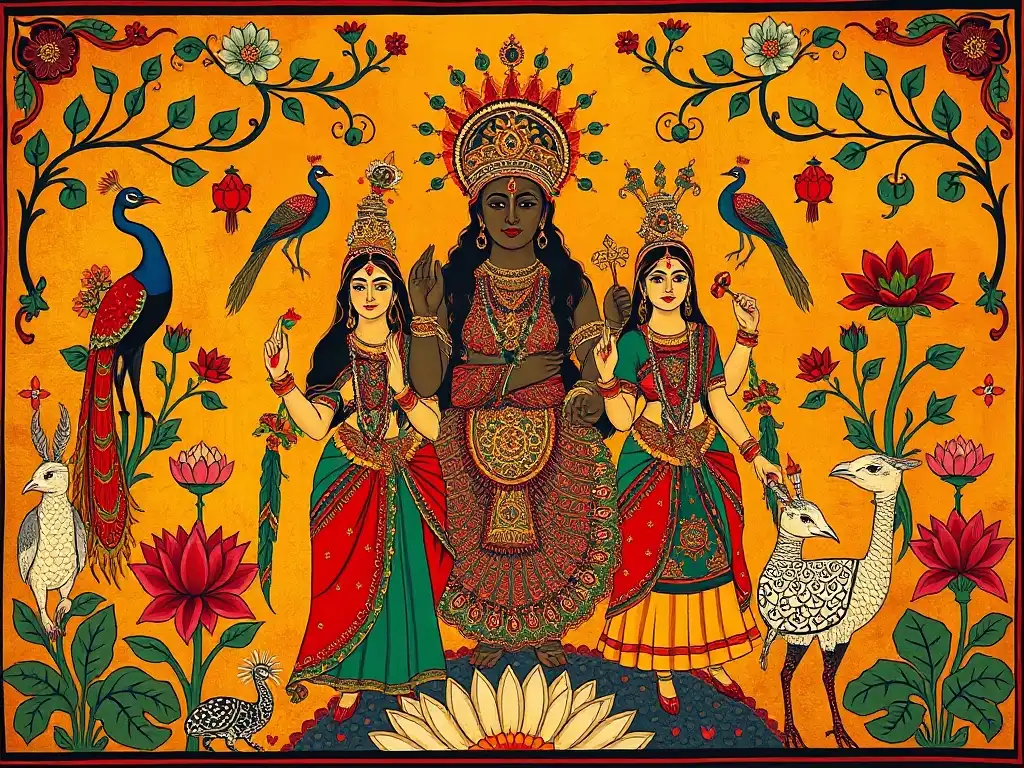
Madhubani, also known as Mithila painting, is a vibrant art form that originated in the Mithila region of Bihar, India. Historically, this style of painting has been deeply rooted in the culture and traditions of the local community. Initially created by women on the walls of their homes to celebrate important life events, Madhubani art has evolved into a globally recognized form of artistic expression. The artwork is characterized by bright colors, intricate patterns, and a unique narrative style that often includes themes of nature, mythology, and spirituality.
Origins and Evolution of Madhubani Art
Madhubani art has ancient origins, with evidence suggesting its practice dates back to the era of the Ramayana (around 4,000 years ago). Traditionally, this art form was a means of expression for women, who used natural dyes and pigments to illustrate their surroundings and cultural beliefs. The style gained prominence in the 1960s when it was popularized by the Indian government as a means of promoting local artisans.
As a result, Madhubani painting began to transcend regional boundaries, finding its place in international art markets and exhibitions. Today, it serves not only as a folk art form but also as a medium of cultural preservation and storytelling.
Characteristics of Madhubani Paintings
Madhubani paintings are characterized by distinctive features that make them easily recognizable:
- Vibrant Colors: Artists use bright, bold colors, often derived from natural sources like turmeric, indigo, and plant extracts.
- Geometric Patterns: The artwork often incorporates intricate geometric designs that frame the main subjects, enhancing the overall aesthetic.
- Symbolic Imagery: Common motifs include peacocks, fish, lotus flowers, and sun and moon representations, each carrying specific symbolic meanings.
- Narrative Style: The paintings tell stories through visual elements, often illustrating scenes from mythology, folklore, and daily life.
These characteristics contribute to the unique charm of Madhubani art, making it a significant part of India's cultural tapestry.
Spiritual Significance and Cultural Context of Madhubani
The spiritual significance of Madhubani art is deeply intertwined with the cultural practices of the Mithila region. The themes portrayed in Madhubani paintings often reflect:
- Divine Representation: Many artworks depict gods and goddesses, serving as a medium for worship and devotion.
- Celebration of Nature: The intricate representation of flora and fauna emphasizes the connection between spirituality and the natural world, highlighting the belief that nature is a manifestation of the divine.
- Ritualistic Importance: Madhubani paintings are commonly created during rituals and festivals, marking significant life events such as weddings, births, and religious ceremonies.
- Community Identity: The art form fosters a sense of identity and continuity within the community, as it embodies the collective beliefs and practices that define the cultural landscape.
In this way, Madhubani serves as a profound reflection of the spiritual and cultural ethos of the region, celebrating the interconnectedness of art, life, and the divine.
Comparative Analysis: Pattachitra vs. Madhubani
Indian paintings, particularly Pattachitra and Madhubani, are not only visually stunning but also deeply rooted in spirituality and cultural traditions. Both art forms offer rich narratives and convey profound meanings, yet they differ significantly in techniques, styles, themes, and the spiritual narratives they present. Understanding these differences and the commonalities can enhance our appreciation of the spiritual significance of Indian paintings.
Differences in Techniques and Styles
Pattachitra, originating from the state of Odisha, is characterized by its intricate detailing and vibrant colors, often created using natural dyes derived from minerals and plants. The paintings are typically done on cloth or dried palm leaves and are known for their narrative storytelling approach, depicting legends, myths, and folklore. The artists utilize a meticulous method of brushwork, which results in a flat, two-dimensional aesthetic that emphasizes the subjects rather than the background.
In contrast, Madhubani painting hails from the Mithila region of Bihar and employs a unique technique that often incorporates fine lines and a plethora of colors to create intricate patterns. Madhubani artists frequently use a variety of tools, including fingers, twigs, and brushes made from natural materials. Its style is more dynamic and expressive, embracing both figurative and abstract forms, often filling the canvas with vibrant motifs ranging from gods and goddesses to nature and daily life.
Common Spiritual Themes in Both Art Forms
Despite their differences, both Pattachitra and Madhubani paintings share several spiritual themes that are intrinsic to Indian culture. One of the predominant themes is the celebration of deities and religious narratives. Both art forms often depict scenes from Hindu epics such as the Ramayana and Mahabharata, illustrating the divine and the moral lessons inherent within these stories.
Additionally, the concept of nature and its connection to spirituality is a common thread. In both Pattachitra and Madhubani, nature is not merely a backdrop but an entity that represents the divine. Elements such as trees, animals, and flowers are integrated into the narratives, symbolizing the interconnectedness of life and spirituality.
Unique Spiritual Narratives in Each Tradition
Pattachitra paintings often narrate the life and exploits of Lord Jagannath, an incarnation of Lord Vishnu, with elaborate stories that reflect the culture of Odisha. The paintings serve as a visual storytelling medium during festivals and religious ceremonies, creating a direct spiritual connection with the viewer.
On the other hand, Madhubani paintings frequently explore themes of love and fertility, often depicting the divine couple of Radha and Krishna. These artworks reflect the socio-cultural aspects of Mithila, with an emphasis on women’s roles in spirituality and domestic life. The narratives are infused with local traditions and rituals, making them resonate deeply with the community’s spiritual fabric.
The Role of Mythology and Religion in Indian Paintings
Mythology and religion play a crucial role in shaping the themes and techniques of Indian paintings, particularly in the Pattachitra and Madhubani traditions. Both art forms serve as a conduit for expressing spiritual beliefs, rituals, and the moral underpinnings of society, reinforcing the significance of mythology in everyday life.
Influence of Hindu Mythology on Pattachitra and Madhubani
Hindu mythology significantly influences both Pattachitra and Madhubani paintings, providing a rich narrative source for the artists. In Pattachitra, the depiction of deities such as Vishnu, Shiva, and Durga is common, with stories illustrating their divine interventions and moral teachings. These paintings often serve as a form of worship, bringing the divine closer to the devotees.
Similarly, Madhubani paintings draw heavily from Hindu mythology, with scenes depicting various avatars of gods and goddesses. The stories of Radha and Krishna are particularly prominent, evoking themes of love, devotion, and the divine play (Lila) that transcends the earthly realm. This deep-rooted connection to mythology not only enriches the visual narrative but also instills a sense of reverence and spirituality among viewers.
Symbolism and Iconography in Indian Spiritual Art
Both Pattachitra and Madhubani paintings utilize a rich tapestry of symbolism and iconography to convey spiritual meanings. In Pattachitra, specific colors and motifs have distinct meanings; for example, blue often represents Krishna, while red signifies power and fertility. The use of intricate borders and patterns adds layers of meaning, often representing the cosmic order and the universe.
Madhubani paintings, on the other hand, are filled with symbols that relate to nature and spirituality. The peacock, lotus, and fish are common motifs, each carrying rich symbolic meanings. For instance, the lotus symbolizes purity and spiritual awakening, while the peacock represents grace and beauty. The overall composition of these paintings is designed to evoke a deep spiritual connection, inviting viewers to reflect on the divine presence in everyday life.
Both Pattachitra and Madhubani paintings reflect the spiritual essence of Indian art through their unique techniques, common themes, and rich narratives that draw heavily from Hindu mythology, making them significant cultural artifacts that continue to inspire and resonate with audiences today.
The Modern Relevance of Spiritual Indian Paintings
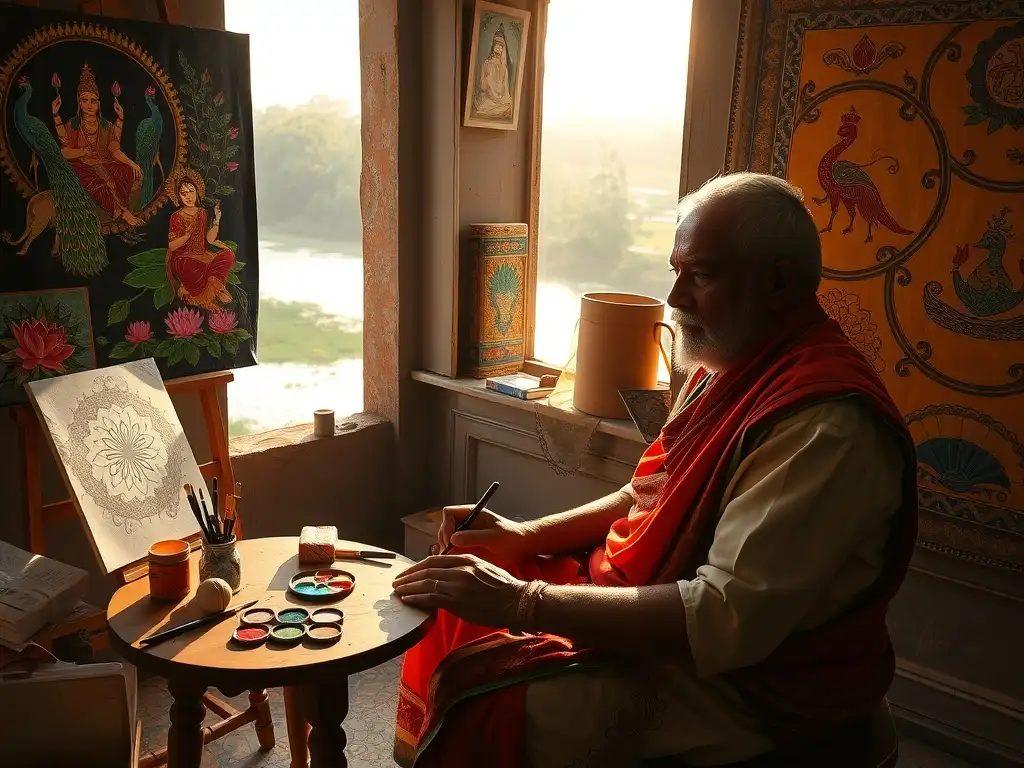
The significance of spiritual Indian paintings, particularly Pattachitra and Madhubani, transcends time and continues to resonate with modern audiences. These art forms not only serve as visual representations of spiritual themes but also act as a bridge connecting contemporary society with ancient traditions. Their vibrant colors, intricate designs, and deep-rooted symbolism reflect the values and beliefs of Indian culture, making them relevant in today's globalized world.
In a society increasingly fascinated by spirituality and mindfulness, the spiritual essence embedded in these paintings offers a source of inspiration and reflection. Many people today seek to understand their own spirituality, and Indian paintings can provide profound insights into universal themes such as love, divinity, and the interconnectedness of life. The revival and adaptation of these art forms in modern contexts exemplify their enduring relevance, as artists and enthusiasts explore how ancient practices can inform contemporary spiritual experiences.
Preservation of Traditional Techniques
The preservation of traditional techniques in Pattachitra and Madhubani painting is crucial for maintaining the authenticity and cultural heritage of these art forms. Artisans dedicated to these practices often undergo rigorous training, learning from master craftsmen and adhering to age-old methods that have been passed down through generations. The use of natural pigments, handmade paper, and traditional tools ensures that each piece reflects the historical context and spiritual narratives inherent in the styles.
Efforts to document and teach these techniques are vital for their survival. Various NGOs and cultural organizations are actively involved in workshops and training programs aimed at educating new artists about the intricacies of these art forms. By fostering a new generation of artisans, these initiatives help to ensure that the spiritual significance of Indian paintings is not lost but rather revitalized. The ongoing commitment to preserving these techniques contributes to the rich tapestry of Indian culture and reinforces the importance of art as a form of spiritual expression.
Contemporary Artists and the Spiritual Essence
Contemporary artists are increasingly drawing inspiration from the spiritual essence of traditional Indian paintings, infusing their work with modern interpretations while respecting the historical significance. By blending traditional themes with contemporary styles, these artists create a dialogue between the past and present, showcasing the timeless nature of spiritual artistry. For example, artists may incorporate modern narratives or abstract elements, yet retain the core spiritual motifs that characterize Pattachitra and Madhubani.
This fusion of styles not only broadens the appeal of Indian paintings but also invites new audiences to explore their spiritual significance. Many contemporary artists use their platforms to address social issues, spirituality, and identity, reflecting the complexities of modern life while staying rooted in their cultural heritage. This interplay between tradition and modernity ensures that the spiritual essence of these paintings continues to evolve, resonating with diverse audiences around the world.
Global Influence and Recognition of Indian Spiritual Art
The global influence and recognition of Indian spiritual art have grown significantly in recent years. Exhibitions featuring Pattachitra and Madhubani paintings have attracted international attention, showcasing the richness of Indian culture and its spiritual narratives. Art enthusiasts, collectors, and scholars from around the world are increasingly appreciating the depth and complexity of these art forms, leading to greater visibility and respect for Indian spiritual art on the global stage.
Moreover, collaborations between Indian artists and their international counterparts further amplify this influence. Through cross-cultural exchanges and exhibitions, the spiritual themes present in Indian paintings are shared and interpreted in various contexts, enriching the global art landscape. As more people engage with these artworks, the spiritual significance of Indian paintings is recognized not just as an aspect of cultural heritage but as a universal expression of human experience.
Conclusion: The Enduring Legacy of Indian Paintings
The enduring legacy of Indian paintings, particularly in their spiritual context, highlights the profound impact these art forms have had on both cultural identity and individual expression. Rooted in ancient traditions, Pattachitra and Madhubani continue to inspire, educate, and resonate with audiences worldwide. Their vibrant colors and intricate designs encapsulate spiritual themes that transcend time and geography, inviting contemplation and reflection.
Reflection on the Spiritual Journey Through Art
The spiritual journey through Indian art is a rich tapestry woven from the threads of mythology, philosophy, and human experience. Each painting serves as a narrative, guiding viewers through a visual exploration of life's deeper meanings. By engaging with these artworks, individuals embark on their own spiritual journeys, discovering connections between the depicted themes and their personal beliefs. The act of creating or appreciating art becomes a form of meditation, fostering a deeper understanding of oneself and the universe.
The Importance of Indian Art in Understanding Ancient Civilizations
Indian art, particularly its spiritual dimensions, plays a crucial role in understanding ancient civilizations. These paintings provide insights into the beliefs, rituals, and social structures of past societies, serving as historical documents that reflect the values and aspirations of their creators. Through the lens of art, scholars and enthusiasts alike can explore the intricacies of ancient Indian culture, revealing how spirituality was interwoven into daily life and governance.
In essence, the spiritual significance of Indian paintings not only enriches our appreciation of art but also offers a profound connection to the history and philosophy of ancient civilizations, ensuring that their legacy endures.
Call to Action
Art serves as a powerful vessel for spiritual expression and cultural storytelling, especially in the context of Indian paintings like Pattachitra and Madhubani. As we delve deeper into the spiritual significance of these artistic forms, we invite you to immerse yourself in the enchanting world of Indian art.
Encouraging Exploration and Appreciation of Indian Art Forms
We encourage you to take the initiative to explore the rich tapestry of Indian art forms. Each stroke of paint and each intricate design tells a story that transcends time and connects us to our cultural heritage. Here are some ways you can foster a deeper appreciation for these art forms:
- Educate Yourself: Read books and articles about Pattachitra and Madhubani, understanding their historical contexts and spiritual meanings.
- Engage with Art Communities: Join forums or social media groups focused on Indian art to discuss, share, and learn from fellow enthusiasts.
- Support Local Artists: Visit local markets or online platforms that showcase the works of Pattachitra and Madhubani artists, contributing to the preservation of these traditional art forms.
By actively engaging with these practices, you not only enrich your own knowledge but also contribute to the larger narrative of Indian culture and spirituality.
Invitation to Visit Galleries or Exhibitions Featuring Pattachitra and Madhubani
We extend a warm invitation to visit galleries and exhibitions that feature Pattachitra and Madhubani paintings. Experiencing these artworks firsthand offers a unique perspective on their intricate details and vibrant colors, which often convey profound spiritual messages. Here are some recommendations for your exploration:
- Local Art Galleries: Check out exhibitions at art galleries in your area that specialize in traditional Indian art. Many galleries host rotating exhibits focused on specific art forms.
- Cultural Festivals: Attend cultural festivals that celebrate Indian heritage. These events frequently showcase live demonstrations by artists, workshops, and displays of Pattachitra and Madhubani artworks.
- Museums: Explore museums that feature collections of Indian art. Many institutions have dedicated sections for regional art forms, providing insights into their cultural significance.
By visiting these venues, you create an opportunity to witness the spiritual essence of Indian paintings, fostering a greater appreciation for the narratives and traditions that they embody. Embrace this journey into the world of Pattachitra and Madhubani, and let the beauty of Indian art inspire your spirit.
- Introduction to Indian Paintings
- Understanding the Spiritual Significance of Indian Paintings
- Pattachitra: The Storytelling Tradition
- Madhubani: The Sacred Art of Bihar
- Comparative Analysis: Pattachitra vs. Madhubani
- The Role of Mythology and Religion in Indian Paintings
- The Modern Relevance of Spiritual Indian Paintings
- Conclusion: The Enduring Legacy of Indian Paintings
- Call to Action
Frequently Asked Questions
What is the spiritual significance of Indian paintings?
The spiritual significance of Indian paintings lies in their ability to convey deep religious themes and cultural narratives, often depicting deities, spiritual practices, and philosophical concepts.
What are Pattachitra and Madhubani paintings?
Pattachitra is a traditional cloth-based painting style from Odisha, known for its intricate details and mythological narratives. In contrast, Madhubani originates from Bihar and features vibrant colors and nature-inspired motifs, each with its own spiritual symbolism.
How do these paintings reflect Indian culture?
Indian paintings like Pattachitra and Madhubani are rich in cultural heritage, showcasing local traditions, folklore, and spiritual beliefs, thus serving as a bridge between art and cultural identity.
Can you explain the themes commonly found in these paintings?
Common themes in these paintings include mythology, nature, and spirituality, with each element meticulously chosen to convey a deeper message or moral lesson.
How have these art forms evolved over time?
While maintaining their spiritual essence, both Pattachitra and Madhubani have evolved to incorporate modern techniques and themes, allowing them to remain relevant while still honoring their traditional roots.
Final Reflection: Embracing the Spiritual Essence of Indian Paintings
The spiritual significance of Indian paintings transcends mere aesthetics, serving as a profound bridge connecting the viewer to the divine. In today's fast-paced world, where art often becomes a commodity, the rich traditions of Pattachitra and Madhubani remind us of the deeper meanings embedded in creativity. These art forms invite us to pause, reflect, and engage with the spiritual narratives that have shaped Indian culture for centuries. The essence of these paintings is not just in their vibrant colors or intricate designs, but in their ability to evoke a sense of connection to something greater than ourselves.
Cultural expressions like Pattachitra and Madhubani continue to influence our social landscape, fostering a sense of community and shared heritage. These art forms are not merely relics of the past; they are living traditions that inspire contemporary artists and resonate with audiences worldwide. As we immerse ourselves in these spiritual narratives, we uncover layers of meaning that enrich our understanding of life and existence. Art is the most beautiful of all lies,
said Claude Debussy, reminding us that through art, we can explore truths that might otherwise remain hidden.
As you reflect on the spiritual significance of Indian paintings, consider how these lessons can be woven into your own life. Take a moment to engage with art that speaks to your spirit, allowing it to inspire your journey and deepen your understanding of the world around you.
Whether through creating, appreciating, or sharing these artistic expressions, you have the power to connect with the divine essence that permeates all forms of creativity. Embrace this opportunity to explore your own spirituality through the lens of art, and let it guide you toward a more profound appreciation of life’s intricate tapestry.
Unveil the Mystique of Indian Art Today!
Thank you for exploring the rich tapestry of Indian spirituality and artistry through our deep dive into Pattachitra and Madhubani paintings. We hope you gained valuable insights into their historical significance and profound meanings. Now, it's time to immerse yourself further in this vibrant cultural heritage!
Here are some actionable steps to ignite your journey into the world of Indian art:
- Explore local art galleries or museums that showcase Indian art. Connect with the history and techniques behind Pattachitra and Madhubani.
- Practice your own artistic skills by trying your hand at these traditional styles. Gather some paints and canvas, and let your creativity flourish!
- Share your newfound knowledge with friends or on social media. Start a conversation about the cultural significance of Indian paintings and inspire others to learn more.
What is one lesson or insight from the world of Indian paintings that has resonated with you the most?