
Visual Storytelling in Ancient Indian Narratives: A Study of Reliefs and Frescoes

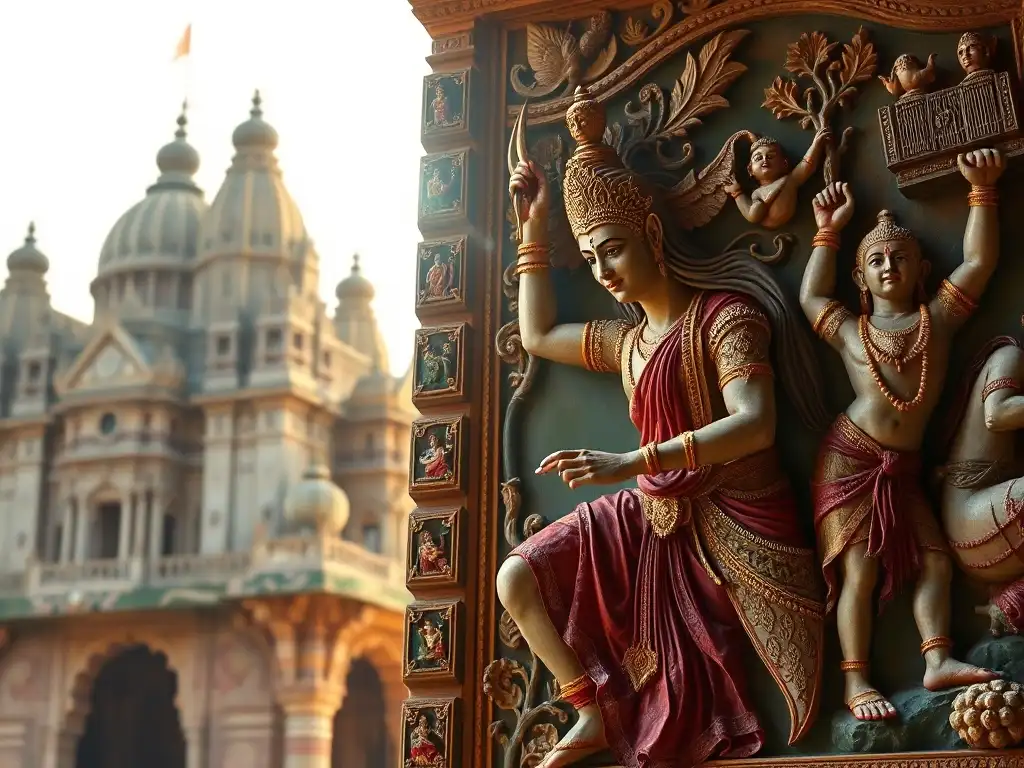
Welcome to Ancient India History, where we embark on a captivating journey through the rich tapestry of ancient Indian civilizations. Here, we delve into the intricate world of Ancient Indian visual storytelling, exploring how reliefs and frescoes brought narratives to life across time. What secrets do these artistic expressions hold about the cultures they represent? Join us as we unravel the profound impact of visual art on storytelling, inviting you to dive deeper into the compelling stories etched in stone and paint. Prepare to be inspired and informed as you navigate the vibrant heritage of our past!
- Introduction to Ancient Indian Visual Storytelling
- Historical Context of Ancient Indian Visual Storytelling
- Key Elements of Ancient Indian Visual Storytelling
- Prominent Examples of Reliefs and Frescoes
- Techniques and Materials Used in Ancient Indian Visual Arts
- The Influence of Ancient Indian Visual Storytelling on Later Art Forms
- Conclusion: The Legacy of Ancient Indian Visual Storytelling
- References
-
Frequently Asked Questions
- What is visual storytelling in the context of ancient India?
- How did reliefs and frescoes contribute to cultural understanding in ancient India?
- What are some examples of ancient Indian visual storytelling techniques?
- How did the Indus Valley Civilization contribute to visual storytelling?
- What impact did the Gupta Empire have on visual storytelling?
- Final Reflection: The Enduring Legacy of Ancient Indian Visual Storytelling
- Unveil the Richness of Ancient Indian Visual Storytelling!
Introduction to Ancient Indian Visual Storytelling
Ancient Indian visual storytelling is a captivating exploration of how narratives were conveyed through various artistic mediums, particularly reliefs and frescoes. This form of storytelling has roots that trace back to the early civilizations of India, such as the Indus Valley, and flourished across numerous dynasties, culminating in the rich cultural tapestry of the Gupta Empire.
Visual storytelling in ancient India goes beyond mere aesthetics; it encapsulates the beliefs, values, and historical events of the time, serving as a vital cultural record. Through intricate designs and vivid imagery, these artworks offer a unique window into the past, allowing us to understand the social, religious, and political contexts of ancient Indian life.
In this article, we will delve into the essence of visual storytelling in ancient India, examining its definition, significance, and the pivotal role of reliefs and frescoes in shaping artistic expression during this period.
Definition of Visual Storytelling in Ancient India
Visual storytelling in ancient India can be defined as the practice of narrating stories, myths, and historical events through visual mediums, such as sculptures, paintings, and reliefs. This art form was not merely decorative but served as a means of communication, conveying complex ideas and narratives to a largely illiterate population.
Key aspects of visual storytelling in ancient India include:
- Symbolism: Artists employed various symbols and motifs to represent deeper meanings, often derived from religious texts and folklore.
- Narrative Structure: Many artworks were designed in a narrative format, guiding viewers through a sequence of events or stories.
- Cultural Context: These visual narratives were deeply rooted in the socio-political and religious contexts of the time, reflecting the values and beliefs of ancient Indian society.
The integration of these elements helped create a rich tapestry of stories that resonated with audiences, fostering a collective cultural identity.
Importance of Reliefs and Frescoes in Ancient Indian Art
Reliefs and frescoes hold a significant place in ancient Indian visual storytelling, serving as primary mediums through which artists expressed intricate narratives. These forms of art are characterized by their detailed craftsmanship and ability to convey stories with emotional depth and dynamism.
Key reasons for their importance include:
- Historical Documentation: Reliefs and frescoes provide valuable insights into the historical events and social conditions of their time, acting as visual records that transcend written history.
- Cultural Preservation: These artworks preserve the rich mythology, religious beliefs, and rituals of ancient India, ensuring that cultural narratives are passed down through generations.
- Artistic Innovation: The techniques used in creating reliefs and frescoes demonstrate the artistic innovation of the time, showcasing advancements in materials, styles, and methods.
- Public Engagement: Often displayed in temples and public spaces, these art forms engaged the viewer directly, inviting them to explore and interpret the stories depicted.
The reliefs and frescoes of ancient India not only serve as artistic masterpieces but also as vital components of visual storytelling, capturing the essence of a civilization that thrived on the expression of its narratives. Through this exploration, we can appreciate the profound impact of ancient Indian visual storytelling on the cultural heritage of India.
Historical Context of Ancient Indian Visual Storytelling
Overview of Ancient Indian Civilizations
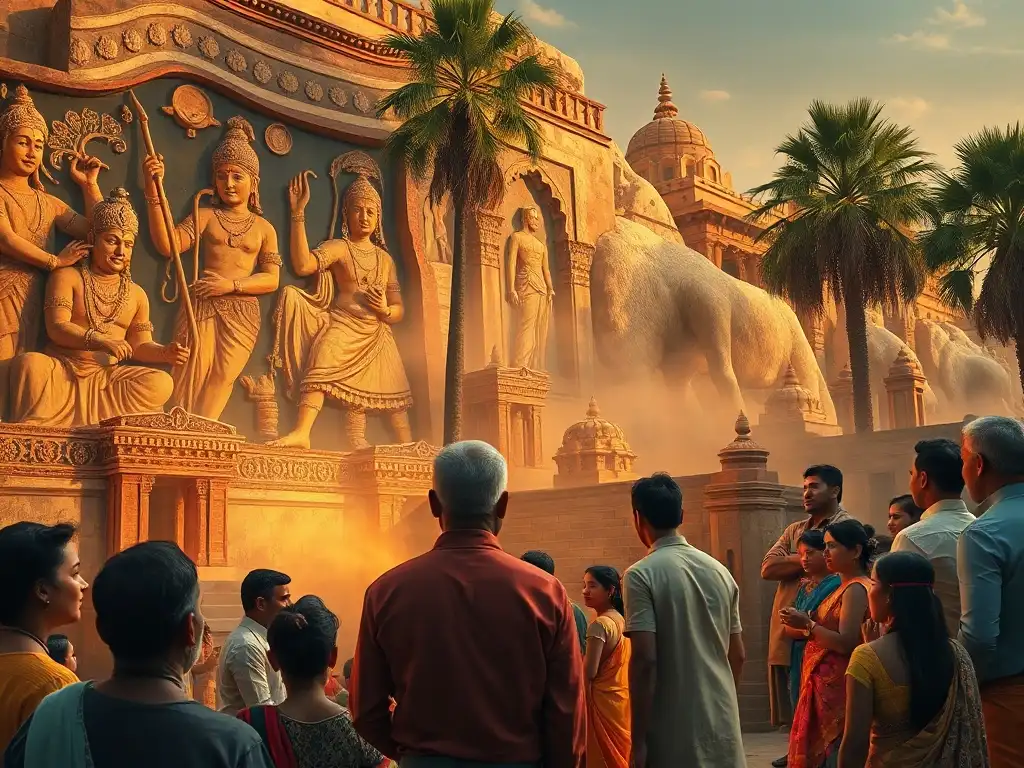
Ancient India was a melting pot of diverse cultures, languages, and traditions, with civilizations such as the Indus Valley Civilization, Maurya Empire, and Gupta Empire contributing significantly to the region's historical tapestry. Each of these civilizations brought unique elements to the art of visual storytelling, which served as a medium to convey narratives, religious beliefs, and societal norms.
The Indus Valley Civilization (circa 3300–1300 BCE) is noted for its advanced urban planning and sophisticated craftsmanship. While direct evidence of visual storytelling through reliefs and frescoes is limited, the seals and pottery from this period often depicted animals and mythological figures, hinting at an early form of visual narrative.
Following this, the Maurya Empire (322–185 BCE) witnessed the emergence of monumental art forms. The Ashoka Pillars, adorned with intricate carvings, narrate stories of the Buddha's teachings, showcasing a transition from mere representation to more elaborate storytelling.
The Gupta Empire (circa 320–550 CE) is often regarded as the "Golden Age" of India, where artistic expressions flourished. This era saw the proliferation of narratives through frescoes, particularly in sites like Ajanta and Ellora Caves, where elaborate frescoes depict scenes from Buddhist and Hindu texts, illustrating the narrative depth that ancient Indian visual storytelling achieved.
The Evolution of Art Forms in Ancient India
The evolution of art forms in ancient India reflects the socio-political and religious changes over the centuries. Initially, visual storytelling was simplistic, focusing on symbolic representations. However, as civilizations advanced, these representations became more intricate.
- Prehistoric Art: The earliest forms included rock paintings in Bhimbetka caves, depicting hunting scenes and daily life, which laid the groundwork for narrative art.
- Indus Valley Seals: These seals featured animals and humanoid figures, hinting at storytelling related to trade and mythology, although their exact meanings remain a subject of debate.
- Buddhist Art: With the rise of Buddhism, visual storytelling took on religious significance. Stupas and viharas often featured frescoes and carvings that narrated the Jataka tales, illustrating the previous lives of the Buddha.
- Hindu Temples: The Gupta period saw the construction of grand temples adorned with intricate reliefs. These reliefs depicted tales from epics like the Ramayana and Mahabharata, showcasing the art's narrative function and its role in religious practices.
- Fresco Techniques: The use of fresco techniques, especially in the caves of Ajanta and Bagh, marked a significant advancement. These works employed a range of colors and detailed figures, captivating viewers and immersing them in the stories being told.
Cultural Significance of Visual Narratives
Visual narratives in ancient Indian art served multiple purposes beyond mere decoration. They were instrumental in preserving cultural heritage, communicating religious beliefs, and educating society.
- Preservation of Mythology: The intricate reliefs and frescoes acted as visual scriptures, preserving tales that were central to Hindu and Buddhist beliefs. They allowed for an accessible means of understanding complex religious concepts.
- Societal Education: Art served as a tool for education, particularly in a largely illiterate society. The stories depicted in temples and caves were vital in imparting moral and ethical lessons to the populace.
- Cultural Identity: These visual stories fostered a sense of identity and continuity among communities. They celebrated regional myths and local deities, allowing different cultures within ancient India to express their unique narratives.
- Aesthetic Experience: Beyond their narrative value, the aesthetic appeal of these artworks also played a key role. The vibrant colors and intricate designs drew in viewers, creating a multi-sensory experience that engaged not only the mind but also the soul.
Ancient Indian visual storytelling is not merely an artistic expression; it encapsulates the beliefs, values, and cultural dynamics of its time, making it a vital area of study for understanding ancient Indian civilizations.
Key Elements of Ancient Indian Visual Storytelling
Iconography in Reliefs and Frescoes
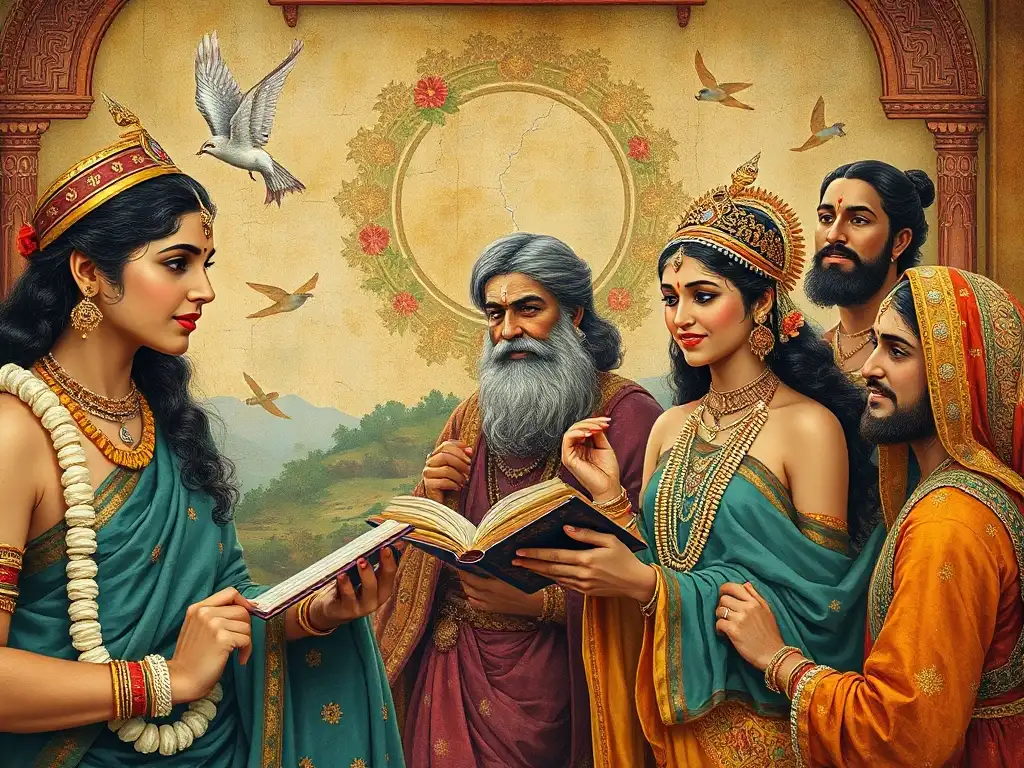
Ancient Indian visual storytelling is characterized by its rich iconography, which serves as a vital tool for conveying complex narratives and cultural themes. Iconography refers to the visual images, symbols, and motifs that are used to represent particular subjects or ideas in art. In the context of reliefs and frescoes, this iconography is meticulously crafted to communicate deeper meanings and stories.
- Deities and Mythical Figures:
- Deities play a crucial role in the visual narratives of ancient India. For instance, sculptures and frescoes often depict gods and goddesses like Vishnu, Shiva, and Durga, each symbolizing various aspects of life and cosmic order.
- Mythical figures from epics such as the Ramayana and Mahabharata are also prominently featured, showcasing their heroic deeds and moral lessons.
- Narrative Scenes:
- Reliefs frequently illustrate specific scenes from ancient texts. For example, the reliefs at the Ajanta Caves depict the life of the Buddha, illustrating his teachings and life events through a visual medium.
- Such scenes are not just decorative; they serve an educational purpose, allowing viewers to engage with the stories and teachings of their culture.
- Animals and Nature:
- Animals are often imbued with symbolic significance. Elephants may represent strength and wisdom, while the peacock symbolizes beauty and grace.
- Nature is depicted in various forms, signifying the connection between humans and the divine. The use of flora and fauna enhances the overall narrative, reinforcing themes of harmony and balance.
Common Themes and Narratives Depicted
The narratives captured in ancient Indian visual storytelling are diverse, reflecting the multifaceted nature of Indian culture. Several common themes emerge from the study of reliefs and frescoes:
- Divine Intervention:
- Many visual stories illustrate moments of divine intervention, where gods come to the aid of devotees or heroes in need. Such depictions serve to reinforce the belief in the protective and guiding forces of the divine.
- Moral and Ethical Lessons:
- Moral teachings are central to many narratives. The stories of kings who uphold dharma (righteousness) or figures who face moral dilemmas serve to educate the audience on ethical conduct and the importance of justice.
- Historical Events and Legends:
- Reliefs often chronicle significant historical events, such as battles or the establishment of kingdoms. These narratives not only celebrate victories but also preserve the memory of cultural heritage for future generations.
- Cosmic Cycles and Time:
- The concept of time in ancient Indian thought is often depicted through cycles of creation and destruction. These narratives serve to illustrate the eternal nature of the universe, a theme that resonates throughout various art forms.
Symbolism and Meaning in Visual Art
Symbolism is a foundational element of ancient Indian visual storytelling, allowing for a deeper understanding of the cultural and spiritual beliefs of the time. The meaning behind various symbols can be understood as follows:
- Color Significance:
- Colors in ancient Indian art are not merely aesthetic choices; they carry specific meanings. For instance, red often symbolizes auspiciousness, while blue may signify the divine, particularly in the depiction of Krishna.
- Posture and Gesture (Mudras):
- The postures of figures in reliefs and frescoes often convey specific meanings. Mudras, or hand gestures, are used to express emotions, convey teachings, or signify different states of being. For example, the Dhyana Mudra represents meditation and contemplation.
- Architectural Context:
- The placement of reliefs and frescoes within temples and other structures enhances their meaning. For instance, the orientation of a relief toward a particular direction may indicate its intended audience or the specific deity it honors.
- Interconnectedness of Elements:
- The interplay between different elements—figures, animals, and natural surroundings—creates a holistic narrative. This interconnectedness emphasizes the idea that all aspects of life are interrelated, a core tenet of ancient Indian philosophy.
By delving into these key elements, we can appreciate how ancient Indian visual storytelling not only captures the artistic prowess of the time but also serves as a profound reflection of its cultural and spiritual ethos.
Prominent Examples of Reliefs and Frescoes
The Ajanta Caves: A Case Study in Visual Storytelling
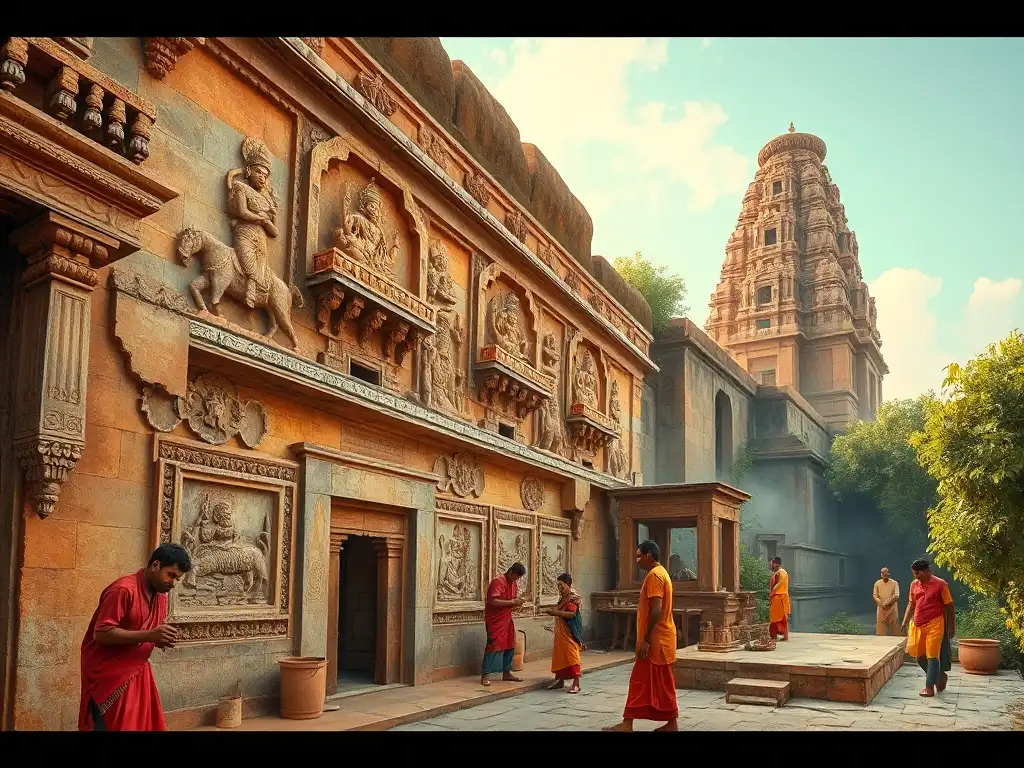
The Ajanta Caves, a UNESCO World Heritage site located in Maharashtra, India, are renowned for their stunning rock-cut architecture and exquisite frescoes. Dating back to the 2nd century BCE to about the 6th century CE, these caves are primarily famous for their intricate wall paintings that depict various Buddhist themes. The narratives illustrated in the Ajanta frescoes are not just mere artistic expressions but serve as a profound medium of ancient Indian visual storytelling.
The central focus of many frescoes is the life of the Buddha, depicted through vivid imagery and symbolic representation. For example, the fresco in Cave 1 illustrates the "Jataka Tales," which recounts the previous lives of the Buddha, emphasizing moral lessons. The use of vibrant colors, intricate details, and dynamic compositions creates a sense of movement and life, drawing viewers into the spiritual narratives portrayed.
Moreover, the frescoes employ a sophisticated visual language that combines both narrative and decorative elements. The careful arrangement of figures, the use of gestures (mudras), and the incorporation of natural landscapes enhance the storytelling aspect. The interplay of light and shadow on the painted surfaces adds depth and dimension, making the stories come alive for the observer.
The Ellora Caves: Merging Architecture and Art
The Ellora Caves, also designated as a UNESCO World Heritage site, showcase the remarkable fusion of architecture and visual storytelling. Carved between the 5th and 10th centuries CE, these caves feature a variety of religious art, including Hindu, Buddhist, and Jain motifs. The most notable cave, the Kailasa Temple (Cave 16), is an architectural marvel that embodies the pinnacle of rock-cut architecture.
The reliefs at Ellora are significant not only for their artistic merit but also for their narrative scope. They depict various deities, mythological tales, and religious ceremonies that reflect the cultural and spiritual milieu of ancient India. For instance, the intricate carvings of Lord Shiva's exploits, such as his victory over the demon Andhaka, are not merely decorative but tell a story of good triumphing over evil.
The ancient Indian visual storytelling at Ellora is further enhanced by the use of layered narratives, where multiple scenes coexist within a single composition. This technique engages the viewer, encouraging them to explore the stories in depth, revealing layers of meaning that resonate with both the religious and cultural identity of the time.
Temples of Khajuraho: Erotic and Spiritual Narratives
The Temples of Khajuraho, built between 950 and 1050 CE, are celebrated for their extraordinary sculptures that blend eroticism with spirituality. Recognized as a UNESCO World Heritage site, these temples exemplify the artistic prowess of ancient Indian craftsmen. The intricate carvings adorning the walls tell a myriad of stories, ranging from divine love to intricate representations of daily life and sensuality.
The erotic sculptures in Khajuraho serve a dual purpose: they are not only a celebration of human emotions and relationships but also a reflection of the spiritual belief in the balance between the material and the divine. Each figure is meticulously carved to convey movement and emotion, transforming stone into a vibrant narrative medium. The interplay of erotic themes with spiritual iconography invites viewers to contemplate the interconnectedness of the physical and the spiritual realms.
Furthermore, the positioning of these narratives within the temple architecture itself enhances their storytelling potential. The sculptures are strategically placed at various levels, allowing for a multi-dimensional viewing experience that engages visitors both physically and intellectually. This unique integration of ancient Indian visual storytelling within the sacred space of the temples underscores the cultural significance of artistic expression in conveying complex ideas about love, spirituality, and the human experience.
Techniques and Materials Used in Ancient Indian Visual Arts
Methods of Crafting Reliefs in Stone
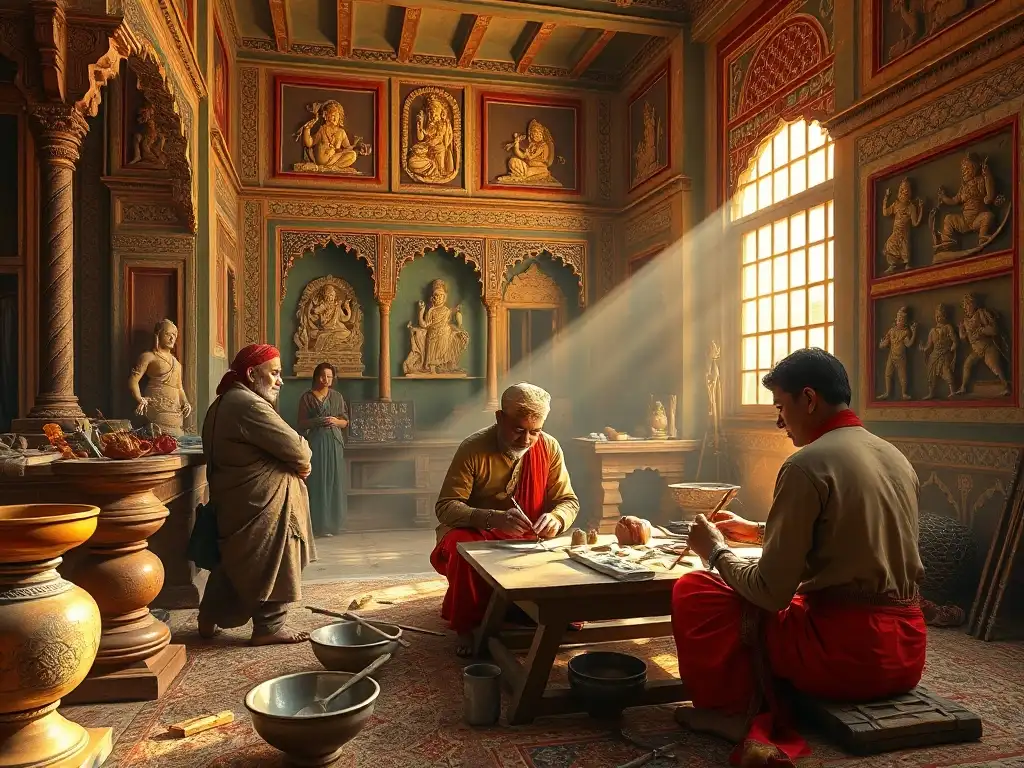
Ancient Indian sculptors employed a variety of techniques to create intricate reliefs that adorned temples, palaces, and public spaces. The primary method involved chisel work, where artisans would meticulously carve figures and scenes into stone blocks. This process required exceptional skill and precision, as the depth of each cut determined the play of light and shadow, enhancing the three-dimensional aspect of the reliefs.
- Tool Selection: Artisans used a range of tools, including:
- Chisels made from iron or bronze for shaping.
- Hammers for striking the chisels, often crafted from harder materials.
- Files and Rasps for fine detailing and smoothing surfaces.
- Techniques:
- Bas-relief: Figures slightly protrude from the background, allowing for a more subtle portrayal of depth.
- High relief: Characters and scenes are carved in a more pronounced manner, often creating dramatic effects.
- Stone Types: The choice of stone varied by region and availability, with sandstone, limestone, and granite being popular materials. Each type offered distinct textures and colors that influenced the final appearance of the artwork.
Fresco Techniques and Their Cultural Relevance
Fresco painting was a predominant art form in ancient India, particularly during the Gupta period. This technique involved applying pigments onto freshly laid wet plaster, allowing the colors to bond with the wall as it dried. The durability of frescoes made them ideal for vibrant storytelling in temples and palatial interiors.
- Application Process:
- Preparation: Walls were first smoothed and coated with a layer of wet plaster.
- Pigment Mixing: Natural pigments sourced from minerals and plants were mixed with water and applied directly onto the wet plaster.
- Layering: Artists often worked in sections, completing one area before moving to the next to ensure that the plaster remained wet during application.
- Cultural Significance:
- Frescoes depicted mythological narratives, royal ceremonies, and daily life, serving both decorative and educational functions.
- The use of frescoes in temples, such as those in Ajanta and Ellora, reflects the integration of art and spirituality, inviting viewers to engage with the divine through visual storytelling.
Use of Color and Texture in Ancient Indian Art
The vibrant colors and varied textures of ancient Indian visual storytelling played a crucial role in conveying emotion and meaning. Artists utilized a harmonious palette, often derived from natural materials, to enhance the visual experience.
- Color Palette:
- Traditional colors included reds, yellows, blues, and greens, often symbolizing various themes:
- Red: Associated with passion and strength.
- Blue: Representing divinity and tranquility.
- Yellow: Symbolizing knowledge and enlightenment.
- Traditional colors included reds, yellows, blues, and greens, often symbolizing various themes:
- Texture Techniques:
- Artists achieved texture through various methods:
- Layering Pigments: Applying multiple layers of paint to create depth and vibrancy.
- Mixed Media: Incorporating materials like gold leaf or minerals to add sheen and enhance visual appeal.
- Artists achieved texture through various methods:
- Symbolic Use:
- The texture and color combinations were not merely aesthetic; they played a significant role in storytelling, where specific colors and textures conveyed deeper meanings and emotions within the narratives portrayed.
By understanding these techniques and materials, we can appreciate the sophisticated artistry and cultural narratives embedded in ancient Indian visual storytelling, which continue to inspire and inform contemporary art practices.
The Influence of Ancient Indian Visual Storytelling on Later Art Forms
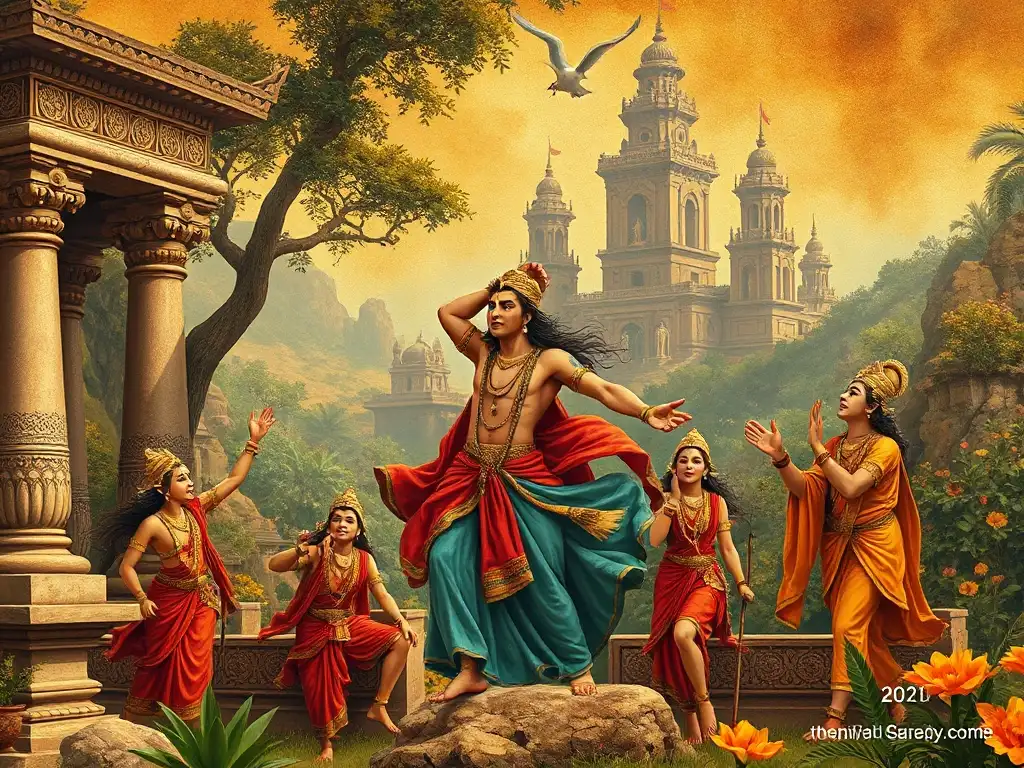
The influence of ancient Indian visual storytelling extends far beyond its own time, significantly shaping various later art forms across different cultures and epochs. The intricate reliefs and frescoes of ancient India, characterized by their narrative depth and vibrant imagery, laid the groundwork for a rich tradition that would resonate through the medieval and modern periods.
Transition to Medieval and Modern Visual Arts
The transition from ancient visual storytelling to medieval and modern art forms in India was marked by a fusion of styles and techniques. During the medieval period, the introduction of new religious ideologies, particularly with the rise of Buddhism and later Islam, brought about significant changes in artistic expression.
- Buddhist Influence:
- The Ajanta and Ellora Caves are prime examples of how ancient Indian narrative techniques evolved. The frescoes within these caves reflect both artistic continuity and innovation, as they incorporate Buddhist themes while maintaining the storytelling traditions of earlier periods.
- Iconography became more symbolic, with narratives often depicted in a more stylized manner that conveyed deeper philosophical meanings.
- Islamic Contributions:
- The Mughal Empire introduced Persian artistic elements, blending them with indigenous traditions. The incorporation of detailed landscapes and intricate floral designs into miniature paintings served to enhance storytelling through visual means.
- The use of calligraphy alongside visual imagery created a unique narrative form that elevated the importance of text and visual art in conveying stories.
- Colonial and Modern Art:
- The arrival of European styles during the colonial period led to further transformations. Artists began to experiment with perspective and realism, but many continued to draw inspiration from ancient narratives, infusing their works with motifs and storytelling techniques from earlier Indian art.
Continuity of Themes in Contemporary Indian Art
Contemporary Indian art continues to reflect the profound legacy of ancient Indian visual storytelling. The themes prevalent in ancient reliefs and frescoes—such as mythology, spirituality, and daily life—remain significant in modern artistic expressions.
- Mythological Representation: Many contemporary artists draw upon the rich tapestry of Indian mythology, translating ancient narratives into modern visual language. For example:
- Subodh Gupta incorporates elements of Indian folklore into mixed media installations, using everyday objects to tell stories of culture and identity.
- Spirituality and Identity: The exploration of spirituality, a cornerstone of ancient visual storytelling, persists in the works of artists like Anjolie Ela Menon, who integrates traditional themes with contemporary techniques, evoking the same emotional resonance found in ancient artworks.
- Social Commentary: Modern artists are also using ancient styles to comment on contemporary societal issues. The use of traditional motifs in street art and graphic design serves as a bridge linking past narratives with present realities.
Global Impact of Ancient Indian Visual Narratives
The impact of ancient Indian visual storytelling reaches far beyond India's borders, influencing global artistic movements and traditions.
- Cultural Exchanges: As trade routes flourished, ancient Indian art traveled to regions such as Southeast Asia, influencing local artistic practices. The Buddhist art of Cambodia and Thailand demonstrates the cross-cultural exchanges, where Indian narrative styles were adapted to local contexts.
- Artistic Inspirations: Artists worldwide have drawn inspiration from the intricate designs and storytelling techniques of ancient Indian art. For instance, the Art Deco movement in the early 20th century saw artists incorporate Indian motifs and themes into their works, showcasing the global fascination with Indian aesthetics.
- Contemporary Global Art Scene: Today, many international artists explore ancient Indian narratives, merging them with modern techniques to address universal themes of identity, belonging, and spirituality. The dialogue between ancient and contemporary forms continues to thrive, evidencing the enduring legacy of ancient Indian visual storytelling.
The rich tradition of ancient Indian visual storytelling has not only informed subsequent art forms but also continues to inspire and resonate within contemporary artistic practices around the globe. The interplay of ancient motifs and modern techniques ensures that these narratives remain a vital part of both India’s cultural identity and the broader global art landscape.
Conclusion: The Legacy of Ancient Indian Visual Storytelling
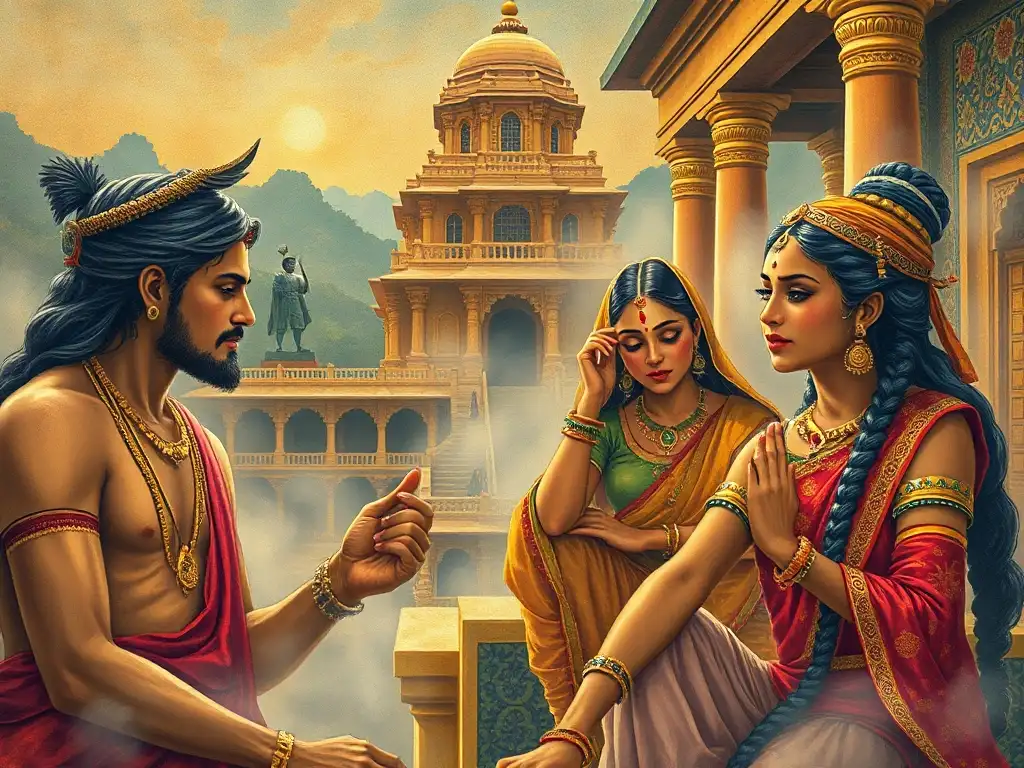
The legacy of ancient Indian visual storytelling is a testament to the rich cultural tapestry woven by centuries of artistic expression. This form of narrative, deeply embedded in the reliefs and frescoes of ancient Indian civilizations, serves as a crucial link to understanding the historical, spiritual, and social dimensions of the time. Through intricate designs and vivid imagery, these artworks have told stories of gods, daily life, and significant events, allowing us to glimpse into the values and beliefs that shaped ancient societies.
The significance of these visual narratives extends beyond mere aesthetics; they represent a unique convergence of art, religion, and philosophy. The use of symbolism and metaphor within these artworks often conveyed complex ideas, making them accessible to a diverse audience. This multifaceted nature of ancient Indian visual storytelling has left an indelible mark on the art world and continues to inspire contemporary artists and scholars alike.
Reflection on the Importance of Preservation
Preserving ancient Indian visual storytelling is vital for several reasons. First, these artworks are invaluable historical documents that provide insights into the cultural and societal norms of their time. They help us understand the evolution of artistic techniques and themes that have influenced modern Indian art.
Moreover, preservation efforts contribute to the safeguarding of heritage. Many ancient reliefs and frescoes are threatened by environmental factors, urban development, and neglect. Therefore, it is imperative to implement strategies that not only protect these artworks but also promote public awareness about their significance. This involves:
- Documentation: Recording the condition, location, and context of existing artworks.
- Restoration: Employing skilled conservators to repair and maintain these pieces.
- Education: Engaging local communities and schools in workshops and programs that highlight the importance of ancient visual storytelling.
By prioritizing preservation, we can ensure that future generations have the opportunity to engage with and learn from these extraordinary expressions of ancient Indian culture.
Future Directions for Research in Ancient Indian Art
The field of ancient Indian visual storytelling is ripe for further exploration and research. Several potential directions can enhance our understanding of these artworks and their context:
- Interdisciplinary Studies: Collaborations between art historians, archaeologists, and cultural anthropologists can lead to a more comprehensive understanding of the narratives depicted in ancient Indian art. This approach may uncover new interpretations and connections to other historical events or cultural practices.
- Technological Advancements: Utilizing digital tools and techniques, such as 3D modeling and virtual reality, can facilitate the study and presentation of ancient artworks. These technologies can provide immersive experiences that allow people to appreciate the scale and detail of reliefs and frescoes in ways that traditional methods cannot.
- Global Comparisons: Investigating the parallels between ancient Indian visual storytelling and similar traditions in other cultures can yield insights into shared human experiences and artistic expressions. Such comparative studies can enrich our understanding of how different civilizations narrate their histories and values through art.
- Community Engagement: Involving local communities in research initiatives can cultivate a deeper appreciation for their cultural heritage. This can take the form of participatory projects that encourage locals to share their knowledge, stories, and connections to ancient artworks.
The future of research in ancient Indian visual storytelling holds immense potential for uncovering new narratives and insights. By fostering collaboration, embracing technology, and engaging communities, we can continue to honor and expand upon the rich legacy of ancient Indian art.
References
Academic Sources on Ancient Indian Visual Storytelling
-
"The Art of Ancient India: Buddhist, Hindu, Jain" by Benoy K. Behl
This comprehensive work delves into the various forms of visual storytelling in ancient Indian art, emphasizing the techniques and narratives depicted in temple reliefs and frescoes. Behl explores the intersection of religion and art, illustrating how storytelling was an essential component of cultural expression in ancient India.
-
"Indian Art and Culture" by N. S. Ramaswamy
Ramaswamy's text provides an in-depth analysis of the evolution of ancient Indian art forms, including visual storytelling methods employed in sculptures and paintings. The book offers insights into the socio-political contexts that influenced artistic expression, making it a valuable resource for understanding ancient Indian visual storytelling.
-
"The Narrative Tradition in Indian Art" by M. S. Randhawa
This work investigates the various narrative techniques utilized in ancient Indian art, focusing on how reliefs and frescoes conveyed stories from mythology and history. Randhawa emphasizes the role of symbolism and iconography, providing a detailed examination of specific examples from different regions of India.
-
"Temples and Sculptures of India: A Visual History" by K. K. Das
Das's publication offers a rich visual guide to the temples of India, highlighting the intricate reliefs and frescoes that narrate ancient tales. This book serves as a visual reference, showcasing the craftsmanship and storytelling techniques that have defined Indian art through the ages.
Suggested Readings for Further Exploration
-
"Ancient Indian Art" by R. C. Sharma
A detailed exploration of the various styles and forms of ancient Indian art, including visual storytelling elements. Sharma discusses the significance of artistic traditions across different dynasties.
-
"Cave Temples of India" by S. M. Ali
This book focuses on the cave temples of India, with a special emphasis on the frescoes and reliefs that depict stories from Buddhist and Hindu traditions. Ali's work provides context to the visual narratives found within these sacred spaces.
-
"Colors of India: The Visual Storyteller" by P. K. Jain
Jain examines the use of color and form in ancient Indian visual storytelling, analyzing how these elements contributed to the overall narrative. The book includes numerous examples of frescoes and sculptures, making it a rich resource for art enthusiasts.
-
"The Art of Storytelling in Indian Sculpture" by A. N. Choudhury
This text details the storytelling techniques employed in ancient Indian sculpture, highlighting the emotive power of visual narratives. Choudhury's analysis includes various artistic styles and their historical significance.
By exploring these academic sources and suggested readings, one can gain a deeper understanding of the rich tradition of ancient Indian visual storytelling and its impact on the cultural heritage of India.
Frequently Asked Questions
What is visual storytelling in the context of ancient India?
Visual storytelling refers to the use of artistic representations, such as reliefs and frescoes, to convey narratives and cultural themes in ancient Indian civilizations.
How did reliefs and frescoes contribute to cultural understanding in ancient India?
These art forms served as a means to communicate religious beliefs, social norms, and historical events, offering valuable insights into the lives and values of ancient Indian societies.
What are some examples of ancient Indian visual storytelling techniques?
Techniques include the use of symbolism, intricate detailing, and compositional arrangements in artworks that depict stories from mythology, epics, and daily life.
How did the Indus Valley Civilization contribute to visual storytelling?
The Indus Valley Civilization showcased early forms of visual storytelling through seals and pottery, which often depicted scenes of daily life and mythological motifs.
What impact did the Gupta Empire have on visual storytelling?
The Gupta Empire is known for its advancements in the arts, leading to more refined frescoes and sculptures that portrayed complex narratives and elevated visual storytelling to new heights.
Final Reflection: The Enduring Legacy of Ancient Indian Visual Storytelling
Ancient Indian visual storytelling is not merely a relic of the past; it is a vibrant thread woven into the fabric of contemporary culture and art. The intricate reliefs and frescoes that adorned temples and palaces centuries ago continue to resonate today, reminding us of the power of images to convey complex narratives and emotions. As we navigate an increasingly visual world, the lessons from these ancient forms of storytelling become ever more relevant, urging us to appreciate the depth and richness of our shared human experience.
Cultural narratives, much like the frescoes that depict them, evolve yet remain anchored in their origins. The influence of ancient Indian visual storytelling can be seen in modern art, cinema, and even digital media, where the fusion of visual elements with narrative continues to captivate audiences. As the renowned artist Anish Kapoor once said, "> Art is a language that speaks to the soul." This sentiment underscores the importance of understanding our artistic heritage, as it shapes not only our cultural identity but also our collective consciousness in an increasingly globalized world.
As you reflect on the themes presented in this article, I invite you to explore how ancient Indian visual storytelling can inspire your own creative endeavors. Consider how the narratives of the past can inform your understanding of the present and guide your vision for the future. Let the stories captured in those timeless reliefs and frescoes ignite your imagination and encourage you to weave your own visual tales, enriching the cultural tapestry for generations to come.
Unveil the Richness of Ancient Indian Visual Storytelling!
Thank you for immersing yourself in the fascinating world of ancient Indian narratives through our exploration of reliefs and frescoes. You’ve unlocked valuable insights into how these timeless art forms tell compelling stories. Now, let’s keep that momentum going!
Take action today to deepen your connection with these incredible narratives:
- Join our community online: Share your thoughts and interpretations of these artworks in our forum! Engaging with fellow enthusiasts can enrich your understanding.
- Explore further: Visit local museums or online galleries that feature Indian art. Discover the stories these visuals hold and how they resonate with contemporary themes.
- Create your visual story: Use your creativity to craft your own narrative inspired by ancient themes—whether through visual art, storytelling, or digital media!
As you reflect on the significance of these ancient works, consider this: How can modern storytelling learn from the techniques employed in these historical reliefs and frescoes? Your insights could inspire others!