
Study of Ancient Inscriptions


Study of Ancient Inscriptions
41 articles in this topic
Start here
- Study of Ancient InscriptionsExploring the Regional Variations in Ancient Indian Inscriptions
- Study of Ancient InscriptionsChallenges in Translating Ancient Inscriptions: A Scholar’s Perspective
- Study of Ancient InscriptionsThe Role of Inscriptions in Documenting Ancient Indian Science and Technology
Read more about this topic
Discover the fascinating world of ancient inscriptions and unlock historical insights carved into stone, metal, pottery, and pillars. Explore how epigraphic evidence reveals the rulers, religions, languages, trade networks, social life, and cultural achievements of ancient India—from the Indus Valley civilization to the Gupta Empire. 🏛️📜 Through the study of scripts, symbols, and inscriptions, uncover authentic stories that enrich the understanding of Indian history, archaeology, and heritage.
More in Study of Ancient Inscriptions
Study of Ancient Inscriptions
The Secrets of Ancient Inscriptions: Unlocking the Wisdom of India's Past

Study of Ancient Inscriptions
The Relationship Between Ancient Inscriptions and Oral Traditions
Study of Ancient Inscriptions
The Indus Valley Script: Mysteries and Discoveries of Ancient Communication
Study of Ancient Inscriptions
Ancient Inscriptions as Tools of Propaganda: Power Dynamics in History
Study of Ancient Inscriptions
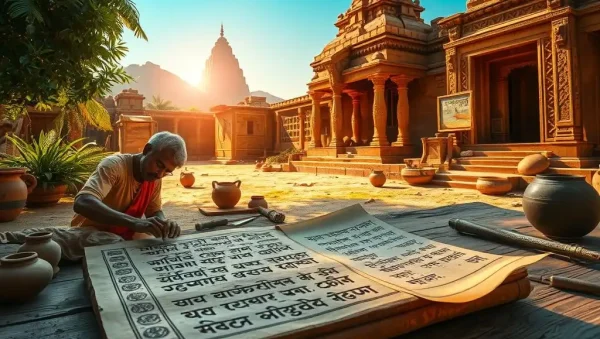
From Stone to Scroll: The Evolution of Inscriptions in Ancient India

Study of Ancient Inscriptions
The Influence of Ancient Inscriptions on Indian Literature

Study of Ancient Inscriptions
A Journey Through Time: Famous Inscriptions from Ancient India
Study of Ancient Inscriptions
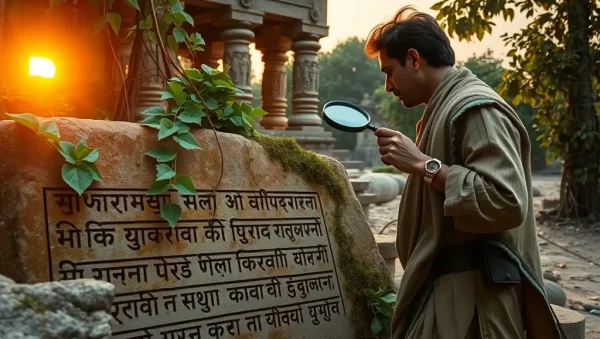
Inscriptions as Historical Evidence: Case Studies from Ancient India
📜 Study of Ancient Inscriptions in India
The Study of Ancient Inscriptions, also known as epigraphy, is a vital field for understanding the political, social, religious, economic, and cultural history of ancient India. This subcategory explores inscriptions engraved on stone pillars, rock surfaces, temple walls, copper plates, coins, seals, and other archaeological objects. Readers can discover how scholars decipher ancient scripts, interpret historical records, and use inscriptions to reconstruct the development of Indian civilization from the Indus Valley period to the Gupta Empire and beyond.
🪨 What Are Ancient Indian Inscriptions?
Ancient Indian inscriptions are written records preserved on durable materials such as rocks, pillars, cave walls, metal plates, pottery, and monuments. They may record royal proclamations, land grants, religious donations, victories, genealogies, administrative decisions, or details about trade and local communities. Studying these sources provides direct evidence that complements literary texts and archaeological discoveries.
In this section, readers can learn about the purpose, location, language, script, and historical context of major inscriptions. The content covers famous examples such as the Ashokan edicts, Satavahana records, Gupta inscriptions, Tamil-Brahmi inscriptions, and copper-plate grants from different regions of ancient India.
🔤 Scripts and Languages of Epigraphy
The study of ancient inscriptions requires knowledge of several historical scripts and languages. Important scripts include Brahmi, Kharosthi, Tamil-Brahmi, Gupta script, Nagari, and regional variations that developed over time. Inscriptions were composed in languages such as Prakrit, Sanskrit, Pali, Tamil, Telugu, Kannada, and other early forms of Indian languages.
Readers can explore how paleographers identify letter forms, compare inscriptions, establish dates, and trace the evolution of writing systems. Understanding these scripts is essential for interpreting ancient Indian history, including the spread of Buddhism, the growth of Sanskrit culture, the development of regional kingdoms, and the administration of early Indian states.
👑 Royal Inscriptions and Political History
Royal inscriptions are among the most important sources for reconstructing the political history of ancient India. Kings and dynasties used inscriptions to announce military victories, define territorial boundaries, record royal lineages, praise rulers, and communicate laws or moral principles. These records offer valuable information about the Mauryas, Satavahanas, Kushanas, Guptas, Pallavas, Cholas, and other ruling houses.
This subcategory explains how historians assess royal claims and compare them with archaeological and literary evidence. Genealogical inscriptions, victory records, prasastis, and royal charters can reveal patterns of succession, imperial expansion, diplomacy, political ideology, and relationships between rulers and local authorities.
🕉️ Religious Inscriptions and Sacred Traditions
Religious inscriptions provide insight into the growth and organization of Buddhism, Jainism, Hinduism, and other spiritual traditions in ancient India. Donations to monasteries, temples, stupas, caves, and religious communities often mention patrons, monks, merchants, artisans, women, guilds, and members of royal families.
Readers can examine how epigraphic evidence reveals the spread of religious institutions and the interaction between faith, society, and economy. Dedication inscriptions, pilgrimage records, temple grants, and Buddhist cave inscriptions help explain patterns of worship, patronage, sacred geography, and the development of religious art and architecture.
🏺 Social and Economic Life in Inscriptions
Ancient inscriptions are valuable records of everyday social and economic life. They may mention occupations, professional guilds, traders, agricultural communities, landowners, soldiers, officials, priests, artisans, and charitable donors. Such evidence helps historians study social organization beyond the accounts of kings and major political events.
This section explores references to taxation, irrigation, land ownership, commercial networks, markets, labor, donations, and village administration. Inscriptions connected with guilds and land grants are especially useful for understanding economic activity, rural development, urban centers, trade routes, and the relationship between local communities and powerful institutions.
🗺️ Major Inscriptions and Archaeological Discoveries
Readers can learn about significant inscriptional discoveries across the Indian subcontinent, including the edicts of Ashoka, the Allahabad Pillar inscription, the Junagadh inscription, the Hathigumpha inscription, the Nasik cave inscriptions, and important temple and copper-plate records. Each discovery contributes to a broader understanding of ancient Indian chronology and civilization.
Detailed discussions may include the location, physical form, script, language, historical ruler, and scholarly importance of individual records. These examples demonstrate how archaeological context and epigraphic analysis work together to establish reliable interpretations of ancient Indian history.
🧭 Methods Used in Epigraphic Research
The study of inscriptions combines archaeology, paleography, linguistics, history, geography, art history, and digital documentation. Researchers examine the material, engraving technique, letter shapes, language, formulaic expressions, names, titles, dates, and geographical references found in each record.
Readers can discover how experts photograph, copy, preserve, translate, and critically interpret inscriptions. Comparative analysis, estampage, digital imaging, GIS mapping, and database research help scholars identify damaged texts, detect later alterations, compare regional writing styles, and place inscriptions within their correct historical setting.
🧱 Preservation of Ancient Inscriptions
Many inscriptions are threatened by weathering, pollution, erosion, construction, vandalism, and the natural deterioration of stone or metal. Preserving these records is essential because a damaged inscription may result in the permanent loss of names, dates, historical events, and linguistic evidence.
This subcategory highlights the importance of archaeological conservation, museum documentation, site protection, accurate recording, and responsible public access. Preservation efforts ensure that future generations can study India’s epigraphic heritage and continue to investigate the history of ancient kingdoms, communities, religions, and cultural traditions.
❓ Frequently Asked Questions About the Study of Ancient Inscriptions
What is the study of ancient inscriptions called?
The study of ancient inscriptions is called epigraphy. It involves examining inscriptions on stone, metal, pottery, coins, buildings, and other materials to understand their script, language, date, purpose, and historical significance.
Why are inscriptions important for ancient Indian history?
Inscriptions are important because they provide direct historical evidence from the period in which they were created. They can reveal information about rulers, dynasties, religious practices, land grants, taxation, trade, administration, social groups, and the development of languages and scripts.
Which scripts are commonly found in ancient Indian inscriptions?
Common scripts include Brahmi, Kharosthi, Tamil-Brahmi, Gupta, early Nagari, and several regional scripts. Their forms changed across different periods and regions, allowing scholars to study the development of writing in the Indian subcontinent.
What languages appear in ancient Indian inscriptions?
Ancient Indian inscriptions were written in languages including Prakrit, Sanskrit, Pali, Tamil, Telugu, Kannada, and other regional languages. The language often reflects the location, political culture, religious tradition, and period in which an inscription was produced.
How do historians date and interpret inscriptions?
Historians use paleography, royal names, regnal years, calendars, genealogies, linguistic evidence, archaeological context, and comparisons with securely dated records. They also consider damage, later modifications, translation difficulties, and the possibility that royal inscriptions may contain political praise or idealized claims.