
Chandragupta Maurya
Chandragupta Maurya
57 articles in this topic
Read more about this topic
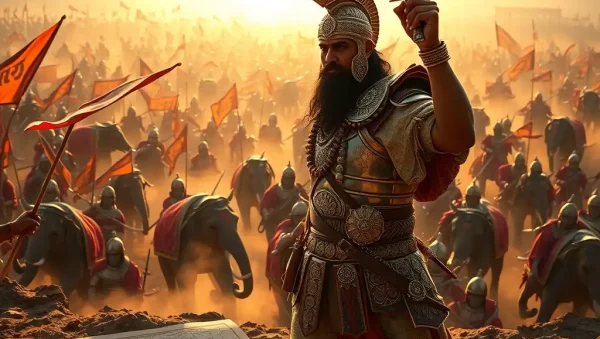
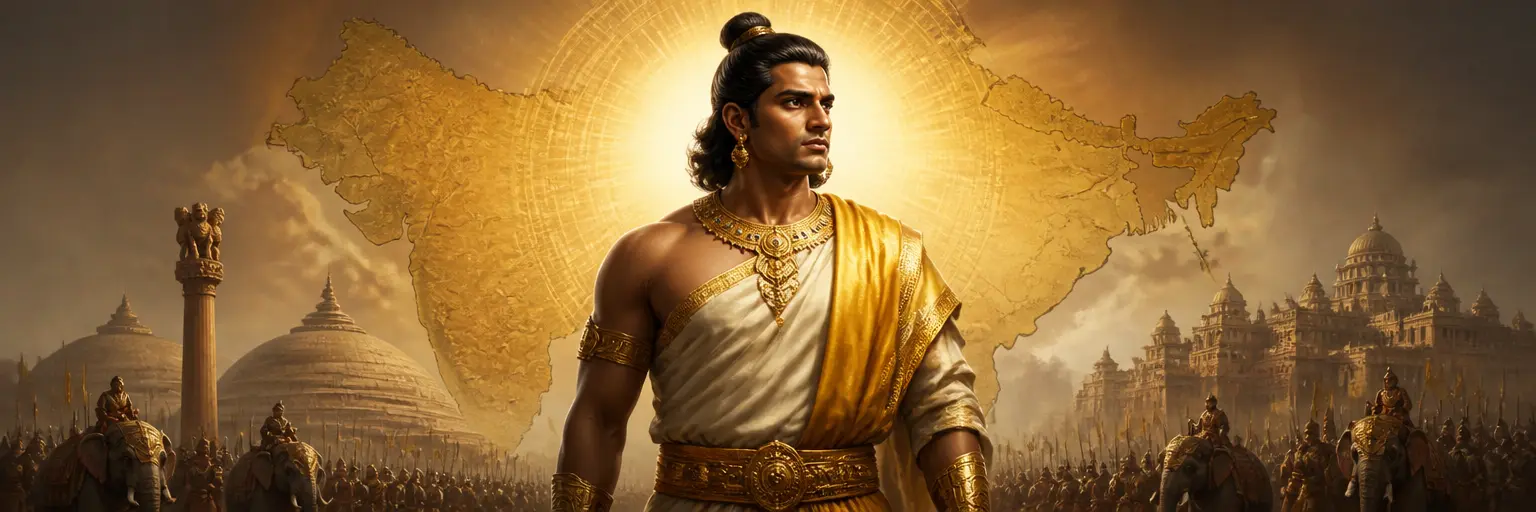
Chandragupta Maurya was the visionary founder of the Maurya Empire and one of ancient India’s most influential rulers. Explore his remarkable rise to power, strategic alliance with Chanakya, empire-building achievements, and role in unifying large parts of the Indian subcontinent. Discover how his leadership shaped Ancient Indian history and laid the foundation for one of India’s greatest imperial dynasties.
More in Chandragupta Maurya
Chandragupta Maurya
Chandragupta Maurya's Journey: From Warrior to Philosopher
Chandragupta Maurya
The Artistic Flourish of the Mauryan Era Under Chandragupta's Rule
Chandragupta Maurya
Chandragupta Maurya: The Visionary Leader Who United a Fragmented India
Chandragupta Maurya
The Mauryan Army: Chandragupta's Military Innovations and Strategies
Chandragupta Maurya
Chandragupta Maurya's Role in Shaping India's Cultural Heritage
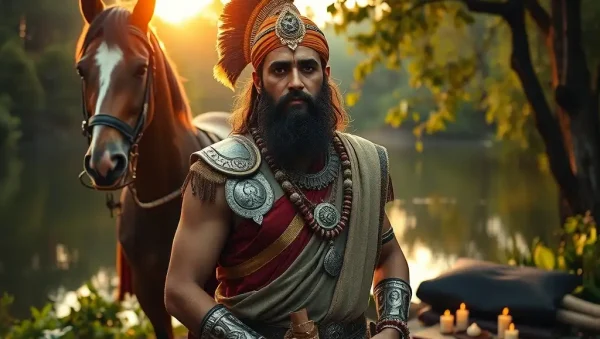
Chandragupta Maurya
The Spiritual Journey of Chandragupta Maurya: From Warrior to Ascetic
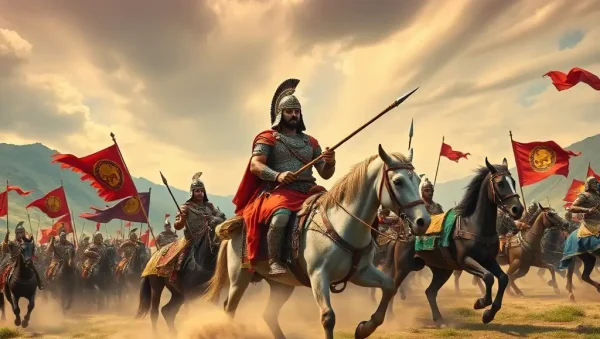
Chandragupta Maurya
Exploring the Military Tactics of Chandragupta Maurya: A Study of Warfare
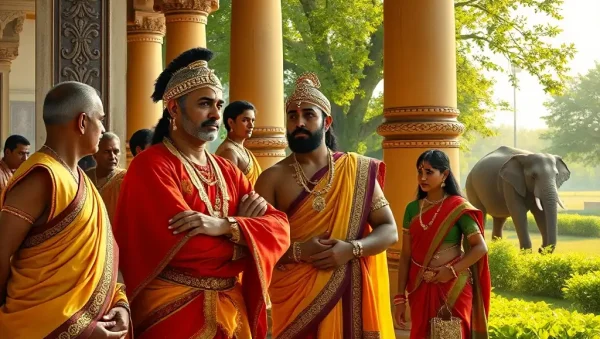
Chandragupta Maurya
The Diplomatic Strategies of Chandragupta Maurya: Alliances and Rivals
Chandragupta Maurya: Founder of the Mauryan Empire 🏛️
Explore the life, achievements, and historical legacy of Chandragupta Maurya, one of the most influential rulers in ancient Indian history. This subcategory examines how Chandragupta established the Mauryan Empire, overthrew the Nanda dynasty, unified large parts of the Indian subcontinent, and created a powerful administrative state. Readers will discover reliable information about his early life, rise to power, relationship with Chanakya, military campaigns, governance, diplomacy, and connection with Jain traditions. As part of Ancient India History, this collection places Chandragupta Maurya within the wider story of Indian civilization, from the age of regional kingdoms to the formation of one of South Asia’s first great empires.
👑 Early Life and Rise of Chandragupta Maurya
Learn about the traditions and historical accounts surrounding Chandragupta Maurya’s origins, childhood, education, and early political ambitions. Ancient sources describe a remarkable figure who rose from uncertain beginnings to challenge the powerful Nanda dynasty of Magadha. Articles in this section compare literary traditions, Greek references, and later Indian accounts while clearly distinguishing between established evidence and legend.
Readers can explore how political instability, military opportunity, and public dissatisfaction may have helped Chandragupta gain support. The subcategory explains his transformation from an ambitious leader into the founder of the Mauryan Empire, offering useful context for understanding the emergence of imperial power in ancient India.
⚔️ Chandragupta Maurya and Chanakya
Discover the celebrated partnership between Chandragupta Maurya and Chanakya, also known as Kautilya or Vishnugupta. According to traditional accounts, Chanakya served as Chandragupta’s mentor, strategist, and political adviser. Their alliance is often regarded as a defining factor in the defeat of the Nandas and the consolidation of Mauryan rule.
This section explores Chanakya’s strategic ideas, diplomacy, intelligence networks, economic policies, and concepts of kingship as presented in the Arthashastra. Readers will also find balanced discussions about the debate over the text’s date, authorship, and direct relationship with Chandragupta’s administration.
🗺️ Expansion of the Mauryan Empire
Follow Chandragupta Maurya’s military and political expansion across northern India. His victories helped bring Magadha, the Ganges region, and other territories under centralized Mauryan authority. The content explains how alliances, warfare, strategic administration, and the control of important trade routes contributed to the growth of the first major pan-Indian empire.
Special attention is given to Chandragupta’s conflict with Seleucus I Nicator, a successor of Alexander the Great. Readers can learn about the Mauryan–Seleucid treaty, territorial adjustments, diplomatic exchange, and the reported marriage alliance. These events demonstrate Chandragupta’s importance not only in Indian history but also in the wider Hellenistic world.
🏛️ Mauryan Administration and Governance
Explore the systems that supported Chandragupta Maurya’s extensive empire, including provincial administration, taxation, agriculture, trade, law enforcement, and military organization. The Mauryan state is often studied as an early example of centralized governance in South Asian history, and this section explains how authority may have been organized from the imperial capital at Pataliputra.
Readers will discover how officials, spies, soldiers, merchants, farmers, and local communities contributed to the functioning of the empire. Topics may include the Mauryan army, economic regulation, urban life, roads, communication, and royal authority, helping visitors understand the practical foundations of Chandragupta’s political success.
🌍 Greek Accounts and Megasthenes
Study the valuable yet complex evidence provided by Greek writers about Chandragupta Maurya and the Mauryan Empire. Megasthenes, an ambassador associated with the Seleucid court, visited Pataliputra and described Indian society, administration, geography, and royal institutions in his work commonly known as the Indica.
This section explains why Greek accounts are important for reconstructing ancient Indian history while also considering their limitations. Readers can learn how historians compare foreign observations with Indian literary, archaeological, and inscriptional evidence to develop a more careful understanding of Chandragupta’s reign.
🕉️ Chandragupta Maurya and Jain Tradition
Examine the traditional account that Chandragupta Maurya later embraced Jainism and renounced royal life. Jain texts associate him with the teacher Bhadrabahu and describe a journey to southern India, where he is said to have spent his final years at Shravanabelagola in present-day Karnataka.
The subcategory presents this tradition with historical context, explaining the importance of Jain sources and the continuing scholarly discussion about their chronology and reliability. Readers can explore ideas of renunciation, asceticism, religious patronage, and the changing identity of an emperor in ancient Indian civilization.
📚 Sources, Evidence, and Historical Debate
Learn how historians reconstruct the life of Chandragupta Maurya from diverse sources, including the Arthashastra, Buddhist and Jain literature, Greek accounts, later Sanskrit narratives, archaeology, and regional traditions. Because direct contemporary records about Chandragupta are limited, comparing different types of evidence is essential.
Articles in this section distinguish between historical probability, literary tradition, and popular legend. This approach helps readers evaluate claims about Chandragupta’s birth, chronology, conquests, administration, religion, and death while developing a deeper understanding of the methods used in ancient Indian history research.
❓ Frequently Asked Questions About Chandragupta Maurya
Who was Chandragupta Maurya?
Chandragupta Maurya was the founder of the Mauryan Empire and one of the earliest rulers to unite large parts of the Indian subcontinent under a centralized government. He established Mauryan power in the late fourth century BCE after defeating the Nanda dynasty of Magadha.
Who was Chanakya, and how did he help Chandragupta?
Chanakya, also called Kautilya or Vishnugupta, is traditionally described as Chandragupta Maurya’s teacher, adviser, and political strategist. He is associated with the Arthashastra, a major work on statecraft, economics, diplomacy, military strategy, and governance.
Which empire did Chandragupta Maurya establish?
Chandragupta established the Mauryan Empire, one of the largest and most influential empires in ancient India. Its political center was Pataliputra, and its influence extended across much of northern and central South Asia.
Did Chandragupta Maurya meet Alexander the Great?
There is no conclusive evidence that Chandragupta personally met Alexander the Great. However, Chandragupta rose to power during the period of political change that followed Alexander’s campaigns in northwestern India and later fought the Seleucid ruler Seleucus I Nicator.
How did Chandragupta Maurya die?
According to Jain tradition, Chandragupta renounced his throne, followed the Jain teacher Bhadrabahu, and spent his final years at Shravanabelagola. He is traditionally believed to have died through the Jain practice of sallekhana, although historians continue to examine the chronology and evidence for this account.