
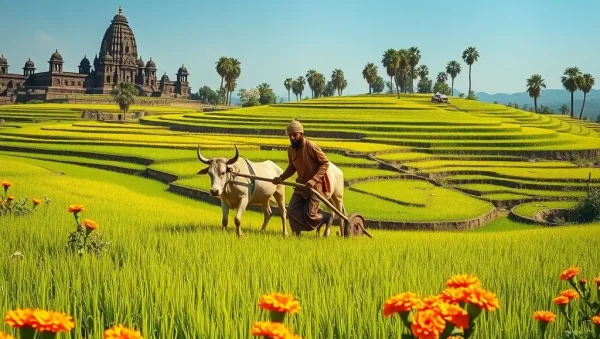
Agricultural Innovations
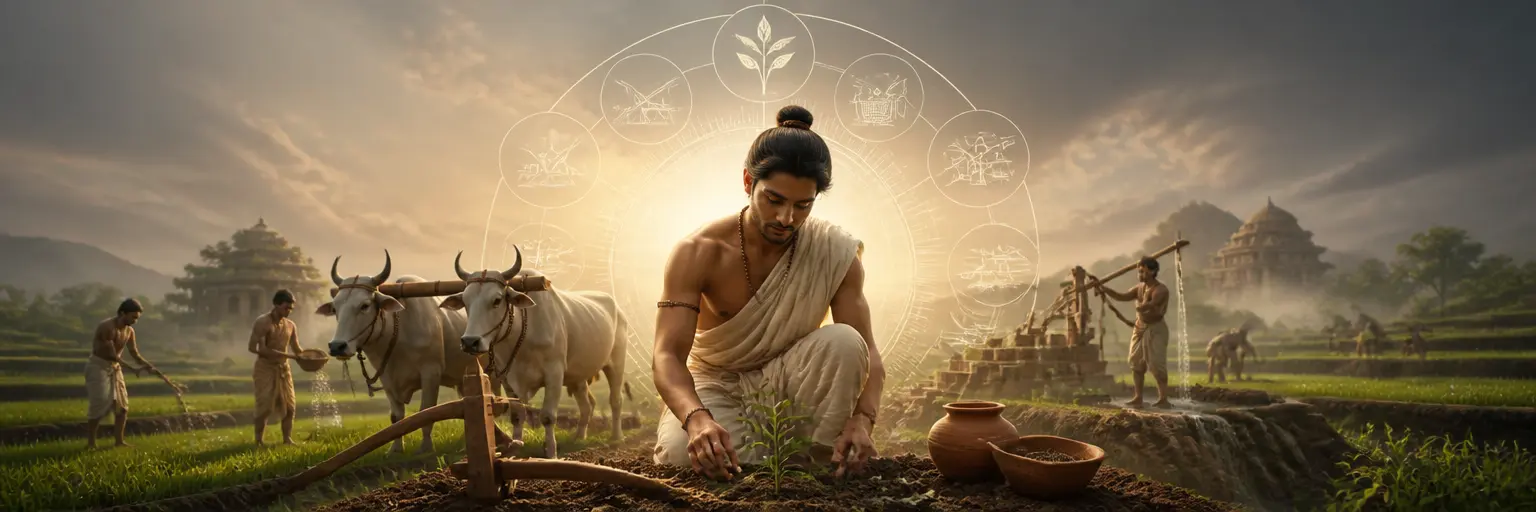

Agricultural Innovations
54 articles in this topic
Read more about this topic
Agricultural Innovations reveal how ancient Indian civilizations transformed farming through ingenious knowledge and technology. Explore historic advances in irrigation, crop cultivation, soil management, water harvesting, and agricultural tools that strengthened food production and supported thriving societies from the Indus Valley to the Gupta Empire. 🌾 Discover the enduring legacy of ancient Indian agriculture and its influence on sustainable farming practices today.
More in Agricultural Innovations
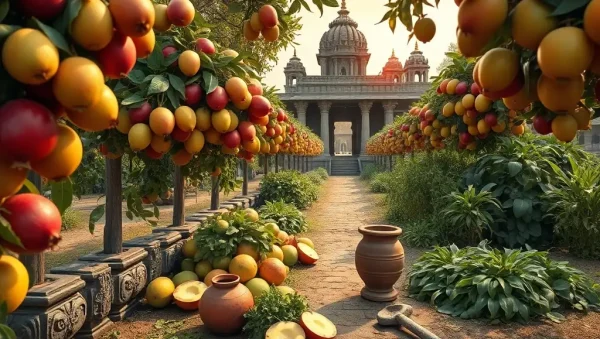
Agricultural Innovations
The Science of Ancient Indian Horticulture: Growing Fruits and Vegetables
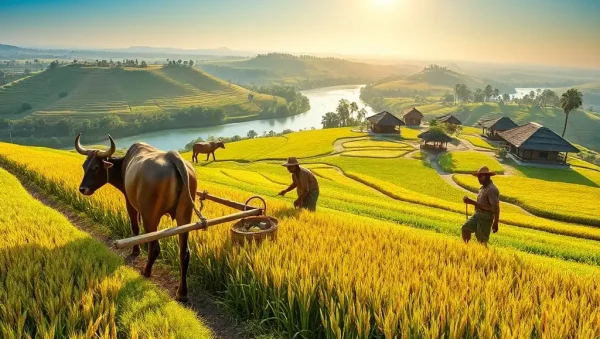
Agricultural Innovations
The Agricultural Mastery of the Gupta Empire: Innovations that Shaped Civilization
Agricultural Innovations
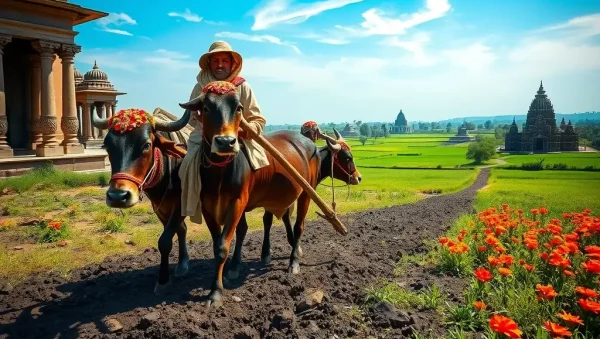
The Role of Plough Technology in Transforming Ancient Indian Farming Practices
Agricultural Innovations
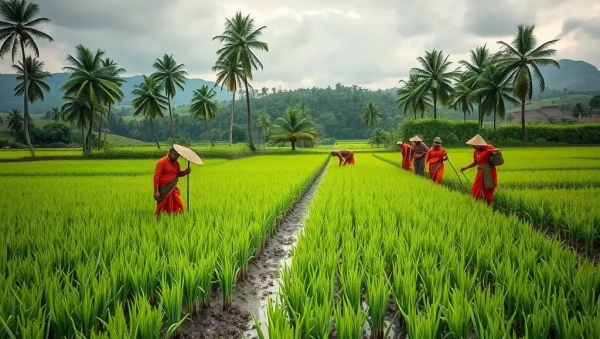
How Monsoons Shaped Ancient Indian Agricultural Innovations
Agricultural Innovations
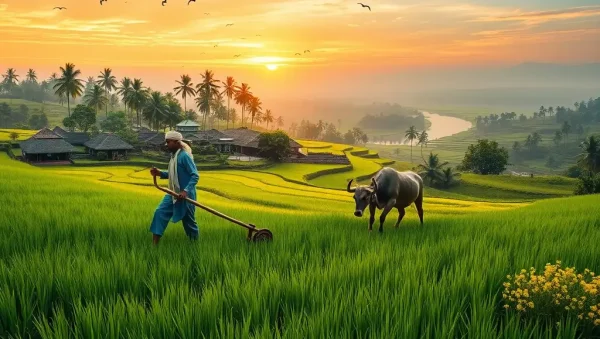
Exploring Ancient Indian Agroecology: The Balance Between Nature and Agriculture
Agricultural Innovations
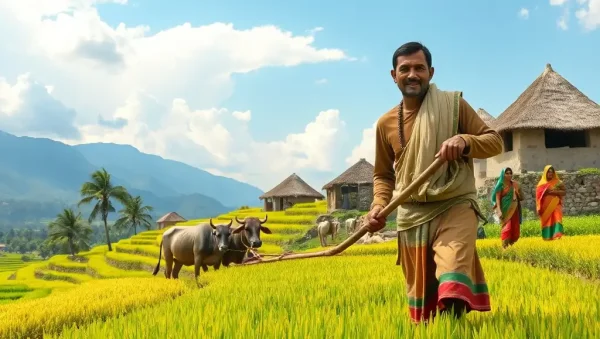
Ancient Indian Agricultural Policies: A Look at Governance and Innovation
Agricultural Innovations
How Agricultural Innovations Supported Ancient Indian Civilizations' Growth

Agricultural Innovations
The Mystique of Ancient Indian Agricultural Rituals and Their Innovations
🌾 Agricultural Innovations in Ancient India
Discover how ancient Indian agricultural innovations transformed farming, food production, water management, and rural life across the Indus Valley Civilization, Vedic communities, the Maurya Empire, and the Gupta period. This subcategory explores the remarkable technologies, techniques, tools, and ecological knowledge that helped ancient Indian civilizations cultivate crops, manage challenging landscapes, and support growing urban centers. From irrigation canals and wells to ploughing methods, crop rotation, soil care, and traditional farming wisdom, these articles reveal the technological achievements behind India’s agricultural history.
🌱 Ancient Indian Farming Techniques
Learn how farmers in ancient India prepared fields, selected seeds, used animal-drawn ploughs, and adapted cultivation methods to regional climates. Articles examine traditional agriculture in India, early farming settlements, seasonal cultivation, and the relationship between monsoon patterns and food production.
Readers can explore the crops grown by ancient Indian communities, including wheat, barley, rice, millet, pulses, cotton, and sugarcane. These studies explain how farming practices supported population growth, trade, craft production, and the development of early cities.
💧 Irrigation and Water Management
Water control was central to the success of ancient Indian agriculture. Discover evidence of ancient irrigation systems, reservoirs, wells, canals, drainage channels, tanks, and water-harvesting structures used to provide reliable water for crops and settlements.
This section also examines how the Indus Valley Civilization and later Indian kingdoms managed rivers, rainfall, and groundwater. Readers will understand the importance of sustainable water management, flood control, and community-based irrigation in ancient India.
🛠️ Agricultural Tools and Technology
Explore the farming tools that improved cultivation in ancient India, including wooden ploughs, iron implements, sickles, hoes, axes, carts, and storage equipment. These technologies demonstrate the practical knowledge of early farmers, metalworkers, and agricultural communities.
Articles explain how advances in ancient Indian agricultural technology increased efficiency, expanded arable land, and supported specialized economic activities. Archaeological discoveries and historical texts provide valuable evidence about the development and use of these tools.
🌾 Crops, Seeds, and Food Production
Ancient Indian agriculture was highly diverse, with farmers cultivating crops suited to different soils, rainfall levels, and geographic regions. Learn about the history of rice cultivation, wheat farming, millets, legumes, oilseeds, cotton, spices, and other important plants.
This section highlights the importance of seed selection, crop diversity, food storage, and agricultural adaptation. It also explores how farming communities protected food supplies, exchanged crops, and contributed to long-distance trade across ancient India.
🏺 Agriculture in the Indus Valley Civilization
Discover the agricultural foundations of Harappa, Mohenjo-daro, Dholavira, Lothal, and other Indus Valley settlements. Evidence from tools, grains, storage facilities, field systems, wells, and settlement planning reveals how these urban societies depended on organized food production.
Readers can learn how Indus Valley farmers responded to river environments, seasonal floods, and changing climate conditions. The subcategory connects archaeology, ancient farming, urban development, and water technology to explain the civilization’s economic strength.
📜 Agricultural Knowledge in Ancient Texts
Ancient Indian texts preserve important information about farming, land ownership, irrigation, taxation, livestock, and rural administration. Explore references in the Arthashastra, Vedic literature, Buddhist texts, Jain writings, and agricultural traditions that reveal how farming was understood and governed.
These sources offer insight into the relationship between rulers, farmers, village communities, and natural resources. Articles carefully connect written records with archaeological evidence to provide a balanced view of agricultural life in ancient India.
🐂 Livestock, Ploughing, and Rural Economy
Animals played a vital role in ancient Indian farming. Learn how cattle, oxen, buffalo, horses, sheep, goats, and other domesticated animals supported ploughing, transportation, dairy production, manure management, and rural livelihoods.
This section explains the connection between animal husbandry and agricultural development. It also explores village economies, agricultural labor, trade networks, taxation systems, and the role of farmers in sustaining ancient Indian kingdoms.
🌍 Sustainable Agriculture and Environmental Adaptation
Many ancient Indian farming practices reflected a close understanding of soil, rainfall, seasons, forests, rivers, and biodiversity. Discover traditional approaches to soil fertility, mixed cropping, natural resources, water conservation, and climate adaptation.
Readers will see how historical agricultural knowledge can inform modern discussions about sustainable farming and environmental responsibility. These articles do not romanticize the past; instead, they examine both the achievements and limitations of ancient agricultural systems.
❓ Frequently Asked Questions About Agricultural Innovations
What were the major agricultural innovations in ancient India?
Major innovations included irrigation canals, wells, reservoirs, water tanks, ploughing methods, metal farming tools, crop diversification, seed selection, animal-powered agriculture, and grain storage. These developments helped communities produce food more reliably and support expanding settlements.
How did the Indus Valley Civilization support agriculture?
The Indus Valley Civilization used wells, drainage systems, floodplain cultivation, storage facilities, farming tools, and carefully planned settlements. Farmers cultivated crops such as wheat, barley, peas, sesame, dates, and cotton while adapting to river and monsoon environments.
What crops were grown in ancient India?
Ancient Indian farmers cultivated rice, wheat, barley, millets, pulses, sesame, cotton, sugarcane, fruits, vegetables, and various spices. Crop selection differed by region and depended on soil conditions, rainfall, river access, and seasonal climate.
Why was irrigation important in ancient Indian agriculture?
Irrigation provided water during dry periods, increased crop reliability, and allowed farmers to cultivate land beyond naturally flooded areas. Wells, canals, reservoirs, tanks, and other water systems were essential for supporting villages, cities, and large kingdoms.
How can ancient Indian agricultural innovations help us today?
Ancient practices offer useful lessons in water conservation, crop diversity, local adaptation, soil care, community resource management, and sustainable agriculture. Studying these innovations helps modern readers understand how historical societies responded creatively to environmental challenges.