
Metallurgy and Material Science

Metallurgy and Material Science
51 articles in this topic
Start here
Read more about this topic
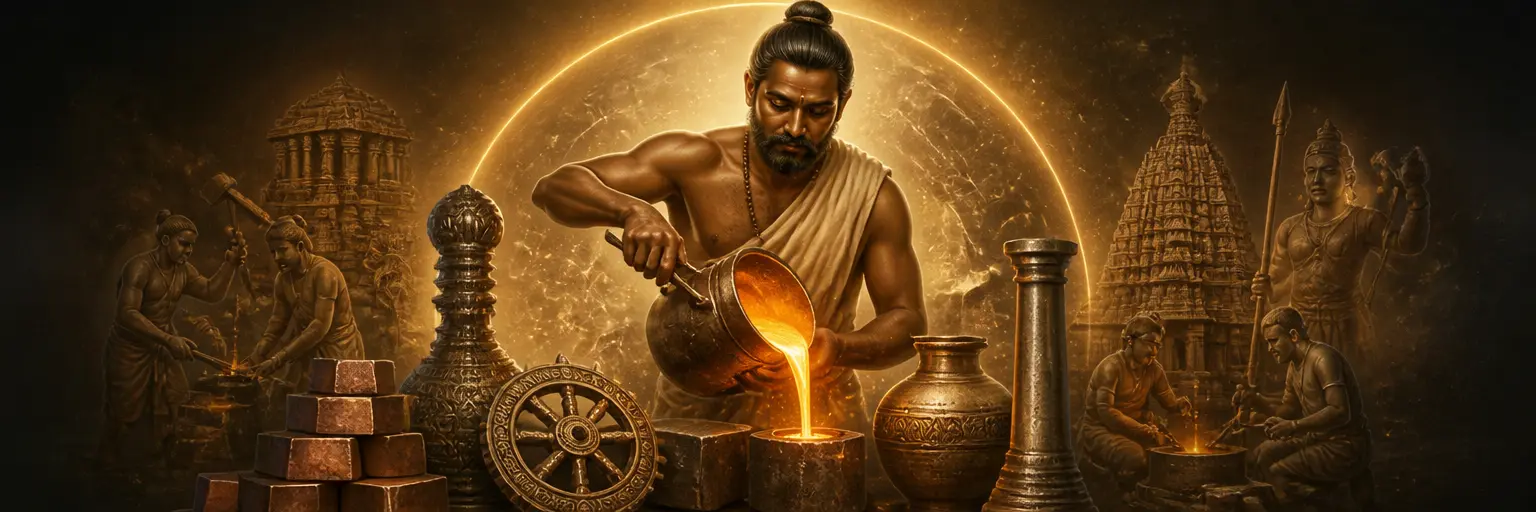
Discover the remarkable world of ancient Indian metallurgy and material science, where innovative techniques shaped tools, weapons, architecture, coins, and sacred objects. Explore how civilizations from the Indus Valley to the Gupta Empire mastered iron, bronze, copper, steel, ceramics, glass, and stone craftsmanship, revealing advanced knowledge of chemistry, engineering, and sustainable production. ⚒️🔬 Uncover the enduring legacy of India’s technological innovations and the scientific achievements that influenced history.
More in Metallurgy and Material Science

Metallurgy and Material Science
The Role of Women in Ancient Indian Metallurgical Practices
Metallurgy and Material Science
The Science Behind Ancient Indian Steel: The Legendary Wootz Steel

Metallurgy and Material Science
The Cultural Significance of Metals in Ancient Indian Rituals
Metallurgy and Material Science
The Role of Alchemy in Ancient Indian Metallurgy: Myths and Realities
Metallurgy and Material Science
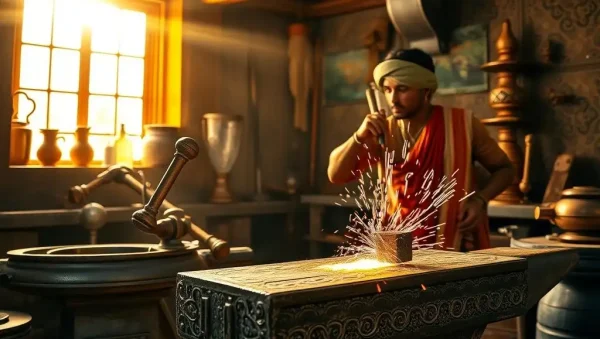
The Forgotten Techniques of Ancient Indian Metalworking: Rediscovering History
Metallurgy and Material Science
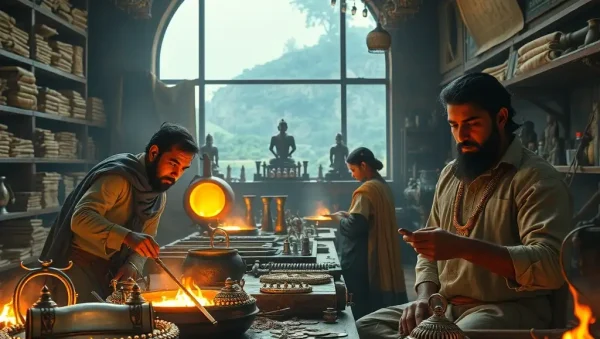
How Ancient Indian Innovations in Metallurgy Influenced Global Practices
Metallurgy and Material Science
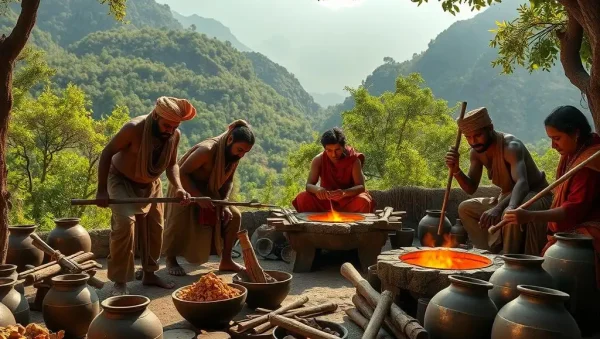
Ancient Indian Innovations in Metal Extraction: A Historical Overview
Metallurgy and Material Science
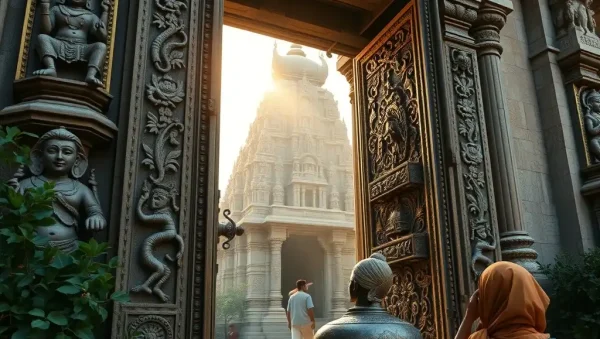
The Art and Science of Metallurgy in Ancient Indian Temples
⚒️ Metallurgy and Material Science in Ancient India
Explore the remarkable development of metallurgy and material science in ancient India, a field that reveals how early Indian civilizations transformed natural resources into tools, weapons, ornaments, buildings, coins, and sacred objects. Within Technology and Innovations, this subcategory examines the scientific knowledge behind metal extraction, alloy production, stone working, ceramics, glassmaking, construction materials, and traditional manufacturing techniques from the Indus Valley Civilization to the Gupta Empire and beyond. Discover how ancient Indian metallurgists combined observation, experimentation, craftsmanship, and engineering to create technologies that influenced trade, warfare, architecture, medicine, agriculture, and everyday life.
🔥 Ancient Indian Metallurgy and Metalworking
Learn how ancient Indian communities identified, mined, processed, and shaped metals such as copper, bronze, iron, gold, silver, lead, and zinc. Articles in this section explore furnaces, crucibles, molds, hammers, anvils, casting methods, forging practices, and heat treatment techniques used by artisans and metalworkers. Readers can expect detailed explanations of how ore was converted into usable metal and how specialized knowledge was passed between generations.
This section also considers the social and economic importance of metallurgy in ancient India. Metal production supported agriculture through improved tools, strengthened military equipment, enriched religious traditions, and encouraged long-distance trade. Evidence from archaeological sites, inscriptions, ancient texts, coins, weapons, and surviving metal objects helps reveal the sophistication of early Indian metal technology.
🏺 Indus Valley Civilization Materials and Technology
Discover the material innovations of the Indus Valley Civilization, including fired bricks, copper tools, bronze objects, faience, beads, seals, pottery, and carefully engineered drainage systems. This section explains how Harappan cities used standardized sizes, durable construction materials, and precise manufacturing techniques to support urban planning and large-scale settlement development.
Readers will also explore the sources of raw materials and the specialized craftsmanship found at sites such as Harappa, Mohenjo-daro, Dholavira, Lothal, and Rakhigarhi. Topics may include beadmaking, shell working, stone carving, terracotta production, metallurgy, and evidence of trade networks that connected the Indus region with Central Asia, Mesopotamia, and other ancient cultures.
⚙️ Iron Technology and the Rise of Steel
Examine the development of iron smelting, forging, carburization, and steel production in ancient India. This section explores iron tools, agricultural implements, weapons, pillars, and architectural components while explaining how early smiths controlled heat, fuel, airflow, and carbon content. Readers can learn why iron technology represented a major transformation in farming, construction, transportation, and warfare.
Special attention is given to high-quality Indian steel traditions, including wootz steel, which became renowned for its strength, flexibility, and distinctive surface patterns. The study of ancient iron artifacts also introduces metallographic analysis, corrosion resistance, furnace technology, and the scientific methods historians use to understand ancient steelmaking.
🛡️ Bronze, Copper, Gold, and Silver Craftsmanship
Explore the use of copper and bronze alloys in tools, vessels, statues, ritual objects, ornaments, and weapons. Articles explain how alloy composition affected hardness, durability, color, and workability, while casting techniques such as lost-wax casting allowed artisans to create intricate sculptures and finely detailed objects.
Gold and silver also played important roles in ancient Indian society, representing wealth, political authority, religious devotion, and artistic excellence. Readers can expect coverage of ancient jewelry, coinage, repoussé work, engraving, polishing, soldering, and decorative techniques, along with discussions of mining regions, trade routes, and the cultural meaning of precious metals.
🧱 Ceramics, Bricks, Glass, and Construction Materials
Learn about the material science behind ancient Indian pottery, bricks, tiles, glass, faience, and architectural surfaces. This section examines clay selection, tempering, shaping, drying, firing temperatures, glazing, and kiln technology. These processes demonstrate how ancient craftspeople controlled natural materials to create objects with specific strength, porosity, color, and heat resistance.
Construction materials are studied in relation to urban planning, fortifications, temples, reservoirs, roads, wells, and domestic buildings. Readers can discover how standardized bricks, stone dressing, lime plaster, mortar, timber, and metal fittings contributed to durable architecture and sophisticated infrastructure across ancient Indian civilizations.
🔬 Scientific Methods for Studying Ancient Materials
Understand how modern researchers investigate ancient technology through archaeometallurgy, materials analysis, experimental archaeology, microscopy, chemical testing, and radiocarbon dating. These approaches help identify ore sources, manufacturing methods, alloy composition, firing conditions, tool marks, and evidence of trade. Scientific analysis can reveal information that is not immediately visible from an artifact’s appearance.
This section also explains the importance of responsible interpretation. Archaeologists compare laboratory results with excavation records, historical texts, inscriptions, artistic representations, and regional environmental evidence. Readers can expect balanced discussions that distinguish confirmed discoveries from theories, legends, and claims that require further research.
🌏 Trade, Guilds, and the Spread of Material Knowledge
Investigate how metallurgy and material science supported craft guilds, urban economies, maritime trade, and cultural exchange. Ancient Indian metalworkers, potters, builders, miners, and jewelers contributed to interconnected networks that moved raw materials, finished products, technical skills, and artistic styles across South Asia and beyond.
Readers will learn how ports, markets, royal workshops, temples, and merchant communities encouraged technological development. Topics may include the movement of Indian steel, gemstones, cotton-related tools, beads, coins, bronzework, and architectural knowledge through contacts with Persia, Central Asia, Southeast Asia, the Roman world, and other regions.
❓ Frequently Asked Questions About Ancient Indian Metallurgy and Material Science
What metals were used in ancient India?
Ancient Indian communities used copper, bronze, iron, gold, silver, lead, zinc, and various alloys. Their applications included tools, weapons, coins, jewelry, sculptures, household vessels, agricultural equipment, and religious objects.
What is wootz steel, and why is it important?
Wootz steel was a high-quality crucible steel associated with South Asian metalworking traditions. It was valued for its hardness, toughness, and characteristic patterned surface, and it contributed to the reputation of Indian steel in international trade.
Did the Indus Valley Civilization have advanced material technology?
Yes. Indus Valley cities demonstrated sophisticated knowledge of fired bricks, copper and bronze production, beadmaking, pottery, faience, stone working, drainage construction, and standardized manufacturing. These technologies supported complex urban societies.
How did ancient Indian metallurgists make iron?
Iron was generally produced by heating iron ore with charcoal in furnaces that created reducing conditions. The resulting bloom was repeatedly heated and hammered to remove impurities and produce workable wrought iron. More advanced processes could produce steel with increased carbon content.
How do historians study ancient Indian materials today?
Researchers combine archaeology with metallography, chemical composition analysis, microscopy, experimental reconstruction, inscriptions, ancient texts, and comparisons with surviving artifacts. These methods help identify manufacturing techniques and place technological developments within their historical context.