
The Influence of Ancient Greek Art on Indian Sculptures: A Comparative Analysis

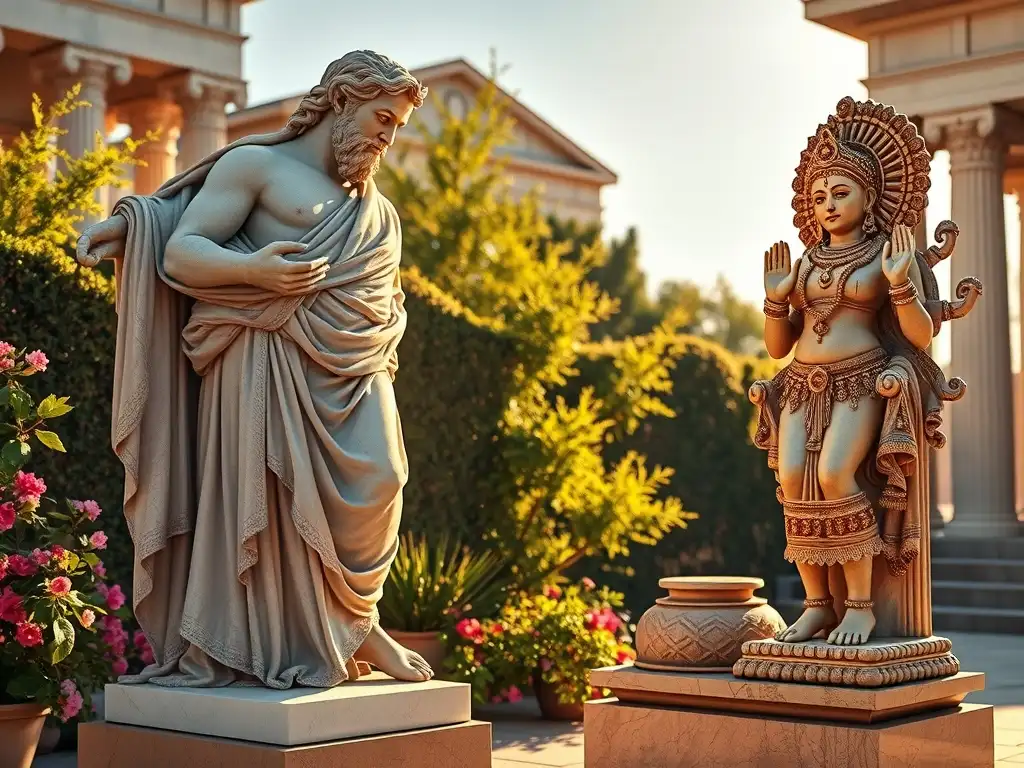
Welcome to Ancient India History, where we embark on a captivating journey through the rich tapestry of ancient Indian civilizations. In this exploration, we delve deep into the intricate threads of cultural exchanges, including the fascinating intersections of artistry and tradition. Our featured article, "The Influence of Ancient Greek Art on Indian Sculptures: A Comparative Analysis," unveils the intriguing ways in which the aesthetics of ancient Greece left an indelible mark on Indian art.
Join us as we uncover the stories behind these artistic influences and discover how they shaped the vibrant heritage of India. Prepare to be inspired and enlightened—your adventure into the past awaits!
Introduction to Ancient Greek Art and Its Features
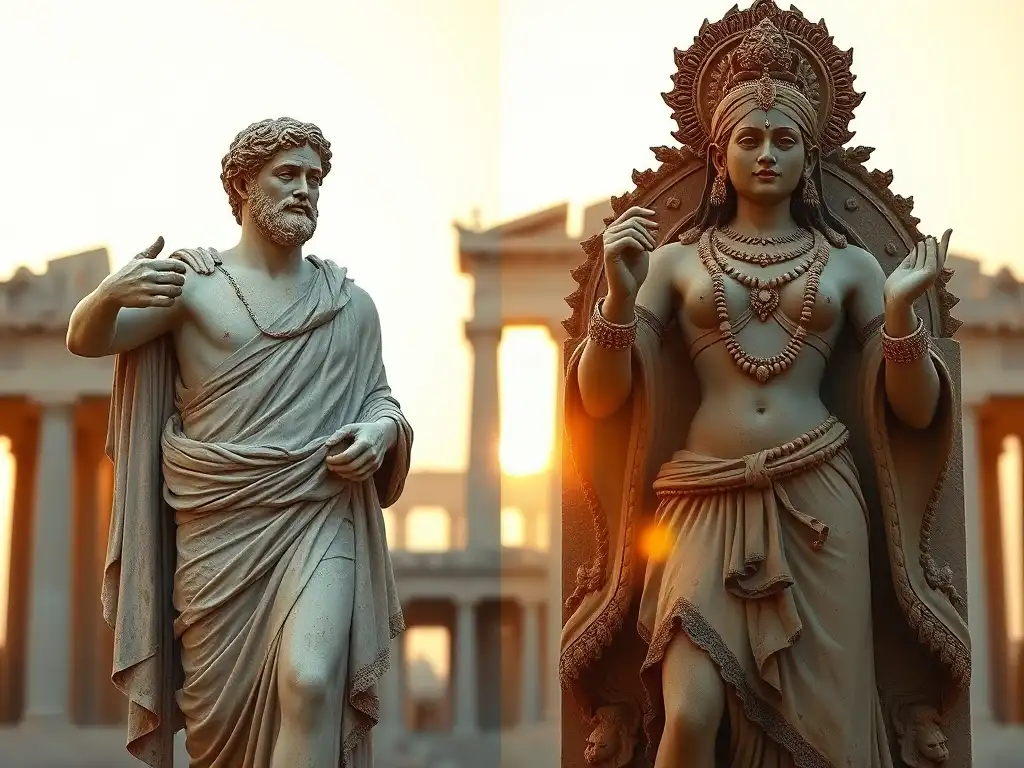
The intersection of ancient cultures often leads to fascinating artistic exchanges, and one of the most intriguing instances of this is the influence of Ancient Greek Art on Indian sculptures. This article delves into the ways in which Greek art permeated Indian artistic traditions, shaping the visual language of sculptures from the Indus Valley to the Gupta Empire. By exploring the characteristics, themes, and historical contexts of both artistic traditions, we aim to uncover the nuances of this cross-cultural dialogue that enriched the art of ancient India.
Definition and Characteristics of Ancient Greek Art
Ancient Greek art is renowned for its emphasis on naturalism, idealized forms, and a deep exploration of the human experience. Its primary characteristics include:
- Realism and Proportion: Greek artists aimed for an accurate portrayal of the human body, focusing on proportion and anatomy.
- Use of Space: Sculptures were often designed to interact with their surroundings, enhancing their visual impact.
- Expression of Emotion: Greek art sought to convey emotions and narratives through the posture and facial expressions of figures.
This commitment to realism and expression set a foundation that would later influence various cultures, including that of ancient India.
Major Periods of Ancient Greek Art
Ancient Greek art can be divided into several distinct periods, each reflecting the evolving cultural and political landscape of Greece:
- Geometric Period (c. 900–700 BCE): Characterized by abstract motifs and geometric patterns.
- Archaic Period (c. 700–480 BCE): Marked by the emergence of life-sized sculptures and the introduction of the kouros and kore figures.
- Classical Period (c. 480–323 BCE): Known for masterpieces by artists such as Phidias and Polykleitos, emphasizing harmony and balance.
- Hellenistic Period (c. 323–31 BCE): Featured dynamic poses and heightened emotional expression, as seen in works like the Laocoön group.
Key Themes and Iconography in Greek Art
Major themes in Greek art often revolved around mythology, religion, and the celebration of human achievement. Some key elements include:
- Mythological Figures: Representations of gods, goddesses, and heroic narratives.
- Athleticism: Emphasis on physical prowess, often depicted in the context of athletic competitions.
- Everyday Life: Scenes that reflect the daily lives of the Greeks, including banquets and communal gatherings.
These themes resonated with the Indian artistic tradition, paving the way for a rich tapestry of visual narratives.
Overview of Indian Sculpture: A Historical Context
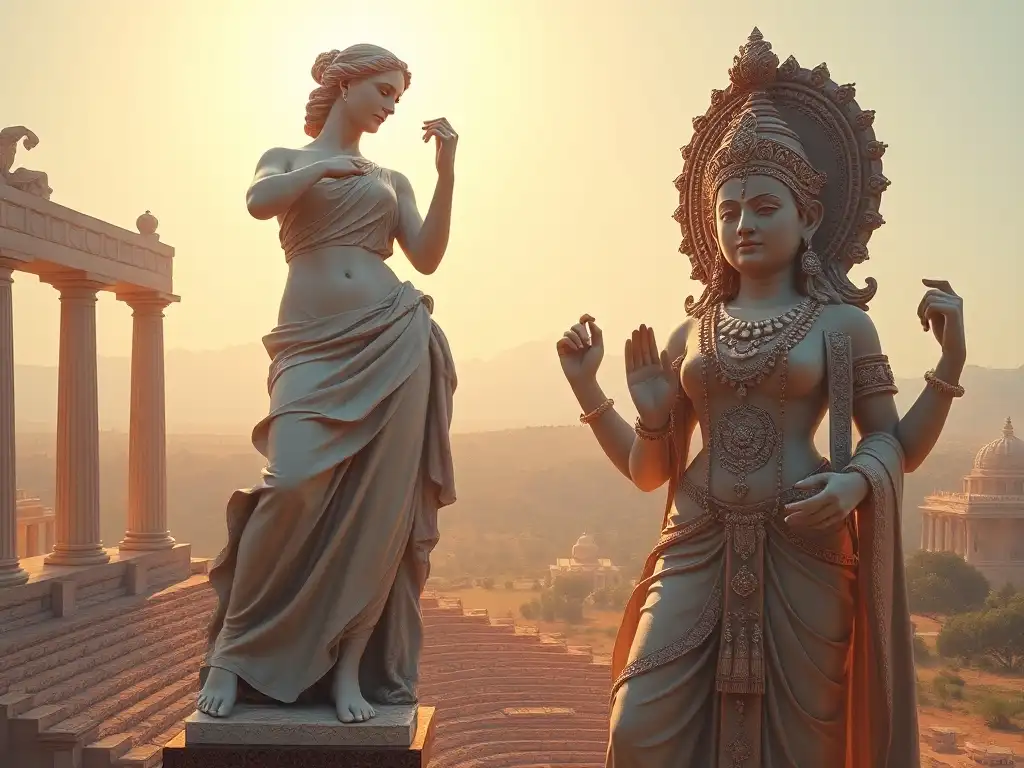
Indian sculpture has a profound legacy, evolving over millennia and reflecting the diverse cultural influences that shaped the subcontinent. This section examines the historical context of Indian sculpture, highlighting its evolution, styles, and themes.
Evolution of Indian Sculpture from the Indus Valley to Gupta Empire
The journey of Indian sculpture began with the Indus Valley Civilization (c. 3300–1300 BCE), which produced intricate terracotta figurines and seals. As civilizations progressed, the art form saw significant developments:
- Mauryan Period (c. 322–185 BCE): Introduction of monumental stone sculptures, notably the Ashoka Pillars.
- Shunga and Kushan Periods (c. 185 BCE–320 CE): Flourishing of Buddhist art, including stupas and intricate carvings.
- Gupta Empire (c. 320–550 CE): A golden age of Indian sculpture, characterized by graceful figures and religious themes.
Distinct Styles and Regional Variations in Indian Sculpture
Indian sculpture exhibits remarkable diversity, with distinct styles emerging across different regions:
- North Indian Styles: Notable for their ornamentation and elaborate detailing.
- South Indian Styles: Characterized by monumental temple sculptures and intricate carvings.
- Central and Eastern India: Known for their unique representations of Buddhist iconography.
These regional variations reflect the syncretism of cultural influences, including the impact of ancient Greek art.
Key Themes and Symbolism in Indian Sculptures
Indian sculptures are rich with symbolism and themes, often reflecting religious and philosophical ideas:
- Divine Figures: Sculptures of deities, embodying various aspects of divinity.
- Narrative Scenes: Depictions of epics like the Ramayana and Mahabharata, conveying moral and ethical lessons.
- Nature and Cosmos: Symbolic representations of the relationship between humans and the universe.
The interplay of these elements with the influence of Ancient Greek Art creates a complex and fascinating artistic heritage that continues to inspire scholars and artists alike.
The Intersection of Greek and Indian Cultures
The intersection of Greek and Indian cultures represents a fascinating chapter in the history of artistic and cultural syncretism. This convergence was primarily facilitated by the expansion of trade routes and the spread of Hellenistic ideas following Alexander the Great's campaigns in India around 326 BCE. As Greek culture began to permeate Indian society, it influenced various aspects of life, including religion, philosophy, and, most notably, art. The melding of these two rich traditions gave rise to unique artistic expressions that reflected the values and aesthetics of both civilizations.
In the centuries that followed, particularly during the rule of the Indo-Greek kings in the northwest regions of India, there was a significant cross-pollination of artistic ideas. This era saw the emergence of Greco-Buddhist art, characterized by the incorporation of Greek artistic techniques and styles into Indian religious iconography. Statues of the Buddha, for example, began to exhibit Greek influences in their proportions, drapery, and facial expressions, marking a pivotal moment in the evolution of Indian sculpture.
Historical Context of Cultural Exchanges Between Greece and India
The historical context of cultural exchanges between Greece and India can be traced back to the conquests of Alexander the Great, which opened up channels of interaction between these two civilizations. Following Alexander’s incursions, the establishment of the Indo-Greek kingdom under rulers like Menander I further solidified these cultural ties. The Greeks brought with them their artistic traditions, which began to blend with indigenous Indian styles.
During the Mauryan Empire, particularly under Emperor Ashoka, there was a notable proliferation of trade with the Hellenistic world. This period facilitated not only the exchange of goods but also ideas and artistic techniques. The introduction of Greek sculptural forms and narrative styles into Indian art can be seen as a direct result of these interactions, with many Indian artists adopting and adapting Greek techniques to convey local themes and stories.
Major Trade Routes and Their Role in Artistic Influence
The major trade routes that connected Greece and India played a crucial role in the dissemination of artistic influences. The Silk Road, which extended from the Mediterranean to the Indian subcontinent, served as a vital artery for cultural exchange. Along these routes, traders and artists interacted, exchanging not just commodities but also artistic styles and techniques.
In addition to the Silk Road, maritime routes that connected the ports of the eastern Mediterranean with the western coast of India facilitated the exchange of goods and ideas. These interactions allowed for the movement of craftsmen and artists who were instrumental in merging Greek artistic principles with Indian traditions. The result was a unique fusion that enriched the artistic landscape of both cultures, leading to the creation of hybrid art forms that are still celebrated today.
Notable Historical Figures and Events Facilitating Cultural Syncretism
Several historical figures and events significantly contributed to the cultural syncretism between Greek and Indian civilizations. Alexander the Great's campaign in India marked the initial encounter between these cultures, but it was the Indo-Greek rulers, like Menander I, who played a pivotal role in promoting Hellenistic culture in India. Menander is often credited with the spread of Buddhism, as he engaged with Buddhist communities and facilitated the incorporation of Greek styles into Buddhist art.
Another notable event was the establishment of the Greco-Buddhist art movement, particularly in regions like Gandhara. This movement was characterized by the synthesis of Greek artistic techniques with Buddhist themes, exemplified in the intricate representations of the Buddha and Bodhisattvas. The artistic output of this period reflects the influence of both cultures, showcasing a deep respect for the aesthetics of each tradition while creating something entirely new and distinctive.
Comparative Analysis of Greek and Indian Sculptural Techniques
A comparative analysis of Greek and Indian sculptural techniques reveals both remarkable parallels and distinct differences that stem from their unique cultural contexts. While both traditions emphasize the importance of craftsmanship and artistic expression, they diverge in terms of material usage, techniques, and stylistic choices.
Material and Techniques: Stone Carving, Bronze Casting, and More
Both Greek and Indian sculptors utilized a variety of materials, including stone and bronze, but their techniques often differed. Greek artists were renowned for their mastery of marble and bronze, employing techniques such as lost-wax casting for detailed sculptures. This process allowed for the creation of lifelike representations, capturing the nuances of human anatomy and emotion.
In contrast, Indian sculptors predominantly used sandstone and terracotta, especially in regions like the Gupta Empire. The Indian tradition often involved direct stone carving, which showcased intricate detailing and ornamentation. While Greek sculptures tended to emphasize idealized forms, Indian sculptures often portrayed deities and figures with exaggerated features and elaborate drapery, reflecting cultural and religious significance.
Stylistic Elements: Proportions and Realism in Sculptures
The stylistic elements of Greek and Indian sculptures also reveal distinct aesthetic philosophies. Greek art is often characterized by its pursuit of ideal beauty, evident in the balanced proportions and realistic portrayal of the human form. The Greek approach to sculpture emphasized anatomical accuracy and naturalism, seeking to represent the human experience in its most perfected state.
Conversely, Indian sculpture embraced a more symbolic and expressive style. Proportions in Indian art were often more exaggerated, with an emphasis on conveying spiritual significance rather than strict realism. The use of intricate adornments and elaborate poses in Indian sculptures served to communicate the divine attributes of the figures being represented, making them more than mere physical representations.
Iconographic Influence: Deities, Myths, and Symbolism
Iconographic influence is another area where Greek and Indian sculptural traditions intersect and diverge. Greek sculptures frequently depicted mythological figures and gods from their pantheon, with a strong emphasis on narratives from mythology. The storytelling aspect of Greek art was integral, as sculptures often served to commemorate and celebrate heroic deeds and divine interactions.
In contrast, Indian sculpture is deeply rooted in religious iconography, depicting deities from Hinduism, Buddhism, and Jainism. The symbolism in Indian art is rich and layered, with each gesture (mudra) and posture (asana) conveying specific meanings and spiritual truths. The incorporation of narratives, such as scenes from the Ramayana or Mahabharata, showcases the importance of storytelling in Indian art, similar to the Greek tradition, yet infused with distinct cultural and spiritual narratives.
The synthesis of these artistic traditions highlights the profound impact of ancient Greek art on Indian sculptural practices, creating a legacy that continues to influence contemporary art and culture in the region.
Case Studies of Specific Sculptures Reflecting Greek Influence
The influence of ancient Greek art on Indian sculptures is a fascinating study, revealing the rich intermingling of cultures through centuries of contact. Notably, two significant examples illustrate this syncretism: the Gandhara Buddha and the Lion Capital of Ashoka. These works not only showcase Greek artistic techniques and aesthetics but also embody the broader cultural exchanges that shaped ancient Indian civilization.
Analysis of the Gandhara Buddha: Greek Elements in Form and Style
The Gandhara Buddha sculptures, originating from the region of Gandhara (modern-day Pakistan and Afghanistan), are renowned for their strikingly realistic portrayal of the human form, a characteristic hallmark of Greek art. Dating from the 1st to 5th centuries CE, these sculptures illustrate a blend of Buddhist iconography and Hellenistic artistry.
- Realism and Naturalism: Unlike earlier Indian sculptures, which often depicted figures in more stylized forms, Gandhara art embraced a naturalistic approach. The Buddha is often represented with finely detailed drapery, a serene expression, and a well-defined musculature, reminiscent of Greek statues like those of the Classical period.
- Facial Features and Hair: The facial features of the Gandhara Buddha often exhibit Greek-like characteristics, such as high cheekbones, a straight nose, and a gentle smile. Additionally, the hair is typically styled in an intricate fashion that mirrors the waves and curls seen in Hellenistic sculptures, further emphasizing this artistic influence.
- Iconographic Elements: Symbolic elements, such as the lotus and the halo, merged with Greek motifs, showcasing a unique fusion of spiritual and artistic traditions.
Examination of the Lion Capital of Ashoka: Cross-Cultural Symbolism
The Lion Capital of Ashoka, erected around 250 BCE, is another exemplary piece that highlights the cross-cultural symbolism prevalent during the Mauryan Empire. Originally part of a pillar constructed by Emperor Ashoka, this sculpture is a powerful testament to the synthesis of Indian and Greek artistic traditions.
- Stylistic Elements: The Lions, depicted in a dynamic posture, exhibit a level of realism and attention to detail reminiscent of Greek sculptures. The meticulous carving of the lion's mane and muscles reflects a deep understanding of anatomy, paralleling the techniques used by Greek artists.
- Symbolism and Meaning: The Lion Capital not only serves as a national emblem but also embodies the principles of truth and moral authority, concepts that were influenced by Hellenistic philosophies. The four lions facing in different directions symbolize protection and vigilance, resonating with the Greek emphasis on the power of representation in art.
- Cultural Exchange: This sculpture exemplifies the blending of cultural narratives, where Indian religious ideals were expressed through a form that bore Greek influence, thus creating a unique artistic identity.
Impact of Hellenistic Art on Indian Sculptural Traditions
The impact of Hellenistic art on Indian sculptural traditions was profound and far-reaching, particularly during the period of the Indo-Greek kingdoms (circa 2nd century BCE to 1st century CE). The interactions fostered by trade and conquest facilitated a rich exchange of artistic techniques and thematic elements.
- Adoption of Techniques: Indian artisans began to incorporate Greek techniques such as contrapposto (a relaxed pose), foreshortening, and the use of light and shadow to enhance depth. These techniques contributed to a more dynamic representation of figures in Indian sculpture.
- Subject Matter Expansion: The introduction of new themes, including the portrayal of mythological scenes and human emotions, enriched the narrative quality of Indian sculptures. This expansion can be traced back to the influence of Greek mythological representations.
- Artistic Workshops: The establishment of workshops where artisans from both cultures collaborated further facilitated the exchange of styles, leading to a distinct Indian interpretation of Greek artistic principles.
The Lasting Legacy of Ancient Greek Art on Indian Sculptures
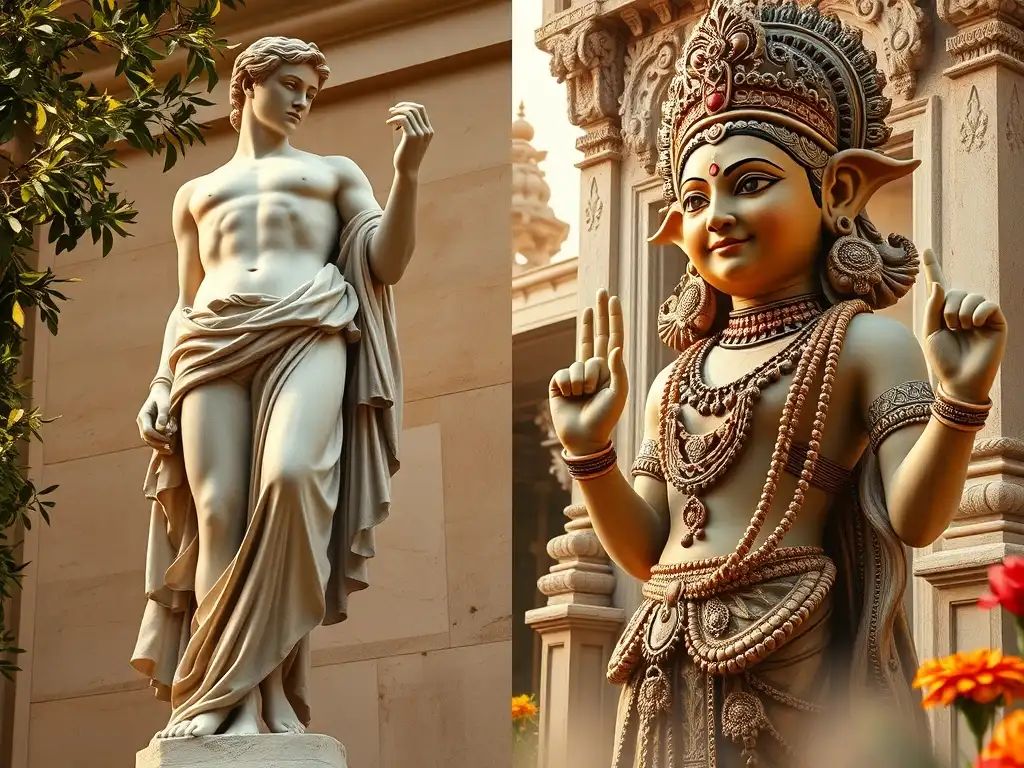
The legacy of ancient Greek art on Indian sculptures is not merely a historical footnote; it has continued to shape Indian artistic expression through the centuries, influencing a variety of art movements and aesthetic values.
Continued Influence in Subsequent Indian Art Movements
The impact of Greek art is evident in various subsequent Indian art movements, such as Gupta art (circa 4th to 6th century CE) and later regional styles.
- Integration of Styles: Elements of Greek realism persisted in Gupta sculptures, characterized by their elegance and proportionate forms. This integration illustrates how the foundational techniques introduced by Greek artisans were adapted and evolved within Indian contexts.
- Regional Variations: The influence can also be seen in regional variants, such as the sculptures from the Chola and Vijayanagara empires, where the naturalistic styles and detailed expressions reflect Hellenistic inspirations.
- Continued Relevance: This legacy continues to inspire contemporary Indian artists, who draw on historical influences to create modern interpretations that resonate with both traditional and contemporary audiences.
The Role of Ancient Greek Art in Shaping Indian Aesthetic Values
Ancient Greek art played a crucial role in shaping Indian aesthetic values, particularly in terms of beauty, proportion, and harmony.
- Concept of Beauty: The Greek ideal of beauty, which emphasized symmetry and proportion, found resonance in Indian art, influencing the standards of beauty represented in sculptures and paintings.
- Philosophical Underpinnings: Greek philosophies regarding aesthetics, such as those proposed by Plato and Aristotle, also permeated Indian thought, contributing to discussions on beauty, ethics, and the purpose of art.
- Cultural Identity: The amalgamation of Greek and Indian artistic philosophies helped forge a unique cultural identity that celebrated both heritage and innovation.
Modern Interpretations and Revivals of Greek-Inspired Indian Art
In contemporary times, the influence of ancient Greek art is being revisited and revived by artists and scholars alike, fostering a renewed interest in the connections between these two rich cultural heritages.
- Art Exhibitions and Installations: Various art exhibitions showcase works that draw inspiration from Greek art forms, highlighting their relevance in modern contexts. These exhibitions often explore themes of identity and cultural exchange.
- Education and Scholarship: Academic studies on the topic have gained momentum, with researchers exploring the intricacies of Greek influence on Indian art. This scholarly attention facilitates a deeper understanding of the historical connections and their implications for contemporary art.
- Fusion Art: Modern artists are increasingly creating works that blend Greek and Indian elements, resulting in innovative pieces that reflect a dialogue between the two cultures. This fusion not only honors the past but also creates a dynamic platform for future artistic exploration.
The enduring influence of ancient Greek art on Indian sculptures exemplifies the rich tapestry of cultural exchange that has shaped the history of both civilizations, leaving a lasting legacy that continues to inspire and inform artistic practices today.
Conclusion: Reflecting on the Cultural Exchange
The exchange of artistic ideas and techniques between Ancient Greece and India represents a significant chapter in the history of cultural syncretism. This interaction not only influenced the stylistic evolution of Indian sculptures but also fostered a deeper understanding of how cross-cultural exchanges can shape artistic expression. The impact of Ancient Greek art on Indian sculptures is evident in the adoption of naturalistic forms, the introduction of drapery in clothing, and the incorporation of mythological themes, illustrating a blend of aesthetics that enriched both cultures.
Summarizing the Influence of Ancient Greek Art on Indian Sculptures
The influence of Ancient Greek art on Indian sculptures can be encapsulated through several key features:
- Naturalism: Greek sculptures emphasized realism and the human form, which inspired Indian artisans to adopt similar techniques, leading to a more lifelike representation in works such as the sculptures from the Gandhara region.
- Drapery and Movement: The intricate drapery seen in Greek art, particularly in figures of deities and mortals, found its way into Indian sculptures, enhancing their dynamism and visual appeal.
- Mythological Themes: The incorporation of Greek mythological elements into Indian narratives, such as the depiction of scenes from the Mahabharata with Hellenistic influences, highlights the blending of stories and symbolism from both cultures.
These aspects signify a substantial artistic dialogue that transcended geographical boundaries and laid the groundwork for a unique artistic heritage in India.
Implications for Understanding Artistic Syncretism in History
The interaction between Ancient Greek and Indian art serves as a compelling case study for understanding the broader phenomenon of artistic syncretism. It reveals how cultures can influence one another through trade, conquest, and migration, leading to the emergence of new artistic styles and themes. This syncretism is not merely a matter of aesthetic borrowing but reflects deeper social, political, and philosophical exchanges. It invites scholars to explore how such cross-cultural interactions can lead to transformative developments in art and culture, shaping the identity and legacy of civilizations.
Future Directions for Research on Cross-Cultural Influences in Art
Future research on the cross-cultural influences in art should focus on several key areas:
- Archaeological Discoveries: Continued excavations in regions of historical significance, like Gandhara, could unveil new artifacts that demonstrate further connections between Greek and Indian art.
- Technological Advances: Utilizing modern technologies such as 3D scanning and digital reconstruction could provide new insights into the techniques and materials used by ancient sculptors, enhancing our understanding of their artistic processes.
- Interdisciplinary Approaches: Collaborative research involving art historians, archaeologists, and cultural anthropologists can yield a more holistic understanding of the complexities of cultural exchanges, considering factors such as trade routes, migration patterns, and religious influences.
By pursuing these avenues, scholars can deepen the understanding of how artistic traditions evolve through cultural contact and exchange.
References
Citing Key Texts and Scholarly Articles on Greek and Indian Art
- "The Art of Gandhara in the Metropolitan Museum of Art" by Kurt A. Behrendt.
- "Hellenistic Influence on Indian Art" by John C. Huntington.
- "Cross-Cultural Encounters in the Art of Ancient India" in Artibus Asiae.
Suggested Further Reading on Cultural Exchanges and Artistic Influences
- "Cultural Syncretism: A Comparative Study of Indian and Greek Art" by K. S. Shukla.
- "The Influence of Greek Art on Indian Sculpture" by M. A. A. Hussain.
- "Trade and Cultural Exchanges: A Study of the Greco-Indian Connection" by R. Narasimhan.
- Introduction to Ancient Greek Art and Its Features
- Definition and Characteristics of Ancient Greek Art
- Major Periods of Ancient Greek Art
- Key Themes and Iconography in Greek Art
- Overview of Indian Sculpture: A Historical Context
- The Intersection of Greek and Indian Cultures
- Comparative Analysis of Greek and Indian Sculptural Techniques
- Case Studies of Specific Sculptures Reflecting Greek Influence
- The Lasting Legacy of Ancient Greek Art on Indian Sculptures
- Conclusion: Reflecting on the Cultural Exchange
- References
- What is the main focus of the article "The Influence of Ancient Greek Art on Indian Sculptures"?
- How did Ancient Greek art influence Indian sculptures?
- What time period does the article cover regarding these influences?
- Are there specific examples of sculptures mentioned in the article?
- Why is understanding this influence important for studying ancient civilizations?
Frequently Asked Questions
What is the main focus of the article "The Influence of Ancient Greek Art on Indian Sculptures"?
The article examines the interactions and influences between Ancient Greek art and Indian sculptures, highlighting how Greek artistic techniques shaped Indian artistic expression.
How did Ancient Greek art influence Indian sculptures?
Ancient Greek art introduced naturalism and realistic representation to Indian sculptures, leading to a blending of styles that enriched Indian artistic traditions.
What time period does the article cover regarding these influences?
The article primarily focuses on the periods of the Indus Valley civilization and the Gupta Empire, illustrating how Greek art impacted Indian culture over time.
Are there specific examples of sculptures mentioned in the article?
Yes, the article discusses notable examples such as the Buddhist sculptures found in Gandhara, which exhibit distinct Greek artistic traits.
Why is understanding this influence important for studying ancient civilizations?
Understanding the influence of Ancient Greek art on India helps us appreciate the cultural exchanges that shaped the development of art and civilization, showcasing the interconnectedness of ancient societies.
Final Reflection: The Enduring Legacy of Ancient Greek Art in Indian Sculptures
The profound connection between Ancient Greek art and Indian sculptures highlights the timeless nature of artistic influence. As we explore the intricate ways in which these two cultures have shaped each other, it becomes clear that the dialogue between them transcends mere aesthetics; it speaks to a shared human experience that continues to resonate today. The impact of Ancient Greek art on Indian sculptures is not just a historical curiosity; it is a testament to the power of cultural exchange and the enduring legacy of artistic innovation.
The influence of Ancient Greek art on Indian sculptures has woven a rich tapestry of cultural dialogue that is still visible in contemporary art forms. This exchange has not only enriched the artistic landscape of India but has also fostered a deeper understanding of the interconnectedness of civilizations. As we reflect on this relationship, we are reminded of the words of the renowned art historian, John Onians: Art is a universal language that transcends borders and time, allowing us to communicate across cultures.
This sentiment encapsulates the essence of how Ancient Greek art has left an indelible mark on Indian sculptures, inspiring generations of artists and thinkers alike.
As we move forward, let us take a moment to reflect on our own creative expressions and the influences that shape them. Consider how the lessons from the past can inspire your own artistic journey. Whether you are an artist, a student, or simply an admirer of art, embrace the idea that creativity knows no boundaries. Allow the rich history of artistic exchange between Ancient Greece and India to inspire you to explore new perspectives and cultivate a deeper appreciation for the diverse influences that shape our world today.
Unveil the Artistic Connections Between Cultures!
Thank you for joining us on this fascinating journey exploring the influence of Ancient Greek art on Indian sculptures. We hope you have uncovered the rich connections and shared inspirations that transcend these two great civilizations. Now, it's time to take action and deepen your understanding!
Here are some engaging next steps you can take:
- Dive deeper: Visit a local museum or explore online archives to view Greek and Indian sculptures up close. Compare their artistic styles and techniques to appreciate their unique contributions.
- Start a conversation: Share this article with friends or on social media and discuss the similarities and differences you've discovered. Engaging with others can spark deeper insights!
- Create your own art: Try your hand at creating a piece of art inspired by both Greek and Indian styles. This creative experiment can help solidify your understanding and appreciation of these cultures.
Which artistic element from Ancient Greece or India resonates most with you, and how would you incorporate that into your own creative expressions?