
The Interactions of Ancient Indian Civilizations with the Scythians

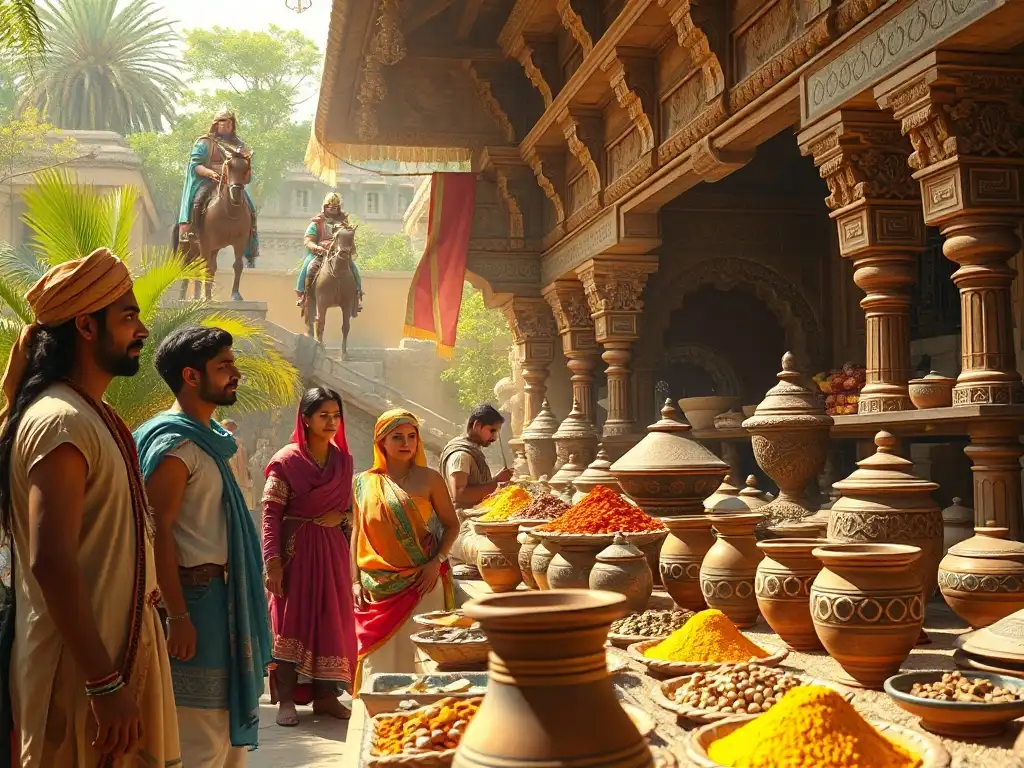
Welcome to Ancient India History, where we embark on a fascinating journey through the tapestry of time that shaped one of the world's oldest civilizations. In this exploration, we delve into the interactions of ancient Indian civilizations, revealing how these cultures not only influenced one another but also engaged with external societies like the Scythians. What were the cultural exchanges that bridged diverse peoples and enriched the subcontinent?
Join us as we uncover the intricate web of connections that defined ancient India, and discover the profound impacts of these exchanges on the development of its rich heritage. Your adventure into the past begins here!
Introduction to Ancient Indian Civilizations
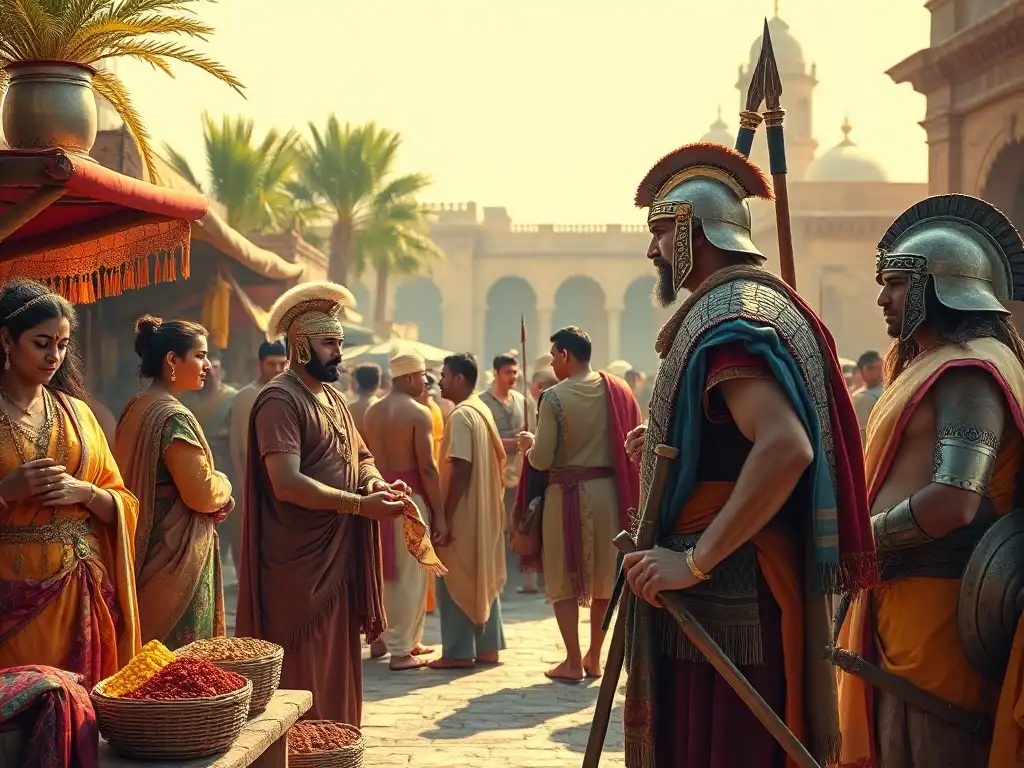
The Interactions of Ancient Indian Civilizations with neighboring cultures played a pivotal role in shaping the rich tapestry of India's historical narrative. From the flourishing cities of the Indus Valley to the intellectual advancements during the Gupta Empire, ancient Indian societies were not isolated; rather, they were vibrant hubs of trade, diplomacy, and cultural exchange.
Among the various groups that engaged with these civilizations, the Scythians, a nomadic warrior people, left a significant mark on the subcontinent's historical canvas. Understanding these interactions not only sheds light on the dynamics of power and culture during that era but also highlights the profound influence of cross-cultural exchanges that enriched both Indian and Scythian societies.
Overview of Ancient Indian Civilizations
Ancient India is characterized by a multitude of civilizations, each contributing uniquely to the region's cultural and historical development. The Indus Valley Civilization, one of the world's earliest urban cultures, was renowned for its advanced city planning, trade systems, and social organization. Following this period, the Vedic Age introduced significant philosophical and religious ideas that would shape Indian thought for millennia. The Maurya and Gupta Empires further emphasized the importance of art, science, and governance, creating a legacy that influenced future generations.
These civilizations were marked by:
- Diverse Cultures: Each region had its own customs, languages, and traditions.
- Trade Networks: Extensive trade routes connected India to Central Asia, the Middle East, and beyond, facilitating cultural exchanges.
- Philosophical Developments: The pursuit of knowledge was central, with contributions in mathematics, astronomy, and philosophy.
Significance of Cultural Exchanges in Ancient India
Cultural exchanges were vital for the evolution of ancient Indian societies. They provided opportunities for innovation and adaptation, influencing art, language, religion, and technology. The interactions with neighboring civilizations, such as the Scythians, introduced new ideas and practices that were assimilated into Indian culture. Some key aspects include:
- Trade and Economy: Trade routes not only facilitated the exchange of goods but also ideas, leading to economic prosperity and mutual influence.
- Religious Syncretism: Contacts with various cultures led to the blending of religious practices and beliefs, enriching the spiritual landscape of ancient India.
- Art and Architecture: Artistic styles evolved through cross-cultural exchanges, resulting in unique architectural forms and artistic expressions.
The Scythians: A Brief Historical Background
The Scythians were a group of nomadic tribes known for their exceptional horsemanship and warrior culture. Originating from the Eurasian steppes, they significantly impacted the regions they interacted with, including ancient India.
Origins and Migration of the Scythians
Scholarly consensus suggests that the Scythians emerged around the 9th century BCE in what is today southern Siberia and western Mongolia. Their migration patterns were influenced by various factors, including climate changes and the search for pasture lands. By the 6th century BCE, they had spread into parts of Central Asia and eventually made their way into northern India.
- Migration Routes: They traversed the vast steppes, moving westward and southward, eventually establishing settlements in regions like Punjab and Sindh.
- Cultural Integration: Their interactions with local populations led to a blend of cultures, as they adopted certain aspects of Indian life while also influencing local customs.
Cultural Characteristics of the Scythian People
The Scythians are often remembered for their unique cultural traits, which included:
- Art and Craftsmanship: The Scythians were skilled artisans, known for their intricate metalwork and elaborate burial practices.
- Warrior Society: Their society was predominantly militaristic, with a strong emphasis on horseback riding and archery, which they utilized effectively in battles.
- Religious Beliefs: They practiced a form of shamanism and were known for their reverence towards nature, which influenced their interactions with other cultures.
The interactions between ancient Indian civilizations and the Scythians represent a fascinating chapter in the historical narrative of cultural exchanges that shaped the region. Understanding these interactions not only enriches our knowledge of ancient India but also highlights the interconnectedness of civilizations throughout history.
Geographic Proximity: The Meeting Point of Cultures
The geographic proximity between ancient Indian civilizations and the Scythians played a crucial role in facilitating various forms of interactions. The Scythians, a nomadic group originally from Central Asia, migrated towards the Indian subcontinent around the 6th century BCE. Their movement brought them into close contact with the northwestern regions of India, particularly areas that are now part of modern-day Punjab and Rajasthan. This convergence of cultures allowed for a rich tapestry of exchanges that influenced both societies.
The geographical landscape, characterized by the vast plains of the Punjab and the rugged terrain of the desert regions, served as a conduit for these interactions. The natural barriers and trade routes created a unique environment where both the Scythians and the ancient Indian civilizations could engage in cultural, economic, and military exchanges. The fertile lands of the Indus Valley and the extensive river systems also provided resources that attracted the Scythians, further solidifying their presence in the region.
The Regions of Interaction between Ancient India and the Scythians
The primary regions of interaction between ancient India and the Scythians were the northwestern territories, particularly Gandhara and the regions around the Indus River. Gandhara, which included parts of modern-day Pakistan and Afghanistan, was a melting pot of various cultures, serving as a crucial juncture for trade and cultural exchanges. It was here that the influences of both the Scythians and the Indian civilizations intersected, leading to a rich cultural amalgamation.
Additionally, the regions of Taxila and Peshawar became significant hubs where ideas, goods, and people flowed between these two civilizations. The Scythians, known for their skilled horsemanship and unique art styles, interacted with Indian artisans and traders, resulting in a blend of artistic traditions. This cross-cultural interaction not only enriched the artistic expressions of both societies but also laid the groundwork for future interactions.
Key Trade Routes Facilitating Interactions
Trade routes played a vital role in facilitating the interactions between ancient Indian civilizations and the Scythians. The most prominent trade route was the Silk Road, which connected the East and West, allowing for the exchange of goods like silk, spices, and precious metals. The portion of the Silk Road that passed through the northwestern frontier of India became a significant artery for economic exchanges.
Another important route was the Royal Road, which extended through Persia and into India, allowing Scythian merchants to access Indian markets. This route not only enabled the trade of commodities but also facilitated the movement of ideas and cultural practices. As a result, the interactions between the two civilizations were not limited to mere trade but extended to cultural and social exchanges that would shape their respective histories.
Types of Interactions between Ancient Indian Civilizations and the Scythians
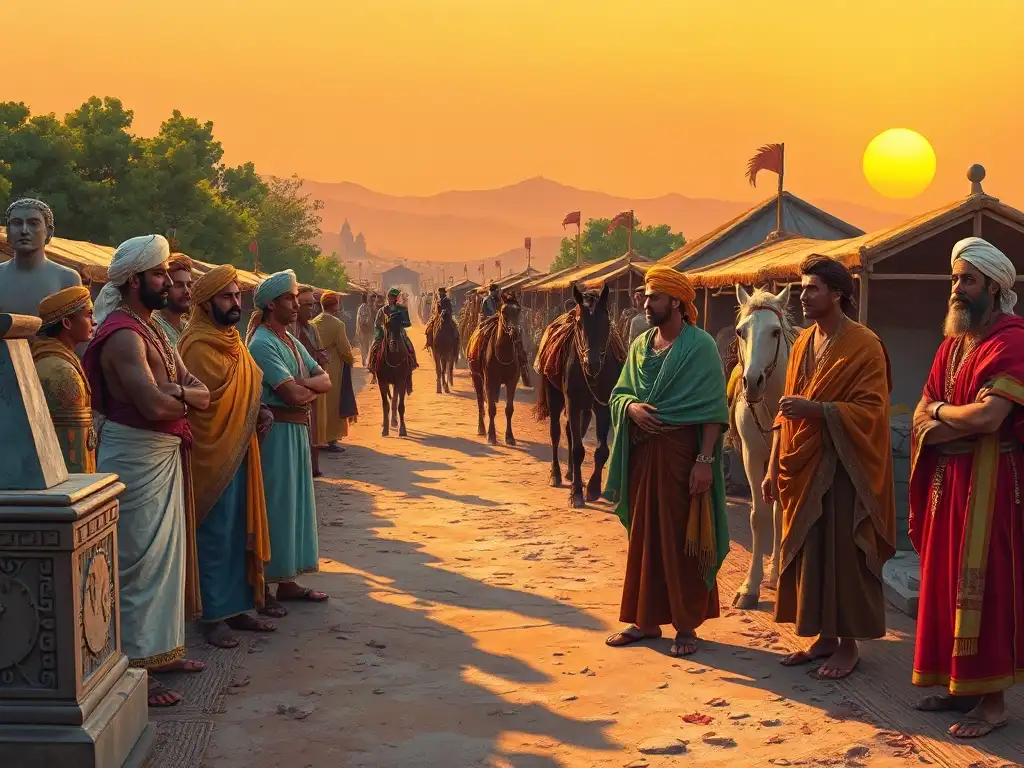
The interactions between ancient Indian civilizations and the Scythians can be categorized into three primary types: economic, cultural, and military. Each of these interactions played a significant role in shaping the dynamics between these two civilizations, influencing their development and legacy.
Economic Interactions: Trade and Commerce
The economic interactions between ancient Indian civilizations and the Scythians were primarily centered around trade and commerce. The Scythians were known for their horse trade, which was highly valued in the Indian market. In exchange, they sought luxury goods, textiles, and agricultural products from Indian merchants. This exchange of goods fostered a mutual dependence that enriched both societies.
Moreover, the introduction of Scythian craftsmanship, particularly in metalwork and weaponry, influenced Indian artisans. The blending of these economic practices led to increased prosperity in the regions involved, with bustling markets emerging as centers of trade where both cultures could interact and thrive.
Cultural Exchanges: Art, Language, and Religion
Cultural exchanges between the Scythians and ancient Indian civilizations were profound and multifaceted. Artistic influences can be seen in the sculptures and pottery from the period, where Scythian motifs began to appear in Gandharan art. This artistic fusion represented a synthesis of styles that enriched the visual culture of both societies.
Language also played a role in cultural exchanges, with interactions leading to the borrowing of terms and expressions that reflected the merging of ideas. Additionally, religious influences were notable; as the Scythians encountered Indian spiritual traditions, elements of Hinduism and Buddhism began to permeate Scythian culture, leading to a unique amalgamation of beliefs.
Military Interactions: Conflicts and Alliances
Military interactions between ancient Indian civilizations and the Scythians were marked by both conflicts and alliances. The Scythians, known for their formidable cavalry, often posed a threat to the settled agricultural communities of India. Historical accounts suggest that there were instances of military confrontations, particularly as the Scythians sought to expand their territories.
However, there were also periods of alliances formed between Indian kingdoms and Scythian tribes. These alliances were often strategic, aimed at countering common threats or enhancing trade relations. The interactions led to a complex relationship characterized by both rivalry and cooperation, significantly impacting the political landscape of the region during ancient times.
The Impact of Scythian Influence on Ancient Indian Civilizations
The interactions between ancient Indian civilizations and the Scythians had a significant impact on various aspects of Indian culture, society, and military practices. The Scythians, known for their nomadic lifestyle and skilled horsemanship, migrated into the Indian subcontinent around the 2nd century BCE. Their arrival marked a period of cultural exchange that influenced both their society and the Indian states they encountered.
Influence on Art and Architecture
The Scythians brought with them distinct artistic styles and techniques that blended with local Indian traditions. This fusion is particularly evident in the sculptures and decorative motifs found in regions such as Gandhara and Mathura. The use of animal imagery, a hallmark of Scythian art, can be seen in various sculptures, where horses and mythical creatures were intricately carved alongside Hindu deities. Additionally, the introduction of new materials and techniques in metalwork, including elaborate gold ornaments and weaponry, showcased the Scythians' craftsmanship, which further enriched Indian artistic expression.
Moreover, architectural features such as the use of arches and vaults, influenced by Scythian building methods, can be observed in some of the stupas and structures that emerged during this period. The blending of these architectural styles contributed to the evolution of Indian architecture, making it more diverse and innovative.
Contributions to Indian Warfare Tactics
The Scythians were renowned for their cavalry tactics and mobility in warfare. Their interactions with Indian armies led to the adoption of new military strategies, particularly the use of mounted archers, which significantly enhanced the effectiveness of Indian forces in battle. The integration of Scythian warfare techniques allowed Indian kings to expand their territories and defend against external threats more effectively.
The introduction of lightly armored cavalry units in Indian military formations, a direct influence of Scythian practices, transformed traditional infantry-based warfare. This tactical evolution played a crucial role in several historical battles, enabling Indian rulers to adapt to the changing dynamics of warfare introduced by the Scythians.
Changes in Social Structures and Practices
The arrival of the Scythians also prompted changes in the social fabric of ancient Indian civilizations. As they settled in various regions, intermarriages between Scythians and local populations led to the emergence of a new social class that blended both cultures. This resulted in a diversification of social structures and the introduction of new customs and traditions.
Additionally, the Scythian influence can be observed in the military aristocracy that began to emerge within Indian states. The status of warriors and the importance of martial skills were elevated, reflecting Scythian values. This shift in social dynamics contributed to the growth of a more stratified society, where military prowess became a key determinant of status and power.
The Role of Ancient Indian Civilizations in Influencing the Scythians
While the Scythians influenced Indian society, ancient Indian civilizations also played a crucial role in shaping various aspects of Scythian culture. The exchange of ideas and practices was reciprocal, leading to significant transformations within Scythian society.
Adoption of Indian Religious Practices
One of the most profound influences of ancient Indian civilizations on the Scythians was the adoption of Indian religious practices, particularly Buddhism and Hinduism. The Scythians, especially those settled in the northwestern regions of India, began to embrace the spiritual philosophies and rituals of these religions. This is evidenced by the existence of Buddhist stupas and inscriptions found in Scythian territories, indicating the incorporation of Indian religious beliefs into their cultural practices.
The integration of Indian deities into Scythian pantheons and the establishment of temples dedicated to Indian gods further exemplify this cultural exchange, leading to a syncretic religious landscape that enriched both societies.
Language and Literature Exchanges
Another significant area of influence was in language and literature. As the Scythians interacted with Indian civilizations, there was a gradual exchange of linguistic elements and literary traditions. Some Scythian tribes adopted Sanskrit and other local languages, which facilitated better communication and cultural integration.
Literary exchanges also occurred, with Indian texts and oral traditions influencing Scythian storytelling and poetry. The blending of these traditions contributed to a shared cultural heritage, where narratives from both civilizations enriched their respective literary landscapes.
Agricultural and Technological Innovations
The interactions between the Scythians and ancient Indian civilizations led to the exchange of agricultural practices and technological innovations. The Scythians, primarily pastoralists, were introduced to advanced agricultural techniques from Indian farmers, which improved their food production methods. This exchange included the cultivation of new crops, such as rice and various legumes, which became staples in Scythian diets.
Additionally, technological advancements in irrigation and farming tools were shared, leading to increased agricultural efficiency. This not only bolstered the economy of Scythian communities but also facilitated their transition from a purely nomadic lifestyle to a more settled agricultural society, demonstrating the profound impact of ancient Indian innovations on Scythian culture.
Case Studies of Specific Interactions
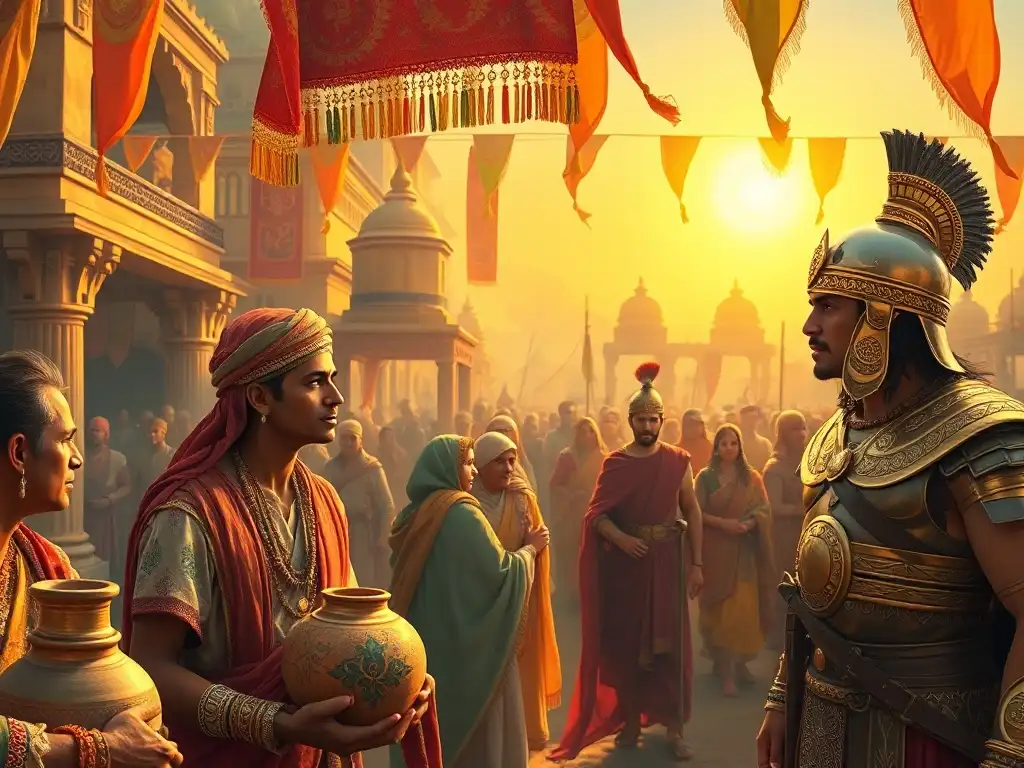
The interactions between ancient Indian civilizations and the Scythians, particularly during the early centuries CE, provide rich case studies that illustrate the complexity of cultural exchanges in the region. Two significant instances are the Kushan Empire's engagement with Scythian tribes and the broader trade networks that emerged as a result of these interactions.
In the context of the Kushan Empire, which flourished from the 1st to the 3rd century CE, the Scythians played an essential role as both traders and cultural intermediaries. Their presence facilitated the flow of goods, ideas, and religious beliefs across vast distances, connecting the Indian subcontinent with Central Asia and beyond. Another notable aspect of these interactions lies in the trade agreements that developed, which not only boosted economic prosperity but also led to profound cultural influences between the two civilizations.
The Role of the Kushan Empire in Cultural Exchanges
The Kushan Empire, which was established by the Yuezhi tribe, became a melting pot of different cultures, including those of the Scythians. The Kushans embraced various aspects of Scythian culture, including art, language, and military practices. This cultural syncretism is evident in the art of the period, where Scythian motifs and techniques blended with Indian styles, resulting in a distinctive artistic expression that characterized Kushan sculptures and coinage.
Furthermore, the Kushan rulers, such as Kanishka, were instrumental in promoting Buddhism, which had a significant impact on both Indian and Scythian societies. The Scythians, who were initially nomadic and had their own belief systems, gradually adopted elements of Buddhism, influenced by the Kushan Empire's expansion and the establishment of trade routes. This mutual exchange of cultural values not only enriched both civilizations but also laid the groundwork for future interactions in the region.
Analysis of Trade Agreements and Their Effects
Trade agreements between ancient Indian civilizations and the Scythians were crucial for fostering economic and cultural exchanges. These agreements often involved the exchange of goods such as silk, spices, and precious metals, which were highly sought after in both regions. The establishment of the Silk Road and other trade routes facilitated this exchange, allowing for the movement of not just commodities but also ideas and technology.
The effects of these trade agreements were profound. Economically, they enhanced the prosperity of both civilizations, enabling them to invest in infrastructure and cultural projects. Culturally, the interactions led to a fusion of artistic styles, religious practices, and technological innovations. The Scythians, for instance, introduced horse-riding techniques and metalworking skills that were integrated into Indian practices, while Indian artistic influences can be seen in Scythian artifacts.
Conclusion: Legacy of Interactions between Ancient Indian Civilizations and the Scythians
The legacy of interactions between ancient Indian civilizations and the Scythians is marked by a rich tapestry of cultural exchanges that significantly shaped the historical landscape of the region. These interactions exemplify how trade and cultural engagement can foster mutual understanding and collaboration between diverse civilizations.
Lasting Impact on Subsequent Civilizations
The interactions between the Scythians and ancient Indian civilizations laid the groundwork for subsequent cultural exchanges in the region. As the Kushan Empire declined, the influences of these interactions persisted, impacting later empires such as the Gupta Empire. The artistic techniques, religious beliefs, and trade practices established during the Kushan period continued to evolve, demonstrating the enduring nature of these early exchanges.
This legacy can be observed in the development of Indo-Scythian kingdoms and the ongoing integration of cultural practices across borders, which influenced the socio-political landscape of ancient India and its neighboring regions.
Reflections on the Importance of Cultural Interactions in History
Cultural interactions, such as those between ancient Indian civilizations and the Scythians, underscore the importance of connectivity in shaping history. These exchanges highlight how civilizations can learn from one another, adapt, and innovate in response to external influences. The interactions not only enriched the cultures involved but also contributed to the broader narrative of human history, demonstrating that cooperation and exchange are fundamental to societal development.
The interactions of ancient Indian civilizations with the Scythians serve as a reminder of the complexities and dynamism of cultural exchanges, which have significantly influenced the course of history in the region.
References
The interactions between ancient Indian civilizations and the Scythians are a fascinating topic that sheds light on the cultural exchanges and influences that shaped the region. To further explore this subject, the following references are recommended for a deeper understanding of the historical context, nuances, and implications of these interactions.
Suggested Reading on Ancient Indian Civilizations and Scythian History
-
"The Scythians: Nomad Warriors of the Steppe" by Christopher T. Renfrew
This book provides an overview of the Scythian tribes, their way of life, and interactions with neighboring cultures, including those of ancient India.
-
"India and the Scythians: A Study of the Cultural Interactions" by Ramesh Chandra Dutta
Dutta's work delves into the specific exchanges between the Scythians and Indian civilizations, focusing on trade, art, and social structures.
-
"The Indus Valley Civilization: An Introduction" by Jane McIntosh
While primarily about the Indus Valley Civilization, this book offers insights into the broader context of ancient Indian societies that interacted with the Scythians.
-
"The Cultural History of India" edited by R. S. Sharma
This compilation includes essays on various aspects of Indian history, including the interactions with nomadic tribes such as the Scythians.
-
"The Great Empires of Asia" by Patricia Crone
Crone's work discusses the rise and fall of various empires in Asia, including the influence of the Scythians on the Indian subcontinent.
Academic Journals and Articles on Cultural Exchanges
-
"Journal of Ancient Civilizations"
This academic journal frequently publishes articles focusing on interactions between ancient cultures. Notable articles include studies on trade routes and cultural exchanges between India and the Scythians.
-
"Asian Historical Studies"
Articles within this journal explore the historical relationships between Asian civilizations, including detailed analyses of the Scythian impact on Indian society.
-
"Cultural Interaction in the Ancient World"
This periodical presents scholarly articles that examine how different civilizations, including ancient India and the Scythians, influenced each other's cultures, economies, and political structures.
-
"Indian Historical Review"
This journal features a variety of articles that address the historical context of ancient Indian civilizations and their interactions with various nomadic tribes, including the Scythians.
These resources will provide valuable insights into the complex tapestry of interactions between ancient Indian civilizations and the Scythians, enhancing our understanding of their cultural exchanges and influences.
- Introduction to Ancient Indian Civilizations
- The Scythians: A Brief Historical Background
- Geographic Proximity: The Meeting Point of Cultures
- Types of Interactions between Ancient Indian Civilizations and the Scythians
- The Impact of Scythian Influence on Ancient Indian Civilizations
- The Role of Ancient Indian Civilizations in Influencing the Scythians
- Case Studies of Specific Interactions
- Conclusion: Legacy of Interactions between Ancient Indian Civilizations and the Scythians
- References
- What were the Scythians' interactions with ancient Indian civilizations?
- How did the interactions influence ancient Indian culture?
- What role did trade play in these interactions?
- Were there any conflicts between the Scythians and Indian civilizations?
- How did these interactions shape the legacy of ancient Indian civilizations?
Frequently Asked Questions
What were the Scythians' interactions with ancient Indian civilizations?
The Scythians, a nomadic group, had significant trade and cultural exchanges with ancient Indian civilizations, particularly during the Maurya and Gupta periods.
How did the interactions influence ancient Indian culture?
The interactions led to the exchange of ideas and artistic influences, enriching Indian art, language, and social structures through the incorporation of Scythian elements.
What role did trade play in these interactions?
Trade routes facilitated the movement of goods, ideas, and cultural practices, promoting economic and social ties between the Scythians and various ancient Indian kingdoms.
Were there any conflicts between the Scythians and Indian civilizations?
While trade was predominant, there were instances of military confrontations as the Scythians sought control over territories, impacting regional power dynamics.
How did these interactions shape the legacy of ancient Indian civilizations?
The cultural exchange and trade relations contributed to the diversification of ancient Indian society, leaving a lasting legacy in its art, culture, and trade networks.
Final Reflection: The Enduring Legacy of Ancient Interactions
The interactions of ancient Indian civilizations with the Scythians reveal a profound tapestry of cultural exchange that remains relevant today. In an era where globalization is reshaping our societies, understanding how ancient peoples connected and influenced one another provides invaluable insights into our shared human experience. These interactions were not merely exchanges of goods but also of ideas, beliefs, and practices that shaped the identities of both civilizations, reminding us that collaboration and understanding can transcend borders and time.
Cultural exchanges between ancient civilizations have always played a pivotal role in shaping societal norms and values. The legacy of the interactions between ancient Indian civilizations and the Scythians continues to resonate in contemporary discussions about cultural identity and heritage. As we navigate an increasingly interconnected world, we can draw inspiration from the past. The greatest civilizations are those that have embraced diversity and fostered dialogue.
This quote encapsulates the essence of these ancient interactions, highlighting the importance of embracing differences to create a richer, more vibrant society.
As we reflect on the lessons from the interactions of ancient Indian civilizations, let us take a moment to consider how we can apply these insights in our own lives. I invite you to explore the diverse cultures around you, engage in meaningful conversations, and foster connections that celebrate our shared humanity. By doing so, we not only honor the legacy of our ancestors but also contribute to a future where understanding and collaboration prevail over division and misunderstanding.
Unveil the Connections: Engage with Ancient Interactions!
Thank you for joining us on this captivating journey through the interactions between ancient Indian civilizations and the Scythians! We hope this exploration has deepened your understanding of the rich tapestry of history and inspired your curiosity. Now, it’s time to take action and delve even deeper!
Here’s how you can continue your adventure:
- Dive Deeper: Explore related topics on our website to uncover more fascinating interactions between ancient cultures. Discover articles on trade routes and cultural exchanges that highlight these historical connections.
- Join the Discussion: Share your thoughts or questions in our comments section. Engaging in dialogue enriches our shared experience and uncovers new insights.
- Spread the Knowledge: Share this article with friends and family who might be interested in ancient history and discussions on cultural interactions!
What aspect of these ancient interactions intrigues you the most, and how do you think they shaped the civilizations we study today?