
The Role of Buddhism in Bridging Ancient Indian and Central Asian Cultures


Welcome to Ancient India History, where we delve into the rich tapestry of ancient Indian civilizations and their profound contributions to the world. In this exploration, we shine a spotlight on Buddhism and ancient Indian culture, a fascinating nexus that not only shaped the spiritual landscape of India but also forged connections with Central Asia. Prepare to embark on a journey that uncovers the intricate cultural exchanges and influences that have left an indelible mark on history.
Discover how Buddhism acted as a bridge between diverse cultures, inviting you to uncover more about this remarkable heritage. Dive in and explore the stories that await!
Introduction to Buddhism and Ancient Indian Culture
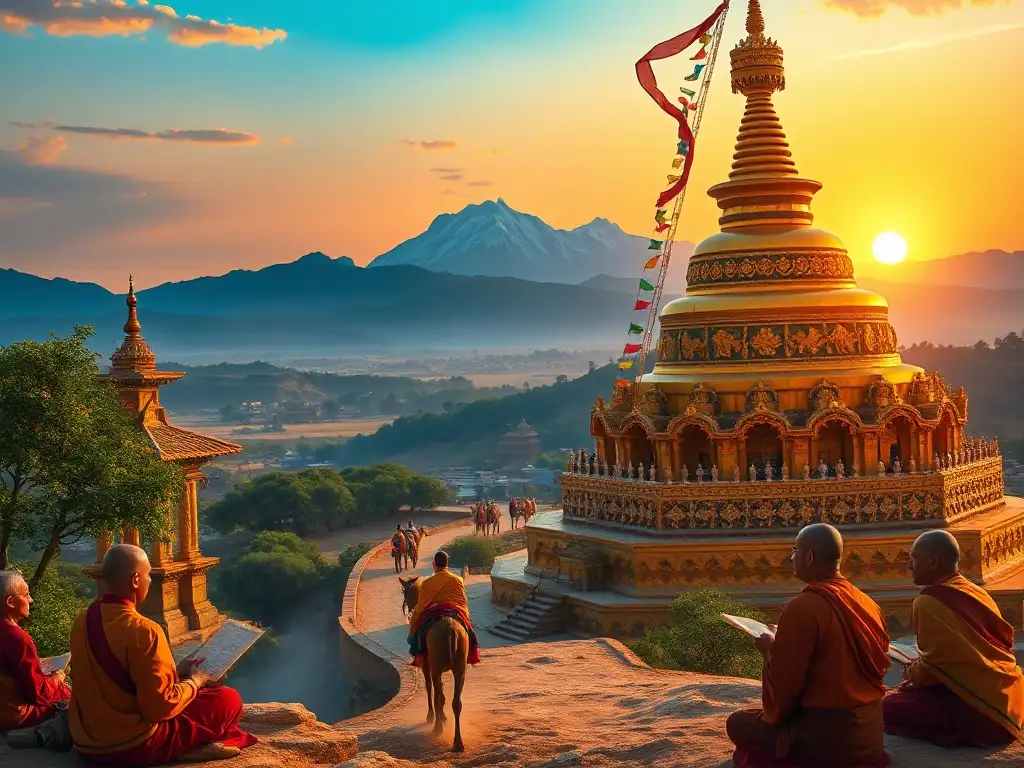
Buddhism, a philosophical and spiritual tradition that originated in ancient India, has played a pivotal role in shaping not only the cultural landscape of the Indian subcontinent but also in fostering connections between India and Central Asia. Emerging around the 5th century BCE through the teachings of Siddhartha Gautama, known as the Buddha, this influential religion emphasized the principles of compassion, mindfulness, and the pursuit of enlightenment. Its teachings resonated deeply within the context of ancient Indian culture, which was rich in various philosophical schools and religious practices.
Understanding the interplay between Buddhism and ancient Indian culture is essential to appreciate how it facilitated cultural exchanges and influenced neighboring civilizations. As we explore the historical trajectory of Buddhism, we will uncover how it served as a bridge connecting diverse cultures across geographical and ideological boundaries.
Overview of Buddhism’s Origins in Ancient India
Buddhism's origins can be traced back to the northeastern region of ancient India, specifically in the area now known as modern-day Nepal. The life of the Buddha, born into a royal family, was marked by a profound quest for understanding human suffering and the quest for spiritual awakening. After years of ascetic practices and meditation, he attained enlightenment under the Bodhi tree in Bodh Gaya, leading to the establishment of the Four Noble Truths and the Eightfold Path as central tenets of Buddhism.
The religion gained traction in various kingdoms and among diverse social strata, transcending caste barriers prevalent in ancient Indian society. The first Buddhist council, convened shortly after the Buddha's death, played a crucial role in preserving and disseminating his teachings. Key locations such as Sarnath, where the Buddha delivered his first sermon, became important centers for Buddhist learning and practice.
Significance of Buddhism in Ancient Indian Civilization
Buddhism was not merely a religion; it became a significant cultural force that influenced art, literature, and social philosophy in ancient India. The religion's emphasis on ethical conduct and community welfare contributed to the establishment of monastic institutions, which served as centers of learning and social service.
Moreover, Buddhist art, characterized by its iconic stupas and intricate sculptures, left a lasting legacy on Indian architecture and aesthetics. The narrative of the Buddha's life inspired countless literary works, enriching the cultural tapestry of ancient Indian civilization. The religion also played a vital role in dialogues about morality, governance, and the nature of existence, fostering a spirit of inquiry and philosophical debate.
The Spread of Buddhism Beyond India
As Buddhism evolved, its influence began to extend beyond the borders of ancient India, reaching Central Asia and beyond. This expansion was facilitated by several factors, including trade routes, the patronage of influential leaders, and the appeal of its teachings.
Routes of Buddhist Expansion into Central Asia
The Silk Road, a network of trade routes connecting the East and West, served as a crucial conduit for the spread of Buddhism into Central Asia. Merchants, travelers, and monks journeyed along these routes, bringing with them Buddhist texts and artifacts. Key sites along the Silk Road, such as Taxila and Samarkand, became melting pots of cultural exchange where Buddhist ideas interacted with local beliefs and practices.
Furthermore, the establishment of the Kushan Empire in the 1st century CE played an instrumental role in promoting Buddhism in Central Asia. Under the rule of Emperor Kanishka, Buddhism flourished and adapted to various cultural contexts, leading to the emergence of different schools of thought, such as Mahayana Buddhism.
Key Figures in the Dissemination of Buddhism
Several historical figures were instrumental in the dissemination of Buddhism beyond India. Notable among them was the monk Xuanzang, who traveled extensively to Central Asia and China in the 7th century CE, translating Buddhist texts and promoting the teachings of the Buddha. His journeys not only solidified the presence of Buddhism in these regions but also facilitated an exchange of ideas that enriched both Indian and Central Asian cultures.
Additionally, the efforts of missionaries and scholars, such as Ashoka the Great, who embraced Buddhism and actively promoted its principles across his empire, contributed significantly to its spread. Ashoka's edicts, inscribed on pillars and rocks, communicated Buddhist values and served as a means of integrating diverse cultures under a common ethical framework.
The role of Buddhism in bridging ancient Indian and Central Asian cultures exemplifies how religious and philosophical ideas can transcend geographical boundaries, fostering connections that shape civilizations. Through the exploration of Buddhism's origins, significance, and expansion, we gain insights into the profound impact this tradition had on cultural exchanges in the ancient world.
Cultural Exchanges Facilitated by Buddhism
Buddhism played a pivotal role in fostering cultural exchanges between ancient India and Central Asia. As the religion spread beyond the Indian subcontinent, it became a conduit for the exchange of ideas, art, and trade. The Silk Road, a network of trade routes connecting the East and West, was instrumental in this process. Monasteries along these routes served not only as religious centers but also as hubs for cultural interaction. Merchants, travelers, and monks exchanged goods and ideas, amplifying the influence of Buddhism and facilitating a rich tapestry of cultural exchanges between diverse civilizations.
The establishment of trade links allowed for the dissemination of Buddhist texts and philosophies, which were translated into local languages, thereby enhancing their accessibility. This exchange was reciprocal; as Central Asian cultures engaged with Buddhism, they also introduced elements of their own traditions, leading to a syncretic blend of beliefs and practices. The adaptability of Buddhism to local customs further exemplified its role as a bridge between distinct cultures, creating a shared space for dialogue and understanding.
Influence of Buddhism on Central Asian Art and Architecture
The influence of Buddhism on Central Asian art and architecture is profound and lasting. As Buddhist missionaries traveled through Central Asia, they introduced new artistic styles and religious iconography that blended with local artistic traditions. Notable examples include the rock-cut caves of Bamiyan in Afghanistan, which showcase intricate carvings of Buddha figures and elaborate murals that reflect a fusion of Hellenistic and Indian artistic elements.
Central Asian stupas and monastic complexes were often inspired by Indian architectural principles, yet they adapted to local environmental and cultural contexts. The use of domes and intricate tile work in Central Asian Buddhist architecture illustrates this hybridization. Moreover, the emergence of the Greco-Buddhist art style in regions like Gandhara demonstrates how Buddhist themes were interpreted through the lens of local aesthetics, creating a unique artistic expression that resonated with both Indian and Central Asian cultural identities.
Interactions Between Buddhist and Local Beliefs in Central Asia
The interactions between Buddhism and local beliefs in Central Asia were characterized by a dynamic process of negotiation and adaptation. As Buddhism spread, it encountered a variety of indigenous belief systems, including Zoroastrianism and various shamanistic practices. This led to a complex interplay where elements of local spirituality were integrated into Buddhist practices, allowing the religion to gain acceptance among diverse populations.
For instance, the concept of the Bodhisattva was sometimes interpreted through the lens of local deities, resulting in a unique synthesis of Buddhist and indigenous beliefs. Rituals, festivals, and iconography often reflected this blending, as local customs were incorporated into Buddhist observances. This adaptability not only facilitated the spread of Buddhism but also enriched the spiritual landscape of Central Asia, allowing for a more inclusive and pluralistic approach to spirituality.
Comparative Analysis of Ancient Indian and Central Asian Cultures
The comparative analysis of ancient Indian and Central Asian cultures reveals both similarities and differences that were shaped by their interactions, particularly through Buddhism. While both regions shared an appreciation for art, philosophy, and trade, their cultural expressions and receptions of Buddhism exhibited distinct characteristics.
Similarities in Philosophical Concepts and Practices
Both ancient Indian and Central Asian cultures exhibited a fascination with philosophical inquiry and spiritual practice. The core tenets of Buddhism, such as the pursuit of enlightenment and the concepts of karma and rebirth, found resonance in the philosophical traditions of Central Asia. Local intellectuals were influenced by Buddhist teachings, leading to the development of a shared philosophical dialogue that emphasized ethics, meditation, and the nature of existence.
Furthermore, the concept of compassion, central to Buddhist philosophy, was echoed in various Central Asian belief systems, leading to a common ground in ethical practices. The emphasis on community and the interdependence of all beings fostered a sense of unity that transcended cultural boundaries, creating a rich tapestry of shared values and spiritual aspirations.
Differences in Cultural Reception and Adaptation of Buddhism
Despite these similarities, the reception of Buddhism in Central Asia differed from its origins in India. In India, Buddhism emerged as a reformative movement within a diverse religious landscape, while in Central Asia, it often interacted with existing traditions, leading to unique adaptations. For instance, while Indian Buddhism emphasized monasticism and renunciation, Central Asian practices often retained a more syncretic approach, integrating local customs and rituals within the Buddhist framework.
Moreover, the political landscape in Central Asia, characterized by the influence of various empires and trade networks, shaped the spread and adaptation of Buddhism. Unlike the relatively homogenous cultural environment of ancient India, Central Asia’s diverse ethnic groups and belief systems required Buddhism to be flexible and responsive to local contexts. This resulted in a rich diversity of practices and interpretations of Buddhism that reflected the unique cultural milieu of Central Asia, highlighting the religion's capacity for adaptation and transformation.
The Role of Trade in Cultural Exchange
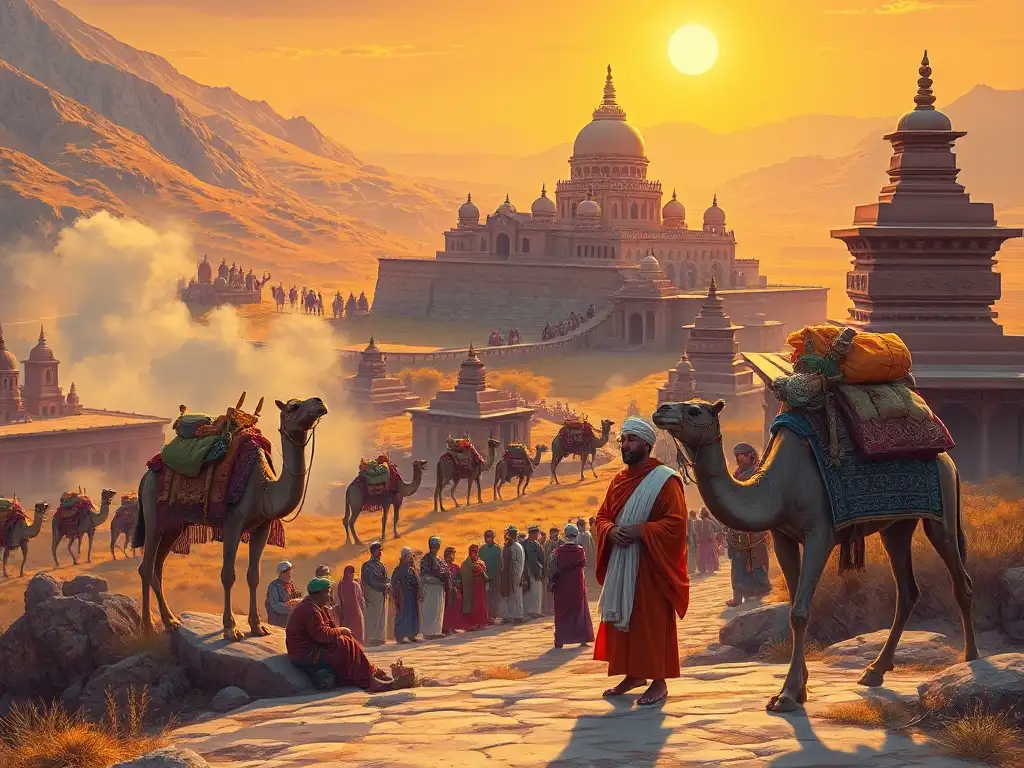
Trade was a pivotal element in fostering interactions between ancient Indian and Central Asian cultures, with Buddhism serving as a significant catalyst in these exchanges. The movement of goods, ideas, and people along trade routes facilitated the spread of Buddhist philosophy, art, and practices beyond the Indian subcontinent. Merchants and travelers acted as conduits for cultural transmission, enriching both regions through shared experiences and beliefs. The establishment of trade networks not only brought material wealth but also promoted a vibrant cultural dialogue that shaped the identities of these civilizations.
The Silk Road as a Conduit for Buddhist Ideas
The Silk Road, a vast network of trade routes connecting the East and West, played a crucial role in the dissemination of Buddhism. Spanning from the eastern edges of Asia to the Mediterranean, this route facilitated not just the exchange of silk and spices but also philosophical and religious ideas. Buddhist missionaries and traders traveled along these paths, introducing Buddhist texts, iconography, and practices to Central Asian societies.
Cities such as Samarkand and Bukhara became melting pots where Buddhist thought mingled with local traditions, resulting in a rich tapestry of syncretic cultures. The presence of stupas, monasteries, and Buddhist relics along these routes is a testament to the profound impact of trade on the spread of Buddhism.
Economic and Cultural Benefits of Buddhist Interactions
The interactions fostered by Buddhism brought numerous economic and cultural benefits to both ancient India and Central Asia. As trade flourished, so did the demand for Buddhist artifacts and literature, stimulating local economies and encouraging craftsmanship. The establishment of monasteries along trade routes provided not only spiritual guidance but also hospitality for travelers, further enhancing the commercial activities. Culturally, the synthesis of Buddhist teachings with local practices led to the emergence of unique artistic styles and architectural forms. This cultural exchange enriched both regions, contributing to a shared heritage that transcended borders.
The Impact of Buddhism on Societal Structures
Buddhism significantly influenced the societal structures of ancient India and Central Asia, leading to transformative changes in social hierarchies and communal practices. As Buddhist ideals of compassion, equality, and communal support gained traction, they challenged existing social norms and fostered a more inclusive society.
Changes in Social Hierarchies in Ancient India and Central Asia
The teachings of Buddhism promoted a more egalitarian approach to social relationships, which contrasted sharply with the rigid caste system prevalent in ancient India. The Buddhist monastic community, or Sangha, welcomed individuals from various backgrounds, including those marginalized by society. This inclusivity led to a gradual shift in social hierarchies, encouraging the emergence of a more fluid social structure. Similarly, in Central Asia, the adoption of Buddhism contributed to the reconfiguration of societal norms, allowing for a blending of local customs with Buddhist philosophies that emphasized respect and compassion for all beings.
The Role of Monasteries as Centers of Learning and Influence
Buddhist monasteries emerged as vital centers of learning and cultural influence in both ancient India and Central Asia. These institutions not only served as places for spiritual practice but also became hubs for education, attracting scholars and students from diverse regions. The exchange of knowledge in areas such as philosophy, medicine, and arts flourished within these monasteries, positioning them as key players in the intellectual landscape of the time.
The spread of Buddhist texts and the teachings of revered monks further solidified their status as centers of influence, shaping the cultural and educational development of both civilizations. Through their role in promoting literacy and scholarship, Buddhist monasteries played a crucial part in bridging the cultural divide between ancient India and Central Asia.
Legacy of Buddhism in Bridging Cultures
Buddhism has played a pivotal role in connecting ancient Indian civilization with Central Asian cultures, facilitating a rich tapestry of cultural, religious, and economic exchanges. Originating in the 6th century BCE, this spiritual tradition quickly transcended the geographical boundaries of India, influencing neighboring regions through trade routes like the Silk Road. The spread of Buddhism was marked by the establishment of monasteries and stupas, which served not only as spiritual centers but also as hubs of learning and cultural interactions.
The legacy of Buddhism is evident in the shared artistic and architectural styles that emerged as a result of this cultural exchange. The Gandhara art style, for instance, is a synthesis of Hellenistic and Indian influences, showcasing the profound impact of Buddhist iconography. Moreover, the translation of Buddhist texts into various languages facilitated the dissemination of philosophical ideas, contributing to a shared intellectual heritage that bridged cultures.
Lasting Impacts on Modern Indian and Central Asian Societies
The lasting impacts of Buddhism can still be seen in modern Indian and Central Asian societies, where the teachings and practices continue to resonate. In India, Buddhism has influenced various aspects of culture, including art, literature, and philosophy. The principles of non-violence, compassion, and mindfulness, central to Buddhist thought, have permeated the broader social fabric, influencing movements for social justice and peace.
In Central Asia, Buddhism's legacy is equally significant. Countries like Mongolia and Kazakhstan have retained Buddhist traditions that reflect their historical ties to ancient Indian culture. The shared heritage is visible in religious practices, festivals, and even in the arts, where Buddhist motifs and themes persist. This interconnectedness serves as a reminder of the historical bonds forged through Buddhism, which continue to shape cultural identities today.
Continuing Cultural Exchanges Inspired by Ancient Buddhist Connections

Cultural exchanges inspired by ancient Buddhist connections are not just remnants of history; they are ongoing processes that enrich both Indian and Central Asian societies. Modern initiatives, such as cultural festivals, academic collaborations, and tourism, celebrate and explore this shared heritage. Events like the International Buddhist Conference and the Nalanda International University are platforms that promote dialogue and understanding among diverse cultures.
Additionally, contemporary art forms, including literature and cinema, have begun to incorporate Buddhist themes, drawing on the rich narrative traditions that emerged from this historical interplay. The revival of interest in mindfulness and meditation practices, rooted in Buddhist teachings, has also seen a resurgence in both regions, further solidifying the cultural ties established centuries ago.
Conclusion
Summary of Buddhism's Role in Cultural Bridging
Buddhism has served as a crucial bridge between ancient Indian and Central Asian cultures, fostering a legacy of shared values, artistic expressions, and philosophical ideas. Its influence can be seen in the cultural landscapes of both regions, illustrating the profound connections that have developed over centuries. The establishment of trade routes, the exchange of knowledge, and the migration of peoples facilitated a dynamic interplay that enriched both civilizations.
Reflection on the Importance of Studying Buddhism and Ancient Indian Culture
Studying Buddhism and its role in ancient Indian culture is vital for understanding the complexities of cultural interactions and exchanges that shaped the region's history. Such an examination not only highlights the importance of Buddhism in fostering unity and cooperation among diverse cultures but also underscores the relevance of these historical connections in addressing contemporary global challenges. By appreciating the shared heritage, we can cultivate a greater sense of empathy and understanding in our increasingly interconnected world.
Suggested Further Reading on Buddhism and Ancient Civilizations
The exploration of Buddhism's influence on ancient Indian culture and its interactions with Central Asian civilizations is a rich field for further study. Here, we provide curated resources that delve deeper into these themes, offering insights into historical contexts, cultural exchanges, and the lasting impacts of Buddhism.
Recommended Books and Articles
-
"Buddhism and the Political Process" by Jonathan S. Walters
This book examines how Buddhism influenced political structures in ancient India and beyond, shedding light on the religion's role in governance and societal organization.
-
"The Spread of Buddhism" by Richard H. Davis
This work explores the dissemination of Buddhist teachings across Asia, highlighting key figures and events that contributed to the cultural exchanges between India and Central Asia.
-
"Buddhism and Its Influence on Indian Culture" by G. P. Malalasekera
This article provides an overview of how Buddhist philosophy and practices shaped various aspects of Indian culture, including art, literature, and social norms.
-
"The Silk Roads: A New History of the World" by Peter Frankopan
While not exclusively focused on Buddhism, this book contextualizes the Silk Road's role in facilitating cultural exchanges, including the transmission of Buddhist ideas and practices between India and Central Asia.
-
"Buddhism and the Silk Road: The Historical Context of the Spread of Buddhism in Central Asia" by A. K. Narain
This article discusses the historical pathways through which Buddhism traveled, emphasizing its impact on the cultures of Central Asia and the interactions with ancient Indian civilization.
Online Resources for Exploring Ancient Cultures
-
The Buddhist Heritage (buddhistheritage.com)
This website offers a comprehensive look at the history, teachings, and cultural practices of Buddhism, featuring articles, glossaries, and interactive maps that detail the spread of Buddhism across regions.
-
The British Museum: Ancient India and Central Asia (britishmuseum.org)
The British Museum provides an extensive collection of artifacts and exhibits related to ancient Indian and Central Asian cultures, with online resources that allow for virtual exploration of historical connections.
-
Internet Archive: Buddhist Texts and Manuscripts (archive.org)
A treasure trove of digitized texts, this resource includes many original Buddhist scriptures and scholarly works related to the cultural history of Buddhism in India and its influence abroad.
-
The Asia Society: Buddhism (asiasociety.org)
This organization offers various educational resources, articles, and events focused on the study of Buddhism and its cultural significance in Asia, including its interactions with ancient civilizations.
-
The Tibetan and Himalayan Library (thlib.org)
A platform dedicated to the study of Buddhist cultures in the Tibetan and Himalayan regions, featuring a wealth of resources including texts, images, and multimedia presentations on the influence of Buddhism across Asia.
These resources provide a diverse range of perspectives and information for anyone interested in the intricate relationships between Buddhism, ancient Indian culture, and Central Asian civilizations. They serve as a gateway to understanding how these cultures influenced one another and contributed to the rich tapestry of history in the region.
- Introduction to Buddhism and Ancient Indian Culture
- The Spread of Buddhism Beyond India
- Cultural Exchanges Facilitated by Buddhism
- Comparative Analysis of Ancient Indian and Central Asian Cultures
- The Role of Trade in Cultural Exchange
- The Impact of Buddhism on Societal Structures
- Legacy of Buddhism in Bridging Cultures
- Lasting Impacts on Modern Indian and Central Asian Societies
- Continuing Cultural Exchanges Inspired by Ancient Buddhist Connections
- Conclusion
- Suggested Further Reading on Buddhism and Ancient Civilizations
- What was the impact of Buddhism on ancient Indian culture?
- How did Buddhism facilitate cultural exchange between India and Central Asia?
- What are some key contributions of Buddhism to art in ancient India?
- How did the Gupta Empire influence Buddhism?
- In what ways did Buddhism affect trade between India and Central Asia?
Frequently Asked Questions
What was the impact of Buddhism on ancient Indian culture?
Buddhism played a significant role in shaping ancient Indian culture by promoting values such as compassion, non-violence, and tolerance, which influenced various aspects of society, art, and philosophy.
How did Buddhism facilitate cultural exchange between India and Central Asia?
Buddhism served as a catalyst for cultural exchange, as it spread along trade routes, leading to the sharing of ideas, art, and religious practices between ancient Indian and Central Asian civilizations.
What are some key contributions of Buddhism to art in ancient India?
Buddhism contributed to the development of unique art forms, such as intricate sculptures and stupas, which depicted Buddhist narratives and symbolized spiritual concepts, enriching the aesthetic landscape of ancient India.
How did the Gupta Empire influence Buddhism?
The Gupta Empire is known for its patronage of Buddhism, leading to the construction of monasteries and universities, which became centers for learning and attracted scholars from various regions, enhancing the intellectual exchange in ancient India.
In what ways did Buddhism affect trade between India and Central Asia?
Buddhism not only facilitated trade routes for goods but also promoted the movement of people, including monks and traders, fostering a deeper understanding of cultural practices and enhancing economic ties between India and Central Asia.
Final Reflection: Buddhism as a Cultural Bridge Between Ancient India and Central Asia
Buddhism's profound influence on the cultural tapestry of ancient India and Central Asia remains strikingly relevant today. As we navigate an increasingly interconnected world, the teachings and practices of Buddhism offer timeless wisdom that transcends geographical boundaries. The ability of Buddhism to foster dialogue and understanding among diverse cultures serves as a powerful reminder of the importance of empathy and shared values in our global society.
The historical interplay between Buddhism and ancient Indian culture has not only shaped spiritual practices but has also left an indelible mark on art, philosophy, and social structures. This rich legacy continues to resonate, as we witness a resurgence of interest in mindfulness and meditation practices rooted in Buddhist traditions. Buddhism teaches us to look beyond the self and to recognize the interconnectedness of all beings.
This perspective invites us to appreciate the shared human experience that binds us, regardless of cultural or geographical differences.
As we reflect on the lessons drawn from Buddhism's role in bridging cultures, I encourage you to consider how these principles can be applied in your own life. Take a moment to explore the ways in which you can foster understanding and compassion in your interactions with others. By embracing the spirit of Buddhism, we can contribute to a more harmonious world, one that honors the rich tapestry of our shared history and paves the way for a brighter, more inclusive future.
Unveil the Connections Between Ancient Cultures!
Thank you for taking the time to explore how Buddhism has played a transformative role in bridging the cultures of ancient India and Central Asia. By delving into this fascinating history, you've gained insights into the rich exchanges that have shaped our world. Now, it's your turn to keep the conversation going and deepen your understanding!
Here are some simple yet impactful steps you can take:
- Dive deeper: Discover more about the influence of Buddhism on contemporary society through various resources such as books, articles, and documentaries!
- Join the dialogue: Share this article with friends or on your social media platforms to spark engaging discussions about cultural connections.
- Explore local events: Seek out workshops, talks, or exhibitions related to Buddhism or cultural history in your area. You might uncover unexpected treasures!
What insights do you believe are most crucial for today's world from the ancient connections between Buddhism and diverse cultures? Let's discuss in the comments below!