
The Mahabharata's Historical Context: What Archaeology Tells Us

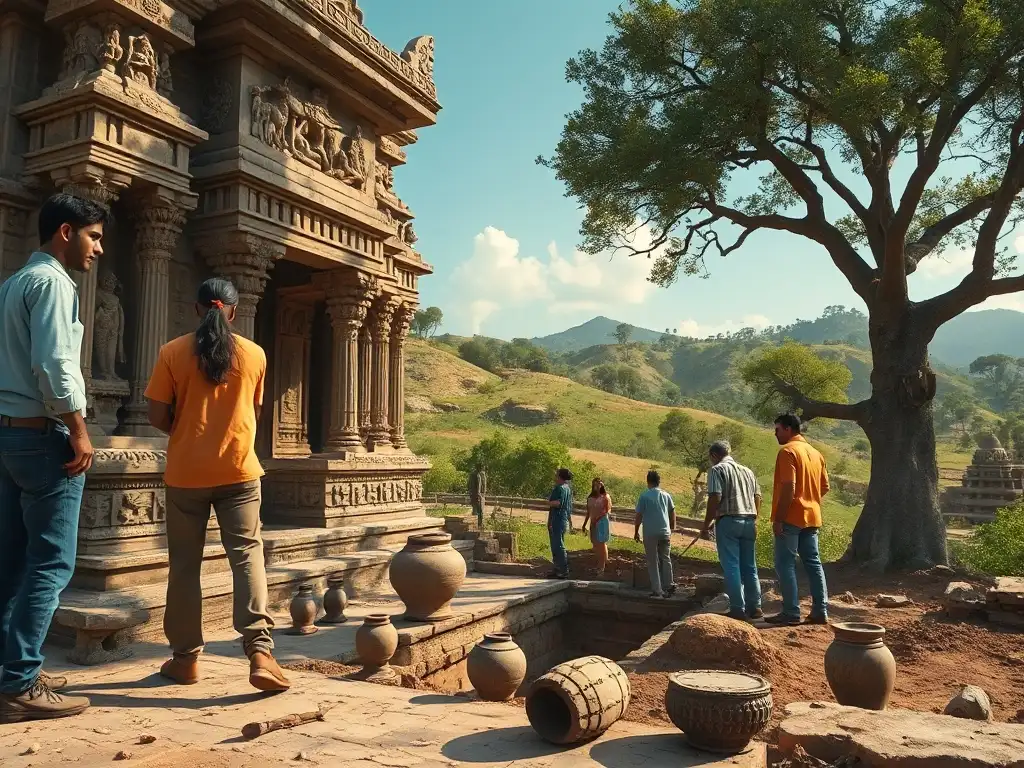
Welcome to Ancient India History, where we embark on an enlightening journey through the rich tapestry of ancient Indian civilizations. Dive deep into the intriguing world of archaeology, revealing the hidden narratives that shape our understanding of epic literature and historical events. In our featured article, “The Mahabharata's Historical Context: What Archaeology Tells Us,” we unravel the layers of time, exploring how archaeological discoveries illuminate the profound connections between legendary tales and historical realities. Join us as we uncover the secrets of the past and ignite your curiosity about the legacies that continue to influence our world today!
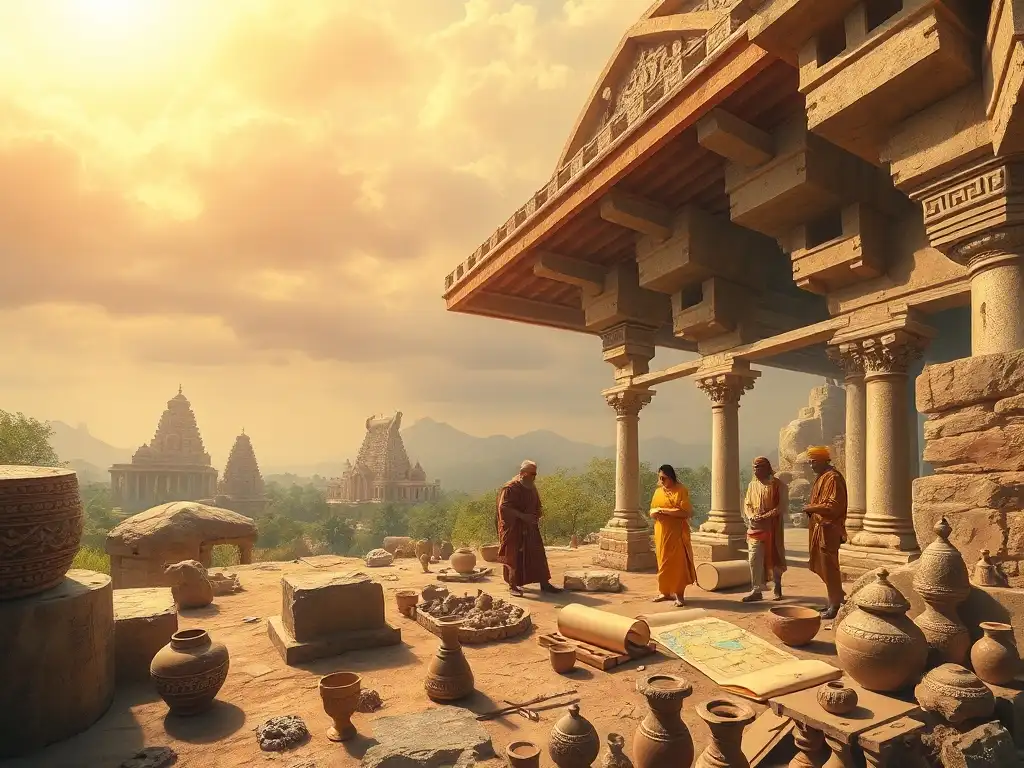
Introduction to the Mahabharata and Ancient Indian Civilizations
The Mahabharata stands as one of the most significant epics in ancient Indian literature, offering profound insights into the socio-political, cultural, and philosophical fabric of its time. Composed over centuries, this monumental text not only narrates the dramatic tale of the Kuru dynasty's rivalry but also serves as a reflection of the values, beliefs, and customs prevalent in ancient Indian civilizations.
As we delve into the historical context of the Mahabharata, it is essential to explore how archaeology complements our understanding of these ancient societies. Through archaeological findings, we can uncover the layers of history that shaped the narratives within the Mahabharata and the broader tapestry of ancient Indian civilization.
Overview of the Mahabharata as an Epic
The Mahabharata is more than just a story of conflict; it is an intricate compilation of myths, legends, and moral teachings that encapsulates the essence of dharma (duty/righteousness). Attributed to the sage Vyasa, this epic is composed of over 100,000 shlokas (verses), making it one of the longest literary works in the world. It includes not only the central narrative of the Kurukshetra War but also a wealth of philosophical discourses, including the revered Bhagavad Gita. This epic has influenced countless generations, shaping cultural practices, legal systems, and ethical principles throughout the Indian subcontinent.
Significance of Ancient Indian Civilizations in History
Ancient Indian civilizations, particularly during the Vedic period and beyond, laid the groundwork for many aspects of modern Indian society. The contributions of these civilizations in various fields—such as mathematics, astronomy, metallurgy, and urban planning—have been foundational to many contemporary practices. Notably, the Indus Valley Civilization, known for its advanced urban infrastructure and trade networks, and the later Vedic culture, with its rich spiritual and philosophical traditions, exemplify the complexity and diversity of ancient Indian societies. Understanding these civilizations provides critical context for interpreting the themes and narratives found within the Mahabharata.
The Role of Archaeology in Understanding Ancient Indian Civilizations
Archaeology serves as a vital tool in uncovering the mysteries of ancient Indian civilizations. By examining artifacts, structures, and cultural remains, archaeologists provide invaluable insights into the daily lives, beliefs, and social structures of these past societies. The integration of archaeological findings with textual analysis of epics like the Mahabharata enriches our understanding of historical contexts, offering a more nuanced perspective of ancient India.
Definition of Archaeology in the Context of Ancient India
In the context of ancient India, archaeology can be defined as the scientific study of material remains left by past civilizations. This includes the excavation of sites, analysis of artifacts, and interpretation of cultural practices. Archaeology seeks to reconstruct historical narratives, allowing us to visualize the social dynamics, economic activities, and technological advancements of ancient Indian societies. Through rigorous methodologies, archaeologists aim to bridge the gap between myth and history, providing a clearer picture of how epics like the Mahabharata relate to real events and cultures.
Key Archaeological Discoveries Related to the Mahabharata
Several significant archaeological discoveries have shed light on the historical context of the Mahabharata. Notable findings include:
- Excavation of Hastinapura: Believed to be the legendary city of the Kuru dynasty, excavations here have revealed remnants of ancient fortifications, pottery, and artifacts that correlate with the timelines mentioned in the Mahabharata.
- Artifacts from Kurukshetra: The site of the legendary battlefield has yielded weapons, pottery, and other items that provide insights into the warfare and social structures of the time.
- Cultural Links to the Harappan Civilization: Artifacts resembling those from the Harappan civilization suggest connections between the epic's narratives and the socio-economic practices of ancient urban centers.
These discoveries not only validate historical elements within the Mahabharata but also enhance our understanding of the cultural and social milieu of ancient Indian civilizations.
The Historical Context of the Mahabharata
The Mahabharata is more than just an epic; it is a reflection of the socio-political landscape of ancient Indian civilizations. Written over a span of several centuries, the narrative encompasses themes of dharma (duty/righteousness), moral dilemmas, and the complexities of human relationships, all set against the backdrop of historical events and cultural practices of the time. Scholars suggest that the Mahabharata, while steeped in myth, is rooted in a historical context that intertwines with the realities of ancient Indian dynasties and their territorial conflicts.
Understanding the historical context of the Mahabharata involves exploring the geographical regions it covers, particularly the northern Indian subcontinent, where major events are believed to have occurred. The epic hints at a time when the Indo-Aryan settlements were establishing themselves, and there was significant interaction with other cultures, such as the Dravidians and various tribal groups. This period, characterized by social stratification and the evolution of political entities, set the stage for the epic's complex narratives of power struggles and warfare.
Timeline of Ancient Indian Civilizations
The timeline of ancient Indian civilizations spans several millennia, with significant cultural, political, and social developments. Here’s a brief overview of key periods that provide a framework for understanding the Mahabharata’s context:
- Indus Valley Civilization (c. 3300–1300 BCE): One of the world's earliest urban cultures, known for advanced city planning and trade.
- Vedic Period (c. 1500–500 BCE): Marked by the composition of the Vedas and the establishment of early Hindu social structures.
- Mahajanapada Period (c. 600–300 BCE): Emergence of powerful kingdoms and republics, setting the stage for the epic narratives.
- Maurya Empire (c. 322–185 BCE): A significant unification of India under Chandragupta Maurya and his grandson Ashoka, known for promoting Buddhism.
- Gupta Empire (c. 240–550 CE): Often regarded as a golden age of cultural and scientific advancements, influencing later interpretations of the Mahabharata.
The Mahabharata is believed to have been composed during the late Vedic to early post-Vedic periods, reflecting the social and political dynamics of these times.
Major Dynasties and Their Influence on the Mahabharata's Narrative
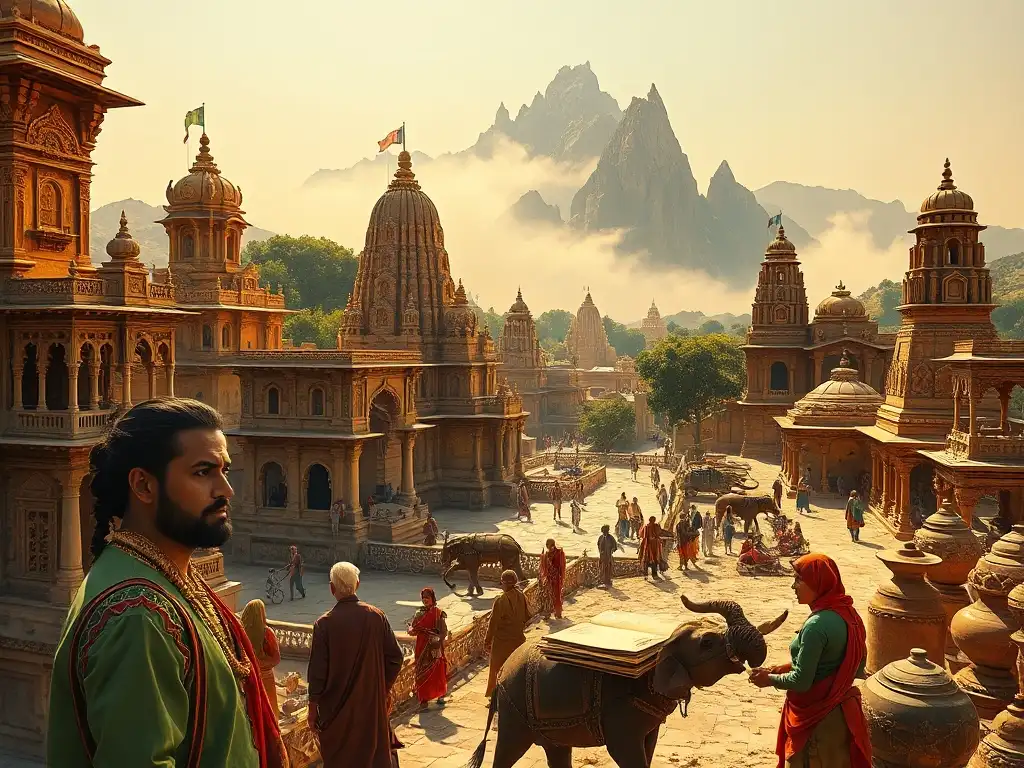
The Mahabharata's narrative is deeply influenced by the major dynasties that rose and fell during ancient Indian history. The Kuru dynasty, which is central to the epic, symbolizes the power struggles and moral dilemmas faced by rulers of the time.
- Kuru Dynasty: The primary setting for the Mahabharata, featuring key figures such as King Bharata and the Pandavas and Kauravas. The conflict between these two factions is symbolic of the larger struggles within ancient Indian society and governance.
- Brahminical Influence: The rise of Brahminical authority during the Vedic period is reflected in the themes of dharma and righteousness that permeate the epic. The roles of sages and priests in guiding rulers and imparting wisdom indicate the intertwining of spiritual and temporal powers.
- Expansion of Kingdoms: The Mahabharata also mirrors the expansion of regional kingdoms and their interactions with neighboring tribes and cultures, highlighting the complexity of alliances and enmities in ancient India.
Understanding these dynasties helps contextualize the epic's themes of power, justice, and moral conflict, which resonate with the historical realities of the time.
Archaeological Evidence Supporting the Mahabharata's Events
Archaeology plays a crucial role in reconstructing the historical backdrop of the Mahabharata. Various excavations and findings have provided insights into the cultures and societies that may have inspired the epic's narratives.
Excavations and Findings Linked to the Mahabharata
Several archaeological sites have been linked to events and locations mentioned in the Mahabharata. For instance:
- Kurukshetra: The battlefield of the great war, which is a significant location in the Mahabharata. Excavations have revealed artifacts from various periods, including pottery and tools, suggesting long-standing human habitation and conflict.
- Hastinapura: Believed to be the capital of the Kuru dynasty, archaeological investigations have uncovered remnants of ancient structures and artifacts that align with descriptions from the epic, indicating its historical significance.
- Other Sites: Sites like Dholavira and Mohenjo-Daro from the Indus Valley Civilization provide context for the early urbanization that the Mahabharata hints at, showcasing advancements in architecture and societal organization.
These findings help bridge the gap between mythology and history, offering tangible links to the narratives within the Mahabharata.
Comparative Analysis of Literary vs. Archaeological Evidence
The interplay between literary accounts and archaeological discoveries presents both challenges and opportunities for historians. The Mahabharata, as a text, is rich in symbolism and allegory, which can complicate direct comparisons. However, a few key points emerge from this analysis:
- Historical Correlation: Certain events described in the Mahabharata have parallels in archaeological evidence, suggesting a foundation in historical realities. For example, the depiction of warfare and societal structures resonates with findings from ancient battle sites.
- Temporal Discrepancies: While the epic suggests specific timelines, archaeological evidence can sometimes indicate different periods of occupation and cultural development, leading to debates about the dating of events in the Mahabharata.
- Cultural Insights: Literary narratives provide insights into the values, beliefs, and social norms of ancient civilizations, while archaeology contributes material evidence that can validate or challenge these narratives.
This comparative approach enriches our understanding of ancient Indian civilizations, highlighting how archaeology can illuminate the historical context of epic literature like the Mahabharata.
The Influence of Geography on Ancient Indian Civilizations
Geography played a pivotal role in shaping the contours of ancient Indian civilizations, influencing everything from trade routes to cultural exchanges. The vast and diverse landscape of India, characterized by its mountains, rivers, and plains, dictated the settlement patterns and socio-economic activities of its inhabitants. The Mahabharata, one of the foundational texts of Indian literature, reflects this geographical diversity through its numerous references to various regions, climates, and natural features, which not only serve as backdrops for the epic's grand narratives but also highlight the importance of geography in the lives of its characters.
The fertile plains of the Gangetic Valley, for instance, became the cradle for many ancient kingdoms, enabling agricultural prosperity and urban development. Meanwhile, the rugged terrains of the Himalayas formed natural barriers that influenced trade and migration routes. The presence of major rivers like the Ganges and the Indus, which are often mentioned in the Mahabharata, facilitated not just agriculture but also communication and cultural interchange among different regions. Thus, the interplay between geography and civilization in ancient India provided a rich tapestry for the stories encapsulated within the Mahabharata.
Geographic Regions Mentioned in the Mahabharata
The Mahabharata references several geographic regions that are crucial to understanding its narrative and historical context. Key locations mentioned include:
- Hastinapura: The capital of the Kuru Kingdom, strategically located in the northern plains of India, which serves as the primary setting for the epic.
- Khandavavana: A dense forest area where significant events occur, showcasing the relationship between humans and nature.
- Indraprastha: Built by the Pandavas, this city symbolizes the achievement of civilization through urban planning and architecture.
- Kurukshetra: The battlefield where the great war of the Mahabharata takes place, representing both a physical and spiritual landscape.
- Draupadi's Swayamvara: A pivotal event held in a royal palace, illustrating the cultural customs of the time.
These regions are not only geographical locations but also integral to the narrative's themes of power, conflict, and morality. The detailed descriptions of landscapes and cities in the Mahabharata provide archaeologists and historians with insights that help to reconstruct the cultural and historical landscape of ancient India.
How Geography Shaped Cultural and Historical Narratives
The geographical landscape of ancient India significantly influenced the cultural and historical narratives found within the Mahabharata. For instance, the presence of rivers often symbolizes life and sustenance, with pivotal moments in the epic occurring near these water bodies, reflecting their importance in daily life and spirituality. The river Ganges, revered in Hindu tradition, serves as a vital character in many narratives, highlighting its role in rituals and the socio-cultural fabric of society.
Moreover, the varied climatic conditions across regions contributed to different cultural practices and social structures. The agrarian societies in the fertile plains developed a distinct set of practices and beliefs compared to those in the arid deserts or lush forests. This geographical diversity led to a rich confluence of ideas, traditions, and customs that are captured within the epic's narrative. As such, geography is not merely a setting in the Mahabharata but an active participant in shaping the ethical dilemmas and moral lessons that emerge throughout the text.
The Relationship Between Myth and History in the Mahabharata
The Mahabharata intertwines myth and history, creating a complex narrative that reflects both the cultural ethos of ancient Indian civilizations and their historical realities. This relationship is essential for understanding how ancient societies perceived their past and the moral lessons they derived from it. In this context, the epic serves as a repository of both mythological tales and historical events, allowing readers to explore the nuances between them.
The blending of myth and history also raises questions about the veracity of events depicted in the Mahabharata. While some scholars argue that the epic is primarily a mythological work, others contend that it contains historical kernels that reflect the socio-political landscape of ancient India. This duality makes the Mahabharata a vital text for the study of ancient Indian civilizations, as it provides insight into the beliefs, values, and practices that shaped society.
Understanding Mythological Elements in Historical Context
The mythological elements in the Mahabharata serve not just as entertainment but as a means of conveying deeper truths about human nature and societal values. Characters like Krishna and Arjuna are depicted as larger-than-life figures who embody virtues such as righteousness and duty. These portrayals are often rooted in the historical context of ancient Indian thought and philosophy, particularly the concept of dharma (duty/righteousness).
Moreover, the epic's narrative structure, which includes divine interventions and supernatural occurrences, reflects the cultural beliefs of the time regarding the relationship between the divine and the mortal. Understanding these mythological elements within their historical context allows scholars to appreciate how ancient Indian civilizations interpreted their world and the moral frameworks they developed as a result. This interplay between myth and history enriches our understanding of the social and cultural dynamics of the period.
Archaeological Findings That Corroborate Myths
Archaeological discoveries in regions associated with the Mahabharata have provided valuable insights that corroborate some of the epic's narratives. For instance, excavations at sites like Hastinapura have revealed artifacts, pottery, and remnants of urban planning that align with descriptions found in the text. These findings suggest that the city was indeed a significant center of political power during its time, supporting the epic's portrayal of the Kuru dynasty.
Additionally, the identification of ancient battle sites, such as Kurukshetra, has led to explorations of warfare practices and social organization in ancient Indian societies. Evidence of large-scale conflict, along with burial sites containing weapons and artifacts, reinforces the historical basis for the great war depicted in the Mahabharata. Such archaeological evidence helps bridge the gap between the epic's mythological elements and historical realities, providing a more nuanced understanding of ancient Indian civilizations.
The relationship between archaeology and the narratives of the Mahabharata enriches our comprehension of ancient Indian civilizations, showcasing how geography, mythology, and historical context intertwined to shape the rich tapestry of India's past.
The Impact of Ancient Indian Civilizations on Later Cultures
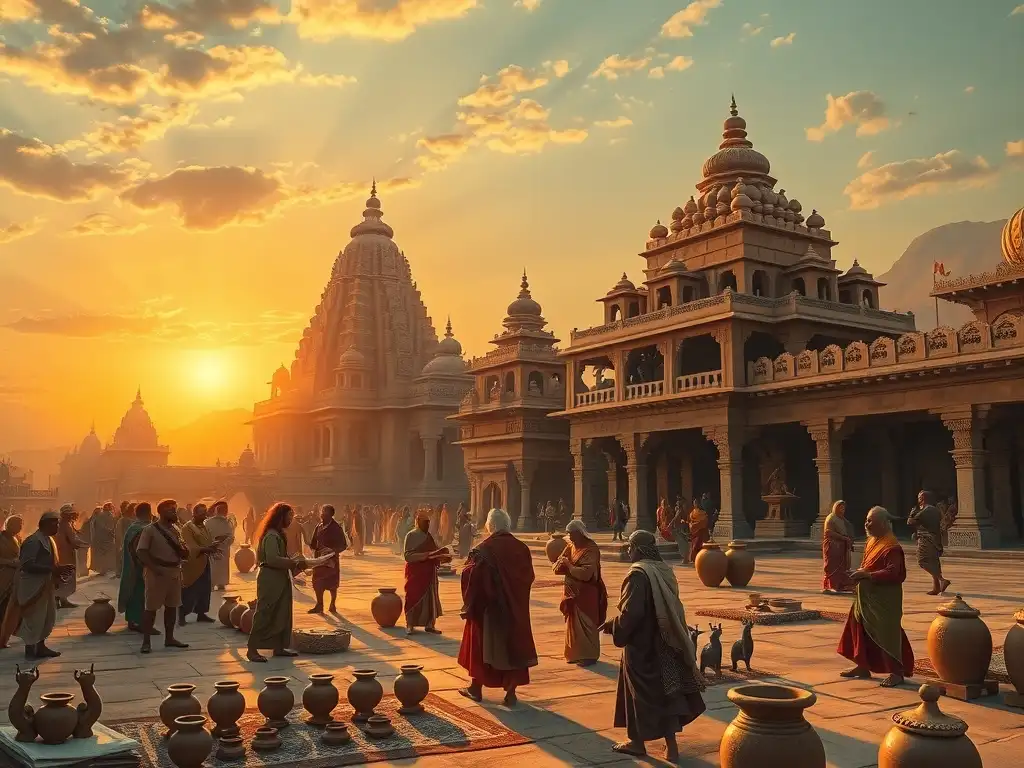
Ancient Indian civilizations have left a profound and lasting impact on various aspects of culture, literature, and philosophy, not just within India but across the world. The Mahabharata, as one of the principal epics of ancient Indian literature, serves as a microcosm of this influence. Through its narratives, themes, and characters, the Mahabharata encapsulates the values, beliefs, and societal norms of its time, which have reverberated through subsequent generations and cultures.
The intricate relationships portrayed in the Mahabharata, alongside its philosophical inquiries into duty (dharma), righteousness, and the moral dilemmas faced by its heroes, have shaped the ethical frameworks in later Indian literature and culture. The archetypes established in this epic have provided a rich repository for writers and thinkers, influencing not just literary forms but also artistic expressions, religious thought, and social customs across various regions.
Influence on Subsequent Indian Literature and Culture
The Mahabharata’s profound themes and complex characters have inspired a wealth of subsequent Indian literature. The epic's narrative style, characterized by its blend of mythology, philosophy, and history, has paved the way for the development of later literary forms, including the Puranas and various regional epics. The moral and ethical quandaries presented in the Mahabharata have continued to resonate in the works of prominent Indian authors, such as Kalidasa and Bhasa, who drew upon its rich tapestry of stories and characters.
Additionally, the Mahabharata's influence extends into modern Indian cinema, theater, and television, where adaptations continue to capture the imagination of audiences. The portrayal of the epic’s key figures—such as Arjuna, Krishna, and Draupadi—has become ingrained in the cultural consciousness, serving as symbols of virtue, heroism, and resilience. Moreover, the themes of war and peace, justice and injustice, and the complexities of human relationships articulated in the Mahabharata remain relevant in contemporary discussions of social and ethical issues.
Legacy of the Mahabharata in Modern Society
The legacy of the Mahabharata transcends mere literary influence; it has become a cornerstone of Indian cultural identity. In modern society, the epic continues to inspire not only literary and artistic endeavors but also philosophical discourse and spiritual exploration. The Mahabharata's teachings on dharma and ethical conduct have found their way into educational curricula and religious teachings, emphasizing its relevance in guiding moral conduct and decision-making.
Moreover, the Mahabharata has fostered a sense of unity among diverse Indian communities, serving as a common cultural reference point. Festivals, theatrical performances, and retellings of the epic in various regional languages reflect its enduring significance and adaptability to contemporary contexts. The epic’s exploration of human nature, power dynamics, and the quest for justice continues to resonate in a world grappling with similar challenges, ensuring its place in both historical and modern narratives.
Conclusion: The Interconnection of Archaeology and Literature
The interplay between archaeology and literature provides a unique lens through which we can understand the historical context of ancient Indian civilizations. Archaeological findings, such as inscriptions, artifacts, and city layouts, complement literary texts like the Mahabharata, offering concrete evidence of the cultural practices, societal structures, and historical events that shaped ancient India. This synergy enriches our comprehension of the past, allowing us to contextualize the narratives of the Mahabharata within the broader tapestry of Indian history.
Summary of Key Insights from Archaeological Studies
Recent archaeological studies have unveiled significant insights into the urban planning, trade networks, and social hierarchies of ancient Indian civilizations, which are often reflected in the themes and settings of the Mahabharata. Excavations in regions associated with the epic, such as Hastinapura and Kurukshetra, have provided material evidence of the societal organization and cultural practices that inform the epic's narratives. Additionally, inscriptions and artifacts have illustrated the historical context of the Mahabharata, shedding light on the interactions between different cultures and the evolution of political structures in ancient India.
Final Thoughts on the Importance of Understanding Ancient Civilizations
Understanding ancient Indian civilizations through the lens of archaeology and literature is crucial for appreciating the rich tapestry of human history. The Mahabharata, as both a literary masterpiece and a historical document, offers invaluable insights into the values, struggles, and aspirations of ancient societies. By studying the interconnections between archaeological findings and literary narratives, we gain a deeper appreciation for the complexities of cultural heritage and the enduring legacy of ancient civilizations in shaping contemporary society. This holistic approach encourages a more nuanced understanding of history, fostering an appreciation for the shared human experience across time and space.
References for Further Reading on Ancient Indian Civilizations and Archaeology
Exploring the extensive history and archaeology of ancient Indian civilizations can be deeply enriching. For those interested in delving further into this fascinating subject, a variety of books and journals provide valuable insights, analyses, and discoveries related to the Mahabharata and its historical context. Here are some recommended resources:
Suggested Books and Articles
-
"The Mahabharata: A Modern Rendering" by Ramesh Menon
This book presents a contemporary narrative of the Mahabharata while intertwining historical and archaeological perspectives, making it accessible to modern readers.
-
"The Archaeology of Early Historic South Asia: The Emergence of Cities and States" by Robin Coningham and Ruth Young
This comprehensive study covers early Indian urbanization and state formation, offering archaeological insights that relate to the era of the Mahabharata.
-
"Ancient India: Culture and Civilization" by R. S. Sharma
A seminal text that discusses the socio-political and cultural evolution of ancient India, including the period of the Mahabharata, grounded in archaeological findings.
-
"The Mahabharata: An Inquiry in the Human Condition" by M. N. Dutt
This scholarly work analyzes the philosophical and moral dimensions of the Mahabharata while contextualizing it within the historical landscape of ancient India.
-
"The Indus Valley Civilization: A Contemporary Perspective" by Gregory Possehl
Although focused on the earlier Indus Valley civilization, this book provides crucial background information that informs the transition to the later Vedic period, which is pertinent to understanding the Mahabharata’s context.
Noteworthy Archaeological Journals and Publications
-
Journal of Archaeological Science
This peer-reviewed journal publishes articles on archaeological science, including studies related to ancient Indian civilizations. It often features research that links literary texts like the Mahabharata with archaeological evidence.
-
Indian Journal of History of Science
This publication focuses on the historical evolution of science and technology in India, often discussing archaeological findings that shed light on ancient Indian society, culture, and literature.
-
Archaeological Survey of India Reports
The official reports published by the Archaeological Survey of India provide insights into ongoing excavations and discoveries across India, many of which relate to the time periods discussed in the Mahabharata.
-
Antiquity
A leading international journal of world archaeology that publishes articles on archaeological findings from various regions, including ancient India, offering comparative studies that can enhance the understanding of the Mahabharata's historical context.
-
Journal of Ancient Indian History
This journal features scholarly articles and research papers that delve into various aspects of ancient Indian history, including archaeological studies that provide insights into the civilizations that preceded and followed the events depicted in the Mahabharata.
These resources will not only deepen your understanding of ancient Indian civilizations but also highlight the interplay between literature and archaeology, particularly regarding the epic narrative of the Mahabharata.
- Introduction to the Mahabharata and Ancient Indian Civilizations
- The Role of Archaeology in Understanding Ancient Indian Civilizations
- The Historical Context of the Mahabharata
- Timeline of Ancient Indian Civilizations
- Major Dynasties and Their Influence on the Mahabharata's Narrative
- Archaeological Evidence Supporting the Mahabharata's Events
- The Influence of Geography on Ancient Indian Civilizations
- The Relationship Between Myth and History in the Mahabharata
- The Impact of Ancient Indian Civilizations on Later Cultures
- Conclusion: The Interconnection of Archaeology and Literature
- References for Further Reading on Ancient Indian Civilizations and Archaeology
- What is the significance of the Mahabharata in ancient Indian history?
- How does archaeology contribute to our understanding of the Mahabharata?
- What archaeological sites are linked to the Mahabharata?
- How do ancient Indian civilizations influence modern culture?
- Why is the study of ancient Indian civilizations important today?
Frequently Asked Questions
What is the significance of the Mahabharata in ancient Indian history?
The Mahabharata is a monumental epic that provides insights into the cultural, social, and political aspects of ancient Indian civilizations, reflecting their values and historical context.
How does archaeology contribute to our understanding of the Mahabharata?
Archaeological findings, such as artifacts and ancient sites, provide tangible evidence that helps historians corroborate events and themes described in the Mahabharata, enriching our understanding of its historical backdrop.
What archaeological sites are linked to the Mahabharata?
Sites like Kurukshetra, associated with the epic's great battle, and Hastinapura, believed to be the capital of the Kauravas, are significant for understanding the historical geography of ancient Indian civilizations.
How do ancient Indian civilizations influence modern culture?
The values, philosophies, and narratives from ancient Indian civilizations, as depicted in texts like the Mahabharata, continue to influence modern literature, art, and social practices in India and beyond.
Why is the study of ancient Indian civilizations important today?
Studying ancient Indian civilizations allows us to appreciate their diverse contributions to world history, including advancements in science, literature, and governance, which laid foundations for contemporary societies.
Final Reflection: Unveiling the Past Through Archaeology
The exploration of ancient Indian civilizations through archaeology not only enriches our understanding of historical narratives but also reveals the intricate tapestry of cultural evolution that has shaped modern society. The Mahabharata, a monumental epic, serves as a lens through which we can examine the complexities of ancient life, politics, and spirituality. Today, as we grapple with our own historical identities and cultural legacies, the insights gleaned from archaeological findings resonate profoundly, reminding us that our past is not merely a series of events but a continuum that informs our present and future.
The impact of the Mahabharata and its historical context continues to reverberate through our cultural and social landscapes. The stories, values, and lessons embedded within this epic are not just relics of a bygone era; they are living narratives that influence our collective consciousness. As we uncover archaeological evidence that aligns with these ancient tales, we find ourselves at a crossroads of tradition and modernity. History is not a burden on the memory but an illumination of the soul.
This quote encapsulates the essence of how understanding our past can guide us in navigating the complexities of contemporary life, fostering a deeper appreciation for the interconnectedness of human experiences.
As we reflect on the lessons drawn from the Mahabharata and the archaeological discoveries that support its historical context, I invite you to consider how these narratives can inspire your own journey. Embrace the opportunity to explore your cultural heritage, engage with the stories that shape your identity, and recognize the power of history in informing your values and actions. Let the echoes of the past guide you as you contribute to the ongoing story of humanity, ensuring that the wisdom of ancient civilizations continues to illuminate our path forward.
Unveil the Truth of the Mahabharata Today!
Thank you for exploring the rich historical context of the Mahabharata with us! You've gained insights into how archaeology breathes life into ancient narratives. Now, let’s take the next step in uncovering the mysteries of our past.
Here are a few actions you can take:
- Dive Deeper: Read more about archaeological discoveries related to the Mahabharata and explore how they connect to the stories you admire.
- Share Your Thoughts: Join our community by commenting below or on our social media pages. Share your insights or favorite moments from the Mahabharata!
- Discover Something New: Explore lesser-known texts and archaeological reports that provide a broader perspective on ancient Indian history.
What aspect of the Mahabharata intrigues you the most, and how do you think archaeology can further illuminate its tales?