
How Ancient Scripts Reflect the Diversity of Indian Civilization

Welcome to Ancient India History, where we embark on a journey through the captivating tapestry of India’s rich and diverse past. In our featured article, "How Ancient Scripts Reflect the Diversity of Indian Civilization," we delve into the fascinating world of ancient Indian scripts diversity and uncover how these inscriptions illuminate the cultural and linguistic mosaic of ancient civilizations.
Prepare to be intrigued as we explore the profound connections between language, culture, and identity that have shaped the subcontinent. Join us in uncovering the secrets inscribed in time, and let your curiosity guide you deeper into the remarkable stories that await!
- Introduction to Ancient Indian Scripts Diversity
- The Origins of Ancient Indian Scripts
- Major Ancient Indian Scripts and Their Characteristics
- The Role of Scripts in Cultural and Social Development
- Deciphering Ancient Indian Scripts
- The Impact of Ancient Indian Scripts on Modern Languages
- Conclusion: The Significance of Ancient Indian Scripts Diversity
-
Frequently Asked Questions
- What are some of the ancient Indian scripts mentioned in the article?
- How did ancient Indian scripts contribute to culture?
- What role did the Indus Valley civilization play in script development?
- How do ancient scripts showcase India's regional diversity?
- Why is understanding ancient scripts important for modern India?
- Final Reflection: Embracing the Diversity of Ancient Indian Scripts
- Unveil the Rich Tapestry of Indian Civilization!
Introduction to Ancient Indian Scripts Diversity
The exploration of ancient Indian scripts offers a fascinating glimpse into the rich tapestry of India's historical, cultural, and linguistic heritage. From the intricate symbols of the Indus Valley Civilization to the sophisticated writings of the Gupta Empire, these scripts are more than mere communication tools; they are vital records of societal norms, religious beliefs, and intellectual pursuits.
Understanding the diversity of these ancient scripts allows us to appreciate the multifaceted identity of Indian civilization, which has evolved over millennia. This article aims to delve into how ancient scripts reflect the diversity of Indian culture and the significance of each script in contributing to the broader narrative of India's history.
Understanding the Importance of Ancient Scripts in Indian Civilization
Ancient scripts serve as the bedrock of literary and cultural expression in Indian civilization. They not only facilitated communication but also preserved knowledge, art, and traditions across generations. Here are some key points highlighting their importance:
- Cultural Transmission: Scripts such as Brahmi and Kharosthi were instrumental in the transmission of religious texts, literary works, and philosophical ideas.
- Historical Documentation: Inscriptions found on temple walls, coins, and stone pillars provide critical insights into the political, economic, and social structures of ancient Indian societies.
- Linguistic Development: The evolution of scripts mirrors the linguistic diversity of India, showcasing the adaptability and innovation of its people.
The study of these scripts is essential for historians and linguists alike, as they unravel the complexities of ancient Indian life and thought.
Overview of India's Linguistic and Cultural Diversity
The linguistic and cultural landscape of ancient India is marked by a rich variety of languages and dialects, each reflecting unique traditions and histories. Here’s a closer look at this diversity:
- Multilingual Society: Ancient India was home to a plethora of languages, including Sanskrit, Prakrit, Tamil, and Pali. Each language contributed to the literary and philosophical discourse of its time.
- Cultural Influences: The interaction of different cultures, whether through trade, conquest, or migration, led to the blending and evolution of scripts. For instance, the influence of Persian and Arabic scripts can be seen in later Indian writings.
- Regional Variations: Different regions developed their own scripts, such as Devanagari in the north and Tamil script in the south, each adapted to the phonetic and grammatical nuances of their respective languages.
This linguistic and cultural diversity is not only a hallmark of ancient Indian civilization but also a testament to its adaptability and resilience over time. By examining these ancient scripts, we can gain deeper insights into the values, beliefs, and innovations that shaped one of the world's oldest continuous cultures.
The Origins of Ancient Indian Scripts
The origins of ancient Indian scripts are deeply intertwined with the evolution of Indian civilization itself. From the sophisticated urban planning of the Indus Valley Civilization to the philosophical and religious texts of later periods, these scripts not only served practical purposes but also reflected the rich tapestry of cultural diversity in ancient India. Understanding these scripts allows us to appreciate the complexities of ancient Indian society and its interactions with neighboring cultures.
The Indus Valley Civilization and its Script
The Indus Valley Civilization, which flourished between 3300 BCE and 1300 BCE, is recognized for its advanced urban centers like Harappa and Mohenjo-Daro. Among its many achievements is a unique script, often referred to as the Indus Script. This script consists of various symbols, around 400 distinct signs, inscribed on seals, pottery, and other artifacts.
The Indus Script remains largely undeciphered, leading to various theories regarding its purpose and content. Scholars generally agree that it likely served administrative or commercial functions, possibly recording transactions or religious texts. Some key features of the script include:
- Pictographic elements: Many signs appear to represent objects or concepts, suggesting a form of visual communication.
- Brevity: Most inscriptions are quite short, typically consisting of a few symbols, reinforcing the idea of utilitarian use.
- Directionality: Inscriptions can be found in multiple orientations, indicating a flexible approach to writing.
Despite ongoing research, the lack of bilingual inscriptions, akin to the Rosetta Stone for Egyptian hieroglyphs, hampers our understanding of this early script. Nonetheless, the existence of such a writing system indicates a complex society capable of sophisticated communication.
Early Brahmi and Kharosthi Scripts
Following the Indus Valley, the Brahmi and Kharosthi scripts emerged around the 3rd century BCE, marking a significant evolution in ancient Indian writing. Both scripts are considered foundational to many modern Indian scripts and demonstrate the diversity of ancient Indian scripts.
- Brahmi Script:
- Believed to be one of the earliest scripts used in India, Brahmi is notable for its syllabic structure, where each character represents a consonant followed by an inherent vowel.
- It was used in various inscriptions, including the Edicts of Ashoka, which conveyed messages of governance and moral guidance across the Mauryan Empire.
- Brahmi characters evolved into several regional scripts, including Devanagari, Tamil, and Bengali, showcasing its adaptability.
- Kharosthi Script:
- Primarily used in the northwest regions of India, particularly in Gandhara, Kharosthi is written from right to left and is also syllabic.
- Influenced by Aramaic, it was used for administrative and religious texts, including Buddhist scriptures.
- Its decline coincided with the rise of Brahmi, but it contributed significantly to the development of scripts in Central Asia.
The emergence of these scripts not only illustrates the diverse writing systems of ancient India but also highlights the region's extensive trade and cultural exchanges, influencing and being influenced by neighboring civilizations.
Influence of Other Cultures on Indian Writing Systems
The development of ancient Indian scripts was not an isolated phenomenon; it was significantly impacted by various external cultures. The interaction with other civilizations facilitated the evolution and diversification of Indian writing systems.
- Persian Influence: The Achaemenid Empire's presence in northwestern India introduced elements that influenced scripts like Kharosthi. This interaction may have introduced new symbols and writing practices that enriched local traditions.
- Greek Influence: Following Alexander the Great's invasion in the 4th century BCE, Greek culture began to permeate Indian society. The Brahmi script, particularly its vowel representation, might show traces of Greek phonetic systems, demonstrating a blend of linguistic practices.
- Buddhism and Trade: As Buddhism spread beyond India, so did the Brahmi and Kharosthi scripts. Buddhist texts were translated into various languages, leading to the adoption and adaptation of Indian scripts across Asia, from Central Asia to Southeast Asia.
This cross-cultural fertilization led to a remarkable diversity of scripts, as each region adapted the original forms to suit local languages and phonetics. The legacy of these ancient scripts continues to influence various modern scripts in India, underscoring the rich historical interplay between cultures.
The study of ancient Indian scripts diversity not only sheds light on the linguistic capabilities of early civilizations but also highlights the profound cultural exchanges that shaped India's historical narrative. Understanding these scripts helps us grasp the complexities of ancient Indian society and its contributions to writing and communication, enriching our appreciation for its history.
Major Ancient Indian Scripts and Their Characteristics
Overview of Key Ancient Indian Scripts
Ancient Indian scripts serve as a testament to the rich tapestry of cultural and linguistic diversity that characterized the subcontinent. These scripts are not only pivotal for understanding ancient texts but also reflect the social, political, and economic intricacies of their time. Among the most significant scripts are Brahmi, Kharosthi, and Tamil-Brahmi, each with distinct origins and functions that contributed to the overall diversity of ancient Indian civilization.
- Brahmi: Considered the mother of many writing systems in Asia, Brahmi shows the evolution of scripts from a unified to a more diverse form.
- Kharosthi: Primarily used in the northwest regions, Kharosthi offers insights into the interactions between Indian and Central Asian cultures.
- Tamil-Brahmi: This regional script highlights the linguistic uniqueness of southern India and its historical narratives.
- Other Regional Scripts: Various other scripts emerged, showcasing the localized adaptations and innovations in writing across different regions.
Brahmi Script: The Foundation of Indian Writing
Brahmi script is often regarded as the cornerstone of ancient Indian writing. Emerging around the 3rd century BCE, it became the basis for numerous scripts across Asia, including Devanagari, Gujarati, and even Southeast Asian scripts. Its remarkable features include:
- Phonetic Structure: Brahmi is an abugida, meaning each consonant has an inherent vowel sound that can be modified with diacritics.
- Versatility: It was used for various languages, such as Sanskrit, Prakrit, and even local dialects, which underscores its adaptability.
- Inscriptions: The script is prominently found in rock edicts, inscriptions, and various manuscripts, showcasing its role in administration and communication.
The significance of Brahmi extends beyond linguistic representation; it reflects the socio-political environment of the Mauryan Empire, where it primarily flourished.
Kharosthi Script: The Forgotten Writing System
Kharosthi script, used predominantly in the northwest of India and areas of present-day Pakistan, offers a glimpse into a unique aspect of ancient Indian writing. Established around the 3rd century BCE, it presents several notable characteristics:
- Right-to-Left Orientation: Unlike Brahmi, Kharosthi is written from right to left, which is rare among Indian scripts.
- Cultural Exchange: The script was influenced by Aramaic and reflects the interactions between Indian civilizations and Persian cultures.
- Decline and Rediscovery: Kharosthi began to decline around the 4th century CE, replaced by Brahmi-derived scripts. However, its rediscovery in the 19th century has spurred scholarly interest and research.
Kharosthi's unique attributes make it an essential subject of study for understanding the historical dynamics of ancient Indian societies.
Tamil-Brahmi Script: A Regional Variation
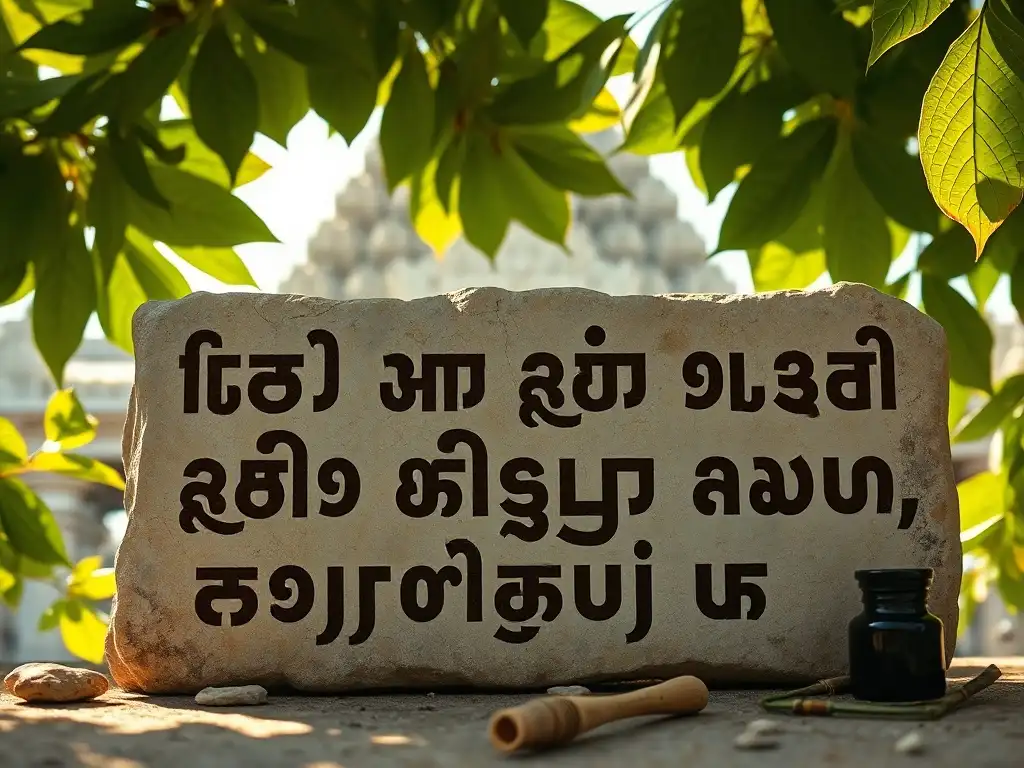
Emerging around the 3rd century BCE, Tamil-Brahmi script represents a significant regional adaptation of the Brahmi script, specifically tailored for the Tamil language. Key features of Tamil-Brahmi include:
- Distinctive Characters: While it retains many elements from Brahmi, Tamil-Brahmi incorporates unique characters to accommodate the phonetics of Tamil.
- Cultural Significance: This script is often found in inscriptions related to early Tamil literature and reflects the socio-political landscape of ancient Tamil Nadu.
- Archaeological Evidence: Numerous inscriptions, including those found in caves and potsherds, provide insights into the early Tamil society and its linguistic development.
The study of Tamil-Brahmi is crucial for understanding the literary and cultural evolution of southern India, highlighting the diversity inherent in ancient scripts.
Other Regional Scripts: Diverse Representations
In addition to Brahmi, Kharosthi, and Tamil-Brahmi, various other regional scripts emerged across ancient India, each contributing to the richness of the subcontinent's linguistic heritage. Some notable examples include:
- Grantha Script: Used primarily for writing Sanskrit in southern India, it served as a bridge between classical Sanskrit literature and regional languages.
- Siddham Script: Originating in the 7th century CE, it played a crucial role in Buddhist texts and spread throughout East Asia.
- Nagari Script: A derivative of Brahmi, it became the basis for many northern Indian languages and continues to be used today.
These regional scripts illustrate the dynamic nature of ancient Indian writing systems, showing how they adapted to local languages and cultures, further underscoring the diversity of ancient Indian scripts and their significance in the historical narrative of the civilization.
Scripts as a Reflection of Society and Culture
Ancient Indian scripts serve as a profound reflection of the society and culture from which they emerged. Each script tells a unique story, revealing insights into the values, beliefs, and daily practices of ancient civilizations. For instance, the Brahmi script, one of the earliest writing systems in India, not only represents the phonetics of the language but also symbolizes the socio-political structures of the time. The use of Brahmi in inscriptions indicates a centralized authority that valued record-keeping and communication.
In contrast, the Kharosthi script, predominantly used in the northwest regions of the Indian subcontinent, reflects the influence of the Persian and Greek cultures due to historical interactions following Alexander's invasion. This script illustrates how external influences were integrated into local writing systems, highlighting the diversity of ancient Indian scripts and their role as cultural artifacts.
Moreover, scripts like Tamil Brahmi showcase the linguistic evolution and regional identity of South India, demonstrating how local dialects and cultural nuances were preserved through writing. The diversity of scripts such as Siddham, used for Sanskrit in Buddhist texts, further emphasizes the importance of religious and scholarly traditions in shaping societal norms.
The Interaction of Language and Religion in Ancient India
The interplay between language and religion in ancient India is vividly illustrated through its scripts. Scripts served as vehicles for religious texts, enabling the dissemination of spiritual and philosophical ideas across vast regions. For instance, the Devanagari script, which is now widely used for several languages including Hindi and Sanskrit, is deeply intertwined with Hindu religious texts such as the Vedas and Upanishads. This script not only facilitated the preservation of religious knowledge but also played a crucial role in rituals and ceremonies.
In Buddhist contexts, scripts like Siddham and Brahmi were employed to transcribe sacred texts, allowing for the spread of Buddhism across Asia. The use of these scripts in monasteries and educational institutions underscores their significance in the religious landscape of ancient India. The Pali Canon, written in Brahmi, is a prime example of how scripts facilitated the transmission of religious teachings.
Furthermore, the Arabic script entered India with the advent of Islam, showcasing the dynamic nature of language and script interaction in response to religious influences. This integration not only enriched the linguistic diversity of the region but also led to the development of hybrid scripts like Urdu, which combines elements of Persian and Arabic with local languages.
How Scripts Facilitated Trade and Communication
Scripts played a pivotal role in enhancing trade and communication among ancient Indian civilizations. The ability to record transactions, contracts, and trade agreements was crucial for the growth of commerce. The Brahmi script was widely used in inscriptions detailing trade routes, goods exchanged, and the parties involved, thus facilitating economic interactions between different regions.
The Indus Valley Civilization is a prime example where seals inscribed with unknown symbols likely served as trade identifiers, aiding merchants in establishing their identity and the authenticity of their goods. These seals, often made of steatite, not only indicate the presence of a sophisticated trade network but also suggest a level of administrative organization that relied on written communication.
As trade expanded, particularly during the Maurya and Gupta empires, the use of scripts became more standardized. The introduction of the Sanskrit language, written in various scripts, became a lingua franca that eased trade across diverse linguistic groups. This standardization allowed for greater cohesion in trade practices and fostered economic stability.
In addition, the rise of the Maritime Silk Road facilitated interactions with foreign traders, necessitating the need for scripts that could bridge linguistic gaps. The adoption of scripts such as Kharosthi by traders in the region enabled smoother communication and exchange of goods, thereby contributing to the richness of ancient Indian scripts diversity.
By studying these aspects, we gain a deeper understanding of how ancient Indian scripts not only reflect the diversity of Indian civilization but also played instrumental roles in cultural, religious, and economic development.
Deciphering Ancient Indian Scripts
Understanding the ancient Indian scripts is essential for unraveling the rich tapestry of Indian civilization. These scripts not only represent the linguistic diversity of the subcontinent but also reflect the cultural, social, and historical contexts in which they were used. The decipherment process has been a complex and evolving endeavor, marked by numerous challenges and significant breakthroughs.
Challenges in Understanding Ancient Scripts Diversity
The diversity of ancient Indian scripts presents several challenges for scholars and epigraphists. Below are some of the key challenges faced in this field:
- Linguistic Variation:
- Ancient India was home to a multitude of languages and dialects, making the scripts highly varied. For example, scripts like Brahmi and Kharoshthi were used for different languages, creating a complex landscape of written communication.
- Fragmentary Evidence:
- Many inscriptions have survived in incomplete states. For instance, the edicts of Ashoka are often found in fragmented pieces, hindering full comprehension of their content and context.
- Cultural Context:
- Understanding the cultural and historical context in which a script was used is crucial. Different regions had distinct practices, and without knowledge of these, interpretations can become skewed.
- Decipherment Techniques:
- The methods used in decipherment have evolved, but many scripts, especially those that are less well-known, still pose significant challenges. For example, the undeciphered Indus script remains a major puzzle for researchers, with various theories but no consensus.
- Interdisciplinary Approach:
- Successful decipherment often requires knowledge from multiple disciplines, such as archaeology, linguistics, and anthropology. The lack of interdisciplinary collaboration can lead to incomplete findings.
Major Discoveries and Breakthroughs in Epigraphy
Over the years, several key discoveries and breakthroughs have significantly advanced our understanding of ancient Indian scripts. Here are some notable examples:
- Brahmi Script:
- The decipherment of Brahmi script, attributed to James Prinsep in the 19th century, marked a turning point. His work on the Ashoka edicts helped unlock a wealth of historical data that had been previously inaccessible.
- Kharoshthi Script:
- Similar to Brahmi, the Kharoshthi script saw significant breakthroughs through the efforts of scholars such as Sir Aurel Stein. His findings in the ancient city of Taxila contributed to the understanding of this script, which was used primarily in the northwestern regions of India.
- Inscriptions from the Gupta Period:
- The discovery of Gupta inscriptions, which utilized a more sophisticated form of Brahmi, provided insights into the socio-political landscape of the time. These inscriptions often reflected the administrative and cultural practices of the Gupta Empire, showcasing the script's evolution.
- Recent Technologies:
- Advances in technology, such as imaging techniques and digital analysis, have allowed researchers to examine inscriptions in ways that were not previously possible. These tools have uncovered details that have aided in the decipherment of faded or illegible texts.
Key Figures in the Decipherment of Indian Scripts
Numerous scholars and epigraphists have played pivotal roles in the decipherment of ancient Indian scripts. Some of the most influential figures include:
- James Prinsep:
- Known for his work on the Brahmi script, Prinsep's contributions laid the groundwork for modern epigraphy in India. His efforts to decipher the inscriptions of Ashoka revealed vital historical information about the Mauryan Empire.
- Sir Aurel Stein:
- A prominent archaeologist, Stein's explorations in Central Asia and India led to the discovery of numerous Kharoshthi inscriptions. His interdisciplinary approach combined archaeology with epigraphy, enhancing the understanding of these scripts.
- N. S. Rajaram:
- A contemporary scholar, Rajaram has focused on the Indus script and its potential links to Dravidian languages. His theories, although sometimes controversial, have sparked significant discussions in the academic community.
- K. R. Narayanan:
- An influential figure in the study of South Indian inscriptions, Narayanan's work has highlighted the regional variations of scripts and their implications for understanding ancient Indian history.
The decipherment of ancient Indian scripts is a dynamic field that continues to evolve. The challenges presented by diverse scripts, combined with significant discoveries and the contributions of key figures, underscore the rich history that these inscriptions encapsulate. Understanding these scripts is not merely an academic pursuit; it is a gateway to appreciating the intricate mosaic of ancient Indian civilization.
The Impact of Ancient Indian Scripts on Modern Languages
Evolution of Scripts into Modern Indian Languages
The evolution of ancient Indian scripts has significantly influenced the development of modern Indian languages. The earliest known script from the Indian subcontinent is the Indus Valley Script, which dates back to approximately 2500 BCE. Although it remains undeciphered, it is believed to have laid the groundwork for subsequent writing systems.
As we move through history, various scripts emerged, each contributing uniquely to the linguistic tapestry of India. For instance:
- Brahmi Script: Considered one of the most significant ancient scripts, Brahmi is the progenitor of many Indian scripts, including Devanagari, Bengali, and Tamil. Its influence extends beyond India, impacting scripts in Southeast Asia.
- Kharosthi Script: Used primarily in the northwest regions of ancient India, Kharosthi was employed for writing Prakrit and later influenced the scripts of Central Asia, such as those used by the Kushan Empire.
The transition from these ancient scripts to modern languages can be summarized in the following table:
| Ancient Script | Modern Language | Characteristics |
|---|---|---|
| Brahmi | Hindi, Marathi | Syllabic, with a combination of consonants and vowels |
| Kharosthi | Urdu | Right-to-left orientation, used for Indo-Aryan languages |
| Tamil | Tamil | One of the oldest continuously used scripts |
| Gupta | Sanskrit | Influenced the development of Devanagari |
This evolution illustrates how ancient Indian scripts diversified, adapting to local languages and cultures while retaining essential features that continue to be evident today.
The Legacy of Ancient Scripts in Contemporary India
The legacy of ancient Indian scripts is deeply ingrained in the cultural and linguistic identity of contemporary India. The scripts not only reflect the diversity of Indian civilization but also serve as a bridge connecting past and present.
Cultural Significance
Many modern languages in India still utilize scripts derived from ancient forms, preserving the linguistic heritage that dates back millennia. For example, the Devanagari script is not only used for Hindi but also for several other languages, including Sanskrit, Marathi, and Nepali. This shared script fosters a sense of unity among speakers of these languages, highlighting the interconnectedness of Indian cultures.
Educational Impact
In contemporary India, ancient scripts are often included in educational curricula, emphasizing their historical importance. Many students learn about the Brahmi and Kharosthi scripts, which enhances their understanding of linguistic evolution and cultural history. This education fosters appreciation for the rich tapestry of languages that characterize India today.
Preservation and Revival
Efforts to preserve ancient scripts are ongoing, with various organizations working to document and digitize inscriptions and manuscripts. These initiatives aim to revive interest in ancient Indian writings, ensuring that future generations recognize their significance. Notably, languages like Sanskrit are experiencing a revival in academic and cultural contexts, leading to renewed interest in its ancient scripts.
The diversity of ancient Indian scripts not only reflects the complexity of India's linguistic heritage but also continues to shape the modern linguistic landscape. Their influence is felt in both the structure of contemporary languages and the cultural practices that celebrate this rich history.
Conclusion: The Significance of Ancient Indian Scripts Diversity
The exploration of ancient Indian scripts reveals a profound diversity that is emblematic of the rich tapestry of Indian civilization. This diversity not only highlights the linguistic variety present in ancient India but also serves as an essential key to understanding the cultural, social, and historical contexts of various regions. The scripts developed and utilized by different communities throughout the subcontinent reflect their unique identities, beliefs, and interactions with neighboring cultures.
Each ancient script, from Brahmi to Kharosthi, encapsulates stories of trade, religion, and governance. For instance, Brahmi, considered one of the earliest scripts, is the progenitor of many modern Indian languages. Its inscriptions often convey messages of royal patronage, religious edicts, and commercial transactions, illustrating how communication evolved over centuries. Similarly, the Kharosthi script, used primarily in the northwest regions, shows the influence of both Indian and Persian cultures, marking the crossroads of ancient trade routes.
Furthermore, ancient scripts provide a window into the socio-political dynamics of the time. The inscriptions found in ancient temples and monuments often reveal the patronage systems and the role of religion in governance, offering insights into the complexities of ancient Indian society. The interplay of various scripts across different dynasties showcases not just linguistic diversity but also the adaptability and resilience of cultures in the face of change.
Reflecting the Plurality of Indian Civilization
The plurality of Indian civilization is vividly reflected through its ancient scripts, which serve as a testament to the coexistence of multiple cultural narratives. For example, the Siddham script, used by Buddhist communities, reflects the spread of Buddhism across Asia, while also indicating interactions with other religious traditions such as Hinduism and Jainism.
- Diversity of Scripts: The variety of scripts can be categorized as follows:
- Religious Scripts: Brahmi, Siddham, and Devanagari used in religious texts.
- Regional Variants: Scripts like Kannada, Telugu, and Tamil evolved to cater to regional languages.
- Trade and Administrative Scripts: Kharosthi and Aramaic used for administrative and commercial purposes.
This diversity is not merely a reflection of linguistic differences but also indicates the historical pathways that shaped Indian civilization. The different scripts often coexisted and influenced each other, leading to a rich intertextual tradition that has survived through centuries. Each inscription acts as a cultural marker that helps identify the nuances of the local traditions, practices, and interactions between communities.
The Continued Relevance of Ancient Scripts in Understanding History
The relevance of ancient Indian scripts extends beyond historical documentation; they continue to play a crucial role in contemporary scholarship and cultural identity. Modern linguists, historians, and archaeologists rely on these scripts to decipher ancient texts, offering insights that shape our understanding of the past.
In recent years, the study of ancient scripts has gained momentum in educational curricula, aiming to instill a sense of pride and awareness of India's rich heritage among younger generations. This revival is vital for cultural preservation and fosters a deeper appreciation for the contributions of ancient Indian civilizations to global history.
The act of deciphering these scripts not only unravels historical narratives but also promotes intercultural dialogue, urging a re-examination of how ancient societies interacted with one another. Moreover, the ongoing research into ancient scripts, aided by technological advancements such as digital imaging and machine learning, holds the potential to uncover even more layers of historical significance, ensuring that the diversity of ancient Indian scripts is appreciated and understood for generations to come.
The ancient Indian scripts diversity stands as a powerful testament to the complexity and richness of India's historical landscape, inviting further exploration and understanding of its multifaceted civilization.
Frequently Asked Questions
What are some of the ancient Indian scripts mentioned in the article?
Ancient Indian scripts include Brahmi, Kharosthi, and Tamil. Each script reflects the linguistic diversity and cultural richness of ancient Indian civilizations.
How did ancient Indian scripts contribute to culture?
These scripts were instrumental in recording literature, religious texts, and administrative documents, showcasing the intellectual and artistic achievements of their time.
What role did the Indus Valley civilization play in script development?
The Indus Valley civilization is believed to have produced one of the earliest forms of writing, known as the Indus script, which remains largely undeciphered but demonstrates early communication practices.
How do ancient scripts showcase India's regional diversity?
The diversity of ancient Indian scripts illustrates the regional languages and dialects that flourished across different areas, each contributing to the cultural mosaic of the subcontinent.
Why is understanding ancient scripts important for modern India?
Studying these scripts helps us appreciate the historical context of India's cultural evolution, fostering a deeper understanding of identity and heritage in contemporary society.
Final Reflection: Embracing the Diversity of Ancient Indian Scripts
The exploration of ancient Indian scripts reveals a profound tapestry of cultural richness and diversity that continues to resonate in today's globalized world. The intricate scripts, each with its unique history and significance, not only represent the linguistic evolution of the Indian subcontinent but also serve as a testament to the harmonious coexistence of various cultures and communities. In an era where the world often feels divided, the legacy of these scripts reminds us of the beauty that arises from diversity.
Diving deeper into the significance of these ancient scripts, we see how they have shaped and enriched the social and cultural landscape of India. The scripts are not merely tools for communication; they embody the thoughts, beliefs, and artistic expressions of countless generations. As we celebrate this diversity, we must remember the words of Mahatma Gandhi: Our ability to reach unity in diversity will be the beauty and the test of our civilization.
This quote encapsulates the essence of ancient Indian scripts, highlighting their role in fostering unity amidst a multitude of voices.
As we reflect on the lessons from these ancient scripts, let us embrace the diversity that surrounds us in our daily lives. I invite you to explore and appreciate the myriad cultures and languages that enrich our world. Whether through learning a new language, engaging with different communities, or simply acknowledging the stories that shape our collective identity, each of us can contribute to a more inclusive and harmonious society. Let the legacy of ancient Indian scripts inspire you to celebrate diversity in all its forms, fostering understanding and connection in your own life.
Unveil the Rich Tapestry of Indian Civilization!
Thank you for exploring the fascinating world of ancient scripts and their reflection on the diversity of Indian civilization. You've just embarked on an insightful journey that deepens your understanding of this vibrant history! Now, it’s time to take that knowledge and turn it into action.
Here are a few practical steps you can take to dive even deeper:
- Visit a local museum or attend a cultural event that showcases ancient Indian artifacts and scripts, allowing you to connect with this history in person.
- Participate in discussions on social media or forums dedicated to ancient Indian history—share your insights and learn from others!
- Consider writing a blog post or creating a video about your favorite ancient script to help spread awareness of India’s rich cultural heritage.
What aspect of India's diverse cultural history would you love to explore further? Share your thoughts below!