
The Archaeological Impact of Inscriptions: Discoveries That Changed Our Understanding of Ancient India


Welcome to Ancient India History, where we embark on a fascinating journey through the rich tapestry of ancient civilizations! Dive into the captivating world of ancient Indian inscriptions discoveries, a gateway to understanding the profound impacts these artifacts have had on our perception of history. From the enigmatic symbols of the Indus Valley to the enlightening texts of the Gupta Empire, each inscription is a story waiting to be uncovered. Join us as we explore how these archaeological gems have reshaped our understanding of the past and continue to inspire curiosity. Ready to delve deeper? Your adventure begins here!

Introduction to Ancient Indian Inscriptions
The study of ancient Indian inscriptions discoveries has profoundly reshaped our understanding of the rich tapestry of India’s past. These inscriptions, often etched into stone, metal, or clay, serve as invaluable primary sources that shed light on the cultural, political, and social landscapes of ancient Indian civilizations.
Through the careful examination of these artifacts, historians and archaeologists have been able to piece together narratives that highlight the achievements, beliefs, and everyday lives of people who lived thousands of years ago. This article delves into the significance of these inscriptions, exploring how they have altered our perceptions of ancient India and the civilizations that flourished within its borders.
Definition of Inscriptions in Ancient India
Inscriptions in ancient India refer to any writing or engraving that has been carved or inscribed onto a durable material, such as stone or metal. These texts can range from royal edicts and religious proclamations to commemorative records and personal dedications. The earliest known inscriptions date back to the Indus Valley Civilization (circa 2500–1900 BCE), where symbols and signs were used, though their exact meanings remain largely undeciphered. As time progressed, more sophisticated scripts emerged, including the Brahmi and Kharosthi scripts, which played a pivotal role in documenting the rich history of this ancient civilization.
Overview of the Importance of Inscriptions in Archaeology
Inscriptions are crucial to the field of archaeology for several reasons:
- Chronological Framework: They provide precise dating for events, rulers, and cultural changes.
- Cultural Insight: Inscriptions reveal the languages, scripts, and literacy levels of ancient populations.
- Political History: They document governance, territorial expansions, and administrative practices.
- Religious Practices: Many inscriptions include religious texts, offering insights into the spiritual beliefs of the time.
- Social Structures: They reflect the social hierarchies and relationships within communities.
By examining these inscriptions, researchers can construct a more nuanced understanding of the ancient Indian world, bridging gaps in historical narratives that are often limited by the scarcity of written records.
Historical Context of Ancient Indian Inscriptions
The historical context of ancient Indian inscriptions is marked by the evolution of writing systems and the rise of various civilizations that contributed to the rich heritage of India.
The Evolution of Writing Systems in Ancient India
The development of writing in ancient India can be traced through several phases, starting from the undeciphered symbols of the Indus Valley Civilization to the flourishing of scripts like Brahmi and Kharosthi during the Maurya Empire (circa 322–185 BCE). This evolution reflects not only technological advancements but also shifts in communication needs and cultural expression:
- Indus Script: Used by the Indus Valley Civilization, yet remains undeciphered.
- Brahmi Script: Emerged around the 3rd century BCE and became the basis for many modern Indian scripts.
- Kharosthi Script: Developed in the northwest of the Indian subcontinent, used primarily for administrative and commercial purposes.
This progression highlights the increasing complexity of communication and record-keeping in ancient Indian societies.
Key Civilizations and Their Inscriptions
Several ancient Indian civilizations contributed significantly to the body of inscriptions that inform us about the past. Notable examples include:
- Indus Valley Civilization: Their seals with pictographs, though not yet deciphered, hint at rich trade networks and societal organization.
- Maurya Empire: The inscriptions of Emperor Ashoka are particularly famous, as they spread messages of Buddhism and ethics across the empire.
- Gupta Empire: Inscriptions from this period reflect advancements in art, literature, and science, marking a golden age in Indian history.
These civilizations utilized inscriptions for various purposes, including governance, trade, religious practices, and cultural expression, thus offering a window into the lives and values of their people.
Through the exploration of these ancient Indian inscriptions discoveries, we gain a deeper appreciation for the historical significance of these texts, which continue to influence our understanding of India's past.
Major Discoveries of Ancient Indian Inscriptions
The field of archaeology has been profoundly enriched by the discovery of ancient Indian inscriptions, which serve as critical primary sources for understanding the socio-political landscapes, cultures, and languages of the time. These inscriptions, found on stone, metal, and pottery, offer invaluable insights into the lives of people and the governance structures of ancient Indian civilizations.
The most significant discoveries span several periods and regions, showcasing the evolution of scripts and languages, as well as cultural exchanges. From the edicts of Ashoka to the inscriptions of the Gupta period, each find has contributed to a richer understanding of India's historical narrative.
The Edicts of Ashoka: A Turning Point in Indian History
The Edicts of Ashoka, inscribed during the reign of Emperor Ashoka (268–232 BCE), are among the most significant archaeological discoveries in ancient Indian history. Found across the Indian subcontinent, these inscriptions were etched on rock surfaces and pillars, disseminating Ashoka’s messages on morality, ethics, and governance.
The edicts are notable for their use of Prakrit language and Brahmi script, making them some of the earliest examples of written communication in India. They advocate for non-violence, tolerance, and social welfare, reflecting Ashoka’s transformation after the Kalinga War. The inscriptions not only shed light on Ashoka's policies but also provide insights into the Mauryan Empire's administration and its emphasis on dharma (moral law).
These edicts have been instrumental in revealing the spread of Buddhism, as they often reference Buddhist principles, indicating the religion's growing influence during this period. The impact of these inscriptions extends beyond India, as they have been found in regions such as Afghanistan and Nepal, illustrating the cultural diffusion facilitated by Ashoka’s reign.
The Inscriptions of the Gupta Period
The Gupta period (approximately 320–550 CE) is often referred to as the "Golden Age" of India, characterized by remarkable achievements in art, literature, and science. Inscriptions from this era provide crucial information about political events, royal patronage, and societal norms.
One of the most significant discoveries is the Allahabad Pillar Inscription, which commemorates the achievements of Emperor Samudragupta. This inscription highlights military conquests, diplomatic relations, and the emperor's patronage of arts and culture, showcasing the administrative proficiency of the Gupta Empire.
Additionally, the Gupta inscriptions often reveal the flourishing of regional languages and scripts, including the emergence of Sanskrit as a prominent literary language. Inscriptions found in temple complexes, such as those at Khajuraho and Udayagiri, provide insights into religious practices, temple architecture, and the socio-economic conditions of the time, indicating a vibrant cultural milieu.
The Role of Inscriptions in Understanding Regional Cultures
Ancient Indian inscriptions play a pivotal role in understanding the diverse regional cultures that flourished across the subcontinent. Each inscription serves as a cultural artifact, reflecting local languages, customs, and historical events.
For example, the Tamil-Brahmi inscriptions found in Tamil Nadu and Sri Lanka provide evidence of early Tamil literature and the socio-political dynamics in south India. These inscriptions reveal the linguistic diversity and cultural richness that existed outside the northern Indian context, demonstrating the importance of regional identities.
Furthermore, inscriptions from various dynasties, such as the Cholas, Pandyas, and Mughals, highlight local governance, trade practices, and religious affiliations, contributing to a more nuanced understanding of India's multifaceted history. The study of these inscriptions allows historians to reconstruct the interactions between different regions, cultures, and communities, offering a comprehensive view of ancient Indian society.
Archaeological Techniques in the Study of Inscriptions
The study of ancient inscriptions relies on a variety of archaeological techniques that enhance our understanding of their historical context and significance. These methods range from traditional excavation practices to modern technological applications, enabling researchers to analyze inscriptions more effectively.
Methods Used in Discovering Inscriptions
The discovery of inscriptions typically involves systematic archaeological excavation, where teams carefully remove soil layers to uncover artifacts. Field surveys are also crucial; researchers often traverse known historical sites to locate inscriptions on temple walls, rocks, or pillars.
Once inscriptions are found, techniques such as photogrammetry and 3D scanning help document their condition and details. These methods allow for precise measurements and create digital records that can be analyzed without disturbing the original artifacts. Additionally, chemical analysis can be employed to understand the composition of the materials used in inscriptions, providing insights into the technological capabilities of ancient civilizations.
Technological Advances in Epigraphy
Recent advancements in technology have revolutionized the field of epigraphy, allowing for more sophisticated methods of analysis. Digital imaging techniques, such as infrared photography and ultraviolet light, are used to enhance the visibility of inscriptions that may have eroded over time.
Moreover, the use of machine learning and AI algorithms is becoming increasingly common in the analysis of inscriptions, enabling scholars to decode ancient scripts and languages more effectively. These technological innovations not only facilitate the study of existing inscriptions but also assist in locating new ones that may have previously gone unnoticed.
The combination of traditional archaeological methods and cutting-edge technology has significantly enriched the study of ancient Indian inscriptions, providing deeper insights into the history and culture of this remarkable civilization.
The Impact of Inscriptions on Our Understanding of Ancient Indian Society
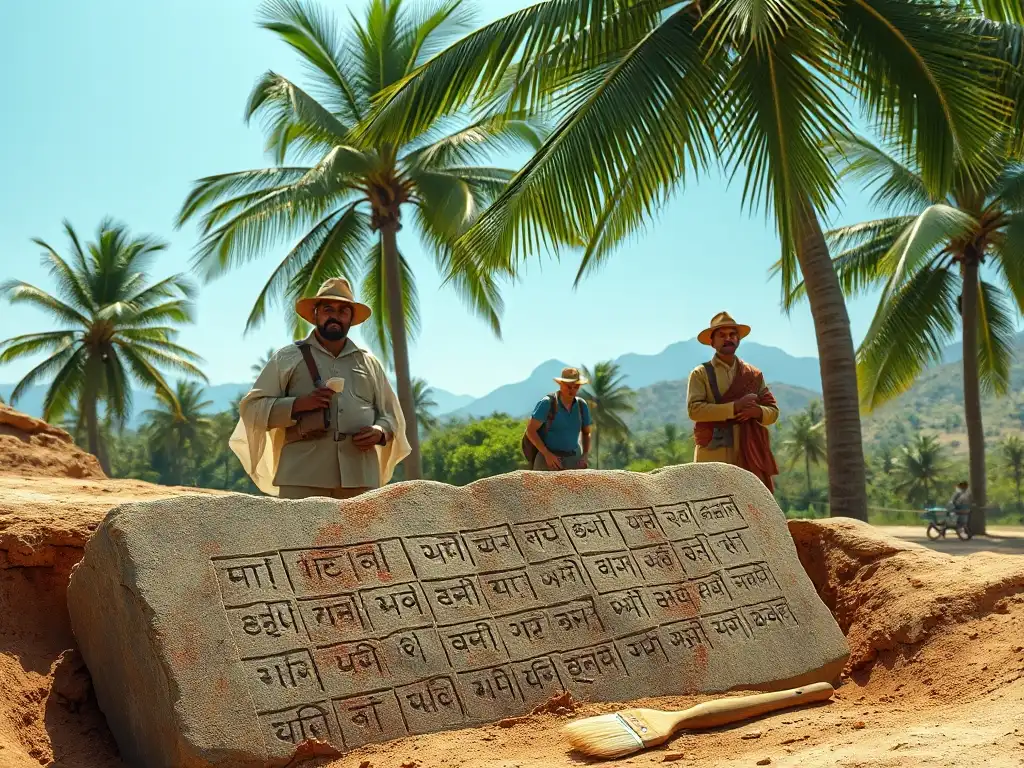
Inscriptions have played a pivotal role in shedding light on the intricate tapestry of ancient Indian society. These etched records, found on a variety of mediums such as stone, metal, and pottery, provide invaluable insights into the cultural, political, and social dimensions of life in ancient India. By studying these inscriptions, historians and archaeologists have been able to reconstruct historical timelines, understand local dialects, and analyze the evolution of languages over the centuries. Furthermore, they serve as a bridge connecting us to the past, revealing the thoughts, beliefs, and practices of ancient civilizations.
Insights into Language and Communication
Ancient Indian inscriptions are a treasure trove for linguists and historians alike, offering significant insights into the evolution of languages and scripts. The inscriptions span various regions and periods, showcasing the diversity of languages such as Sanskrit, Prakrit, and Tamil. For example, the Edicts of Ashoka, inscribed during the reign of Emperor Ashoka in the 3rd century BCE, are pivotal for understanding early Brahmi script and its phonetic attributes.
These inscriptions reflect not only the linguistic variations of that time but also the influences of cultural exchanges across the subcontinent. Scholars have used these texts to trace the development of regional dialects and scripts, providing a clearer picture of how communication evolved in ancient India. Additionally, the bilingual inscriptions found in places like Tamil Nadu highlight the interaction between different language communities, further emphasizing the rich linguistic landscape of the time.
Understanding Religion and Spiritual Practices
Inscriptions serve as vital sources for comprehending the religious landscape of ancient India. They document various religious practices, beliefs, and institutions that shaped the spiritual life of the people. For instance, the rock edicts of Ashoka not only promote Buddhist ideals but also reflect the syncretism of different faiths during his rule.
Moreover, inscriptions found in temples often include dedications, hymns, and descriptions of rituals, providing insight into the worship practices of the time. The presence of diverse inscriptions in sacred sites indicates the coexistence of multiple faiths, including Hinduism, Buddhism, and Jainism, illustrating the pluralistic nature of ancient Indian spirituality. Such discoveries have significantly contributed to our understanding of how religion influenced daily life and governance in ancient societies.
Social Structure and Governance Revealed Through Inscriptions
The study of inscriptions has unveiled much about the social hierarchies and governance systems in ancient India. Inscriptions often contain records of royal decrees, land grants, and administrative orders that reveal the intricacies of governance. For instance, the inscriptions from the Mauryan period provide insights into the centralized administration and the roles of local governors.
Additionally, caste and social stratification are frequently referenced in inscriptions. The mention of guilds, trade associations, and the roles of different social classes in the economy helps us understand the socio-economic framework of ancient Indian society. Inscriptions also reflect the patronage of arts and architecture by various rulers, highlighting the interconnectedness of power and culture.
Challenges in the Study of Ancient Indian Inscriptions
Despite the wealth of information that ancient Indian inscriptions provide, their study is fraught with challenges. Scholars face numerous hurdles including issues of interpretation, preservation, and the integration of modern scholarship into the field of epigraphy.
Issues of Interpretation and Translation
Interpreting ancient inscriptions is often a complex task due to the varying scripts, languages, and dialects used across different regions and periods. The multilingual nature of ancient India means that a single inscription may incorporate multiple languages or scripts, complicating the translation process. Additionally, the context in which an inscription was created can drastically alter its meaning. Scholars must consider historical, cultural, and linguistic nuances to accurately interpret these texts.
Moreover, the lack of comprehensive dictionaries or reference materials for certain ancient scripts further complicates this endeavor. As a result, scholars sometimes rely on conjecture, which can lead to inaccuracies or misinterpretations of the inscriptions' true significance.
Preservation Challenges in Archaeological Sites
The preservation of inscriptions poses another significant challenge. Many archaeological sites where inscriptions have been discovered are vulnerable to environmental factors such as erosion, pollution, and vandalism. Stone inscriptions, while durable, can deteriorate over time due to weathering and natural wear.
Furthermore, the excavation and removal of artifacts can lead to damage or loss of contextual information, which is crucial for understanding the social and historical significance of the inscriptions. Efforts to document and conserve these sites are essential, yet often hindered by limited resources and funding.
The Role of Modern Scholarship in Epigraphy
Modern scholarship plays a crucial role in advancing the study of ancient Indian inscriptions. Advances in technology, such as digital imaging and 3D modeling, have revolutionized how scholars analyze inscriptions, allowing for clearer documentation and preservation. Collaborative efforts among historians, archaeologists, and linguists are essential for piecing together fragmented narratives from inscriptions.
Moreover, interdisciplinary approaches that incorporate anthropology, history, and archaeology enrich the understanding of inscriptions, providing a holistic view of ancient societies. As scholars continue to publish their findings and share insights, the field of epigraphy will undoubtedly evolve, paving the way for new discoveries and interpretations that deepen our understanding of ancient Indian civilizations.
Conclusion: The Lasting Legacy of Ancient Indian Inscriptions
Ancient Indian inscriptions stand as monumental testaments to the rich tapestry of history, culture, and civilization that flourished on the subcontinent. These inscriptions, which range from the edicts of Ashoka to the intricate carvings of temple walls, provide invaluable insights into the political, social, and religious life of ancient India.
Their discovery has not only transformed our understanding of historical timelines but has also shed light on the languages, scripts, and artistic expressions of the time. As we continue to uncover and analyze these inscriptions, their legacy remains a crucial cornerstone in the study of ancient Indian history, reminding us of the complexity and dynamism of past societies.
Reflections on the Ongoing Research and Discoveries
The field of epigraphy is continually evolving, with ongoing research yielding new discoveries that challenge and enhance our understanding of ancient Indian civilizations. Scholars and archaeologists are employing advanced technologies, such as digital imaging and 3D scanning, to examine inscriptions that were previously inaccessible or difficult to interpret. This innovative approach has led to the deciphering of long-lost languages and scripts, further enriching our historical narratives.
Additionally, interdisciplinary collaborations are increasingly common, integrating knowledge from linguistics, archaeology, and anthropology to provide a more comprehensive view of the context surrounding these inscriptions. As a result, the future of epigraphy promises to unveil even deeper layers of understanding regarding ancient Indian societies.
The Future of Inscriptions and Epigraphy in Understanding Ancient India
The future of inscriptions and epigraphy in the study of ancient India appears bright, driven by technological advancements and a growing global interest in ancient cultures. With the advent of artificial intelligence and machine learning, researchers are now able to analyze vast datasets of inscriptions more efficiently than ever before. This will likely lead to the discovery of patterns and connections that were previously overlooked.
Furthermore, as more inscriptions are found and excavated, there is potential for significant revisions to historical narratives, especially concerning trade, migration, and cultural exchanges within and beyond the Indian subcontinent. Continued investment in preservation and research efforts will ensure that the significance of ancient Indian inscriptions is recognized and appreciated for generations to come.
Call to Action
Encouragement for Further Study and Exploration of Ancient Indian Inscriptions
To fully appreciate the depth and richness of ancient Indian history, it is essential to engage with the study of inscriptions. Whether you are a student, researcher, or a history enthusiast, delving into the world of epigraphy can open up new avenues of understanding. There are numerous resources available, including academic journals, online databases, and workshops dedicated to the study of inscriptions. Engaging with these materials can deepen your appreciation for the complexities of ancient Indian civilizations and inspire further inquiry into the narratives encapsulated within these remarkable artifacts.
Invitation to Discover More on Ancient Indian History and Culture
We invite you to explore the diverse and fascinating history of ancient India through its inscriptions and epigraphy. By accessing a wealth of information and resources, you can embark on a journey that uncovers the profound cultural, linguistic, and historical contributions of this remarkable civilization. Join us in our exploration of ancient Indian history and culture, and discover how these inscriptions continue to illuminate our understanding of the past. Together, we can celebrate and preserve the rich legacy of ancient India for future generations.
- Introduction to Ancient Indian Inscriptions
- Historical Context of Ancient Indian Inscriptions
- Major Discoveries of Ancient Indian Inscriptions
- Archaeological Techniques in the Study of Inscriptions
- The Impact of Inscriptions on Our Understanding of Ancient Indian Society
- Challenges in the Study of Ancient Indian Inscriptions
- Conclusion: The Lasting Legacy of Ancient Indian Inscriptions
- Call to Action
Frequently Asked Questions
What are ancient Indian inscriptions?
Ancient Indian inscriptions are writings found on surfaces like stones, metals, or pottery, which provide valuable insights into the languages, cultures, and events of ancient Indian civilizations.
How have inscriptions changed our understanding of ancient India?
Inscriptions have played a crucial role in reconstructing historical narratives, revealing political, social, and economic aspects of ancient Indian life that were previously unknown.
What civilizations are known for their inscriptions?
Civilizations such as the Indus Valley, Maurya, and Gupta are renowned for their inscriptions, which document everything from trade practices to royal decrees.
Where have significant inscriptions discoveries been made in India?
Major discoveries have been made in locations like Ashoka's edicts in Madhya Pradesh and the rock-cut caves of western India, which showcase a variety of artistic and administrative styles.
Why are inscriptions considered important for historians?
Inscriptions serve as primary sources for historians, offering direct evidence of cultural practices, languages, and political structures, thus enriching our understanding of ancient societies.
Final Reflection: The Enduring Legacy of Ancient Indian Inscriptions
The discoveries of ancient Indian inscriptions have not only reshaped our understanding of history but also serve as a powerful reminder of the intricate tapestry of human civilization. These inscriptions, etched in stone and metal, reveal the thoughts, beliefs, and practices of societies long gone, connecting us to our shared past. In a world increasingly driven by technology and rapid change, the importance of these tangible links to history cannot be overstated; they remind us of our roots and the wisdom that can be gleaned from those who came before us.
The influence of these inscriptions extends far beyond academic circles, permeating the cultural and social landscape of contemporary India and beyond. As we engage with these ancient texts, we find ourselves not only learning about the past but also reflecting on our identity and values in the present. The words carved into stone resonate with us today, urging us to consider the lessons of history in our modern lives. History is not just about the past; it is a guide to the future.
This perspective encourages us to appreciate the depth of our heritage and the stories that have shaped our societies.
As we conclude this exploration of ancient Indian inscriptions, I invite you to reflect on how these discoveries can inspire your own journey. Consider the stories that have shaped your life and the lessons they impart. How can you apply the insights gained from the past to navigate the complexities of the present and future? Embrace the opportunity to learn from history, allowing it to guide your actions and decisions, and become a steward of the rich legacy that these inscriptions represent.
Unveil the Secrets of Ancient Inscriptions!
Thank you for taking the time to dive into the fascinating world of archaeological inscriptions and their profound impact on our understanding of ancient India. Your curiosity paves the way for deeper insights into our shared history. Now, let’s transform that knowledge into action!
- Join our community: Share your thoughts on recent discoveries or your favorite inscriptions in our discussion forum.
- Explore further: Visit local museums or online archives to examine inscriptions up close and uncover their intriguing stories.
- Spread the knowledge: Share this article with friends and family who might be interested in history!
Which inscription or discovery has captured your attention the most, and in what ways do you believe it reshapes our understanding of ancient civilizations? Let’s engage in a meaningful discussion!