
From Hieroglyphs to Scripts: The Evolution of Writing in Ancient India

Welcome to Ancient India History, where we embark on a captivating journey through the rich tapestry of India's past. In our featured article, "From Hieroglyphs to Scripts: The Evolution of Writing in Ancient India," we delve into the fascinating transformation of communication that shaped civilizations from the Indus Valley to the Gupta Empire. Discover the intricate layers of inscriptions and epigraphy that not only document history but also reveal the profound cultural advancements of ancient societies.
Prepare to be intrigued as we unravel the stories behind the scripts that have left an indelible mark on human expression and knowledge. Join us as we explore this remarkable evolution and uncover the secrets of a bygone era!
- Introduction to the Evolution of Writing in Ancient India
- The Beginnings: Hieroglyphs in Ancient India
- Transitioning from Hieroglyphs to Early Scripts
- The Rise of Brahmi and Kharosthi Scripts
- The Impact of Writing on Ancient Indian Society
- The Evolution of Writing in the Post-Mauryan Era
- Conclusion: The Legacy of Writing in Ancient India
- References and Further Reading on the Evolution of Writing in Ancient India
-
Frequently Asked Questions
- What is the significance of writing in ancient India?
- How did the Indus Valley Civilization contribute to the evolution of writing?
- What scripts evolved during the Gupta Empire?
- How did ancient Indian writing influence other cultures?
- What was the impact of the evolution of writing on Indian literature?
- Final Reflection: The Enduring Legacy of Writing in Ancient India
- Unveil the Wonders of Ancient Writing!
Introduction to the Evolution of Writing in Ancient India
The evolution of writing in ancient India is a captivating journey that reveals the intricate tapestry of cultures, languages, and ideas that have shaped the subcontinent. From the earliest symbols of the Indus Valley Civilization to the sophisticated scripts of the Gupta Empire, writing has played a pivotal role in communication, governance, and the preservation of knowledge.
This article delves into the various stages of this evolution, exploring how writing systems emerged and transformed over time, reflecting the socio-political and cultural dynamics of their respective eras. By understanding the evolution of writing in ancient India, we gain insights into the intellectual heritage of one of the world's oldest civilizations and appreciate the profound impact these systems had on the dissemination of ideas and information.
Importance of Writing in Ancient Civilizations
Writing serves as a cornerstone for the development of ancient civilizations, acting as a medium for documenting history, legal codes, religious texts, and everyday transactions. In ancient India, writing facilitated:
- Administrative Efficiency: Writing allowed for the effective management of vast empires by documenting laws, tax records, and treaties.
- Cultural Preservation: Through scripts, the philosophical, literary, and artistic achievements of ancient societies were recorded, ensuring their survival through generations.
- Communication: Writing enabled the exchange of ideas across regions, fostering trade, diplomacy, and cultural interactions.
The presence of writing systems in ancient Indian societies not only signifies the sophistication of these civilizations but also their desire to leave a legacy for future generations. The advent of writing marked a significant shift from oral traditions to a more structured means of knowledge transmission, laying the groundwork for future literary and scholarly pursuits.
Overview of the Hieroglyphic and Script Systems
The landscape of writing in ancient India is marked by a variety of scripts and symbols, each with its unique characteristics and purposes. The earliest examples can be traced back to the Indus Valley Civilization (circa 3300-1300 BCE), where indecipherable glyphs were inscribed on seals and pottery. These symbols, although still not fully understood, indicate a complex system of communication that likely played a crucial role in trade and administration.
As time progressed, several scripts emerged, notably:
- Brahmi Script: Developed around the 3rd century BCE, Brahmi is considered the progenitor of many Indian scripts and is crucial for understanding the evolution of writing in the region.
- Kharosthi: This script, used in the northwest of India, coexisted with Brahmi and was primarily employed for administrative and commercial purposes.
- Devanagari: Evolving later, this script is now widely used for several modern Indian languages, showcasing the enduring influence of ancient writing systems.
Each of these scripts reflects the linguistic diversity of ancient India and illustrates the complexities of its cultural interactions. The study of these writing systems is not merely an academic pursuit; it opens a window into the minds and lives of those who lived in ancient times, providing a deeper understanding of their societal structures and beliefs.
The Beginnings: Hieroglyphs in Ancient India
Understanding Hieroglyphs: Definition and Characteristics
Hieroglyphs are a form of writing that utilizes symbols and characters to convey meanings, often representing sounds, words, or ideas. In ancient India, hieroglyphs primarily emerged during the Indus Valley Civilization (circa 3300–1300 BCE). These symbols often depict animals, human figures, and abstract shapes, and are believed to be an early form of script used for communication and record-keeping.
The characteristics of these hieroglyphs include:
- Pictorial Representation: Hieroglyphs are predominantly pictorial, meaning they visually represent the objects or concepts they signify.
- Combination of Logographic and Phonetic Elements: Some symbols function as logograms (representing words or morphemes), while others have phonetic values (representing sounds).
- Lack of Standardization: Unlike later scripts, the Indus Valley hieroglyphs do not appear to follow a uniform system, with variations observed across different sites.
The study of these early symbols provides crucial insights into the evolution of writing in ancient India, revealing the complexity and sophistication of early Indian societies.
The Role of Hieroglyphs in Early Indian Civilizations
Hieroglyphs played a pivotal role in the early Indian civilizations, particularly in facilitating communication and administration. Their usage is believed to have been essential for various functions, including:
- Trade and Commerce: Hieroglyphic inscriptions likely served as a means to record transactions, ensuring clarity in trade dealings between merchants.
- Religious Practices: Symbols may have been employed in religious contexts, possibly inscribing prayers or invoking deities, thereby connecting the spiritual and material worlds.
- Cultural Identity: The adoption of hieroglyphs contributed to a shared identity among the diverse communities within the Indus Valley, fostering a sense of unity and cultural pride.
The significance of these hieroglyphs is further underscored by their implications for social organization, as the ability to write likely influenced hierarchical structures and governance in these ancient societies.
Examples of Hieroglyphic Inscriptions in the Indus Valley
Several notable examples of hieroglyphic inscriptions from the Indus Valley Civilization showcase the complexity of this early writing system. Among the most prominent are:
- The Seal of Pashupati: This famous seal depicts a figure seated in a yogic posture surrounded by animals, with various symbols engraved around it. This seal is thought to have religious significance and reflects the intertwined nature of spirituality and daily life in the Indus culture.
- The Dholavira Inscription: Found at the site of Dholavira, this inscription is composed of large rectangular blocks with symbols carved into them. It is unique due to its elaborate layout and is believed to convey information related to water management and societal organization.
- The Harappa Seals: These small seals, often made of steatite, bear various symbols and motifs. The inscriptions on these seals indicate their use for trade and administrative purposes, highlighting the sophistication of the Indus Valley's economic systems.
These inscriptions not only reflect the artistic and communicative skills of ancient Indian civilizations but also mark a significant milestone in the evolution of writing in ancient India, laying the groundwork for later scripts and literary traditions.
Transitioning from Hieroglyphs to Early Scripts
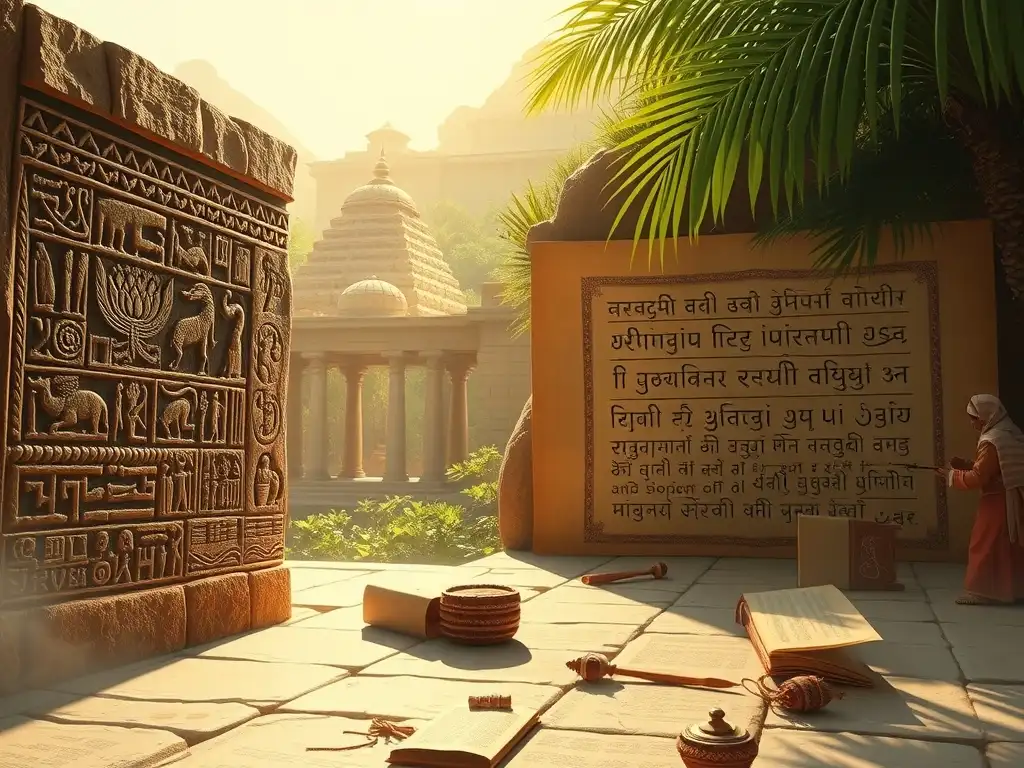
The transition from hieroglyphs to early scripts in ancient India marks a significant evolutionary step in the history of writing. This evolution was not merely a change in symbols but a reflection of broader social, cultural, and technological advancements. The movement from intricate pictographic representations to more abstract forms of writing facilitated enhanced communication and record-keeping, ultimately laying the groundwork for the rich literary traditions that followed.
Factors Influencing the Shift from Hieroglyphs to Scripts
Several factors contributed to the shift from hieroglyphs to scripts in ancient India. Understanding these influences provides insight into the complexities of this transformation.
- Social and Political Changes:
- As ancient civilizations in India, such as the Indus Valley Civilization, began to expand, there was a growing need for more efficient communication methods. The hieroglyphic system, while effective for certain contexts, became cumbersome for administrative purposes.
- The rise of centralized governance required standardized methods of record-keeping, leading to the development of simpler and more versatile writing systems.
- Technological Advancements:
- The advent of new materials and tools, such as metal styluses and clay tablets, allowed for the creation of more durable and versatile scripts. This shift made it easier to produce and preserve written records.
- Innovations in ink and paper-like materials contributed to the evolution of writing, as they provided more options for inscription and documentation.
- Cultural Interactions:
- Trade and cultural exchanges with neighboring regions, such as Mesopotamia and Persia, introduced new ideas about writing systems and documentation practices. The interaction with these cultures facilitated the adoption and adaptation of various writing methods.
- Interactions with other ancient civilizations led to a blending of styles, resulting in unique adaptations suited to the Indian context.
- Religious and Philosophical Influences:
- The rise of religious texts and philosophical treatises necessitated the development of scripts capable of expressing complex ideas and narratives. This demand drove the evolution toward more sophisticated writing systems.
- The need to document religious teachings and practices encouraged the adoption of scripts that could convey deeper meanings and nuances.
The Development of Proto-Scripts in Ancient India
Proto-scripts represent the early stages of writing in ancient India, showcasing the transition from pictorial representations to phonetic symbols. These developments were crucial in shaping the linguistic landscape of the region.
- Indus Valley Script:
- The Indus Valley Civilization (circa 2600–1900 BCE) utilized a system of symbols that is often categorized as a proto-script. This script comprised around 400 distinct signs, primarily used for trade and administrative purposes.
- Although the Indus script remains undeciphered, it is believed to have laid the groundwork for subsequent writing systems in the region.
- Brahmi and Kharosthi Scripts:
- The emergence of Brahmi and Kharosthi scripts around the 3rd century BCE marks a significant advancement in the evolution of writing in ancient India. These scripts are recognized for their phonetic representation of sounds, allowing for a more extensive range of expression.
- Brahmi is considered the ancestor of many modern scripts in India and Southeast Asia, while Kharosthi was used primarily in the northwest regions, highlighting the regional diversity in writing practices.
- Influence of Oral Traditions:
- The rich tradition of oral storytelling and knowledge transmission in ancient India played a pivotal role in the development of proto-scripts. As stories and teachings became codified in written form, scripts evolved to capture the nuances of oral narratives effectively.
- This interplay between oral and written traditions was vital in shaping how knowledge was recorded and transmitted across generations.
The Influence of Neighboring Cultures on Writing Systems
The evolution of writing in ancient India was significantly influenced by neighboring cultures, which contributed to the diversity and richness of its writing systems.
- Cultural Exchange with Mesopotamia:
- Trade routes connecting India with Mesopotamia introduced Indian civilizations to cuneiform writing and administrative practices. This exchange prompted Indian scribes to adopt certain elements of these writing systems, facilitating the transition toward more abstract scripts.
- The Mesopotamian emphasis on record-keeping and trade documentation influenced Indian practices, leading to the creation of more sophisticated writing methods.
- Persian Influence:
- The Achaemenid Empire's expansion into the Indian subcontinent brought Persian administrative practices and the use of the Aramaic script. This exposure encouraged the development of scripts that could accommodate both local languages and administrative needs.
- The incorporation of Persian elements into Indian writing systems reflects the adaptive nature of cultural exchanges, resulting in the evolution of scripts that were both functional and representative of local contexts.
- Impact of Hellenistic Culture:
- Following Alexander the Great's invasion, the interaction between Greek and Indian cultures led to the introduction of Hellenistic ideas, including those related to writing and literacy. The exposure to Greek scripts influenced the development of local scripts, particularly in urban centers.
- The blending of Greek and Indian writing styles highlights the dynamic nature of cultural exchanges during this period, enriching the writing landscape of ancient India.
- Regional Variations:
- As different regions of India engaged with neighboring cultures, unique adaptations of writing systems emerged. Languages such as Tamil and Sanskrit developed their own scripts, reflecting local linguistic characteristics while incorporating influences from other writing traditions.
- This regional diversity not only showcases the adaptability of writing systems but also emphasizes the importance of context in the evolution of scripts across ancient India.
By examining these factors and influences, we gain a deeper understanding of the evolution of writing in ancient India, a process that was shaped by a multitude of social, technological, and cultural dynamics.
The Rise of Brahmi and Kharosthi Scripts
The Brahmi and Kharosthi scripts represent significant milestones in the evolution of writing in ancient India, marking the transition from oral traditions to a system of written communication that would facilitate administration, trade, and cultural exchange. These scripts emerged around the 3rd century BCE, during a period characterized by the consolidation of political powers and the spread of Buddhism and Jainism, which necessitated a more organized means of documentation.
Historical Context of Brahmi and Kharosthi Scripts
Brahmi script is believed to have originated in the northwest regions of India, influenced by the earlier Indus Valley symbols and possibly Semitic scripts. Its development coincided with the Mauryan Empire, particularly under Emperor Ashoka, who played a crucial role in promoting writing for governance and spreading Buddhist teachings. The Rock Edicts of Ashoka, inscribed in Brahmi, stand as a testament to its use in official communications.
Conversely, Kharosthi script flourished in the Gandhara region, which is present-day Pakistan and Afghanistan. It was commonly used for writing the Prakrit language and remained prevalent until the 4th century CE. Kharosthi inscriptions have been discovered on coins, seals, and other artifacts, indicating its widespread use in trade and administration, particularly during the Indo-Greek and Kushan periods.
Characteristics and Structure of Brahmi Script
Brahmi script is notable for its abugida structure, where consonants carry an inherent vowel sound, typically 'a,' unless modified by diacritical marks. This system allowed for a more efficient representation of the phonetic sounds of the languages spoken in ancient India.
Key features of Brahmi include:
- Linear Design: Brahmi is characterized by its simple, linear shapes that are easily inscribed on stone or other materials.
- Direction of Writing: The script is written from left to right, a convention that has influenced many subsequent scripts in the Indian subcontinent.
- Numerical System: Brahmi also developed a system of numerals, which was one of the earliest in use in India.
The script's adaptability and its ability to represent a range of languages led to its evolution into various regional scripts, including Devanagari, Tamil, and Bengali.
The Unique Features of Kharosthi Script
Kharosthi script is distinctive in several ways, setting it apart from Brahmi. It is also classified as an abugida, but it is written from right to left, reflecting influences from Semitic scripts.
Key characteristics include:
- Curvilinear Forms: Kharosthi features more rounded and curvilinear shapes compared to the angularity of Brahmi, which may reflect the artistic styles prevalent in Gandhara.
- Limited Usage: Kharosthi was primarily used for administrative and commercial purposes, with fewer literary texts compared to Brahmi, which saw broader application across various domains.
- Influence on Other Scripts: Although Kharosthi eventually fell out of use, it influenced the development of scripts in Central and East Asia, particularly in Buddhist contexts.
The evolution of both Brahmi and Kharosthi scripts marks a critical phase in the evolution of writing in ancient India, allowing for the preservation of literature, religious texts, and historical records that continue to inform our understanding of ancient Indian civilization today.
Comparison of Brahmi and Kharosthi: Similarities and Differences
The Brahmi and Kharosthi scripts represent two significant writing systems that emerged in ancient India, particularly during the period of the Maurya Empire. While they played a crucial role in the documentation and dissemination of knowledge, they also exhibit notable similarities and differences that reflect the linguistic and cultural diversity of the region.
Similarities
- Origins: Both Brahmi and Kharosthi are believed to have evolved from the ancient Phoenician script, which indicates a common ancestry. They were adapted to suit the phonetic requirements of various Indian languages, marking a significant development in the evolution of writing in ancient India.
- Phonetic Nature: Both scripts are phonetic in nature, meaning they were designed to represent sounds rather than ideas or concepts. This characteristic allowed for a more accurate representation of the spoken language, facilitating communication and record-keeping.
- Usage: Brahmi and Kharosthi were both used extensively during the same historical period, particularly during the Maurya Empire (3rd century BCE). They were employed in inscriptions, coins, and manuscripts, serving as a medium for administrative, religious, and cultural texts.
- Influence on Other Scripts: Both scripts significantly influenced later writing systems in India and beyond. Brahmi, in particular, is considered the ancestor of many modern Indian scripts, while Kharosthi influenced the development of scripts in Central Asia.
Differences
- Direction of Writing: One of the most evident differences is the direction in which they were written. Brahmi is written from left to right, while Kharosthi is written from right to left. This distinction highlights the unique characteristics of each script and reflects the diversity in writing practices.
- Character Shapes: The shapes of the characters in Brahmi and Kharosthi differ significantly. Brahmi characters tend to have more rounded forms, while Kharosthi characters are more angular and linear. This difference in aesthetics also affects their readability and stylistic representation.
- Geographical Distribution: Brahmi was predominantly used in the Indian subcontinent, while Kharosthi was primarily used in the northwestern regions, including present-day Pakistan and Afghanistan. This geographical distinction indicates the cultural and linguistic variations that existed within ancient Indian civilizations.
- Linguistic Applications: Brahmi was used to write various languages, including Sanskrit and Prakrit, while Kharosthi was mainly employed for writing the Gandhari language, which was spoken in the regions around Gandhara. This reflects the adaptability of each script to the linguistic needs of their respective regions.
- Decline and Legacy: The decline of Kharosthi came earlier than that of Brahmi, primarily due to the rise of Brahmi-derived scripts in the Indian subcontinent. While Brahmi evolved into various regional scripts, Kharosthi fell out of use and was largely forgotten, except for its historical significance in the study of ancient scripts.
The Brahmi and Kharosthi scripts, while sharing a common heritage and phonetic structure, diverged significantly in their writing direction, character shapes, geographical relevance, linguistic applications, and historical trajectories. Their study not only sheds light on the evolution of writing in ancient India but also offers insights into the cultural and linguistic diversity of the time.
The Impact of Writing on Ancient Indian Society
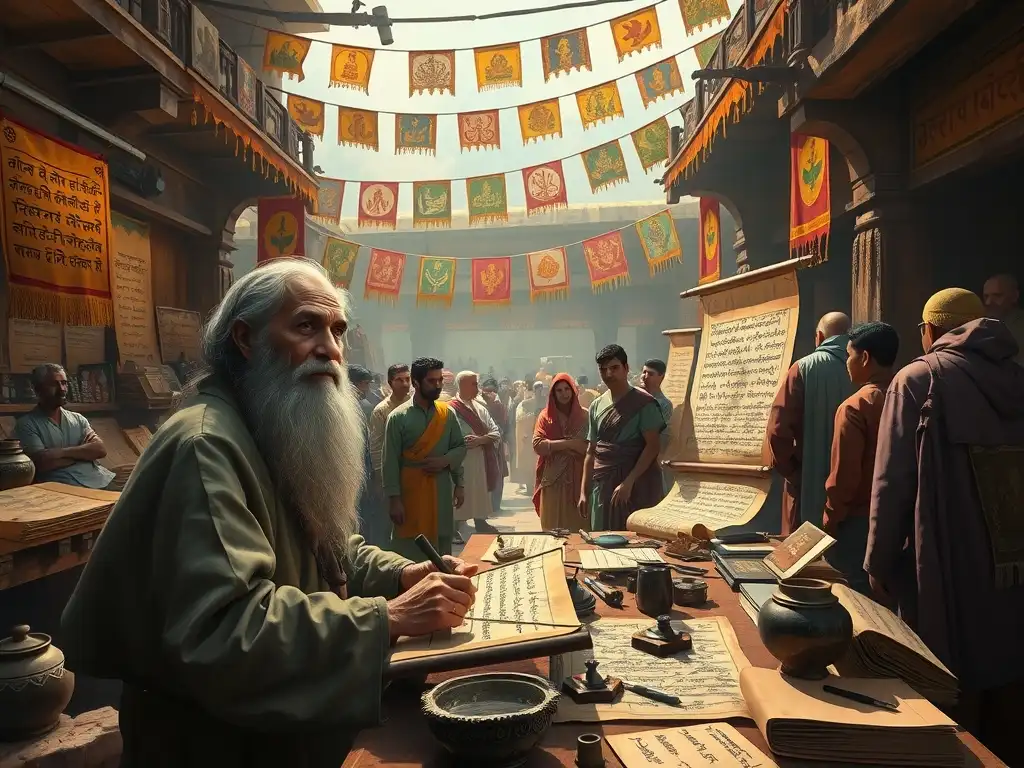
The evolution of writing in ancient India played a pivotal role in shaping the socio-political landscape, religious beliefs, and cultural practices of the time. Writing not only facilitated communication but also served as a crucial medium for the administration, governance, and dissemination of knowledge. This section delves into the multifaceted impact of writing on ancient Indian society, highlighting its significance in various domains.
Writing as a Tool for Administration and Governance
In ancient India, writing emerged as an essential instrument for the administration and governance of diverse kingdoms and empires. The ability to document laws, treaties, and administrative orders was crucial for maintaining order and effective governance.
- Legal Documentation:
- Ancient texts, such as the Arthashastra attributed to Kautilya, outline the importance of written laws for regulating society.
- Inscriptions on stone pillars and edicts, like those of Emperor Ashoka, served to communicate laws and policies to the public, demonstrating the role of writing in governance.
- Record-Keeping:
- Writing enabled meticulous record-keeping of taxation, land ownership, and trade transactions, which enhanced economic management.
- Administrative records were often inscribed on terracotta tablets, showcasing the early use of writing in bureaucratic functions.
- Communication Across Regions:
- The development of scripts such as Brahmi and Kharosthi facilitated inter-regional communication, allowing for the expansion of trade networks and cultural exchanges.
- Official documents, decrees, and letters could be disseminated across vast territories, ensuring that governance could be maintained even in distant provinces.
The Role of Writing in Religion and Philosophy
Writing in ancient India was deeply intertwined with religious and philosophical thought, serving as a vehicle for transmitting spiritual teachings and cultural values.
- Sacred Texts:
- The Vedas, Upanishads, and Puranas were composed in Sanskrit and preserved through writing, allowing for the transmission of complex religious ideas and rituals.
- These texts not only codified religious practices but also reflected the philosophical inquiries of ancient Indian thinkers.
- Scriptural Commentaries:
- Scholars wrote extensive commentaries on sacred texts, further enriching the philosophical discourse.
- The interplay of writing and oral traditions allowed for a comprehensive understanding of spiritual concepts, influencing generations of followers.
- Inscriptional Evidence of Beliefs:
- Inscriptions found in temples and stupas often contained verses dedicated to deities, illustrating the connection between writing and religious devotion.
- Such inscriptions provided insights into the socio-religious fabric of ancient Indian society, revealing the interplay between governance and spirituality.
Literature and Epigraphy: A Reflection of Ancient Indian Culture
Writing in ancient India was not limited to administrative or religious functions; it also encompassed a rich literary tradition that reflected the diverse cultural landscape of the time.
- Poetry and Prose:
- The earliest forms of literature, such as the Mahabharata and Ramayana, were written in verse and prose, showcasing the artistic expression of ancient Indian culture.
- The flourishing of literary genres during the Gupta Empire exemplified the cultural renaissance, with works like Kalidasa's plays gaining prominence.
- Epigraphic Records:
- Epigraphy, the study of inscriptions, serves as a vital source for historians, revealing insights into the socio-political and cultural dynamics of ancient India.
- Inscriptions on pillars, caves, and coins provide concrete evidence of historical events, societal norms, and the patronage of arts and culture.
- Cultural Identity and Heritage:
- Writing enabled the preservation of cultural heritage, allowing future generations to connect with their past.
- The scripts and languages evolved over time, reflecting the amalgamation of various influences and contributing to the rich tapestry of ancient Indian civilization.
The evolution of writing in ancient India was instrumental in shaping its society, governance, religion, and culture. By documenting thoughts, laws, and cultural expressions, writing not only facilitated the administration of vast empires but also laid the foundation for a rich literary and philosophical tradition that continues to influence modern India.
The Evolution of Writing in the Post-Mauryan Era
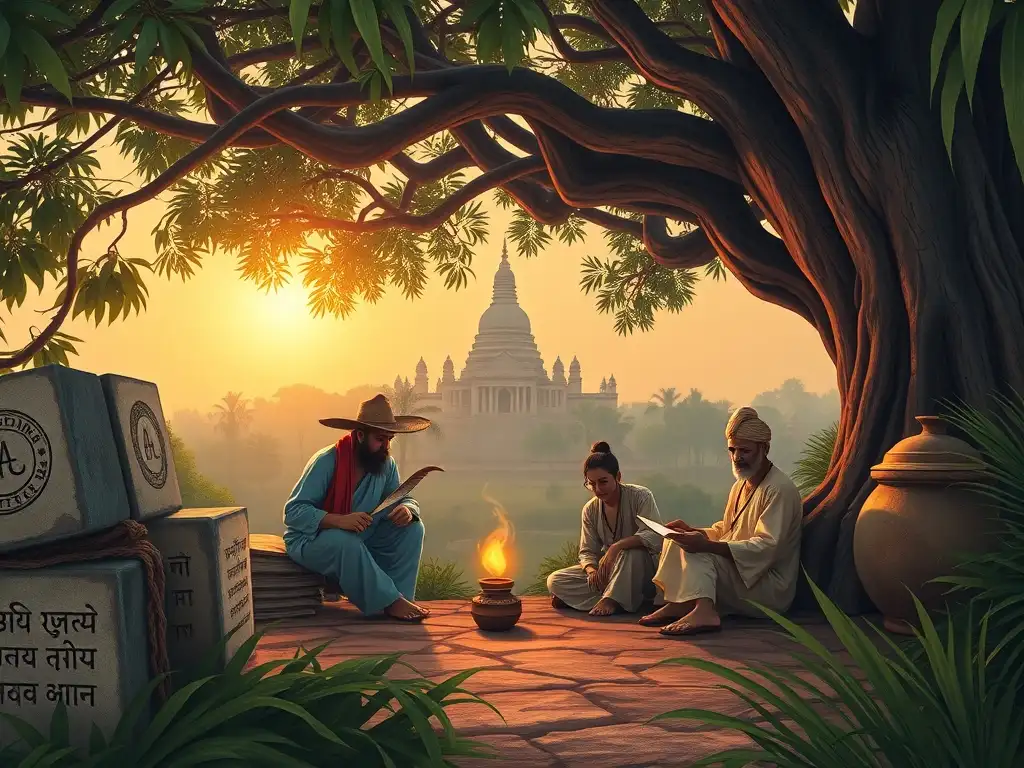
The post-Mauryan era marked a significant transformation in the evolution of writing in ancient India. Following the decline of the Mauryan Empire around 185 BCE, regional kingdoms began to emerge, leading to a diversification in script development across different parts of the subcontinent. This era witnessed the rise of various regional scripts that adapted and evolved from the Brahmi and Kharosthi scripts, which were prevalent during the Mauryan period.
Development of Regional Scripts: A Case Study
One of the most notable developments during this period was the emergence of distinct regional scripts, which reflected the linguistic and cultural diversity of ancient India. For instance, the Tamil script evolved in the southern region, while the Brahmi script branched into several variations throughout northern and central India.
- Tamil Script: Originating around the 3rd century BCE, the Tamil script was used predominantly in the Tamil-speaking regions. It is known for its unique characters, which are distinct from those of Brahmi. The earliest inscriptions found in this script include the Tamil-Brahmi inscriptions, showcasing the transition from Brahmi influences to a more localized form of writing.
- Nagari Script: Emerging in the 1st century CE, the Nagari script became a crucial writing system in northern India. It was characterized by its horizontal line running across the top of the letters and is the ancestor of several modern scripts, including Devanagari, which is used for Sanskrit, Hindi, and other languages.
- Grantha Script: Developed in southern India, the Grantha script was primarily used for writing Sanskrit texts. It played a significant role in the preservation of ancient literature and religious texts, demonstrating the interconnectedness of regional and religious writing practices.
These scripts not only facilitated communication but also played a vital role in the documentation of cultural, religious, and administrative affairs during the post-Mauryan period.
The Influence of the Gupta Empire on Writing Systems
The Gupta Empire, which flourished from approximately 320 to 550 CE, is often referred to as the "Golden Age" of ancient India due to its remarkable advancements in art, science, and literature. This period had a profound impact on the evolution of writing systems, particularly through the standardization of scripts and the promotion of literature.
The Gupta rulers endorsed the use of the Brahmi script, which became more refined and widely adopted during this era. As a result, several key developments emerged:
- Cultural Integration: The Gupta Empire's vast expanse allowed for the integration of various regional scripts, leading to a rich literary culture. The influence of Gupta patronage on literature resulted in the creation of significant texts, such as the Panchatantra and the works of Kalidasa.
- Sanskrit as a Literary Language: The Gupta period marked the establishment of Sanskrit as the predominant literary language, further solidifying the Brahmi script's significance. This era saw the creation of numerous inscriptions, both religious and secular, that were inscribed in Sanskrit, showcasing the script’s versatility.
- Advancements in Epigraphy: The Gupta period also witnessed advancements in the field of epigraphy. Inscriptions became more elaborate in style and content, often detailing royal achievements, religious dedications, and land grants. Such inscriptions serve as vital historical sources that illuminate the socio-political landscape of the time.
The Transition from Ancient Scripts to Modern Languages
The evolution of writing in ancient India did not end with the Gupta Empire; instead, it laid the groundwork for the transition to modern languages. As regional languages began to gain prominence, the ancient scripts adapted to accommodate the unique phonetic and grammatical needs of these languages.
- Evolution of Scripts into Modern Languages: The Brahmi script, for instance, evolved into several modern scripts such as Devanagari, Bengali, and Gujarati. Each of these scripts reflects the linguistic characteristics of its respective language, demonstrating the dynamic nature of script evolution.
- Preservation of Ancient Texts: Many ancient texts and inscriptions were preserved through the use of these evolving scripts. This preservation was crucial for the continuity of cultural and literary traditions, allowing for the transmission of knowledge across generations.
- Impact on Linguistic Diversity: The transition from ancient scripts to modern languages has contributed to the rich tapestry of linguistic diversity in India today. The influence of ancient scripts is still evident in the scripts used for various Indian languages, showcasing the enduring legacy of the evolution of writing in ancient India.
The evolution of writing in ancient India, particularly during the post-Mauryan era and the Gupta Empire, highlights a remarkable journey of cultural and linguistic development. The legacy of these ancient scripts continues to resonate in modern Indian languages, reflecting the rich history and diversity of the subcontinent.
Conclusion: The Legacy of Writing in Ancient India
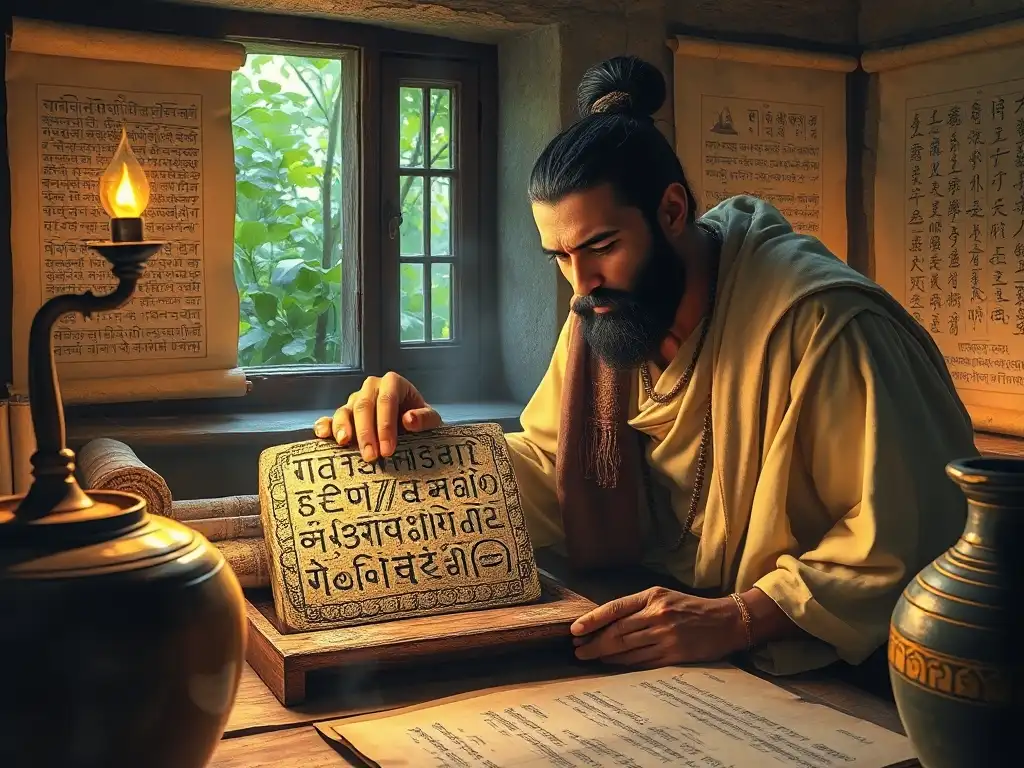
The evolution of writing in ancient India is not merely a historical curiosity but a significant testament to the intellectual and cultural advancements of its civilizations. From the intricate seals of the Indus Valley to the sophisticated scripts of the Gupta Empire, writing served as a crucial medium for communication, administration, and expression of ideas. This legacy has laid the groundwork for the development of modern writing systems in India, influencing literature, religion, and governance.
The innovative scripts that emerged throughout history reflect the dynamic interplay between various cultures and languages, showcasing how writing adapted to the needs of different societies. Each script, whether Brahmi, Kharosthi, or Devanagari, carries a story of its own, embodying the philosophies and aesthetics of its time. This rich tapestry of written expression continues to be a subject of study and admiration, highlighting the intellectual prowess of ancient Indian thinkers.
Significance of the Evolution of Writing in Historical Context
The evolution of writing in ancient India is pivotal for understanding the broader historical narrative of the subcontinent. It marks the transition from oral traditions to recorded knowledge, enabling the preservation and dissemination of culture and ideas across generations. The earliest known script, the Indus script, remains undeciphered but indicates a complex society that valued communication and record-keeping.
Following the Indus Valley civilization, the emergence of Brahmi and Kharosthi scripts during the Maurya period illustrates significant advancements in writing technology. These scripts facilitated the spread of Buddhism, with texts being written and distributed across Asia, influencing various cultures. The inscription of edicts by Emperor Ashoka in Brahmi script underscores the role of writing as a tool for governance and moral instruction, highlighting its significance in statecraft.
As we move into the Gupta period, the development of Devanagari script and other regional scripts signifies a diversification and localization of writing practices. This evolution is not just a reflection of linguistic changes but also of the socio-political transformations taking place in ancient India. The ability to record laws, philosophies, and literary works contributed to a rich cultural heritage that continues to shape Indian society today.
The Continuing Influence of Ancient Scripts on Modern Indian Languages
The legacy of ancient Indian scripts can be seen in the modern languages and scripts used across the subcontinent. For instance, Devanagari, which evolved from Brahmi, is now the script for several major languages, including Hindi, Marathi, and Sanskrit. This continuity demonstrates how ancient writing systems have adapted to contemporary needs while retaining their historical roots.
Moreover, regional scripts such as Tamil, Bengali, and Gujarati serve as reminders of the diverse linguistic landscape of India, each tracing its origins back to ancient writing traditions. The influence of ancient scripts extends beyond mere language; they have shaped literature, arts, and social communication in various forms.
The resurgence of interest in ancient scripts has also spawned movements aimed at reviving traditional calligraphy and scriptural studies. Educational institutions are increasingly incorporating epigraphy and ancient languages into their curricula, ensuring that the knowledge and artistry of ancient writing are preserved for future generations.
The evolution of writing in ancient India is a profound journey that not only reflects the ingenuity of its people but also continues to influence modern Indian identity and culture. Understanding this evolution enriches our appreciation of the complexities of Indian history and the enduring power of the written word.
References and Further Reading on the Evolution of Writing in Ancient India
Suggested Books and Articles
The study of the evolution of writing in ancient India is enriched by a variety of scholarly works that delve into the intricacies of scripts, inscriptions, and their cultural significance. Below is a selection of recommended readings:
-
"The Indus Script: Texts, Concordance, and Translations" by Iravatham Mahadevan
This comprehensive text provides an in-depth analysis of the Indus Valley script, offering insights into its structure and possible meanings through meticulous comparisons and interpretations.
-
"Ancient Indian Epigraphy" by D.C. Sircar
A seminal work that explores the development of inscriptions in India, highlighting the evolution of writing techniques from early Brahmi to later scripts. Sircar's research is instrumental in understanding the broader context of Indian epigraphy.
-
"Scripts and Writing in India: A Historical Perspective" by B. R. Mani
This book encapsulates the historical progression of various scripts used in India, detailing their origins, transformations, and socio-cultural impacts over centuries.
-
"The Brahmi Script: A Historical Study" by Richard Salomon
Salomon's work focuses on the Brahmi script's evolution, tracing its lineage and influence on subsequent scripts. It includes critical analyses of inscriptions and their implications for understanding ancient Indian society.
-
"Deciphering the Indus Script" by Nayanjot Lahiri
Lahiri presents a compelling argument regarding the challenges and methodologies involved in deciphering the enigmatic Indus script, stimulating further discourse on ancient writing systems.
Online Resources for Further Exploration
For those interested in delving deeper into the evolution of writing in ancient India, several online platforms and databases provide valuable resources:
-
Digital South Asia Library
This online repository offers access to a vast array of texts and resources related to South Asian history, including ancient inscriptions and scripts. Visit here .
-
Epigraphia Indica
A comprehensive digital archive that hosts a wealth of epigraphical data, including photographs of inscriptions and scholarly articles discussing their significance. This resource is invaluable for researchers and enthusiasts alike.
-
The Indian Archaeological Society
Their website features publications and research articles on Indian epigraphy, archaeology, and the historical contexts of various scripts.
-
Ancient India - The Indus Valley Civilization
A dedicated section on various educational websites that provide insights into the Indus Valley Civilization, including analyses of its script and writing systems.
-
ResearchGate
A platform where scholars share their research papers and articles, including studies on ancient Indian scripts. Useful for accessing recent findings and ongoing research in the field.
These resources collectively offer a robust foundation for understanding the evolution of writing in ancient India, enriching both scholarly research and general interest.
Frequently Asked Questions
What is the significance of writing in ancient India?
Writing played a crucial role in the administration, trade, and cultural expressions of ancient Indian civilizations, helping to preserve knowledge and facilitate communication across vast regions.
How did the Indus Valley Civilization contribute to the evolution of writing?
The Indus Valley Civilization utilized hieroglyphs and symbols for their early writing systems, which laid the groundwork for later scripts and forms of written communication in India.
What scripts evolved during the Gupta Empire?
The Gupta Empire saw the emergence of the Brahmi and Kharosthi scripts, which were instrumental in the standardization of writing and influenced many other languages and scripts in the region.
How did ancient Indian writing influence other cultures?
Ancient Indian scripts, particularly Brahmi, spread throughout Asia, influencing the development of writing systems in countries like Southeast Asia and Tibet, showcasing the cultural exchange between civilizations.
What was the impact of the evolution of writing on Indian literature?
The evolution of writing in ancient India led to the preservation and creation of significant literary works, including epics like the Mahabharata and Ramayana, enriching India's cultural heritage.
Final Reflection: The Enduring Legacy of Writing in Ancient India
The evolution of writing in ancient India is not just a historical narrative; it is a testament to the profound impact that written communication has on culture and society. As we navigate our modern world, the significance of this evolution becomes increasingly clear, revealing how the foundations laid by ancient scribes continue to shape our understanding of language, identity, and knowledge. The transition from hieroglyphs to scripts illustrates a remarkable journey of human expression that resonates with our contemporary quest for connection and meaning.
The evolution of writing in ancient India has profoundly influenced not only the region's cultural heritage but also the broader landscape of human civilization. The scripts developed during this period served as vehicles for philosophical thought, religious texts, and administrative records, fostering a sense of community and continuity. As we reflect on this legacy, we are reminded of the words of the renowned historian, Will Durant: Civilization exists by geological consent, subject to change without notice.
This quote encapsulates the idea that while the forms of writing may evolve, the essence of communication remains a cornerstone of civilization itself.
As we conclude our exploration of the evolution of writing in ancient India, I invite you to reflect on the power of your own words and the stories you share. Consider how you can contribute to the ongoing narrative of human expression in your daily life. Whether through writing, speaking, or creating, each of us has the ability to leave a mark on the tapestry of history.
Embrace this opportunity to connect with others, share your unique perspective, and honor the legacy of those who came before us. The journey of writing is far from over; it continues with you.
Unveil the Wonders of Ancient Writing!
Thank you for immersing yourself in the fascinating journey of writing in ancient India! You've uncovered the remarkable evolution of communication that shaped cultures and civilizations. Now, take the next step to deepen your understanding and appreciation of this rich history.
Here are some actionable ways to explore further:
- Dive deeper into the topic by reading our detailed articles on specific scripts like **Brahmi** or **Kharosthi**. Discover how each script influenced modern languages!
- Join the conversation! Share your thoughts on social media or in the comments below about how ancient scripts have impacted today's world.
- Start a personal project: Create your own interpretations of ancient texts, or try your hand at writing in a style inspired by those we've discussed!
Which ancient writing innovation do you think had the most profound impact on our communication today? Let's discuss!