
Inscriptions as Time Capsules: What They Reveal About Ancient Indian Society


Welcome to Ancient India History, where the echoes of a vibrant past invite you to explore the remarkable tapestry of ancient Indian civilizations. Here, we delve into the significance of ancient Indian inscriptions, those fascinating time capsules that unveil the social, cultural, and political intricacies of a bygone era.
Prepare to embark on a journey through time as we uncover how these inscriptions serve not just as historical records, but as windows into the lives and thoughts of those who came before us. Join us as we unravel the mysteries that lie within these ancient texts and discover the profound insights they offer about the rich legacy of India’s past.

Introduction to Ancient Indian Inscriptions Significance
Inscriptions serve as invaluable time capsules, preserving the thoughts, beliefs, and socio-political dynamics of ancient Indian civilizations. From the intricate scripts of the Indus Valley to the monumental edicts of the Mauryan Empire, these artifacts illuminate the lives of people who lived centuries ago. Understanding the significance of ancient Indian inscriptions is essential for appreciating the rich tapestry of India’s history, as they provide insights into governance, religion, social hierarchy, and culture.
By examining these inscriptions, historians and archaeologists can piece together the complexities of ancient societies, revealing not only their achievements but also their challenges. This article delves into the historical context of these inscriptions, exploring their role in research and highlighting notable examples from various ancient Indian empires.
Understanding Inscriptions in Ancient India
Inscriptions in ancient India encompass a wide range of texts carved onto stone, metal, or clay, often serving specific purposes such as commemorating events, documenting laws, or honoring individuals. These inscriptions are significant for several reasons:
- Historical Record: They provide authentic records of historical events and societal norms.
- Cultural Insights: Inscriptions reflect the cultural, religious, and ethical values of the time.
- Linguistic Evolution: They help trace the development of languages and scripts in ancient India.
By studying these inscriptions, researchers can reconstruct the social and political landscapes of ancient Indian civilizations, gaining a clearer understanding of their contributions to the world.
The Role of Inscriptions in Historical Research
Inscriptions play a crucial role in the field of historical research, particularly in the study of ancient Indian societies. They serve as primary sources that:
- Authenticate Historical Accounts: Inscriptions can confirm or challenge narratives found in ancient texts and chronicles.
- Provide Chronological Anchors: Many inscriptions are date-specific, allowing historians to establish timelines and sequences of events.
- Reveal Societal Structure: They often contain information about rulers, officials, and the common populace, shedding light on social hierarchies and governance.
As historians sift through these inscriptions, they uncover layers of meaning that contribute to a more nuanced understanding of ancient India.
The Historical Context of Ancient Indian Inscriptions
Inscriptions from the Indus Valley Civilization
The Indus Valley Civilization (c. 3300–1300 BCE) is one of the earliest urban cultures in South Asia, and its inscriptions offer a glimpse into a sophisticated society. Most inscriptions from this period are found on seals, which often feature:
- Pictographic Script: A yet undeciphered writing system that hints at a complex form of communication.
- Symbolic Imagery: Animals and deities depicted alongside inscriptions suggest religious beliefs and trade practices.
These artifacts are crucial for understanding the economic and social organization of this ancient civilization.
Contributions of the Mauryan Empire to Inscriptions
The Mauryan Empire (c. 322–185 BCE), particularly under Emperor Ashoka, made significant contributions to the field of inscriptions. Ashoka's edicts, carved on rock surfaces and pillars across his empire, are notable for:
- Moral and Ethical Teachings: They promote principles of dharma (righteousness) and non-violence, reflecting a shift towards moral governance.
- Administrative Insights: These inscriptions provide details about governance, provincial administration, and public welfare initiatives.
Ashoka's inscriptions mark a pivotal moment in the use of epigraphy for political communication and social reform.
Gupta Empire and the Flourishing of Epigraphy
The Gupta Empire (c. 240–550 CE) is often regarded as a golden age of Indian culture, and its inscriptions reflect this flourishing period. Key features include:
- Artistic Expression: Inscriptions from this era showcase refined aesthetics and artistic techniques in script and layout.
- Religious Significance: Many inscriptions commemorate temples and deities, illustrating the integration of religion and state.
- Cultural Legacy: They highlight advancements in science, literature, and philosophy, showcasing the Gupta Empire's impact on future generations.
The inscriptions from the Gupta period not only serve as historical documents but also as a testament to the cultural vibrancy of ancient India.
Types of Inscriptions Found in Ancient India
Ancient India is home to a rich variety of inscriptions that have provided invaluable insights into its diverse cultures and societies. These inscriptions can be broadly classified into several types based on their materials, locations, and purposes. Understanding these types not only sheds light on the historical context but also highlights the significance of these artifacts in preserving the legacy of ancient civilizations.
Rock Edicts and Pillar Inscriptions
Rock edicts and pillar inscriptions are among the most significant forms of ancient Indian inscriptions, prominently associated with Emperor Ashoka of the Maurya Dynasty. These inscriptions, often carved onto large rock surfaces or pillars, served multiple purposes.
- Moral Teachings: Ashoka's edicts primarily conveyed messages about ethical governance, non-violence, and welfare, reflecting his commitment to Buddhism after the Kalinga War.
- Public Communication: They acted as public announcements intended to educate the populace about laws, social norms, and royal decrees.
- Geographical Spread: Found across the Indian subcontinent, these inscriptions illustrate the vast reach of Ashoka's influence and the administrative unity of his empire.
The use of Brahmi and Kharosthi scripts in these inscriptions also marks a significant advancement in the written language, indicating a shift towards more sophisticated forms of communication.
Copper Plate Inscriptions and Their Importance
Copper plate inscriptions emerged as a significant form of documentation during various dynasties, particularly from the Gupta period onward. These inscriptions, typically engraved on thin sheets of copper, served as legal grants, land records, and religious donations.
- Legal Documents: They often contained detailed descriptions of land grants, rights, and privileges granted to individuals or institutions, providing insights into land ownership and the socio-economic structure of the time.
- Religious Significance: Many copper plates were dedicated to temples and religious institutions, revealing the patronage system and the importance of religion in societal organization.
- Preservation of Knowledge: Unlike ephemeral materials, copper plates have survived the ravages of time, making them crucial for historians studying ancient Indian history.
These inscriptions are essential for understanding the administrative practices and the socio-political landscape of ancient India.
Inscriptions on Temples and Monuments
Inscriptions found on temples and monuments are rich sources of information about the cultural and religious practices of ancient Indian societies. These inscriptions can be categorized into various forms:
- Dedications and Donor Records: Many temples feature inscriptions that record the names of patrons and the nature of their donations, offering insights into the socio-economic status of donors and the community's involvement in religious activities.
- Architectural Significance: The inscriptions often celebrate the architectural achievements of the time, providing evidence of the artistic and engineering skills of ancient builders.
- Religious Texts and Mantras: Some inscriptions include verses from sacred texts, indicating the religious practices and beliefs prevalent in the society.
Overall, these inscriptions reveal the central role of religion in daily life and the significance of communal patronage in sustaining temple activities.
The Cultural Significance of Ancient Indian Inscriptions
Ancient Indian inscriptions serve as profound records of the cultural, social, and political fabric of early Indian civilizations. They provide a glimpse into the values, beliefs, and administrative practices that shaped society during various historical periods.
Language and Script: A Window into Society
The study of inscriptions reveals the evolution of language and script in ancient India, offering a fascinating window into the civilization's linguistic diversity.
- Language Development: The use of various scripts such as Brahmi, Kharosthi, and later Devanagari reflects the linguistic evolution and regional dialects that developed over time.
- Literary Tradition: Inscriptions often contain literary elements, indicating a rich tradition of poetry, prose, and philosophical discourse that contributed to India's cultural heritage.
- Cultural Exchange: The presence of inscriptions in multiple languages, including Sanskrit, Prakrit, and Tamil, highlights the cultural exchanges that occurred across different regions and communities.
Through these linguistic insights, we can trace the development of communication and its implications for governance and societal interaction.
Religious Beliefs and Practices Reflected in Inscriptions
Religious beliefs and practices are prominently reflected in ancient inscriptions, showcasing the integral role of spirituality in shaping societal norms and values.
- Diversity of Faiths: Inscriptions reveal the coexistence of various religions, including Hinduism, Buddhism, and Jainism, highlighting the pluralistic nature of ancient Indian society.
- Ritual Practices: Many inscriptions document rituals, festivals, and religious observances, providing insights into the spiritual life and community engagement of the populace.
- Influence on Governance: The patronage of religious institutions by rulers, often recorded in inscriptions, indicates the intertwining of religion and politics, where divine sanction played a role in legitimizing authority.
These inscriptions serve as critical evidence of the cultural and spiritual ethos of ancient India.
Social Hierarchies and Administration Revealed by Inscriptions
Inscriptions also provide vital information about the social hierarchies and administrative structures that characterized ancient Indian civilizations.
- Caste System: Many inscriptions reference various social classes and their roles, reflecting the hierarchical nature of society and the division of labor.
- Administrative Practices: Inscriptions detailing land grants, taxes, and governance structures illuminate the bureaucratic systems in place, showcasing the sophistication of ancient administrations.
- Community Organization: Records of local councils and community decisions reveal the mechanisms of governance at the grassroots level, illustrating how ancient societies managed civic responsibilities and social order.
The insights gained from these inscriptions allow historians to reconstruct the complexities of social structures and governance in ancient India.
Case Studies: Key Inscriptions and Their Insights
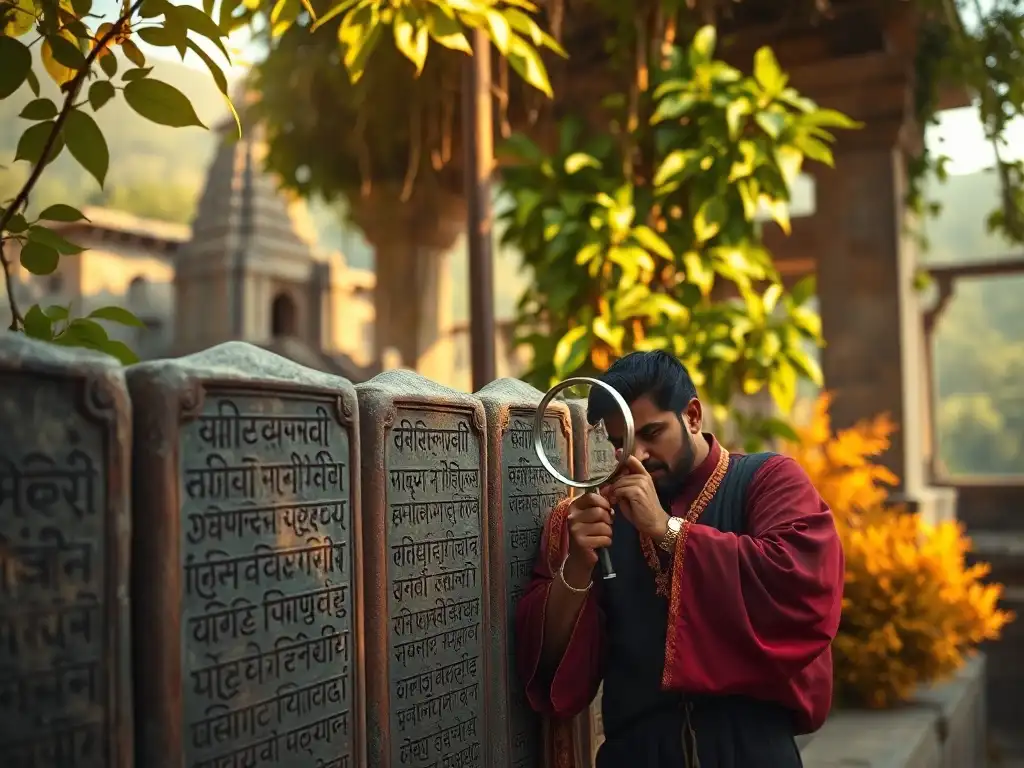
Ancient Indian inscriptions serve as invaluable windows into the past, offering insights into the societal structures, political dynamics, and cultural practices of their time. By examining specific inscriptions, we can understand the complexities of ancient Indian civilization. Let’s delve into key inscriptions that have significantly contributed to our understanding of ancient Indian society.
The Ashoka Edicts and Their Impact on Governance
The Edicts of Ashoka, inscribed on rocks and pillars during the reign of Emperor Ashoka in the 3rd century BCE, are among the most significant inscriptions in Indian history. These edicts convey messages of moral governance, emphasizing principles such as non-violence, compassion, and respect for all living beings.
The major themes found in these inscriptions include:
- Dharma: Promoting righteousness and ethical behavior.
- Social Welfare: Advocating for the welfare of the populace and the establishment of hospitals.
- Religious Tolerance: Encouraging respect for diverse beliefs and practices.
The impact of these edicts on governance was profound. They not only provided a framework for ethical leadership but also contributed to the spread of Buddhism across Asia. The edicts helped to unify the diverse territories under Ashoka's rule by promoting a common moral code that transcended local customs and traditions.
The Allahabad Pillar Inscription and Historical Narratives
The Allahabad Pillar Inscription, erected by Emperor Samudragupta in the 4th century CE, is a crucial source for understanding the political landscape of ancient India. This inscription provides a detailed account of Samudragupta's military conquests, portraying him as a formidable ruler.
Key insights from this inscription include:
- Military Campaigns: It details the regions conquered by Samudragupta, highlighting his extensive military prowess and the expansion of the Gupta Empire.
- Political Alliances: The inscription reflects the strategic alliances formed through marriage and diplomacy, demonstrating the significance of political networking.
- Cultural Flourishing: It indicates a period of cultural and artistic growth, suggesting that military success often led to the patronage of the arts and literature.
The Allahabad Pillar Inscription not only serves as a chronicle of a ruler’s achievements but also as a testament to the interconnectedness of warfare, politics, and culture in ancient India.
Inscriptions from South India: A Glimpse into Regional Cultures
Inscriptions from South India, particularly those from the Chola and Pandya dynasties, provide a rich tapestry of regional culture and governance. These inscriptions, often found in temples and caves, offer insights into various aspects of life in ancient South India.
Notable features include:
- Religious Practices: Many inscriptions document temple donations and the construction of religious structures, reflecting the role of religion in society.
- Social Hierarchies: The inscriptions often mention various castes and guilds, providing information on social stratification and the economic activities prevalent at the time.
- Language and Script: The evolution of scripts from Brahmi to Tamil highlights the linguistic diversity and cultural shifts in ancient South India.
Through these inscriptions, we gain a deeper understanding of regional identities, local governance, and the intricate relationship between politics and religion in the South Indian context.
The Archaeological Significance of Inscriptions
Inscriptions are not merely historical documents; they are critical archaeological artifacts that provide context to our understanding of ancient civilizations. The study of inscriptions helps archaeologists and historians reconstruct past societies and their interactions.
Dating Techniques and Their Relevance
Dating ancient inscriptions is essential for placing them within historical timelines. Various techniques are employed to establish the chronological context of inscriptions, including:
- Paleography: Analyzing the style of ancient scripts can help date inscriptions based on the evolution of writing styles.
- Radiocarbon Dating: For materials associated with inscriptions, such as wood or organic remains, radiocarbon dating provides chronological data.
- Contextual Dating: Examining the archaeological context in which inscriptions are found can also offer clues about their age relative to surrounding artifacts.
Understanding the dating of inscriptions is vital for constructing accurate historical narratives and recognizing the development of societies over time.
Inscriptions as Tools for Understanding Trade and Commerce
Inscriptions often include references to trade practices, economic transactions, and commercial regulations, making them essential for understanding ancient economies. Key insights include:
- Trade Routes: Many inscriptions detail trade routes and goods exchanged, offering evidence of extensive trade networks that connected different regions.
- Market Regulations: Some inscriptions provide regulations about weights, measures, and market conduct, revealing the sophistication of ancient economic systems.
- Cultural Exchange: Through trade, cultural practices, languages, and technologies were exchanged, further enriching our understanding of ancient societies.
By analyzing inscriptions related to trade, researchers can piece together the economic fabric of ancient India and its connections to broader regional and global trade networks.
Preservation and Conservation of Ancient Inscriptions
The preservation of ancient inscriptions is crucial for maintaining our connection to history. Many inscriptions face threats from environmental factors, human activity, and neglect. Conservation efforts focus on:
- Documentation: Creating detailed records of inscriptions to ensure that information is not lost even if the physical inscriptions deteriorate.
- Restoration Techniques: Employing methods that carefully restore inscriptions without causing damage, often using advanced technology to analyze and preserve the integrity of the material.
- Public Awareness: Promoting the importance of inscriptions in cultural heritage can foster community involvement in preservation efforts.
Effective conservation strategies not only protect these valuable historical records but also ensure that future generations can continue to learn from and appreciate the significance of ancient Indian inscriptions.
Challenges in Interpreting Ancient Indian Inscriptions
Interpreting ancient Indian inscriptions presents a unique set of challenges that scholars and historians must navigate. These challenges can significantly affect our understanding of the cultural, social, and political landscape of ancient India. From the evolution of language to the context in which these inscriptions were created, each factor plays a crucial role in the interpretation process.
Language Evolution and Translation Difficulties
One of the primary challenges in interpreting ancient Indian inscriptions is the evolution of languages over time. Ancient Indian inscriptions are often written in languages such as Sanskrit, Prakrit, or Tamil, each with its own dialects and variations.
- Variability in Scripts: The scripts used for these languages, including Brahmi and Kharosthi, have undergone significant changes. Scholars must be adept at recognizing these scripts and understanding their variations to accurately translate the inscriptions.
- Lost Meanings: As languages evolve, the meanings of words can shift or become obsolete. This loss of meaning complicates translations, making it difficult to convey the original intent and significance of the inscriptions.
- Linguistic Nuances: The nuances of ancient languages often include idiomatic expressions and cultural references that may not have direct translations in modern languages. This can lead to misinterpretations if scholars are not sensitive to the historical context.
Issues of Context and Fragmentation
Inscriptions are often found in fragmented forms, making context a significant issue for interpretation. Understanding the circumstances surrounding the creation and use of these inscriptions is vital for accurate analysis.
- Fragmentary Evidence: Many inscriptions exist only as fragments, which can lead to incomplete narratives. This fragmentation can obscure the broader historical context and the relationships between different inscriptions.
- Archaeological Context: The location where an inscription is found can provide critical information. However, without proper archaeological context, it is challenging to ascertain the social or political significance of the inscription.
- Cultural Context: Inscriptions may reference specific events, rituals, or societal norms that are not well-documented elsewhere. Without a comprehensive understanding of the cultural context, interpreting these references becomes problematic.
The Role of Modern Technology in Epigraphy
Modern technology has revolutionized the field of epigraphy, providing new tools and methods for interpreting ancient inscriptions. These advancements have helped to overcome some of the traditional challenges associated with inscription analysis.
- Digital Imaging: Techniques such as high-resolution imaging and 3D scanning allow for detailed examination of inscriptions, revealing text that might be too worn or damaged to read with the naked eye.
- Data Analysis: Software tools can assist in the analysis of large datasets of inscriptions, helping researchers identify patterns and correlations that might not be visible through manual analysis.
- Collaboration Across Disciplines: The integration of technology encourages collaboration between epigraphists, linguists, archaeologists, and computer scientists, fostering a multidisciplinary approach to understanding ancient inscriptions.
Conclusion: The Enduring Legacy of Ancient Indian Inscriptions
Ancient Indian inscriptions serve as vital records of their time, offering insights into the social, cultural, and political life of ancient Indian civilizations. Despite the challenges in interpretation, these inscriptions remain a critical resource for understanding the past.
The Importance of Inscriptions in Understanding Ancient Indian Society
The significance of ancient Indian inscriptions extends beyond mere historical records; they provide a glimpse into the lives and thoughts of people from different eras.
- Cultural Insights: Inscriptions often reveal information about religious practices, social hierarchies, and economic activities, enriching our understanding of ancient Indian society.
- Historical Documentation: They serve as primary sources for reconstructing historical events, such as battles, treaties, and royal decrees, offering a narrative that complements other archaeological and literary evidence.
- Continuity and Change: By studying inscriptions, scholars can trace the evolution of languages, scripts, and cultural practices, highlighting the continuity and change within ancient Indian society.
Future Directions in the Study of Inscriptions and Epigraphy
The field of epigraphy is evolving, with future directions focusing on enhancing our understanding of ancient Indian inscriptions.
- Interdisciplinary Research: Continued collaboration among various fields will be essential to deepen insights into the inscriptions' meanings and contexts. This approach can also help address the challenges posed by language and context.
- Technological Innovations: As technology advances, new methods for analyzing inscriptions will emerge, providing fresh perspectives and potentially uncovering previously inaccessible information.
- Public Engagement: Increasing public awareness and engagement with ancient inscriptions through exhibitions, digital platforms, and educational programs can foster a greater appreciation for their historical significance and encourage further research.
Ancient Indian inscriptions are not merely artifacts of the past; they are dynamic time capsules that continue to shape our understanding of ancient Indian society and culture. Their enduring legacy lies in their ability to inform, inspire, and challenge us as we explore the complexities of history.
Call to Action: Engaging with Ancient Indian History

Inscriptions serve as invaluable windows into the past, offering insights into the culture, governance, and daily life of ancient Indian societies. As we delve into the significance of these inscriptions, it becomes crucial for modern audiences to engage with this rich heritage. Whether you are a student, a historian, or simply an enthusiast of ancient cultures, there are countless avenues to explore and deepen your understanding of ancient Indian history through inscriptions.
By participating in discussions, attending workshops, or even visiting historical sites, you can help keep the dialogue about ancient Indian civilizations alive. Consider how these inscriptions have shaped the identity of modern India and what they can teach us about societal values, religious practices, and administrative systems of the time.
Encouraging Further Research and Exploration
Engaging with ancient Indian inscriptions invites a wealth of research opportunities. Scholars and enthusiasts alike are encouraged to delve into the following aspects:
- Field Studies: Participate in archaeological digs or join expeditions that focus on ancient sites where inscriptions have been uncovered. This hands-on experience provides a deeper appreciation for the context in which these inscriptions were created.
- Academic Courses: Enroll in courses related to ancient Indian history or epigraphy. Universities and online platforms often offer specialized programs that can enhance your understanding of the significance of these inscriptions.
- Community Involvement: Join local history clubs or organizations dedicated to preserving and promoting ancient Indian history. Collaborative research and community projects can lead to new discoveries and insights.
- Interdisciplinary Approaches: Explore how fields such as archaeology, linguistics, and anthropology intersect with the study of inscriptions. This holistic approach can yield richer interpretations and understandings of ancient texts.
- Publish Your Findings: If you conduct research or make discoveries related to ancient inscriptions, consider publishing your findings in journals or online platforms dedicated to historical studies. Sharing knowledge contributes to the broader understanding of ancient Indian history.
Resources for Learning More About Ancient Indian Inscriptions
To facilitate further exploration of ancient Indian inscriptions, the following resources are highly recommended:
- Books:
- Inscriptions of Ashoka by R. C. Sharma
- The Archaeology of Early Medieval South Asia by R. S. Sharma
- Epigraphy and the History of Ancient India by S. M. Jain
- Online Databases:
- Epigraphia Indica: A comprehensive collection of inscriptions from ancient India, offering translations and historical context.
- Digital South Asia Library: A rich repository of resources related to South Asian history, including inscriptions.
- Documentaries and Lectures:
- Look for documentaries on platforms like YouTube or specialized history channels that explore ancient Indian civilizations and their inscriptions.
- Attend lectures or webinars hosted by universities and cultural institutions that focus on epigraphy and ancient history.
- Museums and Exhibitions:
- Visit museums with dedicated sections on ancient Indian history where inscriptions are displayed. Institutions like the National Museum in New Delhi often have rotating exhibitions featuring significant inscriptions.
- Academic Journals:
- Subscribe to journals such as the Indian Historical Review or Journal of Indian History that frequently publish articles and research on ancient inscriptions.
Engaging with these resources can enrich your understanding of the significance of ancient Indian inscriptions and their profound impact on the historical narrative of India.
- Introduction to Ancient Indian Inscriptions Significance
- The Historical Context of Ancient Indian Inscriptions
- Types of Inscriptions Found in Ancient India
- The Cultural Significance of Ancient Indian Inscriptions
- Case Studies: Key Inscriptions and Their Insights
- The Archaeological Significance of Inscriptions
- Challenges in Interpreting Ancient Indian Inscriptions
- Conclusion: The Enduring Legacy of Ancient Indian Inscriptions
- Call to Action: Engaging with Ancient Indian History
- Encouraging Further Research and Exploration
- Resources for Learning More About Ancient Indian Inscriptions
Frequently Asked Questions
What are ancient Indian inscriptions?
Ancient Indian inscriptions are written records found on various materials like stone, metal, and clay, providing insights into historical events, cultural practices, and administrative systems of the time.
Why are ancient Indian inscriptions significant?
These inscriptions serve as time capsules, revealing the socio-political dynamics, religious beliefs, and linguistic evolution of ancient Indian societies, thus helping historians understand their development over time.
What materials were commonly used for inscriptions in ancient India?
Common materials included stone, copper plates, and terracotta. Each material was chosen based on its durability and the context in which the inscription was made.
How do inscriptions help in understanding ancient Indian culture?
Inscriptions provide a direct link to the daily lives, rituals, and traditions of ancient people, offering valuable information about their values, societal structure, and interactions with others.
Can inscriptions be used to trace the evolution of languages in India?
Yes, ancient inscriptions are crucial for tracing the linguistic evolution in India, showcasing the development of various languages and scripts over the centuries, reflecting the cultural exchanges of the time.
Final Reflection: The Enduring Significance of Ancient Indian Inscriptions
The exploration of ancient Indian inscriptions reveals not only the historical narratives of a bygone era but also their profound relevance in today's world. These inscriptions serve as time capsules, encapsulating the values, beliefs, and societal structures of ancient Indian civilization. In an age where the past often feels distant, understanding these artifacts allows us to connect with our roots and appreciate the complexities of our shared human experience.
The significance of ancient Indian inscriptions continues to resonate within our cultural and social landscapes, shaping our understanding of identity and heritage. These inscriptions are more than mere relics; they are powerful reminders of the wisdom and creativity of our ancestors. As we navigate the challenges of modern life, we can draw inspiration from their insights and resilience. History is not a burden on the memory but an illumination of the soul.
This quote encapsulates the essence of how we should view these inscriptions—not as remnants of the past, but as guiding lights for our present and future.
As you reflect on the lessons embedded within these ancient texts, consider how they can inspire your own journey. Take a moment to ponder the values and stories that resonate with you, and think about how you can incorporate these insights into your life. By embracing the significance of ancient Indian inscriptions, we not only honor our heritage but also empower ourselves to forge a more meaningful connection with the world around us. Let these time capsules guide you as you navigate your own path, enriching your understanding of both the past and the future.
Uncover Your Connection to Ancient Insights!
Thank you for diving into the fascinating world of ancient Indian inscriptions with us! You've discovered how these time capsules unveil profound insights about a society long past. Now, it’s time to take that knowledge and make it resonate in your life today.
Here’s how you can connect deeper with this rich heritage:
- Explore local museums or cultural centers that feature ancient Indian artifacts and inscriptions. Who knows what stories await you?
- Share your newfound knowledge with friends and family by hosting a discussion or an online chat about what you learned. Engage others in the wonder of history!
- Participate in a community project focused on preserving historical sites or promoting awareness of ancient cultures. Your efforts can help keep these stories alive!
What aspect of ancient Indian society do you find most intriguing, and how do you think it influences our lives today?