
Ancient Maps and Navigation: Charting the Routes Between India and China

Welcome to Ancient India History, where we embark on a captivating journey through the rich tapestry of ancient civilizations. Dive into the intriguing world of Ancient India and China trade routes, as we explore the maps and navigational techniques that connected two of the world's most influential cultures. What secrets do these ancient pathways hold?
How did they shape the interactions and exchanges between India and China? Join us as we uncover the stories behind the routes that not only facilitated trade but also laid the groundwork for cultural exchanges that resonate to this day. Your adventure into the past begins now!
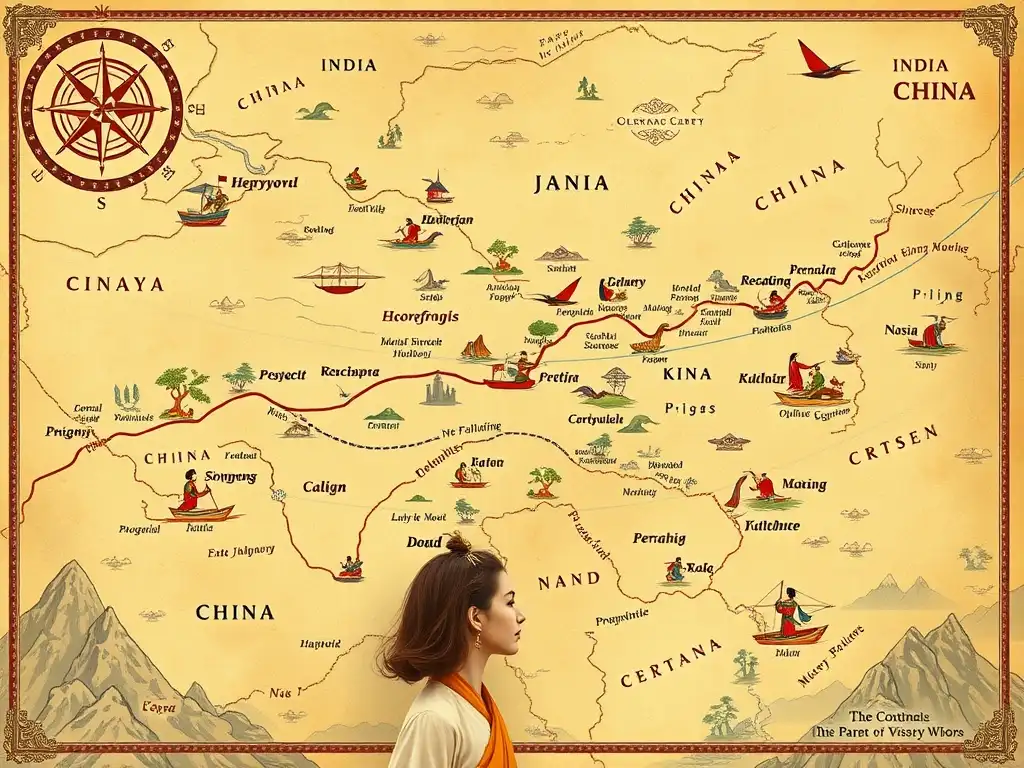
Introduction to Ancient India-China Trade Routes
The ancient trade routes between India and China represent a remarkable chapter in the history of both civilizations, characterized by extensive interactions that shaped cultural, economic, and social landscapes. As far back as the early centuries BCE, merchants, travelers, and scholars traversed these routes, exchanging not only goods but also ideas, art, and philosophies. The trade routes, often referred to as the Silk Road, facilitated the movement of diverse commodities such as silk, spices, precious stones, and textiles, reflecting the rich tapestry of connections that existed between these two great civilizations.
Understanding the ancient India-China trade routes requires a deep dive into the various maps created during these times, which served as essential tools for navigation and trade. These maps not only depicted geographical features but also illustrated the complex pathways of commerce and cultural interchange, enabling travelers to chart their journeys across vast distances. The significance of these ancient maps goes beyond mere navigation; they encapsulate historical knowledge, trade dynamics, and the spirit of exploration that defined ancient Indian and Chinese societies.
Historical Context of India-China Exchanges
Overview of Trade Between India and China
The trade between India and China has a long and storied history, with evidence of exchanges dating back over two millennia. The primary commodities traded included silk from China and spices from India, but the interactions were not limited to material goods. Scholars believe that these exchanges fostered the transfer of technologies, agricultural practices, and artistic traditions.
- Key Commodities Exchanged:
- From India:
- Spices (e.g., pepper, cardamom)
- Textiles (especially cotton and silk)
- Gems and precious stones
- From China:
- Silk
- Porcelain
- Paper
- From India:
The establishment of trade routes, such as the famous Silk Road, played a crucial role in facilitating these exchanges. Caravans traversed rugged terrains, including mountains and deserts, connecting bustling trade hubs. These routes also served as avenues for cultural dialogue and mutual influence.
Importance of Ancient Maps in Navigation
Ancient maps were invaluable tools for traders and travelers navigating the complex landscape of trade routes between India and China. These maps provided critical information about the geography, climate, and resources of the regions, allowing merchants to plan their journeys effectively.
- Functions of Ancient Maps:
- Geographical Orientation: Helping travelers understand their position relative to key landmarks.
- Route Planning: Indicating the safest and most efficient paths for trade.
- Cultural Significance: Reflecting the knowledge and perceptions of the world held by ancient civilizations.
Maps served not just as practical guides but also as cultural artifacts that reveal the interconnectedness of ancient societies. They documented the evolving understanding of geography and the intricate relationships forged through commerce.
Historical Context of India-China Exchanges
Early Interactions Between Indian and Chinese Civilizations
The early interactions between Indian and Chinese civilizations can be traced back to the first few centuries BCE, marked by both trade and cultural exchanges. Buddhist missionaries, for instance, traveled from India to China, spreading the teachings of Buddhism and establishing monasteries, which facilitated further exchange of ideas and practices.
- Notable Events:
- The arrival of Buddhist texts in China via the Silk Road.
- The establishment of trade cities, such as Chang'an in China, which became a melting pot of cultures.
These interactions laid the foundation for a rich tapestry of cultural exchange, influencing art, religion, and social structures in both regions.
The Role of Trade in Cultural Exchanges
Trade played a pivotal role in the cultural exchanges between India and China, creating a dynamic interplay of ideas and practices. As merchants traveled along the trade routes, they brought with them not only goods but also stories, philosophies, and technologies.
- Impact of Trade:
- Cultural Syncretism: Blending of artistic styles, religious beliefs, and culinary practices.
- Technological Transfer: Introduction of innovations such as papermaking and metallurgy.
- Philosophical Exchange: Influence of Indian thought on Chinese philosophy and vice versa.
The legacy of these interactions underscores the importance of trade as a vehicle for cultural dialogue, highlighting how the ancient India-China trade routes were not only conduits for goods but also pathways for the exchange of knowledge and ideas.
Key Ancient Trade Routes Linking India and China
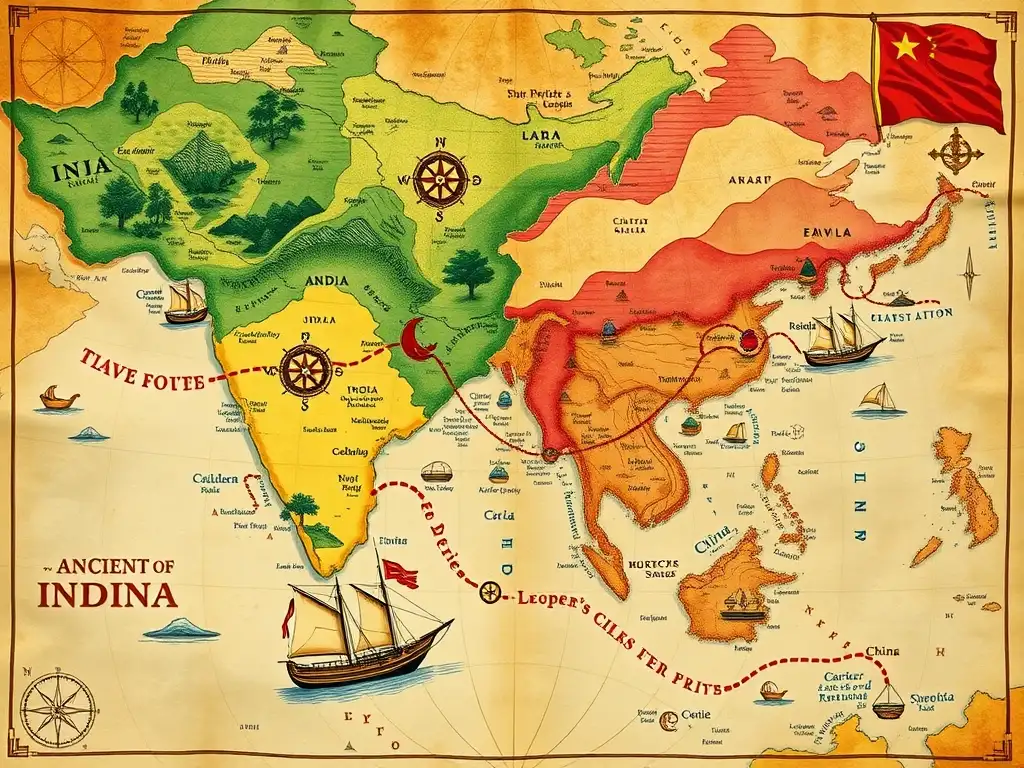
The trade routes between ancient India and China were pivotal in facilitating commerce, cultural exchange, and the movement of ideas between these two great civilizations. These routes spanned both land and maritime pathways, serving as conduits for goods such as silk, spices, precious stones, and textiles. The intricate network of trade routes not only enhanced economic ties but also fostered cultural interactions that shaped the histories of both nations. Understanding these routes provides insight into the historical relations and interdependencies that developed over centuries.
The Silk Road: A Vital Link
The Silk Road stands out as one of the most significant trade routes connecting India and China. Established around the 2nd century BCE, this expansive network of overland paths facilitated the exchange of goods and culture across Asia and beyond. The name "Silk Road" derives from the lucrative silk trade that was highly sought after in both regions.
Key points include:
- Cultural Exchange: The Silk Road enabled the exchange of not only goods but also ideas, religions, and technologies. Buddhism, for instance, spread from India to China along these routes.
- Geographical Challenges: Traversing the harsh terrains of Central Asia, including deserts and mountains, posed challenges for traders. Caravanserais were established to provide rest and shelter for merchants and camels.
- Major Cities: Key trading posts such as Taxila in India and Xi'an in China emerged along the Silk Road, becoming vibrant centers of commerce and culture.
Maritime Trade Routes: The Indian Ocean Connection
In addition to overland routes, maritime trade routes across the Indian Ocean played a crucial role in facilitating trade between India and China. These sea routes flourished particularly from the 1st century CE onwards, creating direct access to various ports along the coasts of India, Southeast Asia, and China.
Highlights of maritime trade routes include:
- Ports and Trade Hubs: Major ports such as Calicut (Kozhikode) in India and Guangzhou (Canton) in China became bustling trade hubs where merchants exchanged goods and ideas.
- Maritime Technologies: The use of advanced shipbuilding techniques and navigational tools, such as the compass and astrolabe, helped sailors navigate vast oceans.
- Trade Goods: Spices, textiles, and precious metals were commonly traded through these maritime routes, contributing to the economies of both regions.
Land Routes Through the Himalayas
The Himalayan mountain range provided additional pathways for trade between India and China, albeit with significant geographical challenges. The routes traversing this formidable terrain were crucial for the movement of goods, particularly between Tibet and regions of India.
Key features of these land routes include:
- Tibetan Trade: The Tibetan Plateau served as a passage for traders, connecting India to the Tibetan regions and further into China.
- Cultural Interactions: The routes facilitated not only the trade of goods but also cultural exchanges, including the spread of Buddhism and other cultural practices.
- Seasonal Trade: Trade was often seasonal, influenced by weather patterns and the accessibility of mountain passes.
Ancient maps were essential tools that enabled traders, explorers, and navigators to chart their courses between India and China. These maps provided a visual representation of trade routes, geographical features, and important landmarks, enhancing the efficiency of navigation and trade.
Types of Ancient Maps Used in India and China
Different types of ancient maps were employed in both India and China, reflecting the diverse needs of their societies.
- Pictorial Maps: These maps depicted geographical features in a symbolic manner, often prioritizing cultural landmarks over precise scale.
- Portolan Charts: Primarily used in maritime navigation, these charts provided detailed coastal outlines and navigational information, crucial for seafarers.
- Topographical Maps: Such maps detailed the terrain, including mountains and rivers, helping land traders navigate challenging landscapes.
Notable Cartographers and Their Contributions
Several cartographers made significant contributions to the mapping of trade routes between India and China. Their work laid the groundwork for future explorations and navigational advancements.
- Zhang Heng (78-139 CE): A Chinese polymath, Zhang Heng created maps that included detailed representations of the known world during his time.
- Al-Biruni (973-1048 CE): An Indian scholar who contributed to geography and cartography, Al-Biruni's works provided insights into the geography of India and its connections with neighboring regions.
- Xuanzang (602-664 CE): This Buddhist monk and traveler documented his journey from China to India, providing valuable geographical insights that influenced later maps.
The Influence of Geography on Navigation
Geography played a crucial role in shaping the navigation practices used by traders between India and China. The diverse landscapes, including mountains, rivers, and seas, dictated the routes taken and the methods employed.
Key geographic influences include:
- Natural Barriers: The Himalayas and deserts acted as natural barriers, necessitating the development of specific trade routes that navigated around or through these obstacles.
- Climate Considerations: Seasonal weather patterns, such as monsoons, significantly influenced maritime navigation, with traders timing their journeys accordingly.
- Resource Distribution: Geographic distribution of resources, such as rivers that served as trade conduits, impacted trade routes' efficiency and development.
The ancient trade routes between India and China, supported by maps and geographical understanding, played a vital role in fostering the rich exchanges that shaped the histories of both civilizations.
Cultural and Economic Impact of Trade Routes
The trade routes connecting ancient India and China were not only vital for the exchange of goods but also served as conduits for cultural interactions and economic growth. These routes facilitated the movement of spices, textiles, and silks, which were highly sought after in both regions, leading to a flourishing trade that had a profound impact on the societies involved. The intertwining of cultures through these trade networks enriched the civilizations on both sides, fostering mutual understanding and collaboration.
The economic ramifications of these trade routes were significant, as they contributed to the prosperity of cities that acted as trading hubs. These urban centers became melting pots of various cultures and ideas, allowing for a vibrant exchange that influenced everything from culinary practices to religious beliefs. The trade routes thus symbolized not just commercial links but also pathways for cultural diffusion, shaping the identities of both Indian and Chinese societies.
Exchange of Goods: Spices, Textiles, and Silks
The exchange of goods along the ancient India-China trade routes was pivotal, with spices, textiles, and silks taking center stage. Indian merchants were known for their rich variety of spices such as black pepper, cardamom, and turmeric, which were coveted in China for their flavor and preservative qualities. In return, Chinese silk became a prized possession in India, symbolizing luxury and status.
The textiles produced in India, particularly cotton and intricately woven fabrics, were highly regarded and sought after in Chinese markets. This mutual demand for each other’s goods not only enhanced trade volume but also encouraged craftsmanship and innovation in both regions. The flow of goods was often complemented by the exchange of knowledge regarding production techniques, leading to improvements in textile manufacturing and spice cultivation.
Cultural Exchanges: Religion, Art, and Knowledge
Cultural exchanges between India and China were equally significant, facilitated by the trade routes. Buddhism, which originated in India, spread to China through these pathways, profoundly influencing Chinese philosophy, art, and architecture. The establishment of Buddhist monasteries along the trade routes served as centers of learning and cultural interaction.
Artistic influences were also exchanged; Indian sculptures and motifs found their way into Chinese art, while elements of Chinese artistic techniques influenced Indian craftsmanship. Furthermore, the trade routes enabled the dissemination of knowledge, including advancements in mathematics, medicine, and astronomy. This intellectual exchange enriched both civilizations, showcasing how commerce can also serve as a vehicle for cultural enrichment.
The Economic Benefits of the Trade Network
The economic benefits of the ancient India-China trade routes were substantial. These pathways enabled the emergence of prosperous trading cities such as Taxila, Khotan, and Chang'an, which became vital economic centers. The influx of goods and wealth led to increased urbanization and the development of marketplaces, enhancing local economies.
The trade routes also stimulated agricultural production, as demand for exportable goods encouraged farmers to cultivate spices and textiles more intensively. Additionally, the exchange of currency and trade practices facilitated greater economic integration between regions, leading to a broader economic network that transcended local boundaries. Overall, the trade routes significantly contributed to the economic vitality of both India and China, fostering a legacy of interdependence.
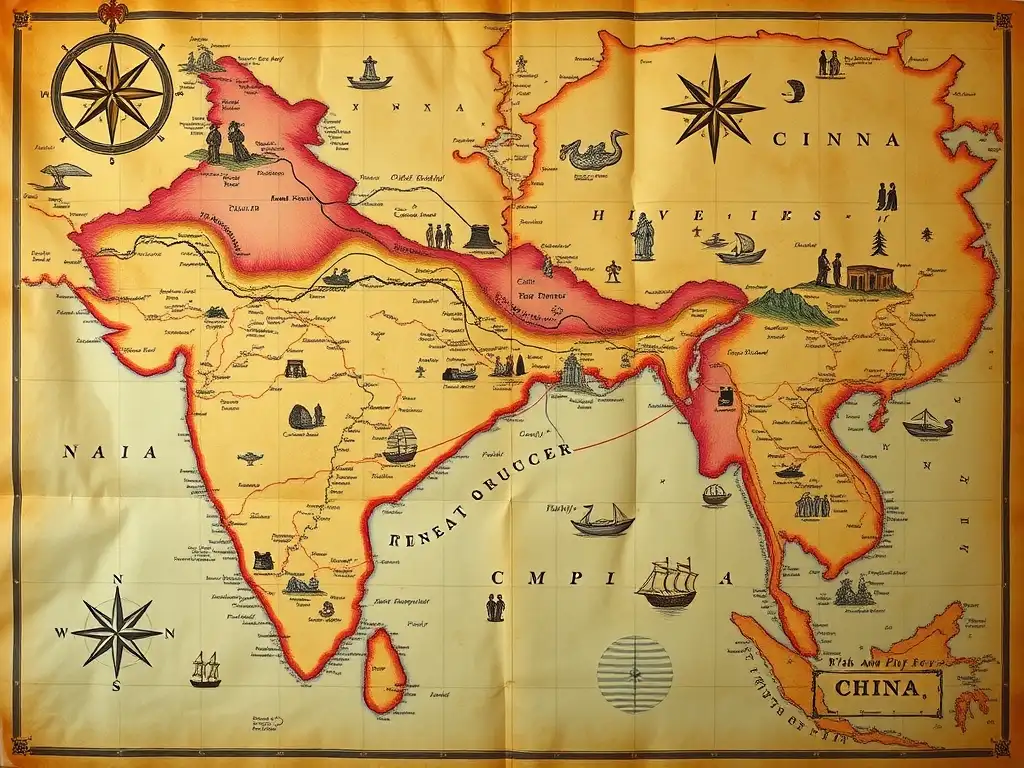
Despite the benefits, ancient navigation and trade routes between India and China were fraught with challenges. Navigators and traders had to navigate not just physical obstacles but also political and social hurdles that complicated their journeys. Understanding these challenges provides a fuller picture of the complexities involved in ancient trade.
Geographic and Climatic Obstacles
Geographic and climatic conditions posed significant challenges for traders traversing the routes between India and China. The formidable Himalayan mountain range created a natural barrier, making overland travel difficult and perilous. Treacherous passes, such as the Karakoram Pass, were often subject to harsh weather conditions, including heavy snowfall and landslides, which could halt trade for extended periods.
In addition to mountains, vast deserts such as the Taklamakan presented extreme heat and arid conditions that tested the endurance of traders. The unpredictable nature of monsoon seasons also affected maritime trade routes, making timing and navigation critical for successful exchanges. These geographic challenges necessitated careful planning, skillful navigation, and the use of local knowledge to ensure safe passage.
Political and Social Barriers
Political and social barriers also impacted trade along these routes. Varying political regimes, territorial disputes, and changes in leadership could lead to instability, making certain regions dangerous for traders. Hostility between kingdoms or empires could result in increased taxes, tariffs, or even outright attacks on caravans.
Moreover, cultural misunderstandings and social hierarchies often complicated interactions between different groups. Traders had to navigate complex social dynamics, ensuring respect for local customs while effectively negotiating their needs. These political and social barriers required traders to be not only skilled merchants but also adept diplomats.
Technological Limitations in Mapping
Technological limitations significantly hindered navigation and trade in ancient times. While maps existed, they were often rudimentary and lacked precision. Ancient cartographers had limited understanding of geography, which could lead to inaccuracies in route planning. This lack of reliable mapping meant that traders had to rely heavily on oral traditions and the knowledge of local guides.
Additionally, the absence of advanced navigational tools made long-distance travel risky. Many traders used simple instruments, such as the sun's position, to guide their journeys. The reliance on basic methods often resulted in diversions and delays, complicating trade logistics. Despite these limitations, the determination and ingenuity of traders allowed them to overcome many challenges, ensuring the continuity of trade between India and China.
The Legacy of Ancient Trade Routes
The ancient trade routes between India and China are a testament to the rich interactions and exchanges that shaped the civilizations of both regions. These routes, which included the famous Silk Road, facilitated not only the transfer of goods but also the exchange of culture, ideas, and technologies. Spanning thousands of miles, these pathways allowed merchants and travelers to connect diverse societies, contributing to mutual growth.
The legacy of these trade routes is visible in the historical artifacts found along the paths, such as pottery, textiles, and religious relics that indicate the movement of goods and cultural influences. Additionally, ancient texts, such as those by the Chinese explorer Zhang Qian and Indian scholars, chronicle the journeys and exchanges that took place. This rich tapestry of trade has laid the groundwork for modern economic relationships, showcasing the long-standing importance of these routes in fostering connectivity.
Influence on Modern Trade Networks
The ancient trade routes between India and China have significantly influenced contemporary trade networks, establishing foundational practices that persist today. The principles of trade, negotiation, and cultural exchange developed during these times continue to resonate in modern economic interactions between the two countries.
For instance, the establishment of trade agreements and partnerships can be traced back to ancient practices of mutual benefit and respect for commerce. Modern infrastructure projects, such as the Belt and Road Initiative, echo the spirit of these ancient routes, aiming to enhance connectivity and trade between regions. The historical significance of these paths serves as a reminder of the potential for collaborative growth, underscoring the importance of historical context in shaping present-day trade dynamics.
Historical Significance of India-China Relations
The relationship between India and China has profound historical significance, rooted in centuries of trade and cultural exchange. The interactions between these two ancient civilizations date back to as early as the 2nd century BCE, with the exchange of silk, spices, and precious stones.
This relationship facilitated not only economic exchanges but also the transmission of religious beliefs, particularly Buddhism, which traveled from India to China via these trade routes. The influence of Indian culture on Chinese society, including art, philosophy, and science, illustrates the depth of these exchanges. Furthermore, historical events, such as the establishment of diplomatic missions and trade fairs, highlight the complexities of their relationship, encompassing both cooperation and competition throughout the ages.
Lessons Learned from Ancient Navigation Practices
Ancient navigation practices between India and China offer valuable lessons that remain relevant today. Navigators of the past utilized a combination of celestial navigation and geographical knowledge to traverse vast distances, demonstrating a profound understanding of the natural world.
The meticulous documentation of routes, landmarks, and seasonal changes allowed merchants to plan their journeys effectively, minimizing risks associated with travel. Modern navigational techniques can draw inspiration from these practices, emphasizing the importance of adaptability and knowledge in navigating contemporary trade challenges. Additionally, the historical reliance on collaboration among traders fosters a reminder of the value of partnerships in achieving common goals.
Conclusion
The exploration of ancient maps and navigation reveals the intricate web of interactions established between India and China throughout history. The trade routes charted by early civilizations not only facilitated the exchange of goods but also fostered cultural and intellectual dialogue that enriched both societies.
Summary of Ancient India-China Trade Routes
The ancient India-China trade routes were pivotal in shaping the histories of both nations. These paths allowed for the movement of goods such as silk, spices, and precious metals, while also serving as conduits for cultural exchange and the spread of religions. The legacy of these routes is a reminder of the interconnectedness of civilizations and the enduring impact of trade on societal development.
The Continuing Impact of Ancient Maps and Navigation on Current Understanding of Trade and Exchanges
The influence of ancient maps and navigation continues to shape our understanding of trade and exchanges today. By studying these historical practices, we gain insights into the evolution of trade networks and the importance of connectivity in fostering economic growth. As modern societies navigate the complexities of globalization, reflecting on the lessons learned from ancient trade routes can inspire collaborative efforts and enhance mutual understanding between nations, particularly between India and China.
- Introduction to Ancient India-China Trade Routes
- Historical Context of India-China Exchanges
- Historical Context of India-China Exchanges
- Key Ancient Trade Routes Linking India and China
- Ancient Maps: Tools for Navigation and Trade
- Cultural and Economic Impact of Trade Routes
- Challenges Faced in Ancient Navigation and Trade
- The Legacy of Ancient Trade Routes
- Conclusion
- What were the main trade routes between Ancient India and China?
- How did ancient maps influence navigation between India and China?
- What were the key goods traded between Ancient India and China?
- How did the trade relationships affect the cultures of India and China?
- What role did navigation techniques play in ancient trade?
Frequently Asked Questions
What were the main trade routes between Ancient India and China?
The primary trade routes included the Silk Road and various maritime paths, facilitating the exchange of goods like silk, spices, and precious stones.
Ancient maps provided vital information on geographical features and trade routes, helping merchants navigate and establish economic ties between the two regions.
What were the key goods traded between Ancient India and China?
Silk, spices, textiles, and metals were significant commodities, with India exporting spices and precious stones, while China exported silk and ceramics.
How did the trade relationships affect the cultures of India and China?
The trade relationships fostered cultural exchanges, leading to the spread of religions, art forms, and technological advancements between the civilizations.
Navigation techniques, including the use of stars and landmarks, were essential for merchants to accurately traverse routes, ensuring the successful transport of goods between India and China.
The exploration of ancient India-China trade routes reveals not only the ingenuity of early navigators but also the profound interconnectedness of cultures that shaped our modern world. Today, as we face globalization and the complexities of international trade, understanding these historical pathways reminds us of the enduring significance of collaboration and exchange across borders. The ancient maps serve as a testament to human curiosity and resilience, illustrating how trade has always been a catalyst for cultural and economic growth.
The influence of these ancient trade routes extends far beyond mere commerce; they have woven a rich tapestry of cultural exchange that continues to resonate in our societies today. The sharing of ideas, art, and technology along these routes laid the groundwork for the vibrant cultural landscapes we see in both India and China. As the historian John Keay aptly noted, The Silk Road was not just a trade route; it was a bridge between civilizations.
This ongoing dialogue between cultures emphasizes the importance of understanding our shared history and the ways in which it shapes our present and future.
As we reflect on the lessons from ancient navigation and trade, let us embrace the spirit of exploration and connection in our own lives. Consider how you can foster relationships that transcend boundaries, whether through learning about different cultures, engaging in meaningful conversations, or supporting global initiatives. The legacy of the ancient trade routes invites us to chart our own paths of understanding and cooperation, reminding us that, like those early navigators, we too can navigate the complexities of our world with curiosity and purpose.
Thank you for joining us on this journey through the fascinating world of ancient maps and navigation between India and China! We hope you’ve uncovered valuable insights into how these historical routes shaped trade, culture, and exploration. Now it’s time to take action and delve deeper into this captivating subject.
- Explore further by visiting your local library or online archives to examine original ancient maps and texts related to trade between India and China.
- Share your newfound knowledge with friends or on social media—start a conversation about how these ancient routes influence today's global trade!
- Consider creating a small presentation or blog post that delves into your favorite tales of ancient navigation and their relevance in contemporary society.
In what ways have you noticed the influence of ancient trade routes in our modern world?