
The Interplay of Politics: Diplomatic Relations Between Ancient India and China

Welcome to Ancient India History, where we embark on an enlightening journey through the rich tapestry of ancient Indian civilizations. In this exploration, we delve into a fascinating chapter: the intricate diplomatic relations between Ancient India and China. As we uncover the political interplay that shaped these two great cultures, you’ll discover how their interactions influenced trade, philosophy, and even art across borders. Prepare to be captivated by the stories that lie ahead and the profound legacies that continue to resonate today. Dive in and let the past unfold before your eyes!
The historical relationship between ancient India and China is a captivating tale of diplomacy, culture, and mutual influence that has shaped the course of both civilizations. This article delves into the intricate web of Ancient India-China relations, highlighting the exchanges that occurred across borders and the political dynamics that defined their interactions. From the flourishing trade along the Silk Road to the establishment of cultural and religious ties, the diplomatic relations between these two great nations were not only significant in their time but also laid the groundwork for future interactions.
As we explore this topic, we will uncover how ancient Indian kingdoms engaged with Chinese dynasties, the role of envoys and travelers, and the impact of these relations on trade, culture, and knowledge transfer. The exchanges were marked by political maneuvering, cultural diplomacy, and the shared quest for knowledge, making the study of these relations vital for understanding the broader context of ancient global interactions.
Historical Context of Ancient India-China Relations
The history of diplomatic relations between India and China can be traced back to several key periods, each characterized by unique political environments and notable interactions.
- Indus Valley Civilization and Early Chinese Dynasties (circa 2500-1500 BCE): This era saw the earliest forms of trade and cultural exchange, although minimal direct evidence exists.
- Mauryan Empire and Han Dynasty (circa 322-185 BCE): The Mauryan Emperor Ashoka's influence and the expansion of the Silk Road facilitated increased contact between these great civilizations.
- Gupta Empire and Tang Dynasty (circa 320-550 CE): This period is often considered the height of cultural and intellectual exchanges, with Buddhist scholars traveling between the regions.
Key Figures in Diplomatic Relations
Several notable individuals played pivotal roles in fostering diplomatic ties between ancient India and China. Their contributions not only impacted political relations but also facilitated cultural exchanges.
- Fa Xian (Fa-Hien): This Chinese monk traveled to India in the 5th century CE to collect Buddhist texts, which he later translated, thereby enriching Chinese Buddhism and promoting intercultural understanding.
- Xuanzang: Another prominent figure, the monk Xuanzang, journeyed to India in the 7th century CE, studying under Indian scholars and bringing back vast amounts of knowledge, particularly in Buddhist philosophy.
The Role of Trade and Cultural Exchange
Trade routes such as the Silk Road were instrumental in the flourishing of ancient India-China relations. These routes not only facilitated the exchange of goods but also served as conduits for cultural and intellectual exchange.
- Goods Traded: Spices, silk, precious stones, and textiles were among the key commodities exchanged between the two civilizations.
- Cultural Influences: The transmission of Buddhist texts, art, and philosophies had a profound impact on both societies, leading to syncretism and the evolution of cultural practices.
Conclusion
The interplay of politics and diplomacy between ancient India and China reveals a rich tapestry of interactions that shaped both civilizations. Understanding these relationships provides valuable insights into the historical context of their respective developments, as well as the enduring legacy of their exchanges in contemporary times. As we continue to explore this fascinating topic, we will delve deeper into specific events and exchanges that exemplify the complexities and richness of ancient India-China relations.
- Historical Context of Ancient India-China Relations
- Key Figures in Diplomatic Relations
- The Role of Trade and Cultural Exchange
- Conclusion
- What were the main factors influencing Ancient India-China relations?
- How did Buddhism play a role in the relationship between India and China?
- What were some key trade routes connecting Ancient India and China?
- How did political events shape the diplomatic relations between the two nations?
- What contributions did Ancient India make to Chinese civilization?
Introduction to Ancient India China Relations
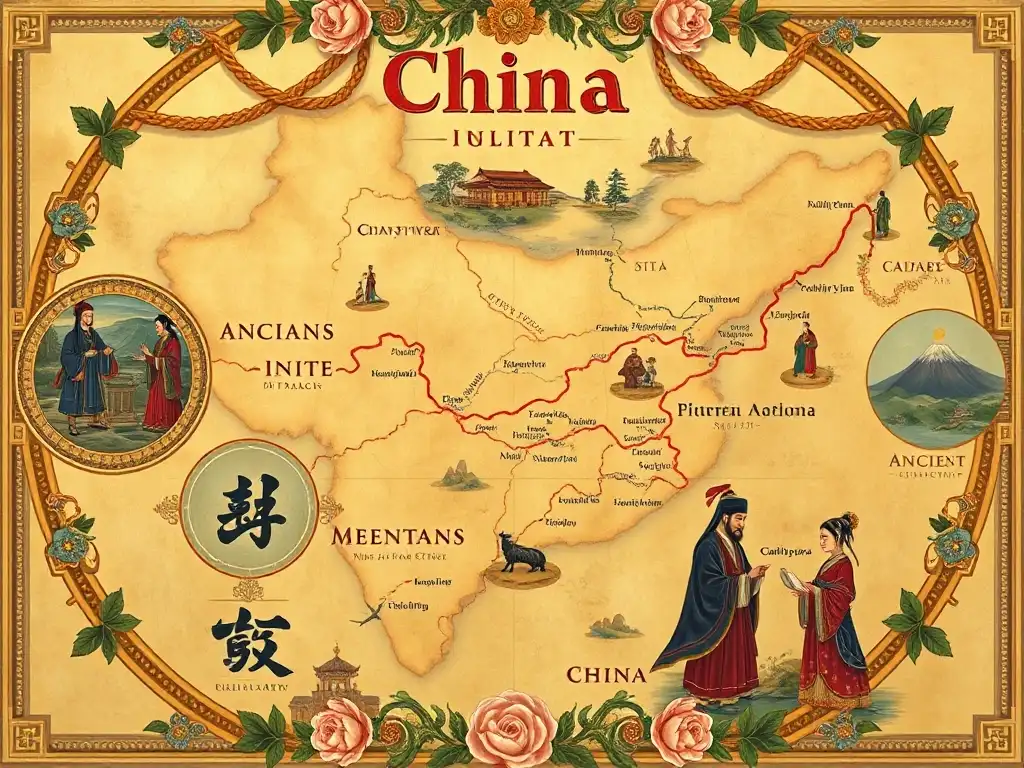
The diplomatic relations between Ancient India and China are a fascinating aspect of historical study that unveils the complexities of interactions between two of the world's oldest civilizations. These interactions encompassed a wide range of exchanges—political, economic, cultural, and religious—that not only influenced the regions involved but also had lasting impacts on global history. Understanding the nuances of Ancient India China relations allows us to appreciate how these civilizations navigated their differences and similarities through diplomacy.
Overview of Diplomatic Exchanges
Diplomatic exchanges between Ancient India and China can be traced back to as early as the 2nd century BCE, primarily through the Silk Road—a network of trade routes that facilitated communication and commerce. These exchanges included:
- Trade Relations: India was known for its spices, textiles, and precious stones, while China exported silk, ceramics, and other goods. This trade not only enriched both economies but also fostered a mutual interest in political alliances.
- Cultural Exchanges: Buddhism, which originated in India, spread to China around the 1st century CE. This exchange was facilitated by monks and traders who traveled along the Silk Road, leading to significant cultural integration and the establishment of Buddhist schools in China.
- Political Alliances: Historical records indicate that Indian and Chinese rulers sought alliances through marriages and treaties. One notable example includes the marriage of Indian princesses to Chinese emperors, which served to strengthen diplomatic ties.
- Intellectual Exchanges: Scholars from both civilizations engaged in discussions about philosophy, science, and technology. For instance, the introduction of Indian mathematics and astronomy into China had profound effects on Chinese scholarship.
Importance of Political Relations in Ancient Civilizations
The political relationships between Ancient India and China played a crucial role in shaping the historical trajectories of both nations. The significance of these political relations includes:
- Stability through Alliances: By forming alliances, both civilizations were able to maintain stability in their borders, which was essential for economic prosperity and cultural development. These alliances often deterred aggression from neighboring states.
- Cultural Diplomacy: Political relations were not solely about trade or military alliances; they also involved cultural diplomacy, which promoted peace and understanding. The spread of Buddhism is a prime example, highlighting how religious and cultural exchanges can serve as bridges between nations.
- Mutual Influence on Governance: The exchange of political ideas and administrative practices influenced governance structures in both regions. For instance, the Indian concept of statecraft, as outlined in texts like the Arthashastra, may have found resonance in Chinese political thought.
- Legacy of Relations: The diplomatic relations established during ancient times laid the groundwork for future interactions. Understanding these early exchanges provides context for the evolving dynamics between India and China through subsequent centuries.
The Ancient India China relations encapsulate a rich tapestry of interactions that were instrumental in shaping not only the two civilizations but also the broader historical landscape of Asia. These diplomatic exchanges serve as a testament to the enduring significance of political relations in fostering cooperation and understanding between diverse cultures.
Historical Context of Ancient India and China
The relationship between ancient India and China is grounded in a rich historical context that spans several centuries. These two civilizations, both among the oldest in the world, developed complex societies characterized by distinct political structures, cultural practices, and philosophical ideas. The interplay of these factors created a fertile ground for diplomatic relations, trade, and cultural exchanges, which significantly influenced both regions.
Major Dynasties in Ancient India
Ancient India was marked by several prominent dynasties, each contributing to the political and cultural landscape. Key dynasties include:
- Maurya Empire (c. 322–185 BCE): Founded by Chandragupta Maurya, this empire is renowned for its political unification of northern India and the promotion of Buddhism under Ashoka the Great. The Mauryan Empire established extensive trade routes, facilitating interactions with neighboring regions, including China.
- Gupta Empire (c. 320–550 CE): Often referred to as the "Golden Age" of India, the Gupta period saw advancements in science, mathematics, and literature. The Guptas engaged in trade with Central Asia and China, leading to the exchange of ideas, art, and culture.
- Chola Dynasty (c. 300 BCE–1279 CE): Known for its naval prowess and trade networks, the Chola Dynasty expanded its influence to Southeast Asia and had interactions with the Chinese during its maritime ventures.
These dynasties not only shaped the political landscape of ancient India but also laid the groundwork for its diplomatic relations with China through trade, cultural exchanges, and the spread of Buddhism.
Key Dynasties and Periods in Ancient China
China's historical narrative is defined by several key dynasties that played pivotal roles in shaping its political and cultural ethos:
- Qin Dynasty (221–206 BCE): The first imperial dynasty, known for unifying China and building the Great Wall. The Qin dynasty's establishment of centralized governance set the stage for diplomatic relations with neighboring regions, including India.
- Han Dynasty (206 BCE–220 CE): A significant period for trade and cultural exchange, the Han dynasty established the Silk Road, which connected China to India. This period saw the exchange of goods, ideas, and technologies between the two civilizations.
- Tang Dynasty (618–907 CE): Renowned for its cosmopolitan culture, the Tang dynasty fostered diplomatic missions to India, leading to the exchange of Buddhism and other cultural aspects.
These dynasties contributed to the evolution of ancient China and shaped its relations with India, creating a network of political and cultural interactions that would last for centuries.
Geographic and Cultural Proximity
The geographic proximity of ancient India and China facilitated a dynamic interchange of ideas, goods, and cultural practices. The key factors include:
- Silk Road: This ancient trade route connected China with the western world, including India. The Silk Road was not just a conduit for goods such as silk and spices but also a pathway for cultural and philosophical exchanges, including Buddhism, which traveled from India to China.
- Himalayan Passes: The mountain passes, such as the Khyber Pass, served as crucial pathways for merchants and pilgrims, allowing for the movement of people and ideas between the two regions.
- Cultural Exchange: The cultural and religious exchanges, especially the spread of Buddhism, played a significant role in bridging the two civilizations. Indian monks traveled to China, promoting Buddhist teachings, while Chinese scholars studied Indian texts.
The geographic and cultural proximity between ancient India and China significantly influenced their diplomatic relations, trade, and cultural exchanges, laying a foundation for a rich and complex history of interaction.
Early Diplomatic Initiatives
Trade Routes and Their Significance
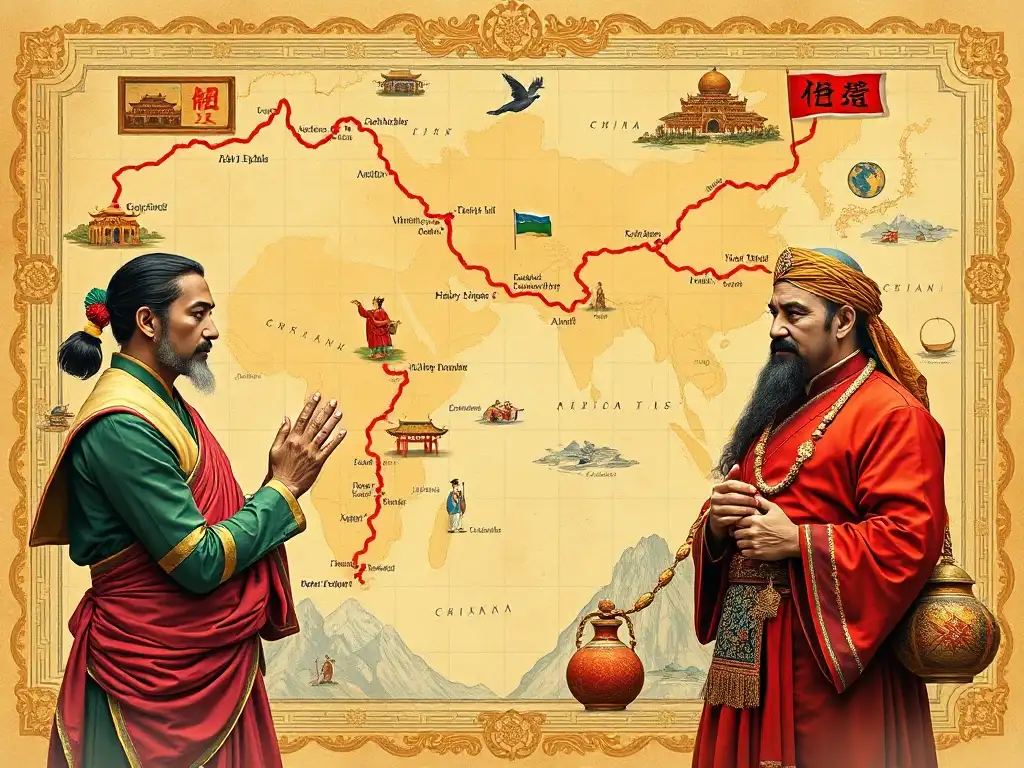
The early diplomatic initiatives between Ancient India and China were significantly influenced by the establishment and development of trade routes. These routes not only facilitated the exchange of goods but also played a crucial role in fostering political and cultural relationships. One of the most prominent of these routes was the Silk Road, which served as a vital link between the two civilizations.
- Economic Benefits:
- The trade routes allowed for the exchange of commodities such as silk, spices, and precious stones, which were highly sought after in both regions.
- Indian merchants exported items like pepper and cotton textiles, while Chinese traders offered silk and porcelain.
- Cultural Exchange:
- Alongside material goods, ideas, philosophies, and cultural practices were exchanged. Buddhism, for instance, traveled from India to China, influencing Chinese thought and culture.
- The movement of scholars and monks across these routes contributed to a deeper understanding and appreciation of each other's civilizations.
- Political Alliances:
- As trade flourished, so did the necessity for diplomatic relations. Envoys were sent between courts to negotiate treaties, establish trade agreements, and ensure safe passage for merchants.
- Such interactions often solidified alliances, with both regions recognizing the mutual benefits of cooperation.
The Role of the Silk Road in India-China Relations
The Silk Road was more than just a trade route; it was a complex network that facilitated various forms of interaction between Ancient India and China. Its significance can be understood through several key aspects:
- Geographical Impact:
- The Silk Road traversed multiple terrains, connecting bustling trade cities such as Taxila in India and Chang'an in China. This geographical expanse allowed for diverse interactions with different cultures along the way.
- Cultural Synthesis:
- The Silk Road acted as a conduit for cultural exchanges, where artistic styles, religious beliefs, and scientific knowledge merged. For example, the introduction of Buddhism into China during the Han dynasty is attributed to these interactions, showcasing the profound impact of the route on spiritual life.
- Political Maneuvering:
- Diplomatic missions were often conducted along the Silk Road, where emissaries would negotiate peace treaties and trade agreements. Notably, the Han Dynasty sought to establish connections with Indian kingdoms to strengthen their economic and strategic positions.
- Legacy of Interaction:
- The Silk Road's influence persisted long after the initial exchanges, leaving a lasting legacy on the political and cultural landscapes of both nations. The shared history enriched both civilizations, leading to a mutual respect that would echo through the ages.
The early diplomatic initiatives between Ancient India and China, primarily facilitated by trade routes like the Silk Road, laid the foundation for a complex relationship characterized by economic interdependence, cultural exchange, and political alliances. Understanding this interplay provides valuable insights into the historical context of Ancient India-China relations and their enduring impact on both civilizations.
Cultural Exchanges Between India and China
Influence of Buddhism on Sino-Indian Relations
Buddhism served as a pivotal bridge between ancient India and China, creating a profound cultural and spiritual connection that shaped diplomatic relations for centuries. Originating in India in the 5th century BCE, Buddhism found fertile ground in China around the 1st century CE, primarily through the efforts of missionaries and traders along the Silk Road.
- Cultural Transmission: The arrival of Buddhist texts and scholars played a significant role in the exchange of ideas. Notable figures, such as Bodhidharma, contributed to the establishment of Zen Buddhism in China, fostering a mutual respect and understanding between the two civilizations.
- Artistic Influence: Buddhist art from India, particularly Gandhara and Mathura styles, influenced Chinese artistic expressions. The depiction of Buddhist figures, stupas, and mandalas can be seen in ancient Chinese sculptures and murals, reflecting a shared spiritual heritage.
The influence of Buddhism not only enriched religious practices but also facilitated diplomatic dialogue. Emperors in both regions often sent envoys to gain insights into each other's cultures, promoting peaceful relations through shared beliefs and practices.
The Spread of Indian Arts and Sciences to China
The exchange of artistic and scientific knowledge between ancient India and China was instrumental in shaping both cultures. Indian scholars and artisans traveled to China, bringing with them a wealth of knowledge in various fields, including mathematics, astronomy, and medicine.
- Mathematics and Astronomy: Indian numerals and the concept of zero reached China through these exchanges, revolutionizing Chinese mathematics. Additionally, Indian astronomical texts introduced advanced methods for calculating eclipses and celestial movements, influencing Chinese astronomy.
- Medicinal Practices: The spread of Ayurvedic medicine significantly impacted Chinese herbal medicine. The exchange of medicinal plants and treatment methods fostered advancements in healthcare in both civilizations, emphasizing the importance of holistic approaches.
These cultural exchanges were not merely one-sided; they involved active participation from both sides, with Chinese scholars often traveling to India to learn from its rich traditions. This collaborative spirit enhanced the diplomatic rapport between the two nations.
Language and Literature: Bridging Cultures
Language and literature played a crucial role in fostering understanding between ancient India and China. The translation of texts and the learning of languages facilitated deeper interactions and exchanges of ideas.
- Translation Movements: The translation of Buddhist texts from Sanskrit to Chinese was a significant endeavor. Scholars like Xuanzang dedicated their lives to translating and disseminating Indian philosophical works, such as the Prajnaparamita and Lotus Sutra. This not only enriched Chinese literature but also contributed to the philosophical discourse of the time.
- Literary Influences: Indian epics, such as the Mahabharata and Ramayana, inspired Chinese literature. Themes of morality, duty, and heroism resonated with Chinese writers, leading to adaptations and original works that reflected these shared values.
Through these literary exchanges, both cultures developed a greater appreciation for each other's narratives and philosophies, reinforcing diplomatic ties and cultural understanding. The interplay of language and literature thus served as a vital conduit in the broader context of ancient India-China relations, highlighting the significance of intellectual collaboration in shaping their intertwined histories.
Political Alliances and Conflicts
Notable Treaties and Agreements
The historical relationship between ancient India and China was characterized by both alliances and conflicts, often formalized through treaties and agreements that shaped the diplomatic landscape of the time. One of the earliest documented agreements was the Treaty of Peace and Friendship (also known as the Pax Sinica) during the Han Dynasty (206 BCE - 220 CE). This treaty established trade routes that connected the two civilizations, facilitating the exchange of goods such as silk, spices, and precious stones.
Another significant agreement was the Treaty of Khotan around the 1st century CE, which allowed Indian Buddhist missionaries to travel to China. This agreement not only enhanced cultural exchanges but also paved the way for the spread of Buddhism in China, illustrating the profound impact of diplomatic negotiations on cultural relations.
| Treaty/Agreement | Year | Key Outcomes |
|---|---|---|
| Treaty of Peace and Friendship | 200 BCE | Established trade; enhanced cultural exchanges |
| Treaty of Khotan | 1st Century CE | Encouraged Buddhist missionary activity in China |
Conflicts and Their Impacts on Relations
While treaties facilitated cooperation, conflicts were equally prevalent, often leading to significant shifts in ancient India-China relations. One notable conflict was the Battle of the Red Cliffs (circa 208 CE), where alliances were tested, and the resulting power dynamics significantly impacted trade routes and diplomatic ties. This battle demonstrated how internal strife within China could influence its foreign relations, including with India.
The Sino-Indian War of the 1960s, although much later than the ancient period, draws parallels in terms of territorial disputes rooted in historical claims. The ancient conflicts, such as skirmishes over the Silk Road routes, exemplified the importance of trade and territorial integrity, which were often at the heart of diplomatic relations.
Conflicts, while detrimental, often led to a re-evaluation of alliances and a more profound understanding of mutual interests.
– Ancient Diplomatic Scholar
Case Studies of Specific Diplomatic Events
Examining specific diplomatic events provides deeper insight into the complexities of ancient India-China relations. One such event was the mission of the Indian ambassador, Zhang Qian, during the Han Dynasty. His travels not only solidified trade agreements but also fostered cultural exchanges that influenced both societies. Zhang Qian's reports on India opened the eyes of the Chinese court to the wealth and sophistication of Indian civilization, leading to increased diplomatic interest.
Another significant case was the Chinese Emperor's request for assistance from Indian kings during the Tang Dynasty (618-907 CE). The Tang sought military aid against the Turks, which led to closer ties and the establishment of a Buddhist cultural exchange that enriched both civilizations. This period saw the flourishing of trade and the introduction of new ideas, technologies, and art forms, showcasing the power of diplomacy in promoting mutual benefits.
| Case Study | Year | Key Outcomes |
|---|---|---|
| Zhang Qian's Mission | 138 BCE | Strengthened trade; increased cultural exchange |
| Tang Dynasty Military Assistance | 7th Century CE | Enhanced diplomatic ties; cultural and technological exchanges |
The interplay of politics, marked by both alliances and conflicts, forged a complex relationship between ancient India and China that laid the groundwork for centuries of cultural and economic exchanges. This intricate history underscores the significance of diplomacy in shaping the interactions between these two great civilizations.
Economic Interactions
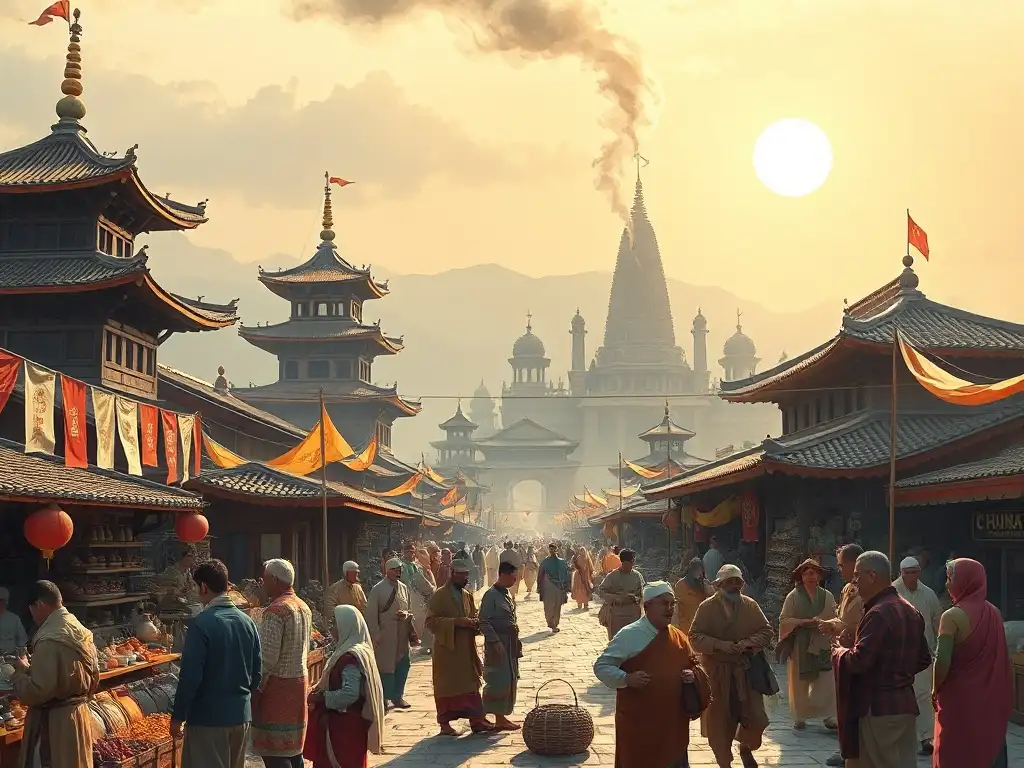
Trade Goods Exchanged Between India and China
The economic interactions between ancient India and China were largely facilitated through trade, which flourished along the Silk Road and maritime routes. This exchange of goods not only enhanced the wealth of both civilizations but also fostered cultural and technological exchanges.
- Indian Exports to China:
- Spices: Indian spices such as black pepper, cardamom, and cinnamon were highly sought after in China. These spices were prized for their flavor and medicinal properties.
- Textiles: Indian cotton and silk textiles were renowned for their quality and intricate designs. The famous muslin, in particular, was a valuable export.
- Precious Stones: India was rich in natural resources and exported gemstones, including diamonds and sapphires, which were favored by Chinese elites.
- Chinese Exports to India:
- Silk: The most significant export from China to India was silk. This luxurious fabric was a symbol of wealth and status, leading to its high demand in Indian markets.
- Porcelain: Chinese porcelain, known for its exquisite craftsmanship, was another valuable item that found its way into Indian households.
- Tea: Although tea became a staple in later centuries, early forms of tea were also traded, slowly introducing this beverage to Indian culture.
This trade was facilitated by the establishment of trading posts and the involvement of merchants who played a critical role in the economic relationships between the two nations.
The Economic Impact of Trade on Both Civilizations
The economic impact of trade between ancient India and China was profound, influencing various aspects of both societies.
- Economic Growth: The exchange of goods led to significant economic growth in both civilizations. As trade flourished, cities like Chang'an (modern-day Xi'an) in China and Taxila in India became bustling commercial hubs. This urbanization contributed to the rise of a merchant class and a more complex economy.
- Cultural Exchange: Economic interactions were closely tied to cultural exchanges. The movement of goods facilitated the transfer of ideas, religion, and technology. For instance, the spread of Buddhism from India to China was significantly aided by the trade routes, which allowed monks and scholars to share their beliefs and knowledge.
- Infrastructure Development: The demand for trade necessitated the development of infrastructure such as roads and ports. The construction of the Grand Canal in China improved transportation and reduced shipping costs, while Indian ports like Lothal became crucial for maritime trade.
- Wealth Disparities: While trade enriched many merchants and the ruling classes, it also led to economic disparities. Certain regions became wealthy at the expense of others, leading to social stratification within both societies.
The economic interactions between ancient India and China were marked by a rich exchange of goods, leading to significant economic impacts that shaped the development of both civilizations and laid the groundwork for future relations.
The Role of Envoys and Diplomats
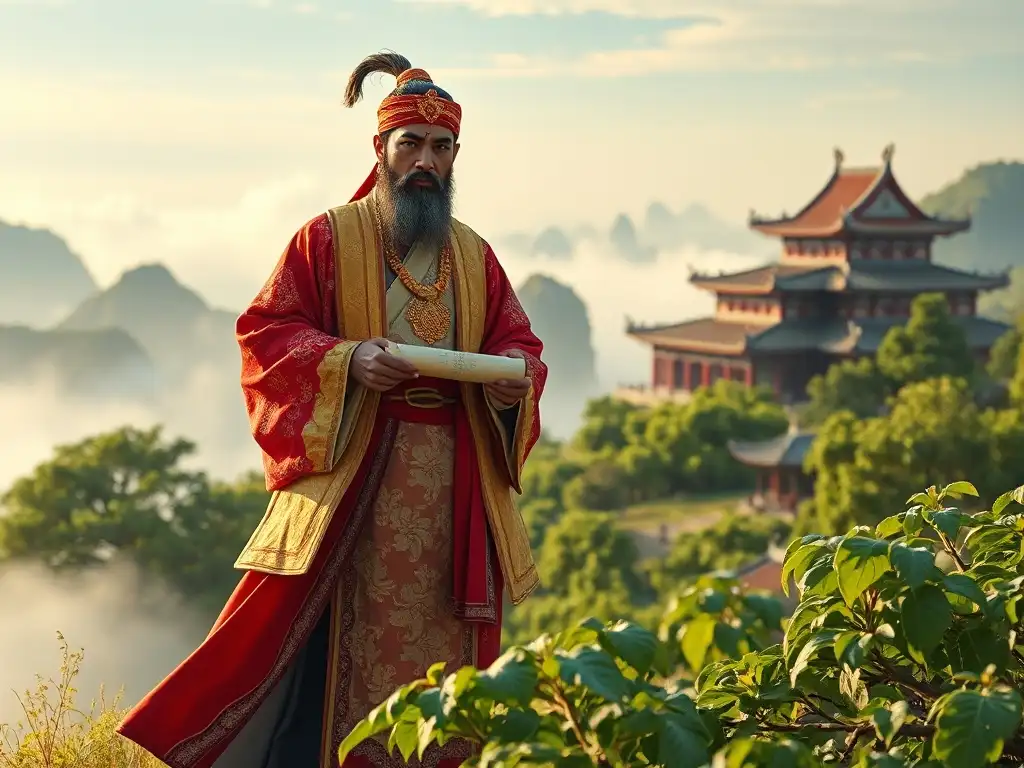
Notable Figures in Ancient Indian-Chinese Diplomacy
The rich tapestry of ancient India-China relations is woven with the contributions of several notable envoys and diplomats who played pivotal roles in fostering diplomatic ties. One of the most distinguished figures is Fa-Hien, a Chinese monk who traveled to India during the early 5th century CE. His journey, primarily aimed at gathering Buddhist scriptures, also facilitated cultural exchanges that enriched both civilizations. Fa-Hien documented his travels in "A Record of Buddhist Countries," providing valuable insights into Indian society, culture, and religious practices during his time.
Another significant figure is Xuanzang, also known as Hiuen Tsang, who embarked on a famous pilgrimage to India in the 7th century. His interactions with Indian scholars and his detailed accounts of Indian Buddhist practices in "Great Tang Records on the Western Regions" highlight the depth of cultural and academic exchanges between the two civilizations. Xuanzang's efforts not only strengthened diplomatic relations but also led to the translation of numerous Buddhist texts, which were instrumental in the spread of Buddhism in China.
Additionally, Kanishka, the Kushan emperor, is often recognized for his diplomatic endeavors that fostered trade and cultural exchanges along the Silk Road, connecting India with Central Asia and China. His reign marked a significant period of interaction, as he established a network of emissaries and trade routes that facilitated the movement of goods and ideas.
The Functions and Responsibilities of Envoys
Envoys in ancient India-China relations were crucial in maintaining diplomatic ties and facilitating cultural exchanges. Their functions spanned a range of diplomatic responsibilities, including:
- Negotiation of Treaties: Envoys played a vital role in negotiating treaties that defined trade relations and territorial boundaries. For instance, the Treaty of 640 CE between the Tang Dynasty and the Indian kingdoms involved envoys who discussed trade privileges and mutual respect for sovereignty.
- Cultural Representation: Envoys were also cultural ambassadors, responsible for representing their sovereign's interests and fostering goodwill. They often traveled with gifts and artifacts, symbolizing friendship and promoting cultural understanding.
- Information Gathering: An essential responsibility of envoys was to gather intelligence about political developments, military capabilities, and economic conditions in the host country. This information was vital for their rulers to make informed decisions regarding alliances and trade.
- Facilitating Trade: Envoys often helped establish and maintain trade routes, ensuring the smooth flow of goods like silk, spices, and precious stones. The establishment of trade links not only enriched both economies but also facilitated cultural exchanges that shaped the social fabric of both civilizations.
- Conflict Resolution: In times of tension or misunderstanding, envoys acted as mediators, seeking to resolve disputes peacefully through dialogue and negotiation. Their diplomatic skills were crucial in preventing conflicts that could disrupt trade and cultural exchanges.
The envoys and diplomats of ancient India and China were instrumental in shaping the political landscape and fostering rich exchanges between the two civilizations. Their efforts laid the groundwork for a dynamic relationship that influenced various aspects of life, including trade, religion, and culture.
Legacy of Ancient India China Relations
The legacy of ancient India-China relations is a complex tapestry woven with threads of diplomacy, trade, and cultural exchange. These interactions date back to as early as the 2nd century BCE and played a pivotal role in shaping not only the histories of both civilizations but also their modern relations. Understanding this legacy is crucial for comprehending the nuances of contemporary Sino-Indian interactions.
Long-Term Impacts on Modern Sino-Indian Relations
The ancient diplomatic relations between India and China laid the groundwork for the frameworks of engagement seen today. Key impacts include:
- Trade Routes: The establishment of the Silk Road facilitated not just the exchange of goods, such as silk and spices, but also ideas and cultural practices. This network helped solidify economic ties that persist into modern trade agreements.
- Cultural Exchange: The transmission of Buddhism from India to China during the Han Dynasty exemplifies the deep cultural connections forged through dialogue and interaction. This exchange has left a lasting impact on Chinese philosophy and religion, influencing modern spiritual practices.
- Political Systems: Ancient Indian political thought, particularly the concepts found in texts like the Arthashastra, provided insights into governance that were acknowledged by Chinese statesmen. This intellectual exchange has influenced administrative practices in both countries throughout history.
- Conflict and Cooperation: Historical tensions, such as border disputes and differing political ideologies, can trace their roots back to ancient rivalries. However, periods of cooperation, particularly during the Tang dynasty's openness to foreign cultures, showcase the potential for collaboration that remains relevant in today's geopolitical landscape.
Historical Lessons from Ancient Diplomacy
The diplomatic strategies employed by ancient Indian and Chinese leaders offer valuable lessons for modern diplomacy:
- Mutual Respect: The ancient treaties and agreements were often predicated on mutual respect and acknowledgment of sovereignty. This principle remains crucial in present-day negotiations, where both nations must navigate their interests while respecting each other's boundaries.
- Cultural Sensitivity: Diplomatic missions in ancient times often included cultural emissaries who facilitated understanding through shared cultural practices. Modern diplomacy can benefit from fostering cultural exchanges that build trust and rapport.
- Flexibility and Adaptation: Ancient diplomats often had to adapt to changing circumstances, whether due to shifting power dynamics or economic needs. Today's leaders must similarly be flexible, adapting their strategies in response to current events and public sentiment.
- Long-Term Vision: The ancient focus on building long-lasting relationships, rather than short-term gains, is a principle that should guide contemporary foreign policy. Sustainable partnerships grounded in historical ties can lead to more stable and mutually beneficial outcomes.
The legacy of ancient India-China relations continues to influence modern interactions, providing both challenges and opportunities. The historical lessons drawn from these ancient diplomatic practices can contribute to more effective strategies in navigating current geopolitical complexities. Understanding this rich history is essential for fostering a constructive and peaceful relationship between India and China in the future.
Conclusion
Summary of Key Points on Ancient India China Relations
The diplomatic relations between ancient India and China were characterized by a complex interplay of trade, cultural exchanges, and political alliances. Key points that highlight the significance of these relations include:
- Trade Routes: The Silk Road served as a crucial channel for economic exchange, allowing goods such as silk, spices, and precious stones to flow between the two civilizations. This trade fostered not only economic benefits but also cultural interactions.
- Buddhism's Spread: One of the most profound impacts of ancient India-China relations was the dissemination of Buddhism. Indian missionaries and scholars traveled to China, where they translated texts and established monasteries, which helped shape Chinese spirituality and philosophy.
- Political Alliances: Diplomatic missions were not uncommon, with emissaries traveling between courts to strengthen ties. For instance, Emperor Ashoka's correspondence with the Chinese Emperor is believed to have laid the groundwork for friendly relations.
- Cultural Exchange: Beyond religion, cultural exchanges included art, architecture, and scientific knowledge. The influence of Indian art can be seen in Chinese Buddhist sculpture, while Indian astronomical texts contributed to the development of Chinese astronomy.
- Mutual Perceptions: Both civilizations held varying views of each other, which evolved over time. Initially seen as exotic and distant, the perception shifted as interactions increased, leading to a greater understanding and appreciation of each other's cultures.
Reflection on the Importance of Historical Diplomatic Ties
The historical diplomatic ties between ancient India and China serve as a testament to the power of collaboration and mutual respect in shaping civilizations. These relations were not merely transactional; they were foundational in establishing a framework for cultural enrichment and intellectual growth.
- Lessons for Modern Diplomacy: The cooperation between these two great civilizations offers valuable lessons for contemporary diplomatic practices. Emphasizing dialogue and cultural exchange can lead to more fruitful international relations today.
- Cultural Heritage: Understanding the depth of ancient India-China relations enriches our appreciation of their shared cultural heritage. This legacy continues to influence modern societies and is reflected in various aspects of life, from philosophy and art to trade practices.
- Continuity and Change: The history of these diplomatic interactions illustrates the dynamic nature of international relations, where historical contexts shape present and future engagements. By analyzing these ancient ties, we can better understand the complexities of current geopolitical landscapes.
The interplay of ancient India-China relations highlights not just a historical narrative but a continuing legacy that underscores the importance of diplomacy, cultural exchange, and mutual respect in fostering enduring relationships between nations.
References for Further Reading
Suggested Books and Articles on Ancient India and China
Exploring the complexities of Ancient India-China relations requires delving into a variety of scholarly resources. Here are some notable books and articles that provide valuable insights into the political, cultural, and economic exchanges between these two ancient civilizations:
- "India and China: The Cultural Dialogue" by A. M. M. S. K. S. Shastri
- This book explores the rich tapestry of cultural exchanges between India and China, highlighting key historical interactions, philosophical exchanges, and artistic influences.
- "The Silk Road: A New History" by Valerie Hansen
- Hansen provides a comprehensive overview of the Silk Road, detailing how trade routes facilitated not only economic exchanges but also diplomatic relations between Ancient India and China.
- "The Early Chinese Empires: Qin and Han" by M. Loewe
- Although primarily focused on Chinese history, this work provides essential context on how early Chinese empires interacted with neighboring regions, including India.
- "Buddhism and the Silk Road" by A. C. T. G. W. S. A. F. R. T. H. R. E. M. R. Sarma
- This article examines how Buddhism, which originated in India, spread to China and the implications it had for diplomatic and cultural relations.
- "Trade and Diplomacy in Ancient India" by K. K. Sharma
- Offering an in-depth analysis, Sharma discusses how trade facilitated diplomatic relations, emphasizing specific instances of political alliances and treaties.
Online Resources and Archives for Research
To further enhance your understanding of Ancient India-China relations, various online resources and archives can be invaluable for research:
- Digital South Asia Library (DSAL)
- A comprehensive resource that offers access to a wealth of primary and secondary materials related to South Asian history, including aspects of India's interactions with China.
- The British Library - Asian and African Studies
- This collection contains numerous historical documents, manuscripts, and maps that shed light on the diplomatic exchanges between India and China.
- Internet Archive
- A digital library offering free access to millions of books, including historical texts on Indian and Chinese relations. Search for specific titles or use keywords like "Ancient India China relations" to find relevant materials.
- JSTOR
- A digital library for academic journals, books, and primary sources. Searching for articles related to Ancient India and China will yield peer-reviewed studies that provide deep insights into their historical interactions.
- Chinese Academy of Social Sciences (CASS) Publications
- CASS publishes various research papers and articles examining ancient diplomatic ties and cultural exchanges, which can provide a Chinese perspective on the topic.
By utilizing these resources, researchers and enthusiasts can gain a more nuanced understanding of the intricate political and cultural dynamics that characterized Ancient India-China relations.
Frequently Asked Questions
What were the main factors influencing Ancient India-China relations?
The trade, cultural exchanges, and diplomatic interactions significantly influenced relations between Ancient India and China, fostering mutual respect and cooperation.
How did Buddhism play a role in the relationship between India and China?
Buddhism spread from India to China during the Han Dynasty, promoting cultural and spiritual ties, and fostering a deeper understanding between the two civilizations.
What were some key trade routes connecting Ancient India and China?
The Silk Road and the Maritime Silk Route were pivotal in establishing trade networks, facilitating the exchange of goods, ideas, and cultural practices.
How did political events shape the diplomatic relations between the two nations?
Political dynasties and conflicts often influenced the dynamics of diplomacy, with periods of cooperation alternating with tension depending on leadership and regional stability.
What contributions did Ancient India make to Chinese civilization?
Ancient India contributed significantly to philosophy, mathematics, and astronomy, enriching Chinese culture and knowledge through scholarly exchanges and texts.
Final Reflection: The Enduring Legacy of Ancient India-China Relations
The intricate tapestry of diplomatic relations between ancient India and China remains profoundly relevant today, as it underscores the importance of cultural exchange and mutual respect in fostering international ties. In an era marked by geopolitical tensions and cultural misunderstandings, revisiting the historical interactions between these two great civilizations offers valuable lessons on the power of diplomacy and collaboration. The legacy of ancient India-China relations serves as a reminder that dialogue and understanding can bridge even the widest divides.
The historical interplay between these two nations has not only shaped their respective cultures but has also laid the groundwork for contemporary interactions in the realms of trade, philosophy, and art. The influence of ancient exchanges is evident in modern times, where the echoes of shared heritage continue to resonate. As the philosopher Confucius once said, “Real knowledge is to know the extent of one’s ignorance,” reminding us that acknowledging our past can illuminate our present and guide our future. > “To know the past is to know the future.”
As we reflect on the lessons drawn from ancient India-China relations, let us embrace the spirit of inquiry and openness that characterized their interactions. I invite you to consider how you can apply these principles in your own life, fostering connections that transcend borders and cultures. By engaging in meaningful dialogue and seeking to understand diverse perspectives, we can contribute to a more harmonious world, echoing the wisdom of our ancestors and ensuring that the legacy of cooperation continues to thrive.
Unveil the Power of Diplomacy: Shape Today’s Global Understanding!
Thank you for exploring the fascinating interplay of politics between ancient India and China! Your curiosity has unlocked valuable insights into how these monumental diplomatic relations shaped historical narratives and influenced contemporary contexts.
Now, let’s channel that newfound knowledge into action—here’s how you can continue to explore and contribute to this rich tapestry of history:
- Engage with History: Join a local history discussion group or an online forum to share your insights and learn from others who share your passion for ancient diplomacy.
- Explore Further: Read a book or listen to a podcast that highlights the cultural exchanges between ancient civilizations—there’s a wealth of knowledge waiting for you!
- Share the Journey: Post your reflections about this article on social media or discuss it with friends—together, we can spark more conversations about ancient politics!
What new perspectives do you believe these ancient diplomatic ties can offer us in understanding today’s global relations?